
美国债务风险

Search documents
黄金牛市:长期逻辑、短期触发与未来展望
Sou Hu Cai Jing· 2025-10-09 23:25
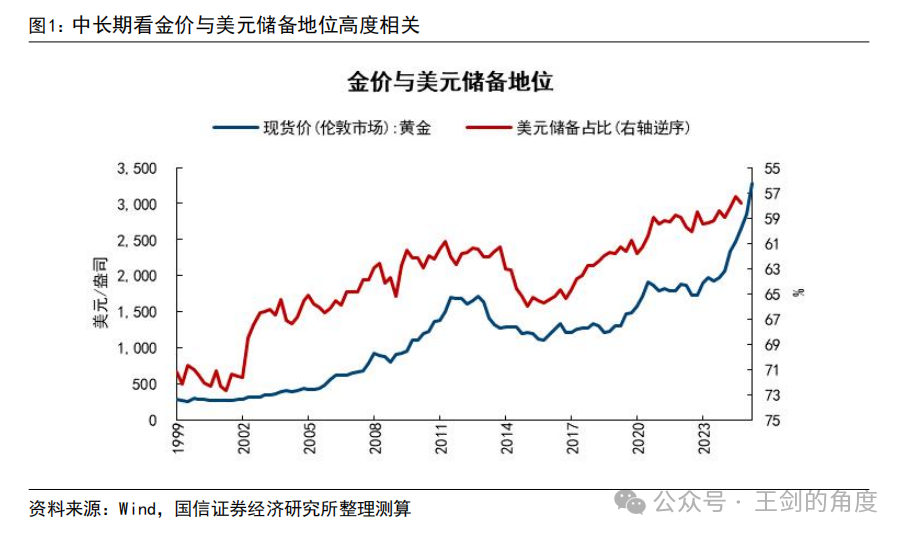
Core Viewpoint - Since September, gold prices have surged significantly, approaching $4000 per ounce by October 7, 2023, driven by a combination of long-term trends, short-term factors, and market sentiment [3][4][17] Long-term Logic for Gold Price Increase - The long-term narrative supporting gold's price increase is centered around the restructuring of the global monetary credit system, with gold acting as a "safe haven" asset during challenges to the dollar's credibility [3][4] - The trend of de-dollarization is accelerating, as more countries diversify their reserve assets, with gold becoming a key alternative, reflecting a shift from a purely dollar-based system to one resembling a "gold standard" [3][4] - Central banks globally are increasingly purchasing gold as a strategic move to stabilize economies during turbulent times, which has become a significant support for gold prices [3][4] Short-term Triggers for Gold Price Surge - The unexpected interest rate cuts by the Federal Reserve in September acted as a direct driver for gold prices, as lower interest rates typically boost gold's appeal [7][11] - Escalating geopolitical tensions and trade policy shifts have heightened market risk aversion, leading investors to seek refuge in gold [11][12] - The significant increase in gold ETF holdings, reaching 32.57 million ounces in September, indicates strong investor demand for gold amid rising risks [14][15] Future Outlook for Gold - The support system for gold remains robust, with long-term factors such as the restructuring of the global monetary system and ongoing central bank purchases likely to sustain a bullish trend for gold over the next 2-3 years [17] - Short-term dynamics, including the continuation of the Fed's easing cycle and persistent geopolitical risks, are expected to keep gold prices elevated and volatile [17]


黄金牛市:长期逻辑、短期触发与未来展望 | 投研报告
Zhong Guo Neng Yuan Wang· 2025-10-09 02:45
Core Viewpoint - The international gold market has experienced a significant upward trend since 2025, with gold prices approaching $4000 per ounce, driven by long-term structural changes in the global monetary credit system [1][3]. Group 1: Recent Price Movements - Since September, gold prices have surged, reaching nearly $4000 per ounce by October 7, 2023 [2]. - The month of September saw a notable increase in gold prices, with an 11.6% rise in USD terms [3]. Group 2: Long-term Logic Behind Gold's Rise - The long-term support for gold's price increase is primarily linked to the restructuring of the global monetary credit system [4]. - Gold's unique attributes as both a commodity and a financial asset tie its price movements closely to macroeconomic conditions, monetary system evolution, and supply-demand dynamics [4]. Group 3: Factors Supporting Gold Demand - The acceleration of de-dollarization is undermining the credibility of the US dollar, prompting countries to diversify their reserve assets, with gold emerging as a key alternative [4]. - Central banks globally are increasingly purchasing gold as a strategic measure, viewing it as a means of value storage and a core resource for stabilizing economies during global turmoil [4]. - The ongoing adjustments in reserve structures are seen as a long-term trend within the broader context of monetary system restructuring, providing stable underlying support for gold demand [4]. Group 4: Risks to Monetary Credit - The accumulation of debt risks in the US is raising concerns about monetary credit, with the heavy interest burden on federal debt posing sustainability challenges [5]. - The rising risk of a debt crisis is eroding confidence in dollar-denominated assets, enhancing gold's appeal as a safe-haven asset [5]. - Historical patterns indicate that when sovereign debt risks escalate and monetary credit is compromised, gold's long-term upward trend tends to strengthen [5].
国信证券:未来黄金怎么看?
智通财经网· 2025-10-09 00:17
Core Viewpoint - The current support system for the gold market remains solid, driven by long-term factors such as the restructuring of the global monetary credit system, de-dollarization trends, continuous gold purchases by central banks, and structural supply-demand imbalances, which are expected to sustain a long-term bullish trend for gold in the next 2-3 years [1][2]. Long-term Logic of Gold Price Increase - Gold's price trajectory is closely linked to global macroeconomic patterns, the evolution of the monetary system, and changes in supply-demand dynamics. The ongoing restructuring of the global monetary credit system is a key factor supporting gold's sustained rise [3]. - The acceleration of de-dollarization is undermining the credibility of the dollar, with many countries diversifying their reserve assets, making gold a significant alternative. Central banks view gold as a core resource for stabilizing economies during global turmoil, which has become a long-term trend in the restructuring of the monetary system [3][4]. - The accumulation of U.S. debt risks is heightening concerns over monetary credit, with rising debt crisis risks potentially leading to a loss of confidence in dollar assets, thereby reinforcing gold's appeal as a safe haven [4]. Short-term Trigger Factors for Gold Price Increase Since September - The recent surge in gold prices is attributed to short-term events, particularly monetary policy adjustments and escalating geopolitical tensions [7]. - The Federal Reserve's unexpected interest rate cuts in September have been a significant driver for gold prices, as lower interest rates typically boost gold's attractiveness [8]. - Heightened geopolitical tensions and trade policy shifts have increased market risk aversion, leading investors to seek refuge in gold as a safe asset. The rise in the geopolitical risk index since mid-September reflects this trend [10]. - The substantial growth of gold ETFs, which reached 32.57 million ounces in September, indicates strong investor demand for gold amid rising risks, with North American funds contributing significantly to this inflow [12]. Additional Observations - There are speculations regarding central banks potentially increasing their gold purchases, which may have contributed to the recent price surge. However, evidence suggests that the primary upward momentum in gold prices is linked to U.S. trading hours and the Fed's policy adjustments rather than significant purchases by the Chinese central bank [13].

近期黄金大涨快评:黄金牛市:长期逻辑、短期触发与未来展望
Guoxin Securities· 2025-10-08 04:53
Long-term Logic - The long-term price trend of gold is closely linked to the global macroeconomic landscape, monetary system evolution, and supply-demand changes[4] - The trend of de-dollarization is undermining the dollar's credit foundation, leading to increased gold purchases by central banks as a strategic move[4] - The accumulation of U.S. debt risks is heightening concerns over monetary credit, reinforcing gold's safe-haven attributes[5] Short-term Triggers - In September, gold prices surged by 11.6%, driven by unexpected interest rate cuts by the Federal Reserve, which initiated a rate reduction of 25 basis points[3][9] - Geopolitical tensions, particularly in the Middle East and Eurasia, have escalated, increasing market risk aversion and driving demand for gold as a safe asset[11] - The scale of gold ETFs expanded significantly, reaching 32.57 million ounces in September, marking the second-highest monthly increase since July 2022[13] Future Outlook - The support system for gold remains robust, with long-term trends in the global monetary credit system and ongoing central bank purchases expected to sustain gold's bullish trend over the next 2-3 years[17] - Short-term factors, including continued monetary easing and persistent geopolitical risks, are likely to keep gold prices elevated and volatile[17]
美国债务风险下埋着“定时炸弹”
Sou Hu Cai Jing· 2025-08-21 03:38
Core Viewpoint - The total U.S. national debt has surpassed $37 trillion, indicating a rapid increase in fiscal burden and potential for a vicious cycle of debt due to the recently enacted "Big and Beautiful" tax and spending legislation [1] Group 1: Fiscal Policy and Debt Dynamics - The "Big and Beautiful" legislation marks a significant shift in U.S. fiscal policy, focusing on tax cuts, increased spending, and adjustments to the debt ceiling, which may stimulate short-term economic growth but poses long-term challenges such as uncontrolled debt and diminished dollar credibility [1][2] - The Congressional Budget Office (CBO) projects that the federal budget deficit will significantly increase over the next decade, potentially adding hundreds of billions to the deficit if certain tax cuts are extended beyond 2028 [1][2] Group 2: Tax Policy Implications - The permanence of existing tax cuts, such as maintaining the highest marginal personal income tax rate at 37% and accelerating depreciation for corporate investments, could lead to an increase in the deficit by hundreds of billions [2] - New temporary tax measures, including exemptions for tips and overtime pay from 2026 to 2028 and annual tax allowances for seniors, are expected to cumulatively add thousands of billions to the deficit over ten years [2] Group 3: Interest Payments and Sustainability Challenges - Current interest payments by the U.S. Treasury exceed $1 trillion, and if debt continues to grow, annual interest costs could increase by hundreds of billions to over a trillion by 2030, straining fiscal resources for essential services [2] Group 4: Historical Context and International Comparisons - Historical data shows that U.S. federal debt has increased from $10 trillion to $20 trillion post-2008 financial crisis, while economic growth has only risen by about 30%, indicating a concerning trend of debt growth outpacing economic potential [3] - International experience suggests that when debt-to-GDP ratios exceed 150%, repayment pressures intensify, and while the dollar's status as a reserve currency currently mitigates some risks, long-term fiscal sustainability is nearing a critical point [3] Group 5: De-dollarization Trends - The attractiveness of U.S. Treasury bonds is declining, leading to concerns about capital outflows as international investors shift towards higher-yield assets, with foreign ownership of U.S. debt dropping from 34% to 29% over the past decade [3][4] - Geopolitical tensions and energy policy shifts are accelerating global de-dollarization, with countries like Russia and China increasing local currency settlements in bilateral trade [4] Group 6: Economic and Social Implications - The expansionary fiscal policy may lead to higher inflation, forcing the Federal Reserve to maintain high interest rates, which could suppress investment and consumption, resulting in a "high debt—high interest—low growth" cycle [4] - Cuts to social welfare programs under the "Big and Beautiful" legislation may disproportionately affect low-income groups, exacerbating social inequalities and potentially leading to public discontent [5]
国内贵金属期货涨跌不一 沪银涨幅为1.27%
Jin Tou Wang· 2025-08-13 07:04
Core Insights - Domestic precious metal futures showed mixed performance, with Shanghai gold down 0.05% and Shanghai silver up 1.17% as of August 13 [1] - International precious metals were all in the green, with COMEX gold up 0.08% and COMEX silver up 1.03% [1] Price Trends - Shanghai gold opened at 777.28 CNY/gram, reached a high of 777.82 CNY/gram, and a low of 773.80 CNY/gram [2] - Shanghai silver opened at 9182.00 CNY/kg, peaked at 9285.00 CNY/kg, and dipped to 9135.00 CNY/kg [2] - COMEX gold opened at 3399.60 USD/ounce, with a high of 3405.00 USD/ounce and a low of 3392.70 USD/ounce [2] - COMEX silver opened at 37.94 USD/ounce, hitting a high of 38.34 USD/ounce and a low of 37.88 USD/ounce [2] Market Context - The U.S. national debt has surpassed 37 trillion USD, raising concerns about fiscal imbalance and potential risks in the market [3] - Federal Reserve officials indicated that tariffs have limited impact on inflation, suggesting no immediate rate cuts [3] - Current market expectations show a 93.4% probability of a 25 basis point rate cut in September, with a 59.9% chance of a cumulative 50 basis point cut by October [3] - On August 12, COMEX gold fell by 0.15% to 3399.60 USD/ounce, while Shanghai gold dropped by 0.11% to 776.28 CNY/gram, reflecting ongoing market reactions to rising U.S. debt and interest rate expectations [4]
2025年上半年人民币汇率走势回顾及下半年展望
Sou Hu Cai Jing· 2025-07-16 02:49
Core Viewpoint - The article discusses the resilience of the Chinese yuan (RMB) against the backdrop of a complex international environment, highlighting the positive trends in China's economy and the implementation of proactive macroeconomic policies to maintain stability in the RMB exchange rate [1][5]. Group 1: RMB Exchange Rate Trends - In the first half of 2025, the RMB appreciated nearly 2% against the USD compared to the end of the previous year, while the USD index fell over 10%, marking its worst performance since 1973 [2]. - The RMB exchange rate showed strong resilience, with a 0.65% appreciation in the first quarter, supported by effective policy measures and a stable domestic economy [2][4]. - The second quarter saw the RMB experience fluctuations due to US-China trade tensions, with the exchange rate initially depreciating before recovering to below 7.2 [3][4]. Group 2: Economic Indicators - In the first five months of the year, fixed asset investment grew by 3.7%, retail sales increased by 5%, and exports rose by 7.2%, indicating a positive economic performance that supports the RMB [5]. - The international balance of payments remained stable, with a surplus of $101.9 billion in foreign exchange payments, reflecting foreign investors' confidence in RMB assets [9]. Group 3: Future Outlook - The RMB is expected to experience fluctuations in the second half of the year, influenced by ongoing US-China trade negotiations and the potential for US economic weakening [5][6]. - The US economic slowdown and the Federal Reserve's potential interest rate cuts are anticipated to exert downward pressure on the USD, contributing to a dual-directional fluctuation of the RMB [7][8]. - Geopolitical risks and uncertainties in international trade negotiations may lead to temporary shocks in the RMB exchange rate, necessitating close monitoring of the situation [9].

银河期货:美债务风险攀升 贵金属易涨难跌
Jin Tou Wang· 2025-07-08 03:47
Macro News - The Trump administration has issued tariff letters to 14 countries, imposing a 25% tariff on imports from Japan and South Korea starting August 1, and a tariff ranging from 25% to 40% on Malaysia, South Africa, Indonesia, Myanmar, and Thailand. Additionally, countries aligning with anti-American policies of BRICS nations will face an extra 10% tariff, with the suspension period for reciprocal tariffs extended to August 1 [1] - The European Union claims good progress in trade negotiations with the U.S., with Portugal's finance minister suggesting a potential agreement on very low tariffs, possibly below 10% [1] Federal Reserve Outlook - The probability of the Federal Reserve maintaining interest rates in July is 95.3%, while the probability of a 25 basis point cut is 4.7%. For September, the probability of maintaining rates is 35.3%, and the cumulative probability of a 25 basis point cut is 61.8%. The market anticipates one rate cut each in September and December this year [1] Central Bank Gold Purchases - As of the end of June, China's gold reserves stood at 73.9 million ounces (approximately 2,298.55 tons), reflecting an increase of 70,000 ounces (about 2.18 tons) month-on-month, marking the eighth consecutive month of gold accumulation [1] Institutional Perspectives - Following the resilience shown in non-farm payrolls, the temporary extension of the tariff suspension to August 1 alleviated market risk sentiment. However, the announcement of new tariff levels on countries including Japan and South Korea, combined with China's continued gold purchases, has led to a robust performance in the precious metals market, showing a V-shaped rebound after a decline. Overall, despite short-term market fluctuations, the substantial increase in U.S. tariffs suggests a baseline scenario of rising inflation and economic slowdown. Furthermore, with the advancement of the "Big and Beautiful" Act, the U.S. debt and deficit issues are likely to worsen, indicating that precious metals are expected to face upward pressure [1]
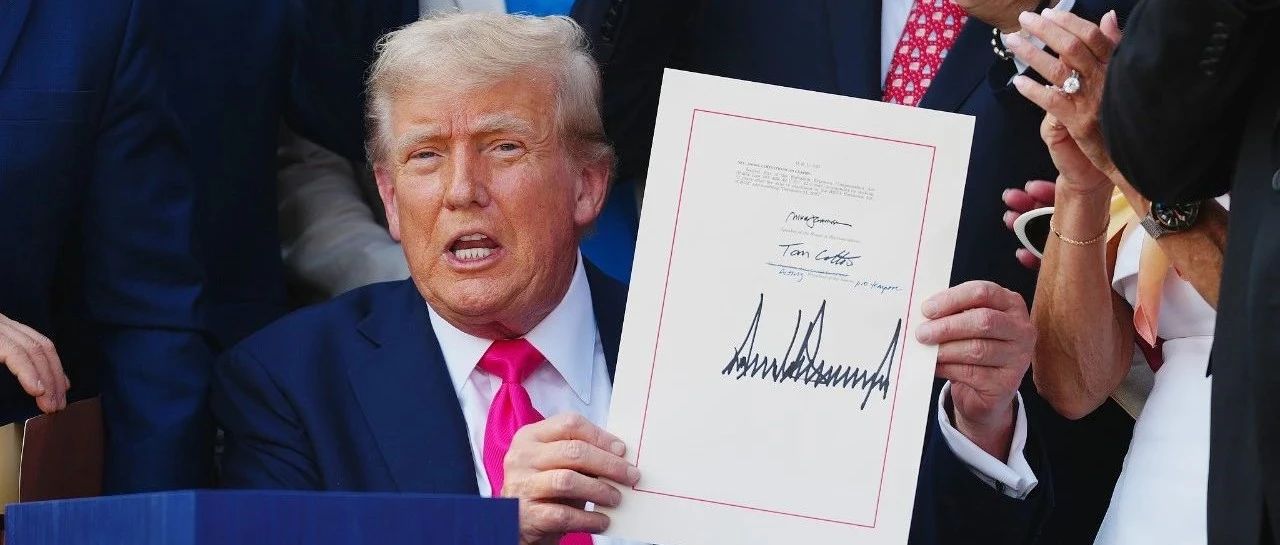
特朗普签署“大而美”法案
财联社· 2025-07-04 23:54
Core Viewpoint - The "Big and Beautiful" tax and spending bill signed by President Trump is expected to significantly increase the U.S. fiscal deficit and debt risk, raising concerns about the long-term financial stability of the country [1][2]. Group 1: Legislative Overview - The "Big and Beautiful" bill was passed by the U.S. House of Representatives with a vote of 218 in favor and 214 against, following its approval in the Senate [1]. - The bill extends tax cuts for corporations and individuals initially implemented in 2017, including provisions to exempt tips and overtime pay from taxation [1]. Group 2: Financial Implications - Preliminary analysis indicates that the bill could increase the U.S. deficit by approximately $3.3 trillion over the next decade and reduce tax revenue for decades to come [1]. - The U.S. national debt currently stands at $36.2 trillion, and the bill is expected to exacerbate the structural deficit, making it more challenging for lawmakers to manage debt levels [2]. Group 3: Economic Concerns - The bill has been criticized for potentially leading to cuts in federal assistance and increasing long-term debt, particularly benefiting wealthy individuals and large corporations [1]. - The growing debt burden is projected to have negative implications for future generations, as highlighted by experts [2].
达利欧呼吁两党合作化解美国“债务炸弹“ 改善美债供需平衡并压低利率水平
Zhi Tong Cai Jing· 2025-07-01 03:12
Group 1 - Ray Dalio, founder of Bridgewater Associates, emphasizes the need for bipartisan cooperation to reduce the fiscal deficit, which would improve the supply-demand balance of U.S. debt and lower interest rates [1] - The Congressional Budget Office estimates that the Senate version of the Trump tax reform and spending bill could increase the U.S. deficit by nearly $3.3 trillion over the next decade if passed [1] - BlackRock warns that rising U.S. government debt may diminish investor interest in long-term U.S. Treasuries and the dollar, citing concerns over the stability of the dollar as a reserve currency [1] Group 2 - BlackRock indicates that higher government debt could disrupt the typical correlation between long-term U.S. Treasury yields and U.S. monetary policy, potentially leading to rising yields even if the Federal Reserve cuts rates [2] - The increase in U.S. debt supply may face reduced demand from the Federal Reserve and foreign central banks [2]
