
航天强国

Search documents
长城基金尤国梁:商业航天后续或仍有诸多催化
Xin Lang Cai Jing· 2026-01-20 08:00
Core Viewpoint - The commercial aerospace sector is experiencing a capital surge in early 2026, with active performance in related stocks, although there has been a recent cooling off after a period of rapid growth [1][8]. Group 1: Market Dynamics - The recent fluctuations in the commercial aerospace sector are normal and do not indicate a trend reversal, as the previous surge was driven by multiple factors including industrial transformation, favorable policies, and international developments [2][10]. - Key events that contributed to the previous rise include a significant increase in rocket launch frequency in the second half of last year and the successful launch of reusable rockets, which addressed domestic capacity constraints and laid the foundation for commercialization [2][10]. - The government has recognized commercial aerospace as one of the three strategic emerging industries, highlighting its importance in national planning and strategy [2][10]. Group 2: Future Catalysts - There are still numerous positive events expected to catalyze the sector, such as successful recovery of reusable rockets, low-orbit communication satellite applications, second-generation satellite tenders, and IPOs of key commercial aerospace companies [2][10]. - The future market dynamics will likely depend on which sector—rockets, satellite manufacturing, or applications—experiences significant advancements or catalysts [3][11]. Group 3: Growth Potential - Commercial aerospace is viewed as a burgeoning industry with substantial growth potential, particularly in low-orbit satellite internet, which has already connected a large user base and demonstrated viable business models [4][12]. - The industry chain is extensive, involving various segments such as satellite research and manufacturing, rocket production and launch, ground equipment, and satellite application services [4][13]. - The development of satellite applications and services is expected to mirror telecommunications operators, potentially capturing greater value in the long term [4][13]. Group 4: Investment Considerations - Valuation concerns exist within the commercial aerospace sector, as the overall industry valuation was already high before the recent market surge [5][14]. - The market tends to price new industries based on long-term growth potential rather than current financial metrics, necessitating ongoing assessment of industry developments [5][14]. - Investors should differentiate between temporary market corrections and long-term risks, focusing on companies with competitive advantages and technological barriers while avoiding speculative investments [6][14].
关注军工ETF(512660)投资机会,军工板块长期趋势向好,回调或可布局
Mei Ri Jing Ji Xin Wen· 2026-01-20 06:14
Group 1 - The long-term trend of the military industry is positive, as highlighted by the 20th Central Committee's Fourth Plenary Session, which aims to achieve the centenary goal of building a strong military and to advance the modernization of national defense and the military [1] - The two major aerospace state-owned enterprises have set key tasks for the "14th Five-Year Plan" to establish a strong aerospace nation, focusing on defense industries, internationalization, and technological applications [1] - The military ETF (512660) tracks the CSI Military Industry Index (399967), which selects the top ten military groups and representative companies related to the military industry from the Shanghai and Shenzhen markets to reflect the overall performance of military-themed stocks [1] Group 2 - The index has a bias towards small and mid-cap stocks, with industry allocations primarily in aviation equipment and military electronics, covering fields such as aerospace, weaponry, and military electronics [1]
中国星网累计发射卫星超150颗,目标是2027年实现400颗卫星在轨运行
Huan Qiu Wang· 2026-01-20 00:54
Group 1 - The space infrastructure construction is accelerating, with significant growth in satellite broadband and mobile direct-to-satellite markets [1] - Galaxy Space has developed mobile direct-to-satellite technology comparable to Starlink, including antennas, onboard base stations, and solar wings [1] - On January 19, 2026, China successfully launched 19 low-orbit satellites for satellite internet using the Long March 12 rocket, marking a successful mission [1] Group 2 - China has launched over 300 satellites in 2022, achieving a record high of 92 launches, indicating a robust growth in satellite deployment [4] - There is a strategic shift in China's space policy, with a focus on building a "strong space nation" as part of the 14th Five-Year Plan, moving from experimental exploration to ecological cultivation [4] - China's satellite capabilities still lag behind the US in terms of scale, technology, and commercialization, but the country is proactively securing frequency orbits at the ITU level [4]

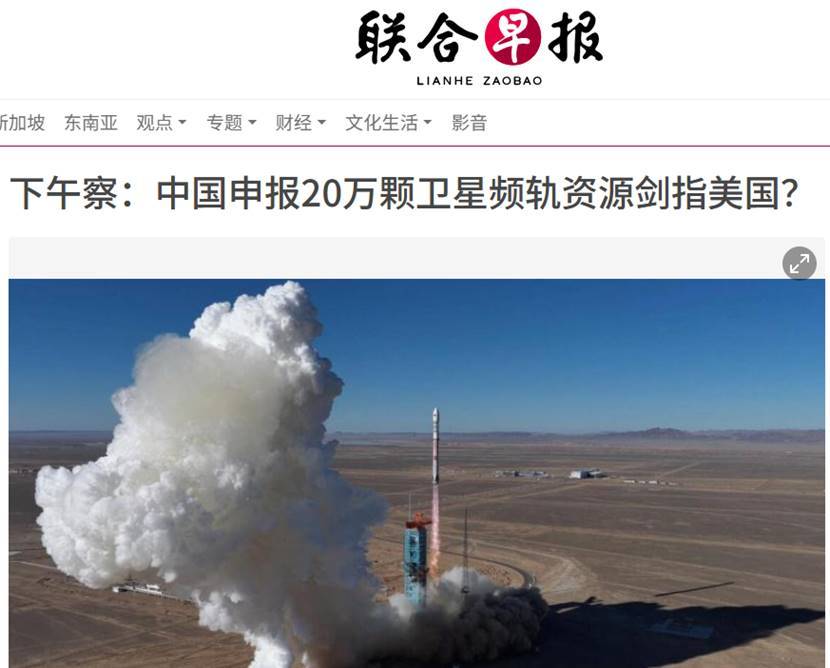
我国成功发射卫星互联网低轨19组卫星 银河航天承担研制
Zheng Quan Ri Bao Wang· 2026-01-19 11:46
Group 1 - The successful launch of 19 low-orbit satellites by Galaxy Space using the Long March 12 rocket marks a significant achievement in China's commercial space sector, which is transitioning from a supplementary role to a strategic pillar in national space infrastructure [1] - The satellites are equipped with advanced technologies developed by Galaxy Space, including phased array antennas and integrated electronic systems, enhancing cost-effectiveness and operational efficiency [1] - The development process of these satellites has achieved a fully digital workflow, incorporating automated testing and intelligent assembly, which significantly improves production efficiency [1] Group 2 - The rapid growth of space infrastructure construction is evident, particularly in satellite broadband and mobile direct-to-satellite markets, with Galaxy Space successfully launching satellites capable of direct mobile connectivity [2] - China's commercial space sector is evolving from experimental exploration to ecological cultivation, with Galaxy Space securing numerous satellite product orders and successfully launching over 40 advanced satellites, establishing a commercial loop [2] - To seize opportunities in the new space era, Galaxy Space is committed to continuous innovation, supporting the development of a modern, self-reliant aerospace industry in China [2]
军工行业周报:两航天央企锚定十五五航天强国目标,俄称打击乌军工设施
GUOTAI HAITONG SECURITIES· 2026-01-19 05:45
Investment Rating - The report rates the military industry as "Overweight" [12] Core Insights - The military industry is expected to have a long-term positive trend, supported by the 20th National Congress of the Communist Party of China, which emphasizes achieving the centenary goal of building a strong military and advancing the modernization of national defense and the military [7][8] - The military sector has recently experienced a decline, with the defense and military index dropping by 5.66%, underperforming the market by 5.21 percentage points [12][13] - Major aerospace state-owned enterprises have set goals for the 14th Five-Year Plan, focusing on advancing aerospace defense industries and internationalization [8][9] Summary by Sections Industry Performance - The military sector index fell by 5.66% from January 12 to January 17, 2026, while the Shanghai Composite Index decreased by 0.45% and the ChiNext Index increased by 1.0% [12][13] - The China Securities National Security Index performed the best among military indices, with a decline of 1.77% [15] Major News in the Military Industry - Internationally, Russia has conducted large-scale strikes on Ukrainian military and energy facilities using precision-guided weapons and drones [21][22] - Domestically, the aerospace industry is focusing on key tasks for the 14th Five-Year Plan, including advancements in manned lunar missions and deep space exploration [8][9] Investment Recommendations - Recommended companies include: 1. Assembly: AVIC Shenyang Aircraft Corporation, AVIC Xi'an Aircraft Industry Group, Aero Engine Corporation of China 2. Components: AVIC Optoelectronics, Zhimin Technology, Shaanxi Huada, Ruichuang Micro-Nano, Unisoc 3. Subsystems: Aerospace Electronics, Guorui Technology, Guobang Electronics, AVIC Avionics, Northern Navigation, Aerospace Nanhu 4. Materials and Processing: Jiachih Technology, AVIC High-Tech, Western Materials, Aviation Materials, Hangya Technology, Guangwei Composite, Filihua, Huayin Technology, Bolite [9][10]


证监会最新部署!全力营造“长钱长投”的市场生态
Xin Lang Cai Jing· 2026-01-19 01:20
Market Performance - The A-share market showed mixed performance this week, with the overall index rising by 0.49%. The Sci-Tech 50 index led the gains with an increase of 2.58%, while the Shanghai 50, CSI 300, and Shanghai Composite Index recorded declines [1][6]. Policy Focus - The State Council emphasized the need to accelerate the cultivation of new growth points in service consumption, supporting new business models and enhancing service quality to stimulate domestic demand [2][8]. - The China Securities Regulatory Commission (CSRC) is working to create a market environment conducive to long-term investment, focusing on deepening public fund reforms and expanding channels for long-term capital [2][8]. - The People's Bank of China announced a reduction in various structural monetary policy tool rates by 0.25 percentage points, signaling a coordinated effort to support the economy and provide financial backing for the new five-year plan [3][9]. Industry Events - Micron Technology announced a strategic acquisition of Powerchip's P5 wafer fab in Taiwan for $1.8 billion, aimed at enhancing production capacity amid rising demand in the storage chip market [3][9]. - The China Aerospace Science and Industry Corporation (CASIC) is focusing on the aerospace defense industry and internationalization, aiming to enhance equipment performance and economic efficiency [4][10]. Market Outlook - The long-term trend for the A-share market remains bullish, supported by favorable macroeconomic policies and expected inflows of long-term capital from insurance funds and foreign investments [11]. - The government plans to invest trillions in urban renewal projects during the new five-year plan, focusing on infrastructure updates and old community renovations [12]. Fund Manager Insights - The A-share market is experiencing structural differentiation, with the Sci-Tech index leading while the Shanghai Composite index slightly declines. The total trading volume exceeded 3 trillion yuan [12]. - Key investment opportunities include sectors related to AI applications, semiconductor equipment, and cyclical industries like non-ferrous metals and power equipment, which are expected to benefit from supply-demand mismatches and policy support [12].
长城基金基金经理尤国梁:商业航天的远期空间与短期估值
Shang Hai Zheng Quan Bao· 2026-01-18 18:39
Core Viewpoint - The commercial aerospace sector has experienced a significant surge, but a market correction has occurred following this rise. The current adjustment is viewed as a potential phase of consolidation rather than a long-term downturn, given the upward industrial trend in the domestic commercial aerospace sector [1]. Group 1: Industry Trends - The commercial aerospace boom is attributed to multiple factors, including a notable increase in rocket launch frequency in the second half of 2025 and the successful orbiting of reusable rockets, which alleviated the domestic capacity bottleneck and laid the groundwork for commercialization [2]. - The "14th Five-Year Plan" emphasizes the goal of becoming a "space power," indicating the government's strategic focus on the aerospace sector [2]. - The commercial aerospace industry is seen as having substantial growth potential, with low-orbit satellite internet already connecting numerous users and the overseas "Starlink" business proving the viability of its business model [2]. Group 2: Market Dynamics - Concerns regarding the valuation of the commercial aerospace sector exist, as the overall industry valuation was already high before the 2025 market surge. The sector is currently at the early stage of an industrial inflection point, where anticipated increases in rocket and satellite launches may not immediately reflect in financial statements [3]. - The market's focus and rotation of funds align with the future development rhythm of the industry, initially concentrating on the rocket sector, which has seen the most significant changes and breakthroughs recently [3]. - Future market dynamics are expected to depend on which sector experiences major catalysts or industrial advancements, with ongoing performance across various directions including satellite manufacturing and operational services [3].
航天科技集团 “十五五”规划老领导、老专家座谈会召开
Xin Lang Cai Jing· 2026-01-16 02:35
Core Viewpoint - The meeting held by China Aerospace Science and Technology Corporation (CASC) focused on the formulation of the "14th Five-Year Plan," with significant input from veteran leaders and experts in the aerospace field [1] Group 1: Meeting Highlights - The meeting was attended by senior leaders and experts, including Wang Liheng, Bai Baier, Xu Qiang, and academicians from various institutes, who provided valuable suggestions on the "14th Five-Year Plan" [1] - Key areas of discussion included the construction of a strong aerospace nation, major aerospace projects, commercial aerospace, digital transformation, talent development, and deepening reform and innovation [1] Group 2: Leadership Insights - Vice Secretary of the Party Committee, Pang Jin, emphasized the importance of the insights from veteran leaders and experts, highlighting their high-level perspective, deep insights, and practical suggestions [1] - Pang Jin committed to thoroughly studying and incorporating the feedback into the planning process, while also ensuring that veteran leaders and experts play a crucial role in contributing to the construction of a strong aerospace nation [1]

中国航天 更多精彩
Ren Min Ri Bao Hai Wai Ban· 2026-01-14 22:50
Core Viewpoint - China's space industry is experiencing significant advancements, with multiple successful missions and the introduction of new technologies, aiming to establish itself as a leading space power by 2026 [7][12][14]. Group 1: Manned Spaceflight Progress - The Shenzhou 21 crew has been working in orbit for over 70 days, conducting key training and scientific experiments [8]. - In 2025, China executed its first emergency launch mission in response to unexpected issues with the Shenzhou 20 spacecraft, demonstrating its capabilities [8]. - The Chinese space station has successfully conducted 265 scientific and application projects in three major fields by December 2025 [8]. Group 2: Deep Space Exploration - The Tianwen-2 mission successfully launched in 2025, marking China's first asteroid exploration and sample return mission, targeting asteroid 2016 HO3 [12]. - The mission aims to return to Earth by the end of 2027 after conducting scientific investigations on the asteroid and later on comet 311P [12]. - The Chang'e 7 mission is planned for 2026, focusing on lunar south pole exploration and ice detection [13]. Group 3: Commercial Space Development - In 2025, various commercial rockets, including Ceres-1 and Zhuque-3, were launched, indicating a surge in China's commercial space activities [14]. - The National Space Administration has initiated a plan to enhance the quality and safety of commercial space development from 2025 to 2027 [14]. - New generation rockets are expected to enter their maiden flights, supporting large-scale satellite networks and low-cost cargo transport [14].

国泰海通证券:中国航天发射创新高 军工市场迎发展新机遇
Xin Lang Cai Jing· 2026-01-13 08:58
Core Viewpoint - The military industry is poised for long-term growth due to recent global developments, including China's record space launches and the U.S. plans to significantly increase military spending, alongside the intensifying geopolitical competition among major powers [1][7]. Group 1: China's Aerospace Achievements - In 2025, China achieved a record of 92 space launches, sending over 300 satellites into orbit, marking a qualitative leap in both launch frequency and satellite deployment [2][8]. - Significant milestones include the Shenzhou 20 mission with a crew duration record of 204 days, the Shenzhou 21's rapid docking record of 3.5 hours, and the successful execution of a 16-day emergency launch protocol [2][8]. - Looking ahead to 2026, China plans to initiate various tests for its manned lunar landing project and the Chang'e 7 mission to search for water ice on the Moon [2][8]. Group 2: Global Military Dynamics - The U.S. military budget is proposed to increase from $1 trillion to $1.5 trillion for the fiscal year 2027, aimed at creating a "dream army" to address current global threats [3][9]. - The Pentagon plans to significantly boost the production of the "Patriot" missile system, increasing the annual output of the PAC-3 MSE missiles from approximately 600 to 2000 units [3][9]. - The U.S. Air Force has selected Northrop Grumman's new autonomous drone, "Reaper," as a leading candidate for collaborative combat aircraft projects [3][9]. Group 3: Military Sector Performance - The military sector showed strong performance in the week of January 5-9, 2026, with the defense and military index rising by 14.56%, outperforming the broader market by 10.74 percentage points [5][11]. - Notable stock performances include Galaxy Electronics (up 60.96%), Nanjing Panda (up 49.10%), and Zhenlei Technology (up 48.18%) [5][11]. - A significant breakthrough in domestic military technology was achieved with the successful first flight of the LQ-150 drone, which features a low-cost, multi-purpose flight control system [5][11]. Group 4: Investment Recommendations - The military sector is expected to accelerate its development during the 14th Five-Year Plan, with a focus on enhancing capabilities in aerospace and satellite internet [6][12]. - Key investment areas include assembly sectors like AVIC Shenyang Aircraft, component sectors like AVIC Optoelectronics, subsystem sectors like Aero Engine Corporation of China, and materials processing sectors like AVIC High-Tech [6][12].
