融资成本

Search documents
财经聚焦丨近15万亿元新增贷款投向哪里?——透视我国前10个月金融数据
Xin Hua Wang· 2025-11-13 14:25
Core Insights - The People's Bank of China reported that nearly 15 trillion yuan in new RMB loans were issued in the first ten months of this year, indicating strong financial support for the real economy [1] - The total RMB loan balance reached 270.61 trillion yuan by the end of October, with a year-on-year growth of 6.5%, while the social financing scale stood at 437.72 trillion yuan, growing by 8.5% year-on-year [1] Loan Structure and Trends - Corporate loans, particularly medium to long-term loans, have seen significant growth, with corporate loans increasing by 13.79 trillion yuan in the first ten months, making them the main contributor to loan growth [1] - Medium to long-term loans accounted for over 60% of the new corporate loans, with an increase of 8.32 trillion yuan [1] - By the end of October, inclusive small and micro loans reached a balance of 35.77 trillion yuan, growing by 11.6% year-on-year, while medium to long-term loans in the manufacturing sector reached 14.97 trillion yuan, up by 7.9% [1] Financial Policy and Support - China Construction Bank announced a service plan to support new industrialization, aiming for a financing scale exceeding 5 trillion yuan in the manufacturing sector over the next three years [2] - The People's Bank of China reported that structural monetary policy tools supporting key financial initiatives had a balance of 3.9 trillion yuan by the end of September, with loan growth in these areas significantly outpacing overall loan growth [2] Monetary Supply and Interest Rates - By the end of October, broad money (M2) grew by 8.2% year-on-year, while narrow money (M1) grew by 6.2%, indicating a narrowing gap between M2 and M1 compared to the previous year [4] - The average interest rate for newly issued corporate loans was 3.1%, down approximately 40 basis points year-on-year, while the average interest rate for new personal housing loans was also 3.1%, down about 8 basis points year-on-year [5] Bond Financing and Social Financing Growth - In the first ten months, the total social financing increment was 30.9 trillion yuan, with net financing from corporate bonds at 1.82 trillion yuan, an increase of 1.36 trillion yuan year-on-year, and government bonds at 11.95 trillion yuan, up by 3.72 trillion yuan [6] - The share of government and corporate bond financing in new social financing rose to approximately 45%, reflecting a shift towards more diversified financing channels beyond traditional bank loans [6]


10月末社融存量同比增长8.5% 专家:更多资金转化为活期存款,企业生产经营活跃度提升
Mei Ri Jing Ji Xin Wen· 2025-11-13 13:52
Group 1 - The core viewpoint of the articles indicates that the financial statistics for October 2025 show a reasonable growth in social financing and monetary supply, which supports the real economy [1][2] - As of the end of October, the total social financing scale reached 437.72 trillion yuan, with a year-on-year growth of 8.5%, while the broad money (M2) balance was 335.13 trillion yuan, growing by 8.2% [1][2] - The issuance of government bonds, including special refinancing bonds, has significantly contributed to the growth of social financing, with net financing from government bonds reaching 11.95 trillion yuan in the first ten months of the year, an increase of 3.72 trillion yuan year-on-year [2] Group 2 - The weighted average interest rate for newly issued corporate loans in October was 3.1%, down approximately 40 basis points from the previous year, indicating a favorable financing environment [3] - The total loan balance reached 274.54 trillion yuan by the end of October, with a year-on-year growth of 6.3%, reflecting a shift in credit structure towards high-quality development [4] - Loans to technology-oriented small and medium-sized enterprises, inclusive small and micro loans, and green loans grew by 22.3%, 12.2%, and 17.5% respectively, all exceeding the overall loan growth rate [4]
万科卖了1000亿仍在亏损,深铁又“输血”22亿
阿尔法工场研究院· 2025-11-03 00:05
Core Viewpoint - Vanke is facing significant operational challenges, highlighted by substantial losses and ongoing financial support from its major shareholder, Shenzhen Metro Group, which has provided a total of 291.3 billion yuan in loans to date [3][18]. Financial Support from Shareholders - Shenzhen Metro Group plans to provide Vanke with a loan of up to 2.2 billion yuan to repay bond principal and interest, reflecting the company's current debt repayment pressure [3][5]. - This loan follows a total of 26.93 billion yuan in loans provided by Shenzhen Metro Group since the beginning of 2025, demonstrating strong support from the major shareholder [3][5][18]. Deteriorating Financial Performance - Vanke's financial performance has worsened, with a reported net loss of 28.016 billion yuan for the first nine months of 2025, a 56.14% increase year-on-year [8][10]. - The company's revenue for the same period was 161.388 billion yuan, down 26.61% year-on-year, indicating severe operational pressure [8][10]. - The third quarter alone saw a revenue drop of 27.30%, with a net loss of 16.069 billion yuan, further exacerbating the financial strain [8][10]. Decline in Core Business - Vanke's core real estate development business has significantly declined, with a 44.6% drop in contract sales amounting to 100.46 billion yuan and a 41.8% decrease in sales area [10][11]. - The overall tax-preferred gross margin for the real estate development business is at a concerning -10.5%, indicating that the core business is operating at a loss [10][11]. Financial Health and Liquidity Concerns - As of September 30, 2025, Vanke's total assets were 1.1366 trillion yuan, down 11.64% from the previous year, while total liabilities stood at 362.93 billion yuan, with a debt-to-asset ratio of 73.5% [11][12]. - The company has a cash flow deficit of 5.889 billion yuan, raising concerns about liquidity given the high level of debt [11][12]. Efforts to Mitigate Financial Pressure - Vanke is taking measures to alleviate financial pressure, including completing bulk transactions for 19 projects worth 6.86 billion yuan and optimizing its business operations [13][14]. - The company has also reported a slight increase in its operational service business, with a revenue of 43.57 billion yuan, up 1.1% year-on-year, providing some support to overall performance [13][14]. Future Challenges - Vanke acknowledges ongoing operational pressures and anticipates continued sales declines, with a focus on maintaining financial stability and operational efficiency [16][17]. - The company is implementing organizational adjustments to enhance operational efficiency and reduce management costs in response to the challenging environment [16][17].


央行上海总部:9月上海新发放企业贷款加权平均利率2.72%
Xin Lang Cai Jing· 2025-10-30 03:59
Core Insights - The People's Bank of China Shanghai Headquarters held a press conference discussing the financial performance of Shanghai and the progress of the "Five Major Articles" initiative in 2025 [1] Financial Performance - As of the end of September, the total balance of loans in Shanghai reached 12.89 trillion yuan, a year-on-year increase of 7.1%, which is 0.6 percentage points higher than the national average [1] - Household loans increased by 11.4% year-on-year, with personal housing loans growing by 9.2% [1] - Non-financial enterprise loans rose by 4.1%, with medium to long-term loans increasing by 5.2% [1] - Foreign loans saw a significant increase of 24.9% year-on-year [1] Loan Structure and Costs - The loan structure is improving, with rapid growth in loans to technology and inclusive finance sectors [1] - By the end of September, loans in the information technology sector, research services, and inclusive small and micro enterprises grew by 29.1%, 21%, and 16% respectively [1] - The weighted average interest rate for newly issued corporate loans in September was 2.72%, down 43 basis points from the previous year, marking a historical low [1] - The weighted average interest rate for small and micro enterprise loans was 3%, a decrease of 42 basis points year-on-year [1] Deposit Growth - In the first three quarters of this year, deposits in Shanghai accelerated, with a notable increase in deposit activity [1] - By the end of September, the total balance of deposits in Shanghai reached 23.84 trillion yuan, a year-on-year increase of 8.4%, which is 0.9 percentage points higher than the previous quarter and 0.1 percentage points above the national average [1] - Household deposits increased by 10.3% year-on-year, while non-financial enterprise deposits grew by 6.3% [2] - Both household and non-financial enterprise demand deposits saw a significant rebound, increasing by 3.1 and 5.5 percentage points respectively compared to the previous quarter [2] - Time deposit growth rates declined for both households and non-financial enterprises, dropping by 4.1 and 7.2 percentage points respectively compared to the previous quarter [2] - Non-bank financial institution deposits increased by 12.1% year-on-year [2] Future Outlook - The People's Bank of China Shanghai Headquarters plans to continue implementing monetary policy tools and deepen financial reforms to promote high-quality economic and financial development in Shanghai [2]
9月末山东社会融资规模达25.6万亿元
Da Zhong Ri Bao· 2025-10-28 01:01
Core Insights - As of the end of September, Shandong's total social financing reached 25.6 trillion yuan, with significant year-on-year growth in financing volume and a historical low in financing costs [1][3][4] Financing Volume and Structure - In the first three quarters, Shandong's financing volume showed reasonable growth, with social financing, loans, and deposits increasing by 1.8 trillion yuan, 1.1 trillion yuan, and 1.3 trillion yuan respectively, compared to the previous year [2][3] - The balance of corporate loans reached 10.1 trillion yuan, marking a year-on-year increase of 12.2%, with manufacturing sector long-term loans growing by 11.6% [3] Financing Costs - The average interest rate for newly issued corporate loans in September dropped to 3.61%, a decrease of 0.31 percentage points year-on-year, indicating a trend of declining financing costs [4] - The People's Bank of China Shandong Branch has implemented measures to reduce the financial burden on enterprises and residents, including a reduction in personal housing loan rates, saving borrowers approximately 1.2 billion yuan annually [4] Cross-Border Trade and Investment - Cross-border trade and investment facilitation have improved, with a 36% increase in the number of trade facilitation transactions and a 44% increase in transaction amounts year-on-year [5] - By the end of September, cross-border RMB transactions reached 1.3 trillion yuan, a year-on-year growth of 17.6%, accounting for 40.8% of total cross-border transactions [5] Sectoral Loan Growth - Loans in key sectors such as technology, green finance, inclusive finance, elderly care, and digital economy reached 6.6 trillion yuan, with a year-on-year growth of 16.9% [5] - The growth rates for loans in these sectors significantly outpaced the overall loan growth, with technology and green finance sectors growing by 17.3% and 29.4% respectively [5]
今年前三季度我国社会融资规模达30万亿元
Huan Qiu Wang· 2025-10-19 02:01
Core Insights - The People's Bank of China reported robust financial support for the real economy in the first three quarters of the year, with significant growth in social financing and credit, creating a favorable monetary environment for economic recovery [1] Group 1: Social Financing and Credit Growth - The cumulative increase in social financing for the first three quarters reached 30.09 trillion yuan, an increase of 4.42 trillion yuan year-on-year [3] - As of the end of September, the total social financing stock was 437.08 trillion yuan, reflecting a year-on-year growth of 8.7%, which is 0.7 percentage points higher than the same period last year [3] Group 2: Direct Financing and Government Bonds - The steady growth in social financing is attributed to the improved direct financing channels, with government bonds playing a crucial role [4] - In the first three quarters, net financing from government bonds reached 11.46 trillion yuan, an increase of 4.28 trillion yuan year-on-year, supporting domestic demand and risk prevention [4] Group 3: Credit Structure Optimization - Total RMB loans increased by 14.75 trillion yuan in the first three quarters, with corporate loans being the main contributor, increasing by 13.44 trillion yuan [5] - The demand for long-term funding is strong, as evidenced by an increase of 8.29 trillion yuan in medium to long-term loans, indicating corporate investment confidence [5] Group 4: Financing Costs and Policy Support - The average interest rate for newly issued corporate loans in September was approximately 3.1%, down about 40 basis points year-on-year, indicating ample credit supply [6] - Policies such as interest subsidies for consumer and business loans have effectively reduced interest costs, stimulating demand for personal loans [6][7] Group 5: Future Outlook - Analysts believe that with stabilizing internal and external environments and the gradual effectiveness of growth-stabilizing policies, there is a solid foundation for achieving annual economic and social development goals [7]
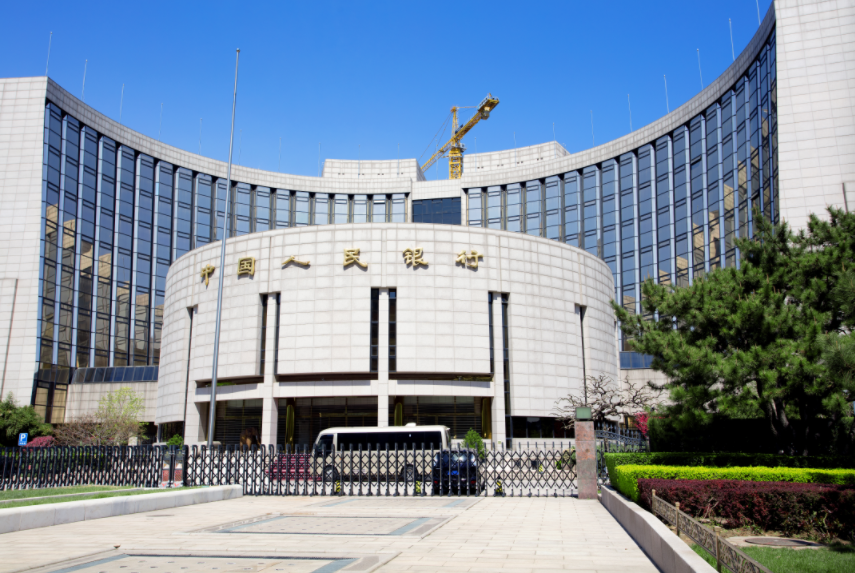
程实:货币政策跨境传导的美元渠道︱实话世经
Di Yi Cai Jing· 2025-10-13 12:41
Core Insights - The article emphasizes the importance of the dollar channel as a significant mechanism for the cross-border transmission of monetary policy, highlighting its role in influencing global financial stability and the challenges it poses for central banks [1][6]. Group 1: Limitations of Traditional Monetary Policy Transmission - Traditional theories of monetary policy spillover effects focus on interest rate differentials and trade competitiveness, but these channels are increasingly inadequate in explaining real-world capital flows [2][3]. - The interest rate differential can indicate the direction of capital flows but fails to capture their scale and volatility, as investor behavior is also influenced by risk preferences and market sentiment [2]. - The trade competitiveness channel is limited in a dollar-dominated global trade system, where exchange rate fluctuations do not effectively translate into trade price adjustments [3]. Group 2: Impact of Dollar Appreciation on Financing Costs - Dollar appreciation leads to increased financing costs for U.S. companies, particularly in the leveraged loan market, which is sensitive to changes in risk appetite [4][5]. - A 1% appreciation of the dollar results in an increase of 6-7 basis points in leveraged loan spreads, which can rise to approximately 13.8 basis points when controlling for the Eurozone yield curve [4]. - Higher-risk loans exhibit greater sensitivity to dollar fluctuations, with spreads increasing significantly more than lower-risk loans during dollar appreciation [5]. Group 3: Dollar Channel's Role in Global Monetary Policy and Risk Cycles - The dollar channel serves as both a conduit for policy transmission and an amplifier of risk cycles, potentially limiting the independence of U.S. monetary policy [6]. - Dollar fluctuations create a self-reinforcing cycle between risk sentiment and financing conditions, exacerbating the pro-cyclical nature of the financial system [6]. - The dynamics of a strong or weak dollar complicate policy decisions for central banks, necessitating a careful balance between domestic monetary policy effects and external spillover impacts [7].
摩根大通 VS 花旗:华尔街掀 “融资暗战”,美国短期利率要涨至 2025?
Sou Hu Cai Jing· 2025-09-26 04:50
Core Viewpoint - The U.S. financing market is experiencing a "bull-bear divergence," with Wall Street strategists debating the potential for easing in the coming months, primarily driven by fluctuations in overnight borrowing costs [1] Group 1: Factors Driving Divergence - Multiple factors have contributed to the rise in U.S. short-term interest rates, creating the backdrop for the divergence. These include increased short-term bond issuance by the U.S. Treasury to rebuild cash reserves, which raises borrowing costs due to heightened demand for short-term funds [2] - The Federal Reserve's steady balance sheet reduction is tightening liquidity, further constraining the supply of funds [2] - The near-zero usage of the central bank's overnight lending facility indicates reduced reliance on the central bank, but also reflects uneven distribution of funds, potentially exposing some institutions to hidden gaps [2] Group 2: Contrasting Views from Major Banks - JPMorgan, led by Teresa Ho, advocates for easing, arguing that the market has overestimated the risks of rising financing costs, predicting a softening of overnight rates by the end of 2025. Their strategy involves buying December SOFR futures and selling equivalent federal funds futures, anticipating a narrowing of the current spread between SOFR (4.42%) and the 30-day federal funds rate (4.33%) [3] - Citigroup, under Jason Williams, takes a contrary stance, expecting financing costs to remain elevated or even rise by the end of 2025. Their strategy involves shorting December SOFR contracts relative to federal funds rates, predicting that SOFR will remain 4-5 basis points higher during favorable conditions [3][4] Group 3: Market Adjustments and Sentiments - Other institutions are also adjusting their positions, reflecting differing judgments. Barclays has shifted its stance, exiting a long position on SOFR relative to federal funds due to the normalization of rising financing costs [4] - Morgan Stanley remains optimistic, suggesting that liquidity pressures may ease by October, leading to a decline in financing costs, while American Bank adopts a flexible approach, closing short positions and recommending long positions on SOFR relative to federal funds for early 2026 [5] Group 4: Consensus on Liquidity Crisis - Despite significant divergence, there is a consensus among major banks that a liquidity crisis similar to the "cash crunch" of September 2019 is unlikely to recur. This is attributed to a more robust liquidity safety net, including the Federal Reserve's standing repo facility (SRF) and overall sufficient bank reserves [6][7] - The current banking system's buffer capacity is stronger than it was before the 2019 crisis, and improved policy communication has reduced market uncertainty, allowing the focus to shift to interest rate levels rather than potential crises [7]


从关税到住房:特朗普拿出新方案能解决吗?
Sou Hu Cai Jing· 2025-09-02 09:21
Core Viewpoint - The Trump administration is considering declaring a "national housing emergency" this fall, which could become a key policy focus ahead of the midterm elections, emphasizing housing affordability as a central issue for the Republican agenda in 2026 [1][2]. Group 1: Policy Measures - Specific measures under consideration include unifying local building and zoning regulations and reducing home transfer costs, aimed at streamlining the home-buying process and minimizing unnecessary expenses [2]. - The administration may pursue these measures through executive action rather than legislative processes, reflecting a strategy used previously to bypass Congress [2][4]. Group 2: Economic Context - High interest rates are identified as a core reason for the sluggish housing market, increasing loan costs and thereby raising the barriers to homeownership, which in turn adds pressure to government debt [4]. - The Trump administration's approach contrasts with that of Democratic candidates, who propose tax incentives and down payment assistance to alleviate the burden on low- to middle-income homebuyers [6]. Group 3: Market Implications - The housing issue affects a broad voter base, including first-time buyers, families considering moving, and investors monitoring real estate trends, indicating the potential political ramifications of housing policies [7]. - While proposed measures may alleviate some immediate issues, the fundamental challenges of supply-demand dynamics and financing costs remain unresolved, particularly if the Federal Reserve does not lower interest rates [7][9]. Group 4: Future Considerations - Key points to monitor include whether the Trump administration will indeed declare a housing emergency this fall and whether the Federal Reserve will adjust its interest rate policies, as both factors are critical to addressing the housing crisis [9].

为什么说企业上市后更有利于融资?
Sou Hu Cai Jing· 2025-08-30 04:12
Financing Advantages of Going Public - The core argument is that going public significantly enhances a company's financing environment, methods, and costs, effectively opening a "financing highway" that is larger, more efficient, and cheaper [1][12]. 1. Expanded Financing Channels - Before going public, companies primarily rely on private financing methods such as venture capital (VC) and private equity (PE), which involve complex negotiations and high barriers [1][2]. - After going public, companies gain access to public markets, allowing them to reach a vast pool of investors, enhancing their ability to raise funds through secondary offerings and convertible bonds [3][5]. 2. Reduced Financing Costs - The liquidity premium associated with publicly traded stocks leads to lower required returns from investors, thereby decreasing the company's cost of capital [5]. - High transparency due to strict disclosure regulations reduces information asymmetry, increasing investor trust and willingness to provide funds under more favorable conditions [5][6]. 3. Diverse and Flexible Financing Tools - Public companies can utilize various efficient financing tools, including equity financing through new stock issuance, which improves their balance sheets without repayment obligations [7]. - Debt financing becomes more accessible and cheaper due to higher credit ratings and transparency, allowing for easier bond issuance [7]. - Hybrid financing options, such as convertible bonds, offer flexibility by combining features of both equity and debt [8]. 4. Enhanced Valuation and Brand Effect - Market pricing post-IPO provides a fair valuation based on public trading, serving as a credible benchmark for future financing activities [9]. - Successful IPOs enhance a company's brand reputation, as they undergo rigorous scrutiny from regulatory bodies and financial institutions, boosting credibility in negotiations with banks and suppliers [9]. 5. Increased Acquisition and Expansion Capabilities - Public companies can use their stock as currency for acquisitions, allowing for stock-for-stock transactions that alleviate cash flow pressures [10]. - This capability is crucial for industry consolidation and expansion efforts [10]. 6. Summary Comparison - The transition from private to public financing presents significant advantages, including broader access to capital, lower costs, and enhanced operational flexibility, outweighing the challenges associated with public listing [11][12].