资产对冲

Search documents
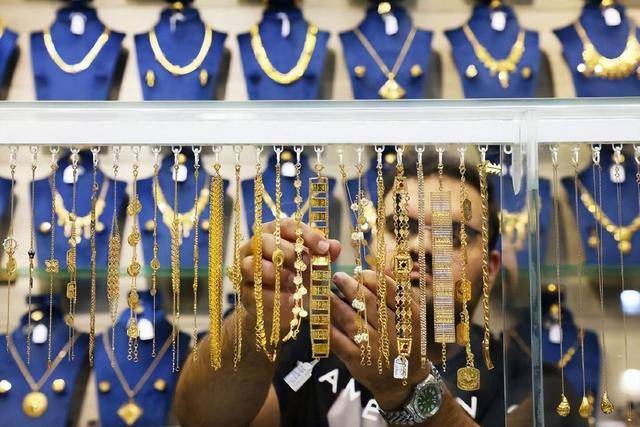
一小区两年前“买房送黄金”,如今250万元的房子市值缩水87万元,送的1000克黄金暴涨到112万元,住户资产增值了
Xin Lang Cai Jing· 2026-02-11 10:16
Core Viewpoint - A real estate promotion in Hangzhou offering gold with home purchases has resulted in unexpected asset appreciation for homeowners, showcasing a form of passive "asset hedging" as gold prices surged while property values declined [1][2][3] Summary by Relevant Sections Promotion Details - In June 2023, a real estate project in Hangzhou's Lin'an District launched a "buy a house, get gold" promotion, offering between 700 grams to 1000 grams of gold depending on the unit type [1][2] - At the time, gold was priced at approximately 450 yuan per gram, making the 1000 grams of gold worth about 450,000 yuan, which represented an 18% discount on a 2.5 million yuan property [1][2] Market Changes - Over two and a half years, international gold prices rose significantly, reaching around 1120 yuan per gram, marking an increase of nearly 149% [1][2] - The value of the 1000 grams of gold received by homeowners increased from approximately 450,000 yuan to about 1.12 million yuan [1][2] Property Value Decline - Concurrently, property prices in the Lin'an area saw a notable decline, with the price per square meter dropping from about 22,000 yuan to approximately 14,700 yuan [1][2] - The value of the same 119 square meter property decreased from 2.5 million yuan to around 1.63 million yuan, a reduction of about 870,000 yuan [1][2] Asset Appreciation - Despite the decline in property value, the increase in gold value resulted in an overall asset appreciation of approximately 250,000 yuan for homeowners [3]
黄金投资全解析(QA问答版)
Sou Hu Cai Jing· 2026-02-05 08:09
Core Conclusion - As of February 5, 2026, the spot gold price in London is $4,864.01 per ounce, while the domestic gold T+D price is ¥1,092.48 per gram, and mainstream gold shop prices range from ¥1,553 to ¥1,568 per gram. The overall gold price is expected to remain strong with fluctuations, supported by anticipated Fed rate cuts of 50-75 basis points and the normalization of global central bank gold purchases, but a short-term correction risk of 5%-15% should be noted. The core value of gold lies in its role as a hedge against risk and asset preservation, with a recommended allocation not exceeding 15% of total assets [1]. Basic Understanding - Gold is primarily categorized into three types: physical gold, paper gold, and gold derivatives. Physical gold includes gold bars, coins, and jewelry, with gold bars typically having a purity of 99.99%. The investment gold bar prices from major domestic banks range from ¥1,141 to ¥1,229 per gram, while gold jewelry prices are higher due to processing fees and brand premiums, reaching ¥1,553 to ¥1,568 per gram. Paper gold is issued by banks with no physical delivery, allowing for flexible trading without fees, while gold derivatives include gold ETFs (tracking gold prices with trading costs of 0.1%-0.3%) and gold futures (with leverage of 5-10 times and higher entry barriers) [2]. Value Understanding - The core value of gold is its ability to hedge against risk, preserve assets, and combat inflation. In 2025, global central banks net purchased 863 tons of gold, driven by emerging market "de-dollarization" strategies, providing structural support for gold prices. Gold is suitable for three types of investors: those with low risk tolerance seeking stable asset preservation, those looking to hedge against inflation and diversify risks from stocks and funds, and those with short-term speculative needs who have a certain risk tolerance [5]. Influencing Factors - Key factors influencing gold price fluctuations include: 1. Federal Reserve policy: Expected rate cuts of 50-75 basis points in 2026 will lower the cost of holding gold, benefiting its price. 2. Dollar performance: The negative correlation of approximately -0.7 between the dollar index and gold prices means a stronger dollar typically leads to lower gold prices. 3. Central bank purchases: In 2025, global central banks net purchased 863 tons of gold, with an expected monthly average of 60-70 tons in 2026, supporting gold prices. 4. Geopolitical and supply-demand factors: Geopolitical conflicts increase demand for safe-haven assets, with an expected widening of the gold supply-demand gap to 320 tons in 2026, supporting prices [12]. Price Trends - The overall trend for gold prices in 2026 is expected to be strong with fluctuations. The World Gold Council predicts a baseline scenario of ±5% price fluctuations, with an optimistic scenario suggesting that if geopolitical conflicts escalate, prices could rise by 15%-30%, potentially exceeding $6,000 per ounce. In contrast, a risk scenario could see prices correct by 5%-20% if inflation rebounds. Institutions have differing views: UBS has raised its 2026 target price to $6,200 per ounce, while Goldman Sachs expects it to reach $5,400 per ounce by year-end, and JPMorgan has a long-term bullish outlook of $8,000-$8,500, but warns of short-term overbought risks [13]. Product Selection - New investors are advised to prioritize gold ETFs or bank paper gold due to their low entry barriers, controllable risks, and convenient operations. Gold ETFs typically allow investments starting at ¥100, with trading costs of only 0.1%-0.3%, and no physical storage costs. Paper gold can be traded flexibly starting from 1 gram (approximately ¥1,092 based on current T+D prices), with no leverage risk. In contrast, gold futures involve high leverage and risks, while physical gold incurs storage costs, making them less suitable for beginners [9].
Gold prices hit record high as 2026 starts with a rally
Yahoo Finance· 2026-01-29 16:17
Group 1: Gold Market Dynamics - Gold prices have reached new trading records, surpassing $5,500 an ounce, with projections from Morgan Stanley suggesting a potential rise to $5,700 an ounce by the end of Q2 [1] - Since the beginning of the year, gold prices have increased by over 20%, driven by investor demand for reliable assets amid geopolitical uncertainty [2] - The recent volatility in U.S.-European relations, particularly due to actions by the Trump administration, has contributed to the attractiveness of gold as a hedge [2][3] Group 2: U.S. Dollar Performance - The U.S. dollar has depreciated by 10% since the Trump administration took office, reaching its lowest level since 2022 against currencies like the Euro [4] - The decline in the U.S. dollar's value has coincided with the rise in gold prices, indicating a shift in investor sentiment towards gold as a preferred asset [4]
NCE平台:比特币黄金齐创纪录
Xin Lang Cai Jing· 2026-01-28 12:41
Group 1 - The core observation is that digital assets and safe-haven assets are experiencing a collective resonance driven by macroeconomic policies, with Bitcoin surpassing the $89,000 mark [1][2][3] - The immediate catalyst for this surge is the significant decline of the US Dollar Index (DXY), which has fallen to around 95.80, marking a four-year low, influenced by President Trump's indifferent attitude towards the dollar's depreciation [1][2][3] - This macro-level policy signal has injected strong liquidity expectations into the market, leading to a 2.2% increase in Bitcoin within 24 hours, reaching a peak of $89,300, while gold prices surged 1.8% to a record of $5,215 per ounce [1][3] Group 2 - From a technical analysis perspective, Bitcoin is showing significant bullish divergence, which historically indicates a strong reversal, with potential for a 10% subsequent return, suggesting Bitcoin may challenge the $95,000 resistance level in the short term [2][3] - The underlying logic of the market dynamics is shifting, and while there may be short-term volatility risks, the dual drivers of a weakening dollar and technical divergence are expected to enhance the asset hedging value of Bitcoin and gold, potentially initiating a new round of valuation recovery [4]


和讯投顾葛鋆隆:人民币升值利空黄金? 炒黄金这么操作可以帮你对冲人民币汇率!
Sou Hu Cai Jing· 2025-12-29 10:16
Group 1 - The strengthening of the RMB negatively impacts the profits of gold holders, as gold is priced in RMB, leading to lower gold prices when the RMB appreciates [1] - There is a proposed hedging strategy involving the Hang Seng Tech Index, which shows a negative correlation with the RMB exchange rate; when the Hang Seng Tech rises, the RMB tends to be strong [1] - Recent market movements indicate that as the RMB weakened from 7.35 to approximately 6.99, the Hang Seng Tech Index experienced an increase, suggesting a pattern where a stronger RMB benefits stock assets like the Hang Seng Tech [1] Group 2 - The underlying logic suggests that overseas capital perceives the RMB will continue to appreciate, leading to the selling of USD for RMB, which is then likely invested in the Hong Kong capital market, including assets like the Hang Seng Tech and Hong Kong dividend stocks [2] - This investment strategy allows capital to benefit from both RMB appreciation and dividend income from holdings in stocks [2] - The current trend of a strengthening RMB presents an opportunity to allocate assets towards the Hang Seng Tech or Hong Kong stocks [2]
外媒:黄金或成为“长期性重要资产”
Sou Hu Cai Jing· 2025-12-21 09:21
Group 1 - Gold prices have seen a historic surge, reaching a high of $4,381 per ounce in October 2025, with predictions of hitting $5,000 by 2026 due to factors like U.S. policies, geopolitical tensions, and increased demand from central banks and new investors [2] - Central banks have diversified their reserves for five consecutive years, which analysts believe will provide solid support for gold prices in 2026, with a quarterly demand expectation of 585 tons compared to the current requirement of 350 tons to maintain price levels [2] - The proportion of gold assets held by investors has increased from 1.5% to 2.8% of total assets since before 2022, indicating a growing interest in gold as a hedge against market downturns [3] Group 2 - The International Bank for Settlements noted a rare simultaneous rise in gold and stock prices, raising concerns about a potential bubble, while geopolitical conflicts have made gold a preferred hedge against stock market declines [3] - Despite a 23% decline in jewelry demand in Q3, there is a shift towards investment in gold bars and coins, as evidenced by increased retail demand in Australia and Europe [3] - The overall gold supply response has been limited, with only a 6% increase in recycling and minimal central bank sell-offs, while total gold demand is expected to grow by 11% this year but will slow down by 2026 [3][4]
帮主郑重早间观察:市场冷热不均?这5个信号藏着中长线机会
Sou Hu Cai Jing· 2025-12-10 02:07
Group 1: Precious Metals - Silver has reached $60 and gold has stabilized at $4200, driven by expectations of interest rate cuts [3] - Standard Chartered Bank warns of potential pullback due to decreased purchasing in India and replenished London inventories, suggesting that silver and gold are better as hedging tools rather than for short-term speculation [3] Group 2: AI Sector - Global investors are cautious about high valuations in U.S. AI, leading them to seek opportunities in Chinese tech stocks, which have a complete industrial ecosystem and competitive manufacturing capabilities [3] - Focus should be on hard technology and AI manufacturing segments for long-term investments, rather than speculative concepts [3] Group 3: Real Estate Market - In the first 11 months, second-hand home sales in four first-tier cities reached 519,000 units, the highest in four years, indicating a recovery in market confidence [3] - The easing of policies has facilitated a positive cycle of increased volume, restored confidence, and stable prices, making core properties in quality cities and leading real estate companies worth monitoring for long-term investment [3] Group 4: Photovoltaic Industry - A new $3 billion polysilicon storage platform has been established, signaling a significant industry reshuffle as leading companies consolidate capacity and eliminate outdated production [4] - Companies with cost and technological advantages, as well as vertically integrated firms, are expected to benefit from this consolidation [4] Group 5: Kweichow Moutai - The wholesale price of Kweichow Moutai has dropped to 1520 yuan, a 43% decline over two years, due to excessive inventory and changes in consumer behavior [4] - Long-term investors should wait for inventory clearance and observe sales data post-Spring Festival before making decisions, while consumers may find value in this price window [4]

怕暴跌血亏?用这个“保险”,美股暴跌你也能赚钱 (第五期-Long Put买入看跌期权)
贝塔投资智库· 2025-09-23 04:01
Core Viewpoint - The article emphasizes the importance of asset hedging, particularly through the use of deep out-of-the-money put options, to protect against market downturns and "black swan" events, which are often underestimated by investors [1][2][4]. Group 1: Importance of Hedging - Historical examples illustrate that during significant market downturns, such as the 2008 financial crisis, hedging strategies can yield substantial returns, as demonstrated by Universa Investments achieving approximately 115% returns while the S&P 500 fell by about 37% [1][2]. - Many investors maintain a purely long position without any hedging, often due to a fear of underperforming compared to peers, leading to a lack of protection against potential market crashes [1][2]. Group 2: Mathematical Illustration of Hedging - A hypothetical scenario shows that an investor with a long-only position (Old Wang) could see their investment drop from 1.52 million to 0.988 million after a 35% market decline, while a hedged investor (Old Li) would still retain a value of 1.336 million due to the gains from put options [3][4]. - The article highlights that deep out-of-the-money put options can potentially multiply returns significantly during market crashes, reinforcing the necessity of hedging [4]. Group 3: Strategies for Hedging - The article discusses the use of long put options as a dual-purpose tool for both speculation and hedging, with protective puts being a strategy to mitigate losses in a bear market [5][9]. - It provides a step-by-step guide for investors on how to implement these strategies effectively, including determining risk tolerance and selecting appropriate strike prices and expiration dates for options [11][12]. Group 4: Practical Applications - Two practical applications are presented: one for speculative purposes and another for hedging against potential market downturns. For speculation, the article suggests selecting a strike price close to the current stock price, while for hedging, it recommends choosing a deeper out-of-the-money strike price to minimize costs [13][16]. - The article also outlines the potential outcomes of these strategies, including scenarios where the stock price falls below the strike price, demonstrating how hedging can limit losses [17][18].

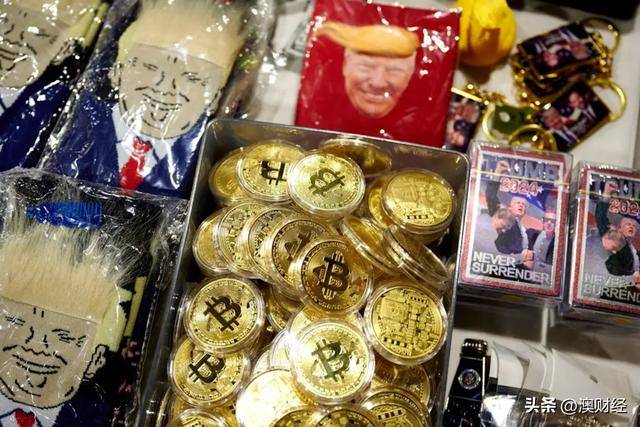
黄金不香了?澳洲资金大举买入比特币!
Sou Hu Cai Jing· 2025-06-02 12:12
Group 1 - Australian investors are increasingly allocating funds to Bitcoin over gold, indicating that Bitcoin is being viewed as a hedge and asset protection tool amid market volatility caused by Trump's trade policies [1][3] - In May, Bitcoin's price surged over 10%, reaching a historical high of $111,980 (approximately 174,000 AUD), benefiting from favorable regulations and macroeconomic uncertainties [3] - The inflow into Australian Bitcoin ETFs in May reached 87.3 million AUD, significantly surpassing the 1.5 million AUD inflow into gold ETFs [1][3] Group 2 - The U.S. market shows a more pronounced trend of fund allocation, with Bitcoin ETFs attracting over $9 billion (approximately 139 billion AUD) in the first five weeks of May, while gold ETFs experienced an outflow of $2.8 billion [3][4] - Investors are beginning to view Bitcoin as an independent asset class, with decreasing correlation to traditional risk assets like tech stocks, indicating its strengthening position as an "independent allocation asset" [5][6] - Gold's price has stabilized, with a recent report of $3,313 per ounce, slightly below its historical high of $3,500, while Bitcoin's status as an alternative asset is rising due to waning trust in traditional safe-haven assets [4][5]