
资产配置策略

Search documents
刘纪鹏喊话“老登”:振兴中国不能靠白酒,资本市场必须拥抱高科技
Xin Lang Zheng Quan· 2025-09-25 08:21
Core Viewpoint - The discussion emphasizes the need for a shift in investment strategies towards high-tech sectors rather than traditional sectors like liquor, highlighting the limitations of relying solely on alcohol for economic growth [1] Group 1: Investment Strategy - Liu Jipeng, a professor at China University of Political Science and Law, advocates for high-tech investments, stating that relying on liquor for revitalizing China's economy is insufficient [1] - The liquor sector has dominated the market for the past five years, but there is a call for diversification into high-tech investments [1] - High-tech investments are acknowledged to carry higher risks, and investors are encouraged to be selective and rational in their participation [1] Group 2: Market Sentiment - A recent incident involving a senior investor questioning the profit forecasts of a leading optical module company led to a backlash from younger analysts, highlighting a generational divide in investment preferences [1] - The term "Old Deng" has emerged to describe investors who prefer high-dividend sectors like liquor and energy while being conservative towards technology growth stocks [1]


英银利率不变支撑英镑 但降息预期仍存
Jin Tou Wang· 2025-09-22 02:52
Group 1 - The Bank of England has decided to maintain the current interest rate level, reflecting its policy dilemma between a weak labor market and persistent inflation pressures [1] - Early initiation of a rate-cutting cycle could further elevate inflation expectations, while maintaining high rates for an extended period may suppress consumption and investment, increasing economic downturn risks [1] - For ordinary investors, this policy stance suggests that interest rates on savings products may remain stable in the short term, but mortgage rates will stay high, making repayment pressures difficult to alleviate [1] Group 2 - The GBP/USD exchange rate shifted from an upward trend to a downward trend, with the "Evening Star" pattern prompting a drop below 1.3500, increasing the likelihood of testing the convergence of the 100-day and 50-day moving averages around 1.3477/63 [2] - A daily closing price below this convergence would clear the path for testing the low of 1.3332 from September 3, while a closing price above 1.3600 could reinforce the rationale for challenging the annual peak of 1.3788 [2]
现金类理财近6月平均七日年化全线低于3%,最低不到1%
2 1 Shi Ji Jing Ji Bao Dao· 2025-09-10 08:17
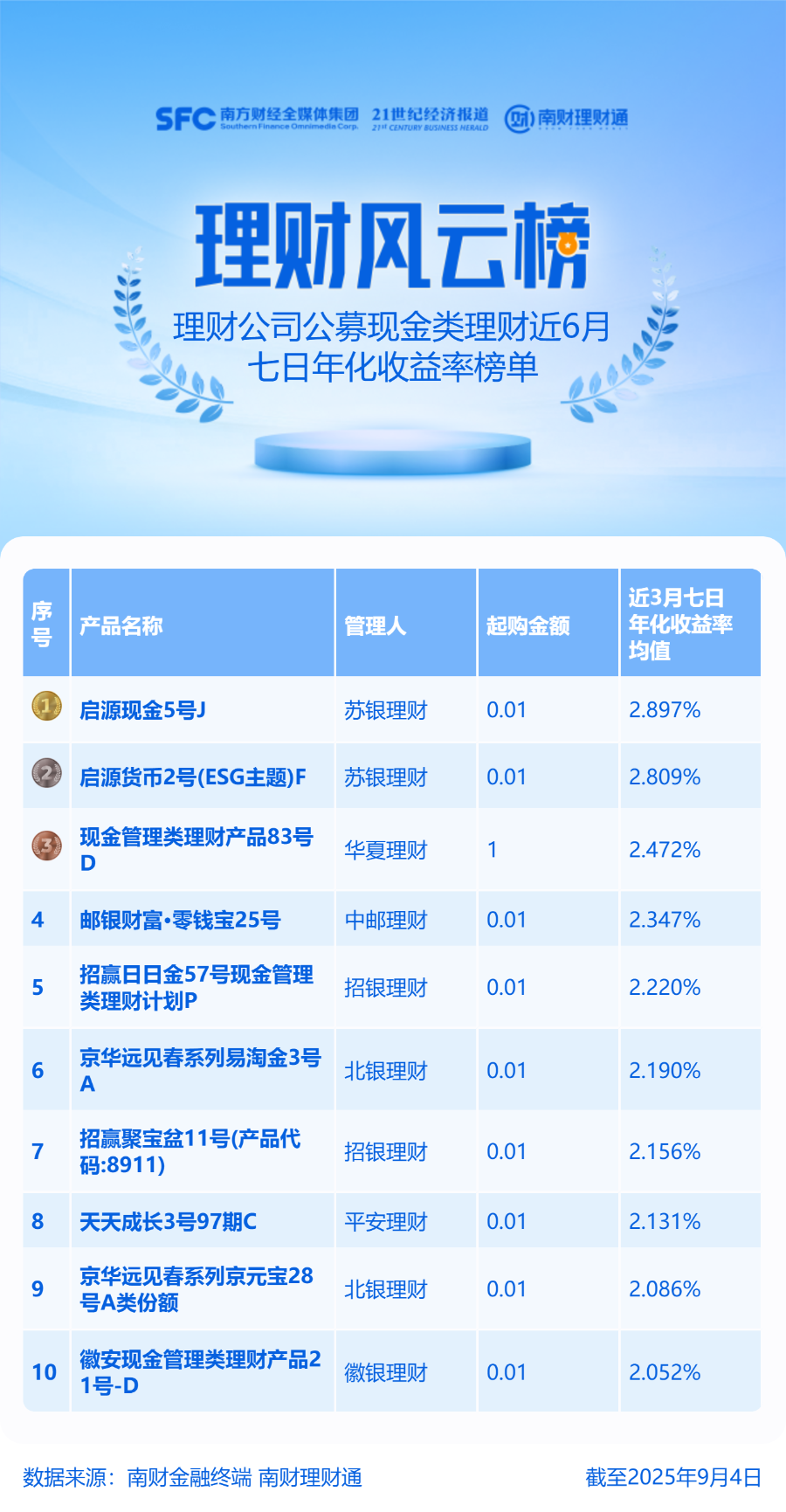
Overall Performance - The average seven-day annualized yield of RMB public cash management products is 1.447% as of September 4, 2025, while USD cash products have an average yield of 3.942% [5] - There are a total of 4,922 RMB public cash management products, with only 55 products (1.1%) yielding over 2% in the past six months [5] - 1,561 products (31.7%) fall within the yield range of 1.5% to 2%, while three products yield below 1% [5] Highlighted Product Analysis - The top three products in terms of average seven-day annualized yield over the past six months are "Qiyuan Cash No. 5 J" and "Qiyuan Currency No. 2 (ESG Theme) F" from Su Yin Wealth Management, and "Cash Management Product No. 83 D" from Huaxia Wealth Management, with yields of 2.897% and 2.809% respectively [6] - "Qiyuan Currency No. 2 (ESG Theme)" focuses on low-risk assets such as bank deposits and repos, utilizing moderate leverage and a tiered strategy to maintain static returns amid declining market interest rates [6] - Huaxia Wealth Management's "Cash Management Product No. 83 D" capitalizes on high bond yields and employs leverage strategies while maintaining liquidity through cash and easily convertible assets [6]
中信证券上半年净利137亿,分红43亿,直面券商并购潮挑战
Sou Hu Cai Jing· 2025-08-30 03:21
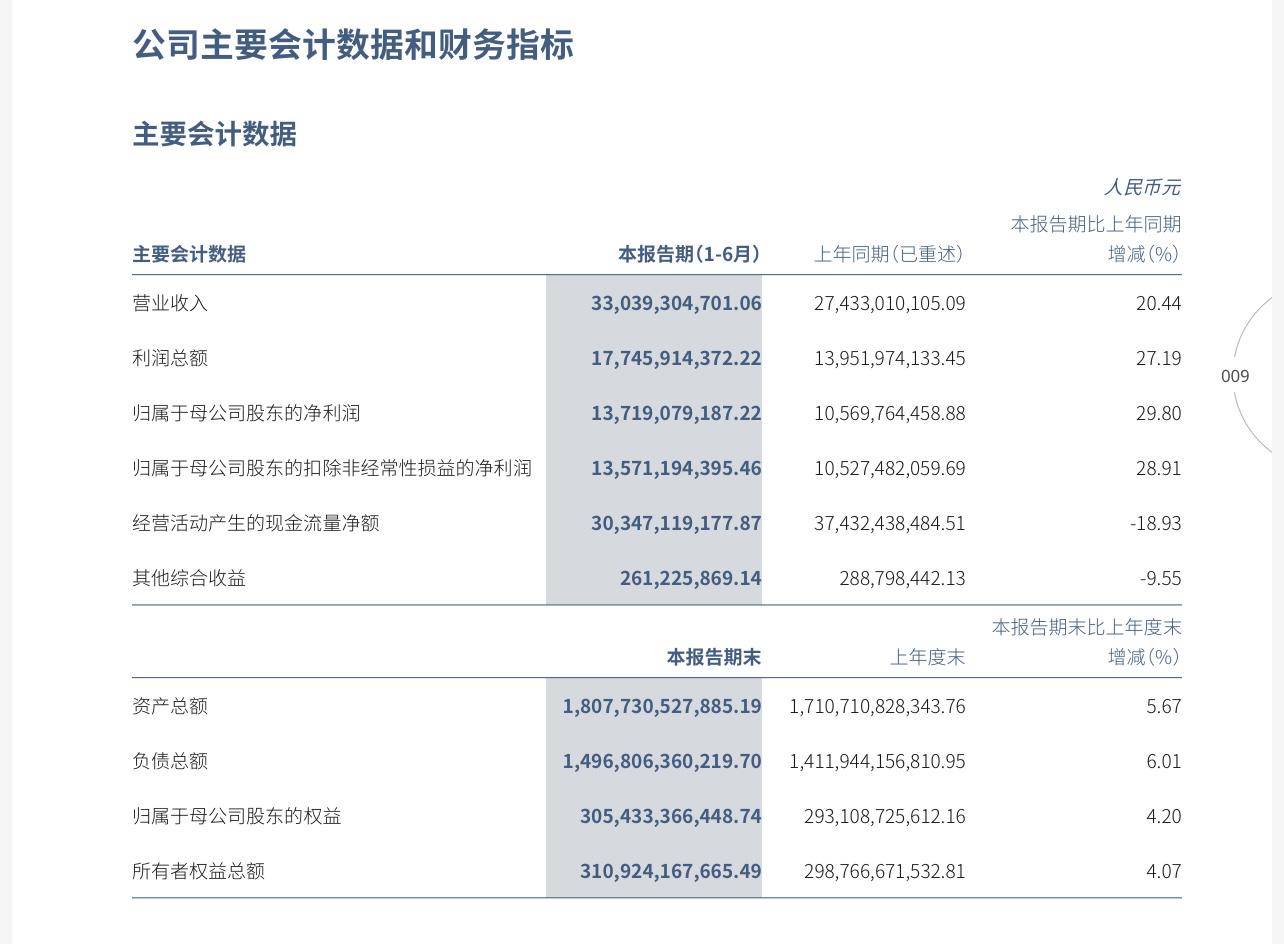
Core Insights - CITIC Securities reported a record high net profit of 13.72 billion yuan for the first half of 2025, achieving over 20% year-on-year growth in both revenue and profit, leading the brokerage industry in performance [1][2] - The company emphasized its commitment to international expansion, with international business revenue increasing by 53% and net profit rising by 66% compared to the previous year [2][3] Financial Performance - Total revenue for the first half of 2025 reached approximately 33.04 billion yuan, up from 27.43 billion yuan in the same period last year, marking a growth of 20.44% [2][4] - The net profit attributable to shareholders was 13.72 billion yuan, a significant increase from 10.57 billion yuan year-on-year, reflecting a growth of 29.83% [2][4] - Major business segments showed strong performance: - Brokerage business revenue was 9.32 billion yuan, up 21.11% - Asset management revenue reached 6.02 billion yuan, increasing by 22.32% - Securities investment revenue was 14.50 billion yuan, growing by 8.15% - Securities underwriting revenue was 2.05 billion yuan, up 19.16% [1][4] Strategic Outlook - The company addressed investor concerns regarding potential mergers and acquisitions, stating that it will maintain strategic focus and enhance competitive advantages despite increasing market pressures [3] - In terms of asset allocation strategy, CITIC Securities plans to actively manage market risks and deepen forward-looking research to ensure stable returns [3] - The company also highlighted the importance of optimizing risk control systems in securities investment, aiming to enhance proactive risk assessment [3] Dividend Announcement - CITIC Securities announced a cash dividend plan of 2.9 yuan per share, totaling 4.30 billion yuan, which represents 32.53% of the net profit for the period, aimed at boosting investor confidence [6]

个人消费贷贴息政策出台,可关注哪些机会?
Datong Securities· 2025-08-18 13:06
Market Review - The equity market indices continued to strengthen, with the ChiNext Index showing the largest increase of 8.58% [4] - The bond market saw an increase in both short and long-term interest rates, with the 10-year government bond rising by 5.74 basis points to 1.747% [10] - The fund market experienced mixed results, with equity funds rising while medium and short-term pure bond fund indices declined [18] Equity Product Allocation Strategy - Event-driven strategies include focusing on the semiconductor sector due to the upcoming China Semiconductor Ecosystem Development Conference and the newly introduced personal consumption loan interest subsidy policy [21][20] - Asset allocation strategy suggests a balanced core plus a barbell strategy, emphasizing dividend and technology sectors [23] - Recommended funds include those focused on consumer and infrastructure sectors, as well as technology growth styles [23][27] Stable Product Allocation Strategy - The central bank's recent operations indicate a net withdrawal of 414.9 billion yuan, maintaining a balanced liquidity environment [29] - Economic data for July shows a year-on-year industrial value-added growth of 5.7% [29] - Social financing data indicates a total stock of 431.26 trillion yuan, with a year-on-year growth of 9% [29] Key Focus Products - Recommended products include short-term bond funds like Nord Short Bond A and Guotai Li'an Medium and Short Bond A, as well as funds benefiting from convertible bonds and equity market opportunities [2][34]
在市场定价为0的时候,大规模关税冲击“这次来真的”?
Hua Er Jie Jian Wen· 2025-07-18 09:25
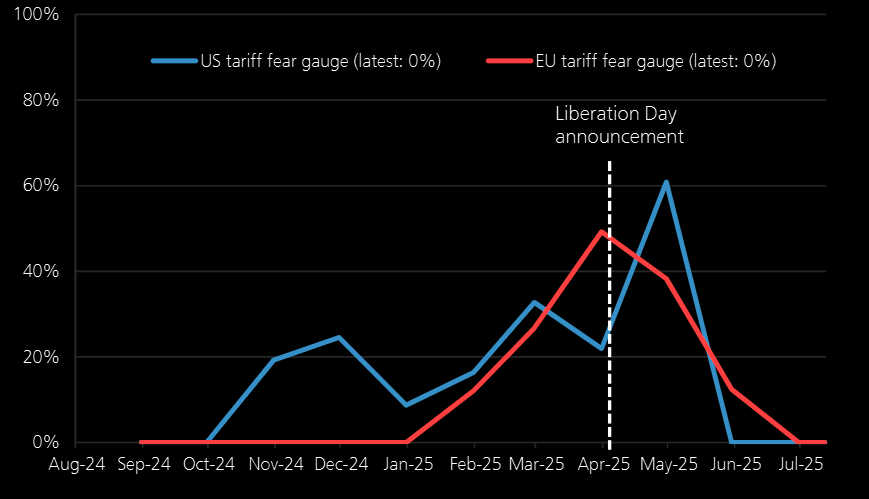
Core Insights - The market's reaction to Trump's tariff policies has been muted, with the UBS Tariff Panic Index currently at zero [1] - Deutsche Bank warns that this optimism may be overly naive, as Trump has historically supported tariff policies and recent inflation data may provide the government with justification for implementing large-scale tariffs [3][10] - If tariffs are implemented as outlined in recent communications, the average tariff rate in the U.S. could rise from the current 10% to a median level of 20% [3] Group 1: Market Conditions - The S&P 500 index is at a historical high, with a forward P/E ratio close to 24, significantly above its long-term average, contrasting sharply with potential tariff risks [4] - The market seems to believe that the tariff policies planned for August 1 may be weakened or delayed [6] - The correlation between the dollar and trade uncertainty has shifted, indicating a potential misjudgment of risk, as the dollar has recently shown a positive correlation with trade uncertainty [6] Group 2: Inflation and Tariff Implications - Recent U.S. inflation data has consistently fallen short of expectations for five months, marking the longest streak in two decades, which may bolster government confidence in imposing tariffs [10] - The report raises concerns about whether the government might view the current stable market environment as a backdrop for imposing unexpected large-scale tariffs [13] - If large-scale tariffs are enacted, the dollar may weaken, and foreign exchange market volatility is expected to rise significantly [14]

诺伟:下半年市场将面临双重压力 需重新审视资产配置策略
Zhi Tong Cai Jing· 2025-07-10 11:12
Core Viewpoint - Nuveen anticipates that the second half of 2025 will face dual pressures of economic slowdown and policy uncertainty, prompting investors to reassess asset allocation strategies focusing on robust fundamentals, defensive characteristics, and spread advantages to enhance return potential and mitigate risks [1][2] Global Economic Outlook - The global investment committee of Nuveen expects potential interest rate cuts by the Federal Reserve in September and December, but inflation driven by tariffs may lead to a pause in easing [1] - The European Central Bank is expected to pause after previous rate cuts, while the Bank of Japan is likely to raise rates once [1] Asset Allocation Strategy - Nuveen recommends focusing on assets driven by spreads and reducing reliance on risk-free rates, with municipal bonds attracting long-term investors due to a steep yield curve [1] - The real estate market is gradually recovering after two years of stagnation, with strong demand observed in medical office spaces, grocery retail properties, and affordable housing [1] Stock Market Insights - Large U.S. tech companies are benefiting from the expansion of AI, increased demand for data centers, and power generation, leading to an upgrade in market positioning [1] - Defensive sectors such as finance and infrastructure are highlighted, while European equities present long-term value; emerging markets are becoming less attractive due to trade policy impacts [1] Investment Strategies - Nuveen advises investors to adopt a broadly diversified and actively managed strategy to navigate policy changes and economic slowdowns [2] - Preferred loans and securities are favored for their attractive valuations and solid credit quality, while investment-grade corporate bonds are viewed less favorably due to narrowing spreads [2] Real Estate Sector Focus - Nuveen continues to explore opportunities arising from demographic and educational diversity, with a positive outlook on medical, industrial, and residential sectors [2] - The office market faces challenges, with vacancy rates expected to improve but recovery still requiring time; real estate bonds currently offer valuation advantages over real estate stocks [2] Infrastructure Investment Preferences - Nuveen prefers public-private projects, particularly in electricity, utilities, and energy storage investments [2] - Agricultural land assets are seen as an inflation hedge, although returns are expected to slow in 2025, especially for grain crops affected by tariff pressures [2]
估值整改引银行理财“抛长买短”债券 回归产品净值化“道阻且长”
经济观察报· 2025-07-06 09:13
Core Viewpoint - The article discusses the challenges faced by bank wealth management subsidiaries in optimizing asset allocation strategies due to regulatory changes that require a return to net value-based pricing for financial products, making it difficult to achieve high returns, stable valuations, and high liquidity simultaneously [1][4][11]. Regulatory Changes - Regulatory authorities have mandated the cessation of self-built valuation models used by bank wealth management subsidiaries, which previously smoothed net value fluctuations of financial products [3][11]. - The new regulations require the use of standardized valuation methods, such as those provided by the China Bond Pricing Center and the China Securities Index [11][12]. Impact on Investment Strategies - In response to regulatory changes, banks are reducing their holdings of long-term bonds and low-rated credit bonds, opting instead for short-term, high-rated bonds to minimize net value fluctuations [4][18]. - The overall bond investment strategy is shifting towards more liquid assets to enhance the stability of financial product valuations [18][22]. Investor Education - Increased pressure on investor education has been noted, as banks must help clients understand the implications of net value fluctuations and avoid panic selling during periods of volatility [2][10]. Market Dynamics - The article highlights a significant decline in the net buying of long-term credit bonds by bank wealth management subsidiaries in June, indicating a strategic shift in response to market conditions and regulatory pressures [22]. - The overall bond yield environment has also influenced banks to diversify into other high-dividend investment products to maintain overall returns [19][22].

估值整改引银行理财“抛长买短”债券 回归产品净值化“道阻且长”
Jing Ji Guan Cha Wang· 2025-07-03 05:46
Core Viewpoint - The regulatory changes regarding self-built valuation models for bank wealth management subsidiaries have increased the pressure on investor education and have led to significant adjustments in investment strategies to manage net asset value fluctuations [2][6][12]. Group 1: Regulatory Changes and Impact - Regulatory authorities have prohibited bank wealth management subsidiaries from using self-built valuation models, requiring them to adopt standardized valuation methods [6][4]. - The implementation of these regulations aims to restore the fundamental nature of net asset value and ensure fair competition among wealth management institutions [6][4]. - As of the end of May, the average annualized yield of open-ended fixed-income wealth management products decreased to 2.84%, down 0.35 percentage points from April, reflecting the impact of market adjustments [2]. Group 2: Investment Strategy Adjustments - Wealth management subsidiaries are shifting their investment strategies by reducing long-term bonds and low-rated credit bonds while increasing short-term high-rated bonds to mitigate net asset value fluctuations [3][11]. - The need to comply with regulatory requirements has led to a significant reduction in the net buying of long-term credit bonds, with net purchases dropping from 27 billion to 9 billion for 7-10 year bonds in June [13]. - The overall bond yield decline has prompted wealth management subsidiaries to explore alternative high-dividend investment options such as REITs and preferred stocks to enhance overall product returns [12]. Group 3: Challenges in Valuation and Investor Education - The self-built valuation models previously used by wealth management subsidiaries aimed to smooth out net asset value fluctuations but have been deemed unfair and misleading [5][4]. - Investor education has become increasingly important as fluctuations in net asset values have led to irrational redemption behaviors among investors [2]. - Wealth management subsidiaries are now required to closely monitor and adjust their asset allocation strategies in response to market conditions to maintain investor confidence [11][10].

政策支持高端医疗器械创新发展,可关注哪些机会?
Datong Securities· 2025-06-23 13:46
Market Overview - The equity market experienced a collective decline last week, with the North Certificate 50 index dropping the most at 2.55% [5][6] - The bond market saw a collective decline in both short and long-term interest rates, with the 1-year government bond rate decreasing by 4.50 basis points to 1.355% [9][13] - The fund market reflected the equity market's downturn, with the偏股基金指数 down 1.65% and the二级债基指数 down 0.07% [15][16] Event-Driven Strategy - The National Medical Products Administration has initiated support for the innovation of high-end medical devices, highlighting investment opportunities in funds such as 南方医药保健 A (000452), 鹏华品牌传承 (000431), and 信澳健康中国 A (003291) [17] - Xiaomi's first SUV is set to launch, presenting potential investment in 工银新能源汽车 A (005939), 嘉实港股互联网产业核心资产 A (011924), and 鹏华新能源汽车 A (016067) [17][18] - The World Mobile Communications Conference held in Shanghai showcased advancements in robotics, indicating investment potential in 华夏智造升级 A (016075), 嘉实制造升级 A (018240), and 鹏华碳中和主题 A (016530) [19] Asset Allocation Strategy - The report suggests a balanced core and barbell strategy, focusing on dividend and technology sectors, with recommended funds including 安信红利精选 A (018381) and 嘉实港股互联网核心资产 (011924) [20][21] - The report emphasizes the value of high-dividend assets due to the low interest rate environment and government policies encouraging dividends [20] - The technology growth sector is highlighted for its investment value, driven by national policy support and the global trend towards artificial intelligence [21] Stable Product Allocation Strategy - The central bank's recent actions indicate a net injection of 102.1 billion yuan, maintaining a balanced and loose funding environment [24] - The report notes that the LPR remained unchanged at 3.0% for the 1-year rate, aligning with market expectations [25] - Economic data from May showed better-than-expected performance, with industrial value-added growth at 5.8% year-on-year [25] Key Focus Products - Recommended funds include 诺德短债 A (005350) for short-term strategies and 安信新价值 A (003026) for a bond-equity hybrid approach [30][29]