运力过剩

Search documents
期货市场上演过山车!集运指数反转领涨,红海危机搅动全局!
Sou Hu Cai Jing· 2025-12-02 08:41
Core Viewpoint - The recent dramatic fluctuations in the domestic commodity futures market, particularly the container shipping index (European line), reflect significant changes and uncertainties in the global shipping industry, driven by market sentiment, supply-demand imbalances, and geopolitical risks [1][4][17]. Market Fluctuations - The container shipping index (European line) experienced a remarkable reversal, rising over 6% after a nearly 8% drop the previous day, indicating a recovery in market sentiment [1][4]. - The trading volume showed a reduction, with over 2,800 contracts being closed on the main contract, suggesting a shift in market dynamics [4]. Shipping Market Dynamics - The global container shipping market is undergoing a profound transformation, highlighted by the split between Maersk and MSC, leading to a new "3+1" alliance structure that affects route planning, capacity allocation, and pricing strategies [6][7]. - The total capacity of the global container fleet has surpassed 33 million TEU for the first time, with an expected growth of 4.5% this year, exacerbating supply-demand imbalances [7][9]. Trade Imbalances - The trade imbalance has worsened, with North America's container imports nearly quadrupling its exports, increasing the imbalance ratio from 40-50% pre-pandemic to about 60% this year, raising operational costs and complexities [9]. Geopolitical Risks - The situation in the Red Sea has become a critical factor affecting European line freight rates, with recent attacks reigniting concerns and leading to increased operational costs for shipping companies [10][12]. - The geopolitical risks have forced ships to reroute, significantly increasing fuel costs and operational pressures, with predictions that these measures may continue into mid-next year [12]. Seasonal and Economic Factors - The year-end period, typically crucial for shipping companies to maintain prices, is showing signs of a "weak peak season" due to delayed shipments and overall weak global trade demand [13][15]. - Economic challenges in Europe, including high inflation and energy crises, are suppressing consumer demand, while U.S. tariff policies are adding pressure to global trade [15]. Future Outlook - Short-term market recovery is possible, with seasonal demand expected to rise, but long-term forecasts remain pessimistic, predicting a 45% drop in container shipping profits this year and a further 61% decline next year [15][17]. - If the Red Sea routes normalize by mid-next year, spot rates for shipping from Shanghai to Europe could fall to between $1,500 and $2,000 per container [15]. Conclusion - The volatility in the European line futures market mirrors the complexities of the global trade landscape, influenced by supply-demand dynamics, geopolitical tensions, and seasonal factors, indicating a shift towards a new normal in the container shipping market [17].

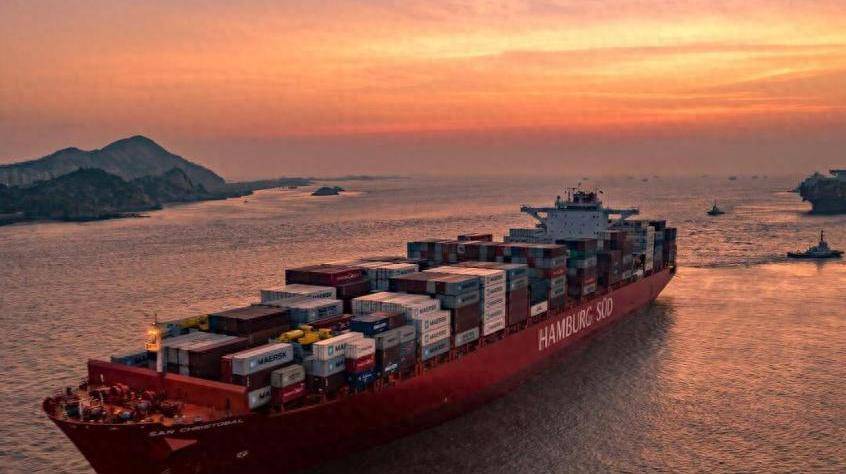
地中海航运半月内两度官宣涨价,市场担忧苏伊士运河复航预期恐致运力过剩并拉低运价
Mei Ri Jing Ji Xin Wen· 2025-12-01 15:33
Core Viewpoint - After three consecutive weeks of decline, China's export container shipping market has recently seen a slight increase of 0.7% in freight rates, with varying trends across different routes [1] Group 1: Freight Rate Trends - The freight rates on different routes have shown a mixed performance, with significant rebounds on the South America route and a recovery on the East America route, while the West America route continues to decline [1] - Mediterranean Shipping Company (MSC) announced a price increase for the Europe-Asia route, with a uniform freight rate of $2,975 per TEU for the first half of December, rising to $3,375 per TEU in the second half, marking a $400 increase for 20-foot containers [2] - As of November 28, the market freight rate from Shanghai to Mediterranean ports was $2,232 per TEU, reflecting an 8.6% increase [2] Group 2: Market Dynamics and Seasonal Factors - The end of November typically marks the beginning of a concentrated shipping period in Europe and the Mediterranean, driven by contract fulfillments and pre-arranged shipments for the Spring Festival [5] - The shipping volume on European routes is currently insufficient to support higher rates, leading some shipowners to offer discounted rates [5] - An increase in booking volumes is expected from late December, particularly on the Mediterranean route, due to previous capacity shortages and cargo backlogs [6] Group 3: Suez Canal and Capacity Concerns - Discussions are ongoing regarding the resumption of services through the Suez Canal, which could lead to an oversupply of capacity and downward pressure on freight rates [7] - The Suez Canal is expected to fully restore shipping volumes and revenue by 2026, with strategic agreements already in place between the Suez Canal Authority and major shipping companies [7][9] - The potential return to Suez Canal routes could result in an oversupply of approximately 1.5 million TEU, necessitating careful capacity management by shipping companies [9]

集运指数大跌近8%,如何看待未来的运力过剩?
对冲研投· 2025-11-25 07:15
Core Viewpoint - The shipping industry is expected to enter a downward cycle due to a significant delivery of new ships from 2026 to 2028 and a lack of growth in global trade demand, compounded by geopolitical factors that may affect shipping routes [6][7]. Group 1: Market Dynamics - The main driver of the shipping industry's cyclical nature is the balance between demand surges and supply contractions, leading to periods of prosperity followed by downturns as new ship orders flood the market [7]. - The outbreak of the Russia-Ukraine war and the Federal Reserve's aggressive interest rate hikes have contributed to a decline in global demand, marking the beginning of a downward cycle for the shipping industry after the highs of 2020-2021 [7][8]. - The anticipated delivery of new ships from 2023 to 2028 is projected to create a significant oversupply, with delivery volumes peaking at 3.88 million TEU in 2028, exacerbating the supply-demand imbalance [8][9]. Group 2: Supply and Demand Forecast - According to Linerlytica, the projected delivery capacities from 2023 to 2028 are 2.3 million TEU, 2.95 million TEU, 2.25 million TEU, 1.48 million TEU, 3.13 million TEU, and 3.88 million TEU, indicating a growing supply pressure in the latter years [8]. - The average age of ships being scrapped has increased to 29 years since 2021, which is significantly higher than the historical average of 20-25 years, indicating reluctance among shipowners to retire older vessels despite high profits [8][9]. - The expected growth rate of throughput volume is around 2% from 2026 to 2028, while fleet size is projected to grow by up to 10%, leading to a widening gap between supply and demand [8][9]. Group 3: Market Analysis and Projections - Sea Intelligence's analysis suggests that the peak of excess capacity will occur in 2027, with the overcapacity levels being higher than in 2023 but lower than in 2009 [9][14]. - The comparison of two methods for estimating supply-demand dynamics indicates that the excess capacity in 2027-2028 may be less severe than in 2023, but still significant enough to suggest a potential decline in global shipping rates by approximately 300 points [15]. - The concentration ratio (CR10) in the global shipping industry has increased from less than 60% before 2008 to 84% in 2024, indicating that shipping companies have gained more control over freight rates despite the impending downturn [16].

美国年末进口预计大幅放缓 是疲软“新常态”还是暂时调整?
Di Yi Cai Jing· 2025-11-23 10:29
Core Viewpoint - The U.S. is expected to see a significant slowdown in import volumes during the traditional holiday shopping season, with predictions of declines in container imports for November and December compared to the previous year [1][2]. Import Volume Trends - The National Retail Federation (NRF) forecasts a decline of 14.4% and 17.9% in container imports for November and December, respectively [1]. - Vizion's real-time monitoring indicates a projected year-on-year drop of approximately 16.6% in December imports [1]. - C.H. Robinson predicts container import declines of 19.7% and 20.1% for the last two months of the year [1]. Demand and Economic Outlook - There are concerns about the weak demand in the U.S. market, with specific categories like furniture and toys showing significant declines in imports [1][2]. - The CEO of Vizion expressed deep concerns about the future of U.S. goods trade, suggesting that low demand has become the "new normal" in the freight market [1]. - The DAT's truck freight volume index indicates a simultaneous decline in rates for various truck types, reflecting the overall state of the goods economy [2]. Inventory and Supply Chain Adjustments - Many North American retailers have adjusted their ordering and inventory strategies, completing orders earlier to avoid congestion during peak seasons [3]. - The Port of Los Angeles reported a 6.3% year-on-year decrease in container volume for October, with expectations of further declines in November and December [3]. Capacity and Pricing Outlook - Container utilization rates have dropped from 100% to 91%, with a forecast of 2.19 million TEUs arriving in December 2025, down from 2.62 million TEUs the previous year [4]. - There are warnings of a potential long-term oversupply in shipping capacity, which could lead to significant adjustments in the freight market [5]. - Despite the current challenges, C.H. Robinson noted that shipping rates remain relatively high due to careful capacity management by shipping companies [5]. Future Projections - The Port of Long Beach's CEO anticipates a slight increase in imports before the Lunar New Year in February, but acknowledges the uncertainty in economic data [6]. - Overall, there is an expectation for container volumes to approach last year's record of 9.6 million TEUs, with moderate growth projected for 2026 depending on economic performance and tariff policies [6].
四大航运巨头三季度业绩齐现“量增利减”
Xin Hua Cai Jing· 2025-11-16 16:58
Core Viewpoint - Major international shipping companies have reported an increase in cargo volume but a decrease in profits for the third quarter, leading to adjustments in future performance expectations across the industry [1][5]. Financial Performance - Maersk Group reported third-quarter revenue of $14.2 billion, a year-on-year decrease of 9.9%, with net profit down over 60% [3]. - CMA CGM Group's revenue for the third quarter was $14.04 billion, with a net profit decline of 72.6% compared to the previous year [3]. - COSCO Shipping Holdings (中远海控) saw a 20.42% year-on-year decline in revenue for the third quarter, with net profit down 55.14% [4]. - Hapag-Lloyd reported a revenue of $5.43 billion for the third quarter, with a significant net profit drop of 85.5% to $160 million [4]. Cargo Volume and Market Dynamics - Despite profit declines, shipping companies experienced growth in cargo volumes, with Maersk reporting a 7% increase in loading volume and a stable capacity utilization rate of 94% [4]. - Hapag-Lloyd's transport volume increased by 9.1% in the first three quarters, while COSCO Shipping Holdings reported a 6.01% increase in container shipping volume [4]. Reasons for Profit Decline - The primary reasons for profit shrinkage are attributed to falling freight rates and rising cost pressures, including fuel, labor, and port fees [4]. - The shipping market's supply-demand dynamics have led to a decrease in market freight rates, impacting operational efficiency [4]. Industry Outlook - Shipping companies are adopting a cautious outlook and adjusting their performance targets, with Maersk revising its 2025 financial guidance to reflect an expected global container market growth rate of approximately 4% [5]. - Hapag-Lloyd has lowered its profit forecast for 2025, indicating a shift in focus from "price determines revenue" to "efficiency determines revenue" due to anticipated capacity increases and weakening market demand [6].


异动点评:现货遇冷,集运期货盘面持续下跌
Guang Fa Qi Huo· 2025-09-19 11:08
Report Summary 1) Report Industry Investment Rating - Not provided in the content 2) Core Viewpoints of the Report - The EC2510 main contract hit a new low again, closing at 1050.5 points today with a 6% decline [2] - The direct cause of the current decline is the continuous drop in spot - end prices, driven by increasing capacity and relatively weak supply [4] - In the short - term, the downward trend of spot prices remains strong, but the situation may improve after a period. The year - end peak - season price increase this year may be more conservative than last year [6] 3) Summary by Related Catalogs Today's Market - The EC2510 main contract hit a new low, closing at 1050.5 points with a 6% decline [2] Trading Logic - The direct cause of the decline is the continuous drop in spot - end prices. Most Maersk 40GP quotes are in the range of 1400 - 1680 dollars/TEU, and other airlines' quotes are mostly 1600 - 1700 dollars/TEU, about 300 - 400 dollars/TEU lower than a week ago [4] - The overall capacity of the European line is 505,000, a year - on - year increase of 7.8%, showing an over - supply situation. Although the suspension of flights from wk40 - 42 this year is similar to last year, the overall capacity base is significantly higher [4] Fundamental Analysis - As of September 19, the future 6 - week freight quotes from Shanghai to European basic ports vary among different airlines. For example, Maersk's quotes are 840 - 1351 dollars/FEU and 1400 - 2162 dollars/FEU [5] - As of September 19, the global container total capacity is 33.05 million TEU, a 7.5% increase compared to the same period last year. The eurozone's August composite PMI is 51, and the US August manufacturing PMI is 48.7 [5] - On the demand side, the European economy recovers slowly. Affected by the energy crisis and high inflation, consumer confidence is low, and shipping orders have decreased significantly [5] Future Outlook - In the short - term, the downward trend of spot prices is still strong, but the situation may improve after a period. The year - end peak - season price increase this year may be more conservative than last year, and investors will be more cautious [6] - Investors should closely monitor booking situations and possible price - increase announcements from airlines. In the short - term, consider 12 - 10 spread arbitrage, and in the medium - term, consider the opportunity of the 12 - contract bottom - fishing rebound [6]
货量萎缩、运价暴跌,跨境商家旺季备货期遇冷?
Hu Xiu· 2025-08-07 09:42
Core Insights - The average spot freight rates for container shipping from Asia to the U.S. West Coast and East Coast have plummeted by 58% and 46% respectively since June 1, indicating a significant decline in shipping demand despite the route being one of the most profitable for shipping companies [1][2]. Group 1: Market Dynamics - Overcapacity in shipping capacity, tariff changes, and geopolitical trade route adjustments are key factors contributing to the current freight rate collapse [2]. - The uncertainty surrounding U.S.-China trade negotiations has intensified market volatility [2]. - A brief increase in freight rates was observed from late May to early June due to shippers rushing to export during a temporary tariff suspension, but rates quickly fell as supply outstripped demand [3]. Group 2: Industry Expert Opinions - Experts predict that the severe overcapacity in global shipping will continue to impact the market, with shipping companies likely to implement sailing suspensions to maintain freight rates [4]. - DHL noted that the surge in shipping volume from Asia to North America has led to a decline in spot freight rates, as carriers rushed to increase capacity but are now facing an oversupply issue [4]. - Analysts expect freight rates to steadily decline in the second half of the year due to the influx of more vessels into the market and ongoing uncertainties related to tariff policies and global demand [5]. Group 3: Seasonal Trends and Implications - Traditionally, domestic supply chains in China sign contracts for production between March and June to prepare for the peak order season during the year-end shopping events [7]. - The ongoing decline in U.S.-China shipping rates may lower logistics costs for merchants, but it also indicates a weak demand for maritime freight during the critical inventory preparation phase, suggesting a contraction in overall cargo volume compared to previous years [8]. - Route adjustments, such as avoiding the Red Sea due to tensions in Yemen, are expected to absorb excess shipping capacity, providing some support for freight rates [8][9]. Group 4: Future Outlook - Analysts suggest that the diversion of shipping routes could absorb over 10% of container shipping capacity, maintaining a healthy utilization rate of 86%-87% [9]. - Despite a decline in exports from China to the U.S., shipments to other regions are reportedly increasing, indicating a potential shift in trade patterns [9].
高关税冲击下亚洲至美航线运价下跌 企业加速布局新兴市场
2 1 Shi Ji Jing Ji Bao Dao· 2025-08-06 12:55
Core Viewpoint - The shipping market is experiencing a significant downturn in freight rates, particularly on routes from Asia to the United States, due to oversupply of shipping capacity and geopolitical trade tensions [1][2][3]. Group 1: Freight Rate Decline - From June 1 to August 1, average spot rates from Asia to the U.S. West Coast fell by 58%, while rates to the East Coast dropped by 46% [1]. - Rates for the U.S. West Coast routes decreased from $6,100/FEU to $2,000/FEU, and for the East Coast from $7,100/FEU to $3,000/FEU [1][2]. - The decline in freight rates is attributed to a significant oversupply of shipping capacity and reduced export volumes from Asia [1][3]. Group 2: Market Dynamics - Shipping companies are adjusting their operations by canceling or skipping planned port calls to stabilize freight rates [1][2]. - The rapid decline in rates may be a result of shipping companies misjudging market demand and aggressively increasing capacity on U.S. routes [3]. - The delivery of new ships has surged, contributing to the oversupply situation [3][5]. Group 3: Industry Response - Major shipping companies are facing challenges in predicting market conditions due to fluctuating trade situations and uncertainties in U.S. tariff policies [4]. - Companies are employing strategies such as reducing sailing frequencies to mitigate the impact of falling rates [4][5]. - The global shipping market is becoming increasingly consolidated, with alliances actively managing capacity to maintain price levels [5]. Group 4: Future Outlook - The consensus in the industry is that freight rates will continue to decline in the second half of the year due to high tariffs and ongoing oversupply [5][6]. - New emerging markets are showing strong growth potential, with container trade volumes from regions like Southeast Asia and South America increasing significantly [6][7]. - Companies are diversifying their market presence to reduce reliance on the U.S. market, with a focus on regions like Southeast Asia and Latin America for future growth [7].
关税扰乱下亚美航线运费两个月内腰斩,未来还会持续承压?
Hua Er Jie Jian Wen· 2025-08-05 13:17
Group 1 - The core viewpoint is that shipping rates from Asia to the US are under significant pressure due to oversupply and geopolitical factors, with rates dropping 58% for the West Coast and 46% for the East Coast since June 1 [1] - Xeneta warns that shipping rates from Asia to the US will continue to decline into 2025 due to persistent oversupply, with more new ships expected to enter the market in the second half of the year [1] - Major Japanese shipping companies have expressed uncertainty about the market outlook for the second half of the fiscal year due to increasing trade uncertainties [1] Group 2 - The oversupply of global shipping capacity is leading companies to cancel sailings to maintain freight rates, particularly as demand from Asia to the US weakens and European demand remains sluggish [2] - A temporary rebound in shipping rates in late May and early June was short-lived, primarily driven by companies rushing to ship goods before potential tariff increases [2] - The US domestic logistics system is currently operating smoothly, indicating a significant reduction in cross-border shipping volumes [2] Group 3 - Geopolitical conflicts in the Red Sea have inadvertently absorbed about 10% of global shipping capacity, providing some support for freight rates [3] - Some shipping companies are rerouting to avoid US ports due to tariffs, which extends travel times and reduces available shipping capacity [3] - While shipping volumes from Asia to the US are declining, there is a regional differentiation in freight rates, with rates to Europe and Latin America remaining relatively high [3]
航空反内卷,可以做什么?
Tianfeng Securities· 2025-08-01 06:15
Industry Rating - The industry investment rating is maintained as "Outperform the Market" [1] Core Insights - The aviation industry has incurred significant losses, totaling 329.5 billion yuan from 2020 to 2023, while the cumulative profit from 2010 to 2019 was only 278.2 billion yuan [2][8] - The root cause of the losses is identified as excess capacity, with a 15% increase in the number of aircraft from 2019 to 2024, while passenger traffic only grew by 11% [3] - Average ticket prices for the three major airlines have decreased by approximately 7% compared to 2019, leading to continued losses in 2024 and the first half of 2025 [11] Summary by Sections 1. Aviation Industry Losses - The aviation industry urgently needs to address its losses, with major airlines continuing to report significant deficits [6] - The average ticket price for the three major airlines in 2024 is lower than in 2019, contributing to declining profit margins [11] 2. Capacity and Demand Imbalance - The growth in the number of aircraft has outpaced the growth in passenger traffic, leading to an ongoing imbalance in supply and demand [15] - Aircraft utilization rates have not fully recovered to pre-2019 levels, although passenger load factors have exceeded those levels in 2025 [20] 3. Opportunities for Improvement - There is potential for the early retirement of older aircraft, which could help clear excess capacity and improve profitability [24][27] - The prices of second-hand aircraft have risen, providing an opportunity for airlines to sell or lease older planes for good returns [28] - The profitability of foreign airlines is higher than that of domestic airlines, suggesting a need for domestic airlines to consider external aircraft adjustments [36] 4. Domestic Aircraft Market - The delivery volume of domestic large aircraft is expected to increase significantly, with domestic aircraft projected to become the main source of growth in aircraft numbers [39]