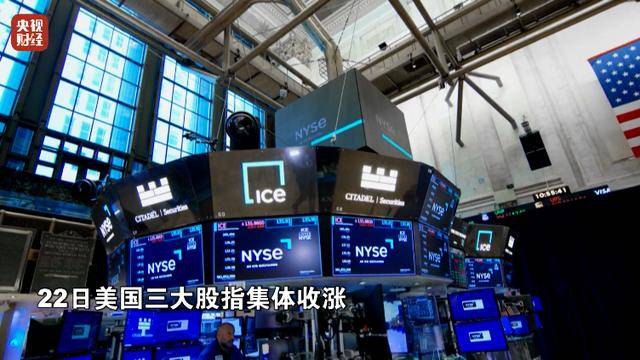
避险交易

Search documents
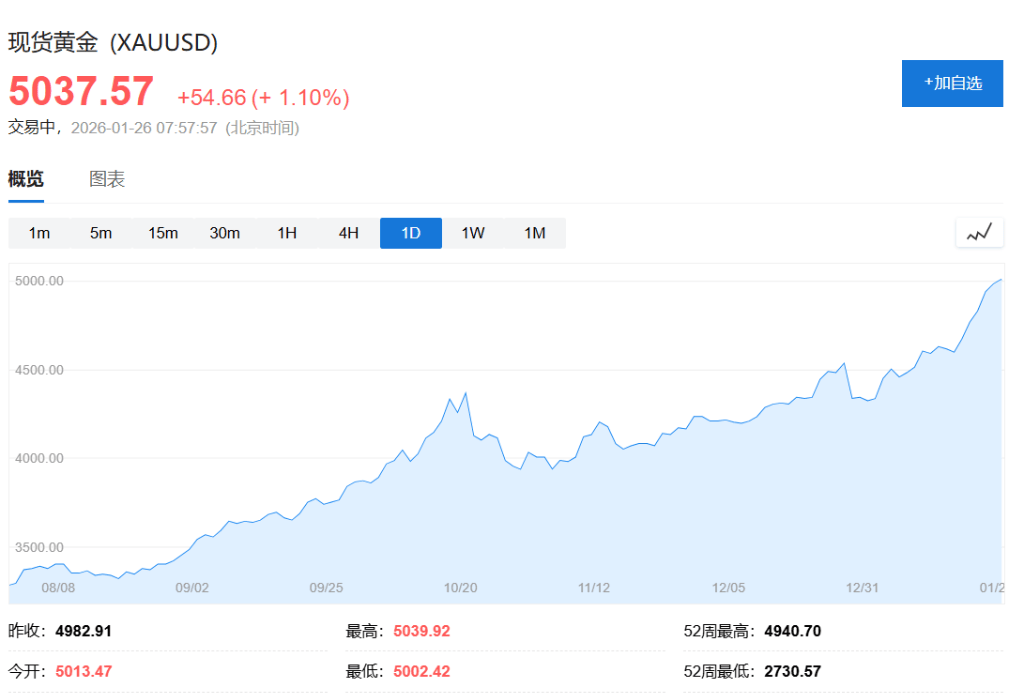
美日干预“箭在弦上”,美元走低日元急升,避险狂潮中黄金突破5000美元,美国天然气期货大涨16%
Sou Hu Cai Jing· 2026-01-26 00:27
Market Overview - Global markets experienced significant volatility on Monday due to geopolitical risks, the U.S. fiscal deadlock, and threats of currency market intervention, leading to intense risk-off trading [1] - The market displayed extreme risk-averse characteristics, with a substantial influx of funds into precious metals as investor confidence in sovereign bonds and fiat currencies waned [1] Precious Metals - Spot gold rose over 1% during the day, reaching $5,037 per ounce, while spot silver briefly surpassed $106 per ounce, with an intraday increase of nearly 3% [1][2] - The recent surge in gold prices reflects deep-seated market fears, with gold prices doubling over the past two years and increasing by 15% this year alone [15] Currency Market - The Japanese yen rebounded sharply amid expectations of intervention, with the dollar index falling by 0.52% [1][6] - The dollar against the yen dropped by 0.89% to 154.32, currently trading around 154.77, while the euro against the dollar rose by 0.52% to 1.1888 [1][6] Risk Assets - Risk assets faced pressure, with Nikkei index futures initially down by 2.6%, Nasdaq futures dropping over 1%, and S&P 500 futures declining by 0.75% [1][11] - The probability of a U.S. government shutdown by January 31 has surged to 75%, driven by internal fiscal instability and recent events affecting budget negotiations [16] Natural Gas Market - U.S. natural gas futures prices surged by 16% due to a winter storm impacting the region, which is expected to increase heating demand [1][17]

1月21日收盘:美股收跌道指重挫870点 特朗普关税威胁引燃避险交易
Xin Lang Cai Jing· 2026-01-20 21:08
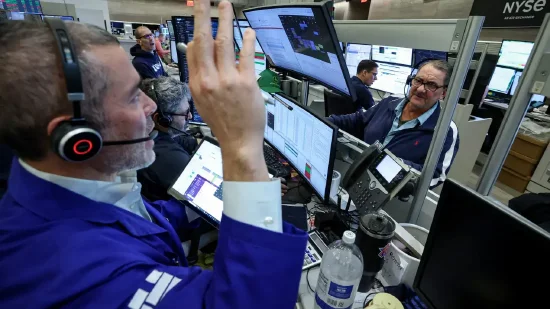
北京时间1月21日凌晨,美股周二大幅收跌,道指下跌870点,标普指数录得10月以来的最大跌幅。美国 总统特朗普再次重申有关攫取格陵兰的强硬言论,威胁提高对欧洲八国的关税。市场避险情绪盛行,资 金逃离美国资产,美债收益率飙升。丹麦养老金运营商称正退出美国国债市场。 美国总统特朗普发出的最新关税威胁导致资金逃离美国资产,美国国债收益率飙升,美元下跌。 特朗普威胁对多个欧洲国家提高关税后,美国、美国国债和美元汇率全线下跌。欧美围绕格陵兰问题的 对峙不断升温。黄金价格创历史新高。 特朗普周六在其社交媒体平台Truth Social上发帖宣布,八个北约成员国的对美出口将面临逐步升档的关 税,"直到就完全和彻底购买格陵兰达成协议为止。" 特朗普表示,关税将从2月1日起以10%开始征收,并在6月1日升至25%。 随后,有报道称法国总统埃马纽埃尔·马克龙不愿加入其所谓的"和平委员会(Board of Peace)",特朗 普威胁要对法国出口葡萄酒和香槟征收200%的关税。 特朗普还抨击了英国,称英国政府计划将查戈斯群岛(Chagos Islands,其中一岛是美英军事基地所在 地)主权移交给毛里求斯是"极其愚蠢的行为"。他表 ...
20260118周报:海外宏观和地缘风险升温,银价延续加速上涨:有色金属-20260118
Huafu Securities· 2026-01-18 10:46
Investment Rating - The report maintains an "Outperform" rating for the industry [4] Core Insights - The precious metals sector is experiencing an increase in prices due to rising macroeconomic and geopolitical risks, with silver prices accelerating [1][9] - Industrial metals are expected to see price fluctuations due to interest rate expectations and geopolitical tensions, particularly affecting copper and aluminum [2][11] - The lithium carbonate market is witnessing a significant price increase, although spot trading remains sluggish [3][17] - The rare earth market is seeing rapid price increases driven by supply tightening, but demand has not kept pace, leading to a divided sentiment in the industry [3][21] Summary by Sections Precious Metals - The report highlights that geopolitical tensions and macroeconomic factors are enhancing the safe-haven appeal of precious metals, particularly gold and silver [1][9] - Key stocks to watch include Zijin Mining, Zhongjin Lingbao, and others in the A-share and H-share markets [10] Industrial Metals - Copper prices are experiencing volatility due to macroeconomic disturbances and geopolitical risks, with domestic inventories reaching a ten-year high [11][15] - Aluminum prices are expected to remain stable in the short term, but demand is under pressure due to high prices and seasonal factors [15][16] New Energy Metals - Lithium carbonate production is slightly increasing, but overall market sentiment remains strong due to optimistic demand forecasts, particularly in the energy storage sector [17] - Key stocks in the lithium sector include Ganfeng Lithium and others [17] Other Minor Metals - The rare earth market is seeing price increases driven by supply constraints, particularly in recycled materials, but demand has not matched this growth [21] - Key stocks to monitor include Northern Rare Earth and others in the rare earth sector [21] Market Review - The overall non-ferrous metal index increased by 3.0%, outperforming the broader market [22] - Notable stock performances include Hunan Silver, which saw a 41.14% increase, while West Materials experienced a 16.96% decline [32] Valuation - The current PE ratio for the non-ferrous metal industry is 35.36, indicating potential for valuation increases in copper and aluminum sectors due to supply constraints and rising demand for green metals [37]
美联储风波引爆全球避险交易,XBIT强化链上金融引领加密新范式
Sou Hu Cai Jing· 2026-01-14 07:58
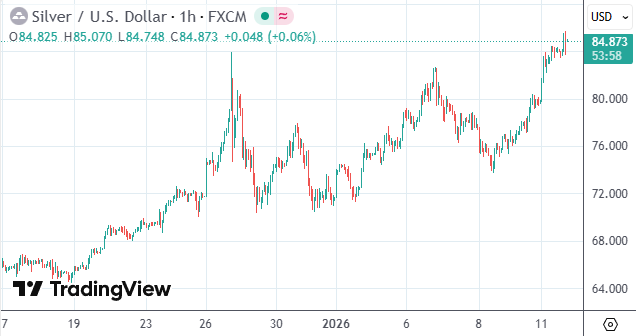
Core Viewpoint - The recent pressure from the Trump administration on the Federal Reserve has triggered a crisis of confidence in U.S. assets, leading to a surge in safe-haven investments, particularly in precious metals and decentralized cryptocurrency platforms like XBIT [1][3]. Precious Metals Market - Precious metals have seen significant price increases, with silver reaching a peak of $85.74 per ounce, up over 7%, and gold hitting $4620.34 per ounce, a 2.4% increase, both breaking historical records set in December 2025 [3]. - The U.S. dollar index fell nearly 0.5% to 98.81, while major U.S. stock indices declined, with the Dow Jones down 159 points (0.32%) and the S&P 500 and Nasdaq down 0.14% and 0.1% respectively [3]. Federal Reserve Independence - The core issue revolves around the independence of the Federal Reserve, with recent interventions by the Trump administration raising concerns among investors, leading to a "sell-off" of U.S. assets [5]. - The Federal Reserve Chairman Jerome Powell confirmed a criminal investigation against him, which has been perceived as an attack on the Fed's independence, prompting market panic [3][5]. Cryptocurrency Market Dynamics - The cryptocurrency market has experienced volatility, with Bitcoin dropping from $89,000 to around $87,000, resulting in significant liquidations of positions [6]. - XBIT, a decentralized exchange, has emerged as a stable option for investors seeking security and compliance amid market fluctuations, highlighting its role as a "stable anchor" in the crypto space [6]. XBIT's Strategic Positioning - XBIT prioritizes compliance and user asset security, adapting to global regulatory changes and ensuring transparency in operations, which has helped it avoid penalties faced by other exchanges [8]. - The platform is enhancing its decentralized trading mechanisms and exploring the tokenization of real-world assets (RWA), aligning with industry trends such as the SEC's approval for blockchain-based tokenized stocks [8]. - XBIT aims to strengthen its technology and compliance framework while expanding its product offerings to provide secure and efficient digital asset trading solutions [8].

STARTRADER :黄金白银齐破历史新高 美联储风波点燃避险潮
Sou Hu Cai Jing· 2026-01-13 05:48
Core Viewpoint - The precious metals market experienced a significant surge in January 2026, with gold and silver prices breaking historical peaks, driven by increased risk aversion amid rising policy uncertainty from the Federal Reserve and geopolitical risks [1][4]. Market Performance - On January 12, 2026, spot gold reached a milestone of $4,600 per ounce, with a daily increase of up to 2%, while spot silver surged nearly 5% to surpass $84 per ounce, both hitting historical highs [3]. - The domestic market mirrored this excitement, with the Shanghai silver futures contract hitting the daily limit with an increase of over 11%, and Shanghai gold rising more than 2% to a historical high of 1,031.30 yuan per gram [3]. - Silver's performance was particularly notable, with a monthly increase of 44.74%, and the Guotou Silver LOF seeing an annual increase of over 8%, with circulating shares reaching a record high of 3.139 billion [3]. Federal Reserve Dynamics - The escalation of internal conflicts within the Federal Reserve was a key driver of the risk aversion trade, highlighted by Chairman Powell's confirmation of a subpoena related to potential misuse of funds in a renovation project, which has raised concerns about the independence of monetary policy [4]. - The internal policy divisions within the Fed have become pronounced, with a notable split in the December 2025 meeting where 9 members supported a 25 basis point rate cut while 3 opposed it, marking the most significant decision split since 2019 [4]. Market Reactions - The surge in policy uncertainty has led to a re-evaluation of market pricing, prompting a flow of funds into gold and silver assets as the Fed's turmoil raises doubts about future policy directions [5]. - The U.S. dollar index weakened rapidly, and the attractiveness of U.S. Treasuries declined, while gold and silver emerged as safe-haven assets, supported by disappointing U.S. non-farm payroll data that fell short of expectations [5]. - In the first week of January, gold ETFs saw accelerated inflows, with net subscriptions exceeding 400 million shares, and global gold ETF assets under management surpassing $350 billion, the highest level since 2020 [5]. Diverging Market Sentiment - There is a clear divide in market sentiment regarding the sustainability of the gold and silver price surge, with optimistic views suggesting continued upward potential due to persistent policy uncertainty and geopolitical risks [6]. - UBS has raised its 2026 gold price forecast to $5,000 per ounce, while Bank of America predicts silver prices could soar to a range of $135 to $309 per ounce [7]. - Cautious perspectives highlight potential short-term pullback risks, with warnings from UBS about the possibility of profit-taking following rapid price increases and the potential for volatility due to regulatory measures [7]. Key Variables Influencing Future Trends - The progress of Powell's criminal investigation will significantly impact the trajectory of policy uncertainty, potentially exacerbating market risk aversion [8]. - Upcoming Federal Reserve meetings and U.S. inflation data will reshape interest rate expectations, while the flow of funds into gold ETFs and central bank purchases will influence the support for gold and silver prices [8]. - Global geopolitical developments and industrial demand, particularly for silver in sectors like photovoltaics and AI, will also play crucial roles in shaping market trends [8].
黄金白银双双狂飙刷新高,美联储风波引爆避险交易
Feng Huang Wang· 2026-01-12 22:54
Group 1 - Precious metals prices surged significantly, with spot gold and silver both reaching record highs, silver prices increased over 6% to $84.87 per ounce, and gold prices rose 2.4% to $4620.34 per ounce, breaking the previous record set in December 2025 [1] - The U.S. dollar index fell nearly 0.5% to 98.81, while silver mining stocks performed well, with Hecla Mining up 6.5% and Coeur Mining up 5.8% [3] - Analysts attribute the movements in precious metals and the dollar to increased attacks by the Trump administration on the Federal Reserve, leading investors to reduce their investments in U.S. assets [3] Group 2 - The dynamics surrounding the Federal Reserve highlight the uncertainty in the market, influenced by geopolitical factors, growth/interest rate disputes, and institutional risk premiums triggered by current headlines [4] - The Swiss bank's strategist noted that increased intervention against the Federal Reserve is a key positive factor for rising precious metal prices in 2026, with silver being more sensitive to interest rates and dollar movements [3]
美国介入委内瑞拉触发避险交易 黄金、白银领涨 美债反应温和
智通财经网· 2026-01-05 22:28
智通财经APP获悉,在美国对委内瑞拉采取军事行动后,全球市场周一出现明显的避险资金流动,黄金 与白银成为最大赢家。这一轮涨势也在一定程度上缓解了市场对贵金属在2025年大幅上涨、并可能在新 一年面临回调的担忧。 受地缘政治不确定性刺激,投资者加速配置贵金属,延续了近年来在美国军事行动、制裁政策背景下, 逐步寻找美元与美债替代资产的长期趋势。纽约商品交易所2月交割的黄金价格周一一度上涨近3%,至 约每盎司4450美元,此前黄金在2025年已累计上涨逾60%。下月交割的白银价格则大涨6.6%至75.50美 元/盎司,在2025年价格已实现翻倍的基础上继续走高。 相比之下,另一传统避险资产,美国国债反应则相对温和。2年期至30年期美债仅小幅反弹,收益率略 有回落。与此同时,衡量美元对六种主要货币表现的ICE美元指数下跌约0.1%,回吐了早盘涨幅。 加拿大多伦多AGF Investments固定收益与外汇主管Tom Nakamura表示,过去十余年,美国在制裁与军 事干预方面频繁"展示力量",引发了全球对过度依赖美元体系的担忧。"如果这种担忧持续扩大,市场 中寻求美元和美国国债替代品的力量也会随之增强。"不过他也强调 ...
金饰克价首破1400元!“中国黄金”APP,正式上线!
Sou Hu Cai Jing· 2025-12-23 12:01
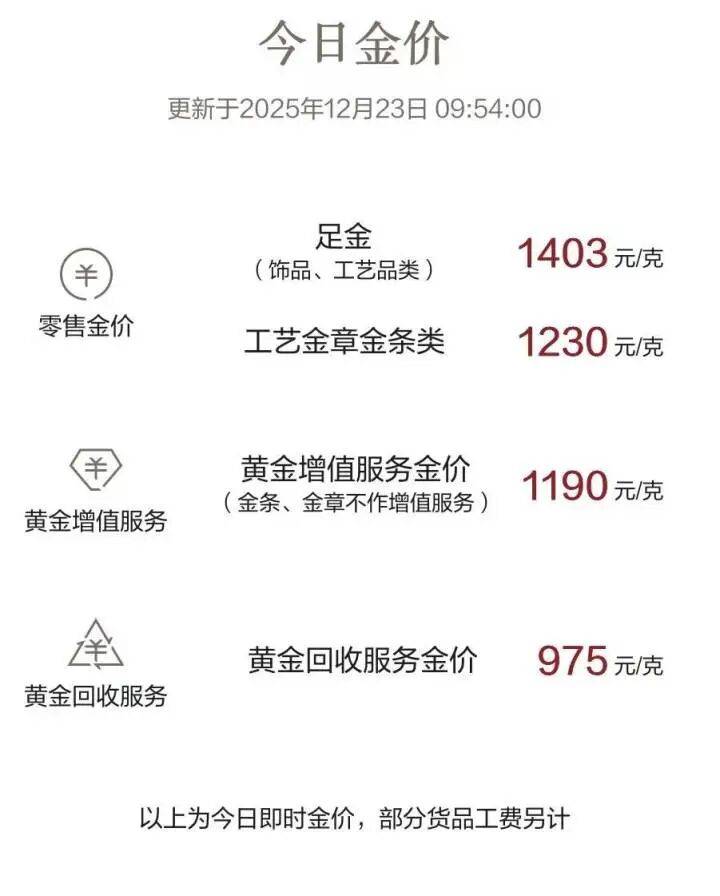
Group 1 - International gold prices continue to rise, with gold priced in RMB reaching a new high of over 1400 yuan per gram on December 23, with brands like Chow Tai Fook and Chow Sang Sang quoting 1403 yuan per gram [1][5] - The price of gold jewelry has increased by 35 yuan and 36 yuan per gram respectively [3] - The international gold price has significantly increased, breaking the $4400 per ounce mark, reaching a historical high in both intraday and closing prices [10][8] Group 2 - The market anticipates multiple interest rate cuts by the Federal Reserve next year, contributing to a surge in gold prices and active safe-haven trading due to geopolitical tensions in the U.S. and Venezuela [10][7] - Silver prices have also seen a strong upward trend, closing at a historical high of $68.565 per ounce, influenced by the same factors affecting gold [13][11] - Year-to-date, international spot gold has risen over 70%, with gold priced in RMB increasing by more than 64%, indicating a strong demand for gold amid a potential continuation of loose monetary policy by central banks [15]

集体飙涨,同日创新高!有人看傻眼,“下午刚买的,还没发货就赚了”
Sou Hu Cai Jing· 2025-12-23 08:04
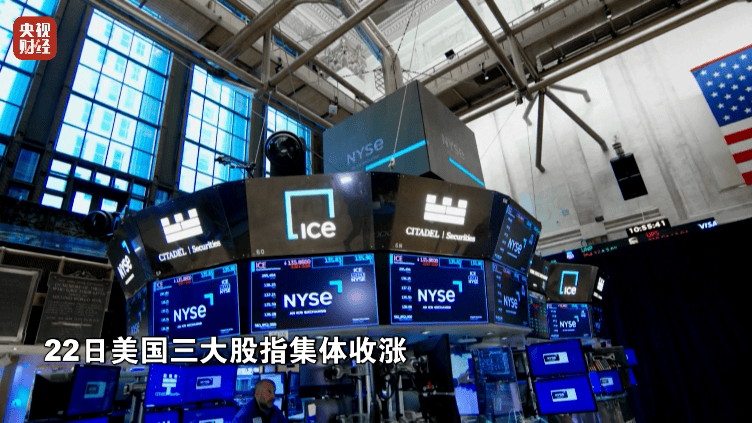
Group 1: Market Trends - The market anticipates multiple interest rate cuts by the Federal Reserve next year, leading to a significant rise in international gold prices, surpassing $4,400 per ounce, marking both intraday and closing historical highs [1][10] - The S&P 500, Dow Jones, and Nasdaq all experienced gains, supported by seasonal and technical factors, with the S&P 500 rising by 0.64% and the Nasdaq by 0.52% [2][4] - European stock indices collectively declined, with the UK, France, and Germany experiencing drops of 0.32%, 0.37%, and 0.02% respectively [6] Group 2: Commodity Prices - International oil prices rose significantly due to concerns over potential disruptions in global oil supply linked to the U.S.-Venezuela situation, with light crude oil futures closing at $58.01 per barrel, up 2.64% [8] - Silver prices continued their strong upward trend, closing at $68.565 per ounce, an increase of 1.59%, driven by expectations of interest rate cuts and rising industrial demand [13] Group 3: Consumer Behavior - The surge in gold prices has led to increased consumer interest, with a notable 30% rise in foot traffic at jewelry stores, although actual sales volume has not seen a significant increase [18][20] - Online precious metal markets are experiencing high activity, with reports of rapid price increases for silver products shortly after purchase, indicating strong demand [20][21]
金价、银价,同日创新高!
Sou Hu Cai Jing· 2025-12-23 02:38
Group 1: Market Reactions - The market is increasingly anticipating multiple interest rate cuts by the Federal Reserve next year, leading to a significant rise in international gold prices, which surpassed the $4,400 per ounce mark, setting both intraday and closing historical highs [1][11] - The U.S. stock market saw all three major indices rise, supported by seasonal and technical factors, with the Dow Jones up 0.47%, S&P 500 up 0.64%, and Nasdaq up 0.52% [2][4] - European stock markets experienced a collective decline, with the UK down 0.32%, France down 0.37%, and Germany slightly down by 0.02% [6] Group 2: Commodity Prices - Silver prices continued their strong upward trend, closing at a historical high of $68.565 per ounce, influenced by expectations of interest rate cuts, supply shortages, and increased investment and industrial demand [4][14] - Crude oil prices rose significantly due to concerns over potential disruptions in global oil supply stemming from tensions in Venezuela, with light crude oil futures closing at $58.01 per barrel, up 2.64%, and Brent crude at $62.07 per barrel, up 2.65% [8]