AI估值泡沫

Search documents
AI泡沫的“核心争议”:GPU真的能“用”6年吗?
华尔街见闻· 2025-11-19 23:45
Core Viewpoint - The article discusses the debate surrounding the economic lifespan of GPUs, which is crucial for understanding the profitability of major tech companies and the validity of current AI valuations. Bernstein's report suggests a depreciation period of 6 years for GPUs, arguing that this is economically reasonable, while critics like Michael Burry claim the actual lifespan is only 2-3 years, warning of potential accounting manipulation to inflate profits [1][11]. Group 1: Economic Viability of GPU Depreciation - Bernstein analysts argue that a 6-year depreciation period for GPUs is justified, as the cash costs of operating older GPUs are significantly lower than their rental prices [2][4]. - The report highlights that even 5-year-old NVIDIA A100 chips can still yield "comfortable profits," indicating that the depreciation policies of major cloud service providers are fair and not merely for financial embellishment [2][4]. - The analysis shows that the contribution profit margin for A100 chips can reach up to 70%, with operational costs being substantially lower than rental income, providing strong economic incentives for extending GPU usage [4][5]. Group 2: Market Demand and Old GPUs - The current market environment supports the value of older GPUs, as there is overwhelming demand for computing power, with AI labs willing to pay for any available capacity, even for outdated models [6][7]. - Industry analysts note that the A100's computing capacity remains nearly fully booked, suggesting that as long as demand stays strong, older hardware will continue to hold value [8]. Group 3: Depreciation Policies of Tech Giants - Google has a depreciation period of six years for its servers and network equipment, while Microsoft ranges from two to six years, and Meta plans to extend some assets to 5.5 years starting January 2025 [9][10]. - Notably, Amazon has reduced the expected lifespan of some servers and network equipment from six years to five years, reflecting differing views within the industry on hardware iteration speed [10]. Group 4: Criticism and Concerns - Michael Burry warns that tech giants are artificially inflating profits by extending the effective lifespan of assets, predicting that this accounting practice could lead to a profit inflation of $176 billion from 2026 to 2028 [11][12]. - Burry specifically points out that companies like Oracle and Meta could see their profits overstated by 26.9% and 20.8%, respectively, due to these practices [12]. - Previous warnings from Bank of America and Morgan Stanley indicate that the market may be underestimating the true scale of AI investments and the potential surge in future depreciation costs, which could reveal a lower actual profitability for tech giants than expected [14][15].







抛售潮席卷全球!资金抢筹这些ETF
Ge Long Hui· 2025-11-18 09:46
Core Viewpoint - The simultaneous decline of gold and U.S. stocks signals tightening market liquidity, as investors are forced to sell profitable assets to cover losses in other holdings [3][4]. Group 1: Market Performance - The S&P 500 index fell below the critical support level of 6725 points, marking its first close below the 50-day moving average in 139 trading days [2]. - Bitcoin dropped below $90,000, erasing its 30% gain for the year, while spot gold fell below $4020, marking four consecutive days of decline [3]. - Asian markets followed suit with significant declines, including a drop of over 3% in the Nikkei 225 and the KOSPI, while the Hang Seng Index fell 1.74% below 26,000 points [3]. Group 2: Liquidity Concerns - Market liquidity is tightening, as indicated by the near-zero usage of the Overnight Reverse Repurchase Agreement (ONRRP) and a reduction in bank reserves to $2.83 trillion, which is considered slightly tight [4]. - The Federal Reserve's recent actions, including a temporary meeting with major Wall Street dealers to address liquidity pressures in the repo market, highlight their awareness of the liquidity issues [4][6]. Group 3: ETF Inflows and Outflows - Despite a general outflow of 10.35 billion yuan from stock ETFs, there was a strong net inflow of 116.3 billion yuan into cross-border stock ETFs, particularly favoring the Hang Seng Technology Index and other innovative sectors [12]. - The top inflows for ETFs included the SGE Gold 9999 with a net inflow of 55.73 billion yuan, and the Sci-Tech 50 with 35.32 billion yuan [14]. Group 4: Notable Investment Moves - Billionaire investor Peter Thiel's fund significantly reduced its holdings in Nvidia by two-thirds and cut its Tesla shares by 76%, while initiating positions in Microsoft and Apple, reflecting concerns over the AI valuation bubble [16][17]. - Thiel's actions align with his previous warnings about the AI hype cycle, comparing it to the 1999 internet bubble, indicating a cautious stance towards current market valuations [18].



帮主郑重:美股大跌550点!科技股领跌,中长线该慌吗?
Sou Hu Cai Jing· 2025-11-18 04:08
Core Viewpoint - The recent decline in the U.S. stock market, particularly in technology stocks, is primarily driven by concerns over high valuations in the AI sector and changing expectations regarding Federal Reserve interest rate cuts [3][5]. Group 1: Technology Sector - The technology sector, especially AI stocks like Nvidia, has been a major driver of market gains, with Nvidia's stock price increasing nearly tenfold since November 2022 and becoming the first company to reach a market capitalization of $5 trillion [3]. - There are growing concerns that AI valuations may be inflated, leading to profit-taking ahead of Nvidia's upcoming quarterly earnings report [3]. - Despite the market's worries about AI valuation bubbles, significant investments are still being made in valuable companies, as evidenced by Berkshire Hathaway's recent purchase of Alphabet shares, which rose by 3.1% on that day [4]. Group 2: Federal Reserve and Economic Indicators - Initially, there was a strong expectation for a Federal Reserve interest rate cut in December, with probabilities exceeding 90% a month ago; however, recent comments from Fed officials have reduced this expectation to around 40% [3]. - The upcoming release of the September non-farm payroll data and the minutes from the Federal Reserve's October meeting are critical events that will influence future interest rate decisions and market sentiment [3][5]. Group 3: Investment Strategy - Long-term investors are advised to remain calm and not react impulsively to short-term market fluctuations, as a 550-point drop in a single day is part of normal market behavior after significant gains [5]. - Investors should focus on Nvidia's earnings report and the upcoming economic data to gauge the sustainability of AI demand and the direction of interest rate policies [5]. - Diversification is emphasized as a key strategy, encouraging investors to seek out companies with reasonable valuations and core competitive advantages rather than concentrating on a few popular stocks [5].

“AI泡沫”争议起——美国科技巨头“发债潮”与隐忧
Shang Hai Zheng Quan Bao· 2025-11-16 17:55
Core Viewpoint - The article discusses the emergence of an "AI bubble" in the U.S. market, driven by a surge in bond issuance by major tech companies, raising concerns about sustainability and potential risks in both equity and debt markets [1][2]. Group 1: AI Bond Issuance - The scale of bond issuance by U.S. AI companies has exceeded $200 billion this year, with Oracle issuing $18 billion in September and Meta issuing $30 billion in October, marking the largest corporate bond transaction of 2023 [2]. - The primary driver behind this bond issuance is the significant capital expenditure required for AI infrastructure investments, as companies' free cash flow is insufficient to cover these expenses after accounting for stock buybacks and dividends [2][3]. Group 2: Market Reactions - There is a stark contrast between stock and bond market reactions; for instance, Meta's stock fell by 11.33% on the day of its bond issuance, yet the bonds were oversubscribed with demand reaching approximately $125 billion, setting a record for U.S. corporate bond issuance [4]. - The bond market prioritizes debt repayment capacity, and companies like Meta have stable cash flows and low leverage, which enhances investor confidence in their bonds despite stock market volatility [4][6]. Group 3: Financial Health and Risks - Concerns are rising regarding the sustainability of capital expenditures, as Oracle's capital spending has significantly outpaced its free cash flow, leading to a downgrade in its debt rating [6]. - The trend of heavy reliance on external financing marks a shift from previous practices where tech giants primarily depended on strong operating cash flows for expansion [6][7]. Group 4: Future Outlook - The current trend of intensive bond issuance may become the norm, with expectations of continued high levels of debt issuance driven by ongoing investments in data centers, chip development, and application deployment [7][8]. - However, there is a potential for differentiation in the market, where financially stable companies may continue to attract investors, while those with weaker financial structures could face rising financing costs and potential liquidity issues [7][8].

全线崩溃!比特币、黄金、科技股无一幸免!
Sou Hu Cai Jing· 2025-11-15 11:40
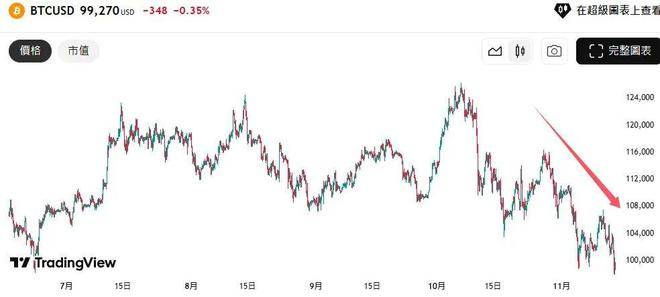
Group 1: Bitcoin Market Dynamics - Bitcoin has entered a confirmed bear market, having dropped over 20% from its historical high of $125,000, resulting in a market cap loss exceeding $450 billion [3] - On October 11, Bitcoin experienced a significant drop of 13% within 24 hours, leading to a total liquidation amount of $19.358 billion, affecting approximately 1.66 million traders [6] - Long-term holders have sold approximately 815,000 Bitcoins, marking the highest level of selling since 2024, as major investment funds and ETFs withdraw their positions [9] Group 2: Gold Market Trends - Gold prices have seen a sharp decline, with international spot gold dropping over 6% on October 21, marking the largest single-day drop since April 2013 [12] - The Central Bank of the Philippines is considering selling some of its gold reserves, which currently account for about 13% of its $109 billion international reserves, aiming to reduce this to a range of 8%-12% [14] - Predictions for gold prices vary significantly, with Goldman Sachs forecasting a price of $4,900 per ounce by the end of 2026, while others predict a drop to $3,500 per ounce due to excessive central bank reserves [17] Group 3: Technology Sector Performance - Global technology stocks have faced a significant downturn, with U.S. tech stocks leading the decline amid economic uncertainties and valuation corrections [20] - Nvidia's stock fell by 9.1% in the week leading up to November 7, followed by a further 3.2% drop, resulting in a market cap loss of over $100 billion [21] - Tesla's stock dropped over 6% in a single day on November 13, with a total weekly decline of approximately 10%, leading to a market cap loss exceeding $125 billion [22]
黄金走势推演与后市机会分析(2025.11.9)
Sou Hu Cai Jing· 2025-11-09 08:35
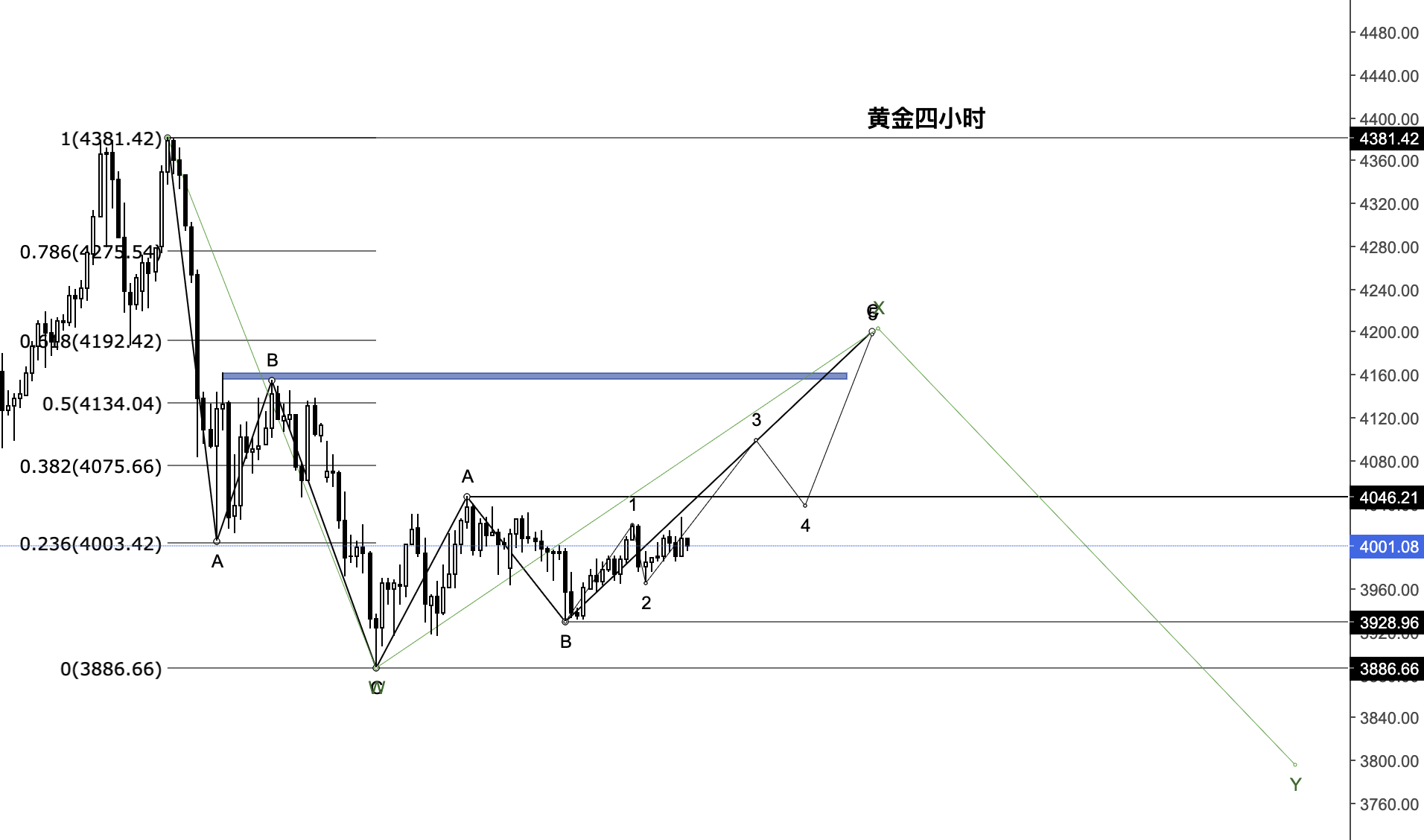
Group 1: Market Overview - The gold market is currently experiencing a fluctuating pattern with alternating bullish and bearish candles, indicating a "downward test followed by recovery" trend [1] - The U.S. government shutdown continues to create record delays in key economic data releases, with consumer confidence dropping to a three-year low [2][4] - The Federal Reserve shows significant internal divisions regarding monetary policy, with market attention on the potential for interest rate cuts in December [2][4] Group 2: Technical Analysis - Gold is trading in a range around $4,000, influenced by safe-haven demand, central bank purchases, and fluctuations in the U.S. dollar [3] - The price has not broken below the key support level of $3,886 or above the resistance level of $4,046, maintaining a range-bound movement [5] - Key levels to watch include the resistance at $4,046 and support at $3,928 and $3,886, which will significantly impact future price direction [7][9]
大跳水,AI突发
Zheng Quan Shi Bao· 2025-11-07 09:22
Core Viewpoint - The market's concerns regarding the valuation of technology stocks, particularly in the AI sector, remain unresolved, leading to significant declines in stock prices across Asia, especially for SoftBank Group [1][3][5]. Market Reaction - The Japanese stock market experienced a sharp decline, with the Nikkei 225 index dropping over 1000 points at one point, closing down 1.19% at 50,276 points [3]. - SoftBank Group's stock fell nearly 20% over four trading days, with a market capitalization loss exceeding 7.6 trillion yen (approximately 35 billion RMB) [1][3]. AI Valuation Concerns - The recent downturn in AI-related stocks is attributed to fears of overvaluation, reminiscent of the late 1990s internet bubble, as stock prices have surged far beyond actual earnings expectations [6]. - The Philadelphia Semiconductor Index's forward P/E ratio is currently close to 28, compared to its five-year average of less than 22, indicating heightened valuation concerns [6]. SoftBank's Position - As a major investor in AI infrastructure, semiconductors, and applications, SoftBank's stock volatility reflects broader market apprehensions about the AI industry's profitability and high valuations [3][6]. - Analysts suggest that SoftBank's stock decline is linked to its role as the only publicly traded agent for OpenAI, highlighting investor caution regarding the AI sector's future [3][9]. OpenAI's Funding Challenges - OpenAI's CFO sparked controversy by suggesting government-backed loans to reduce financing costs, which was met with backlash and clarification that the company does not seek such guarantees [8][9]. - Despite OpenAI's optimistic revenue projections, market skepticism persists regarding its ability to fulfill significant investment commitments, raising concerns about the sustainability of its funding model [9].

刚刚,大跳水!AI,突发!
券商中国· 2025-11-07 09:01
Core Viewpoint - The market's concerns regarding the valuation of technology stocks, particularly in the AI sector, remain unresolved [1]. Market Reaction - Following a significant drop in U.S. tech stocks, the Japanese stock market experienced a sharp decline, with the Nikkei 225 index falling over 1000 points at one point, representing a drop of more than 2% [2][4]. - SoftBank Group saw its stock price plummet by nearly 20% over four trading days, resulting in a market value loss exceeding 7.6 trillion yen (approximately 35 billion RMB) [2][4]. AI Valuation Concerns - The recent downturn in Asian tech stocks is closely linked to the decline of AI concept stocks in the U.S. market, with notable drops in companies like Nvidia and AMD [6]. - Experts have expressed concerns that current valuations of AI companies exhibit characteristics reminiscent of the late 1990s internet bubble, with stock price increases far exceeding actual profit expectations [6]. - The Philadelphia Semiconductor Index's forward P/E ratio is currently close to 28 times, compared to its five-year average of less than 22 times, indicating heightened valuation concerns [6]. Investor Sentiment - Analysts suggest that the recent market volatility is not necessarily indicative of a bubble burst but rather a sign of valuation fatigue, where investors are reluctant to pay high premiums for AI returns that have yet to materialize [7]. - OpenAI's CFO sparked controversy with comments suggesting the need for government guarantees for infrastructure loans, which led to significant market reactions and further scrutiny of AI companies' funding situations [8][9]. Industry Dynamics - The AI investment cycle is under close observation for risk signals, with large investments seen as both a vote of confidence in downstream profitability and a potential cycle of funding to maintain chip demand [9].

美股前瞻 | 三大股指期货齐涨 超微电脑(SMCI.US)绩后大跌 特朗普盘后发表声明
智通财经网· 2025-08-06 12:06
Market Overview - US stock index futures are all up ahead of the market opening, with Dow futures rising by 0.35%, S&P 500 futures up by 0.24%, and Nasdaq futures increasing by 0.23% [1] - European indices also show positive movement, with Germany's DAX up by 0.02%, UK's FTSE 100 up by 0.20%, France's CAC40 up by 0.28%, and the Euro Stoxx 50 up by 0.22% [2][3] - WTI crude oil prices increased by 1.63% to $66.22 per barrel, while Brent crude oil rose by 1.52% to $68.67 per barrel [3][4] Economic Insights - There is a growing divergence among Wall Street investment banks regarding interest rate cuts, with Goldman Sachs and Citigroup suggesting aggressive cuts in September, while Bank of America and Barclays remain cautious [4] - The upcoming months are critical for determining the Federal Reserve's interest rate decisions, especially if employment and inflation data continue to show weakness [4] - Concerns about the credibility of government data have arisen following President Trump's criticism of employment data, which could impact the TIPS market significantly [5] Company News - Supermicro (SMCI.US) reported a 7.5% year-over-year increase in Q4 sales to $5.76 billion, but this fell short of market expectations of $6.01 billion, leading to a nearly 17% pre-market drop [7][8] - AMD (AMD.US) saw a 32% year-over-year revenue increase to $7.7 billion in Q2, but its adjusted earnings per share of $0.48 fell below expectations, resulting in a nearly 6% pre-market decline [8] - Novo Nordisk (NVO.US) reported a 32% year-over-year increase in net profit for Q2, driven by strong sales of its semaglutide products, which generated $16.68 billion in revenue [9] - Honda (HMC.US) adjusted its full-year guidance upward despite a 1.2% year-over-year decline in Q1 revenue, anticipating a reduction in tariff-related losses [10] - McDonald's (MCD.US) reported a 5.4% year-over-year revenue increase in Q2, exceeding expectations, with same-store sales growth driven primarily by higher customer spending [11] - Uber (UBER.US) exceeded revenue expectations for Q2, reporting $12.65 billion, and provided a positive outlook for Q3 [11] - Disney (DIS.US) reported Q3 earnings that surpassed expectations, although traditional TV revenue fell short, overshadowing strong performance in theme parks and streaming [12] - Lucid (LCID.US) reported a Q2 adjusted loss of $0.24 per share, below expectations, and lowered its annual production guidance to 18,000-20,000 vehicles [13] - Snap (SNAP.US) experienced a significant drop in advertising revenue growth, leading to a nearly 18% pre-market decline following its Q2 earnings report [13]