
低利率时代

Search documents
又创历史新低,普通人在“低利率时代”如何理财?
3 6 Ke· 2025-05-30 03:09
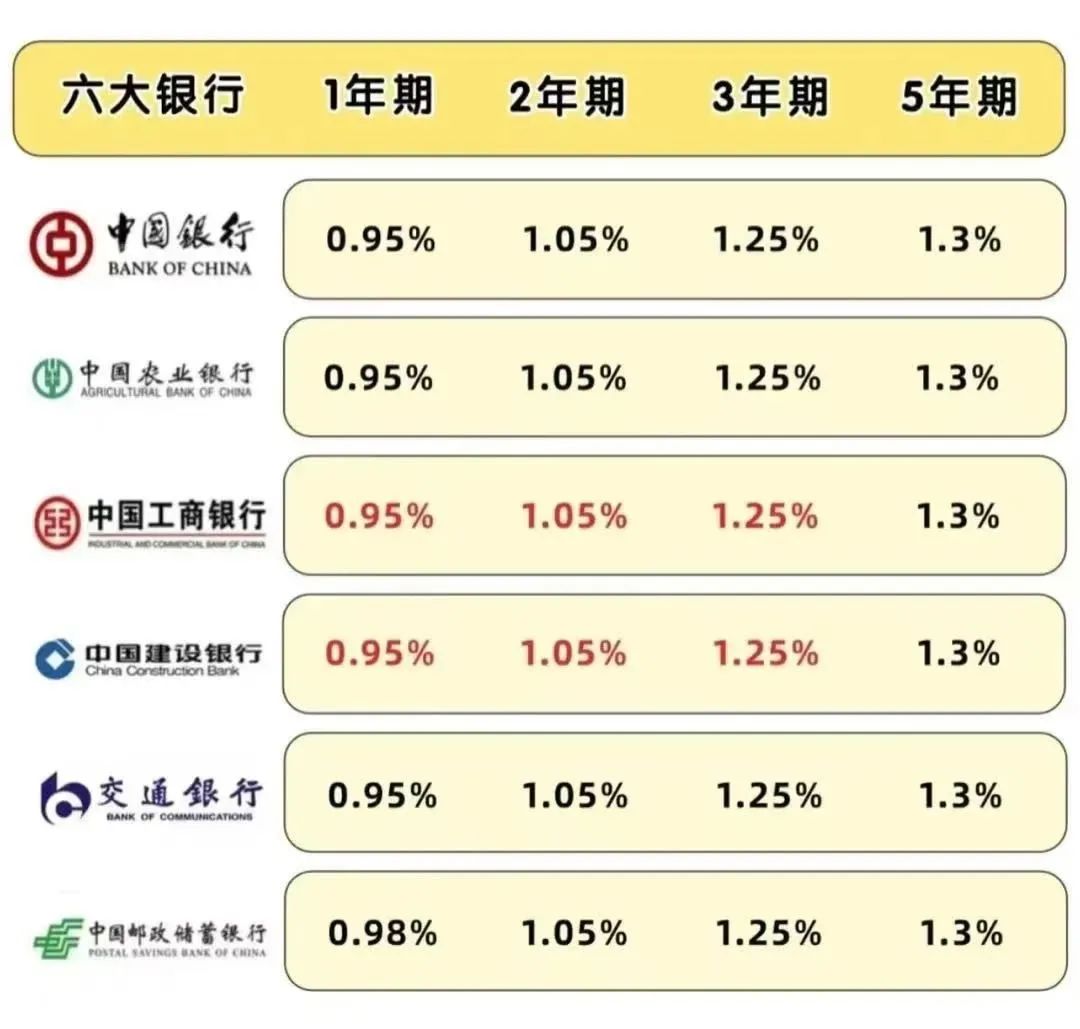
Group 1 - The core viewpoint of the articles is that a "rate cut wave" has spread to small and medium-sized banks, resulting in historically low deposit rates across the banking sector [1][7] - Major banks have reduced their deposit rates significantly, with the one-year fixed deposit rate falling below 1% for the first time in history, now at 0.95% [1][7] - The interest rates for various fixed deposit terms have been adjusted downwards, with the three-year rate decreasing from 1.5% to 1.25% and the five-year rate now at 1.3% [1][7] Group 2 - The impact of these rate cuts can be illustrated with a hypothetical example of a 1 million yuan deposit over five years, showing a significant decrease in interest earnings from 200,000 yuan in 2020 to only 75,000 yuan by 2024 [3][4] - The cumulative effect of these rate reductions is likened to a slow and painful loss, where depositors may not immediately notice the impact until it becomes substantial [5][4] - The trend of rate cuts typically starts with large commercial banks, followed by joint-stock banks, and finally small and medium-sized banks, which tend to have higher rates due to their weaker brand image and deposit absorption capabilities [8][9] Group 3 - The phenomenon of "deposit special forces," where individuals would travel to different cities to find better deposit rates, is diminishing as current rates make such efforts impractical [10][11] - The articles emphasize the importance of understanding the three key attributes of financial products: yield, safety, and liquidity, which are crucial for making informed investment decisions [13][14][15] - Strategies for managing finances in a low-interest-rate environment include both "staying within banks" with safer products and "venturing outside banks" into various investment options [22][24]

国债期货下跌意味着什么?散户的钱袋子正在被谁掏空?
Sou Hu Cai Jing· 2025-05-29 14:06
Core Viewpoint - The recent decline in the government bond futures market reflects a silent struggle regarding the direction of the Chinese economy, driven by both funding and policy pressures [2][5]. Group 1: Policy Dynamics - The central bank's recent reverse repurchase operations, with a net injection of 58.5 billion yuan in a single day, signal a tightening stance despite appearing to be accommodative [2][5]. - The Ministry of Finance initiated bond market support operations, injecting 280 million and 260 million yuan of 2-year and 3-year bonds, respectively, indicating a subtle shift in market supply and demand dynamics [2][5]. Group 2: Interest Rate Environment - The current low interest rate environment has seen the interest rate on demand deposits from major state-owned banks drop to 0.05%, with 1-year fixed deposits falling below 1% [2][5]. - Despite this, the 30-year government bond ETF has shown a remarkable annualized return of 15.28% over the past year, highlighting a paradox where funds flee low-yield deposits but hesitate to enter riskier markets [2][5]. Group 3: International Market Influence - The cold reception of the U.S. 5-year Treasury auction, with indirect bidders receiving a record 78.4% allocation, indicates a global capital flight towards safe assets, contrasting with domestic capital fleeing the bond futures market [3][5]. - The significant increase in SOFR futures open interest by 173,000 contracts within three days suggests that the market may be anticipating larger upheavals [3][5]. Group 4: Market Behavior - The net short position in 5-year government bond futures among the top 20 positions reached 6,254 contracts, indicating a strong institutional presence in the short-selling camp [3][5]. - A "mini redemption wave" in the wealth management market has led to short-term products experiencing a withdrawal magnitude similar to last September, showcasing a stark contrast between retail panic selling and institutional arbitrage strategies [3][5]. Group 5: Economic Transition - The anticipated increase in government bond issuance in May and June may exceed expectations, with local government bond issuance aiming for 700 billion yuan in a single month [4][5]. - The decline in bank deposit rates has paradoxically strengthened residents' savings tendencies, with the proportion of demand deposits falling below 20% in April, indicating a growing conservative mindset among the populace [4][5].

降准降息下,银行理财有哪些变化?又暗藏哪些重要机遇?
Sou Hu Cai Jing· 2025-05-29 10:47
Core Viewpoint - The recent monetary policy adjustments by the central bank, including a 0.5% reserve requirement ratio cut and a 0.1% interest rate reduction, present both challenges and opportunities for the banking wealth management market [2][3]. Group 1: Challenges and Opportunities in Banking Wealth Management - The primary challenges include a decrease in bond yields and interbank deposit rates due to interest rate cuts, leading to reduced returns on fixed-income wealth management products and exacerbating the "asset shortage" [2][3]. - Conservative investors, who are sensitive to declining yields, may face further pressure on bank net interest margins due to the lag in deposit rate adjustments [2]. - Potential opportunities arise from the release of over one trillion yuan in long-term funds due to the reserve requirement cut, which, combined with stock market volatility, may drive a temporary expansion in low-risk wealth management products [2][3]. Group 2: Impact of Monetary Policy on Banking Wealth Management - The interest rate cuts directly lower market interest rates, resulting in decreased expected returns on wealth management products [3]. - Banks may accelerate the transition to diversified strategies like "fixed income plus" to enhance returns by increasing the proportion of equity and derivative assets [3]. - The competitive landscape will further differentiate, with leading wealth management subsidiaries leveraging stronger research capabilities and brand effects to adapt more quickly to the low-interest environment, while smaller institutions may face pressure to shrink if they cannot effectively manage costs or optimize asset allocation [3]. Group 3: Future Changes in Banking Wealth Management Products - Expected further compression in the yield levels of wealth management products, with a downward trend in the performance benchmarks for fixed-income products [4]. - An increase in the proportion of short-term products to meet investors' liquidity needs [4]. - A diversification in product types, including low-volatility stable products and thematic products (e.g., technology innovation, rural revitalization), to cater to varying risk preferences and return requirements of investors [4]. Group 4: Investment Strategies for Individual Investors in a Low-Interest Environment - In a low-interest rate context, the relative value of equity assets becomes more pronounced, necessitating careful asset allocation based on individual risk tolerance [5]. - Emphasis on diversified asset allocation strategies to build a portfolio that includes defensive assets like cash and bonds alongside growth-oriented equity assets [5]. - Encouragement of a long-term investment perspective to smooth out short-term volatility and achieve steady capital appreciation over time [5].

多家中小银行下调存款利率!杭州有人担心还要降,急凑100万元直奔银行!低利率时代如何理财,专家建议......
Mei Ri Jing Ji Xin Wen· 2025-05-29 03:35
Core Viewpoint - The recent trend of banks, including state-owned and joint-stock banks, lowering deposit rates has prompted a swift response from city commercial banks, leading to concerns among depositors about potential losses in interest income [1][5]. Group 1: Deposit Rate Adjustments - Multiple small and medium-sized banks have reduced their deposit rates, with Shanghai Huari Bank lowering its rates for various terms, including a 10 basis point reduction for 3-year deposits to 2.4% [5]. - Agricultural Bank of Shanghai and Beijing Bank have also adjusted their rates, with significant reductions across various terms, indicating a broader trend of rate cuts among banks [5][8]. - The average reduction in deposit rates has been greater than the reduction in the Loan Prime Rate (LPR), reflecting banks' efforts to protect their net interest margins [8][10]. Group 2: Investor Reactions and Strategies - Individual investors, like a woman from Hangzhou, express frustration over missing out on higher interest rates due to the timing of rate cuts, highlighting the emotional impact of these financial decisions [2][3]. - Financial advisors suggest that in a low-interest-rate environment, investors should consider diversifying their asset allocation beyond traditional bank deposits to include higher-yielding products such as money market funds and bonds [10][11]. - Experts recommend that households reduce their reliance on bank deposits and explore options like large-denomination certificates of deposit and structured deposits for better returns [11].

【西街观察】 低利率时代应摒弃躺赢心态
Bei Jing Shang Bao· 2025-05-28 14:27
定存跌破1%的低利率时代如期而至。 低利率时代短期不可逆。虽然短期内,货币进一步通过宽松来实现稳增长的必要性下降,但长期来看, 随着外部冲击显现,国内经济下行压力仍大,国内降准、降息也只是时间问题。而贷款利率调降的同 时,为保持商业银行净息差的稳定,存款利率仍将大概率同步调降。 在低利率时代,想要管理好自己的钱袋子,固守旧思维,拒绝变化恐怕不行。唯有持续学习、理性配 置、动态调整,才能让财富在不确定性中扎根生长。 虽然投资策略无"标准答案"。但不管是经济周期的轮动,还是监管风向的调整,以及个人财务目标的变 化,都是动态调整资产配置的重要因素。 无论是主动配置,还是被动理财,掌握基础金融知识都是必须做的事。当了解复利计算、资产配置等原 理后,被"高收益陷阱"误导的概率自然也将下降。 理性配置还在于对投资者自身财务目标的清醒认知与持续规划。它并非一时应对低利率的权宜之策,而 是应该贯穿于财富生命周期。 近日,随着贷款市场报价利率(LPR)的调降,部分商业银行也相应下调存款利率,其中,六大国有银 行一年期定期存款利率首次跌破1%至0.95%。 这是时代抛给每个人的财富管理考题。它宣告着"躺赚利息"的终结,却也开启了 ...
固收+爆火,年内业绩怎样?业绩首尾差近20%,融通、汇丰晋信、金鹰基金旗下产品垫底
Sou Hu Cai Jing· 2025-05-28 11:46
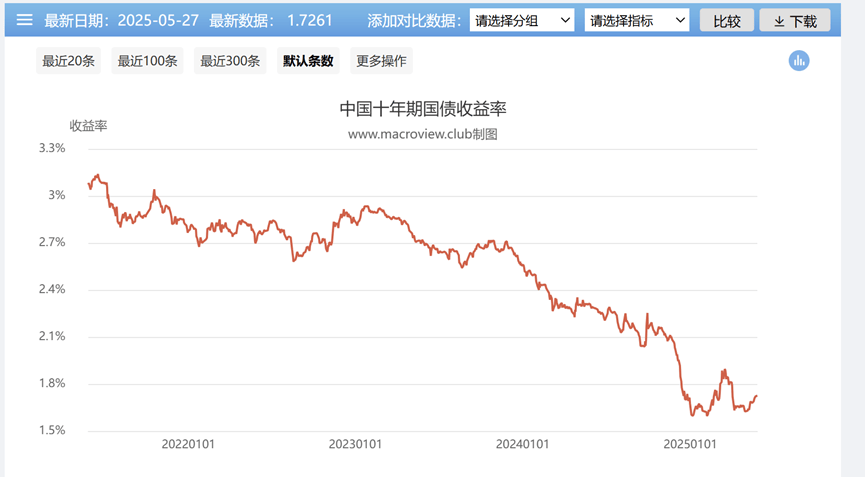
Core Viewpoint - The "fixed income +" funds have experienced explosive growth in early 2025, with the total market size surpassing 2 trillion yuan, marking a significant recovery from previous lows [1][3]. Group 1: Market Performance - As of the end of Q1 2025, there are 2,161 "fixed income +" funds with a total scale exceeding 2 trillion yuan, reflecting a quarter-on-quarter increase of 6.7% and a net subscription scale of nearly 50 billion units [1]. - The low interest rate environment has driven a migration of funds towards "fixed income +" products, as evidenced by the historical low of 1.68% for 10-year government bond yields in 2024, which fell by 88 basis points [1]. Group 2: Product Characteristics - "Fixed income +" products, represented by the Wind偏债混合型基金指数, have shown unique yield elasticity with an equity allocation of 20%-30%, outperforming equity funds over three and five-year periods [3]. - The maximum drawdown for the index over the past ten years is 8.17%, significantly better than the 45.42% volatility of mixed equity funds [3]. Group 3: Fund Performance - As of May 28, 2025, 23 "fixed income +" funds have achieved returns greater than 5% year-to-date, with 工银聚享A leading at 13.65% [4]. - Other notable funds include 富国久利稳健配置A at 12.20% and several others surpassing the 5% return threshold [4]. Group 4: Risks and Challenges - Despite the overall positive performance, there are concerns as five high-volatility "fixed income +" products have reported losses exceeding 4%, with some experiencing declines over 5% [5].
公募规模创新高33万亿,银行理财重回31万亿高位,低利率时代谁主沉浮?
Sou Hu Cai Jing· 2025-05-28 06:07
Group 1 - The core viewpoint of the article highlights the significant inflow of funds into bank wealth management and money market funds due to risk aversion and the trend of "deposit migration" [2][5] - As of April, public money market funds saw an increase of 662.3 billion yuan, pushing the total public fund scale to a historical high of 33.12 trillion yuan [2][3] - Bank wealth management products have also experienced growth, with a current scale of 31.44 trillion yuan, reflecting a net increase of 2.41 trillion yuan since the end of March [2][6] Group 2 - The public fund scale surpassed 33 trillion yuan for the first time, marking a significant milestone in the asset management industry [2][4] - The competition between public funds and bank wealth management is intensifying, especially as interest rates on demand deposits approach zero, making "deposit replacement" a key competitive advantage for asset management firms [2][8] - The decline in deposit rates, with one-year deposit rates falling below 1%, has led to a reduction of 1.39 trillion yuan in household deposits, while non-bank financial institutions saw an increase of 1.57 trillion yuan [5][6] Group 3 - The growth in public funds is primarily driven by money market funds, which reached a total scale of 13.99 trillion yuan, reflecting a net increase of 662.3 billion yuan [3][4] - Other open-end fund types, particularly fixed-income products, also showed significant growth, with bond funds increasing by 140.2 billion yuan [3][4] - The low interest rate environment has compressed the yield space for money market funds and short-term wealth management products, yet they remain attractive compared to the near-zero returns on demand deposits [6][7]

海外固收类基金专题:日本固收类基金启示录
Hua Yuan Zheng Quan· 2025-05-27 14:59
1. Report Industry Investment Rating No relevant content provided. 2. Core Views of the Report - Japan's bond market is dominated by government and quasi - government bonds, and the scale of government debt has been continuously increasing, while the growth of corporate and individual debt may stagnate in the stage of population negative growth [5][15]. - The Bank of Japan is the most important investor in the Japanese bond market, holding nearly half of Japanese government bonds. Banks and insurance companies have a relatively high proportion of overseas bond holdings due to low domestic bond yields. Although Japan's government debt - to - GDP ratio is high, it has not experienced a currency crisis because most of its government bonds are held by domestic investors [17]. - Japan's stock funds have grown significantly, while the scale of fixed - income funds has nearly reached zero. When the 10 - year government bond yield is below 2%, the scale of bond funds starts to decline; when it is below 1.5%, the decline accelerates; when it is below 0.5%, the scale may gradually reach zero [1][99]. - In the low - interest - rate era, the indexation and ETF - ization of bond funds are major trends, and the fee rate shows a downward trend. Global bond funds may be a direction when domestic bond yields are low under the condition of free capital convertibility [1][101]. - China is in a low - interest - rate era. The development of domestic pure - bond funds may stagnate, and it is recommended to actively follow the trend of bond - fund indexation and ETF - ization, develop overseas bond funds, and strengthen the development of fixed - income plus funds [102][106]. 3. Summary According to Relevant Catalogs 3.1 Japan's Bond Market Structure's Long - term Changes 3.1.1 Japan's Economic Past and Present - After World War II, Japan's economy grew rapidly from 1961 - 1990, with an average real GDP growth rate of 6.2%. In the 1980s, Japan was world - leading in many fields. However, since the 1990s, due to the bursting of the real - estate and stock - market bubbles, Japan has entered a "lost era", with an average real GDP growth rate of only 0.7% from 1992 - 2024 [6]. - Japan's GDP was once very close to that of the United States in 1995, accounting for 72.6% of the US GDP. But by 2024, it was only 13.8% of the US GDP [7]. 3.1.2 Japan's Bond Market Structure Changes - Japan's bond types include government bonds, corporate bonds, financial bonds, etc. Government and quasi - government bonds are the main part of the bond market. As of the end of 2024, the balance of government and quasi - government bonds accounted for 92.3% of the total bond - market scale [9]. - Since 1998, the proportion of government and quasi - government bonds in the Japanese bond market has gradually increased from 64.1% to 92.3%. The scale of the Japanese bond market has been growing, but the scale of convertible bonds has nearly reached zero, reflecting the low financing demand of Japanese enterprises [9][14]. - Looking forward, the scale of Chinese government bonds may continue to increase, and the proportion of government bonds in the bond market may continue to rise [15]. 3.2 Japan's Bond Market Investor Structure Changes 3.2.1 Holders of Japanese Government Bonds - As of the end of 2023, the Bank of Japan held 47.9% of Japanese government bonds, followed by insurance companies, banks, pension funds, and overseas investors [18]. - The issuance term of Japanese government bonds is relatively long, with bonds with a term of 10 years and above accounting for 76.4% of the balance as of the end of 2023 [20]. 3.2.2 Bond Investment of Various Japanese Investors - The Bank of Japan is the core investor in Japanese government bonds. As of the end of 2024, it held 582.7 trillion yen of government bonds, accounting for 47.5% of the government - bond balance. The Bank of Japan's assets are mainly government bonds [22][28]. - Japanese financial institutions have a relatively high proportion of overseas bond holdings. As of March 2024, overseas bonds accounted for 37.6% of the bond investments of Japanese domestic banks and 25.2% of those of the insurance industry [29]. - The proportion of securities investment of Mitsubishi UFJ Bank has decreased significantly since 2013, which is related to the low bond yields in Japan. When the 10 - year government bond yield falls below 1%, the proportion of its securities investment decreases significantly [31][32]. - Japanese life - insurance companies invest a significant amount in Japanese government bonds and also have a relatively high proportion of overseas - securities investment. The Government Pension Investment Fund (GPIF) has a relatively high proportion of stock investment, with a 49.9% stock - investment ratio at the end of 2024 [39][40]. - Japanese retail government bonds have three main terms: 3, 5, and 10 years. The amount of government bonds held by individual investors has remained at a low level in recent years, which is related to the decline in government - bond yields [43]. 3.3 Japan's Public - Fund Industry's Seventy - year Development 3.3.1 Long - term Changes in Japan's Public - Fund Industry - Japan's public - fund industry has a history of more than 70 years. The earliest securities investment trust appeared in 1937, and the legal basis for modern securities investment trust was established in 1951. The earliest open - end stock investment fund was established in 1952, and the earliest bond fund was established in 1961 [53]. - The development of Japan's public funds can be divided into four stages: the start - up stage (before 1971), the booming development stage (1972 - 1989), the stock - fund downturn stage (1990 - 1997), and the stock - fund maturity stage (after 1997). As of the end of 2024, the total scale of Japanese public funds reached a record high of 246 trillion yen, with stock funds accounting for the majority [54][55][56]. 3.3.2 Structure Evolution and Investment Direction of Japan's Stock Funds - Japan's stock funds can invest in both domestic and overseas bonds and stocks. The scale of bonds invested by stock funds was once higher than that of stocks, but since 2012, the proportion of bond investment has decreased significantly [60]. - As of the end of 2024, Japanese stock funds held 10.1 trillion yen of domestic stocks, accounting for 10.2% of the total market value of the Japanese stock market. The top three industries with increased investment proportions from 2011 - 2024 were electrical appliances, services, and retail, while the top three with decreased proportions were automobiles, chemicals, and glass and ceramics [64]. - The proportion of bond investment by Japanese stock funds is closely related to the stock - market situation and bond - yield levels. As of the end of 2024, the bond - investment proportion of Japanese stock funds was only 8.0% [66]. - Since 2013, the scale of Japanese stock funds has increased significantly, which is closely related to the rise of the stock market and the development of ETFs. As of the end of 2024, the scale of ETFs in stock funds accounted for 38.8% [68]. 3.3.3 Evolution of Japan's Fixed - Income Funds - Japan's fixed - income funds are mainly divided into money funds (MMF), long - term bond funds, medium - term government - bond funds, domestic - and - foreign - bond funds, and money reserve funds (MRF). Currently, the scale of money funds, medium - term government - bond funds, and domestic - and - foreign - bond funds has reached zero [71]. - The scale of Japanese money funds reached zero in 2017 due to the Bank of Japan's unconventional monetary - easing policies and negative interest rates [75]. - The scale of Japanese bond funds has decreased significantly. As of the end of 2024, the scale of long - term bond funds was only 0.45 trillion yen, and the fixed - income funds are mainly MRF, with a scale of 15.3 trillion yen [71][84]. 3.3.4 Competition Pattern of Japanese Asset - Management Institutions - As of the end of 2024, there were hundreds of asset - management institutions in Japan, including 80 public - asset - management companies. The total management scale of public - asset - management institutions was 380 trillion yen, with public - fund scale at 246 trillion yen [90]. - Nomura Asset Management dominates the market, and the top five public - fund institutions account for nearly 70% of the market share. The indexation and ETF - ization characteristics of Japanese stock funds are obvious, and the average fee rate of public funds is in a downward trend [91][95][97]. 3.4 Enlightenment from the Development of Japanese Fixed - Income Funds 3.4.1 Enlightenment from the Development of Japanese Fixed - Income Funds - When the 10 - year government - bond yield is below 0.5%, the development of fixed - income funds may reach an end. The current main part of Japanese fixed - income funds is MRF, which is less sensitive to yield [98][100]. - If capital is freely convertible, global bond funds may be a direction when domestic bond yields are low. However, the total scale of Japanese bond funds investing in overseas bonds is not large due to exchange - rate risks and hedging costs [100]. - In a low - interest - rate environment, the indexation and ETF - ization of bond funds are major trends, and the fee rate shows a downward trend [101]. 3.4.2 Where Do Bond Funds Go in the Low - Interest - Rate Era? - China is in a low - interest - rate era, and the development of domestic pure - bond funds may stagnate. It is recommended to actively follow the trend of bond - fund indexation and ETF - ization, develop overseas bond funds, and strengthen the development of fixed - income plus funds [102][106][109]. - In the low - interest - rate era, bond - fund indexation and ETF - ization are major trends. Nomura Asset Management has many bond ETFs and index funds. China's fund companies can actively layout bond - segment index funds or ETFs [109][112]. - Fund companies are advised to actively obtain QDII quotas and vigorously layout overseas - bond investments [117]. - Fixed - income plus funds still have broad development space and can be further segmented, and the scope of plus - assets can be expanded [118].

低利率倒逼理财觉醒:高收益产品成“限量版潮品”
Zhong Guo Jing Ji Wang· 2025-05-27 07:24
Core Viewpoint - The traditional savings model is undergoing a transformation due to low interest rates, prompting investors to seek new wealth growth opportunities through digital platforms and high-yield financial products offered by banks [1][2]. Group 1: Changes in Savings and Investment Behavior - Investors are increasingly turning to high-yield financial products, with some offering annualized returns exceeding 6%, leading to a phenomenon where investors "wait for quotas" to purchase these products [2][3]. - The reduction in deposit interest rates, with major banks lowering one-year fixed deposit rates below 1% to 0.95% and savings rates to 0.05%, has significantly decreased the attractiveness of traditional savings [2][3]. Group 2: Rise of High-Yield Financial Products - Financial institutions are launching short-term high-yield products, such as those from Ping An Wealth Management, which achieved an annualized return of 6.12% over three months, attracting substantial capital from traditional savings [3]. - The market for financial products is expanding rapidly, with a reported 506 new financial products issued in one week, reflecting a growing investor enthusiasm for high-yield options [3][6]. Group 3: Emergence of New Investment Strategies - Social platforms are becoming key venues for investors to share and develop new investment strategies, with individuals employing detailed tracking methods to optimize their returns [4][5]. - The trend of diversifying investments is gaining traction among younger investors, with many opting for a mix of money market funds, bond funds, and gold funds, thereby reducing risk and increasing options [5]. Group 4: Market Expansion and Future Outlook - The total scale of bank wealth management products reached 31.28 trillion yuan, with expectations for continued growth as deposit rates decline further [6]. - Financial institutions are actively promoting new product issuances and optimizing product structures to attract more investors, although there are concerns about the sustainability of high yields in the future [6].
定期存款利率“1”时代,信用债ETF的配置价值再思考
Sou Hu Cai Jing· 2025-05-27 06:14
Core Insights - The article discusses the evolving landscape of investment opportunities, particularly focusing on the emergence of credit bond ETFs as a significant financial tool in the current low-interest-rate environment [2][21]. Group 1: Market Context - The current economic environment is characterized by a decline in risk-free interest rates, with one-year fixed deposit rates falling below 1% and money market fund yields decreasing, indicating a shift from a stable investment climate to one of uncertainty [1]. - Investors are increasingly seeking stable value anchors as the market experiences heightened volatility, leading to a new normal of "asset scarcity" [1]. Group 2: Credit Bond ETF Overview - Credit bond ETFs combine the stability of credit bonds with the flexibility of ETFs, evolving from a supporting role to a central component in investment strategies [2]. - Credit bonds are defined as bonds that rely on the issuer's creditworthiness rather than government backing, including various types of corporate and financial institution-issued bonds [3]. - The structure of credit bond ETFs allows for T+0 trading, enabling investors to quickly adjust their positions in response to market changes, thus avoiding the delays associated with traditional fund subscriptions and redemptions [6][8]. Group 3: Investment Logic - Credit bond ETFs offer cost efficiency, with management and custody fees significantly lower than those of actively managed bond funds, potentially leading to greater long-term returns due to compounding effects [10]. - The investment style of credit bond ETFs is characterized by a dual filtering mechanism that emphasizes high credit ratings and shorter durations, reducing sensitivity to interest rate fluctuations [11][15]. - The current market conditions suggest a focus on short to medium-term credit bonds, balancing the likelihood of continued monetary easing with the need for flexibility in uncertain environments [19][20]. Group 4: Evolution of the Financial Tool - The evolution of the Chinese bond market over the past two decades highlights a pattern where market changes prompt innovations in financial tools, such as the rise of credit bond ETFs [21]. - Credit bond ETFs democratize access to credit bond investments, allowing individual investors to participate with lower entry barriers compared to traditional credit bond investments [22][23]. - For institutional investors, credit bond ETFs enhance liquidity and trading convenience, transitioning from a "hold to maturity" approach to a more dynamic trading strategy [24][25]. Group 5: Strategic Implications - The performance characteristics of the Shanghai benchmark corporate bond index suggest a balanced risk-return profile, making credit bond ETFs a viable option for investors seeking to manage risk while pursuing returns [27]. - The shift in asset allocation strategies from seeking higher yields to balancing risk and return positions credit bond ETFs as a crucial component in constructing resilient investment portfolios [28].
