贸易战

Search documents
关税纷扰重塑格局 美国制造汽车在加拿大的市场份额跌至新低
Xin Lang Cai Jing· 2026-01-16 12:57
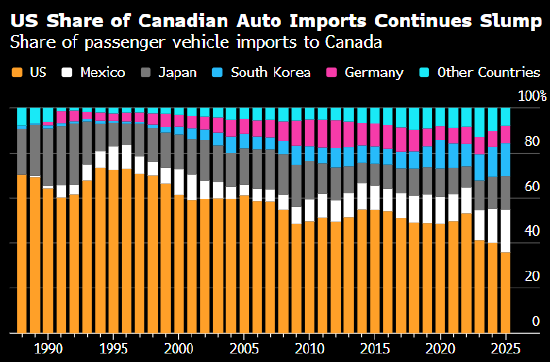
美国制造汽车在加拿大汽车市场的占比跌至新低,汽车关税颠覆了数十年来享有紧密跨境一体化的汽车 行业。 根据加拿大统计局的进口数据,2025年前10个月,加拿大进口的乘用车中只有36%是在美国制造的。相 比之下,此前10年的平均占比为49%。 加拿大是美国制造的新车和卡车的最大买家。但这些数据凸显了特朗普政府发动的贸易战如何改变了行 业格局。墨西哥和韩国制造的汽车在加拿大汽车经销商的销售份额越来越大。 美国制造汽车在加拿大汽车市场的占比跌至新低,汽车关税颠覆了数十年来享有紧密跨境一体化的汽车 行业。 根据加拿大统计局的进口数据,2025年前10个月,加拿大进口的乘用车中只有36%是在美国制造的。相 比之下,此前10年的平均占比为49%。 加拿大是美国制造的新车和卡车的最大买家。但这些数据凸显了特朗普政府发动的贸易战如何改变了行 业格局。墨西哥和韩国制造的汽车在加拿大汽车经销商的销售份额越来越大。 特朗普在4月对外国制造的汽车征收关税,促使加拿大对美国汽车和卡车实施报复性关税。不过,加拿 大政府对仍在安大略省生产车辆的汽车制造商给予了一些豁免,例如丰田汽车和通用汽车。 责任编辑:何云 特朗普在4月对外国制造的汽车征 ...

不装了:美国掏出广场协议的刀,却发现中国脖子比刀还硬
Sou Hu Cai Jing· 2026-01-16 04:50
Core Viewpoint - The article emphasizes that China's manufacturing industry has significantly challenged U.S. economic dominance, with a trade surplus reaching $1.08 trillion, indicating a shift in global economic power dynamics [1][3]. Trade Surplus and Economic Impact - By November 2025, China's trade surplus increased by 21.7% to $1.076 trillion, contradicting U.S. efforts to reduce reliance on Chinese goods through tariffs [3]. - The U.S. tariffs have resulted in an additional burden of $2,400 per American household, impacting middle-class living standards [4]. U.S. Economic Strategy and Consequences - The U.S. finds itself in a dilemma: avoiding Chinese goods could lead to inflation, while continued purchases result in a loss of economic power [6]. - The "Restoring Trade Fairness Act" aims to impose a 35% baseline tariff on China, but this has led to a decrease in U.S. exports to China by 18.9%, while exports to ASEAN, EU, and Latin America have increased [6]. Historical Context and Current Dynamics - The article draws parallels between current U.S.-China relations and the 1985 Plaza Accord, suggesting that the U.S. may attempt to manipulate currency values to weaken China's economic position [7][9]. - Unlike Japan in the 1980s, China possesses significant economic sovereignty and control over its currency, making it less susceptible to U.S. pressure [9]. Manufacturing and Innovation - China's manufacturing value added is $4.44 trillion, nearly double that of the U.S., highlighting its dominance in industrial production [9]. - U.S. sanctions on companies like Huawei have inadvertently accelerated China's technological advancements, leading to breakthroughs in various sectors [9]. Conclusion on Economic Transition - The $1.08 trillion trade surplus symbolizes a shift in economic power, marking the end of an era where the U.S. could rely on financial manipulation to maintain its global position [9].
美国拒绝取消关税,莫迪想从中国身上破局,正琢磨让中企重返印度
Sou Hu Cai Jing· 2026-01-16 03:18
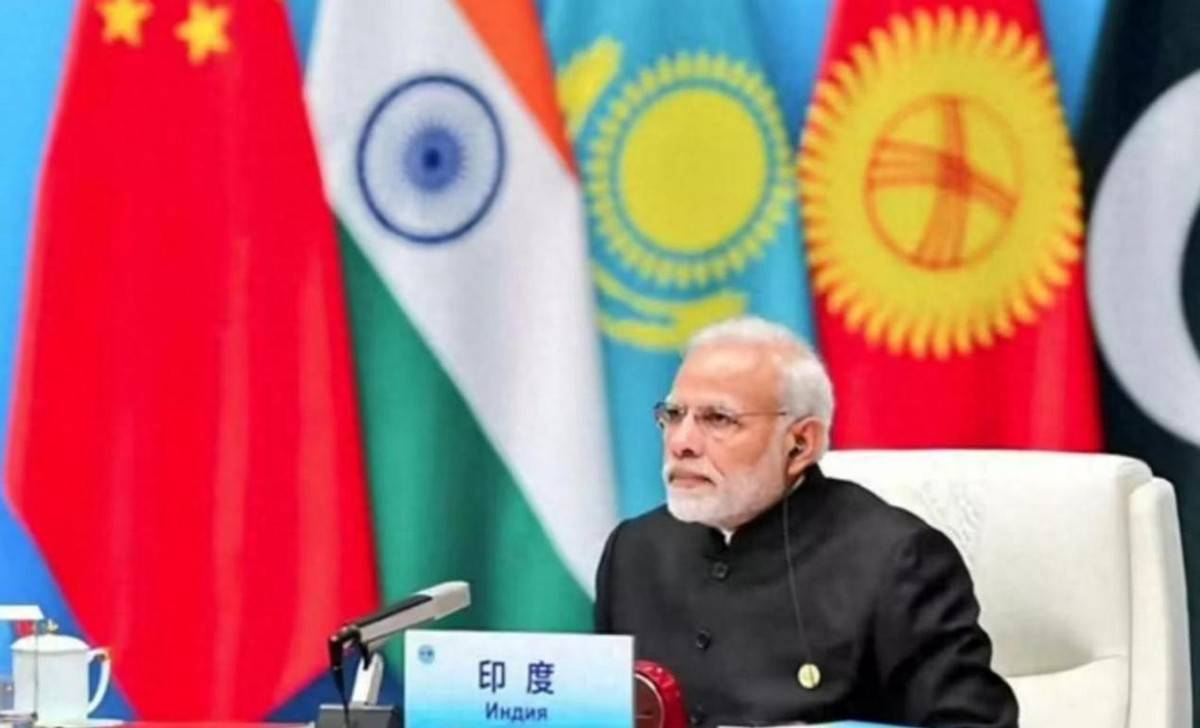
中方对等反制迫使美国做出让步,两国贸易战进入暂时"休战"阶段。而缺乏这一能力的印度,现在仍面临着50%的高额关税。考虑到对美出口占印度经济的 比重,莫迪政府打算如何缓解这一压力? 据环球网最新报道,印度政府消息人士日前放出口风,称印度财政部计划取消已实施5年之久、针对中企参与政府合同项目竞标的限制,欢迎中国企业投资 印度。 要知道自2020年边境冲突以来,印度政府一直对中企"严防死守",要求中企必须通过安全和政治审核才能参与政府项目,但迄今为止也没几家中企通过这个 审核,其中含义已不言自明。如今印度政府愿意在这件事上做出转变,自然是有利于提升中印关系、稳定印度经贸格局的。至于莫迪是否会批准印度财政部 的这一计划,目前来看应该不用过于担心,毕竟在美国拒绝取消关税的背景下,莫迪想要破局,恐怕只能将希望寄托在中国身上。 考虑到印度有14亿人口,是一个庞大的单一市场,相信会有不少中企对投资印度感兴趣,但这里面也存在不容忽视的风险。 只能说这种可能性不是不存在,投资印度有许多商业之外的事情需要考量。印度若想获得中企真心实意的投资,除了明面上修改政策法规之外,最好还要以 行动展示诚意,为中国企业在印经营提供安全、稳定的投 ...
中原:香港2025年一手私宅成交20525宗 创6年新高
Sou Hu Cai Jing· 2026-01-15 11:13
Core Viewpoint - In 2025, Hong Kong's primary residential property sales contracts registered reached 20,525, with a total value of HKD 225.55 billion, marking year-on-year increases of 21.7% and 8.2%, respectively, the highest level in six years since 2019 [1] Group 1: Market Performance - The market is expected to maintain a transaction volume of around 20,000 units in 2026 [1] - Despite a temporary pressure on the Hong Kong property market due to the trade war at the beginning of the year, the market sentiment improved as the HSI returned to the 27,000-point mark following a decline in interbank rates and the Fed's resumption of interest rate cuts [1] - Developers accelerated their sales pace, achieving quarterly transaction volumes exceeding 5,000 units for three consecutive quarters, leading to an annual total returning to the 20,000-unit level for the first time in three years [1] Group 2: Quarterly Performance - In the fourth quarter of 2025, the registration volume fell to 5,577 units, a decrease of 1.6% quarter-on-quarter, but the transaction value increased by 12% to HKD 68.43 billion [1]
英国经济专家:特朗普的计划是先摧毁美国民众的生活,再摧毁中国
Sou Hu Cai Jing· 2026-01-15 08:44
Group 1 - Trump's aggressive tariff policies aimed at revitalizing American manufacturing have led to increased costs for consumers, with household expenses rising by hundreds of dollars monthly due to a 25% tariff on Chinese goods, contributing to inflation rates climbing from 3% to 4.5% [1][3] - The automotive industry faced significant challenges, with General Motors delaying new car launches and a reduction in worker overtime, while agricultural exports, particularly soybeans, dropped by 40%, severely impacting farmers' incomes [3][4] - The trade war has resulted in a 15% decline in U.S. agricultural exports to China, with Brazil and Argentina filling the market gap, leading to a 10% increase in bankruptcy rates among small businesses in the U.S. [4][6] Group 2 - The U.S. economy has shown signs of contraction, with GDP growth expectations dropping from 2% to 1.6%, as domestic demand weakens and consumer confidence declines by 15% [4][13] - The trade war has led to a net loss of 70,000 manufacturing jobs, with many workers transitioning to lower-paying service jobs, while the unemployment rate increased from 4% to 4.4% [3][12] - By the end of 2025, the inflation contribution from tariffs reached 1.5%, and investment willingness among businesses significantly decreased, while the U.S. manufacturing index fell below 50, indicating economic shrinkage [10][11] Group 3 - Trump's tariffs have resulted in a 25% increase in battery costs for electric vehicles, slowing down the U.S. renewable energy sector and prompting consumers to shift towards public transportation [10] - The overall trade deficit only decreased by 11%, while exports fell by 18%, indicating a persistent economic struggle for the U.S. [11] - The trade policies have led to a significant decline in consumer quality of life, with rising protest sentiments and political crises brewing as Trump's approval ratings fell below 40% [12][15]

特朗普通报全球,他带领美国赢了中国!话音刚落,中方对美征关税
Sou Hu Cai Jing· 2026-01-15 08:03
Group 1 - The core argument presented is that Trump's claim of winning against China through tariffs is misleading, as the burden of tariffs falls on American consumers and businesses rather than China [3][18][21] - The U.S. has implemented multiple rounds of tariffs on Chinese goods, with a cumulative increase of 20% on certain products, which violates WTO regulations and reflects unilateral trade protectionism [5][8][10] - China's response to U.S. tariffs has been strategic, imposing tariffs on U.S. exports such as coal, LNG, and agricultural products, targeting key sectors of the U.S. economy [12][14][16] Group 2 - The impact of tariffs has been detrimental to the U.S. economy, with studies indicating that American households face increased costs, averaging an additional $1,140 annually, disproportionately affecting low-income families [21][23][26] - The U.S. manufacturing sector has experienced significant job losses, with 28,000 jobs evaporating in the automotive industry alone by 2025, and major companies like Ford and GM slowing their transition to electric vehicles [23][26] - In contrast, China has diversified its trade partnerships, reducing its reliance on the U.S. market, with exports to ASEAN countries rising to 18.5% of total trade, and has strengthened its domestic industries in response to U.S. trade pressures [28][30][32] Group 3 - The global photovoltaic industry is dominated by China, which holds over 85% of the global market share in polysilicon production, and is expected to contribute over 65% of global solar cell shipments by 2025 [33][35] - The ongoing trade tensions highlight the lack of winners in trade wars, as both countries suffer economic consequences, emphasizing the need for equal cooperation and mutual benefits [35][40][42] - The article calls for the U.S. to abandon its zero-sum game mentality and return to a path of equal dialogue, which aligns with the interests of both nations in the context of globalization [43]
欧盟为何在贸易战最后一刻踩刹车?两年较量背后,中国靠三张王牌逼出大和解
Sou Hu Cai Jing· 2026-01-14 13:18
Group 1 - The core issue revolves around the escalating trade tensions between the EU and China, particularly concerning electric vehicles and rare earth materials, with a significant increase in China's rare earth magnet exports to the EU by 21% in one month [1] - The EU initiated an anti-subsidy investigation into Chinese electric vehicles in October 2023, leading to a potential tariff of up to 35.3%, which prompted China to retaliate with investigations into European products [4] - The EU's decision to allow Chinese car manufacturers to raise prices instead of imposing tariffs indicates a strategic retreat, as Chinese electric vehicles are already priced 50% to 100% higher in Europe, yet still see a 91% increase in sales [4][9] Group 2 - The EU's reliance on Chinese rare earth materials, which account for 90% of global processing, poses a significant risk to its green transition and high-end manufacturing if China restricts exports [7] - Internal divisions within the EU regarding tariffs on Chinese electric vehicles highlight the economic implications, with countries like Germany opposing tariffs due to fears of losing access to the Chinese market [8] - The compromise reached between the EU and China reflects a recognition of China's competitive advantage in technology, supply chains, and cost control, leading to a shift towards cooperation rather than confrontation [9]

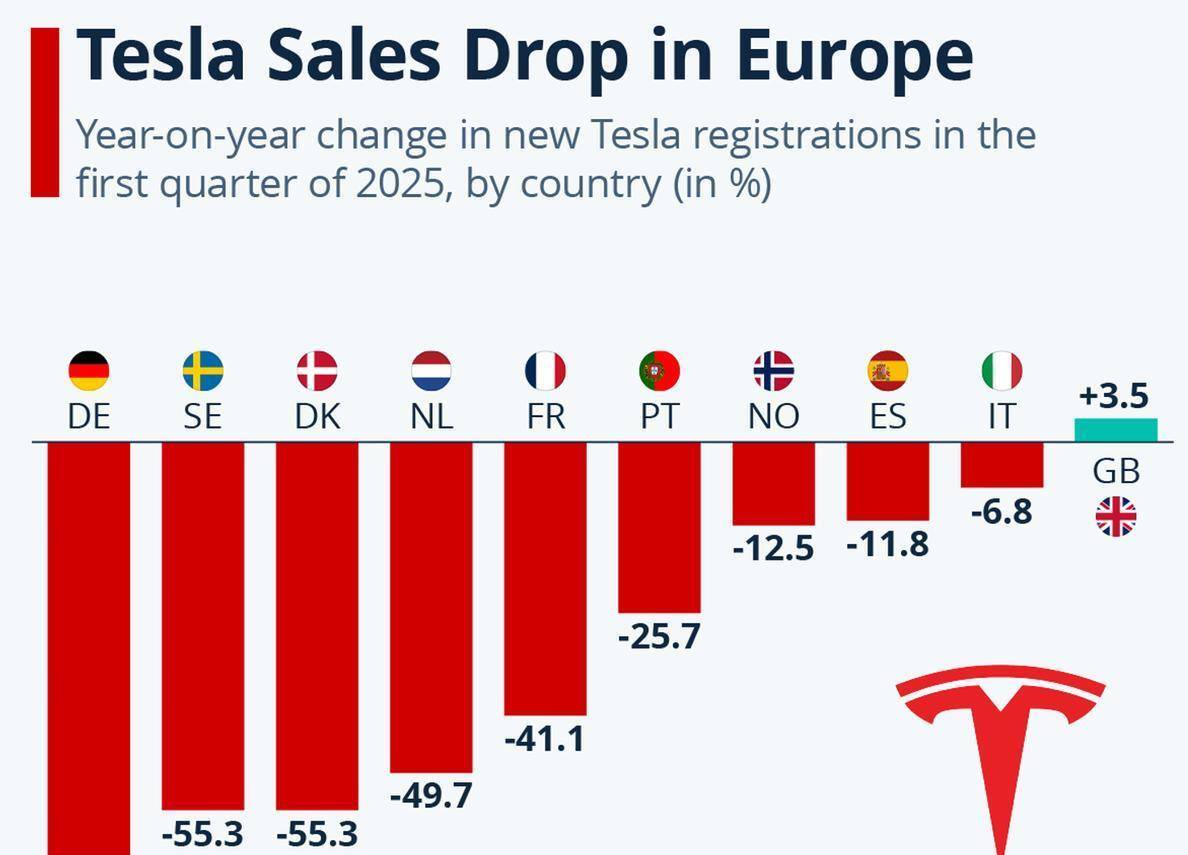
特朗普紧急发文承认美国或完蛋,中国成唯一最大救援
Sou Hu Cai Jing· 2026-01-14 12:49
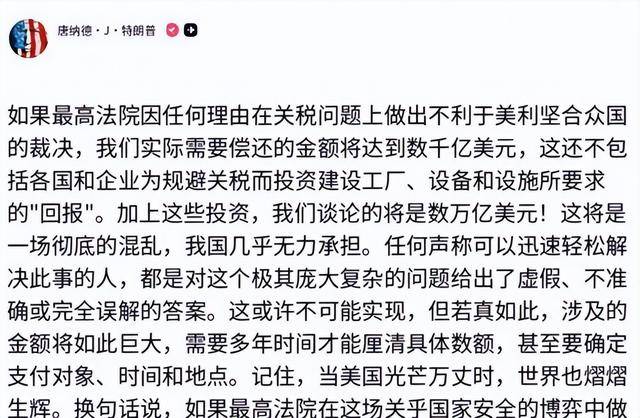
Group 1 - The article highlights the significant risks the U.S. faces regarding tariff policies, particularly if the Supreme Court rules unfavorably, which could lead to economic turmoil and potential refunds of tariffs [1][6] - Trump's administration is seeking to end the trade war with China, aiming to reach consensus on core resources like rare earths and chip technology, which are crucial for U.S. high-tech production [4][6] - The recent agreement between the EU and China on electric vehicle tariffs disrupts the U.S.'s plans to dominate the market, forcing American automakers to adjust their strategies in response to increased competition [2][4] Group 2 - Iran's warnings of retaliation against U.S. military actions increase risks for U.S. forces in the Middle East, complicating the geopolitical landscape for the Trump administration [2][8] - NATO's internal divisions regarding Greenland actions reflect challenges in U.S. foreign policy, as not all member states support unilateral U.S. initiatives, potentially leading to fractures within the alliance [2][6] - The Supreme Court's delayed decision on tariff policies prolongs uncertainty, prompting discussions within Trump's team about alternative strategies to mitigate potential impacts on the economy [6][8]
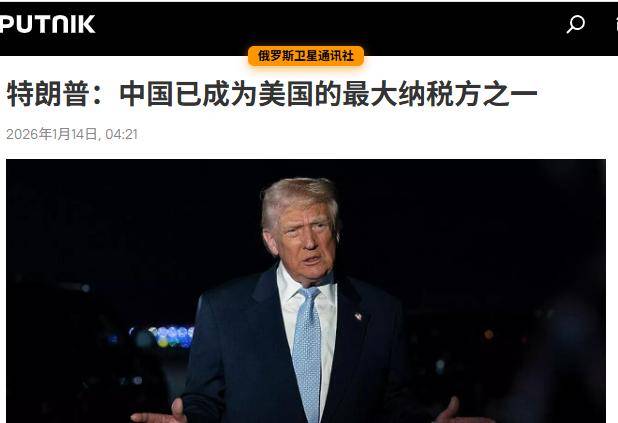
特朗普通报全球,他带领美国赢了中国!话音刚落,中方对美征税
Sou Hu Cai Jing· 2026-01-14 11:19
Group 1 - The article highlights the contradiction in the U.S. narrative regarding trade with China, emphasizing that American consumers and businesses bear the tax burden from tariffs, not Chinese exporters [3][5][21] - It points out that major U.S. tech companies like Nvidia and Intel are lobbying against tariffs while still seeking to sell to China, indicating a dependency on the Chinese market [5][19] - The U.S. government's recent decision to allow the sale of advanced chips to China comes with stringent conditions, reflecting a transactional approach rather than genuine cooperation [7][24] Group 2 - China's response to U.S. tariffs includes imposing anti-dumping duties on U.S. and South Korean solar-grade polysilicon, which is critical for the solar industry, potentially harming U.S. production [11][13] - The article notes that China's solar industry holds over 85% of the global market share, giving it significant leverage over the U.S. solar sector [14][25] - The diversification of agricultural supply sources for China, with countries like Argentina and Brazil strengthening ties, reduces reliance on U.S. agricultural exports [15][17] Group 3 - The narrative suggests that U.S. companies are increasingly reliant on the Chinese market for growth, with significant sales contributions from firms like Nvidia, Apple, and Tesla [21][23] - China's advancements in technology and supply chain capabilities have diminished the effectiveness of U.S. attempts to restrict access to critical components like chips [19][27] - The article concludes that China's market position has evolved to one of strength and choice, challenging the notion that it will passively accept unfavorable trade terms [27][28]


伊朗一夜之间稳住局面,特朗普一怒之下对中国突施冷箭:25%的关税即刻生效
Sou Hu Cai Jing· 2026-01-14 11:19
Core Viewpoint - Trump's decision to impose a 25% tariff on countries trading with Iran raises questions about the coherence of U.S. foreign policy and has sparked global attention [1] Group 1: Economic Implications - The tariff is seen as a means to increase economic pressure on Iran and its trade partners, with a particular focus on China, which is Iran's largest trading partner [3] - The projected non-oil trade volume between China and Iran is expected to reach $20.15 billion by 2025, highlighting the significance of this economic relationship [3] Group 2: Geopolitical Context - The tariff decision comes at a time when U.S.-China relations are delicately balanced, following a period of trade negotiations that have eased tensions [5] - Imposing tariffs on China could disrupt this fragile truce and provide China with a legitimate reason to retaliate, especially given its control over nearly 70% of global rare earth processing capacity [5] Group 3: International Relations - Other countries such as India, Turkey, and the UAE, which also trade with Iran, may face difficult choices due to the U.S. sanctions, potentially straining U.S. alliances [8] - These nations may reconsider their cooperation with the U.S. and seek more stable partnerships with China, reflecting a shift in international alliances [8] Group 4: Long-term Viability - The effectiveness and feasibility of Trump's tariff plan remain uncertain, influenced by the delicate balance of U.S.-China relations and the responses from the international market [6][8] - The potential for a renewed trade war could lead to detrimental outcomes for both the U.S. and its allies, emphasizing the need for careful consideration of the long-term impacts of such policies [6][8]