
重组胶原蛋白

Search documents
养生堂拟20亿投资锦波生物,钟睒睒再度加码大健康布局
Sou Hu Cai Jing· 2025-06-27 13:52
Core Viewpoint - The company Jinbo Biological announced a plan to issue shares to Yangshengtang, raising up to 2 billion yuan to enhance its capital structure and support its growth in the recombinant collagen market [1][4][5]. Group 1: Share Issuance and Strategic Partnership - Jinbo Biological plans to issue no more than 7.1756 million shares at a price of 278.72 yuan per share, raising a total of up to 2 billion yuan [1][4]. - A share subscription agreement has been signed with Yangshengtang, making it the second-largest shareholder with over 5% ownership [4]. - The partnership aims to leverage Yangshengtang's extensive experience in health products to enhance Jinbo's product development, industrial production, and market strategies [5][7]. Group 2: Company Performance and Market Position - Jinbo Biological reported a revenue of 1.443 billion yuan for 2024, a year-on-year increase of 84.92%, and a net profit of 732 million yuan, up 144.27% [4]. - Despite strong performance, the company faces challenges in scaling industrial production and requires additional funding to expand its market reach [4][5]. Group 3: Market Outlook - The recombinant collagen product market in China is projected to grow rapidly, reaching 58.57 billion yuan by 2025, with a compound annual growth rate of 44.93% [8]. - By 2030, the market is expected to reach 219.38 billion yuan, indicating significant growth potential [8].

暴涨超8%!钟睒睒拟大手笔入股
第一财经· 2025-06-27 13:04
Core Viewpoint - The article discusses the recent capital increase and strategic partnership of Jinbo Biological, a leader in recombinant collagen, with Yangshengtang, highlighting the financial implications and future growth potential in the collagen market [1][2]. Group 1: Capital Increase and Shareholder Changes - Jinbo Biological plans to issue up to 7.1756 million shares at a price of 278.72 yuan per share, raising a total of no more than 2 billion yuan, with 1.15 billion yuan allocated for the development of a humanized collagen FAST database and product development platform [1]. - Following the issuance, Yangshengtang will hold 5.87% of Jinbo Biological, making it the second-largest shareholder, while Yang Xia's stake will decrease to 50.73% [2][3]. - Yang Xia transferred 575.33 million shares (5% of total shares) to Hangzhou Jiushi at a price of 243.84 yuan per share, totaling 1.403 billion yuan [1][2]. Group 2: Strategic Cooperation and Market Position - Jinbo Biological and Yangshengtang signed a strategic cooperation agreement to enhance research and development collaboration, focusing on the application of collagen bio-materials in skincare, food, and pharmaceuticals [4][5]. - The partnership aims to leverage Yangshengtang's resources for brand promotion, channel management, and international expansion, aligning with Jinbo Biological's product offerings in anti-aging and medical aesthetics [5]. - Analysts note that the recombinant collagen industry is experiencing technological advancements and increasing consumer awareness, leading to accelerated commercialization [5].

高开高走
Zhong Guo Ji Jin Bao· 2025-06-24 10:07
Market Overview - The Hong Kong stock market experienced a significant rise, with the Hang Seng Index increasing by 2.06%, the Hang Seng Tech Index by 2.14%, and the Hang Seng China Enterprises Index by 1.9% [2] - The technology, financial, and automotive sectors saw widespread gains, while oil and gas stocks faced substantial declines [2] Technology and Financial Stocks - Major technology and financial stocks rose, with Xiaomi increasing nearly 4%, Hongye Futures surging over 15%, and China Galaxy rising nearly 9% [3] - Leading insurance stocks included China Taiping and Ping An, while major banks like Bank of Communications, China Construction Bank, and Industrial and Commercial Bank of China reached new highs [3] Oil and Gas Sector - The oil and gas sector suffered due to a sharp decline in international oil prices, influenced by geopolitical developments in the Middle East [4] - Notable declines included United Energy Group falling over 21%, Sinopec Oilfield Services down 15.85%, and Dalip Holdings dropping over 10% [4][5] Automotive Sector - The automotive sector benefited from favorable market conditions, with significant gains in stocks such as BYD (up 3.25%), Li Auto (up 3.81%), and Leap Motor (up 4.34%) [6][7] - The China Association of Automobile Manufacturers reported that vehicle production and sales in the first five months of the year increased by over 10% year-on-year, with new energy vehicles showing particularly strong growth [8] Company-Specific Developments - Juzhibio saw a rise of 5.27% following a statement addressing the limitations of its current collagen product testing methods [9] - The company acknowledged the need for improved quality standards and testing methods in response to industry advancements and consumer expectations [11][13] - Future measures include collaborating with research institutions to enhance testing methods, publicly sharing key technical parameters, and participating in the formulation of national and industry standards [14]

高开高走!
中国基金报· 2025-06-24 09:43
Group 1: Market Overview - The Hong Kong stock market opened high and closed with significant gains, with the Hang Seng Index rising by 2.06%, the Hang Seng Tech Index by 2.14%, and the Hang Seng China Enterprises Index by 1.9% [2] - The technology and financial sectors saw widespread gains, while the oil and gas sector experienced a sharp decline [2][3] Group 2: Technology and Financial Stocks - Major technology and financial stocks rose, with Xiaomi increasing nearly 4%, Hongye Futures soaring over 15%, and China Galaxy rising nearly 9% [4] - Leading insurance stocks included China Taiping and Ping An, while major banks like CCB, ICBC, and CMB reached new highs [4][5] Group 3: Oil and Gas Sector - The oil and gas sector faced significant sell-offs due to a sharp drop in international oil prices, with companies like United Energy Group falling over 21% and Sinopec Oilfield Services down 15.85% [6][7] - Specific stock performances included China Petroleum down 0.30%, Sinopec Oilfield Services down 15.85%, and United Energy Group down 21.21% [8] Group 4: Automotive Sector - The automotive sector benefited from favorable market conditions, with stocks like BYD rising 3.25%, Li Auto up 3.81%, and Leap Motor increasing 4.34% [9][10] - The overall automotive industry showed positive growth, with production and sales in the first five months of the year increasing by over 10% year-on-year, and new energy vehicle sales reaching 44% of total new car sales [12] Group 5: Company-Specific News - Juzhibio saw a rise of 5.27% following a statement addressing the limitations of its current collagen product testing methods [13][14] - The company acknowledged the need for optimization in quality standards and testing methods to meet industry advancements and consumer expectations [18]

深夜回应!两大巨头纷争迎“终章”
Zhong Guo Ji Jin Bao· 2025-06-24 04:31
Group 1 - The core issue revolves around the dispute between two major players in the medical beauty industry, Juzi Biotechnology and Huaxi Biotechnology, regarding recombinant collagen products [2] - Juzi Biotechnology acknowledged limitations in its current quality standards, testing methods, and labeling, which are not fully aligned with the industry's evolving high standards and technological advancements [2][7] - Following the announcement, Juzi Biotechnology's stock price surged over 7% on June 24 [3] Group 2 - Juzi Biotechnology outlined three future initiatives: collaborating with research institutions to enhance testing methods for recombinant collagen in cosmetics, gradually disclosing key technical parameters and quality control data, and actively participating in the formulation of national and industry standards for recombinant collagen [7] - Huaxi Biotechnology previously addressed concerns about the lack of relevant testing standards in the recombinant collagen sector, emphasizing the misuse of the term "collagen" and the need for clear scientific conclusions to avoid misleading the market and consumers [10]
深夜回应!两大巨头纷争迎“终章”
中国基金报· 2025-06-24 04:25
Core Viewpoint - The article discusses the ongoing dispute between two major players in the beauty industry, Juzi Biotechnology and Huaxi Biotechnology, focusing on Juzi's acknowledgment of limitations in their collagen product standards and their plans for improvement [2][8]. Group 1: Juzi Biotechnology's Response - Juzi Biotechnology admitted that their current quality standards, testing methods, and labeling have limitations that do not fully meet the high standards and requirements of industry development and technological advancement [2][8]. - The company plans to collaborate with research institutions to accelerate the optimization and validation of qualitative and quantitative testing methods for recombinant collagen in cosmetics [8]. - Juzi will gradually disclose key technical parameters and quality control data for raw materials and finished products to empower industry development and accept public supervision [8]. Group 2: Industry Standards and Developments - The latest industry standard for recombinant collagen dressings, YY/T 1947-2025, is set to be implemented in March 2026, indicating a need for updated compliance among companies [6]. - Juzi Biotechnology emphasized the necessity for continuous optimization and iteration of their quality standards and methods in response to the rapid development of the recombinant collagen industry and increasing consumer quality demands [8]. Group 3: Huaxi Biotechnology's Position - Huaxi Biotechnology previously addressed concerns regarding the lack of relevant testing standards in the recombinant collagen field, highlighting the misuse of the term "collagen" in the market [9]. - They criticized the misleading use of the term "collagen" by some companies, which do not produce the actual collagen sequence and structure, thus lacking physiological functionality [9]. - Huaxi believes that clear and scientifically verifiable conclusions are essential to avoid prolonged disputes and help companies resolve their issues quickly [9].


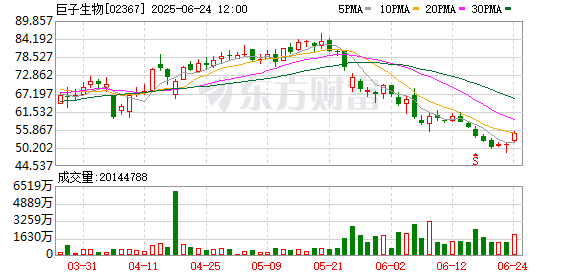
巨子生物深夜再回应可复美配方事件:现有检测方法存局限性
Xin Lang Cai Jing· 2025-06-24 01:14
Core Viewpoint - The company, Xi'an Juzhi Biological Gene Technology Co., Ltd. (referred to as "Juzhi Biological"), has issued a statement addressing controversies surrounding its recombinant collagen product, Kefu Mei, emphasizing its commitment to quality standards and ongoing improvements in response to industry developments [1][2]. Group 1: Company Background and Standards - Juzhi Biological applied for the first domestic invention patent related to recombinant collagen in 2001, naming the innovative substance "human-like collagen" and applying for the "human-like" trademark [1]. - The company has accumulated over 20 years of technical expertise, transitioning the substance from laboratory research to industrial application [1]. - Multiple industry standards related to recombinant collagen have been established, including the 2021 "Guidelines for Naming Recombinant Collagen Biological Materials" and the 2022 medical industry standard YY/T 1849-2022 [1]. Group 2: Quality Control and Self-Inspection - The company claims that its product development and production adhere to established standards, implementing quality control measures for raw materials and products [2]. - In response to the controversies, Juzhi Biological conducted a comprehensive self-inspection of all production, testing, and labeling processes, validating different testing methods [2]. - The company acknowledged limitations in its existing quality standards and testing methods, indicating a need for continuous optimization to meet evolving industry standards [2]. Group 3: Controversy and Response - The controversy began when a beauty blogger accused Juzhi Biological's Kefu Mei product of ingredient fraud, claiming the actual collagen content was only 0.0177% [3]. - Juzhi Biological refuted these claims, stating that their testing results showed collagen content exceeding 0.1%, contradicting the blogger's assertions [3]. - The dispute centers on differing testing methods, with both parties accusing each other of using "unscientific" approaches, as there are currently no national standards for testing recombinant collagen in cosmetics [3]. Group 4: Market Impact - As of June 23, Juzhi Biological's total market value was HKD 54.83 billion, reflecting a nearly 40% decline from its peak on May 20 [4].
巨子生物:公司现有质量标准、检测方法和标签标识已显现局限性,需要优化迭代
Cai Jing Wang· 2025-06-24 00:31
Core Viewpoint - The company has issued a statement regarding the standards and developments related to recombinant collagen products, highlighting the need for continuous improvement in quality standards and testing methods to meet industry demands and consumer expectations [1][2]. Group 1: Industry Standards - In 2021, the guideline for naming recombinant collagen biomaterials was published and implemented [1] - In 2022, the pharmaceutical industry standard YY/T 1849-2022 for recombinant collagen was published and implemented [1] - In 2023, the pharmaceutical industry standard YY/T 1888-2023 for recombinant humanized collagen was published and implemented [1] - In 2023, the group standard T/ZGKSL 004-2023 for recombinant collagen raw materials used in cosmetics was published and implemented [1] - In 2025, the pharmaceutical industry standard YY/T 1947-2025 for recombinant collagen dressings is set to be published, with implementation in March 2026 [1] Group 2: Company Response and Actions - The company has conducted a comprehensive self-inspection of all aspects of production, testing, and labeling in response to recent discussions about the recombinant collagen content in its products [1] - The company acknowledges the limitations of its current quality standards, testing methods, and labeling, which need to be optimized to align with industry advancements and high consumer expectations [2] - The company plans to collaborate with research institutions to accelerate the optimization and validation of qualitative and quantitative testing methods for recombinant collagen in cosmetics [2] - The company aims to gradually disclose key technical parameters and quality control data for raw materials and finished products to empower industry development and accept public supervision [2] - The company will continue to participate in the formulation of national and industry standards related to recombinant collagen in cosmetics to promote standardized industry development [2]
10个美妆品牌,9个次抛
Xin Lang Cai Jing· 2025-06-19 10:03
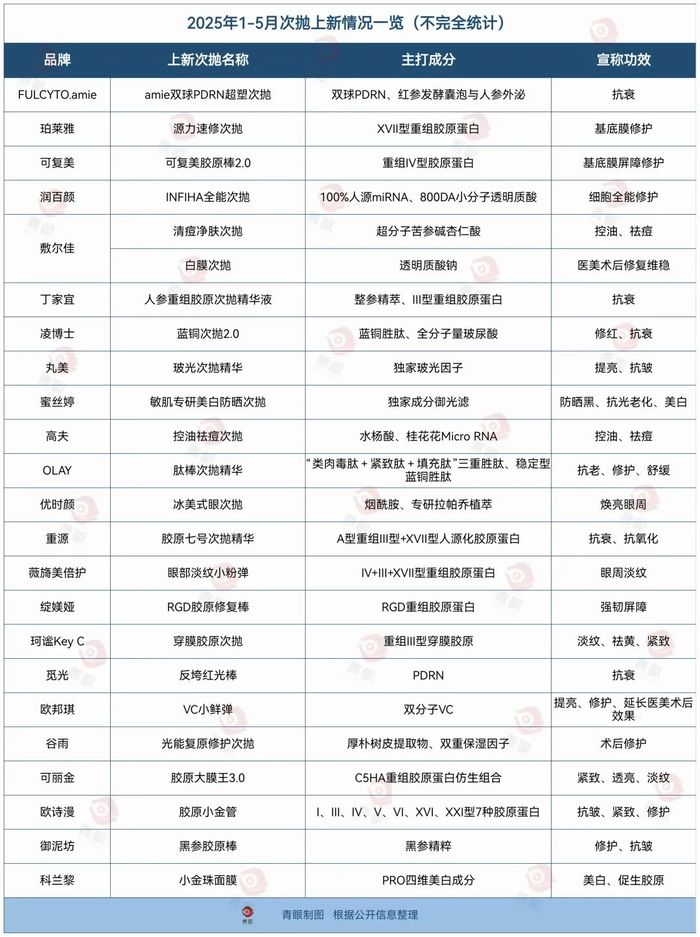
Core Insights - The "next-use" essence is becoming a must-have option for beauty brands, with the market size in China expected to reach 7.5 billion yuan in 2024, reflecting a year-on-year growth of over 20% [1] - Major brands like OLAY, Proya, and Miss Tina are entering the next-use product space, indicating a trend where "9 out of 10 brands" are adopting this format [1] Market Trends - The next-use essence has emerged as a phenomenon in the beauty sector, highlighted by over 20 next-use essence products launched during the 618 shopping festival [2] - The cumulative filing of "next-use" products reached 6,518 by June 17, 2025, with 5,653 specifically for next-use essences [2] - In the first five months of 2025, 21 out of 24 newly launched next-use products were essences, accounting for over 87% [2] Product Development - The next-use essence market is diversifying, with brands like OLAY and Proya focusing on specific skin issues such as anti-aging and acne treatment [4] - Key ingredients in next-use essences include recombinant collagen, with some products featuring multiple types for targeted anti-aging effects [4] - The introduction of next-use formats is expanding beyond essences to include sunscreen, makeup removers, and even men's skincare products [5] Consumer Demand - Consumer education around next-use essences is maturing, and brands are encouraged to create unique advantages to stand out in a competitive market [5] - The convenience and hygiene of next-use products are appealing to consumers, especially for those with sensitive skin or post-medical treatment needs [5][6] - Social media engagement around next-use products is significant, with topics related to them generating over 1.7 billion views on platforms like Xiaohongshu [9] Industry Challenges - Some industry experts express concerns about the environmental impact of next-use packaging, which often relies on plastic materials [10] - There is a debate about the necessity of next-use formats for all products, with some suggesting that not all formulations require such packaging [10][11] - The industry is exploring more sustainable packaging options to address environmental concerns while maintaining the convenience of next-use products [10]


华熙生物:质疑重组胶原蛋白并非针对竞争对手
2 1 Shi Ji Jing Ji Bao Dao· 2025-06-18 10:47
Core Viewpoint - The recent debate in the medical beauty industry regarding "recombinant collagen" has led to significant stock price fluctuations for leading companies, particularly Huaxi Biological and Juzhi Biological, with Huaxi denying any "business war" motives behind its actions [1][5]. Group 1: Market Reactions and Company Performance - From May 24 to June 18, Huaxi Biological's stock price increased by 23.65%, while Juzhi Biological's stock price fell by over 31% during the same period [1]. - As of June 18, Juzhi Biological's market capitalization was approximately 514 billion RMB, while Huaxi Biological's market capitalization was 245 billion RMB, less than half of Juzhi's [1]. Group 2: Opposition to "Name Games" - Huaxi Biological firmly opposes the "name game" in ingredient labeling, arguing that the capital market's concept switching has led to misunderstandings about hyaluronic acid and recombinant collagen, affecting the business environment and causing resource misallocation [2][3]. - The company emphasizes that recombinant collagen is only a small part of collagen research and that the leading edge of protein research remains with life science institutions and pharmaceutical companies [3]. Group 3: Industry Standards and Scientific Communication - Huaxi Biological highlights that no medical beauty Class III device certificates based on recombinant collagen have been approved internationally, indicating that this field requires more time for practical observation [3]. - The company plans to enhance professional communication with the capital market, noting that many analysts lack a biological background and often misinterpret the relationship between hyaluronic acid and collagen [4]. Group 4: Denial of Business War Claims - Huaxi Biological denies rumors that its recent actions are motivated by a "business war" due to pressure on its hyaluronic acid business and competition losses in recombinant collagen [5][6]. - The company asserts that its business has not been under pressure as claimed, with hyaluronic acid business growing over 10% annually and medical-grade hyaluronic acid growing over 20% [6]. Group 5: Consumer Trust and Market Integrity - Huaxi Biological argues that consumer trust in domestic brands should not be built on the misuse of academic concepts and misleading marketing practices, which could distort the business ecosystem and lead to resource misallocation [7]. - The company calls for industry-wide participation in product testing and standard discussions to enhance understanding and eliminate industry bubbles and misconceptions [7]. Group 6: Timeline of Events - The controversy began in mid-May when Huaxi Biological questioned several brokerage reports that promoted recombinant collagen and criticized hyaluronic acid [8]. - On May 24, beauty blogger "Big Mouth Doctor" Hao Yu publicly questioned the collagen content in Juzhi Biological's products, leading to further disputes [9][10].