AGI(通用人工智能)

Search documents
DeepSeek流量下滑,周鸿祎称梁文锋就没想认真做to C的App
21世纪经济报道· 2025-07-23 09:41
Core Viewpoint - DeepSeek's decline in traffic is attributed to its focus on AGI and large model technology development rather than consumer-facing applications, as stated by Zhou Hongyi, founder of 360 Group [1][2]. Group 1: DeepSeek's Impact on the Industry - DeepSeek has significantly contributed to the development of China's large model industry by eliminating the "hundred model war," which prevents resource waste and encourages the use of existing open-source models as foundational models, thus promoting the development of Agents, which are crucial for the implementation of large models [2]. - The company has demonstrated the value of adhering to an open-source approach in China, which not only benefits its own industry development but may also create an ecological advantage over the monopolistic and closed paths of the United States [2]. - DeepSeek, along with companies like Qianwen and Kimi, forms a core team in China's open-source sector, and as long as models maintain open-source status and reach international standards, it will be beneficial for China's development [2]. Group 2: DeepSeek's Current Status and Future Prospects - Zhou Hongyi noted that despite DeepSeek's recent lack of updates, its foundational models are still widely used by many domestic companies, indicating that DeepSeek provides essential "weaponry" for these companies [1]. - There is speculation about whether DeepSeek R2 will be launched in the second half of the year, with the potential for significant developments, although recent advancements by foreign engines and domestic competitors like Kimi and Qianwen raise questions about DeepSeek's ability to regain momentum [1].


周鸿祎评DeepSeek流量下滑:梁文锋一心扑在AGI上
2 1 Shi Ji Jing Ji Bao Dao· 2025-07-23 07:05
Core Viewpoint - DeepSeek's decline in traffic is attributed to its focus on AGI and large model technology development rather than consumer app engagement, as stated by Zhou Hongyi, founder of 360 Group [1][2] Group 1: DeepSeek's Current Status - DeepSeek's website traffic has decreased due to a lack of investment in consumer-facing applications, despite high usage of its large models on third-party cloud services [1] - Zhou Hongyi emphasized that DeepSeek provides essential foundational models for many companies, likening it to supplying "weapons" for the industry [1] Group 2: Contributions to the Industry - DeepSeek has played a significant role in the Chinese large model industry by eliminating the "hundred model war," thus preventing resource waste and promoting the development of agents, which are crucial for the application of large models [2] - The company has demonstrated the value of an open-source approach in China, which not only benefits domestic industry growth but may also create an ecological advantage over the monopolistic and closed paths of the U.S. [2] Group 3: Future Outlook - There is uncertainty regarding the release of DeepSeek R2 in the second half of the year, with observations that competitors have improved their capabilities during DeepSeek's recent inactivity [1]

“国产芯片必须咬牙坚持用!”周鸿祎:360近期采购全是华为产品
Di Yi Cai Jing· 2025-07-23 06:28
Group 1 - The core viewpoint emphasizes the rapid development of domestic chips in China, particularly in the context of AI, as highlighted by Zhou Hongyi's comments on the recent visit of NVIDIA CEO Jensen Huang [1] - Zhou Hongyi stated that 360 Group is shifting its chip procurement towards domestic products, specifically Huawei's chips, despite acknowledging the performance gap with NVIDIA's offerings [1] - The discussion also pointed out that while NVIDIA's H20 chip is more suitable for inference tasks, domestic chips offer better cost-performance ratios for similar applications [1] Group 2 - Zhou Hongyi addressed the recent decline in traffic for DeepSeek, clarifying that the platform's value should not be judged solely on surface-level metrics, as many large models and industry agents continue to rely on DeepSeek [2] - He mentioned that DeepSeek has set a positive precedent for the Chinese large model industry by eliminating redundant efforts and promoting an open-source approach to enhance international competitiveness [2] - The anticipated release of DeepSeek-R2 remains uncertain, with Zhou suggesting that the company may be preparing significant updates amidst competitive pressures [2] Group 3 - Zhou Hongyi highlighted new security challenges posed by AI agents, noting that the accessibility of large models allows individuals without programming skills to execute potentially harmful operations [3] - The emergence of "hacker agents" utilizing AI to enhance attack methods was discussed, indicating a shift in the cybersecurity landscape where traditional defenses are increasingly challenged by algorithmic adversaries [3] - The transformation of cybersecurity from human-to-human confrontations to algorithmic and machine-based conflicts necessitates a shift in strategy for security companies to develop their own intelligent security agents [3] Group 4 - Zhou Hongyi revealed that 360 is planning to enter the AI glasses market, acknowledging the challenges associated with creating functional and appealing eyewear [4] - He emphasized the importance of display functionality in AI glasses, suggesting that without it, the product may not offer significant advantages over existing smart devices [4]

算力的尽头是电力:墨脱水电站,决定AI竞赛胜负的“电力底牌”
Tai Mei Ti A P P· 2025-07-23 04:04
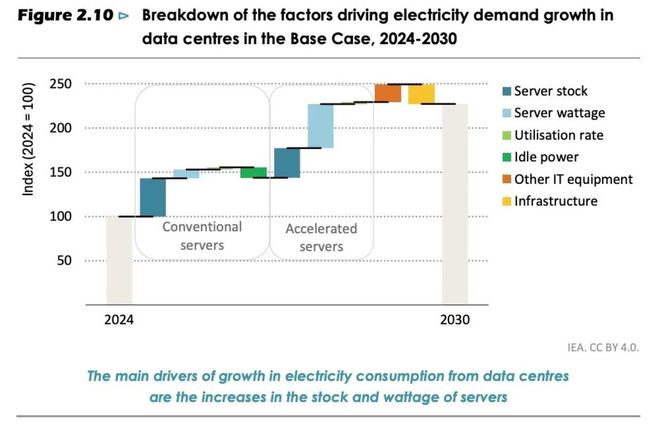
Core Insights - The article emphasizes that electricity is becoming a critical factor in the competition for artificial intelligence (AI) development, overshadowing traditional elements like algorithms and chips [1][5] - The demand for electricity in AI applications is expected to surge dramatically, with projections indicating that global data center electricity consumption will double from 415 TWh in 2024 to 945 TWh by 2030 [2] - The construction of the Mêdog Hydropower Station in China is highlighted as a strategic initiative to secure a stable and abundant energy supply for AI computing power, positioning China favorably in the global AI landscape [6][10] Energy Crisis in AI - The article discusses an ongoing AI electricity crisis, where the energy consumption for training AI models, such as GPT-4, is extraordinarily high, with a single training session consuming over 50 million kWh [1] - Major tech companies like Amazon, Microsoft, and Google are facing challenges in securing sufficient electricity for their data centers, as existing power grids reach their limits [3] Mêdog Hydropower Station - The Mêdog Hydropower Station is projected to have an installed capacity of 60 million kW and an annual generation of nearly 300 billion kWh, which is equivalent to the combined output of three Three Gorges Dams [8] - This hydropower station is expected to provide a stable and low-cost energy source, significantly reducing operational costs for AI computing in China compared to competitors in Silicon Valley [10] Strategic Importance - The Mêdog project is seen as a crucial element in China's long-term strategy for AI dominance, aligning with national initiatives like "East Data, West Computing" and carbon neutrality [11][12] - The unique geographical features of the Yarlung Tsangpo River in Tibet provide an unparalleled opportunity for hydropower generation, making this project feasible only in China [12][13] Conclusion - The Mêdog Hydropower Station represents not just an engineering feat but also a manifestation of China's strategic vision for the future of AI and energy [14] - The article concludes that the ability to harness clean and abundant electricity will define the success of nations in the AI era, positioning China as a formidable player in this new landscape [15]
“Salesman”李开复
Sou Hu Cai Jing· 2025-07-23 02:16
Core Insights - The article discusses the strategic shift of Zero One Infinity, led by CEO Kai-Fu Lee, towards a focus on commercializing AI applications rather than developing large foundational models [4][5][6] - The company aims to create a one-stop platform for enterprise AI solutions, emphasizing efficiency and value delivery to clients [10][11] Group 1: Company Strategy - Zero One Infinity has officially launched the "Wanzhi Agent" platform, marking a significant step in its transition to a business-to-business (B2B) model [1][6] - The company has decided to abandon the pursuit of training super-large models, opting instead for faster and more cost-effective models that can generate revenue [4][5] - CEO Kai-Fu Lee emphasizes the importance of creating a market for AI, likening the company's role to that of an operating system that enables foundational models to deliver real value [5][6] Group 2: Product Offerings - The newly launched "Wanzhi Enterprise Model 2.0" provides comprehensive solutions, including secure model deployment, model fine-tuning, and tools for knowledge management [6][10] - The "Super Employee Agent" solution is designed to enhance enterprise efficiency by addressing management bottlenecks and leveraging AI agents that can operate continuously without fatigue [7][10] Group 3: Market Position and Collaboration - Zero One Infinity is positioned as a leader among the "AI Six Tigers," being the first to achieve 100 million yuan in revenue in 2023 [10][12] - The company is actively collaborating with local governments and various industries to explore AI applications, establishing a robust ecosystem of partners [5][12] - The sales strategy involves direct engagement with CEOs and decision-makers to create tailored AI solutions, fostering a deep co-creation model rather than a traditional bidding process [9][12] Group 4: Future Outlook - CEO Kai-Fu Lee has set ambitious revenue targets for 2025, predicting significant growth driven by the value output of AI agents [11][14] - The company aims to shift the perception of AI agents from simple tasks to comprehensive solutions that enhance operational efficiency and profitability for enterprises [11][12]

Grok 4遥遥领先,但马斯克想要得更多
首席商业评论· 2025-07-21 03:34
Core Viewpoint - The article discusses the ambitious and high-risk strategy of Elon Musk's xAI, focusing on the launch of the Grok 4 AI model, its capabilities, and the financial challenges the company faces in the competitive AI landscape [5][10][25]. Group 1: Grok 4 AI Model - Grok 4 is touted as the "world's strongest AI model," achieving graduate-level performance across various disciplines and outperforming competitors in standardized tests [5][8]. - Grok 4's training volume is 100 times that of Grok 2, with a computational power investment in reinforcement learning exceeding that of any other model on the market [8]. - The subscription fee for Grok 4 is set at $30 per month, while the more advanced Grok 4 Heavy version costs $300 per month [8]. Group 2: Financial Challenges - xAI's monthly expenditure is reported to be around $1 billion, with total expenses projected to reach $13 billion in 2024 against an expected revenue of only $500 million [11][22]. - The company is pursuing an aggressive hardware strategy, planning to build a supercomputer with 1 million NVIDIA GPUs, which could cost between $5 billion and $62.5 billion [13]. - xAI's financial needs are compounded by debts incurred from Musk's acquisition of Twitter, which adds to the company's overall financial burden [15]. Group 3: Competitive Landscape - The AI industry is shifting from a "scale race" to a focus on efficiency and application depth, with competitors like OpenAI and Anthropic making significant advancements [16][20]. - xAI's current revenue heavily relies on the X Premium subscription service, with only 20 million active users compared to OpenAI's 100 million [23]. - Analysts predict that xAI could achieve profitability by 2027, potentially outpacing OpenAI, but this is contingent on several optimistic assumptions [22]. Group 4: Strategic Positioning - Musk's strategy involves leveraging the data and computational resources from his other ventures, such as Tesla and Twitter, to enhance Grok's capabilities and reduce costs [20]. - The article highlights the ongoing debate about the definition of AGI, with Musk positioning Grok as a potential leader in this space, despite skepticism about its current capabilities [19].

宇树科技及产业链深度解读
2025-07-16 00:55
Summary of the Conference Call on Yushu Technology and Industry Chain Company and Industry Overview - **Company**: Yushu Technology - **Industry**: Robotics, specifically quadruped and humanoid robots - **Key Supplier**: Huarui Precision, a tool and integrated solution provider Core Insights and Arguments 1. **Order Demand and Production Challenges**: Yushu Technology is experiencing overwhelming order demand, leading to production bottlenecks in core components such as motors, reducers, and LiDAR. This has resulted in product quality issues, necessitating improvements in tool quality and process optimization to meet market demand [1][3][4] 2. **Market Position**: Yushu Technology holds a leading position in the quadruped robot market, with 2023 sales accounting for nearly 70% of the global market share and 41% in revenue. The company is also expanding into the humanoid robot market, aiming to become a leader in this sector [1][5][7] 3. **Production Timeline**: Yushu Technology is expected to enter mass production of humanoid robots by the end of 2024, with projected sales of 5,000 units, comparable to competitors like Tesla and Zhiyuan Tongxing [1][7] 4. **AGI Development Perspective**: Yushu Technology believes that AGI (Artificial General Intelligence) should be based on training with vertical domain data to form a general model. The company aims to leverage its hardware advantages and technology reuse effects to explore unique development paths in humanoid robotics [1][14][20] Additional Important Insights 1. **Huarui Precision's Role**: Huarui Precision is positioned as a key player in the supply chain, providing stable and reliable tools and technical support to help Yushu Technology enhance its core component production capacity [1][4][21] 2. **Financial Projections for Huarui Precision**: Huarui Precision is expected to achieve significant growth, with projected revenue of 10.5 billion yuan in 2025, a nearly 40% year-on-year increase. The humanoid robot tool market is anticipated to reach 7 billion to 12.6 billion yuan by 2027 [3][23][30] 3. **Market Dynamics**: The tool industry is witnessing a shift with foreign companies retracting and domestic firms like Huarui Precision gaining market share. Huarui is expected to benefit from this trend, with a projected market value increase due to its integrated solutions [22][24][25] 4. **Technological Advantages**: Yushu Technology's humanoid robots feature high degrees of freedom, with the G1 model exceeding twenty degrees of freedom, allowing for unique movements that are difficult for humans to replicate [8][10][11] 5. **Future Market Supply and Demand**: The humanoid robot market is expected to face supply challenges until 2025-2026, with Yushu Technology strategically positioned to meet emerging demands through rapid product launches and application expansion [12][13] Conclusion Yushu Technology is poised for significant growth in the humanoid robotics market, supported by strong order demand and strategic partnerships with suppliers like Huarui Precision. The company’s focus on technological innovation and market responsiveness positions it well to capitalize on future opportunities in the AGI landscape.

CoreWeave(CRWV.US)斥资60亿美元加码数据中心 AI算力版图向吉瓦级狂飙
智通财经网· 2025-07-15 11:39
Core Viewpoint - CoreWeave plans to invest up to $6 billion to establish a large AI data center in Lancaster, Pennsylvania, as it expands its AI computing infrastructure across the U.S. [1][2] Investment and Expansion - The company aims to develop an initial capacity of 100 megawatts (MW) of computing resources, potentially expanding to 300 MW in the future [2][3] - The data center is expected to create 600 high-paying jobs during construction and provide 175 long-term positions once operational [2][3] Market Demand and Performance - The global demand for AI computing power is surging, with significant investments from tech giants like Nvidia and Meta, indicating a strong market for AI infrastructure [2][4] - CoreWeave's stock price has increased over threefold since its IPO in March, closing at $132.37, with a pre-market rise of over 9% following the announcement of the data center [4][5] Technological Advancements - CoreWeave is set to deploy next-generation Nvidia AI GPUs and NVL AI server racks to support the training and operation of large-scale AI models [3][6] - The company has become a key player in the AI cloud computing market, being the first to deploy Nvidia's H200 Tensor Core GPU, enhancing its reputation and capabilities [6][7] Service Offering - CoreWeave specializes in providing high-end AI GPU clusters on a large scale, allowing users to access powerful AI computing resources on demand for various AI workloads [7]

梁文锋发愁
投资界· 2025-07-15 07:55
Core Viewpoint - DeepSeek is experiencing a decline in user engagement and website traffic, yet remains committed to its long-term vision of developing an ecosystem for general artificial intelligence (AGI) [3][4][5]. User Engagement and Traffic - DeepSeek's user usage rate has dropped from a peak of 7.5% at the beginning of the year to 3% [3]. - As of May, DeepSeek's mobile monthly active users decreased to 169 million from 194 million in March, a drop of 25 million [3]. Company Vision and Strategy - Founder Liang Wenfeng emphasizes that the current phase is one of technological innovation rather than application explosion, aiming to establish an ecosystem for direct industry use of their technology [4]. - The transition from a technology acceleration phase to an application acceleration phase is anticipated around 2025, as noted by industry expert Zhou Zhifeng [4]. Competitive Landscape - DeepSeek is compared to OpenAI, possessing strong foundational models and the largest user base among AI products in China, but faces competition from tech giants like Alibaba and Tencent [4]. - OpenAI has advanced in application-level organization, appointing a dedicated "application CEO" to focus on product and business development [5]. Product Development and Updates - DeepSeek has made recent updates to its product, including new login options and functionality enhancements, such as text recognition and file upload features [8][9]. - The service uptime for DeepSeek's API and web chat services has exceeded 99% in the last 90 days, resolving previous performance issues [9]. Recruitment and Team Composition - DeepSeek is actively recruiting for product and design roles, indicating a focus on developing next-generation intelligent products centered around large language models (LLM) [11]. - The team consists of approximately 130 members, primarily young graduates from domestic universities, characterized by their passion for technology [11]. Market Position and Future Outlook - For AI startups, creating a super consumer application is crucial for securing funding and ensuring growth, as many are transitioning from startup to growth stages [13]. - DeepSeek is positioned to leverage its backing from Huanfang Quantitative, providing a financial safety net for its commercial endeavors [14]. - The ultimate goal for DeepSeek is to establish a comprehensive AI ecosystem, akin to those developed by major companies like Google and Apple, although this is recognized as a long-term endeavor [15][17].

一个价值1000亿的词,让OpenAI和微软杠上了
Hu Xiu· 2025-07-13 07:15
Core Viewpoint - The ongoing debate between Microsoft and OpenAI regarding the definition of Artificial General Intelligence (AGI) highlights the complexities and ambiguities surrounding the term, which has significant implications for their business relationship and the broader AI industry [5][19][36]. Group 1: Definition and Implications of AGI - In 2023, Microsoft and OpenAI defined AGI as "an autonomous system capable of generating $100 billion in profit" [2]. - OpenAI later revised this definition to describe AGI as "a highly autonomous system that outperforms humans in the most economically valuable work" [3]. - The lack of consensus on AGI's definition has led to tensions between Microsoft and OpenAI, as the ability to declare the achievement of AGI carries substantial economic and strategic weight [19][36]. Group 2: Economic and Strategic Considerations - The ambiguity surrounding AGI allows companies to leverage the term for investment attraction, valuation, and negotiation advantages [12][18]. - The concept of AGI has become a powerful narrative in the tech industry, with the potential to unlock funding and reshape competitive dynamics among major players [11][16]. - The ability to define AGI is seen as a means to control economic benefits, including investment and policy resources [12][37]. Group 3: Research and Modeling of AGI's Impact - A study from Newcastle University attempts to model the socio-economic impacts of AGI, aiming to identify critical thresholds where AI technology could irreversibly alter social structures [23][31]. - The research employs various production functions to simulate the effects of AGI on labor replacement and capital accumulation [26][30]. - The findings suggest that while AGI may not be precisely defined, its implications can be quantified through economic modeling, reflecting a shift towards a more pragmatic approach in the tech community [34][35].