
套期保值

Search documents
80亿拿下南美优质铜金矿!江铜四季度套保操作遇挫,亏损或抵半矿估值
Sou Hu Cai Jing· 2025-12-27 17:40
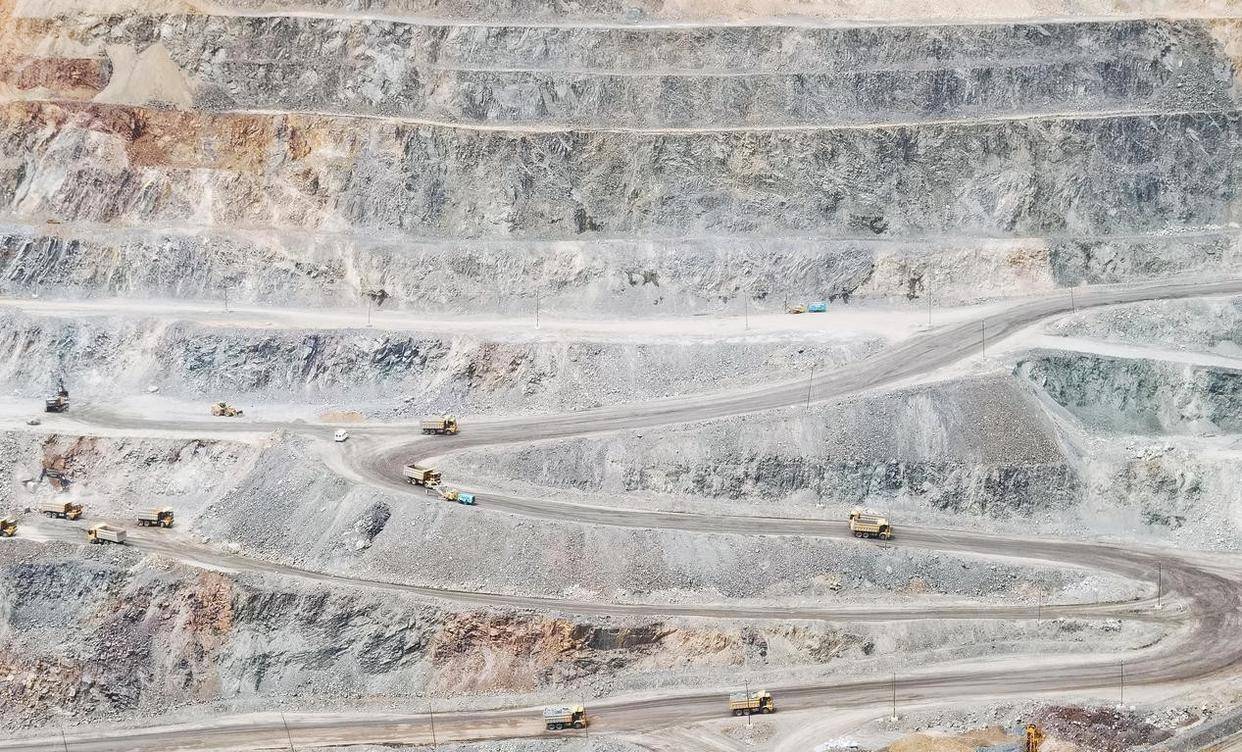
Core Viewpoint - Copper prices have surged significantly, leading to a major acquisition by Jiangxi Copper, which purchased a world-class copper-gold mine in Ecuador for approximately 8 billion RMB, potentially doubling its copper production in the future [1][10] Group 1: Acquisition Details - Jiangxi Copper acquired the Cascabel mine in Ecuador, which has over 10 million tons of copper reserves and several million ounces of gold, marking a strategic move to enhance its resource base [1][10] - The acquisition price was set at 28 pence per share, with Jiangxi Copper making three price increases before the formal offer on December 24 [1] Group 2: Financial Risks - Simultaneously, Jiangxi Copper faced significant losses in the domestic futures market, estimated at nearly 4 billion RMB, which is equivalent to half the value of the mine it just acquired [3][5] - The company held an average net short position of about 40,000 contracts in the copper futures market during the fourth quarter, leading to substantial floating losses as copper prices soared [5][6] Group 3: Operational Challenges - Jiangxi Copper's self-produced copper is only about 200,000 tons annually, which is insufficient for its refining capacity, forcing it to rely heavily on purchasing copper concentrate [3][10] - The company's gross profit margin from copper sales has been low, often between 3% and 4%, indicating a reliance on processing fees rather than resource ownership [3][10] Group 4: Market Dynamics - The copper market is experiencing a "super bull market" due to supply-demand imbalances, with major copper-producing countries facing production issues while new industries like electric vehicles and solar energy are increasing copper demand [6][12] - The traditional hedging strategy of holding net short positions in futures may not be effective in such a volatile market, raising concerns about the adequacy of Jiangxi Copper's risk management practices [6][12] Group 5: Strategic Implications - The acquisition of the Cascabel mine represents a critical strategic move for Jiangxi Copper to transition from a processing-focused company to a resource-owning entity, which is essential for improving its profitability [10] - However, the financial burden from the acquisition and potential futures market losses raises questions about the company's ability to manage cash flow and financial stability [10][12]

每周股票复盘:特变电工(600089)拟取消监事会并开展86亿套期保值
Sou Hu Cai Jing· 2025-12-27 17:31
特变电工股份有限公司于2025年12月26日设立"特变电工-特变新能源基础设施投资绿色碳中和1期资产 支持专项计划",优先级和次级资产支持证券已全额认购,募集资金总额为133,700.00万元。优先级证券 规模为131,600.00万元,评级AAA,预期年收益率2.70%,按年付息并期间摊还本金;次级证券规模为 2,100.00万元,不设预期收益率。专项计划已获上海证券交易所无异议函,托管人为中国民生银行乌鲁 木齐分行,登记机构为中国证券登记结算有限责任公司上海分公司。 截至2025年12月26日收盘,特变电工(600089)报收于23.46元,较上周的21.88元上涨7.22%。本周, 特变电工12月26日盘中最高价报23.79元。12月22日盘中最低价报21.92元。特变电工当前最新总市值 1185.39亿元,在电网设备板块市值排名3/123,在两市A股市值排名149/5178。 本周关注点 公司公告汇总 特变电工股份有限公司召开2025年第六次临时股东大会,审议开展套期保值及远期外汇交易业务、与新 疆特变电工集团有限公司2026年度日常关联交易、取消监事会、修订公司章程及各项议事规则等议案。 套期保值业 ...

铜价破12000美元关口创新高,江西铜业套保风险引关注
Sou Hu Cai Jing· 2025-12-26 22:40
Group 1 - The core point of the article is the significant rise in copper prices, which has reached historical highs due to a combination of supply shortages, increased demand from new industries, and macroeconomic policies [1][3][4] - Copper prices on the London Metal Exchange (LME) surpassed $12,000 per ton, marking a year-to-date increase of over 37%, potentially the largest annual gain since 2010 [1][3] - Domestic copper futures in China also rose, with the main contract closing at 96,200 yuan per ton, reflecting a 1% increase in a single day [1][3] Group 2 - The supply side is facing challenges, with global copper mine production expected to decline by 4.7% year-on-year due to issues in major mining regions, leading to a potential supply gap of 150,000 to 300,000 tons [3][4] - The demand for copper is being driven by new industries such as renewable energy and AI, with significant copper consumption in solar and wind energy, as well as electric vehicles [3][4] - Macroeconomic factors, including expectations of interest rate cuts by the Federal Reserve and a weaker dollar, have contributed to increased investment in the metals market, further pushing copper prices higher [4] Group 3 - Jiangxi Copper, as the largest copper producer in China, employs hedging strategies to mitigate price volatility, which has become a focal point amid rising copper prices [1][5] - The company utilizes futures and options to lock in profits and avoid losses from price fluctuations, with a structured risk management approach in place [4][5] - In the first half of 2025, Jiangxi Copper reported revenues of 256.96 billion yuan and a net profit of 4.18 billion yuan, indicating a 15.42% year-on-year increase, with hedging contributing to stable performance [4][5] Group 4 - Despite the hedging strategy, Jiangxi Copper faces risks due to the extreme price increases, including potential losses from short positions and increased margin requirements [5][6] - The company is prepared to adjust its hedging strategies in response to market volatility, with regular assessments and compliance audits to ensure effective risk management [7] - Market analysts predict that copper prices may continue to rise, with forecasts suggesting prices could reach $15,000 per ton by mid-2026, which could increase the pressure on Jiangxi Copper's hedging operations [7][8]

盐湖股份(000792) - 000792盐湖股份投资者关系管理信息20251226
2025-12-26 16:00
Group 1: Production and Sales Performance - The company achieved orderly production and smooth sales in its potassium chloride and lithium carbonate businesses, meeting expected targets due to improved industry supply-demand dynamics and price recovery [2] - The average domestic price of potassium chloride increased to $348 per ton, supported by global supply contraction and rigid agricultural demand [2] - The company implemented a dual strategy of "resource optimization + process upgrading" to enhance production capacity and efficiency [2] Group 2: New Lithium Salt Project - The 40,000-ton lithium salt integrated project commenced production on September 28, 2025, achieving rapid capacity ramp-up and quality improvement [3] - The project utilizes advanced technology, resulting in a significant reduction in production costs and maintaining product purity above 99.7% [4] - The project is expected to reduce freshwater consumption by 47.4% and overall energy consumption by 50.6% [6] Group 3: Future Market Outlook - The company maintains a positive long-term outlook for the lithium carbonate industry, driven by the growth of the electric vehicle sector and energy storage demand [4] - The company plans to enhance product quality and cost control to strengthen its market competitiveness [5] Group 4: Financial Management and Shareholder Returns - The company is focused on sustainable growth and plans to implement diversified shareholder return policies as profits allow [8] - It aims to address capital reserve losses prudently while ensuring stable profit distribution policies to protect investor interests [8] Group 5: Strategic Development and Expansion - The company is actively pursuing overseas potassium salt resources and has initiated exploration activities in the Republic of Congo [10] - It aims to integrate into the China Minmetals Corporation framework to enhance its competitive edge and contribute to the development of a world-class salt lake industry [11]

中储股份控股子公司拟开展2亿元商品期货套期保值业务 涉8个金属品种
Xin Lang Cai Jing· 2025-12-26 13:35
Core Viewpoint - China Storage Development Co., Ltd. plans to initiate commodity futures hedging business in 2026 to mitigate risks associated with commodity price fluctuations, with a maximum margin usage of 200 million RMB [1][2]. Group 1: Business Overview - The core objective of the hedging business is to effectively prevent or avoid market price volatility risks and promote spot trading while locking in price differentials [2]. - The business will cover standardized futures contracts on the Shanghai Futures Exchange and Zhengzhou Commodity Exchange, including eight industrial metal varieties such as copper, aluminum, zinc, lead, nickel, tin, silicon iron, and ferrosilicon [2]. - The 200 million RMB margin is the maximum amount that can be utilized at any given time and can be rolled over during the usage period, excluding physical delivery payments for futures [2]. Group 2: Risk Management - The company has identified five major risks associated with the hedging business: market risk, funding risk, internal control risk, technical risk, and policy risk [3]. - Specific risk control measures include a trading matching mechanism, dynamic monitoring of margin usage, a structured operational system, a professional team for operations, and compliance management to track regulatory changes [3]. Group 3: Decision Process and Accounting Treatment - The decision to proceed with the hedging business was approved by the company's board on December 26, 2025, and does not require shareholder approval [4]. - The accounting treatment will follow relevant financial instrument standards and will not apply hedge accounting standards [4]. - The initiative aims to utilize the futures market to hedge against commodity price volatility, ensuring stable operations for the main business, which aligns with the long-term interests of the company and its shareholders [4].

迪阿股份启动铂金期货套期保值业务 最高合约价值上限4亿元
Xin Lang Cai Jing· 2025-12-26 12:33
来源:新浪财经-鹰眼工作室 为应对原材料价格波动风险,迪阿股份有限公司(证券代码:301177,证券简称:迪阿股份)于近日发 布公告,宣布公司及控股子公司将开展铂金期货及衍生品套期保值业务。公司明确表示,此次业务开展 不以投机为目的,旨在有效规避铂金价格大幅波动对公司经营带来的不利影响。 根据公告,迪阿股份此次开展铂金期货及衍生品套期保值业务的核心交易参数如下: 交易参数 具体内容 交易目的 规避铂金价格波动风险,降低原材料成本波动影响 保证金及权利金上限 不超过2,000.00万元人民币 单日最高合约价值 上限为4.00亿元人民币 交易方式 通过经监管机构批准的 金融机构及合法交易平台进行 交易品种 包括但不限于铂金远期、铂金期货和铂金期权等 资金来源 公司 自有资金,不涉及募集资金和银行信贷资金 业务期限 自董事会审议通过之日起12个月内有效,额度可 循环使用 作为珠宝首饰行业的重要原材料,铂金价格受国际经济形势、地缘政治等多重因素影响,其价格波动直 接关系到公司的生产成本控制和盈利能力稳定性。迪阿股份表示,通过开展铂金期货及衍生品套期保值 业务,能够有效对冲原材料价格波动风险,增强公司经营的稳定性。 在 ...
博众精工:拟开展最高1.5亿美元外汇衍生品交易业务
Xin Lang Cai Jing· 2025-12-26 11:55
Core Viewpoint - The company has announced the approval of a foreign exchange derivatives trading business, which will be conducted from December 26, 2025, to December 25, 2026, with a focus on hedging rather than speculative trading [1] Group 1 - The third extraordinary meeting of the company's third board of directors will be held on December 26, 2025, to review the proposal for the foreign exchange derivatives trading business [1] - The maximum trading margin and premium expected to be utilized is $15 million, with the highest contract value held on any trading day anticipated to be $150 million [1] - The funding for this trading activity will come from the company's own funds [1] Group 2 - The primary objective of the trading business is to hedge against risks rather than engage in speculative arbitrage [1] - The company has acknowledged the existence of market and liquidity risks associated with this business and has established risk control measures [1]

股市必读:唐人神(002567)12月25日董秘有最新回复
Sou Hu Cai Jing· 2025-12-25 20:10
Core Viewpoint - The company Tangrenshen (002567) has held its fourth extraordinary general meeting of shareholders for 2025, approving several key financial and operational proposals for the upcoming year [4]. Group 1: Trading Information - As of December 25, 2025, Tangrenshen's stock closed at 4.39 yuan, with an increase of 0.23%, a turnover rate of 0.79%, a trading volume of 112,600 shares, and a transaction amount of 49.39 million yuan [1]. - On December 25, the net inflow of main funds was 2.5968 million yuan, indicating a positive short-term sentiment from major investors [5]. Group 2: Company Announcements - The fourth extraordinary general meeting of shareholders on December 24, 2025, approved eight proposals, including applying for comprehensive credit from banks, engaging in financing leasing, providing guarantees, and conducting hedging and derivative trading for the year 2026 [3][4]. - The meeting's procedures and results were confirmed as compliant with legal regulations and company bylaws by Hunan Yixing Law Firm [4].

碳酸锂期货主力合约连续5个交易日飘红
Zheng Quan Ri Bao· 2025-12-25 16:10
Core Viewpoint - The lithium carbonate futures market has seen a significant price increase, reaching a new high since March 2022, with trading volume and market participation rising sharply, prompting regulatory adjustments by the Guangzhou Futures Exchange [1][2][3] Group 1: Market Performance - On December 25, the main lithium carbonate futures contract 2605 reached a peak of 127,880 yuan/ton, marking a continuous five-day increase [1] - The total funds in the lithium carbonate futures market approached 30 billion yuan, ranking fourth among commodity futures [1][3] - Trading volume for the top twenty main positions increased significantly, with December 25 seeing a volume of 1,061,500 contracts, up from below 900,000 contracts prior to December 23 [2] Group 2: Regulatory Adjustments - The Guangzhou Futures Exchange adjusted trading instructions for lithium carbonate futures, increasing the minimum opening order size from 1 to 5 contracts and setting daily opening limits for non-futures company members [1] - Daily opening limits for non-futures company members are capped at 400 contracts or 800 contracts, while hedging and market-making transactions are exempt from these limits [1] Group 3: Market Sentiment and Participation - Analysts express optimism regarding future demand in the lithium carbonate spot market, contributing to a bullish sentiment that has driven prices higher [1][2] - The market has seen increased participation from various investors, with a notable rise in funds exceeding 100,000 yuan entering the market [2] - The current market structure includes both long-term industrial capital and short-term speculative funds, driven by expectations of sustained demand from the energy storage and electric vehicle sectors [2]
主业不振炒期货,江特电机被套惨了
Shen Zhen Shang Bao· 2025-12-25 15:17
江特电机表示,上述事项不会影响公司的日常经营活动,公司将根据《企业会计准则第24号-套期会计》对公司商品期货和衍生品业务进行账务处理,是 否对全年的利润产生影响以实际盈亏为准。 近期,碳酸锂期货持续大涨,价格从9月低位不足7万元/吨涨至目前超12万元/吨,各路资金蜂拥而至,将价格不断推高。12月24日收盘大涨5.89%,报 124720元/吨。虽然12月25日价格有所波动,但整体上涨趋势未改。 12月25日,江特电机(002176)发布关于开展商品期货和衍生品业务的进展公告。公司用于对冲现货风险的碳酸锂期货空单,因价格持续飙升,已确认及 浮亏金额超过1000万元。 据此前公告,公司2025年11月14日和12月1日分别召开了董事会会议和临时股东会,审议通过了《关于开展2026年度商品期货和衍生品业务及可行性分析 的议案》,同意公司及子公司开展商品期货和衍生品业务,交易品种为碳酸锂、纯碱和铜。 最新公告显示,近日,经公司初步测算,公司商品期货和衍生品交易已确认损益及浮动亏损金额已达到公司最近一年经审计的归属于上市公司股东净利润 的10%且绝对金额超过1000万元,具体以会计师事务所的审计结果为准。 亏损原因方面 ...

