金融开放

Search documents
央行宣布八项重磅金融开放举措
财联社· 2025-06-18 01:55
Core Viewpoint - The People's Bank of China announced eight significant financial policies aimed at enhancing the financial market infrastructure, promoting digital currency, and improving credit systems, which are expected to facilitate international trade and investment [1][2]. Group 1: Financial Market Infrastructure - Establishment of an interbank market trading report database to systematically analyze trading data across various financial sub-markets, aiding financial institutions and regulatory bodies [1] - Launch of a digital RMB international operation center to promote the internationalization of digital currency and support financial market development [1] Group 2: Credit and Trade Innovations - Creation of a personal credit institution to provide diversified credit products for financial institutions, enhancing the social credit system [1] - Implementation of comprehensive reform pilot for offshore trade finance services in the Shanghai Lingang New Area to support offshore trade development [1] Group 3: Financing and Investment Channels - Development of offshore bonds following international standards to broaden financing channels for enterprises involved in the Belt and Road Initiative [1] - Optimization of free trade account functions to facilitate efficient capital flow between quality enterprises and foreign funds, enhancing cross-border trade and investment [1] Group 4: Monetary Policy Innovations - Introduction of structural monetary policy tools in Shanghai, including pilot projects for blockchain credit refinancing and cross-border trade refinancing [1] - Collaboration with the China Securities Regulatory Commission to promote RMB foreign exchange futures trading, improving the product offerings in the foreign exchange market [2]


惊!A 股缩量震荡暗藏玄机,下一个风口已经暴露
Sou Hu Cai Jing· 2025-06-17 12:45
Index Performance - The A-share market showed a complex situation on June 17, with major indices exhibiting mixed performance and frequent rotation among sectors [2] - The Shanghai Composite Index slightly decreased by 0.04% to 3387.40 points, while the Shenzhen Component fell by 0.12% to 10151.43 points, and the ChiNext Index dropped by 0.36% to 2049.94 points [4][5] - The overall trading volume shrank to approximately 1.23 trillion yuan, indicating a cautious market sentiment and a strong observation mood among investors [6] Sector Highlights - The technology sector displayed significant differentiation, with sub-sectors like brain-computer interfaces and AI glasses maintaining their momentum, while semiconductor equipment and optical modules faced profit-taking [9] - Geopolitical tensions in the Middle East led to a rise in oil and gas prices, benefiting companies like Beiken Energy, while gold and nuclear protection concepts experienced volatility [10] - High-profile themes such as IP economy and innovative drugs faced selling pressure, indicating a cooling enthusiasm for high-priced themes [10] Capital Flow - Northbound funds recorded a net outflow of 1.83 billion yuan, marking three consecutive days of net selling, although there was a late-stage increase in technology stocks [12] - Domestic capital saw a net outflow of approximately 45 billion yuan, shifting from consumer and pharmaceutical sectors to defensive sectors like oil and military [13] Influencing Factors - The upcoming Lujiazui Forum is expected to provide significant policy signals, which could boost market confidence if favorable policies are announced [15] - The escalation of conflicts in the Middle East has caused fluctuations in oil prices, impacting investor sentiment and the broader financial market [17] - The uncertainty surrounding the Federal Reserve's monetary policy continues to influence global capital flows and the A-share market [17] Market Outlook - The market's shrinking volume indicates a significant divergence between bulls and bears, with a cautious sentiment prevailing [19] - Positive economic data from May suggests a solid foundation for the A-share market, supported by ongoing policy initiatives [19] - Investors are advised to remain cautiously optimistic, focusing on volume changes, policy dynamics, and geopolitical developments as key factors influencing market direction [19]

明天潘行长将出席重要会议
摩尔投研精选· 2025-06-17 10:23
Core Viewpoint - The article discusses the upcoming 2025 Lujiazui Forum, focusing on financial policies and market opportunities related to financial openness, green finance, and AI finance [3][4][14]. Market Overview - The market experienced fluctuations with the three major indices slightly declining. The total trading volume in the Shanghai and Shenzhen markets was 1.21 trillion, a decrease of 78.7 billion compared to the previous trading day [1]. - Over 3,500 stocks rose, but the number of stocks hitting the daily limit decreased, while the number of stocks hitting the lower limit increased, indicating cautious market sentiment. Defensive sectors like military and gold performed well, while consumer electronics and innovative pharmaceuticals saw corrections [2]. Lujiazui Forum Agenda - The forum will take place from June 18 to 19, 2025, with key speeches from leaders of major financial regulatory bodies and the Shanghai municipal government [3]. - The opening ceremony will focus on "Financial Openness and High-Quality Development in the Context of Global Economic Changes," emphasizing market access and promoting the internationalization of the RMB [6]. - Subsequent sessions will address sustainable capital market development and cooperation between Shanghai and Hong Kong as international financial centers, with discussions on new initiatives expected [7]. Historical Themes and Impacts - The article reviews the core themes of the Lujiazui Forum from 2020 to 2024, highlighting the impact of each year's focus on various sectors: - 2020: Focused on "Shanghai International Financial Center," leading to gains in tech and consumer stocks due to policy support [9]. - 2021: Addressed "China's Financial Reform and Opening Up," boosting new energy sectors [10]. - 2022: Emphasized "Financial Support for Carbon Neutrality," benefiting wind and energy sectors despite market volatility [11]. - 2023: Centered on "New Era, New Finance," with AI and digital economy themes driving performance in computing and cloud sectors [12]. - 2024: Focused on "High-Quality Financial Development," with implications for cross-border cooperation and green finance [13]. 2025 Forum Policy Directions and Market Opportunities - The 2025 forum will focus on financial openness, green finance, AI finance, and capital market reforms, with several sectors expected to benefit: - **Brokerage and Financial Services**: Major brokerages like CITIC Securities and internet brokerages like Eastmoney are likely to benefit from financial openness [14][15]. - **Banking Sector**: Banks such as Bank of Communications and China Merchants Bank may see advantages from cross-border business expansions [15]. - **Cross-Border Payment Companies**: Companies like Sifang Jichuang and Hailian Jinhui are positioned to benefit from upgraded cross-border payment policies [16][17]. - **Technology and Hard Science**: Leading companies in the sci-tech sector, such as SMIC and Northern Huachuang, are expected to gain from capital market stability [18][19]. - **Green Finance and New Energy**: Companies like CATL and Longi Green Energy will benefit from policies promoting green finance and carbon market development [21][22]. - **Fintech and AI**: Companies like Ant Group and Tencent Financial Technology may receive more policy support for AI applications in finance [24][25]. - **Insurance and Insurtech**: Insurance firms like China Insurance and ZhongAn Online may benefit from policies supporting the development of the reinsurance market [28][29].

境内离岸金融是资本账户开放的练兵场
Di Yi Cai Jing· 2025-06-16 11:51
Core Viewpoint - The development of offshore finance serves as a transitional arrangement to promote capital account opening, where the former is a means and the latter is the goal [1][12] Group 1: Relationship Between Offshore Finance and Capital Account Opening - Clarifying the relationship between offshore finance and capital account opening is essential, as there is a prevailing view that further capital account opening is necessary for the development of offshore finance [1][2] - The current state of China's financial openness shows significant progress, yet restrictions on short-term capital flows remain, affecting non-residents' confidence in the market [2][3] - The Chinese decision-makers are aware of the issues caused by capital account controls and have consistently pushed for capital account opening, balancing efficiency and safety [2][3] Group 2: Challenges and Historical Context - The 2008 financial crisis highlighted the vulnerabilities of the global financial system, leading to a reevaluation of rapid capital account opening in developing countries [3][4] - Historical experiences indicate that a fully open capital account can easily be impacted by external financial risks, creating a contradiction between the need for high-quality economic development and the increasing risks associated with opening [3][4] Group 3: Development of Domestic Offshore Finance - Developing domestic offshore finance is seen as an alternative path to capital account opening, allowing for high levels of openness and internationalization while managing external risks [4][5] - The lack of attention to offshore finance in the past was due to the expectation that capital accounts would gradually open with the growth of China's capital markets, but changing global conditions necessitate a reevaluation of this strategy [5][6] Group 4: Functions of Domestic Offshore Finance - Domestic offshore finance can serve as a testing ground for capital account opening, allowing for controlled experimentation in a less risky environment [8][9] - It acts as a buffer zone to mitigate external shocks and control internal risks, facilitating a gradual adjustment of capital flows [9][10] - The offshore financial market can also function as a training ground for Chinese financial institutions, enhancing their international competitiveness and regulatory capabilities [10][11] Group 5: Conclusion - Offshore finance is both a testing ground for capital account opening and a buffer against potential risks, while also serving as a training ground for the financial system [12]
非银金融行业周报:关注陆家嘴金融论坛表态,港交所受益于金融开放-20250615
KAIYUAN SECURITIES· 2025-06-15 10:52
Investment Rating - Investment rating: Positive (maintained) [1] Core Views - The non-bank financial sector is expected to benefit from the recovery of public fund benchmarks, while the Hong Kong Stock Exchange is likely to continue benefiting from the expansion of both asset and funding sides [3][4] - The brokerage sector has seen a rebound in trading volume, with daily average stock fund transaction amounting to 1.59 trillion, a week-on-week increase of 11.4% [3] - The insurance sector is allowed to defer the implementation of new accounting standards for certain non-listed insurance companies, which is expected to ease the transition costs [4] Summary by Sections Non-Bank Financial Sector - The sector is anticipated to benefit from the recovery of public fund benchmarks and the expansion of the Hong Kong Stock Exchange [3] - The report highlights the steady growth in profitability and high dividend yields of Jiangsu Jinzu [3] Brokerage Sector - Trading volume has improved, with a daily average stock fund transaction of 1.59 trillion, reflecting a 11.4% week-on-week increase [3] - The sector's valuation and institutional holdings are at low levels, with macro measures supporting the stock market [3] Insurance Sector - The Ministry of Finance and the Financial Regulatory Authority have allowed certain non-listed insurance companies to defer the new accounting standards, which will reduce the difficulty and cost of switching [4] - The insurance sector is expected to see an increase in new business value (NBV) growth in the second half of the year, despite a decline compared to 2024 [4] Recommended and Beneficiary Stocks - Recommended stocks include Jiangsu Jinzu, Hong Kong Stock Exchange, and China Pacific Insurance [5] - Beneficiary stocks include Guosen Securities, Jiufang Zhitu Holdings, and China Galaxy [5]
北京朝阳打造国际金融开放前沿区 金融机构已超1800家
Sou Hu Cai Jing· 2025-06-10 06:41
65%的背后,是国际金融机构的加速聚集,朝阳区凭借 "首都国际金融主聚集区""国际保险 + 再保险中 心""国际创投集聚区" 的清晰定位,众多国际知名金融机构纷纷落户。 2025北京CBD论坛年会朝阳区"两区"建设五周年成果新闻发布会6月10日举行。截至目前,朝阳区金融 发展交出亮眼成绩单,区内金融机构数量已突破 1800 家,其中外资(合资)机构近 400 家,占全市总量 约 65%。 而在跨境贸易方面结算方面,宁波银行北京分行为朝阳注册企业中国船舶燃料(香港)有限公司发放1400 万美元贷款,为山海国际有限公司发放1340万美元贷款,实现境外企业境内账户无缝获取信贷支持(外 币NRA账户与境内账户发生收支视同跨境)。 而在政策方面,众多创新实践建立起制度型开放新优势,朝阳区创新金融政策先行先试,不断提升跨境 金融便利化水平。中信银行、德意志银行、中金公司等机构入围"北向互换通"首批报价商名单;宝马 (中国)落地全市首笔外资汽车金融行业数字人民币车贷还款试点;西门子财务落地全市首笔外资企业数 字人民币大额缴税…… "下一步,朝阳区将持续提升金融产业能级,打造金融高质量发展示范区。加大力度吸引国内外知名金 融 ...
中美又要在伦敦谈了!怎么谈?!
格兰投研· 2025-06-07 15:04
Core Viewpoint - The upcoming trade talks between the U.S. and China in London are significant, with potential implications for technology sanctions and tariffs, as well as the broader economic landscape [1][2][6]. Group 1: Trade Talks - The meeting will take place in London, a neutral location, symbolizing equality and historical significance as the first country to reach a trade agreement with Trump [2]. - The U.S. delegation includes key figures: Treasury Secretary Mnuchin, Commerce Secretary Ross, and Trade Representative Lighthizer, indicating a serious approach to negotiations [3][4]. - The involvement of Commerce Secretary Ross suggests that technology sanctions will be a topic of discussion, which could indicate a shift in U.S. policy [3][6]. Group 2: Economic Implications - There is speculation that the U.S. may make concessions during the talks, such as easing technology sanctions or extending tariff suspension periods, which could positively impact the market [6]. - The outcome of these negotiations is expected to influence market movements, particularly in the A-share market [6]. Group 3: Federal Reserve and Interest Rates - Trump has been pressuring Federal Reserve Chairman Powell to lower interest rates significantly, citing the need to reduce government borrowing costs [7][11]. - The U.S. national debt has surpassed $36 trillion, with a debt-to-GDP ratio exceeding 120%, raising concerns about fiscal sustainability [11][12]. - The urgency for rate cuts is driven by the impending maturity of a substantial amount of U.S. debt, which could lead to increased interest expenses if rates remain high [12].

广州南沙塑造高水平开放新优势
Jing Ji Ri Bao· 2025-06-06 21:41
Core Viewpoint - The "Nansha Financial 30 Measures" aims to position Nansha as a significant financial hub and innovation platform within the Guangdong-Hong Kong-Macao Greater Bay Area, enhancing financial support for technological innovation and entrepreneurship [2][3][9]. Group 1: Policy Development - The "Nansha Financial 30 Measures" builds on previous policies, including the "Nansha Financial Reform 15 Measures" and the "Guangdong-Hong Kong-Macao Greater Bay Area Development Plan," to empower the local economy and industry [2][3]. - The measures include 27 financial reform and innovation initiatives across six areas, such as enhancing financial services for innovation and entrepreneurship, improving social welfare financial services, and promoting cross-border financial innovation [3][4]. Group 2: Financial Support for Innovation - Financial institutions are encouraged to innovate their product offerings and create tailored financial services that meet the specific needs of different industries [4][5]. - Agricultural Bank of China has provided significant financial support, issuing loans totaling 4 billion yuan to over 500 tech enterprises and 3,000 small and micro businesses in Nansha over the past three years [5]. Group 3: Cross-Border Financial Integration - The measures promote cross-border financial integration, including the establishment of a direct capital account for foreign investment enterprises, facilitating smoother capital flows [6]. - The collaboration between Guangzhou Data Exchange and Hong Kong's digital asset platforms aims to enhance data trading services and foster a data-driven economy [8]. Group 4: Strategic Industry Upgrades - The focus on strategic industry upgrades emphasizes the need for a diverse and innovative financial service system that aligns financial resources with industry demands [4][10]. - The measures are expected to create a new advantage for Nansha, combining economic development with financial hub capabilities, thereby enhancing the region's global competitiveness [10]. Group 5: Risk Management and Regulatory Framework - The importance of balancing reform with risk management is highlighted, advocating for enhanced monitoring of cross-border capital flows and the adoption of regulatory technologies [11]. - The use of regulatory sandboxes for testing financial innovations in a controlled environment is suggested as a way to encourage innovation while mitigating risks [11].
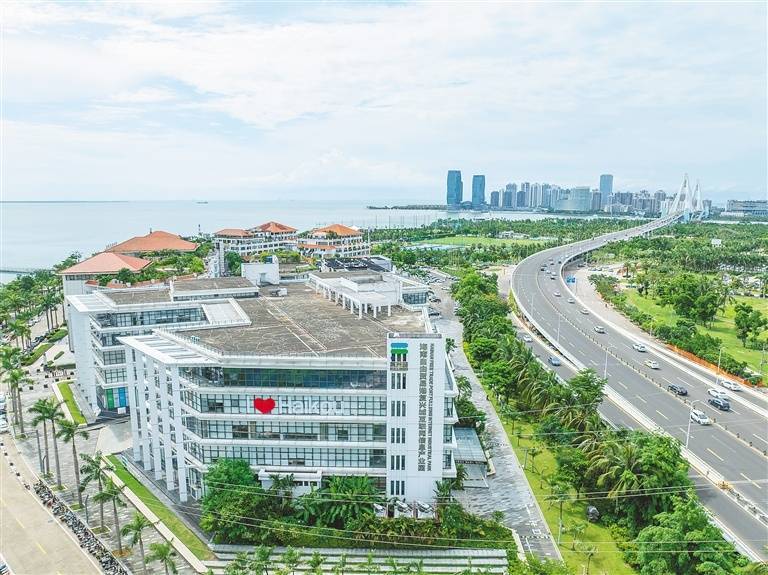
海南自贸港跨境资金“活水”双向奔涌
Sou Hu Cai Jing· 2025-06-06 01:02
Core Insights - The establishment of the EF account in Hainan Free Trade Port has significantly facilitated cross-border capital flow, with over 330 accounts opened and a transaction volume exceeding 120 billion RMB as of early May 2023 [4][5] - The EF account allows for more convenient and cost-effective foreign exchange operations for enterprises, saving approximately 300 RMB per $10,000 in transaction costs [3][4] - The QFLP and QDLP policies are enhancing cross-border investment opportunities, attracting foreign capital into Hainan and allowing domestic funds to invest abroad [5][6] Financial Innovations - The EF account serves as a "currency bridge" between Hainan and foreign markets, enabling seamless cross-border transactions [4] - As of May 2023, 19 countries and regions have opened EF accounts in Hainan, with funds flowing to and from 48 countries [2][5] - The total foreign exchange revenue and expenditure in Hainan is projected to reach $108.63 billion in 2024, marking a significant milestone for the region [2] Policy Developments - The Hainan Free Trade Port has implemented a series of financial policies aimed at enhancing cross-border capital flow, including the expansion of the cross-border trade and investment pilot program [8] - The establishment of a cross-border capital centralized operation center is expected to further streamline financial operations and enhance the region's attractiveness for foreign investment [8] - The financial policies in Hainan are designed to create a secure and efficient environment for both domestic and international businesses, promoting a robust financial ecosystem [5][8]
李迅雷专栏 | 中美关税谈判的前景分析及应对
中泰证券资管· 2025-05-21 06:55
Core Viewpoint - The article discusses the implications of the recent US-China trade negotiations and the impact of tariffs on China's exports and economy, emphasizing the need for comprehensive economic discussions beyond just tariffs [2][4][5]. Tariff Negotiations - As of May 12, 2023, the US and China had imposed tariffs of 125% and 145% respectively, but both sides agreed to suspend 91% of these tariffs and delay 24% for 90 days to negotiate further [2][4]. - The US has imposed a total of 30% tariffs on China this year, with 20% attributed to China's handling of fentanyl, leading to China's retaliatory tariffs on US goods [4][5]. Impact on Exports - The tariffs are projected to reduce China's exports by approximately 1.2 trillion yuan in 2025, resulting in a year-on-year decline of about 4.5% [9]. - The average tariff on Chinese exports to the US is expected to increase by 32.6% over the next 90 days if negotiations do not yield positive results [11]. Economic Growth Implications - The increase in tariffs could lead to a GDP decline of 0.6 percentage points for China in 2025, with potential further impacts depending on the outcome of negotiations [16][17]. - If negotiations fail, the average tariff could rise to 47.4%, significantly affecting trade dynamics and economic stability [11][12]. Trade Diversification - China is expected to increase its re-export trade through regions like ASEAN and Mexico, which have been less affected by US tariffs, potentially boosting trade volumes [12][13]. - The article suggests that the US's high tariffs on Chinese goods may lead to a shift in trade patterns, with increased reliance on alternative markets [12][13]. Policy Recommendations - The article advocates for increased fiscal policies to stimulate domestic consumption in response to declining exports, suggesting a focus on consumer spending to mitigate economic downturns [20][21]. - It emphasizes the importance of financial openness and the internationalization of the yuan as strategies to counterbalance the effects of US tariffs and enhance trade resilience [23][26].