食品安全

Search documents
雀巢奶粉召回范围扩大至31个国家和地区 雀巢中国召回部分特定批次婴幼儿奶粉
YOUNG财经 漾财经· 2026-01-08 04:05
Core Viewpoint - Nestlé has expanded its recall of specific batches of infant formula to 31 countries and regions, including China, due to the detection of a harmful toxin in raw materials supplied by a vendor [1][3]. Group 1: Recall Details - The recall involves specific batches of infant formula products, including brands like Nan, Althéra, and Wyeth, with a focus on products imported from Europe and sold through cross-border e-commerce channels in mainland China [1]. - Nestlé China has stated that all other products outside the recall range are safe for consumption, and key product lines such as Althéra and S26 Platinum are not affected by this incident [1]. Group 2: Cause of Recall - The issue originated from a self-monitoring test at a Nestlé factory in the Netherlands, where a toxin from Bacillus cereus was detected in raw materials provided by a supplier [3]. - The toxin found in the ARA oil used in production is heat-resistant and may cause acute gastrointestinal symptoms such as nausea and vomiting [3]. - Nestlé China has reported no adverse health reports related to the affected products as of now [3].

立华股份涨2.04%,成交额4356.21万元,主力资金净流入58.92万元
Xin Lang Cai Jing· 2026-01-08 02:13
Group 1 - The core viewpoint of the news is that Lihua Co., Ltd. has shown a mixed performance in stock price and financial results, with a slight increase in stock price recently but a significant drop in net profit year-on-year [1][2]. Group 2 - As of January 8, Lihua's stock price increased by 2.04% to 21.05 CNY per share, with a total market capitalization of 17.625 billion CNY [1]. - The company has seen a net inflow of main funds amounting to 589,200 CNY, with significant buying and selling activities from large orders [1]. - Year-to-date, Lihua's stock price has risen by 1.45%, with a 5-day increase of 1.30% and a 20-day increase of 5.62%, while it has decreased by 9.46% over the past 60 days [1]. Group 3 - For the period from January to September 2025, Lihua achieved an operating income of 13.493 billion CNY, representing a year-on-year growth of 6.38%, while the net profit attributable to shareholders decreased by 75.27% to 287 million CNY [2]. - The company has distributed a total of 2.063 billion CNY in dividends since its A-share listing, with 1.114 billion CNY distributed in the last three years [3]. - As of September 30, 2025, the number of shareholders decreased by 23.50% to 16,000, while the average circulating shares per person increased by 30.72% to 39,351 shares [2][3].

雀巢中国召回部分特定批次婴幼儿奶粉
Xin Lang Cai Jing· 2026-01-08 00:26
Core Viewpoint - Nestlé has expanded its recall of infant formula products to the Chinese market due to the detection of a harmful toxin in raw materials supplied by a vendor, affecting multiple product batches [1][2]. Group 1: Recall Details - The recall involves several product lines including Lactogen, Althéra, and Wyeth, with specific batches identified for voluntary recall in China [1]. - Nestlé China has stated that all other products not included in the recall are safe for consumption, including major product lines registered in the Chinese market [1]. Group 2: Cause of Recall - The issue originated from a self-monitoring test at a Nestlé factory in the Netherlands, where a toxin from a supplier's raw material was detected [2]. - The toxin, found in arachidonic acid oil, is heat-resistant and may cause acute gastrointestinal symptoms such as nausea and vomiting [2]. Group 3: Broader Implications - The contamination issue may not be limited to Nestlé, with potential implications for other infant formula brands in the market [2].

徒手拌奶茶、高含咖啡因,霸王茶姬真让人上头
阿尔法工场研究院· 2026-01-08 00:05
Core Viewpoint - The incident involving a staff member of Bawang Chaji preparing tea in an unsanitary manner has led to a significant trust crisis regarding food safety for the brand, despite the company's rapid expansion and unique positioning in the market [2][11][28]. Group 1: Incident Overview - A viral video showed a Bawang Chaji employee preparing tea without gloves or masks, leading to public outrage and scrutiny of the brand's food safety practices [1][4][5]. - The company quickly announced measures in response to the incident, including the indefinite closure of the involved store and the dismissal of the employee [11][10]. - Despite the company's claims that the incident was an isolated case, there are concerns about systemic food safety issues within the brand [16][19]. Group 2: Business Performance and Challenges - Bawang Chaji has experienced a decline in single-store GMV for seven consecutive quarters, raising questions about its ability to balance rapid expansion with food safety and profitability [2][24]. - The brand's aggressive expansion strategy has resulted in over 7,338 stores by Q3 2025, but this has led to increased competition and reduced profitability per store [22][24]. - The total GMV for Bawang Chaji was approximately 79.3 billion, down from 83.01 billion the previous year, indicating a significant drop in sales despite the increase in store numbers [24]. Group 3: Market Position and Competitive Landscape - Bawang Chaji's rapid growth has outpaced competitors like Heytea and Nayuki, but this has also resulted in high store density and intense competition in key markets [22][26]. - Other leading tea brands are slowing their expansion, contrasting with Bawang Chaji's aggressive growth strategy, which may lead to sustainability issues in the long run [26][27]. - The brand's high caffeine content in its products has also sparked consumer concerns, further complicating its market position [19][20]. Group 4: Operational and Management Issues - The company faces challenges in maintaining food safety standards across its franchise network, with reports of unsanitary practices and customer complaints about product quality [19][25]. - Bawang Chaji's franchise model, which accounts for over 80% of its stores, raises questions about the effectiveness of its management and oversight of franchisees [25][24]. - The need for a robust franchise management system is critical to prevent hygiene issues and service disputes, which could undermine the brand's reputation [25][28].
霸王茶姬舆情倒逼行业反思:新茶饮如何筑牢食安与信任防线?
3 6 Ke· 2026-01-07 11:11
Core Viewpoint - The incident involving Bawang Chaji's "handmade milk tea" video has sparked widespread public concern regarding food safety and management practices within the brand and the new tea beverage industry as a whole [1][4]. Group 1: Incident Overview - A video featuring an employee of Bawang Chaji performing unsanitary practices went viral, leading to significant public backlash and concerns about food safety [1][4]. - The video was filmed using discarded materials and showed the employee engaging in unhygienic practices without gloves, which raised alarms about the brand's operational standards [2][4]. Group 2: Brand Response - Bawang Chaji quickly initiated an internal investigation and utilized surveillance footage to clarify the situation, confirming that the materials used in the video were not sold to customers and that proper cleaning protocols were followed afterward [5][6]. - The brand's response included a public statement addressing the incident, outlining the investigation results, and taking immediate disciplinary actions against the involved employee and management [8][6]. Group 3: Industry Context - The incident has prompted discussions about the importance of food safety and management practices across the new tea beverage industry, with other brands also being scrutinized for similar practices [4][6]. - Bawang Chaji's approach to crisis management reflects a broader trend in the industry where rapid response and transparency are critical in maintaining consumer trust [6][12]. Group 4: Areas for Improvement - While Bawang Chaji's response was timely, there are suggestions for enhancing emotional engagement with consumers and improving risk management practices to prevent similar incidents in the future [9][10]. - The brand is encouraged to strengthen its employee training programs and enhance communication channels with consumers to foster trust and transparency [10][12].
长保食品也营养、无菌蛋并非真无菌 2025食品安全与健康热点解读会回应民生关切
Zhong Guo Jing Ji Wang· 2026-01-07 11:04
Core Viewpoint - The conference organized by the China Food Science and Technology Society focused on ten major food safety and health issues, providing scientific guidance for industry development and regulatory improvement [1] Group 1: Food Safety Issues - The "water-retaining shrimp" incident highlighted the serious violation of food additive usage principles by involved companies, emphasizing the need for responsible and compliant use of food additives [2] - The introduction of new food labeling regulations aims to enhance transparency and consumer safety, including mandatory allergen labeling and an updated nutrition facts format [3] - The need for strengthened full-chain supervision in food safety was discussed, addressing regulatory gaps in transportation, delivery, and cross-border e-commerce [4] Group 2: Emerging Food Technologies - The approval of D-allohexose as a new food ingredient signifies advancements in synthetic biology technology within the food sector, indicating a mature application of these technologies [6] Group 3: Specific Food Safety Concerns - The issue of lead contamination in children due to illegal additives underscores the importance of strict adherence to food safety laws and the need for enhanced training and supervision in food handling [7] - The risk of botulinum toxin contamination from improperly processed foods remains a significant food safety concern, necessitating better control measures from production to storage [9] - The debate over the safety and nutritional value of long-shelf-life foods suggests that modern processing techniques can ensure both safety and nutrition [10] Group 4: Nutritional Needs and Market Opportunities - The concept of "age-appropriate foods" for the elderly is gaining attention, with a significant market demand for products that meet the nutritional needs of older adults, highlighting a gap in current market offerings [12] - The safety of campus dining is critical, with calls for improved raw material control and a comprehensive traceability system to ensure food safety for students [11]
塔城市新城市场监管所:节前农副产品检测筑牢食品安全防线
Zhong Guo Shi Pin Wang· 2026-01-07 09:10
春节临近,为切实保障辖区群众节日期间食品安全,塔城市市场监督管理局新城监管所聚焦超市农副产 品质量安全,联合专业检验检测机构开展专项抽样检测工作,从源头守护市民"菜篮子"安全。 作者:塔城市市场监督管理局新城市场监管所 迪丽娜尔、蔡路阳 目前,抽取样品检测工作正在有序进行中。对于检测结果,新城市场监管所将第一时间向社会公示,若 发现不合格产品,将立即依法依规采取下架、召回等处置措施,并追溯源头严肃查处,坚决杜绝不合格 农副产品流入市场,以精准监管和严格执法筑牢食品安全防线,让辖区群众度过一个安全、放心的春 节。 此次检测行动以辖区内各大超市为重点检查对象,检测范围涵盖蔬菜、水果、肉类等群众日常消费量大 的农副产品,重点针对农残超标、兽药残留、重金属含量等关键指标进行专业检测。执法人员与检测机 构工作人员严格按照抽样规范,随机抽取各类农副产品样品,现场做好信息登记、封样留存等工作,确 保检测样本的代表性和真实性。同时,执法人员还对超市农副产品的进货查验、索证索票、储存条件等 环节进行同步检查,督促经营主体落实食品安全主体责任,规范进货渠道和台账管理。 ...

山东省临沂市市场监督管理局关于34批次食品不合格情况的通告2025年第12期
Zhong Guo Zhi Liang Xin Wen Wang· 2026-01-07 08:44
Summary of Key Points Core Viewpoint - The Linyi Market Supervision Administration conducted a food safety inspection on 1,532 samples across 22 categories, revealing that 34 batches from 10 categories of food products failed to meet safety standards due to pesticide residues, veterinary drug residues, and excessive food additives [2]. Group 1: Inspection Results - A total of 1,532 food samples were tested, including edible agricultural products, grain processing products, and condiments [2]. - Out of these, 34 batches were found to be non-compliant with safety standards [2]. - The non-compliance was attributed to issues such as pesticide residues, veterinary drug residues, and excessive food additives [2]. Group 2: Specific Non-Compliant Products - Specific examples of non-compliant products include: - A batch of edible white peony (白芷) with a sulfur dioxide residue of 1.16 g/kg, exceeding the permissible limit [4]. - A batch of chili pepper (辣椒) containing 0.11 mg/kg of pesticide residue (噻虫胺), above the standard limit of 0.05 mg/kg [4]. - A batch of ginger (生姜) with a pesticide residue of 0.12 mg/kg, exceeding the allowable limit of 0.01 mg/kg [4]. Group 3: Regulatory Compliance - The inspections were conducted in accordance with the Food Safety Law of the People's Republic of China and related regulations [2]. - The results are part of a broader effort to ensure food safety and protect public health in Linyi City [2].
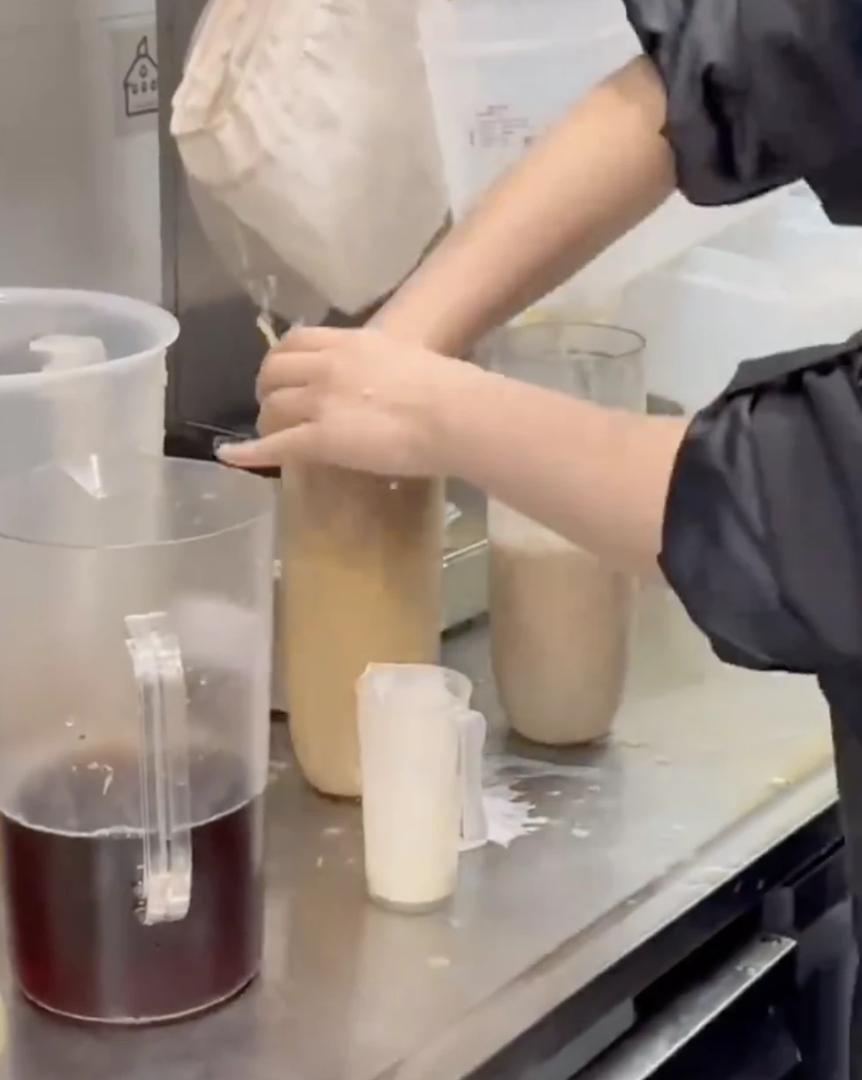
霸王茶姬通报“手打奶茶”:系摆拍,涉事店员已辞退
Nan Fang Nong Cun Bao· 2026-01-07 01:31
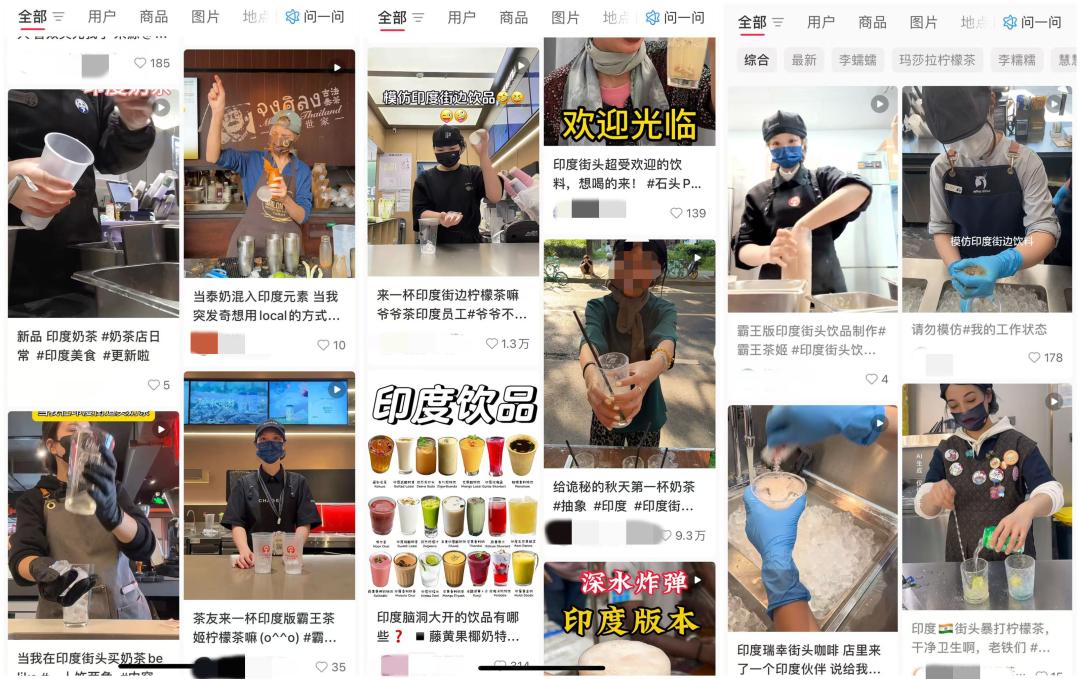
霸王茶姬通 报"手打奶茶": 系摆拍,涉事店 员已辞退_南方 +_南方plus 1月6日中午,霸 王茶姬就"员工 手打奶茶"事件 发布通报,称该 视频为店员跟 风"印度奶茶"热 梗博流量摆拍, 涉事店员刘某某 已被辞退,涉事 门店则无限期停 业整顿。 网上热传的视频 显示,一霸王茶 姬店员未佩戴手 套直接接触产 品,徒手挤柠檬 片,又直接用手 在奶茶杯内搅拌 饮品。"霸王茶 姬手打"词条迅 速在社交平台冲 上热搜,引发广 泛关注。 料处理规定》 《员工管理手 册》及《门店运 营管理手册》, 完全背离品牌对 食品安全和诚信 经营的坚持,触 霸王茶姬调取完 整监控,核实视 频内容发生在福 建漳州龙文宝龙 广场店。视频中 店员为跟风网 络"印度奶茶"热 梗博取流量,在 即将开始打烊 时,用当天门店 的报损废弃物料 进行模仿摆拍。 监控核查显示, 该物料在拍摄结 束后被当场倒 掉,未对外销 售,现场在拍摄 结束后完成常规 清洁消毒流程。 事后该店员为掩 盖错误称该行为 系打烊后操作。 该门店采用自动 化设备制茶,所 有原叶鲜奶茶的 制作均通过扫码 由机器自动化完 成,实现人料分 离。 霸王茶姬表示, 该店员的行为, ...

祸从天降,茶饮圈跟风玩梗“徒手制茶”,多品牌被中伤
3 6 Ke· 2026-01-07 00:42
Core Viewpoint - The incident involving employees from various tea brands, including Bawang Chaji and Luckin Coffee, mimicking a viral video of making drinks without proper hygiene practices has sparked significant consumer backlash and raised concerns about food safety standards in the industry [1][3][10]. Group 1: Incident Overview - A viral video showed a staff member from a tea brand preparing drinks without gloves, leading to widespread criticism and concerns about hygiene [1][10]. - The brands involved quickly responded, with Bawang Chaji announcing an indefinite closure of the affected store and disciplinary actions against responsible personnel, emphasizing that food safety is a non-negotiable priority [3][10]. Group 2: Consumer Reactions - Many consumers expressed distrust, questioning the hygiene practices behind the drinks they purchase, with comments reflecting a zero-tolerance attitude towards perceived food safety violations [10][12]. - Some consumers acknowledged the incident as an extreme case but emphasized the need for brands to demonstrate effective corrective actions to restore trust [16]. Group 3: Industry Implications - The incident highlights a broader issue within the tea industry, where the actions of individual employees can significantly impact brand reputation and consumer trust [9][19]. - The need for brands to establish and enforce strict food safety standards is underscored, as the industry has evolved beyond its initial growth phase and now requires robust management practices [17][20]. Group 4: Management and Brand Image - The incident serves as a reminder that employees represent the brand at all times, and any actions perceived as unprofessional can lead to rapid negative backlash [19][21]. - Brands must address management blind spots, particularly regarding employee behavior on social media and during work hours, to prevent similar incidents in the future [20].