
智能化

Search documents
不装App就不能住店,这哪是开门迎客?
Xin Jing Bao· 2026-02-12 09:39
Core Viewpoint - A hotel in Ningbo, Zhejiang, has implemented a policy requiring guests to download an app to check in, which has raised concerns about consumer rights and the appropriateness of such a requirement in the hospitality industry [1][2]. Group 1: Consumer Rights and Fair Trading - The hotel’s requirement to download the app may infringe on consumers' rights to fair trading, as it imposes an unreasonable condition on guests [2]. - According to consumer protection laws, businesses must provide adequate information and cannot impose unfair terms on consumers, which the hotel failed to do by not informing guests of the app requirement prior to their arrival [2]. Group 2: Industry Trends and Technology Integration - The hospitality industry is increasingly pursuing integration of booking and service through technology, with AI and smart solutions becoming common tools [3]. - However, any technological upgrades in the service industry should prioritize consumer experience, and requiring app downloads may contradict this principle by complicating the check-in process [3]. Group 3: Market Positioning and Customer Demographics - The hotel in question does not position itself as a high-end establishment, with room rates below 300 yuan, raising questions about the appropriateness of its app download policy [2]. - The assumption that all guests, including older individuals, are tech-savvy enough to use the app reflects a disconnect with the diverse customer base and their varying levels of comfort with technology [2].
研报掘金丨长江证券:维持比亚迪“买入”评级,盈利能力有望继续提升
Ge Long Hui· 2026-02-12 07:10
Group 1 - BYD's overall sales in January reached 210,000 units, representing a year-on-year decline of 30.1% and a month-on-month decline of 50.0% [1] - Passenger vehicle sales totaled 206,000 units, with a year-on-year decrease of 30.7% and a month-on-month decrease of 50.5% [1] - Export sales remained strong at 100,000 units in January, showing a year-on-year increase of 43.3% [1] Group 2 - Domestic inventory reduction is ongoing, positioning the company to embrace a new cycle [1] - The expansion of the overseas vehicle matrix and the launch of plug-in hybrid models abroad are expected to sustain monthly export sales growth [1] - The introduction of high-end models such as Z9GT, Z9, Leopard 8, N9, and N8L is anticipated to enhance market penetration and improve per-vehicle profitability [1] Group 3 - The company is committed to its strategic transformation towards intelligent driving, with the release of the Super e platform marking a significant innovation in pure electric technology [1] - The product lineup for high-end markets is being accelerated with a rich reserve of models from brands like Tengshi, Yangwang, and Fangchengbao [1] - Continued efforts in overseas expansion and the enhancement of overseas channels and vehicle matrix are expected to further improve profitability [1] Group 4 - The company forecasts a net profit attributable to shareholders of 35 billion yuan by 2025, corresponding to a PE ratio of 23X, maintaining a "buy" rating [1]


朗博科技发布2025年业绩预告,净利润预增超57%
Jing Ji Guan Cha Wang· 2026-02-12 05:32
Group 1 - The core viewpoint of the article highlights the recent performance forecast and stock price fluctuations of Langbo Technology (603655) [1] Group 2 - The company announced its 2025 annual performance forecast on January 22, 2026, expecting a net profit attributable to shareholders of 44 million to 46.5 million yuan, representing a year-on-year increase of 57.58% to 66.53% [2] - The net profit excluding non-recurring gains and losses is expected to grow by 72.85% to 83.02% year-on-year, primarily driven by increased sales of sealing rings for new energy vehicles and improved gross margins [2] Group 3 - On February 6, 2026, Langbo Technology's stock price fell by 2.00% in a single day, closing at 43.52 yuan per share, with a net outflow of 1.66 million yuan in main funds and a turnover rate of 1.28%, indicating short-term capital fluctuations [3] Group 4 - In the long term, the trends of electrification and intelligence in the automotive industry may present order growth opportunities for the company, but there are concerns regarding intensified industry competition and high valuation risks [4]

赢下全球的宝马,不想只输在中国
3 6 Ke· 2026-02-12 01:40
Group 1 - BMW Group announced a significant leadership change, appointing Christian Ach as the new President and CEO for Greater China, effective April 1, 2026, replacing Sean Green, who served for over twelve years [1][2] - BMW's global delivery volume showed a slight increase of 0.5% in 2025, with European market sales rising by 7.3%, while sales in China fell to 625,500 units, a decline of 12.5% year-on-year, marking two consecutive years of double-digit declines [1][3] - The luxury car market in China is undergoing a structural crisis, with the 300,000 to 350,000 RMB segment shrinking by 19.2% in 2025, leading to a significant loss of customers to local electric vehicle brands [3][5] Group 2 - BMW's X3 model experienced a dramatic sales drop of 30%, from over 110,000 units in 2024 to 76,900 units in 2025, due to design controversies and aggressive discounting strategies [3][5] - The German luxury car manufacturers, including BMW, Mercedes-Benz, and Audi, are facing a collective downturn, with Mercedes-Benz sales in China dropping by 19% to 575,000 units and Audi's sales down by 5% to 617,500 units [5][6] - BMW's strategy has been inconsistent, struggling to balance traditional driving pleasure with the new demands for smart technology and user experience in the Chinese market [6][8] Group 3 - The leadership change at BMW is seen as a decisive move to regain control and address the chaotic situation in the Chinese market, with a focus on efficiency and execution [8][12] - Christian Ach's mission includes leveraging his successful experience in the German market to boost electric vehicle sales in China, where the market dynamics are more complex [12][16] - In 2026, BMW plans to launch nearly 20 new models in China, including the iX3, which is crucial for establishing a high-end electric brand image [17][19] Group 4 - Ach faces several challenges, including aligning pricing with perceived value for the new iX3, adapting successful strategies from Germany to the dynamic Chinese market, and effectively communicating BMW's unique competitive advantages in the era of electrification and smart technology [22][23]



2026年中国半导体洁净室行业进入壁垒、相关政策汇总、产业链图谱、市场规模、竞争格局及发展趋势分析:中高端市场竞争较为缓和[图]
Chan Ye Xin Xi Wang· 2026-02-12 01:21
Core Insights - The semiconductor cleanroom industry is experiencing rapid growth driven by advancements in cloud computing, IoT, big data, 5G/6G, AI, and digitalization, with the market expected to reach 195.06 billion yuan by 2025, reflecting a year-on-year growth of 14.7% [1][9]. Industry Overview - Cleanrooms are designed to eliminate micro-particles, harmful gases, and bacteria, maintaining specific cleanliness levels essential for semiconductor manufacturing [2]. - The semiconductor cleanroom is a critical component in chip manufacturing, aimed at controlling contamination that affects yield and reliability [3]. Market Barriers - The semiconductor cleanroom industry has high entry barriers due to the significant investment required and the critical nature of cleanroom systems in production processes, where instability can lead to substantial losses for clients [5][6]. - Companies with extensive project experience and a strong brand reputation are preferred by clients, making it difficult for new entrants to gain recognition [6]. Market Policies - The Chinese government has prioritized the self-sufficiency of the semiconductor industry, implementing various supportive policies to promote its development, which also benefits the cleanroom sector [6][7]. Industry Chain - The upstream of the cleanroom industry includes materials and equipment essential for cleanroom systems, while the midstream involves design and construction, and the downstream caters to semiconductor manufacturing processes [7]. Current Development - The semiconductor industry is projected to reach a market size of 211.5 billion USD by 2025, accounting for 29.42% of the global market, providing significant growth opportunities for the cleanroom sector [7]. Competitive Landscape - The cleanroom industry is characterized by a fragmented market with many small players, while a few companies like 柏诚股份 (Borch) and 亚翔集成 (Yaxiang) dominate the high-end market due to their technical expertise and project experience [10][11]. Development Trends - Continuous technological upgrades are necessary to meet the stringent requirements of advanced semiconductor processes, focusing on molecular-level contamination control and high-precision environmental regulation [12]. - The industry is moving towards green and intelligent solutions, integrating energy-saving technologies and smart management systems to enhance operational efficiency [13]. - The push for domestic substitution in the semiconductor industry is expected to strengthen collaboration across the supply chain, enhancing the competitiveness of local firms in critical components [14].





【图说】一目了然
Xin Lang Cai Jing· 2026-02-11 20:52
Core Viewpoint - The launch of the "Pharmacy Price Heat Map" by the Hebei Provincial Medical Insurance Bureau aims to enhance price transparency in over 20,000 pharmacies, benefiting consumers and promoting fair market competition [1] Group 1: Consumer Benefits - The "Pharmacy Price Heat Map" allows consumers to easily identify affordable prices, potentially eliminating the hassle of comparing prices across multiple pharmacies [1] - The service has seen a cumulative access volume exceeding 7.7 million visits since its launch, indicating strong consumer interest and engagement [1] Group 2: Impact on Pharmacies - Pharmacies may face increased scrutiny and pressure to maintain fair pricing, as the heat map reduces information asymmetry that previously allowed for inflated pricing [1] Group 3: Regulatory Oversight - Regulatory authorities can quickly detect abnormal pricing patterns through the heat map, enabling timely intervention in cases of price violations [1] Group 4: Broader Implications - The initiative reflects a broader trend of digital and intelligent healthcare services, with potential applications extending to various sectors such as tourism and public management [1]
四中全会精神在基层丨河北迁安:钢铁企业有“三变”
Xin Hua Wang· 2026-02-11 12:35
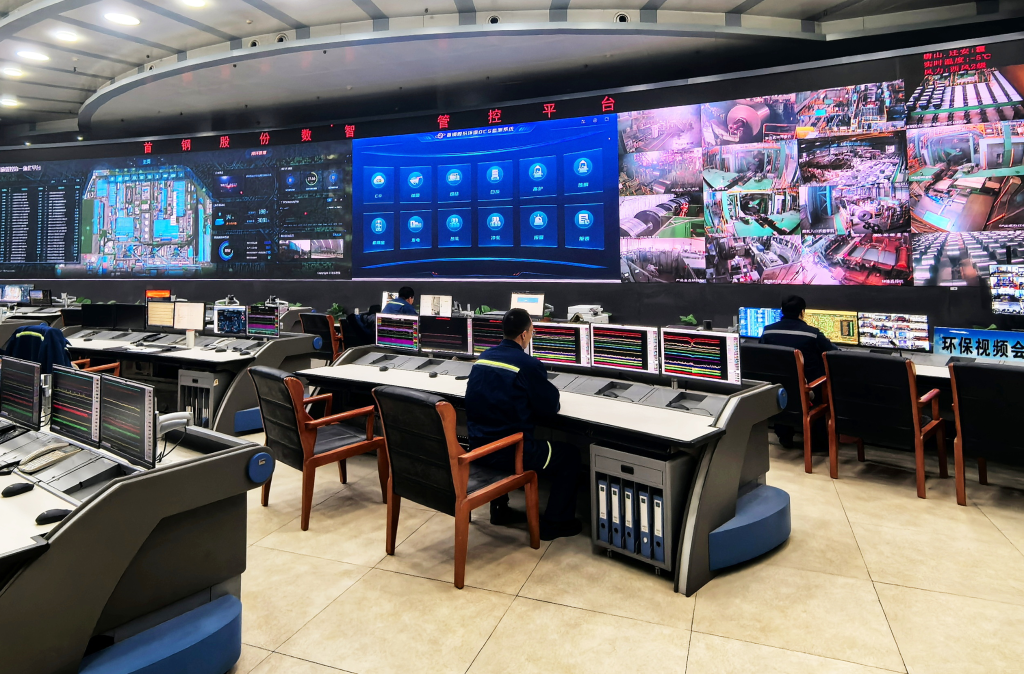
Group 1: Digital Transformation - The Shougang Group's steel company in Qian'an has implemented digital control for iron water transportation, utilizing data management systems [1] - The company has integrated artificial intelligence models into over 20 processes, resulting in annual cost savings of 70 million yuan and a reduction of 40,200 tons of carbon dioxide emissions [3][4] - Qian'an's steel enterprises have achieved AI demonstration applications in 45 scenarios across 12 processes, with plans to enhance collaboration with leading AI companies [4] Group 2: Green Transformation - Qian'an's steel companies are pursuing green transformation, achieving A-level environmental performance across all long-process steel enterprises [4] - The local steel and coking enterprises have a total coking capacity of 10.8 million tons, with the potential to produce 200,000 tons of hydrogen from coke oven gas [5] - The Hebei Yanshan Steel Group has deployed 643 hydrogen-powered heavy trucks, emphasizing the integration of hydrogen energy and steel production [6]
中国建筑2026年1月新签订单稳健增长
Zhong Zheng Wang· 2026-02-11 12:33
Core Viewpoint - China State Construction Engineering Corporation (CSCEC) reported a steady growth in new contract signings for January 2026, indicating resilience in its business operations and a positive outlook for the construction industry [1][2]. Group 1: Contract Performance - In January 2026, CSCEC achieved a total new contract signing amount of 399.5 billion yuan, representing a year-on-year increase of 1.8% [1]. - The construction business segment saw new contract signings of 383.8 billion yuan, with a year-on-year growth of 1.6% [1]. - The housing construction segment specifically recorded new contract signings of 274.3 billion yuan, reflecting a significant year-on-year increase of 15.9% [1]. - Domestic new contract signings amounted to 361.7 billion yuan, showing a modest year-on-year growth of 0.3%, while overseas new contract signings reached 22.1 billion yuan, marking a robust year-on-year increase of 29.5% [1]. Group 2: Physical Indicators - The physical indicators for housing construction included a total construction area of 1.388 billion square meters, with new construction area of 16.71 million square meters and completed area of 15.57 million square meters [1]. Group 3: Real Estate Business - In January 2026, CSCEC's contract sales in the real estate sector totaled 15.7 billion yuan, which is a year-on-year increase of 6.9%, with a contract sales area of 520,000 square meters [1]. - The company reported a land reserve of 67.73 million square meters, indicating a sufficient supply of land for future projects [1]. Group 4: Major Projects - CSCEC has been steadily advancing major project constructions, with a total of 37.24 billion yuan in significant project amounts recently secured [1]. - This includes four housing construction projects, such as the Singapore Alexandra Hospital IP segment, totaling 18.37 billion yuan, and four infrastructure projects, including the reconstruction of the Fuyin Expressway in Xiangyang, amounting to 18.87 billion yuan [1]. Group 5: Future Outlook - Looking ahead to 2026, CSCEC aims to align closely with national policy directions, seizing industry development opportunities while accelerating its transformation towards high-end, intelligent, and green construction [2]. - The company is focused on enhancing both development quality and efficiency, with the goal of maintaining its leading position in the global industry and creating greater value for shareholders, clients, and society [2].

投资25亿元!华南钢管领军企业落户高明
Nan Fang Du Shi Bao· 2026-02-11 10:47
Core Insights - The signing of the major project by Zhenhong Steel Products Co., Ltd. marks the first significant investment in Gaoming District this year, with an investment of 2.5 billion yuan for a manufacturing base expected to generate an annual revenue of 5 billion yuan once operational [1][2] Group 1: Project Details - The project covers an area of 252.44 acres in Yanghe Town and is a key addition to the high-end manufacturing cluster in Gaoming, contributing to the district's "14th Five-Year Plan" for investment attraction [1][2] - Zhenhong Steel Products has been established in Foshan for 20 years, with a total annual output value of approximately 10 billion yuan across three production bases, holding 85 national patents and recognized as a national high-tech enterprise [2] Group 2: Strategic Importance - The project aligns with the company's strategy to enhance its production capacity in South China and seize opportunities in the Greater Bay Area, focusing on high-end products such as automotive pipes and special steel-plastic composite pipes [2] - The initiative is expected to fill gaps in the high-end metal products sector in Gaoming and promote collaborative development across the industry chain [2] Group 3: Economic Impact - In January, Gaoming District attracted 20 projects with a total investment of 4.496 billion yuan, with ongoing efforts to boost project quality and scale [3] - The district aims to focus on strategic emerging industries such as air transport economy, new energy systems, and high-end equipment manufacturing, targeting Fortune 500 companies for investment [3]
韶关高素质农民培育班收官,1211名新农人学成赋能农业发展
Nan Fang Nong Cun Bao· 2026-02-11 09:31
Core Insights - The training program for high-quality farmers in Shaoguan has successfully concluded, with 1,211 new farmers trained to empower agricultural development [2][4]. Group 1: Training Program Overview - The training program, organized by the Shaoguan Agricultural and Rural Bureau and conducted by Guangzhou Zhongning Agricultural Technology Development Co., Ltd., started in December 2025 and lasted for over a month, comprising four sessions [2][3]. - The program focused on cultivating leaders of new agricultural business entities and key talents for rural revitalization, effectively enhancing the professional skills and practical abilities of local agricultural practitioners [3][4]. Group 2: Curriculum and Practical Training - The curriculum was closely aligned with the actual development needs of Shaoguan's agricultural industry, addressing practical demands in areas such as rice and vegetable planting, digital agriculture, and agricultural machinery operation [6][7]. - Specialized courses were offered to address skill gaps among practitioners, particularly focusing on training agricultural machinery operators [8]. - The training included practical sessions at high-quality agricultural training bases and e-commerce operation bases in cities like Guangzhou, Jiangmen, Huizhou, and Foshan, allowing for field observation, discussions, and hands-on training [15][16]. Group 3: Future Plans and Support - The Shaoguan Agricultural and Rural Bureau plans to establish a follow-up service system for trainees, providing ongoing support through discussions, e-commerce skill enhancement, on-site expert guidance, and agricultural policy education [20][21]. - This initiative aims to help trainees convert their skill advantages into developmental benefits, ensuring that the training translates into practical production outcomes [22].
