
反内卷

Search documents
大炼化系列一:聚酯链景气向上
Guotou Securities· 2026-02-24 09:22
Group 1: Core Insights - The report highlights a clear trend of "East rising, West falling" in the global chemical industry, with Chinese companies leveraging cost advantages to capture market share as European chemical firms face high energy and compliance costs [1] - The "PX-PTA-Polyester filament" industry chain is expected to show resilience due to improved supply-demand dynamics [1] Group 2: PX Supply and Demand - PX production growth is limited, with no new capacity added since 2024, leading to a forecasted production increase of only 1% in 2026 [2][3] - The supply of PX is expected to remain tight in 2026, with only one new plant (200,000 tons) coming online in Q4, while demand is projected to grow by 5% due to downstream polyester industry expansions [3][30] Group 3: PTA Market Dynamics - The PTA industry is at a turning point, with a significant slowdown in capacity expansion expected after 2025, leading to a projected production growth of 5% in 2026 [4][42] - The concentration of PTA supply among a few major players (CR6 around 75%) is expected to facilitate better industry coordination and improve profitability [41][43] Group 4: Polyester Filament Outlook - The polyester filament industry is anticipated to benefit from a new round of production cuts, with expectations for a strong seasonal demand in the first half of the year [10][12] - The supply-demand balance for polyester filament is improving, with a projected production growth of 4% in 2026, driven by domestic consumption and favorable external factors [12][30]


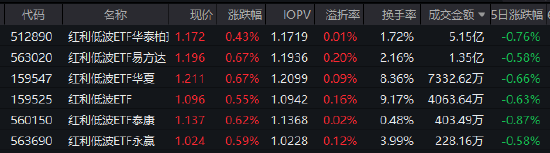
红利低波ETF华泰柏瑞(512890)近60天狂吸金48.6亿!机构:2026年科技与非科技都有机会,质量策略正当时
Xin Lang Cai Jing· 2026-02-24 09:02
Core Viewpoint - The market experienced fluctuations with the ChiNext Index rising over 2% at one point, while the Shanghai Composite Index closed up by 0.87%. In this context, the Huatai-PineBridge Low Volatility ETF (512890) increased by 0.43%, closing at 1.172 yuan, with a turnover rate of 1.72% and a trading volume of 5.15 billion yuan, leading its category [1][6]. ETF Performance - The Huatai-PineBridge Low Volatility ETF (512890) reported a trading volume of 154.12 billion yuan over the last 20 trading days, averaging 7.71 billion yuan per day. Since the beginning of the year, the total trading volume reached 250.40 billion yuan, with an average of 8.08 billion yuan per day [2][7]. - The ETF has seen significant net inflows, with 3.6 billion yuan in the last 5 trading days, 9 billion yuan in the last 10 days, 29.2 billion yuan in the last 20 days, and 48.6 billion yuan in the last 60 days [2][7]. Top Holdings - The top ten holdings of the Huatai-PineBridge Low Volatility ETF include major companies across various sectors such as banking, food and beverage, home appliances, and pharmaceuticals. Notable holdings include Shanghai Bank, Nanjing Bank, Ping An Bank, and Gree Electric Appliances, with a total market value of approximately 6.72 billion yuan, accounting for 25.34% of the ETF's total market value [2][7]. Market Outlook - Multiple institutions have expressed optimistic views on the post-holiday market and dividend strategies. CITIC Securities believes that the A-share market, primarily driven by manufacturing and finance, will be less affected by AI disruptions compared to US and Hong Kong markets, suggesting a continuation of the spring rally [4][9]. - Guotai Junan Securities noted that with China's economic policy focusing on domestic demand, investor pessimism towards traditional domestic industries is likely to be corrected, contributing to a more stable economic outlook for 2026 [4][9]. Investment Strategy - The Huatai-PineBridge Low Volatility ETF, established on December 19, 2018, has achieved a return of 76.88% over the past five years, outperforming its benchmark and ranking 51st among 909 funds. Investors are encouraged to consider regular investment strategies to mitigate volatility risks [10].

A股马年“开门红”:沪指重返4100点 资源品补涨科技分化
Xin Jing Bao· 2026-02-24 08:43
Market Performance - A-shares opened positively on the first trading day after the Lunar New Year, with the Shanghai Composite Index rising by 0.87% to 4117.41 points, and the Shenzhen Component Index increasing by over 1% [1][2] - The total market turnover exceeded 2 trillion yuan, with over 4,000 stocks rising and 111 stocks hitting the daily limit [1][2] Sector Performance - Defensive sectors showed strong performance, with resource stocks experiencing a rebound; leading sectors included energy equipment, oil and gas, and precious metals [1][2] - The hard technology sector also performed well, particularly in optical modules (CPO) and optical communication, while several large model concepts in AI and the film and media sector declined [1][2][3] Analyst Insights - Analysts noted that the market's strong performance was supported by resource stocks, which helped lift the indices; the Shenzhen Component Index rose by 1.36% and the ChiNext Index by 0.99% [2][4] - Geopolitical risks and inflation expectations have led to a surge in resource sectors, while AI applications and media sectors showed significant pullbacks [3] Future Market Outlook - Analysts predict that the market will continue to trend upwards, particularly with the upcoming "Two Sessions" and a potential increase in policy-driven market activity [4][5] - Two main investment themes are suggested: one focusing on sectors benefiting from improved supply-demand dynamics and industry profitability, and the other on key areas such as humanoid robots, gaming, and semiconductor industries [6] Investment Strategy - The recommended strategy is to focus on individual stocks rather than indices, as trading activity is expected to increase post-holiday [5] - The humanoid robot sector is highlighted as having strong support from both policy expectations and capital inflows, with a favorable trading environment [6]
A股马年“开门红”:沪指重返4100点,资源品补涨科技分化
Bei Ke Cai Jing· 2026-02-24 08:41
Core Viewpoint - The A-share market experienced a strong opening on the first trading day after the Lunar New Year, with major indices showing positive performance, particularly in resource and hard technology sectors [1][2][4]. Market Performance - On February 24, the Shanghai Composite Index rose by 0.87% to 4117.41 points, while the Shenzhen Component increased by over 1% and the ChiNext Index gained 0.99%. The total market turnover exceeded 2 trillion yuan, with over 4000 stocks rising and 111 stocks hitting the daily limit [1][2][3]. - The market saw a strong performance in defensive sectors, with resource stocks experiencing a rebound. Key sectors such as energy equipment, oil and gas, and precious metals led the gains [1][3][4]. Sector Analysis - The hard technology sector also showed significant strength, particularly in optical modules (CPO) and optical communication concepts, which saw notable increases. In contrast, several large model concepts, including AI applications and the film and media sector, experienced declines [1][4]. - The human-robot concept stocks opened high, reflecting investor interest in this emerging technology [2][3]. Analyst Insights - Analysts suggest that the market's overall performance is promising, with resource stocks providing substantial support to the indices. The Shenzhen Component rose by 1.36%, indicating active growth in certain sectors [4]. - Geopolitical risks and uncertainties in global trade policies are seen as short-term disturbances, but they do not alter the mid-term trends. The expectation of a stronger renminbi and upcoming policy influences from the "Two Sessions" are expected to support the market [6][7]. Investment Strategies - Analysts recommend focusing on structural opportunities rather than broad index movements. Key investment themes include sectors benefiting from improved supply-demand dynamics and industry profit recovery, such as non-ferrous metals, basic chemicals, and construction materials [7][8]. - The robot sector is highlighted as having dual support from policy expectations and capital inflows, with a strong performance anticipated due to ongoing demand for new productive forces and smart manufacturing [8].
化工板块上扬,化工ETF国泰(516220)涨超3%,行业供需格局变化可期
Mei Ri Jing Ji Xin Wen· 2026-02-24 07:01
Group 1 - The chemical industry is entering a phase of new capacity release, with a supply-demand reversal expected by 2026 [1] - The emphasis on "anti-involution" is anticipated to improve industry profitability and promote healthier long-term development [1] - Short-term adjustments in operating methods can help balance supply and demand, leading to price recovery and profit restoration [1] Group 2 - The focus on shutting down inefficient capacity and promoting technological upgrades is crucial for escaping homogeneous competition in the medium to long term [1] - Policies such as "anti-involution" and "stabilizing growth" are expected to help the economy recover from its low point, increasing the likelihood of confirming the bottom of corporate profits [1] - The restructuring of supply-demand patterns and the upgrading of industrial attributes will jointly drive the revaluation of traditional chemical enterprises [1] Group 3 - The Guotai Chemical ETF (516220) tracks a sub-index of the chemical industry (000813), which selects listed companies involved in chemical raw materials and products to reflect the development status of the Chinese chemical sector [1] - The index includes companies from various sub-industries such as pesticides, fertilizers, and coatings, aiming to capture the performance of growth-oriented and competitive enterprises [1]
2026年1月物价数据点评:春节错期带动1月CPI涨幅回落,PPI降幅继续收窄
Dong Fang Jin Cheng· 2026-02-24 06:45
CPI Analysis - In January 2026, the CPI increased by 0.2% year-on-year, down from 0.8% in December 2025, with a cumulative year-on-year CPI of 0.0% for 2025[1] - The significant drop in CPI growth is primarily due to the high base effect from the 2025 Spring Festival, which fell in January[2] - Increased vegetable supply led to a decline in food prices, contributing to the overall CPI trend[3] - The core CPI, excluding volatile food and energy prices, was 0.8%, down 0.4 percentage points from the previous month[4] PPI Analysis - The PPI decreased by 1.4% year-on-year in January 2026, an improvement from a 1.9% decline in December 2025, marking the smallest year-on-year decline since August 2024[5] - The PPI increased by 0.4% month-on-month, marking the fourth consecutive month of increase[6] - Key drivers for the PPI increase include improved supply-demand dynamics in certain industries and rising international prices for non-ferrous metals[7] - The PPI for production materials rose by 0.5% month-on-month, while the PPI for living materials increased by 0.1%[8] Future Outlook - The CPI is expected to rise significantly in February 2026, potentially reaching around 1.0% due to the reversal of the Spring Festival base effect[9] - The overall CPI for January and February combined is projected to be around 0.6% year-on-year, indicating a continuation of the price recovery trend from the second half of 2025[10]
日度策略参考-20260224
Guo Mao Qi Huo· 2026-02-24 05:39
1. Report Industry Investment Rating - Not provided in the content 2. Core View of the Report - After the holiday, A-shares are likely to have a restorative rebound. Asset shortage and weak economy are beneficial to bond futures, but the central bank has indicated interest rate risks in the short term. The macro situation during the holiday is favorable for the market, and the prices of various commodities have different trends [1]. 3. Summary by Related Catalogs Macro Finance - **Stock Index**: Before the holiday, the A-share market adjusted significantly due to the rise of risk aversion. During the holiday, the Hong Kong stock market rebounded, and technology sectors such as AI and robotics attracted wide attention. It is expected that A-shares will have a restorative rebound after the holiday [1]. - **Treasury Bonds**: Asset shortage and weak economy are beneficial to bond futures, but the central bank has indicated interest rate risks in the short term. Attention should be paid to the interest rate decision of the Bank of Japan [1]. Non-ferrous Metals - **Copper**: The macro situation during the holiday is favorable for the market, and the copper price may fluctuate strongly in the short term [1]. - **Aluminum**: The macro situation is mixed, and the aluminum price will fluctuate in the short term. The operating capacity of domestic alumina has decreased, and there are disturbances in the supply of a large alumina enterprise in North China. Attention should be paid to the opportunity of going long at a low price [1]. - **Zinc**: The negotiation between the United States and Iran has reached a deadlock, which has led to concerns about the supply of Iranian zinc mines and supported the zinc price in the short term. Attention should be paid to the resumption of production of downstream enterprises after the holiday [1]. - **Nickel**: The LME nickel price rose slightly during the holiday. Although the tailings landslide in the Indonesian QMB project has limited actual impact, there are still concerns about nickel ore supply. The nickel price will fluctuate strongly in the short term and is still affected by the resonance of the non-ferrous metal sector. Attention should be paid to changes in Indonesian policies and macro sentiment. In the long term, the high global nickel inventory may still have a suppressing effect. It is recommended to pay attention to the opportunity of going long at a low price and control risks [1]. - **Stainless Steel**: The raw material nickel-iron price remains firm, the spot transaction of stainless steel is weak, the social inventory has increased slightly, and the steel mills' maintenance and production reduction have increased in February. The stainless steel futures will fluctuate strongly. Attention should be paid to the demand recovery after the holiday. It is recommended to go long at a low price in the short term and control risks [1]. - **Tin**: The uncertainty of recent macro events is relatively large. Under the influence of US tariffs and geopolitics, the short-term volatility of the tin price may increase. Although the long-term trend of the tin price remains unchanged, investors are advised to pay attention to risk management and profit protection in the short term [1]. - **Precious Metals**: The judgment of the Supreme Court that the "IEEPA tariff" is illegal and Trump's new tariff policy have intensified market concerns about uncertainty. Coupled with the escalation of the geopolitical tension between the United States and Iran, the demand for hedging has supported the price of precious metals. The macro situation is favorable for platinum, and the balance expectation of palladium may improve, which may further support the palladium price in the short term [1]. Agricultural Products - **Palm Oil**: The data of Malaysian palm oil from February 1 to 20 showed a double decline in production and exports. The Malaysian palm oil market rebounded and then faced pressure during the holiday and is expected to fluctuate [1]. - **Soybean Oil**: The US soybean oil has risen under the influence of biodiesel and crude oil prices. The domestic soybean oil may open higher but lacks new driving forces for the time being. It is recommended to wait and see [1]. - **Rapeseed**: The ICE rapeseed rose slightly during the holiday and may be affected by US biodiesel and potential domestic import demand. Attention should be paid to the release of the EPA biodiesel policy and the anti-dumping arbitration announcement of Canadian rapeseed in China [1]. - **Cotton**: The domestic new cotton crop has a strong expectation of a bumper harvest, and the purchase price of seed cotton supports the cost of lint cotton. The downstream startup rate remains low, but the inventory of spinning mills is not high, and there is a rigid demand for replenishment. The cotton market is currently in a situation of "having support but no driving force." Future attention should be paid to the tone of the No. 1 Central Document in the first quarter of next year regarding direct subsidy prices and cotton planting areas, the intention of cotton planting areas next year, weather during the planting period, and the peak demand season from March to April [1]. - **Sugar**: The global sugar market is in surplus, and the domestic new sugar supply is increasing. The short-selling consensus is relatively consistent. If the price continues to fall, there will be strong cost support below, but the short-term fundamentals lack continuous driving forces. Attention should be paid to changes in the capital market [1]. - **Corn**: After the holiday, attention should be paid to the selling pressure of on-the-ground grain in the production areas. However, the quality of Northeast grain is relatively dry this year, and the selling pressure is expected to be limited under the support of the rigid replenishment demand of the middle and lower reaches. In addition, attention should be paid to the release of policy grain and the implementation of import restrictions after the holiday. The overall expectation is to maintain range fluctuations [1]. - **Soybean Meal**: The US tariff policy has changed during the holiday, but the external market fluctuated little, which has limited guidance for the domestic soybean meal market. The Brazilian soybean premium has declined, and the soybean meal market is expected to fluctuate. Attention should be paid to Sino-US trade dynamics and Brazilian selling pressure in the near future [1]. - **Coniferous Pulp**: There is no obvious positive news for coniferous pulp during the Spring Festival. The previous positive factors on the supply side have basically faded. It is expected to fluctuate in the range of 5200 - 5400 in the short term. Attention should be paid to the port inventory after the holiday [1]. - **Log**: The spot price of logs has risen, the log arrivals in February have decreased, and the external quotation is expected to rise. The futures market has an upward driving force [1]. Energy and Chemicals - **Fuel Oil**: OPEC+ has suspended production increases until the end of 2026, the Middle East geopolitical situation is still uncertain, and the sentiment in the commodity market has cooled down. The short-term supply-demand contradiction is not prominent, and it follows the trend of crude oil [1]. - **Asphalt**: The raw material cost has strong support, the sentiment in the commodity market is changeable, the risk appetite of funds has decreased, the downstream demand has weakened before the holiday, and the basis difference has expanded to the high level of the same period [1]. - **Butadiene**: The cost end of butadiene has strong support, the overseas cracking device capacity has been cleared, which is beneficial to the long-term domestic butadiene export expectation. The profit of private cis-butadiene plants has remained in a loss state recently, and the expectation of maintenance and load reduction has increased. The downstream negative feedback has been gradually realized. The butadiene market is in a state of destocking, and the high inventory of cis-butadiene is still a potential negative factor. Attention should be paid to the inventory reduction of cis-butadiene before the Spring Festival and the trading performance of the butadiene market. The short-term market is expected to fluctuate widely, and the BR still has an upward expectation in the long term [1]. - **PX**: The PX-mixed xylene price difference has narrowed to $150, which is still enough to support PX manufacturers to purchase mixed xylene as raw materials. PX maintains fundamental resilience during the high-level correction, and there are still risks of crude oil prices due to the Iranian geopolitical risk. The downstream PTA industry continues to be strong, and the domestic PTA output in January is expected to reach a new high, and there is no plan to reduce production during the Spring Festival, and there is no new PTA production capacity throughout the year [1]. - **Ethylene**: The production profit rate of naphtha cracking has declined due to the rise in raw material prices. The price difference between ethylene and naphtha has reached $83. Several Korean ethylene producers plan to maintain the operating rate of their cracking devices in February. The ethylene glycol price is waiting at a low level [1]. - **Styrene**: The high inventory of pure benzene has weak import demand, and the price difference between the United States and Asia is $88, which is not enough to open the arbitrage window. The Asian styrene price and economic situation have recovered, mainly driven by supply tightening, unexpected shutdowns in the Middle East, surging export demand, and rising cost ends. The continuous strong export, short-term supply gap caused by domestic maintenance, and speculative buying driven by chemical futures support the firmness of the spot price [1]. - **Methanol**: Methanol is generally affected by the Iranian situation, and the future import is expected to decrease, but the downstream negative feedback is obvious. The leading MTO device has stopped, and some enterprises have reduced production, but the Fude plant restarted on January 25. The Iranian situation has eased, but the risk cannot be completely ruled out. The freight has risen due to the cold air in the inland area, and the inventory pressure of enterprises in the northwest has increased, and they have reduced prices to sell goods [1]. - **PVC**: In 2026, there will be less global production, and the differential electricity price in the northwest region is expected to be implemented, which will force the clearance of PVC production capacity. The future expectation is relatively optimistic, but the current fundamentals are poor, and the export rush has slowed down stage by stage [1]. - **LPG**: The CP price in February has risen, and the purchase in March is still relatively tight. The Middle East geopolitical conflict has cooled down, and the short-term risk premium has declined. The driving logic of the overseas cold wave has gradually slowed down, and the market expectation is weakening. It is expected that the basis will gradually expand. The domestic PDH operating rate has declined, and the profit is expected to recover seasonally. The short-term demand side of LPG is bearish, which suppresses the upward movement of the market. The port inventory has been continuously decreasing, but the domestic civil gas is relatively sufficient, showing a divergence between propane and PG [1]. Shipping - **Container Shipping**: The freight rate peaked and fell before the holiday. Airlines are still cautious about tentative resume flights. Airlines are expected to have a strong willingness to stop the decline and raise prices after the off-season in March [1].
美国电力的经验:内卷这道题该怎么解?
Changjiang Securities· 2026-02-24 03:51
Investment Rating - The report maintains a "Positive" investment rating for the utility sector [9] Core Insights - The PJM market in the U.S. has successfully navigated out of an "involution" phase, driven by both demand recovery from AI and significant supply reforms, including adjustments to capacity market supply curves that led to substantial increases in capacity prices [3][5] - The report suggests that implementing a reliable capacity mechanism in China could yield similar results, emphasizing that policy-driven capacity exit is crucial for resolving supply-demand imbalances [3][7] - The report highlights the importance of forced capacity exit, particularly focusing on "low-carbon" and "environmental" considerations, as effective strategies for addressing overcapacity in various industries [3][7] Summary by Sections Why Focus on U.S. Electricity "Anti-Involution"? - The U.S. officially entered a "national energy emergency" on January 20, 2025, with measures aimed at releasing energy supply, leading to a significant shift in supply-demand dynamics, particularly in the PJM market [5][18] - The PJM market is recognized as a model for electricity market reform globally and is seen as a potential reference for China's electricity market evolution [5][24] Origins and Solutions of "Involution" - The electricity sector's inherent characteristics lead to a persistent oversupply, creating conditions for "involution" [6][29] - The PJM market experienced a complete "involution" cycle from 2016 to 2025, with significant capacity price declines followed by recovery due to policy reforms and demand resurgence [6][7] Policy Initiatives and Challenges - The report discusses the necessity of policy interventions to facilitate the retirement of outdated power generation units, particularly coal and gas plants, to optimize supply capacity [52][53] - The PJM market has seen a significant reduction in coal-fired capacity, with a total of 12.89 million kilowatts retired from 2022 to 2023 [53] Investment Recommendations - The report recommends focusing on quality transitioning coal power operators such as Huaneng International, Guodian Power, and Huadian International, as well as green energy companies like Longyuan Power and Xintian Green Energy, which are expected to benefit from the ongoing reforms [7][8]
黑色金属数据日报-20260224
Guo Mao Qi Huo· 2026-02-24 03:29
1. Report Industry Investment Rating - Not provided in the given content 2. Core Viewpoints of the Report - The black sector's opening market is expected to be stable, and then observe the spot market's start around the Lantern Festival. For steel, it is recommended to wait and see, and look for profit - taking opportunities for the long basis position given before the festival [2]. - For manganese - silicon and ferrosilicon, short - term long positions are advisable at low prices [6]. - For coking coal and coke, it is recommended to wait and see for unilateral positions. In the long - term, industries can actively establish cash - and - carry positions if the market presents upward opportunities [5]. - For iron ore, stop losses on short positions and enter long positions at the support level [6]. 3. Summary by Related Catalogs Futures Market - On February 13th, for far - month contracts, RB2610 closed at 3095.00 yuan/ton with a decline of 4.00 yuan (-0.13%); HC2610 closed at 3236.00 yuan/ton with a decline of 4.00 yuan (-0.12%); 12609 closed at 730.50 yuan/ton with a decline of 15.50 yuan (-2.08%); J2609 closed at 1751.00 yuan/ton with an increase of 10.50 yuan (0.60%); JM2609 closed at 1201.50 yuan/ton with a decline of 2.00 yuan (-0.17%). For near - month contracts, RB2605 closed at 3055.00 yuan/ton with an increase of 4.00 yuan (0.13%); HC2605 closed at 3222.00 yuan/ton with no change; 12605 closed at 746.00 yuan/ton with a decline of 18.00 yuan (-2.36%); J2605 closed at 1682.00 yuan/ton with an increase of 17.50 yuan (1.05%); JM2605 closed at 1121.00 yuan/ton with a decline of 3.50 yuan (-0.31) [1]. - On February 13th, the cross - month spreads: RB2605 - 2610 was - 40.00 yuan/ton with an increase of 6.00 yuan; HC2605 - 2610 was - 14.00 yuan/ton with an increase of 5.00 yuan; 12605 - 2609 was 15.50 yuan/ton with a decline of 1.50 yuan; J2605 - 2609 was - 69.00 yuan/ton with an increase of 6.00 yuan; JM2605 - 2609 was - 80.50 yuan/ton with a decline of 0.50 yuan [1]. - On February 13th, for the spreads/price ratios/profits of the main contracts, the coil - to - rebar spread was 167.00 yuan/ton with a decline of 1.00 yuan; the rebar - to - ore ratio was 4.10 with an increase of 0.09; the coal - to - coke ratio was 1.50 with an increase of 0.01; the rebar's on - paper profit was - 74.65 yuan/ton with an increase of 22.40 yuan; the coking's on - paper profit was 191.07 yuan/ton with an increase of 16.67 yuan [1]. Spot Market - On February 13th, the spot prices of Shanghai rebar, Tianjin rebar, and Guangzhou rebar were 3210.00 yuan/ton, 3140.00 yuan/ton, and 3400.00 yuan/ton respectively, with no change; the price of Tangshan billet was 2900.00 yuan/ton with no change; the Platts Index was 96.40 with no change [1]. - On February 13th, the spot prices of Shanghai hot - rolled coil, Hangzhou hot - rolled coil, and Guangzhou hot - rolled coil were 3230.00 yuan/ton, 3260.00 yuan/ton, and 3230.00 yuan/ton respectively, with no change; the billet - to - product price difference was 310.00 yuan/ton with no change; the price of PB at Rizhao Port was 753.00 yuan/ton with a decline of 9.00 yuan [1]. - On February 13th, the spot prices of Super Special Powder at Qingdao Port, a certain product, coking coal at Ganqimao, and quasi - first - grade coke at Qingdao Port (ex - warehouse) were 645.00 yuan/ton, 699.00 yuan/ton, 1230.00 yuan/ton, and 1480.00 yuan/ton respectively. The price of Super Special Powder and a certain product declined by 5.00 yuan, and the price of PB at Qingdao Port declined by 8.00 yuan [1]. Steel - During the Spring Festival, the global equity markets mostly rose, and the market risk appetite was generally positive. The Singapore iron ore swap, a related overseas variety, declined slightly. The iron ore EF main contract closed at 95.35 on February 23rd at 9:30, a decrease of 1.9 US dollars (-1.9%) compared to the price of 97.25 at 15:00 on February 13th. The domestic spot market has not started yet, and the spot price of Tangshan billet remained stable at 2890 - 2900 yuan/ton during the holiday [2]. - After the Spring Festival, there will be a pulse high point in spot inventory, and the inventory is expected to be slightly higher than normal. Plate and billet inventories are at historical highs. The pressure of winter storage is not large this year, and the active selling pressure of spot goods is expected to be light. The late Spring Festival and good post - festival weather are conducive to resuming work and production, and the policy signals from the Two Sessions may be a macro - driving point [2]. Manganese - Silicon and Ferrosilicon - During the holiday, the macro and industrial fundamentals remained stable. After the holiday, the molten iron output is expected to rise, and the direct demand is expected to improve. The overall profit of alloy plants is under pressure but has improved stage - by - stage. The production and operating rate are lower than the same period last year, and the overall production remains stable. However, the driving force for alloy plants to reduce or control production is insufficient, and the pressure of medium - term oversupply remains [3]. - Policy benefits and cost support are positive for prices. The quotes of overseas mainstream manganese mines to China have risen, strengthening the cost support for manganese - silicon. The electricity price fluctuates, and the cost center of double - silicon has shifted upward. Industrial policies such as "dual - carbon", energy - consumption dual - control, and anti - involution policies have an impact on the supply of double - silicon and strengthen the expectation of cost support [3]. Coking Coal and Coke - During the holiday, the spot market was on vacation. The price of quasi - first - grade wet - quenched coke at ports was 1470 (no change week - on - week), and the price of quasi - first - grade dry - quenched coke was 1670 (no change week - on - week). The coking coal price index was 272.1 (no change week - on - week). The inventory of Mongolian coal in the supervision area exceeded 4 million tons, and the sales pressure of trading enterprises increased, with prices showing a downward trend. The mainstream Mongolian No. 5 raw coal at Ganqimao Port was quoted at 1010 - 1020 yuan/ton [5]. - During the holiday, affected by factors such as the repeated changes in US tariff policies, the military confrontation between the US and Iran, and the AI narrative, most overseas risk assets rose, which was beneficial to market risk appetite. Since part of the post - holiday decline expectation of the black sector was realized by pre - holiday funds, it is not recommended to enter the market unilaterally after the holiday. It is advisable to wait and see first [5]. - The domestic spot market has not started yet. The supply side will recover first, and domestic coal mine supply and Mongolian coal customs clearance are expected to gradually resume this week. The demand side, including coking and downstream steel mills, will also gradually recover, but due to environmental protection restrictions before the major meeting in March and the uncertainty of the recovery of terminal industries, combined with the seasonal active de - stocking of coking coal and coke by downstream steel mills, the recovery of the downstream is expected to be weaker than that of the supply side [5]. - In the short - term, the black spot market may continue the off - season characteristics before the holiday, showing a pattern of strong supply and weak demand. However, considering that the downstream demand will start after the Two Sessions, the market can still expect the subsequent peak - season performance in the next two weeks, which depends on the overall market risk appetite and domestic macro - guidance. In the long - term, the market is still pessimistic about the coking coal 05 contract, and the futures price may gradually test the support at the cost of Mongolian coal agreements (expected to be around 900 - 950). It is recommended that industries actively establish cash - and - carry positions if the market presents upward opportunities, and wait and see for unilateral positions in the short - term [5]. Iron Ore - During the long holiday, the overseas market generally performed strongly, but iron ore was one of the varieties with a relatively large decline. On February 14th, an accident occurred at the Simfor mining area in Simandou, and production was suspended, but it did not affect the price. As of 7:00 on February 21st, the swap declined 1.39% to 95.8 [6]. - This year's Spring Festival is late, which means that the market demand will start quickly after the new year. The "Two Sessions" in early March may release macro - policy signals. The post - holiday market environment is expected to be warm, but it needs to be verified in real - time. The swap price is approaching the bottom of the previous large - shock range. With the domestic warm expectation, the price has strong support and there is a certain demand for rebound. However, due to the pressure of port inventory, the overall upward space is limited [6].
国信证券晨会纪要-20260224
Guoxin Securities· 2026-02-24 03:02
Group 1: Macro and Strategy - The report highlights three major industry opportunities for the 2026 bull market: 1) The technology sector led by AI, with a shift from hardware to application expansion, focusing on humanoid robots and AI+ fields 2) The "double low" characteristics of real estate and liquor industries, indicating potential recovery as valuations and institutional holdings are at historical lows 3) Changes in supply-demand dynamics in resource products, supported by global factors, enhancing the value of resource allocations [8][10][11] Group 2: AI Industry - The AI industry is expected to transition from hardware to application, with significant growth in sectors such as governance, finance, manufacturing, education, and healthcare, driven by policy support and technological advancements [9] - The report emphasizes the importance of the AI application acceleration, particularly in edge computing and AI+ related fields, as well as the continued investment in the computing power supply chain [9] Group 3: Nuclear Fusion Industry - The nuclear fusion sector is identified as a key area for future energy systems, with its potential for near-infinite energy, high energy density, and minimal environmental impact, making it a strategic focus for development [12][13] - The report outlines the challenges of achieving controlled nuclear fusion, including the extreme conditions required for the reaction and the need for advanced materials and technologies [13][14] - Various approaches to achieving nuclear fusion are discussed, with magnetic confinement (Tokamak) being the most mature and commercially viable option [14] - The report forecasts significant market potential for nuclear fusion, estimating an investment scale of around 200 billion yuan during the 14th and 15th Five-Year Plans, with a total market space of 8-10 trillion yuan if fusion power plants replace 20% of China's total electricity generation [16] Group 4: Financial Strategies - The report suggests a strategic asset allocation of 35% in equities, 25% in bonds, 25% in commodities, and 15% in cash, indicating a recovery phase in the economic cycle [28] - It highlights the importance of emerging markets as a diversification strategy, particularly in the context of high valuations in developed markets [29] Group 5: REITs Market - The REITs market is showing signs of recovery, with significant inflows into commercial real estate REITs and a notable increase in the number of public offerings [21][22][25] - The report notes that data center, consumer, and energy REITs have performed well, indicating a positive trend in these sectors [24]