理性消费

Search documents
《寻找消费力》报告正式发布:从价格到价值,情感定义消费
Bei Jing Shang Bao· 2025-05-28 08:44
Core Insights - The Chinese consumer market is undergoing a structural adjustment, with traditional consumption growth engines under pressure while new consumer segments and interests emerge, leading to a focus on "finding consumption power" [1][3] - A report titled "Finding Consumption Power" highlights three major trends reshaping consumer choices: rational consumption dominating, value concepts reconstructing consumption patterns, and emotional drivers surpassing price drivers [1][3] Group 1: Industry Trends - The report identifies a shift from quantity to quality in consumption, necessitating businesses to understand the flow and activation of consumption power [3] - In the live e-commerce sector, "contradictory consumption" is pushing for quality improvements, with consumers seeking a balance between product quality and price, leading to a direct supply model [4] - The fast fashion industry is transitioning from scale expansion to value deepening, with a consensus on "closing small stores and opening large ones," driven by consumer demand for quality and personalization [4] Group 2: Consumer Behavior - The restaurant industry reveals a "curiosity-driven, quality-loyal" consumption logic, with successful restaurants having a high repeat customer rate of 60%, emphasizing the importance of refined operations and repurchase rates for sustained growth [4][6] - The craft beer market shows a structural shift in consumption scenarios, moving from offline to online and from niche to mainstream, with scenario innovation becoming a key growth point [6] - The development of the trendy toy industry reflects the value of IP content ecosystems, where rational consumer decision-making emphasizes emotional connections and social value as core growth drivers [6][8] Group 3: Future Outlook - The transformation in the consumer market is fundamentally a competition of "insight into human needs," where consumption power will not disappear but will shift and be reborn in new forms [8] - Future business winners will be those who can provide value in rational consumption, create experiences amidst diverse demands, and maintain long-termism in a rapidly changing environment [8]


visa卡怎么办理?境外消费返现背后的猫腻:手把手教你选对Visa卡
Sou Hu Cai Jing· 2025-05-27 13:13
Core Insights - The demand for Visa cards among young consumers reflects a significant increase in China's cross-border consumption index, which has surged by 287% over the past three years [2] - The application process for Visa cards is more complex than it appears, with hidden barriers that disproportionately affect ordinary wage earners [2] - The marketing claims of instant approval for credit cards are misleading, as actual approval times can be significantly longer due to various factors [3] - There is a growing concern regarding the lack of understanding among cardholders about the true costs associated with annual fees and hidden charges [3] - The rising overdue rate for Visa cards, particularly among the post-90s generation, indicates a shift towards debt accumulation rather than responsible financial planning [4] Application Process - Applicants need to prepare identification, income proof, and employment verification, and can submit applications through bank branches, official websites, or apps [4] - Key steps include selecting the appropriate card type, filling out the application form, waiting for credit review (typically 3-15 working days), and activating the card [4] - Important considerations include confirming whether the card's foreign transaction feature is enabled by default, understanding real-time exchange rate calculations, and setting transaction limits to prevent fraud [4] Approval and Fees - The approval process is not as instantaneous as advertised, with some applicants experiencing delays of up to 2.7 times longer during peak times [3] - A significant percentage of cardholders are unaware of the actual calculation methods for annual fees, leading to unexpected charges [3] - Some banks' promotional offers, such as "no annual fee," may come with stringent conditions that are not clearly communicated to consumers [3] Risk Management - Banks are implementing strict risk control measures, which can lead to account freezes during foreign transactions, impacting normal consumer behavior [3] - Data shows that transactions exceeding 50% of monthly income are likely to trigger manual reviews, indicating a cautious approach to fraud prevention [3]


加快融合创新 圈粉年轻一代 国货老品牌富含“老”韵味 怀揣“新”动能
Zhong Guo Chan Ye Jing Ji Xin Xi Wang· 2025-05-26 23:19
Core Insights - The resurgence of traditional Chinese brands, once considered outdated, is now appealing to younger consumers through innovation and modern marketing strategies [1][2][3] Group 1: Consumer Trends - The 90s generation is the largest group purchasing traditional brands, while the 00s generation shows the fastest growth in orders, with a year-on-year increase of 95% [1] - Young consumers prioritize cost-effectiveness, making it a key factor in their purchasing decisions [2] - The rise of "Guochao" (national trend) reflects a growing recognition and trust in domestic brands among consumers [2] Group 2: Innovation and Product Development - Traditional brands are innovating by incorporating modern elements into their products, such as new flavors and packaging [3][4] - A significant 42.42% of respondents choose traditional brands due to their focus on innovation and research [3] - Collaborations between traditional brands, such as the partnership between Guangming Dairy and Guanshengyuan for the "White Rabbit" ice cream, have successfully attracted younger consumers [4] Group 3: Marketing and Brand Storytelling - Traditional brands are leveraging their historical and cultural significance to create compelling brand narratives that resonate with younger audiences [5] - The use of e-commerce platforms and social media has enabled traditional brands to reach younger consumers effectively, with products selling out rapidly [5] - The engagement on short video platforms has surged, with a 99% increase in video submissions related to traditional brands on Douyin, reaching 4.906 billion views [6]
麦当劳今年近半新餐厅将开在中国,九成采购本土化抵御关税波动
Di Yi Cai Jing· 2025-05-24 06:29
Core Viewpoint - McDonald's China business remains stable despite recent "reciprocal tariffs" events, driven by increased delivery share, successful value meal offerings, and strong chicken business performance [1][2] Group 1: Business Performance - In Q1 2025, McDonald's China reported stable performance, benefiting from enhanced delivery services and value meal promotions [1] - Over 90% of McDonald's raw materials in China are sourced locally, including key ingredients like chicken and potatoes [2] Group 2: Market Strategy - McDonald's has shifted focus from primarily first and second-tier cities to expanding its presence in third to fifth-tier cities, with approximately 50% of its restaurants now located in these areas [1] - The company plans to open around 1,000 new restaurants in China in 2025, part of a global strategy to open about 2,200 new locations [3] Group 3: Consumer Trends - McDonald's has launched a "Value Year" initiative in 2025, featuring multiple high-value projects aimed at enhancing customer experience [2] - A survey revealed that young consumers prioritize quality and experience over merely low prices, indicating a shift towards a "quality-price ratio" era in the Chinese dining market [2] Group 4: Innovation and Expansion - McDonald's is innovating restaurant formats to enhance consumer convenience, including drive-thru services, smart pick-up cabinets, and family-friendly dining options [3] - The company aims to increase store density in key cities while expanding into new business districts [3]

从“恒久远”到“卖不动”:钻石行业经历了什么
Qi Lu Wan Bao Wang· 2025-05-22 11:52
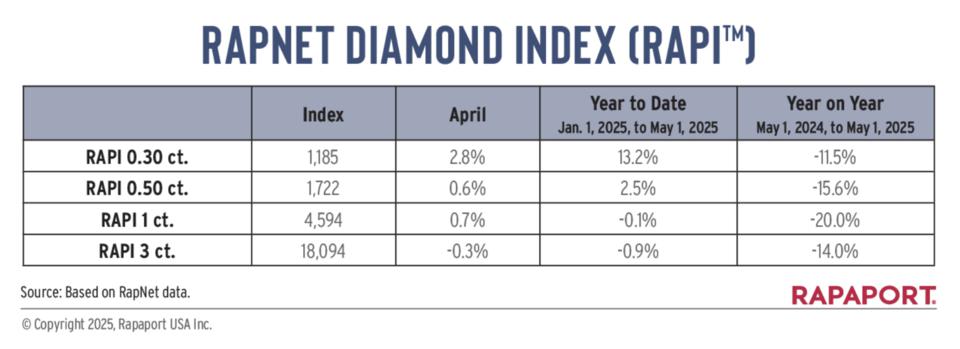
Core Insights - The diamond market is experiencing a significant downturn, contrasting with the rising prices of gold jewelry, as diamond prices continue to decline globally despite a brief increase in early 2023 [1][4][10] - De Beers Group announced the closure of its lab-grown diamond brand Lightbox and is considering divesting its diamond business due to declining performance across key financial metrics [4][6] - Consumer preferences are shifting towards lab-grown diamonds, which are significantly cheaper and meet the demand for personalized products, undermining the traditional value narrative of natural diamonds [7][8][10] Market Trends - Global natural diamond prices have shown a year-on-year decline, with specific price indices reflecting decreases of up to 20% for larger carat sizes [3][6] - The lab-grown diamond market is growing rapidly, accounting for 20% of the global diamond jewelry sales, with prices being approximately one-twentieth of natural diamonds [8][10] - Traditional jewelry brands are adjusting their strategies, with some like Chow Tai Fook optimizing their store formats while others like DR are shifting focus away from the traditional "love binding" narrative [9][10] Consumer Behavior - There is a noticeable decline in the foot traffic and sales of diamond jewelry, with consumers becoming more pragmatic and value-conscious in their purchasing decisions [5][6] - The younger generation is increasingly favoring lab-grown diamonds for their affordability and aesthetic appeal, leading to a reevaluation of the emotional value traditionally associated with natural diamonds [7][8] - The wedding market, a core driver of diamond sales, is also under pressure due to declining marriage rates, further impacting diamond consumption [6][10] Industry Challenges - The diamond industry is facing a dual challenge from both the rise of lab-grown diamonds and changing consumer attitudes towards luxury and value [10] - Continuous price wars in the lab-grown diamond sector are affecting profit margins, with significant price reductions observed in recent years [10] - The need for a redefined value proposition in the diamond market is becoming increasingly urgent as consumer preferences evolve [10]

年轻人的消费观变了
Sou Hu Cai Jing· 2025-05-21 14:07
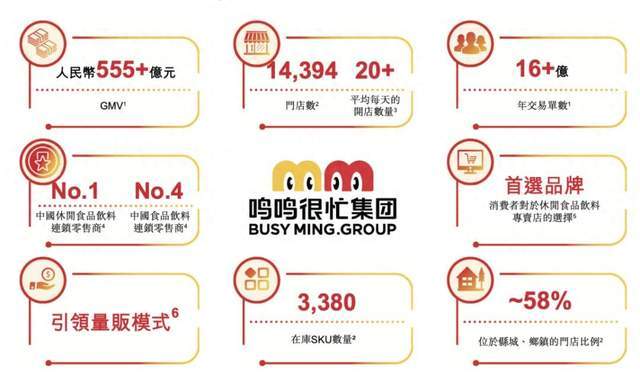
Group 1 - The core viewpoint of the articles highlights the rapid expansion of discount snack stores in urban areas, driven by consumer demand for affordable products, with "Mingming Hen Mang" leading the market with 14,394 stores and a projected GMV of 55.5 billion yuan by the end of 2024 [1][3] - The introduction of the "Zhao Yiming Savings Supermarket" 3.0 store format by "Mingming Hen Mang" reflects a strategic shift to include a wider range of products, catering to consumers' desire for both savings and quality, thereby enhancing the one-stop shopping experience [3][5] - The McKinsey 2024 China Consumer Report indicates a shift towards rational consumption, with consumers prioritizing value for money, which has made cost-effectiveness a key competitive advantage in the discount retail sector [5][6] Group 2 - The discount retail model is gaining traction across various sectors, with the apparel industry also adapting to this trend, as evidenced by Vipshop's GMV reaching 52.4 billion yuan in Q1 2025, with a significant portion of sales coming from clothing and accessories [5] - The discount retail market in China reached a scale of 1.62 trillion yuan in 2021, with projections estimating it will grow to 2.28 trillion yuan by 2025, reflecting a compound annual growth rate (CAGR) of 11% from 2022 to 2025 [5][6] - The future of discount retail is expected to become more widespread as consumer rationality deepens and businesses optimize their supply chains and product categories, indicating potential growth in various industries beyond snacks and apparel [6]
2025年第19周:服装行业周度市场观察
艾瑞咨询· 2025-05-21 01:09
服装丨市场观察 本周看点: -老铺黄金火了,「周大福们」跟上了吗? -奢侈品牌如何为"超级贵宾"打造不一样的 VIC 空间? -国货美妆2024年业绩拆解,50亿成为TOP6新门槛。 行业环境 1.老铺黄金火了,「周大福们」跟上了吗? 关键词:黄金珠宝,古法工艺,高端商场,年轻消费,文化审美 概要:老铺黄金凭借"古法黄金"工艺创新、高端商场布局及VIP服务体验,在金价上涨背景下 逆势崛起,24年36家门店实现85亿元营收。创始人徐高明将其定位为奢侈品品牌,对标爱马 仕,目标单店年销售额超10亿元。品牌吸引年轻消费者与高净值人群,会员年内增长至35万。 老铺黄金计划拓展国际市场,推动全品类黄金奢侈品发展,形成与周大福等品牌的良性竞争。 2.飞速涨粉的"服饰成分党"博主,靠讲面料破圈了? 关键词:服饰成分,面料分析,服装博主,理性消费,品质生活 概要:新一代"服饰成分党"博主以面料、版型为核心,科普服装材质优劣与选购技巧,多为行 业资深从业者。他们通过分析纤维成分、缝线工艺等细节,帮助消费者规避购买误区,获大量 关注。代表如"十一讲服装"和"Tina面料测评"。相比传统博主,更注重专业性和实用性,满足 年轻女性对 ...

与孩子闲聊消费与节约都要有度
Sou Hu Cai Jing· 2025-05-19 06:18
Group 1 - The article emphasizes the value of frugality, illustrating that even wealthy individuals practice a simple and modest lifestyle, which can lead to greater material wealth [2] - It highlights the importance of teaching children about frugality and consumption, showing that understanding the relationship between spending and supporting others can foster a sense of responsibility [4][6] - The narrative suggests that rational consumption is necessary to maintain a balance between spending and saving, warning against excessive debt and its potential consequences on the economy [6] Group 2 - The article discusses the positive impact of frugality on financial well-being, indicating that those who are mindful of their spending habits are more likely to achieve financial success [2] - It presents a perspective that consumption can be viewed as a form of social contribution, as spending supports various livelihoods, thus encouraging a balanced approach to spending [4][6] - The text warns against the dangers of a collective withdrawal from consumption, which could lead to economic downturns, emphasizing the need for responsible financial behavior [6]

餐饮协会新规:禁止吉利数定价引发行业热议
Sou Hu Cai Jing· 2025-05-18 14:58
在餐饮行业,定价策略一直是商家们绞尽脑汁的焦点。最近一则关于"禁止吉利数定价"的新规,却在这个看似平静的湖面上投下了 一颗重磅。这一规定不仅引发了行业内外的广泛讨论,更让无数消费者和商家陷入了深思。究竟,这一新规的背后隐藏着怎样的深 意?它又将如何改变我们日常的餐饮消费习惯? 一、吉利数定价:传统与商业的碰撞 在中国传统文化中,数字往往承载着特殊的象征意义。例如,"8"象征着发财,"6"代表着顺利,"9"则寓意长久。这些吉利数字在餐 饮行业的定价中屡见不鲜,商家们通过巧妙地运用这些数字,不仅能够吸引消费者的眼球,还能在心理上给予顾客一种"物超所 值"的暗示。 这种看似双赢的定价策略,却在新规的出台下遭遇了前所未有的挑战。餐饮协会认为,吉利数定价不仅助长了消费者的非理性消费 行为,还可能导致价格虚高,损害消费者的利益。禁止吉利数定价,成为了协会整顿市场秩序、保护消费者权益的重要举措。 二、新规背后的深意:理性消费与市场公平 禁止吉利数定价,表面上是对传统习俗的一种挑战,实则是对市场公平和消费者理性消费的呼唤。在过去的几年里,随着餐饮行业 的迅猛发展,一些商家为了追求利润最大化,不惜通过吉利数定价来制造"虚假繁荣 ...

2025年,要开始带现金出门了!
Xin Lang Cai Jing· 2025-05-17 00:26
Core Points - The article discusses the risks associated with automatic payment services and the lack of transparency in transactions, highlighting a case where a user was unexpectedly charged for a violation from five years ago without prior notification [2][3] - It emphasizes the importance of being aware of automatic payment authorizations and the potential for unauthorized deductions from accounts [5][6] Group 1: Automatic Payment Risks - Users often unknowingly authorize automatic payments when using services like "pay later" or "no deposit" options, which can lead to unexpected charges [5][6] - Many individuals have shared similar experiences of being charged for services they were unaware of, indicating a widespread issue with automatic payment systems [6][7] Group 2: Consumer Behavior and Spending - The convenience of mobile payments has led to a decrease in consumers' sensitivity to spending, resulting in impulsive purchases and a lack of awareness regarding their financial habits [10][18] - Psychological factors, such as "payment pain," affect how consumers perceive spending, with digital transactions reducing the emotional impact of spending money [18][20] Group 3: Recommendations for Consumers - Consumers are advised to disable unnecessary automatic payment features and set transaction limits to mitigate risks associated with unauthorized charges [40][41] - Keeping track of spending and using cash can help individuals regain control over their finances and improve their budgeting habits [34][45]