第二增长曲线

Search documents
国贸地产忙碌中前行
3 6 Ke· 2025-09-05 02:03
Core Viewpoint - The "Minxi" real estate companies are undergoing a transition as state-owned enterprises take over, with Guomao Real Estate being a key player in this shift [1] Group 1: Company Overview - Guomao Real Estate, a core member of Xiamen Guomao Holding Group, has undergone significant business adjustments, including integration with Guomao Education and Guomao Exhibition [1][4] - The company is positioning itself as a comprehensive real estate enterprise, leading to nearly doubled revenue growth [1] Group 2: Financial Performance - For the reporting period, Guomao Real Estate recorded total revenue of 10.547 billion yuan, a 71.52% increase from 6.149 billion yuan in the same period last year [2] - The real estate development segment remains the main revenue source, contributing 9.014 billion yuan, a year-on-year increase of 77.84% [2] - Operating profit reached 631 million yuan, with a gross margin of approximately 16.02% [2][6] Group 3: Cost and Profit Analysis - Operating costs increased from 4.767 billion yuan to 8.475 billion yuan, reflecting a 77.78% rise, which kept the gross margin stable around 15% [2] - The company has seen a significant recovery in profits, with a 144.57% increase in operating profit due to a lower base from the previous year [6][8] - The net profit attributable to shareholders was 101 million yuan, showing improvement compared to a 90.69% decline in the previous year [8] Group 4: Debt and Asset Management - As of June 30, 2025, Guomao Real Estate had interest-bearing debt of 2.5 billion yuan, a 25% increase from the beginning of the reporting period [8] - The company has a relatively safe debt structure, with 3.594 billion yuan due within one year and 19.55 billion yuan due after one year [8] - Total assets were reported at 106.741 billion yuan, a slight decrease of 0.94% year-on-year [8] Group 5: Market Activity - Guomao Real Estate was active in the land acquisition market, securing five plots across major cities with a total investment of approximately 8.577 billion yuan [9] - The company adopted a relatively conservative investment strategy, focusing on replenishing existing land reserves in familiar markets [9]
追觅造车:扫地机器人的“速度梦想”能否驶入现实?
Xin Lang Zheng Quan· 2025-09-04 07:01
Core Viewpoint - Chasing Technology officially announced its entry into the automotive industry, aiming to create the "fastest car in the world," with its first ultra-luxury electric vehicle set to debut in 2027, directly competing with Bugatti Veyron [1] Group 1: Technological Foundation and Global Presence - Chasing Technology's decision to enter the automotive sector is backed by a long-term vision, having drafted its first car plan as early as 2013 [2] - The company has accumulated significant technological expertise in high-speed digital motors, smart sensing, and AI algorithms, with a total of 6,379 global patent applications by the end of 2024, of which 45% are invention patents [2] - Its patents cover key areas in smart automotive technology, providing a solid technical foundation for its vehicle production [3] - The company has established over 6,000 offline channels in more than 100 countries, boasting a user base of 30 million, which will support its high-end automotive brand's marketing and service [3] Group 2: Challenges in the Automotive Sector - The automotive industry is characterized by long cycles, heavy investment, and slow returns, with intense competition leading to the exit of many smaller players [4] - Chasing Technology is not yet publicly listed, limiting its financing capabilities, and faces uncertainty regarding its ability to support mass production with its asset-light model [4] - The company’s core business in robotic vacuum cleaners is under pressure, with a projected global market share of 8% in 2024, ranking fifth, and a revenue of 15 billion yuan, nearly doubling from 2023, but with a 6% decrease in gross margin and a 12% drop in average selling price [4] Group 3: Strategic Approach and Market Positioning - Chasing Technology employs a "left-hand and right-hand model," where the left-hand represents its ODM business for cash flow, while the right-hand focuses on self-developed vehicle projects [5] - The company aims for a differentiated strategy by targeting the ultra-luxury electric vehicle market, avoiding direct competition with mainstream brands like Tesla and BYD [6] - Plans include launching vehicles overseas before entering the domestic market, with a focus on high-end branding [6] Group 4: Internal Challenges and Future Prospects - Progress on vehicle production has faced delays, with the first model still in the design review stage, and the original production timeline for February 2027 is no longer emphasized internally [7] - The company plans to showcase prototype vehicles to attract financing, but internal confusion exists regarding priorities between prototype development and ODM operations [7] - The automotive venture reflects a broader trend among Chinese smart hardware companies seeking new growth avenues amid increasing competition in the cleaning appliance market [8] Group 5: Industry Context and Competitive Landscape - Chasing Technology's entry into the automotive sector highlights the maturity of China's electric vehicle supply chain, allowing for lower barriers to entry [10] - The ultra-luxury market remains dominated by traditional brands like Bugatti and Bentley, which are slow to adopt electric and smart technologies, providing a competitive edge for Chasing Technology [10] - The company’s ability to transition from a successful cleaning appliance brand to a notable automotive player remains uncertain, with significant challenges ahead [10]

跨界入局低速无人车赛道 德赛西威如何打通末端“最后一公里”?
Huan Qiu Wang· 2025-09-04 05:27
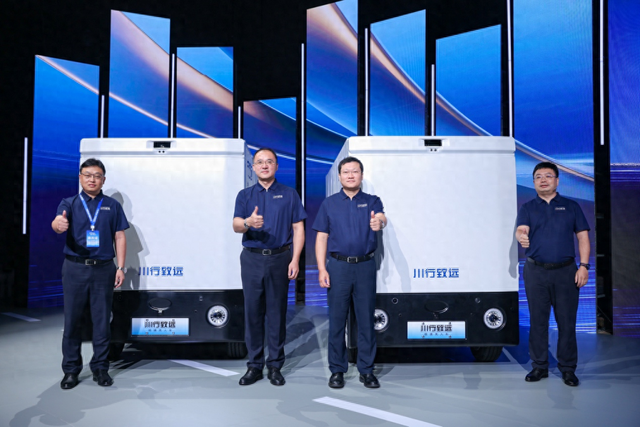
Core Viewpoint - The logistics industry is undergoing a transformation with the introduction of low-speed unmanned vehicles, which are seen as a key variable for improving the efficiency and intelligence of last-mile delivery [1][4]. Group 1: Industry Trends - The scale of unmanned logistics vehicles in China has exceeded 6,000 units, delivering over 100 million orders across various scenarios, significantly increasing daily delivery volumes [1]. - The market for instant delivery is expanding, prompting companies to explore new applications for low-speed unmanned vehicles to address last-mile challenges [1][4]. Group 2: Company Strategy - Desay SV's entry into the low-speed unmanned vehicle market is part of its broader strategy to leverage its extensive experience in smart cockpit, driving assistance, and intelligent driving technologies [3]. - The company aims to redefine the relationship between people, vehicles, and environments by focusing on intelligent solutions for logistics and delivery services [3][4]. Group 3: Product Development - The S6 series of low-speed unmanned vehicles will include four models designed for various applications, such as industrial logistics, cold chain transport, and urban delivery [5]. - The S6 series incorporates six innovative technologies, including a full vehicle-level development approach and enhanced safety features, addressing common pain points in traditional unmanned vehicles [5][6]. Group 4: Future Outlook - The integration of unmanned delivery vehicles into urban logistics is expected to evolve into a critical service node in smart cities, enhancing the efficiency and reliability of last-mile delivery [6]. - The vision for sustainable smart logistics is to ensure that every delivery is secure and that the flow of goods is orderly and meaningful, reflecting a commitment to innovation and customer value [6].

昔日“彩电大王”康佳集团主业仍失血 亏超10亿元
Nan Fang Du Shi Bao· 2025-09-04 02:26
Core Viewpoint - Konka Group's consumer electronics business continues to face challenges in the first half of the year, despite a change in ownership to China Resources Group, which marks a significant transition for the former "king of color TVs" [3][4]. Financial Performance - In the first half of 2025, the company reported operating revenue of 5.248 billion yuan, a slight decrease of 3.05% year-on-year; net profit attributable to shareholders was a loss of 383 million yuan, significantly narrowing from a loss of 1.088 billion yuan in the same period last year, a reduction of 64.75% [3][4]. - The net profit reduction was primarily due to non-recurring gains totaling 644 million yuan, with the largest portion being 656 million yuan from changes in accounting for equity in Wuhan Tianyuan Group and the disposal of financial assets [3][4]. Consumer Electronics Business - The consumer electronics segment, which includes color TVs and white goods, generated revenue of 4.713 billion yuan, a slight decline of 0.87% year-on-year; while TV revenue grew by 6.09%, the gross margin was only 0.39%, and white goods revenue fell by 6.76% [4][5]. - The overall gross margin for the consumer electronics business was just 3.23%, indicating a challenging environment where revenue growth does not translate into profit [4][5]. Financial Challenges - The company faces high financial costs and tight cash flow, with financial expenses reaching 311 million yuan in the first half of the year; net cash flow from operating activities was -676 million yuan, worsening by 53.78% compared to the previous year [5]. - The high level of interest-bearing debt continues to burden the company's financial operations [5]. Semiconductor Business - The semiconductor business generated revenue of 97 million yuan, a year-on-year increase of 17.38%, but remains in the early stages of industrialization without achieving scale or profitability [6][7]. - There is potential for synergy between China Resources' semiconductor resources and Konka's existing optoelectronic and storage businesses, which could accelerate the industrialization process [8]. PCB Business - The PCB (printed circuit board) business was a rare highlight, achieving revenue of 263 million yuan, a year-on-year growth of 13.63%, indicating stable growth in this segment [8]. Strategic Outlook - The entry of China Resources Group brings a new governance structure and strategic opportunities, but the new management team faces the complex challenge of revitalizing the struggling core business while nurturing new ventures [8].

昔日“彩电大王”主业仍失血 亏超10亿元
Nan Fang Du Shi Bao· 2025-09-03 23:11
Core Insights - Konka Group's consumer electronics business continues to face challenges, with a slight revenue decline in the first half of 2025 despite a significant reduction in net losses [2][3] - The company reported a revenue of 5.248 billion yuan, a year-on-year decrease of 3.05%, while net loss attributable to shareholders was 383 million yuan, a 64.75% improvement from the previous year's loss of 1.088 billion yuan [2] - The improvement in net loss was primarily due to non-recurring gains totaling 644 million yuan, indicating that the core business remains under pressure [2][3] Consumer Electronics Business - The consumer electronics segment generated revenue of 4.713 billion yuan, a slight decrease of 0.87% year-on-year, with TV revenue growing by 6.09% but with a low gross margin of only 0.39% [3] - The white goods segment saw a revenue decline of 6.76%, and the overall gross margin for the consumer electronics business was just 3.23%, highlighting ongoing challenges in profitability [3] Financial Challenges - The company faces high financial costs and tight cash flow, with financial expenses reaching 311 million yuan in the first half of the year [4] - The net cash flow from operating activities was -676 million yuan, worsening by 53.78% compared to the previous year, indicating significant financial pressure [4] Semiconductor Business - Konka's semiconductor business reported revenue of 97 million yuan, a year-on-year increase of 17.38%, but remains in the early stages of industrialization without achieving scale or profitability [5][6] - There are expectations that the resources from China Resources Group could synergize with Konka's existing semiconductor operations to accelerate growth [7] PCB Business - The PCB (Printed Circuit Board) segment emerged as a bright spot, achieving revenue of 263 million yuan, a year-on-year growth of 13.63%, marking it as one of the few segments with stable growth [7] Strategic Outlook - The entry of China Resources Group as a new controlling shareholder brings potential for strategic restructuring and resource integration, but the new management faces the challenge of revitalizing the core business and nurturing new growth areas [5][7]

白电三巨头“第二曲线”对决:美的B端强势,海尔多元布局,格力何时破局?
Guo Ji Jin Rong Bao· 2025-09-03 14:14
Core Viewpoint - The performance of major white goods manufacturers Midea Group, Haier Smart Home, and Gree Electric Appliances in the first half of 2025 shows a clear divergence, indicating a potential reshuffling in the competitive landscape of the home appliance industry [2][4]. Group 1: Financial Performance - Midea Group leads with a revenue of 2511.24 billion yuan, a year-on-year growth of 15.58%, and a net profit increase of 25.04% to 260.14 billion yuan [4][7]. - Haier Smart Home achieved a revenue of 1564.94 billion yuan, growing by 10.22%, with a net profit of 120.33 billion yuan, reflecting a 15.59% increase [4][7]. - Gree Electric Appliances reported a revenue of 973.25 billion yuan, a decline of 2.46%, with a net profit of 144.12 billion yuan, showing a minimal increase of 1.95% [4][7]. Group 2: Market Dynamics - The home appliance market in China is transitioning into a phase of stock competition, necessitating companies to diversify beyond traditional core businesses to find new growth avenues [10]. - Midea Group is focusing on both consumer (To C) and business (To B) segments, with its smart home business generating 1672 billion yuan, a growth of 13.31% [10][11]. - Haier Smart Home's revenue is primarily driven by traditional appliances, with over 80% of its income coming from refrigerators, washing machines, air conditioners, and kitchen appliances [11]. - Gree Electric Appliances remains heavily reliant on its air conditioning business, which accounted for 78.38% of its revenue, while other segments contribute minimally [11][12]. Group 3: Strategic Insights - Analysts suggest that the future performance of these companies will depend on their strategic positioning and execution, particularly in global expansion and new business growth [8]. - Gree's struggles are attributed to its over-reliance on a single product line and structural issues, which have hindered its ability to adapt to market changes [6][12]. - Midea's B2B business is seen as a significant growth area, with potential in industrial technology and renewable energy sectors [11].



四方新材(605122):需求疲弱业绩承压 持续探索跨界机遇
Xin Lang Cai Jing· 2025-09-03 08:39
Core Viewpoint - The company reported a significant decline in revenue and net profit for the first half of 2025, indicating pressure on its performance due to weak downstream demand and falling product prices [1][2]. Group 1: Financial Performance - In H1 2025, the company achieved total revenue of 540 million yuan, a year-on-year decrease of 22.59%, and a net profit attributable to shareholders of -26 million yuan [1]. - In Q2 2025, total revenue was 293 million yuan, down 21.64% year-on-year, with a net profit of -25 million yuan, reflecting ongoing performance challenges [1]. - The company's sales volume of concrete decreased by 15.6% to 1.726 million cubic meters, while the average selling price fell by 8.3% to 312.9 yuan per cubic meter, indicating a significant drag on performance [1]. Group 2: Profitability and Cost Management - The gross margin dropped by 9.65 percentage points to 5.36% due to weak downstream demand and declining sales prices [2]. - Despite efforts to reduce costs, the overall expense ratios saw minimal decline due to reduced revenue, with sales expense ratio down by 0.06 percentage points and management expense ratio down by 0.03 percentage points [2]. - The company recorded credit impairment losses of 22 million yuan, an increase of 8 million yuan year-on-year, while asset disposal gains rose by 15 million yuan [2]. Group 3: Business Strategy and Market Position - The company has a strong competitive advantage in the Chongqing concrete industry, with a production capacity of approximately 15.5 million cubic meters per year and two mortar production lines with a capacity of 1.2 million cubic meters per year [3]. - As the second-largest player in the Chongqing concrete market, the company is positioned to benefit from the ongoing concentration of market share among leading firms [3]. - The company is actively exploring and nurturing a second industry to overcome growth bottlenecks, with potential support from policies related to urban renewal and housing market stabilization [3]. Group 4: Earnings Forecast - The expected earnings per share (EPS) for 2025-2027 are projected to be -0.05 yuan, 0.10 yuan, and 0.21 yuan, with corresponding price-to-earnings (PE) ratios of 136 times and 64 times for 2026 and 2027, respectively [3].

开润股份(300577):制造业务稳健增长 净利率改善显著
Xin Lang Cai Jing· 2025-09-03 04:50
Group 1 - The company reported a revenue of 2.427 billion in H1 2025, representing a year-on-year growth of 32.53%, while the net profit attributable to shareholders was 187 million, a decrease of 24.77% due to the impact of investment income from the acquisition of Jiale in H1 2024 [1] - The operational net profit growth rate, excluding the aforementioned impact, was 23.28%, with a non-recurring net profit of 181 million, an increase of 13.98% year-on-year [1] - In Q2 2025, the company achieved a revenue of 1.194 billion, a year-on-year increase of 29.54%, while the net profit attributable to shareholders was 101 million, a decrease of 42.78% [1] Group 2 - The bag manufacturing business generated a revenue of 1.419 billion in H1 2025, reflecting a year-on-year growth of 13.03%, supported by a core strategy targeting major clients [1] - The company’s production capacity for bags reached 22.0733 million units, a year-on-year increase of 3.55%, with a capacity utilization rate of 93.39%, up 2.15 percentage points [1] - The company has established a global supply chain advantage with clients including Nike, ADIDAS, Uniqlo, and others, with approximately 71% of production capacity located overseas, mainly in Indonesia and India [1] Group 3 - The apparel manufacturing segment reported a revenue of 678 million, a significant year-on-year increase of 148.25%, indicating effective implementation of the vertical integration strategy [2] - The subsidiary Shanghai Jiale achieved a revenue of 685 million in H1 2025, with a net profit margin of 5.08%, an increase of 1.8 percentage points year-on-year [2] - The company’s clothing production capacity was 30.0143 million units, with a utilization rate of 50.73%, and approximately 80% of production capacity located overseas, primarily in Indonesia [2] Group 4 - The brand management business generated a revenue of 311 million in H1 2025, a year-on-year increase of 8.87%, with distribution channel revenue from Xiaomi reaching 250 million, up 28.28% [2] - The self-owned brand "90 Points" has optimized its online channel operations, with online sales revenue of approximately 55.486 million, while also expanding into offline channels [2] Group 5 - The overall gross margin for H1 2025 was 24.66%, an increase of 0.72 percentage points, primarily due to improvements in the gross margin of the OEM business [3] - The company reported a significant increase in operating cash flow, reaching 239 million, a year-on-year growth of 3843%, indicating improved operational quality [3] - Inventory amounted to 861 million, a year-on-year increase of 19.33%, with an inventory turnover period of 85 days, an increase of 6 days year-on-year [3]

顶固集创半年报:主业智造利润反转 开启第二增长曲线
Zheng Quan Ri Bao Wang· 2025-09-02 10:41
Group 1 - The company reported a total revenue of 461 million yuan and a net profit of 10.05 million yuan for the first half of 2025, marking a return to profitability [1] - The company invested 33.5 million yuan in a share buyback program for employee stock ownership plans [1] - The weighted average return on equity for the first half of 2025 was 1.86%, an increase of 2.53 percentage points year-on-year [1] Group 2 - The company has initiated a non-core business expansion into the aerospace sector, acquiring 5.8018% of Hubei Hangju Technology Co., Ltd. for 63.82 million yuan [2] - Hubei Hangju Technology specializes in the research and production of special functional materials for aerospace applications, including thermal protection materials [2] - This strategic move is expected to create synergies between smart manufacturing and aerospace technology, enhancing the company's growth potential [3] Group 3 - The management team has expressed confidence in the company's future growth, as indicated by the employee stock ownership plan with a transfer price of 8.67 yuan per share, significantly higher than the buyback price [3]

康佳易主华润后首份财报:净利减亏六成,主业“失血”仍持续
Nan Fang Du Shi Bao· 2025-09-02 10:15
Core Viewpoint - The financial report of Konka Group shows a mixed performance under the new ownership of China Resources Group, with a slight decline in revenue but a significant reduction in net losses, indicating ongoing challenges in its core business despite some positive signs from non-recurring gains [2][5]. Financial Performance - In the first half of 2025, Konka achieved operating revenue of 5.248 billion yuan, a year-on-year decrease of 3.05% [2]. - The net loss attributable to shareholders was 383 million yuan, a substantial improvement of 64.75% compared to a loss of 1.088 billion yuan in the same period last year [2]. - However, the adjusted net profit, excluding non-recurring items, was a loss of 1.028 billion yuan, nearly unchanged from the previous year's loss of 1.103 billion yuan [2]. Core Business Challenges - The consumer electronics segment, which includes color TVs and white goods, generated revenue of 4.713 billion yuan, a slight decline of 0.87% year-on-year [3]. - The color TV business saw a revenue increase of 6.09%, but the gross margin was only 0.39%, while the white goods segment experienced a revenue drop of 6.76% [3]. - The overall gross margin for the consumer electronics business was just 3.23%, highlighting the ongoing struggle to convert revenue into profit amid fierce market competition [3]. Financial Pressures - High financial costs and tight cash flow continue to exert pressure on the company's operations, with financial expenses reaching 311 million yuan in the first half of the year [4]. - The net cash flow from operating activities was -676 million yuan, worsening by 53.78% compared to -440 million yuan in the same period last year, indicating significant operational cash flow challenges [4]. New Ownership and Future Prospects - The transition to China Resources Group as the new controlling shareholder has introduced a new management team and strategic direction for Konka [5]. - The semiconductor business reported revenue of 97 million yuan, a year-on-year increase of 17.38%, but remains in the early stages of industrialization and is not yet profitable [6]. - The PCB (printed circuit board) business was a bright spot, achieving revenue of 263 million yuan, a growth of 13.63%, amidst challenges in both core and new business areas [6].