
高性能计算

Search documents
Bitcoin Mining News: BTC crosses 1 zettahash, Tether wins in court, U.S. eyes Bitmain
Yahoo Finance· 2025-09-17 19:44
Industry Overview - Bitcoin miners are increasingly integrating with High-Performance Computing (HPC), indicating a shift in operational focus that is expected to strengthen over time [1] - The Bitcoin mining network has achieved a significant milestone, reaching one zettahash of computing power, which equates to one sextillion computations per second [6] Market Performance - Cipher Mining's stock rose by 39% to $10.32, while Bitfarms saw a 62% increase, nearing $2 per share after CEO Ben Gagnon announced stock purchases [1] - IREN also performed well, surpassing $30 per share [1] Bitcoin Difficulty Adjustments - Recent Bitcoin difficulty adjustments show a significant upward trend, with a 7.96% increase in July followed by a 4.89% adjustment, and expectations of an additional 8% increase [2][4] - The current hash price is estimated to be between $53 to $56 per petahash per day [3] Legal and Regulatory Developments - Tether is involved in a legal dispute with Swan Bitcoin, claiming exclusive ownership over intellectual property developed in their joint venture [8][9] - A GOP lawmaker has urged a Treasury investigation into Bitmain's operations, citing potential risks to U.S. energy grid security [13][14] Company-Specific Developments - Canaan has reported strong performance, mining 1,400 Bitcoin in Q2 and shifting its operations to the U.S. [16] - Ocean Pool is facing controversy over executive compensation, with unconfirmed reports suggesting a salary of $750,000 for its CEO, which is considered high for the industry [17][18]
玻璃走向芯片,一步之遥
半导体行业观察· 2025-09-17 01:30
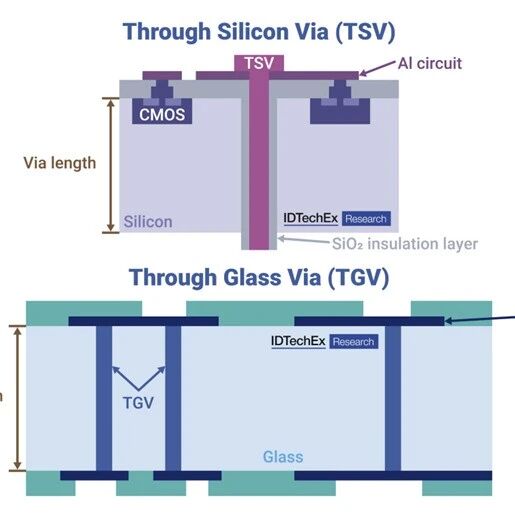
Core Viewpoint - Glass is transitioning from a background consumable to a core component in semiconductor packaging, providing essential substrates and dielectric materials for advanced applications [2][4]. Group 1: Glass in Semiconductor Manufacturing - Glass substrates are increasingly used in modern wafer fabs, supporting silicon wafers and forming sealed MEMS caps [2]. - The demand for higher bandwidth and power density in AI and high-performance computing (HPC) is driving the need for advanced packaging solutions, where glass can offer better performance than traditional organic laminates and silicon interposers [3][4]. Group 2: Market Potential and Applications - The low dielectric loss and optical transparency of glass make it a significant growth driver beyond computing packaging, particularly in photonic applications [6]. - Co-packaged optical devices (CPO) are being developed to simplify fiber connections, leveraging glass's capabilities to support electrical redistribution layers and low-loss waveguides [6]. Group 3: Supply Chain Insights - The transition from pilot lines to mass production for glass substrates hinges on advancements in laser drilling, copper filling, and panel processing technologies [8]. - Understanding the competitive landscape with silicon and improved organic materials is crucial, as foundries push for mixed wafer-level redistribution, which may diminish glass's advantages [8].


通富微电(002156) - 002156通富微电投资者关系管理信息20250916
2025-09-16 09:08
Company Overview - Tongfu Microelectronics is an integrated circuit packaging and testing service provider, offering one-stop services from design simulation to packaging testing for global clients [2][3] - The company covers various fields including AI, high-performance computing, big data storage, 5G, IoT, automotive electronics, and industrial control [2][3] - Major shareholder is Nantong Huada Microelectronics Group, with stable equity structure [2] Financial Performance - Revenue for 2022, 2023, 2024, and the first half of 2025: CNY 21.429 billion, CNY 22.269 billion, CNY 23.882 billion, and CNY 13.038 billion respectively [3] - Net profit for the same periods: CNY 0.502 billion, CNY 0.169 billion, CNY 0.678 billion, and CNY 0.412 billion [3] - 2024 revenue growth of 7.24% and net profit growth of 299.90% [6] - 2025 H1 revenue growth of 17.67% and net profit growth of 27.72% [6] Industry Situation - Global semiconductor market reached USD 346 billion in H1 2025, a year-on-year growth of 18.9% [4] - Forecast for 2025 global semiconductor market size is USD 728 billion, up 15.4% from 2024 [4] - Expected market size for 2026 is USD 800 billion, with a further growth of 9.9% [4] Key Trends in Semiconductor Market - AI-driven growth continues; Asia-Pacific IC design market expected to grow by 15% in 2025 [5] - TSMC maintains dominance in wafer foundry; strong demand for advanced processes [5] - 2025 is a critical year for 2nm wafer manufacturing technology [5] Business Performance in Specific Fields - In H1 2025, the company increased market share in mobile, home appliance, and automotive sectors [9] - Focus on AI and high-performance products, with successful integration of Suzhou and Penang factories [9] Technology Development - Significant progress in large-size FCBGA development, with mass production initiated [11] - Breakthroughs in optical-electrical hybrid packaging technology [11] - Over 1,700 patent applications, with nearly 70% being invention patents [8] Future Outlook - Continued growth expected in AI and new energy vehicle sectors in H2 2025 [10] - Chinese IC packaging and testing industry is anticipated to transition from "catching up" to "keeping pace" and potentially "leading" [10]

联发科2纳米芯片已完成流片 将于明年底量产
Mei Ri Jing Ji Xin Wen· 2025-09-16 04:17
Core Insights - MediaTek has successfully completed the design tape-out of its first flagship SoC using TSMC's 2nm process, expected to enter mass production by the end of next year [1] - The 2nm process represents a significant advancement in semiconductor technology, promising enhanced performance and energy efficiency for applications such as mobile processors, generative AI, and high-performance computing [1] - TSMC's 2nm technology utilizes nanosheet transistor architecture, achieving a 1.2x increase in logic density, up to 18% performance improvement at the same power level, and a 36% reduction in power consumption at the same speed compared to the N3E process [1] Industry Context - TSMC is a leading foundry, producing chips for major tech companies, including Apple and NVIDIA, and is crucial for the production of processors used in devices like iPhones and iPads [2] - Qualcomm and MediaTek are currently competing with their next-generation flagship SoCs primarily based on TSMC's 3nm process, with competition expected to extend to the more advanced 2nm process as it matures [2] - According to Counterpoint Research, MediaTek holds the largest market share in smartphone application processors at 36%, benefiting from increased demand for entry-level and mainstream products, while Qualcomm follows with 28% and Apple at 17% [2]

与英伟达(NVDA.US)签署63亿美元新订单 CoreWeave(CRWV.US)涨超5%
Zhi Tong Cai Jing· 2025-09-15 14:27
Core View - CoreWeave's stock price increased by over 5%, reaching $118.1 [1] - The company announced a new order agreement with NVIDIA, based on a prior agreement signed on April 10, 2023, with an initial value of up to $6.3 billion [1] Agreement Details - The agreement aims to provide reserved cloud computing capacity for CoreWeave's customers [1] - NVIDIA will purchase any unused capacity from CoreWeave's data centers, enhancing capacity utilization for CoreWeave [1] - The terms stipulate that NVIDIA will commit to purchasing the remaining capacity from 2025 to April 13, 2032, contingent on CoreWeave meeting delivery and service availability conditions [1] Strategic Implications - This arrangement is expected to improve CoreWeave's capacity utilization [1] - It also provides NVIDIA with additional computational power support in the fields of artificial intelligence and high-performance computing [1]


美股异动 | 与英伟达(NVDA.US)签署63亿美元新订单 CoreWeave(CRWV.US)涨超5%
智通财经网· 2025-09-15 14:26
Core观点 - CoreWeave's stock price increased by over 5%, reaching $118.1, following the announcement of a new order agreement with NVIDIA valued at up to $6.3 billion [1] 分组1: 合同细节 - The new order agreement is based on a prior agreement signed on April 10, 2023, between CoreWeave and NVIDIA [1] - The agreement aims to provide reserved cloud computing capacity for CoreWeave's customers [1] - NVIDIA will purchase any unused capacity from CoreWeave's data centers, enhancing CoreWeave's capacity utilization [1] 分组2: 时间框架与条件 - NVIDIA is committed to purchasing the unused capacity from 2025 to April 13, 2032, contingent upon CoreWeave meeting delivery and service availability conditions [1] - This arrangement supports NVIDIA's needs for additional computing power in the fields of artificial intelligence and high-performance computing [1]
优刻得以弹性算力与高性能存储,助力国产芯片产业跨越式发展
Quan Jing Wang· 2025-09-15 06:45
Core Insights - The global chip industry is experiencing a new wave of technological iteration and market growth driven by advancements in artificial intelligence, smart driving, and industrial intelligence [1] - Domestic chip research and manufacturing have become a strategic focus in national technological competition, emphasizing the need for independent development [1] Group 1: Challenges in Chip Design - The chip design process faces increasingly complex simulation and verification tasks, requiring high computational power, storage performance, and resource flexibility [1] - Traditional self-built data center models are struggling to meet the rapid iteration demands due to limitations in scalability, high costs, and complex operations [1] Group 2: UCloud's Solutions - UCloud has developed a centralized "computing power zone" at the Shanghai Qingpu Intelligent Computing Center, supporting rapid delivery and private deployment of over a thousand physical servers [2] - This zone provides high-performance GPU/CPU servers and low-latency networks, enabling a hybrid cloud architecture that connects securely with clients' local data centers [2] - UCloud's solutions allow chip companies to flexibly allocate resources based on project progress, significantly reducing cost pressures from idle computing power and shortening product development cycles [2] Group 3: High-Performance Storage Development - UCloud has independently developed the UPFS parallel file storage product, which addresses the I/O performance, scalability, and stability demands of EDA tools during chip design [3] - UPFS offers microsecond-level latency and terabyte-per-second throughput, supporting linear performance and capacity expansion even with increasing parallel tasks [3] - The product has been successfully implemented in several chip companies' simulation environments, enhancing their ability to conduct large-scale netlist simulations and physical verifications [3] Group 4: Comprehensive Support for Chip Localization - UCloud provides extensive support for chip companies across various dimensions, including network, security, and operations [4] - The Qingpu Intelligent Computing Center offers high-quality network access and low-latency transmission, while UCloud's self-developed UXR hybrid cloud gateway cluster enables T-level cross-cloud network forwarding [4] - UCloud's chip cloud solutions have served numerous leading domestic chip design firms, covering a range of fields from autonomous driving chips to AI acceleration chips, facilitating the entire development process from architecture exploration to prototype verification [4] Group 5: Commitment to Future Development - UCloud is committed to the rise of domestic chips through continuous innovation and iteration of foundational infrastructure [4] - The company plans to increase investment in high-performance computing, storage, and chip cloud solutions, optimizing resource scheduling and ecosystem service capabilities [4] - UCloud aims to support the construction of a secure, efficient, and open research environment for China's chip industry, achieving critical breakthroughs in global technological competition [4]

第一创业晨会纪要-20250915
First Capital Securities· 2025-09-15 03:18
Macro Economic Group - In August, M2 growth was 8.8% year-on-year, the highest since December 2023, while M1 growth was 6.0%, the highest since January 2023, indicating a significant acceleration in the speed of money circulation [5][6] - The total social financing (TSF) in August was 2.57 trillion yuan, lower than the previous year's figure by 463 billion yuan, with a notable decrease in government bonds and loans [5] - Bank credit increased by 590 billion yuan in August, but this was a year-on-year decrease of 310 billion yuan, indicating a contraction in both household and corporate loans [6] Industry Comprehensive Group - Recent US sanctions on Chinese companies, including Shanghai Fudan, may lead to short-term stock sell-offs, but China's countermeasures could benefit domestic analog chip manufacturers [9] - The global analog chip market is recovering, with price increases from major manufacturers, suggesting improved profitability for domestic firms if anti-dumping investigations succeed [9] Advanced Manufacturing Group - In August, China's battery sales reached 134.5 GWh, a year-on-year increase of 45.6%, with lithium iron phosphate batteries accounting for the majority of the growth [11] - The National Development and Reform Commission aims for new energy storage capacity to reach 180 million kilowatts by 2027, driving significant investment in the sector [12] - The automotive industry is projected to see a 3% increase in total sales in 2025, with a 20% growth in new energy vehicle sales, indicating a shift towards smart and electric vehicles [12] Consumer Group - Jiangnan Buyi reported a total revenue of 5.548 billion yuan for the 2025 fiscal year, a 4.6% increase, driven by online sales and store expansion [14] - The company's membership system plays a crucial role, with over 80% of retail revenue coming from members, highlighting the importance of customer loyalty [14] Bond Research Group - The bond market experienced an overall rise in interest rates, influenced by concerns over high redemption fees for bond funds and a weak inflation outlook [16]
看看咱们是如何见招拆招的!中美经贸磋商前夕中方连出“重拳”
Bei Jing Ri Bao Ke Hu Duan· 2025-09-15 00:18
Core Viewpoint - The Chinese government has initiated anti-dumping and anti-discrimination investigations against U.S. imports of simulation chips and measures related to the semiconductor industry, signaling a strong response to U.S. pressure ahead of the upcoming trade talks [1][19]. Group 1: Trade Investigations - China has launched an anti-dumping investigation targeting U.S.-origin simulation chips, specifically those with a process node of 40nm and above, which are essential for various industries including electric vehicles and smart appliances [16][19]. - The investigation period is set from 2022 to 2024, and if the findings are in favor of China, it could lead to the imposition of anti-dumping duties, impacting U.S. companies' market share and profits in China [16][19]. - Additionally, China has initiated an anti-discrimination investigation against U.S. measures that have targeted the semiconductor industry since 2018, which includes tariffs and export bans [19][20]. Group 2: U.S. Pressure Tactics - The U.S. has been intensifying its pressure tactics, including threats of a 200% tariff on rare earth magnets, which are critical for high-value industries such as electric vehicles and defense [3][5]. - The U.S. has also been pushing for increased soybean orders from China, aiming to protect American farmers facing export challenges [4][5]. - Furthermore, the U.S. has added several Chinese entities to its export control list, indicating a shift in strategy to restrict not only domestic companies but also foreign branches of Chinese firms [5][6]. Group 3: Geopolitical Context - The U.S. is attempting to form a "tariff alliance" with its allies to impose additional tariffs on Chinese goods, as seen with Mexico's recent announcement of a 50% tariff on countries without trade agreements [7][8]. - Military maneuvers, such as the passage of U.S. and British warships through the Taiwan Strait, have been used as a tool for geopolitical pressure, coinciding with sensitive negotiation periods [9][11]. - China's swift response to these pressures through the initiation of investigations is seen as a strategic move to level the negotiating field ahead of the upcoming talks in Madrid [12][20].

溢价超过44倍!大基金三期为何青睐拓荆科技旗下子公司?
Mei Ri Jing Ji Xin Wen· 2025-09-14 13:01
Core Viewpoint -拓荆科技 is expanding its semiconductor equipment business through a capital increase in its subsidiary,拓荆键科, with significant participation from external investors, including国投集新, which will become the second-largest shareholder after the investment [1][2]. Group 1: Investment and Shareholding Structure - The capital increase involves six entities, with拓荆科技 and国投集新 each contributing up to 450 million yuan, while employee shareholding platforms and other investors contribute smaller amounts [2]. - After the capital increase,拓荆科技's ownership in拓荆键科 will decrease to approximately 53.57%, while国投集新 will hold about 12.71% [2]. Group 2: Financial Performance and Valuation - As of mid-2025,拓荆科技's overall revenue is projected to be around 1.954 billion yuan, while拓荆键科's revenue is only 114,550 yuan, with a net loss of approximately 37.47 million yuan [2]. - The pre-investment valuation for this financing round is set at 2.5 billion yuan, reflecting a substantial increase of 4427.36% from the net asset value of 55.22 million yuan [3]. Group 3: Expansion Plans and Projects -拓荆科技 plans to invest 1.768 billion yuan in a high-end semiconductor equipment industrialization base to enhance production capacity and efficiency [4]. - The company also intends to allocate 2 billion yuan for a cutting-edge technology research and development center to optimize existing thin film deposition equipment [4]. - The construction of the industrialization base is expected to take five years, addressing future capacity bottlenecks and supporting sustainable growth [4].
