
内卷式竞争

Search documents
吉祥航空中报净利增长背后:营业外收入大增80倍 有息负债升破350亿
Xin Lang Cai Jing· 2025-09-12 15:36
Core Viewpoint - 吉祥航空 reported a dual growth in revenue and net profit for the first half of 2025, with total revenue reaching 11.067 billion yuan, a year-on-year increase of 1.02%, and net profit attributable to shareholders at 505 million yuan, up 3.29% year-on-year. However, the net profit excluding non-recurring gains and losses fell by 14.27% to 408 million yuan, indicating a weakening in the company's core business profitability [1][2]. Group 1: Financial Performance - The company's operating revenue for the first half of 2025 was 11.067 billion yuan, a slight increase of 1.02% year-on-year, while operating costs grew by 5.65%, outpacing revenue growth by 4.5 percentage points [2][4]. - Operating profit for the first half of 2025 was 576.1 million yuan, reflecting an 11.39% decline year-on-year due to the adverse effects of intense industry competition [3]. - The gross profit margin for the first half of 2025 was 11.84%, a significant decrease of 24.61% compared to the same period last year, indicating reduced profitability in core operations [1][3]. Group 2: Strategic Adjustments - In response to domestic market competition, 吉祥航空 reduced domestic passenger capacity by 9.76% while increasing international passenger capacity by 65.55% in the first half of 2025 [3]. - The utilization rate of wide-body aircraft improved significantly by 25%, reaching 14.75 hours per day, although the international route passenger load factor was 78.4%, 4.3 percentage points lower than in 2019, suggesting room for improvement [3]. Group 3: Debt and Financial Health - As of June 30, 2025, the company's interest-bearing debt ratio rose to a new high of 70.65%, with total interest-bearing debt amounting to 35 billion yuan, a 10% year-on-year increase [4]. - The debt-to-equity ratio has been increasing, with recent figures at 209.5%, 228.56%, and 395.09% over the last three half-year reports [4]. Group 4: Industry Challenges - The civil aviation industry is facing intense "involution" competition, leading to a decline in overall revenue levels, characterized by the situation of "more passengers but less profit" [4]. - Future risks include lower-than-expected travel demand, oversupply in the market, intensified competition, rising oil prices, and potential depreciation of the yuan, all of which may continue to impact 吉祥航空's performance [4].

聚焦新修订的《反不正当竞争法》——保护公平竞争、强化“内卷”治理、完善平台管理责任、 共促高质量发展
Xin Lang Ji Jin· 2025-09-12 09:55
Core Points - The newly revised Anti-Unfair Competition Law will take effect on October 15, 2025, marking the second significant amendment since its initial implementation in 1993 and the first major revision in 2017 [1] Group 1: Strengthening Fair Competition - The revised law addresses "involutionary" competition, emphasizing that operators should "fairly participate in market competition" and establishing a fair competition review system to ensure equal access to production factors [2] Group 2: Addressing New Forms of Unfair Competition - The law prohibits new forms of unfair competition in the internet economy, including illegal data acquisition and malicious transactions, with specific provisions against fraudulent practices and misuse of platform rules [3] Group 3: Responsibilities of Platform Operators - For the first time, the law establishes the responsibility of platform operators to manage fair competition within their platforms, including the obligation to create clear competition rules and report unfair practices [4] Group 4: Regulating Abuse of Dominance - The revised law includes provisions against the abuse of dominant market positions by large enterprises, ensuring that they do not impose unreasonable payment terms on smaller businesses [5] Group 5: Clarifying Confusion in Competition - The law expands regulations on confusing competitive behaviors, including unauthorized use of influential media account names and improper use of search keywords that mislead consumers about product origins [6]
散小乱卷技术与同质化
董扬汽车视点· 2025-09-10 10:32
Group 1 - The core viewpoint is that the Chinese automotive industry is transitioning from a large automotive nation to a strong automotive nation, and the industry dynamics have changed significantly, requiring a reevaluation of common assumptions [1][2][4] - The notion that the industry is primarily characterized by fragmentation and small-scale operations is challenged, as the current market structure can support more than just three major automakers due to its size [2][3] - The historical context shows that while fragmentation was an issue in the past, the current primary concern is excessive competition rather than the number of enterprises [3][4] Group 2 - The industry is entering a new phase of innovation, with significant investments in research and development, making China a leader in both R&D spending and patent applications [5] - Emphasis on safety and technological maturity is crucial for new technology applications in the automotive sector, as vehicles are high-value, long-term consumer goods [5][6] - Government regulation is necessary to manage the premature application of unproven technologies, and a "sandbox" approach could facilitate gradual integration of new technologies [5][6] Group 3 - The idea that companies should avoid using similar technologies to foster differentiation is deemed unrealistic, as consumer needs are often similar across brands, leading to a natural overlap in technology use [7] - The historical development of the automotive industry indicates that new technologies are often adopted by various manufacturers over time, and the focus should be on refining these technologies for optimal user experience [7] - The industry is urged to focus on high-quality development and to consider what market competition and technological progress should look like for the benefit of the nation and its people [7]


信用债周策略20250907:信用债票息策略有优势吗
Minsheng Securities· 2025-09-07 14:48
Group 1: Credit Bond Yield Strategy - The credit bond yield strategy shows advantages as credit bonds have demonstrated strong anti-drawdown characteristics in the current adjustment market, with their adjustment pace and magnitude closely following government bonds [1][9] - The current market conditions suggest that credit bonds still possess certain yield value, warranting continued attention, although the protection space of credit spreads is insufficient [1][9] - Historical data indicates that September is typically a challenging month for the bond market, with a less than 15% probability of interest rates declining in September over the past seven years [1][16] Group 2: Market Dynamics and Fund Behavior - Credit bonds are expected to continue fluctuating weakly in September, but the adjustment magnitude is relatively controllable, as the net selling momentum of funds may weaken [2][20] - Funds significantly sold off credit bonds with maturities over five years in July and August, totaling over 370 billion yuan, leading to a noticeable reduction in long-term bond positions [2][20] - Despite the large net selling, credit bonds did not experience sustained negative feedback, indicating a potential stabilization in the market [2][20] Group 3: Investment Strategies - Investment strategies should focus on ordinary credit bond varieties, particularly those with good credit quality and larger outstanding amounts, such as 3Y/AAA+ and AAA bonds yielding around 1.88% and 1.90% respectively [3][23] - For urban investment bonds, the yields for bonds with maturities under 2 years have been compressed to historical low levels, suggesting a focus on high-quality issuers in favorable regions [3][23] - The report recommends prioritizing 4Y and 6Y perpetual bonds while avoiding lower-rated options, maintaining a focus on liquidity and flexibility in bond selection [3][23] Group 4: Policy Impact on Economic Growth - Recent policies aimed at boosting high-tech industries and expanding domestic demand are expected to stimulate economic growth, as indicated by rising manufacturing and service sector PMIs [4][27] - The manufacturing PMI rose to 49.4%, while the non-manufacturing PMI reached 50.3%, reflecting an overall improvement in economic conditions [4][27] - The service sector is showing significant recovery, with business activity indices indicating strong growth in capital market services and transportation sectors [4][28]
8月PMI数据点评:经济延续弱复苏
Yong Xing Zheng Quan· 2025-09-05 11:31
Economic Indicators - The manufacturing PMI for August is 49.40%, an increase of 0.1 percentage points from the previous value[1] - The production index rose by 0.3 percentage points to 50.80%, while the new orders index increased by 0.1 percentage points to 49.50%[1] - The new export orders index recorded 47.20%, up by 0.1 percentage points, and the import index rose to 48.00%, an increase of 0.2 percentage points[1][2] Price Trends - The raw material purchase price index increased by 1.8 percentage points to 53.30%, marking three consecutive months of rise[2] - The factory price index rose by 0.8 percentage points to 49.10%, also showing a three-month upward trend[2] - The price gap between raw material purchases and factory prices increased by 1.00 percentage point to 4.20 percentage points[2] Sector Performance - The non-manufacturing PMI for August is 50.3%, up by 0.2 percentage points, indicating accelerated expansion[2] - The service sector PMI reached 50.5%, an increase of 0.5 percentage points, with capital market services showing strong growth[2][3] - The construction sector PMI fell to 49.1%, down by 1.5 percentage points, affected by adverse weather conditions[2][3] Investment Recommendations - The economic weak recovery pattern continues, with manufacturing supply PMI above the critical point for four consecutive months[3] - Focus on high-rated short-duration credit bonds while controlling low-rated risks in credit bonds[3] - The bond market is expected to maintain a "bull steep" trend, with long-end bonds offering better value[3]
从竞争到竞合
Jin Rong Shi Bao· 2025-09-05 05:01
Core Viewpoint - The Industrial and Commercial Bank of China (ICBC) has taken a lead in addressing "involution" competition within the banking sector, emphasizing the need for rational and healthy competition to avoid detrimental impacts on the industry ecosystem [1][3] Group 1: Industry Competition Dynamics - ICBC is the first major state-owned bank to explicitly mention "anti-involution" in its mid-year meeting, following earlier statements against "price wars" [1] - The National Financial Regulatory Administration has highlighted the need to prevent excessive credit to high-quality agricultural clients and to correct "involution" competition [1] - Various local financial regulatory bodies and banking associations have called for the banking and insurance sectors to abandon "involution" competition and promote stable development [1][3] Group 2: Differentiation in Financial Services - The banking sector is facing challenges due to oversupply and homogenization of financial products, leading to unhealthy competition [3][4] - Banks are encouraged to leverage their unique strengths to provide differentiated financial services, moving from a focus solely on credit to a more comprehensive service model [4] - ICBC has introduced innovative products tailored to local agricultural needs, such as "Pepper Loan" and "Cherry Loan," to support rural revitalization [4] Group 3: Non-Financial Services Integration - Banks are increasingly focusing on non-financial services to enhance customer loyalty and better understand the needs of the agricultural sector [7][8] - The Construction Bank of Yaan has adopted a "service first, finance later" approach, engaging in community support and financial literacy initiatives to build trust with the agricultural community [7][8] Group 4: Collaborative Competition - There is a growing recognition of the need for banks to transition from pure competition to a "co-opetition" model, where they can collaborate to provide differentiated services [10][11] - Agricultural Bank of Yaan emphasizes the importance of self-regulation and collaboration among banks to avoid destructive competition and enhance service quality [10][11] - Effective task assignment and adaptive assessment mechanisms are crucial for guiding banks towards a cooperative approach in serving rural revitalization [11]


债市早报:资金面整体均衡偏松;债市偏弱震荡-债券-金融界
Jin Rong Jie· 2025-09-05 02:55
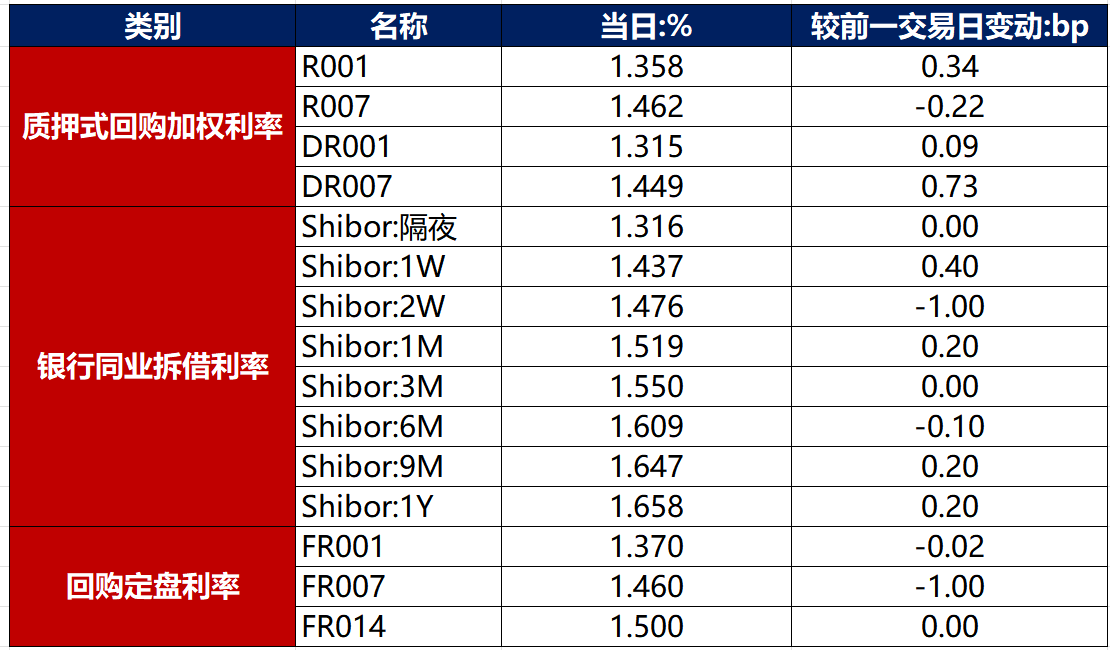
Group 1: Domestic News - The State Council issued an opinion to support qualified sports enterprises in listing, refinancing, issuing bonds, and asset securitization, aiming to enhance the financing services for the sports industry [2] - The Ministry of Industry and Information Technology and the State Administration for Market Regulation released a plan to promote high-quality development in the photovoltaic sector, focusing on eliminating low-price competition and guiding local industries [3] - As of September 3, 537 special bond storage projects have been implemented nationwide, with a total scale of 146.6 billion yuan, primarily supporting the acquisition of existing residential properties [3] Group 2: International News - The US ISM Services PMI for August rose to 52, exceeding expectations, with the new orders index increasing significantly, indicating robust service sector activity despite a contraction in employment [4] - The ADP employment report for August showed a significant slowdown in job growth, with only 54,000 jobs added, reinforcing expectations for a potential interest rate cut by the Federal Reserve [5] Group 3: Commodity Market - International crude oil prices fell, with WTI and Brent crude down by 0.76% and 0.90% respectively, while natural gas prices continued to rise [6] Group 4: Financial Market - On September 4, the central bank conducted a 7-day reverse repurchase operation of 212.6 billion yuan, with a rate of 1.40%, resulting in a net withdrawal of 203.6 billion yuan for the day [7] - The overall funding situation remained balanced and slightly loose, with DR001 and DR007 rates rising to 1.315% and 1.449% respectively [8] Group 5: Bond Market Dynamics - The bond market showed weak fluctuations, with the yield on the 10-year government bond rising to 1.7535% [10] - The secondary market for credit bonds experienced significant price deviations, with "H9 Long Control 01" dropping over 12% and "H1 Bi Di 01" increasing over 599% [12] Group 6: Convertible Bonds - The convertible bond market followed the equity market downwards, with major indices declining, and trading volume increasing to 89.164 billion yuan [14] - Several convertible bonds announced adjustments to their conversion prices, with some opting not to adjust [16]


引导光伏、锂电池产业有序布局
Qi Huo Ri Bao Wang· 2025-09-04 16:31
Core Viewpoint - The "Action Plan for Stable Growth of the Electronic Information Manufacturing Industry 2025-2026" aims to optimize industrial layout and structure, promote high-quality development in sectors like photovoltaics, and manage low-price competition effectively [1][2]. Group 1: Industry Growth Targets - The expected average growth rate of the value-added output in the computer, communication, and other electronic equipment manufacturing industries is around 7% from 2025 to 2026, with an overall annual revenue growth rate of over 5% for the electronic information manufacturing industry [1][2]. - By 2026, it is anticipated that five provinces will achieve over 1 trillion yuan in electronic information manufacturing revenue, and the server industry will exceed 400 billion yuan in scale [1]. Group 2: Policy and Governance - The plan emphasizes the combination of proactive government intervention and effective market mechanisms to enhance industry governance and respect market rules [2]. - It aims to consolidate existing industrial scales while fostering new growth points, addressing "involution" competition, and ensuring high-quality development alongside high-level safety [2][6]. Group 3: Industry Challenges and Responses - Despite rapid growth, the lithium battery sector faces declining profits, with 65 out of 104 listed companies reporting profit drops in 2024 [4]. - The plan calls for a shift towards rational development in the lithium and photovoltaic industries, emphasizing the need for technological innovation and cost reduction to enhance competitiveness [4]. Group 4: International Trade and Supply Chain - The plan seeks to leverage China's vast domestic market to strengthen the entire industrial chain and enhance supply chain resilience against international trade barriers [5]. - It encourages electronic information manufacturing companies to diversify trade channels and improve supply chain flexibility, while also promoting the integration of domestic and foreign trade [5]. Group 5: Technological Development and Industry Support - The plan stresses the importance of strengthening key technology research and enhancing the resilience and safety of supply chains in critical industries [6]. - It aims to support the development of short-chain industries, extend advantages in existing industries, and build new industries to ensure a robust industrial ecosystem [6].
8个月销量286万台,营收反超特斯拉!为啥比亚迪还会被人唱衰?
电动车公社· 2025-09-02 15:59
Core Viewpoint - BYD has achieved significant sales growth, with over 370,000 units sold in August and more than 2.86 million units sold from January to August, representing a 23% year-on-year increase, maintaining a leading position in the domestic market [1][2]. Group 1: Financial Performance - Despite strong sales, BYD's stock price fell on the day of its Q2 earnings report due to disappointing financial metrics [3]. - Q2 gross margin was 16.3%, returning to levels seen three years ago, while net profit decreased by 30% year-on-year to 6.4 billion yuan, falling short of market expectations [5][20]. - The company reported a single-vehicle profit of 4,800 yuan, nearly halved from the previous quarter, indicating pressure on profitability due to competitive pricing strategies [5][12]. Group 2: Competitive Landscape - Intense competition in the market has led to price reductions across BYD's model lineup, further squeezing profit margins [10][8]. - Morgan Stanley noted that to achieve its ambitious sales target of 5.5 million vehicles by 2025, BYD has provided significant rebates to dealers, impacting single-vehicle profitability [12]. Group 3: R&D Investment - BYD's R&D expenditure reached 30.9 billion yuan in the first half of the year, nearly double its net profit, highlighting the company's commitment to innovation [22][24]. - The company has maintained a high R&D investment relative to its profits over the past five years, with a notable 300% ratio in 2021, underscoring its focus on technological advancement [25][30]. Group 4: Global Expansion - BYD has expanded its presence to over 112 countries and regions, achieving sales leadership in several international markets, including Italy and Turkey [37]. - The company aims to sell 2.64 million vehicles in the last four months of the year to meet its annual target, averaging 660,000 units per month [39]. - BYD's strategy includes establishing local manufacturing facilities in various countries to enhance its export capabilities and meet local demand [60][63]. Group 5: Future Strategy - The company is expected to prioritize quality and product enhancement over merely increasing sales volume, reflecting a shift in strategic focus [45][71]. - BYD's commitment to high-quality development, sustained R&D investment, and international market expansion will be crucial for its future growth [64][72].


13家湿法隔膜企业达成“反内卷”共识
Zhong Guo Hua Gong Bao· 2025-09-02 08:12
Core Insights - The meeting held on August 23 in Suzhou focused on how the wet-process lithium battery separator industry can respond to and implement national policies aimed at addressing "involution" competition, ensuring healthy and orderly industry development [1] Group 1: Industry Challenges - The lithium industry is undergoing a significant transformation under national policy guidance, with "involution" competition posing severe challenges to the healthy development of the industry, compressing reasonable profit margins for companies, and hindering technological innovation and sustainable development [1] Group 2: Consensus Among Companies - Thirteen wet-process separator production companies, including Yunnan Enjie New Materials Co., Ltd. and Shenzhen Xinyuan Materials Technology Co., Ltd., reached six key agreements regarding production and sales for 2024 and the first half of 2025 [2] - The first consensus emphasizes price discipline, ensuring product prices remain above cost lines to support normal operations and development [2] - The second consensus focuses on capacity regulation, advocating for scientific production planning based on market supply and demand dynamics [2] - The third consensus highlights the need to avoid the duplication of low-quality and inefficient production capacities [2] - The fourth consensus calls for enhanced information sharing and cooperation among upstream and downstream enterprises to provide quality products and services, maintaining a healthy ecosystem within the industry [2] - The fifth consensus stresses the importance of respecting and protecting intellectual property rights and encouraging independent research and development to drive technological innovation [2] - The sixth consensus urges industry associations and society to play a supervisory role in fostering a fair, just, and orderly market environment [2]