
信创

Search documents
中国长城N90旗舰笔记本亮相互联网大会 打造政企移动办公新标杆
Zheng Quan Shi Bao Wang· 2025-11-07 03:51
Core Insights - The World Internet Conference 2025 was held in Wuzhen, Zhejiang, where China Great Wall (000066) unveiled its flagship laptop, the Great Wall N90, marking a significant advancement in the domestic innovation industry [1][2] - The N90 features the new Feiteng D3000M processor, weighs only 990g, and has a thickness of 14.9mm, showcasing a complete evolution in design and performance [1] - The launch of the N90 is seen as a milestone towards high-end and experiential products in the domestic innovation sector, aiming to set a new standard for mobile office solutions in key sectors such as government, finance, energy, and transportation [1] Product Features - The N90 has a power consumption reduction of approximately 30%, with a battery life exceeding 7 hours, and supports WiFi 6 for a 174% increase in network speed [1] - The laptop meets military-grade reliability standards, with over 1200 tests and 200 certifications, and an MTBF (Mean Time Between Failures) of 1.2 million hours [1] - It supports a 180° flip screen, smart noise reduction technology, and versatile interface design, enhancing convenience and professionalism in mobile office settings [2] Ecosystem Integration - The N90 addresses the challenges of weak application ecosystems and low cross-platform efficiency by integrating with the Feiteng multi-ecosystem heterogeneous fusion suite "Jiuyi," enabling seamless operation across Windows, Android, Linux, and OpenHarmony [2] - This integration aims to eliminate the "ecological isolation" of domestic laptops, facilitating a more user-friendly experience [2]

国防军工行业深度报告:国防军工行业2025三季报总结:基本面压力释放,确收和利润兑现将提速
Shenwan Hongyuan Securities· 2025-11-07 02:25
Core Insights - The defense and military industry is experiencing a release of fundamental pressures, with revenue and profit realization expected to accelerate [3][11][12] - Overall revenue and net profit for the military industry showed a year-on-year decline, indicating a need for recovery [12] - The report highlights the importance of various segments within the military industry, showing differentiated performance across equipment categories [12][4] Revenue and Profit Performance - For Q1-Q3 2025, the military industry reported a revenue growth rate of -1.68% and a net profit growth rate of -10.95% year-on-year [12][4] - Performance varied by equipment segment: ground armaments (+18.2%), naval equipment (-8.4%), aviation equipment (-1.7%), aerospace equipment (+9.3%), and military electronics (+7.1%) [12][4] - Revenue growth rates for different supply chain segments were also varied, with upstream materials (+4.8%) and components (+6.6%) performing better than midstream and downstream segments, which saw declines [12][4] Profitability Analysis - The overall gross margin and net margin for the military industry were reported at 18.04% and 5.07%, respectively, with expectations for improvement as scale effects materialize [4][12] - The military electronics segment maintained a high level of profitability, while other segments experienced slight fluctuations [4][12] - Profitability across the supply chain showed divergence, with upstream and midstream segments maintaining stronger profitability but on a declining trend [4][12] Operational Indicators - Operational indicators demonstrated stable growth, with inventory, accounts payable, and contract liabilities increasing by 13.19%, 30.96%, and 12.10% year-on-year, respectively [4][12] - All equipment segments reported growth in prepayments and contract liabilities, with significant increases in inventory and accounts payable in the aviation equipment sector [4][12] - The report indicates that the military industry is experiencing a sustained level of activity and demand, supporting overall industry health [4][12] Investment Recommendations - The report suggests increasing attention to the military sector, particularly focusing on next-generation equipment and unmanned systems, which are expected to see rapid realization starting in 2025 [12][11] - Key companies to watch include those involved in high-end combat capabilities and new quality combat forces, indicating a broad spectrum of investment opportunities within the sector [12][11]
整体营收净利均两位数增长 创业板三季报何以领跑
Shang Hai Zheng Quan Bao· 2025-11-06 18:46
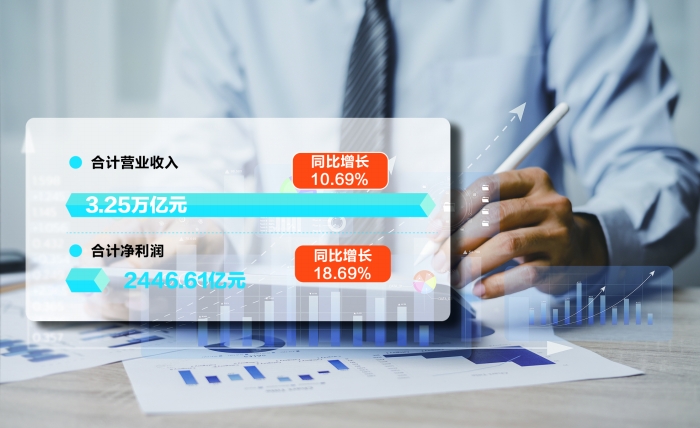
Core Insights - The overall performance of the ChiNext board companies shows significant growth in both revenue and profit for the first three quarters of 2025, with total revenue reaching 3.25 trillion yuan, a year-on-year increase of 10.69%, and net profit of 244.66 billion yuan, up 18.69% [2][3] Group 1: Emerging Industries - The ChiNext board has become a hub for high-growth and quality companies, with 90% of listed firms being high-tech enterprises and nearly 70% belonging to strategic emerging industries [3] - The strategic emerging industries have shown robust growth, particularly in sectors like new-generation information technology, new energy, and biotechnology, driven by advancements in artificial intelligence and increasing demand for computing power [3][4] Group 2: Sector Performance - The electronics industry reported a revenue increase of 21.65% year-on-year and a net profit growth of 36.29% for the first three quarters [4] - The telecommunications sector experienced a revenue growth of 24.82% and a remarkable net profit increase of 94.10% year-on-year [4] - The optical module industry saw a staggering net profit growth of 130.13%, benefiting from strong overseas market demand [4] Group 3: Traditional Industries - Midstream manufacturing companies have shown improved performance due to favorable policies and overseas growth, with the power equipment sector's revenue increasing by 12.90% and net profit by 28.61% [6] - The machinery equipment sector also experienced growth, with revenue and net profit increasing by 10.15% and 8.26% respectively [6] - The public utilities sector turned profitable due to energy security strategies and reduced fuel prices, while the construction materials sector saw a net profit increase of 719.94% driven by major infrastructure projects [7] Group 4: R&D Investment - ChiNext companies have increased their R&D investment, totaling 147.35 billion yuan for the first three quarters, a year-on-year increase of 6.20% [8] - The R&D expenses have shown a quarterly increase, with the third quarter reaching 51.66 billion yuan, up 3.60% from the previous quarter [8] Group 5: Large Market Capitalization Companies - The top 100 companies by market capitalization on the ChiNext board achieved a revenue of 1.54 trillion yuan, a year-on-year increase of 17.72%, and a net profit of 170.84 billion yuan, up 26.78% [9] - These large-cap companies also demonstrated strong quarterly growth, with a revenue increase of 12.50% and a net profit increase of 23.40% in the third quarter [9] - Long-term asset investments by ChiNext companies reached 273.77 billion yuan, reflecting a strong willingness to expand production [9]


信创产业迎爆发式增长,政府采购、招标公告揭示三大关键趋势
Sou Hu Cai Jing· 2025-11-06 12:45
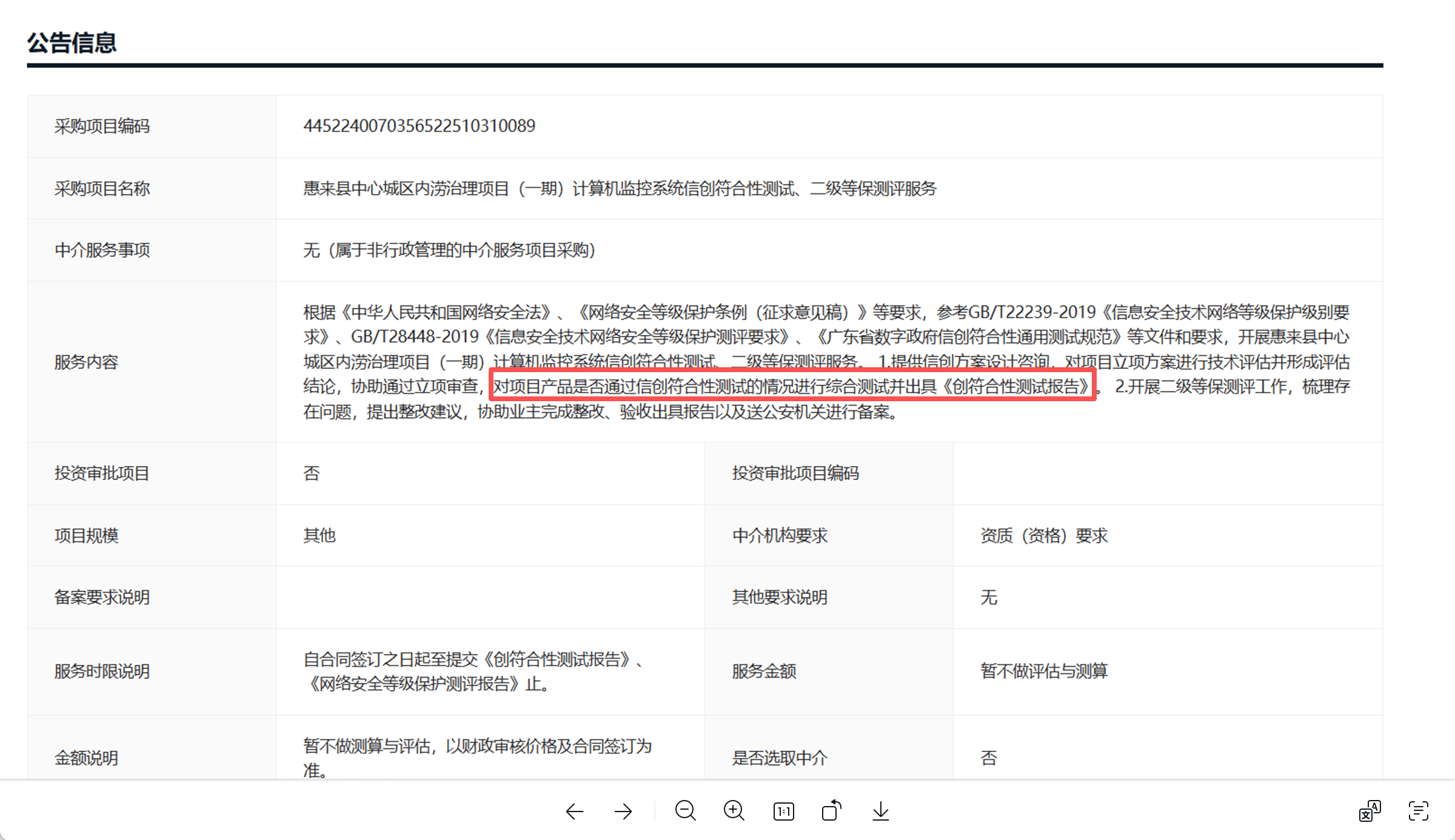
Core Insights - The procurement of "Xinchuang products" is experiencing explosive growth, indicating a comprehensive rollout of Xinchuang procurement across various sectors [1] Group 1: Tender Dynamics - Case examples show a significant increase in projects requiring Xinchuang compliance testing, such as the Huizhou County flood control project and the Guoren Insurance network switch procurement [2][4][8] - The Guoren Insurance project involves the procurement of 10 network switches to ensure the security and reliability of financial infrastructure [4] - The China Unicom project focuses on IPv6 and Xinchuang transformation for its core data communication network, highlighting the importance of autonomous security in telecommunications [13] Group 2: Industry Trends - Trend 1: The application scope of Xinchuang is expanding from "government" to "all domains," with key industries like finance, telecommunications, and energy becoming focal points [13][16] - Trend 2: The focus of construction is shifting from "peripheral" to "core" systems, emphasizing the need for Xinchuang in critical infrastructure and core business processes [16][17] - Trend 3: The entry threshold is transitioning from "declaration" to "verification," with third-party testing becoming a crucial requirement for procurement [17][19] Group 3: Market Implications - The procurement model of "Xinchuang products + testing reports" is becoming standardized, indicating a healthy and orderly development of the Xinchuang industry chain [19] - The demand for third-party testing and Xinchuang certification services is expected to grow, supporting the high-quality development of China's digital economy [19]
泛微网络(603039):降本增效措施持续见效,拥抱AI+出海机遇
China Post Securities· 2025-11-06 07:18
Investment Rating - The report maintains a "Buy" rating for the company, expecting a relative increase in stock price of over 20% compared to the benchmark index within six months [7][14]. Core Insights - The company achieved revenue of 1.299 billion yuan in the first three quarters of 2025, a year-on-year decrease of 6.26%, while net profit attributable to shareholders increased by 15.99% to 100 million yuan [4]. - Cost reduction and efficiency improvement measures have significantly enhanced profit margins, with gross margin rising by 1.20 percentage points to 94.28% [5]. - The company is leveraging AI and international expansion opportunities, having established service points in multiple countries and serving over 4,000 overseas Chinese enterprise clients [6]. Financial Performance Summary - For 2025, the company is projected to achieve revenues of 2.437 billion yuan, with a growth rate of 3.19%, and net profit attributable to shareholders of 262 million yuan, reflecting a growth of 29.22% [10]. - The company’s net profit margin improved by 1.48 percentage points to 7.70%, driven by increased other income and reduced investment losses from joint ventures [5]. - The company’s financial ratios indicate a healthy outlook, with a projected PE ratio decreasing from 73.85 in 2024 to 34.16 by 2027 [10][11].

太极股份(002368):电科金仓加速,盈利逐步修复
Shenwan Hongyuan Securities· 2025-11-05 14:11
Investment Rating - The report maintains a "Buy" rating for the company [6] Core Insights - The company reported a revenue of 4.865 billion yuan for the first three quarters of 2025, representing a year-over-year increase of 12.15%. However, the net profit attributable to shareholders was only 4 million yuan, showing a significant decline compared to the previous year [6] - The subsidiary, Electric Science and Technology JinCang, experienced strong growth, with new contract amounts increasing by over 100% year-over-year and revenue growth of nearly 50% [6] - The company has effectively controlled expenses, resulting in a significant reduction in management costs by over 100 million yuan year-over-year [6] - The overall gross margin has faced pressure, decreasing to 26.74% from 28.95% year-over-year, while operating cash flow remains negative at -1.809 billion yuan [6] - The company is increasing its investment in research and development, with R&D expenses reaching 174 million yuan, a year-over-year increase of 67.3% [6] - The company has signed contracts worth nearly 3 billion yuan in the "信创" (Xinchuang) business, which supports the sales of its core products [6] - The revenue forecasts for 2025-2027 are 8.152 billion, 9.158 billion, and 10.646 billion yuan, respectively, with net profits projected at 235 million, 325 million, and 478 million yuan [6] Financial Data and Profit Forecast - Total revenue for 2025 is estimated at 8.152 billion yuan, with a year-over-year growth rate of 4.0% [5] - The net profit attributable to shareholders is projected to be 235 million yuan for 2025, reflecting a year-over-year increase of 22.9% [5] - The earnings per share (EPS) is expected to be 0.38 yuan for 2025, with a projected price-to-earnings (P/E) ratio of 68 [5] - The gross margin is forecasted to be 25.0% for 2025, with a return on equity (ROE) of 4.3% [5]

达梦数据(688692):利润超预期,信创数据库持续高景气
Shenwan Hongyuan Securities· 2025-11-05 14:11
Investment Rating - The report maintains a "Buy" rating for the company, indicating a positive outlook for its stock performance relative to the market [6]. Core Insights - The company reported strong financial performance in the first three quarters of 2025, with revenue reaching 830 million yuan, a year-over-year increase of 31.9%, and a net profit of 330 million yuan, up 89.1% year-over-year [4][6]. - The growth in revenue is attributed to robust demand in the "Xinchuang" (domestic innovation) sector and successful expansion into key industries such as energy, finance, and transportation [6]. - The gross profit margin significantly improved to 96.3% in the first three quarters of 2025, up from 86.32% in the same period last year, primarily due to a higher proportion of software product licensing in revenue [6]. - The company has shown effective cost management, with a decrease in R&D expense ratio from 22.51% to 21.23% year-over-year, benefiting from operational scale effects [6]. - Operating cash flow also demonstrated healthy growth, with a net cash flow from operating activities of 110 million yuan, a 46.74% increase year-over-year [6]. - The company is actively investing in R&D, particularly in AI and multi-model databases, enhancing its product offerings to meet emerging data processing needs [6]. - The revenue forecast for 2025-2027 has been revised upwards, with expected revenues of 1.4 billion, 1.8 billion, and 2.4 billion yuan respectively, and net profits of 505 million, 632 million, and 810 million yuan [6]. Financial Summary - For the first three quarters of 2025, the company achieved total revenue of 830 million yuan and a net profit of 330 million yuan, with significant growth rates of 31.9% and 89.1% respectively [4][5]. - The projected total revenue for 2025 is 1.4 billion yuan, with a gross profit margin of 90.3% and a net profit margin of 36.1% [5][8]. - The company's earnings per share (EPS) for 2025 is estimated at 4.46 yuan, reflecting strong profitability [5].
超云CEO:成为用户信赖的数据中心产品和服务提供商
Xin Hua Cai Jing· 2025-11-05 06:37
Core Viewpoint - The long-term vision of ChaoYun Digital Technology Group is to become a trusted provider of data center products and services, focusing on leading AI inference computing solutions in China, making AI and data centers simpler [1] Industry Overview - The rapid development of artificial intelligence (AI) technology is increasingly applied in the economic sector, becoming a significant driver of economic growth [1] - According to IDC's report, the global AI server market is projected to grow from $125.1 billion in 2024 to $158.7 billion in 2025, and reach $222.7 billion by 2028. China's AI computing power market is expected to reach $25.9 billion by 2025, with a year-on-year growth of 36.2% [1] Company Performance - In the first half of 2025, ChaoYun's shipment volume increased by over 73% year-on-year, and sales revenue grew by 140.7%, indicating a shift in the market from "scale expansion" to "capability differentiation" [1] - ChaoYun's strategy includes differentiated innovation and deep engagement in specific scenarios, with a focus on AI server R&D and delivery since the establishment of its accelerated computing product department in 2022 [2] Technological Strategy - ChaoYun employs a dual-track strategy in response to the complex international supply chain environment, maintaining high-performance products based on leading international chips like NVIDIA Tesla and Intel Gaudi for demanding model training scenarios [2] - The company is also advancing domestic alternatives, exemplified by the ChaoYun R3428 AI server, which utilizes the Haiguang C86 platform and Kunlun AI acceleration card, achieving over 8 times performance improvement compared to pure CPU solutions [3] Market Opportunities - The national strategies of "East Data West Computing" and "Xinchuang" present significant industry opportunities, with the former driving the construction of large-scale intelligent computing centers in western regions [3] - ChaoYun's shipments of Xinchuang servers increased by 210% year-on-year in the first half of 2025, significantly outpacing the industry average [3] Technological Impact - Policies such as "East Data West Computing" have influenced ChaoYun's R&D direction, mandating a PUE (Power Usage Effectiveness) control below 1.25, making liquid cooling technology essential [4] - ChaoYun has developed a specialized cooling liquid for high-density AI loads, stabilizing data center PUE between 1.1 and 1.2, significantly enhancing energy efficiency [4]
金证股份2025年第三季度业绩说明会问答实录
Quan Jing Wang· 2025-11-05 00:59
Core Viewpoint - The company is focusing on enhancing its financial technology business while reducing its non-financial IT operations, which has led to a decline in revenue from non-financial sectors. The company is also investing in AI and innovation to improve its core offerings and operational efficiency [1][5][13]. Financial Performance - For the first nine months of 2025, the company reported a revenue of 1.771 billion yuan, with non-financial business revenue at 457 million yuan. In comparison, for the same period in 2024, the revenue was 3.478 billion yuan, with non-financial business revenue at 2.055 billion yuan [5][7]. Business Strategy - The company is actively developing its AI capabilities, particularly in financial AI models, and is focusing on the integration of investment management and research products to enhance its core competencies in investment management [1][3][12]. - The company is implementing a strategy to shrink its non-financial IT business and concentrate on its core financial technology sector, with plans to potentially divest non-core operations when suitable opportunities arise [5][7][13]. Product Development - The company has made significant progress in its core products, including the FS2.5 core trading system, which has been successfully implemented at several securities firms, and the A8 investment trading system, which is operational at leading brokerages [10][12]. - The company is also exploring next-generation intelligent trading systems based on AI agents and has launched various intelligent investment solutions [4][8]. Market Environment - The company noted that the decline in revenue is partly due to a slowdown in IT investment from financial industry clients, which has extended project timelines for bidding, implementation, and acceptance [5][6]. - The company is optimistic about the future of its self-operated technology business, anticipating good development opportunities in the sector [3][12].

初灵信息(300250.SZ):公司不做信创产品和文生视频领域等方面
Ge Long Hui· 2025-11-04 15:15
Core Viewpoint - The company, Chuling Information (300250.SZ), clarifies that it does not engage in the fields of trusted computing products and generative video, focusing instead on its integrated enterprise intelligent computing network product [1] Group 1: Product Offering - The company has developed an integrated computing network product that combines all-optical connectivity, computing power scheduling, and partial intelligent agent deployment [1] - This product provides various practical business intelligent agents, including network coverage and operation maintenance, business insight, security control, video analysis, intelligent switchboard, document assistant, and knowledge base assistant [1] - The integrated solution is designed to meet the intelligent needs of enterprises across different business scenarios [1]
