
出海

Search documents
立足香港,拓展海外——金融壹账通科技助力跨境金融新发展
Huan Qiu Wang· 2025-11-13 07:09
Core Insights - The "Hong Kong FinTech Week × StartmeupHK Festival 2025" highlighted the importance of AI and international expansion for mainland companies leveraging Hong Kong as a strategic hub for global market entry [1] Group 1: AI and Digital Solutions - Financial One Account showcased innovative digital banking and insurance solutions, focusing on AI-driven wealth management, credit process optimization, and intelligent marketing management [2] - The AI Agent digital employee system integrates ASR, NLP, TTS, large models, and Agentic AI technologies, significantly enhancing customer service efficiency and satisfaction [2] Group 2: Cross-Border Trust and Compliance - The challenges of "data silos" and AI identity fraud risks create trust barriers for SMEs going global, making "data trustworthiness" and "identity security" critical issues [3] - Financial One Account has developed a compliance framework and technical safeguards, including a standardized contract for cross-border data flow and an intelligent visual anti-fraud platform with over 99% accuracy [3] Group 3: Cross-Border Financial Facilitation - Financial One Account, through its subsidiary Shenzhen CA, is enhancing cross-border financial services by providing electronic certification services for compliance and security [4] - Shenzhen CA has served over 4 million users, addressing challenges in cross-border business operations [4] Group 4: Global Financial Network Expansion - Hong Kong is intensifying support for mainland companies' international expansion, with a dedicated task force established to assist businesses [5] - Financial One Account's global operations now cover 20 countries and regions, serving nearly 200 overseas financial institutions, reinforcing Hong Kong's position as a financial technology hub [5]
建材行业年度策略:关注反内卷、出海、AI电子布机遇
NORTHEAST SECURITIES· 2025-11-13 01:48
Group 1: Cement Industry - The cement production in China for Q1-Q3 2025 decreased by 5% year-on-year, with a narrowing decline, and the annual production is expected to be around 1.73 billion tons, which is a 30% drop from the peak in 2014 [15][32] - The SW cement manufacturing industry revenue for Q1-Q3 2025 was 252.1 billion yuan, a year-on-year decrease of 9%, with a sales net profit margin of 3.3%, an increase of 1.0 percentage points compared to the full year of 2024 [32][33] - The future support for domestic cement prices mainly depends on the optimization process on the supply side, with a focus on completing the target of limiting overproduction by the end of the year [35][45] Group 2: Glass Industry - The flat glass production in China for Q1-Q3 2025 was 730 million weight cases, a year-on-year decrease of 5%, with prices continuing to decline [57] - The SW glass manufacturing industry achieved a total revenue of 34.4 billion yuan in Q1-Q3 2025, a year-on-year decrease of 11%, with a sales net profit margin of 0.6% [74] - The overall profitability of the glass manufacturing industry is under pressure, with major companies like Xinyi Glass and Qibin Group experiencing significant declines in net profit margins [74][78] Group 3: Fiberglass Industry - The fiberglass manufacturing industry saw a significant recovery in profitability in Q1-Q3 2025, with revenue reaching 49.2 billion yuan, a year-on-year increase of 24%, and a sales net profit margin of 10.8%, up 4.3 percentage points from 2024 [83][84] - The demand for high-performance electronic fabrics is expected to continue growing due to advancements in AI and high-frequency communication technologies [84][89] - Companies like Zhongcai Technology and Honghe Technology are recommended for their focus on high-end products and significant growth in revenue and profit margins [89][94] Group 4: Consumer Building Materials - The transaction volume of commercial housing and second-hand housing prices in China continued to decline, but the rate of decline has narrowed [2] - The sales of waterproof materials and coatings have shown significant improvement compared to 2024, with companies like Sankeshu and Hanhai Group recommended for investment [2][4]



调整结束,大反攻开始?
Sou Hu Cai Jing· 2025-11-12 08:33
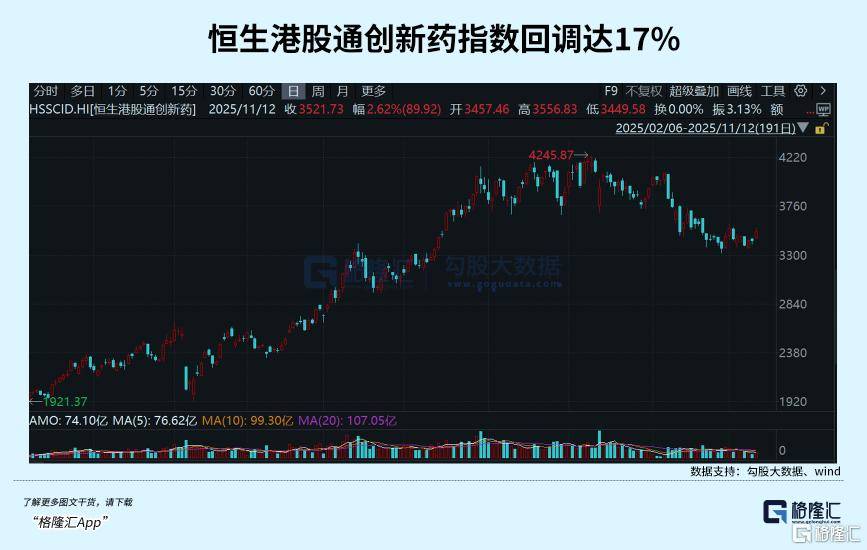
Core Viewpoint - The innovative drug sector has regained market attention after a two-month adjustment period, driven by macroeconomic liquidity easing and strong Q3 earnings reports from key companies [1][3]. Group 1: Performance and Financials - The Hang Seng Innovative Drug ETF (159316) rose by 2.52%, while the low-fee Innovative Drug ETF from E Fund (516080) increased by 31% year-to-date [2]. - BeiGene reported Q3 revenue of 27.595 billion yuan, a 44.21% year-on-year increase, with a net profit of 1.562 billion yuan, reversing previous losses [3]. - Innovent Biologics announced over 3.3 billion yuan in product revenue for Q3 2025, maintaining approximately 40% growth [3]. - Other leading companies like WuXi AppTec, Hengrui Medicine, Shanghai Pharmaceuticals, and Fosun Pharma reported revenues of 32.857 billion yuan, 23.188 billion yuan, 21.507 billion yuan, and 2.939 billion yuan respectively, with net profits of 12.076 billion yuan, 5.751 billion yuan, 5.147 billion yuan, and 2.523 billion yuan [3]. Group 2: Industry Trends - A total of 81 innovative drug companies reported a 13.84% year-on-year increase in net profit, with 9 companies turning losses into profits, indicating a shift towards commercialization in the sector [4]. - The total value of outbound licensing transactions for Chinese innovative drugs exceeded 101.24 billion USD, significantly surpassing the projected 51.9 billion USD for 2024 [5]. - Notable licensing deals include Hengrui's collaboration with GSK valued at up to 12 billion USD and a deal between 3SBio and Pfizer worth over 1 billion USD [6]. Group 3: Market Dynamics - The innovative drug sector has experienced a 17% correction since early September, suggesting it may be nearing a bottom [8]. - Historical data indicates that corrections of 15%-20% often signify deep pullbacks, but current macroeconomic conditions are not as extreme as in previous downturns [11]. - The likelihood of a significant market drop exceeding 20-30% is low, given the improving macroeconomic environment and corporate earnings recovery [12]. Group 4: Future Growth Drivers - The domestic policy environment has shifted to a more stable and supportive framework for innovative drug development, with recent healthcare negotiations enhancing commercial prospects [18]. - China's biotech sector ranks second globally in clinical pipelines, with over 20% of global clinical projects, indicating strong future product launches [20]. - Chinese companies are transitioning from "me-too" drugs to "First-in-Class" and "Best-in-Class" innovations, leveraging lower costs and faster clinical trial processes [23]. Group 5: Conclusion - The innovative drug sector is entering a favorable phase characterized by policy improvements, international expansion, and strong earnings, suggesting a potential market rebound [25]. - The increasing interest in innovative drug ETFs reflects the challenges of direct stock investment in this complex sector, with products like the Hang Seng Innovative Drug ETF providing a focused investment vehicle [25].



截至去年底超270家京企来港上市 李家超:希望更多京企落户北部都会区和河套合作区
智通财经网· 2025-11-12 07:33
Core Insights - Hong Kong and Beijing are enhancing their collaboration in technology and innovation, with a focus on leveraging each other's strengths to create new development opportunities [1][2][3] Group 1: Economic Cooperation - Hong Kong has invested over $140 billion in Beijing, accounting for more than 65% of the actual foreign investment in the city, with over 14,000 foreign enterprises established [1] - Beijing has a cumulative direct investment stock of over $50 billion in Hong Kong, with more than 270 companies listed there [1] Group 2: Technological Development - Beijing is positioned as a national technology innovation center, aiming to become a major global scientific hub, excelling in areas such as research and development spending and basic research [2] - Hong Kong ranks third globally in digital competitiveness and is actively building an international innovation and technology center [2] Group 3: Support for Enterprises - The Hong Kong government is integrating its overseas offices to form a dedicated team to support mainland enterprises in expanding internationally, facilitating access to global capital [3] - The newly launched team includes professionals from various sectors such as law, finance, and trade, aimed at helping mainland companies use Hong Kong as a gateway to the world [3]
证监会最新发声!坚决防止资本市场大起大落、急涨急跌
Shang Hai Zheng Quan Bao· 2025-11-12 06:30
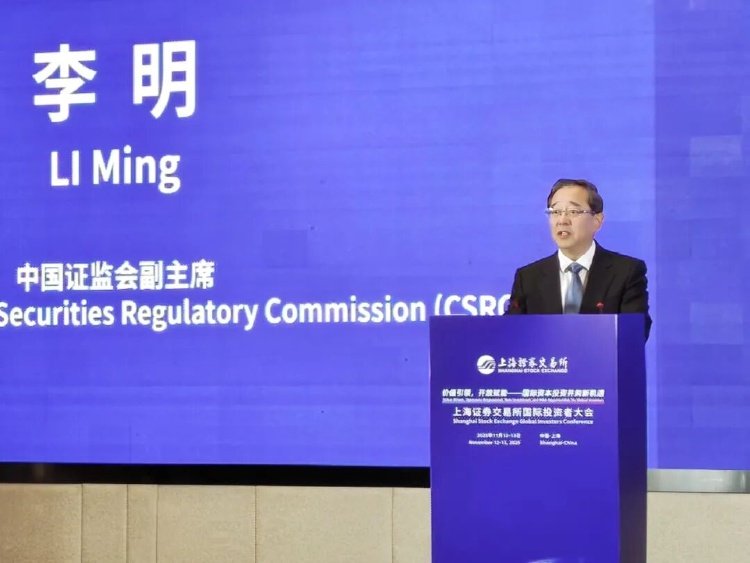
Group 1: Conference Overview - The Shanghai Stock Exchange International Investor Conference commenced on November 12, aiming to create a communication bridge for foreign institutions to engage with domestic regulatory bodies, exchanges, listed companies, and various financial institutions [1] - The theme of this year's conference is "Value Leading, Open Empowerment - New Opportunities for International Capital Investment and Mergers" [1] Group 2: Regulatory Insights - The Vice Chairman of the China Securities Regulatory Commission (CSRC), Li Ming, emphasized the stability and potential of the Chinese economy, stating that the capital market operates smoothly and has a solid foundation [3] - The CSRC plans to deepen comprehensive reforms in investment and financing, enhance the inclusiveness and adaptability of capital market systems, and promote the development of various equity financing methods [3][4] Group 3: Future Outlook - Li Ming projected that the door for foreign investment in China's capital market will continue to open wider, with efforts to improve the Qualified Foreign Institutional Investor (QFII) system and expand cross-border investment products [4] - The Shanghai Municipal Government aims to attract more domestic and foreign institutions to operate in Shanghai, enhancing the quality of financial services to the real economy [6] Group 4: Exchange Development - The Chairman of the Shanghai Stock Exchange, Qiu Yong, highlighted the focus on fostering new productive forces and optimizing key systems such as issuance, refinancing, and mergers to guide capital towards advanced technologies and future industries [9] - Qiu also mentioned the importance of expanding institutional openness and enhancing the international product system to improve global competitiveness [9] Group 5: Investment Trends - Huatai Securities' Liang Hong identified three main lines for China's consumption upgrade: innovation, restructuring, and going global, with a positive outlook on capital investment in high-tech sectors [10][12] - Temasek's China Region Chairman, Wu Yibing, noted the dual drivers of innovation and mergers in China's economic transformation, emphasizing the importance of long-term investment in the evolving market [13]
华泰证券梁红:变革中的中国有创新、重组、出海三条主线,2026年各行业盈利增速均将有所回升
Xin Lang Zheng Quan· 2025-11-12 02:27
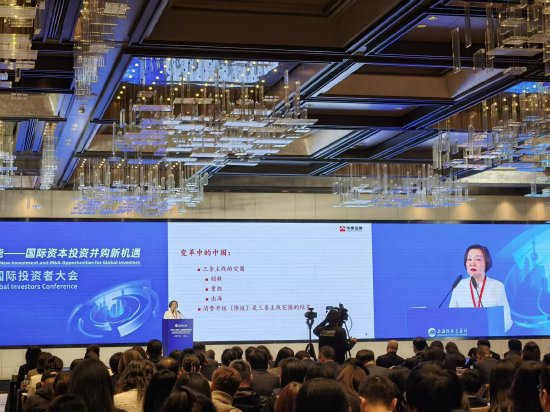
Group 1 - The Shanghai Stock Exchange International Investor Conference was held on November 12, highlighting three main themes in the current transformation of China: innovation, restructuring, and going global, with consumption upgrade being a result of these themes [1] - Liang Hong, Chairman of Huatai Securities Institutional Business Committee, predicts that the macroeconomic trend in China for 2026 will show nominal growth recovery, particularly in dollar-denominated nominal growth, with productivity improvement becoming a more significant narrative than the downturn in real estate [3] - It is expected that the net profit growth rate for non-financial companies in 2026 will be approximately 13%, with profit growth across various industries anticipated to rebound [3]

小鹏汽车-W(09868):2025年10月销量点评:同环比持续增长,月销再破4万辆
Changjiang Securities· 2025-11-12 01:42
Investment Rating - The investment rating for the company is "Buy" and is maintained [6]. Core Insights - In October 2025, the company delivered 42,013 new vehicles, representing a year-on-year increase of 75.7% and a month-on-month increase of 1.0% [2][4]. - Cumulatively, from January to October 2025, the company delivered 355,000 new vehicles, marking a year-on-year increase of 190.0% [2][4]. - The company is expected to see steady sales growth driven by strong new vehicle cycles, enhanced marketing systems, and ongoing improvements in smart driving technology [2][9]. - The new models MONA M03 and P7+ are expected to initiate a new vehicle cycle for the company [9]. Summary by Sections Sales Performance - October 2025 saw a record monthly delivery of over 40,000 vehicles, with significant contributions from the new P7 model and strong sales of the SUV family [9]. - The MONA M03 model alone delivered over 15,000 units in October, with total deliveries exceeding 200,000 since its launch [9]. Future Outlook - For Q3 2025, the company anticipates deliveries between 113,000 and 118,000 units, representing a year-on-year growth of 142.8% to 153.6% [9]. - Expected revenue for Q3 2025 is projected to be between 19.6 billion and 21 billion CNY, reflecting a year-on-year increase of 94.0% to 107.9% [9]. Strategic Developments - The company is expanding its international presence, having entered seven new markets in Europe, Asia, and Africa, transitioning from rapid expansion to solid operations [9]. - The upcoming launch of the next-generation extended-range product, the X9, is anticipated to enhance the company's competitive edge with its unique features [9].
“双十一”期间浙江日均快递业务量已超1亿件
Zhong Guo Xin Wen Wang· 2025-11-11 17:13
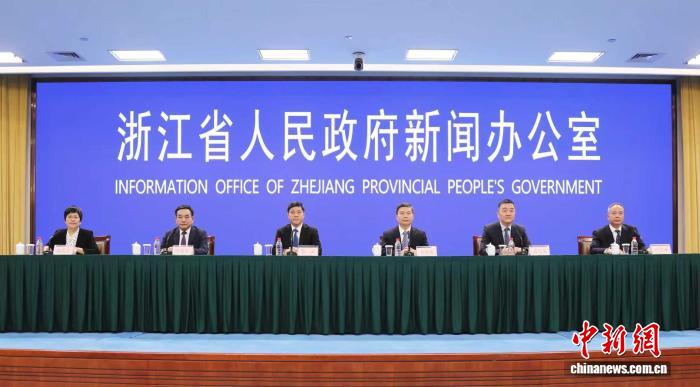
Core Insights - The 17th "Double Eleven" event has seen an average daily express delivery volume exceeding 100 million packages in Zhejiang province, with nearly 50 million packages delivered daily from October 20 to November 11 [1] - The express delivery industry in Zhejiang has experienced significant growth, with the total delivery volume projected to rise from 20.38 billion packages in 2020 to 33.57 billion packages by 2024, reflecting an annual growth rate of 13% [3] - The province's express delivery business volume is expected to increase from 17.95 billion packages in 2020 to 32.19 billion packages by 2024, with an annual growth rate of 16% [3] Industry Development - Zhejiang's express delivery sector has become a key player in the Yangtze River Delta region, accounting for 54.2% of the total regional volume and 17.3% of the national total, ranking second in the country [3] - The province has implemented initiatives to enhance service capabilities, including the "Two In One Out" project, which focuses on integrating express delivery into rural areas and optimizing logistics for manufacturing enterprises [3] - The establishment of 1.7 million service stations has been crucial in improving last-mile delivery, utilizing resources such as village postal stations and community service centers [3] Agricultural Support - Zhejiang has facilitated the distribution of agricultural products through innovative models, such as "production processing + online sales + express logistics" and "fresh e-commerce + cold chain delivery," enabling local specialties to reach a national audience [4] - A total of 1.69 billion express deliveries of specialty agricultural products have been sent from the province this year [4]
休闲食品行业专题报告之一:大浪淘沙,沉者为金
Guoxin Securities· 2025-11-11 11:18
Investment Rating - The report maintains an "Outperform" rating for the leisure food industry and specific companies such as Wei Long Mei Wei, Yan Jin Pu Zi, Jin Zai Food, and Wan Chen Group [4][5]. Core Insights - The leisure food market in China is projected to reach 1.344 trillion yuan in 2024, with a year-on-year growth of 5.3% and a CAGR of 4.4% from 2019 to 2024, expected to increase to 5.5% from 2025 to 2029 [1][15]. - The industry is characterized by a highly fragmented competitive landscape, with the top five and ten companies holding only 5.9% and 10.4% of the market share, respectively [1][22]. - Structural changes are reshaping the industry, including the rise of new retail channels, increased health consciousness among consumers, vertical integration in supply chains, and accelerated globalization efforts by leading companies [1][2][33]. Summary by Sections Industry Overview - The leisure food sector is a multi-billion market with diverse product categories, including snacks, nuts, and baked goods, focusing on fulfilling various consumer needs beyond mere hunger [15][18]. - The market is expected to continue expanding, with significant room for growth in per capita consumption, currently at 954.4 yuan, which is substantially lower than in the US and Japan [2][15]. Competitive Landscape - The industry is marked by intense competition and low concentration, with major players like Mars and Mondelez holding a small market share compared to their counterparts in the US [22][23]. - The competitive dynamics are shifting from price wars to differentiation and efficiency battles, as consumer demands become more diverse and nuanced [2][3]. Structural Changes - New retail formats such as bulk snack stores and instant retail are emerging, challenging traditional retail channels [33][34]. - Health awareness is driving innovation in product offerings, with a notable rise in demand for healthier snack options like konjac products, which are low in calories and high in dietary fiber [66][70]. Future Outlook - The report identifies three core drivers for industry growth: product innovation, scenario extension, and international expansion [2][3]. - Leading brands are expected to strengthen their market positions, with opportunities for both manufacturing and channel-focused companies to benefit from evolving consumer preferences and retail dynamics [2][3][4]. Company-Specific Insights - Wei Long Mei Wei and Yan Jin Pu Zi are highlighted as key players in the konjac snack segment, with significant revenue growth anticipated [3][70]. - Jin Zai Food is undergoing channel reforms and launching new products, while Wan Chen Group is expanding its discount supermarket presence, indicating potential for long-term growth [3][4].
70后中国夫妻,非洲卖纸尿裤,狂揽200亿
创业邦· 2025-11-11 03:48
Core Viewpoint - The article highlights the successful IPO of Leshu Shi, a company known as the "King of Diapers in Africa," which has rapidly expanded its market presence in Africa by leveraging a unique business model that combines local manufacturing with global supply chains [6][33]. Group 1: Company Background and Growth - Leshu Shi was spun off from the Guangzhou-based Sen Da Group and has achieved an annual revenue of 3.2 billion RMB, focusing on traditional hygiene products like diapers [8]. - The founders, Shen Yanchang and Yang Yanjuan, initially engaged in trade before identifying significant market opportunities in Africa, particularly in the hygiene product sector [10][12]. - The company was established in 2009, targeting the African market with affordable hygiene products, capitalizing on the low penetration rates of such products in the region [18][20]. Group 2: Market Strategy and Expansion - Leshu Shi transitioned from a "Made in China" model to "Made in Africa" by establishing local production facilities, which significantly reduced costs and improved market responsiveness [22][24]. - The company has built a comprehensive distribution network across 12 countries, reaching over 80% of the core market population, and has become the market leader in both baby diapers and sanitary pads in Africa [25][26]. - By 2024, Leshu Shi's annual revenue reached approximately 454 million USD (around 3.2 billion RMB), with a gross margin of 35.2%, despite offering products at prices 30% lower than competitors [24][26]. Group 3: Competitive Landscape and Future Plans - The African market is becoming increasingly competitive, prompting Leshu Shi to separate from Sen Da Group and pursue an independent IPO to strengthen its market position [29][31]. - The company plans to raise over 2 billion HKD through its IPO to fund capacity expansion, supply chain upgrades, and brand enhancement [31][32]. - With the African population projected to grow significantly, the demand for hygiene products is expected to rise, presenting further growth opportunities for Leshu Shi [30].
