能源安全

Search documents
11月22日晚间央视新闻联播要闻集锦
Yang Shi Xin Wen Ke Hu Duan· 2025-11-22 12:28
Group 1 - The core viewpoint emphasizes the importance of energy security and guarantees for national economy and people's livelihood, highlighting the ongoing construction of ultra-high voltage power transmission projects during the 14th Five-Year Plan period [2][1] - The construction of a super grid covering all regions of China is accelerating, significantly enhancing the capacity for cross-province and cross-region electricity transmission, thereby solidifying the foundation for energy security [2][1] Group 2 - Jiangsu and Hubei provinces are actively expanding institutional openness to promote reform and development, in line with the spirit of the 20th Central Committee's Fourth Plenary Session [7] - The number of newly established foreign-funded enterprises in China increased by 14.7% year-on-year from January to October [10]
电力竞争将决定未来格局!中国将成为人类史上首个“电力帝国”
Sou Hu Cai Jing· 2025-11-22 11:42
Core Viewpoint - China is accelerating the development of renewable energy projects such as wind and solar power, aiming to transform into a global electricity "empire" while ensuring energy security and enhancing industrial competitiveness [1][29]. Group 1: Energy Demand and Infrastructure Development - China's electricity demand has steadily increased over the past decades, driven by the rise of manufacturing and high-tech industries, making electricity supply a strategic issue for national development [3]. - The construction scale of various power plants in China is expanding annually, transitioning from traditional coal and nuclear power to renewable energy sources like wind and solar, with infrastructure development progressing at an extraordinary pace [3]. Group 2: Energy Security Challenges - China's energy issues have long been a "pain point" in national strategy, with a high dependency on foreign oil and gas, reaching 70% for oil, making the country vulnerable to global energy market fluctuations [5]. - The outbreak of the Russia-Ukraine conflict in 2022 led to soaring international oil prices, increasing domestic logistics costs and affecting consumer prices [5]. Group 3: Government Initiatives and Renewable Energy Investment - The "bottleneck" situation has prompted the Chinese government to reflect deeply on energy security and increase investments in renewable energy, which is not reliant on geographical or political changes [7]. - The government has set strategic goals for developing renewable energy over a decade ago, indicating a long-term commitment to this sector [7]. Group 4: Technological Advancements and Market Position - Continuous technological advancements have led to decreasing costs and increasing efficiency of renewable energy sources, allowing them to gradually replace portions of traditional energy [9]. - By 2024, China's photovoltaic power generation is expected to meet local demand and enable power transmission to other regions through ultra-high voltage transmission networks, showcasing the strength of China's electricity network [9]. Group 5: Industry Leadership and Competitive Advantages - China holds a leading position in the global renewable energy sector due to its core technologies in power generation equipment, grid systems, transmission technology, and energy storage systems [11]. - In the photovoltaic sector, China's market share reached 60% in 2024, indicating a significant competitive edge [12]. - The complete supply chain from raw materials to final photovoltaic components allows China to lower costs and enhance product competitiveness [14]. Group 6: Grid System and Transmission Technology - China's grid system is crucial for stable electricity supply, with extensive coverage and strong dispatch capabilities, enabling cross-province and cross-region power allocation [16]. - The ultra-high voltage transmission technology allows for long-distance power transmission with minimal losses, exemplified by the Jinping-Su Nan project, which transmits 30 billion kWh annually over 2000 kilometers [18]. Group 7: Energy Storage Solutions - The rapid development of energy storage technology addresses the challenge of balancing electricity supply and demand, particularly the issue of "more electricity during the day, less at night" [20]. - By 2024, China's battery production is expected to account for 70% of the global market, with costs having decreased by 60% over the past five years [21]. Group 8: Global Energy Competition and Future Outlook - The rise of renewable energy technologies positions the electricity industry as a competition not only for resources but also for manufacturing capabilities and overall supply chain strength [23]. - China's unmatched infrastructure capabilities and efficient policy support enable it to construct high-efficiency ultra-high voltage transmission projects in a fraction of the time compared to other countries [25]. - As energy storage technology advances, the stability of electricity supply is better ensured, allowing China to maintain a competitive edge in the global energy market [27]. - By actively promoting renewable energy development and infrastructure construction, China is laying a solid foundation for its future, potentially becoming the world's first "electricity empire" [29].

美匈白宫谈崩欧盟?能源豁免加和平倡议,国际格局生变
Sou Hu Cai Jing· 2025-11-22 06:33
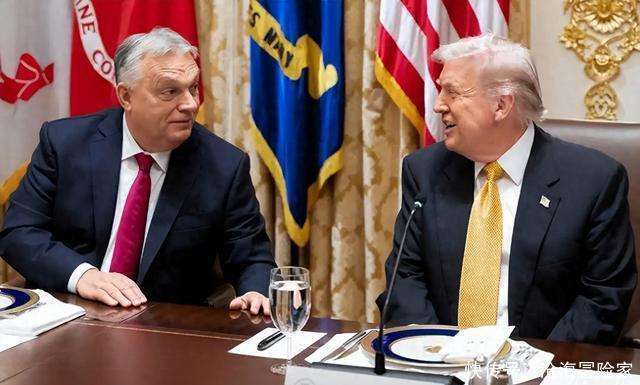
Core Points - The meeting between Trump and Hungarian Prime Minister Orban focused on resolving the Russia-Ukraine conflict, energy security cooperation, and preparations for a potential Russia-US summit [1][3] - Hungary's stance on the Russia-Ukraine issue is notably different from that of other EU countries, advocating for diplomatic solutions rather than strict sanctions against Russia [5][6] - The discussions included the possibility of hosting a Russia-US summit in Budapest, emphasizing Hungary's unique position and historical significance in regional security [8][11] Energy Security - Energy supply security is a critical issue for Hungary, which relies heavily on natural gas and oil imports through specific pipelines [15][18] - The US announced a permanent sanctions exemption for Hungary, addressing its energy security concerns and allowing for more stable energy supplies [18] - A nuclear cooperation agreement was signed, with the US Westinghouse Electric providing nuclear fuel and assistance in building small modular reactors, further alleviating Hungary's energy anxieties [17][18] International Relations - The outcomes of the meeting reflect the complex geopolitical dynamics, with Hungary's opposition to EU sanctions against Russia causing internal divisions within the EU [19] - The cooperation between the US and Hungary aims to strengthen ties with Central and Eastern European countries while seeking breakthroughs in the Ukraine conflict [19] - The meeting has the potential to inject stability into the international situation and revive hopes for a diplomatic resolution to the Ukraine conflict [19]
加纳政府拟主导油田开发以重振石油产量
Shang Wu Bu Wang Zhan· 2025-11-21 15:21
加纳能源部的声明称,鉴于加纳原油产量下降以及全球能源转型的不确定性,加纳国家石油公司 (GNPC)及其负责上游业务的子公司正与SEP进行建设性磋商,探讨收购可能性,防止该区块继续闲 置,并加强加纳的能源安全。 政府还重申了其对本地政策的承诺,称此干预举措符合国家建立具有竞争力、韧性和本土赋能的油 气行业的政策目标,并强调正在进行的调查不会干扰任何涉及SEP或其附属机构的调查。 (原标题:加纳政府拟主导油田开发以重振石油产量) 据"乐在线"11月19日报道,加纳政府正在考虑由国家主导接管本土石油生产公司斯普林菲尔德 (SEP)在西部近海三点角2号区块的股份,以保护日益减少的石油资产并提高石油产量。 ...
“稳中求进”基调不变 重点转向激发内需与修复工业品价格
Jing Ji Guan Cha Wang· 2025-11-21 14:27
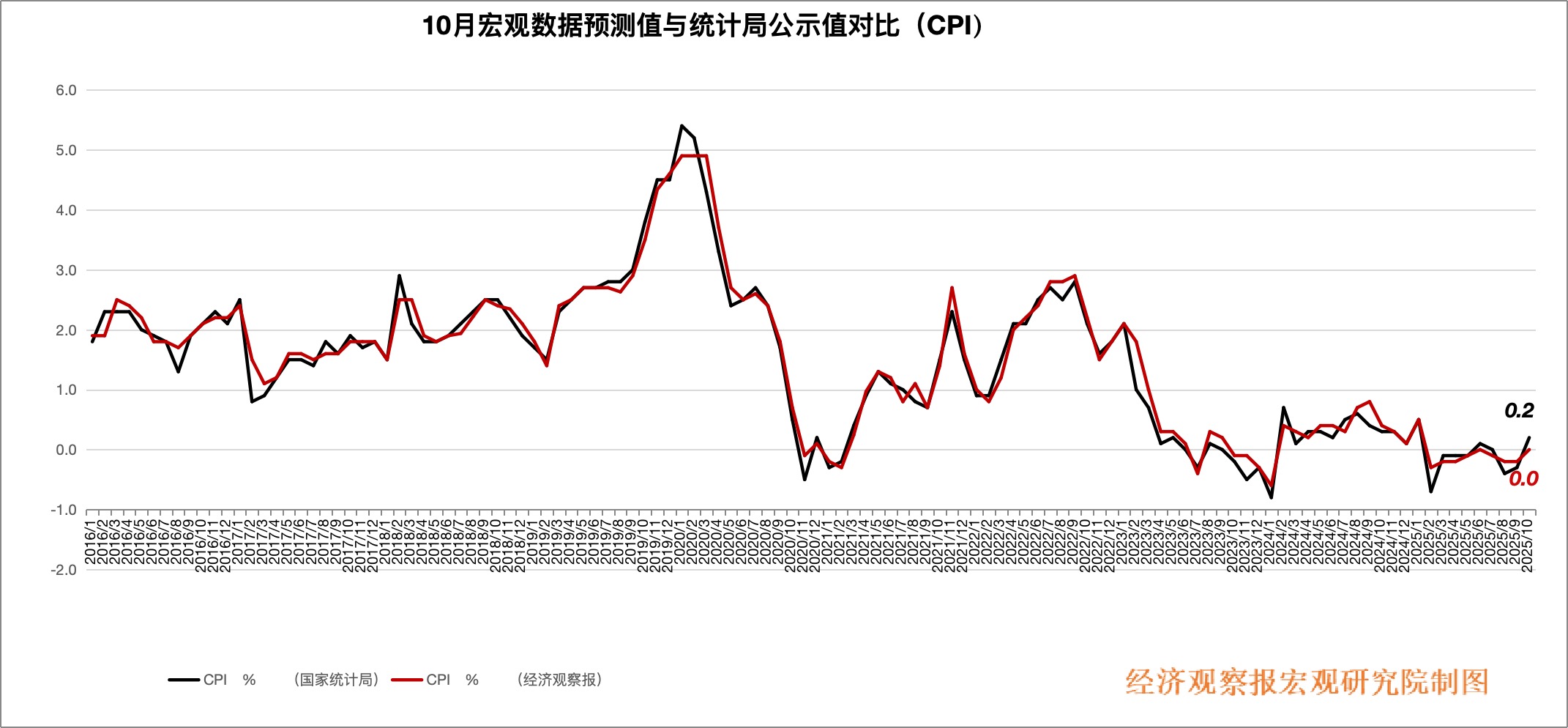
Core Insights - The macroeconomic data for October indicates a short-term increase in economic downward pressure, with adjustments in policies focusing on stimulating domestic demand and repairing industrial product prices [1] CPI - The Consumer Price Index (CPI) rose from -0.3% to 0.2% year-on-year, marking a 0.5 percentage point increase from the previous month [4] - The month-on-month CPI increased by 0.2%, influenced by rising prices of fruits and vegetables, with food prices showing a higher growth rate compared to historical values [4] PPI - The Producer Price Index (PPI) decreased by 2.1% year-on-year, but saw a month-on-month increase for the first time this year, supported mainly by the mining industry [7] - Prices for production materials rose by 0.1%, with mining prices increasing by 1% [7] PMI - The Manufacturing Purchasing Managers' Index (PMI) fell to 49% from 49.8%, indicating a contraction in manufacturing activity [10] - The decline in PMI is attributed to high inventory levels, a significant drop in new export orders, and weakened investment demand due to debt repayment acceleration [10] Fixed Asset Investment - Fixed asset investment (FAI) decreased by 1.7% year-on-year, with construction and real estate investments showing significant declines [14] - Factors contributing to the low performance in infrastructure include accelerated debt repayment, insufficient project reserves, and seasonal construction slowdowns [14] Credit - New credit issuance in October was 220 billion yuan, a decrease of 280 billion yuan compared to the previous year [17] - The total social financing (TSF) increased by 815 billion yuan, but the growth rate has slowed down [17] M2 - The M2 money supply grew by 8.2% year-on-year, a slight decrease from the previous month's growth rate of 8.4% [21] - The decline in M2 growth is influenced by a slowdown in social financing and an increase in fiscal deposits [21]
张玉清:“十五五”时期能源安全是我国能源产业的首要任务
2 1 Shi Ji Jing Ji Bao Dao· 2025-11-21 13:22
Core Viewpoint - The conference highlighted the achievements and future goals of China's energy industry, emphasizing the importance of energy security and the transition to a low-carbon economy during the 14th and 15th Five-Year Plans [1][2]. Group 1: Achievements in Energy Sector - During the 14th Five-Year Plan, China's energy consumption structure improved, and the supply capacity of renewable energy significantly increased [1]. - Over the past decade, the average cost of wind power projects has decreased by over 60%, and the cost of photovoltaic power projects has dropped by over 80%, largely due to China's innovation and manufacturing capabilities [1]. Group 2: Future Goals and Strategies - The primary task for the 15th Five-Year Plan is to ensure energy security, which includes increasing oil and gas exploration and development, aiming for an additional natural gas production of 20 billion cubic meters annually [2][3]. - The development and utilization of renewable energy must accelerate, with a target for non-fossil energy consumption to exceed 30% by 2035 and a total installed capacity of wind and solar power to reach over 360 million kilowatts [3]. - Enhancing energy efficiency is crucial, focusing on key technologies, promoting zero-carbon parks and factories, and advancing the digitalization of the energy sector [3].
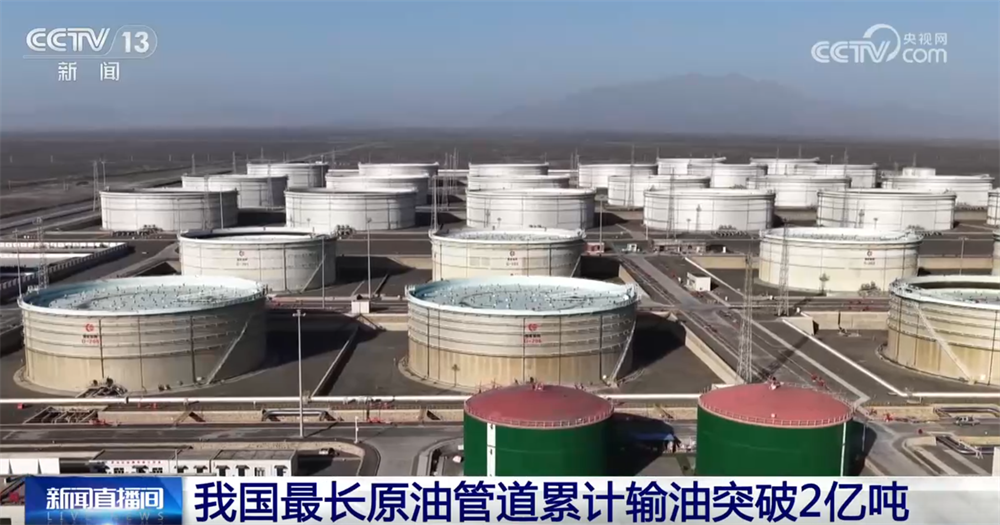
我国最长原油管道累计输油突破2亿吨 织密织牢国家“能源安全网”
Yang Shi Wang· 2025-11-21 09:27
Core Insights - The West Oil Pipeline has surpassed a cumulative oil transportation volume of 200 million tons, reinforcing national energy security [1][5] Group 1: Pipeline Overview - The West Oil Pipeline stretches 1,541 kilometers from Shanshan, Xinjiang, to Lanzhou, Gansu, with a designed annual transportation capacity of 20 million tons [1] - It connects with the China-Kazakhstan oil pipeline and the Northern Xinjiang pipeline network, facilitating the transport of crude oil from the Tuhai, Xinjiang, and Tarim oil fields, as well as resources from Central Asia [1] - The pipeline has transported nearly 13 million tons of crude oil this year alone, with a cumulative transportation volume exceeding 68 million tons during the 14th Five-Year Plan period [1][3] Group 2: Technological Innovations - The National Pipeline Group has intensified technological innovation, enhancing the intelligent operation and maintenance system, and exploring "unmanned" repair operations [3] - The cleaning cycle for storage tanks at the first station of the Shanshan-Lanzhou line has been reduced from 80 days to 45 days, with an average annual fault-free operation time of over 40,000 hours for oil pumps [3] - The pipeline has transitioned from seasonal heating to year-round, closed transportation, becoming the first large-diameter long-distance crude oil pipeline in China to achieve closed sequential transportation of multiple types of crude oil [3] Group 3: Performance Metrics - Over 18 years of operation, the oil transportation volume has increased from an initial rate of 1,000 cubic meters per hour to over 2,000 cubic meters per hour, with annual transportation volume rising from 3.69 million tons to 14.45 million tons, marking a 391% increase [5]
关注石油ETF(561360)投资机会,有望实现盈利修复
Mei Ri Jing Ji Xin Wen· 2025-11-21 09:01
Core Insights - The oil and petrochemical industry is experiencing structural differentiation in demand, with the refining sector benefiting from domestic economic recovery and increased demand for refined oil products [1] - The petrochemical product demand is closely linked to manufacturing sector performance, with significant potential for domestic substitution of high-end chemical materials [1] - Geopolitical disturbances are creating new opportunities in the trade segment, as energy supply chains are being restructured [1] - Current industry profitability is at a historically low level, but leading companies are expected to achieve profit recovery through scale effects and technological upgrades [1] - Traditional traders need to accelerate their transformation into comprehensive energy service providers to adapt to industry changes [1] Industry Overview - The oil ETF (561360) tracks the oil and gas industry index (H30198), which selects listed companies involved in oil and gas exploration, extraction, processing, and related services [1] - The oil and gas industry index focuses on the entire energy industry chain, effectively reflecting market trends and cyclical characteristics in the fossil fuel sector [1] - This index serves as a valuable tool for investors interested in energy security and cyclical investment opportunities [1]
德国倒向俄气?欧盟加速俄能源脱钩,德州长逆势宣布:要用俄气
Sou Hu Cai Jing· 2025-11-21 08:12
Group 1 - The core viewpoint of the articles highlights the irreversible decoupling of Russia and Europe in the energy sector, with Germany's energy policy becoming a focal point of public discussion following comments from Saxony's governor advocating for the resumption of Russian gas imports if the Ukraine war ceases [1][3] - Since the outbreak of the Ukraine conflict, the EU has imposed sanctions on Russia, particularly targeting the energy sector, which has historically seen significant reliance on Russian imports, accounting for 45% of natural gas, 30% of oil, and nearly 50% of coal in 2021 [1][3] - The EU's REPowerEU plan was introduced in 2022 to reduce dependence on Russian gas, but its implementation faces challenges due to insufficient infrastructure and the lengthy timeline required for new projects [1][3] Group 2 - Germany, as the economic engine of the EU, has been under significant pressure due to the energy decoupling from Russia, with pre-conflict dependencies of 55% on natural gas, 35% on oil, and 50% on coal [3] - The German government announced a complete halt to Russian energy imports starting in 2023, seeking alternative sources such as Norway and Qatar, but faces difficulties as Norway approaches production limits and Qatar prioritizes long-term contracts with Asia [3] - Energy prices in Germany surged by 40% year-on-year by 2023, leading to increased industrial electricity costs and forcing high-energy industries to reduce production or relocate, exemplified by BASF's closure of domestic chemical production lines for the first time since WWII [3] Group 3 - The energy crisis and inflation in Germany have contributed to a shrinking economy, with the eurozone inflation rate exceeding 10.7%, marking a historical high [3] - The geopolitical landscape of global energy is shifting, with the U.S. expanding LNG exports to the EU, becoming the largest supplier despite high prices exacerbating energy poverty in Europe [3] - Russia is advancing the Power of Siberia-2 gas pipeline project and securing long-term supply contracts with China and India, while the global energy market is increasingly polarized between OPEC+ led by Saudi Arabia and Russia, and the U.S.-led shale oil alliance [3] Group 4 - Germany's energy choices reflect deep-seated contradictions between energy security, economic interests, and political positions, with potential short-term solutions including increased gray imports and expanded renewable energy deployment [5] - A complete detachment from Russian energy reliance will require several years, necessitating the EU to accelerate the construction of a unified energy market and strengthen cooperation with regions like Africa and the Middle East [5] - The success of global energy transition will depend on advancements in technological innovation and the depth of international cooperation [5]
欧洲能源出奇招,五国联动开通道,乌克兰寒冬求生结局难料
Sou Hu Cai Jing· 2025-11-21 06:28
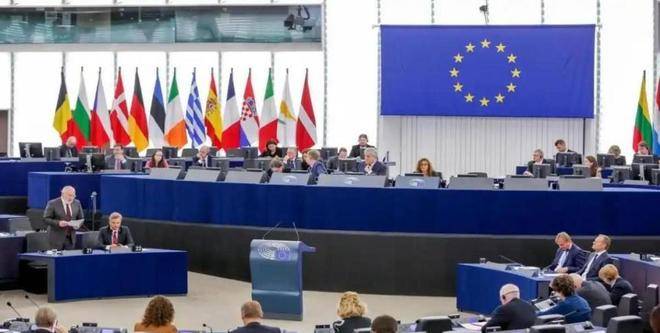
最近,欧洲能源圈传出了一个大新闻!由于俄乌冲突,欧洲的能源安全问题变得异常严峻。乌克兰居然联合希腊和美国,提出了一个跨越五国的能源走廊计 划,这一波操作能否帮助欧洲渡过寒冬呢?我觉得,这其实是乌克兰在困境中找到的一条破局之路。我们先来看一下乌克兰的处境有多么困难。俄罗斯几乎 全力攻击乌克兰的能源设施,基辅等大城市时常会出现停电,输送管道也损坏得很严重。 更为棘手的是,乌克兰不仅缺乏修复设备的资金和物资,还严重短缺44亿立方米的天然气。如果能源供应出现问题,民众的取暖需求无法满足,国家的运转 也会受到影响。而且,这不仅仅是乌克兰一个国家的问题,整个欧洲都在为此感到焦虑。自从俄乌冲突打破了原本稳定的能源供应格局后,欧洲就陷入了两 难境地:既不想依赖俄罗斯的天然气,又担心找不到其他供应来源。乌克兰的困境也成了一个警示,暴露了欧洲能源安全的脆弱。只要能源设施成为了敌对 方的打击目标,甚至像冬季取暖这样的基本需求,也会被当作政治博弈的工具。 我认为,能源的武器化简直是一个巨大的陷阱,它将能源安全从一个经济问题提升到了国家安全的层面,这也让各国都急于寻找解决之道。在大家都担心乌 克兰是否能撑过这个冬天时,乌克兰总统泽连斯 ...