
光伏反内卷

Search documents
产能治理政策预期仍存 多晶硅下方受到刚性支撑
Jin Tou Wang· 2025-08-14 06:05
Core Viewpoint - The main focus of the news is the significant decline in the futures price of polysilicon, which dropped to a low of 49,300 yuan, reflecting a decrease of 4.41% as of the latest report. Group 1: Market Performance - On August 14, the main contract for polysilicon futures experienced a rapid decline, reaching a low of 49,300 yuan, and closing at 49,740 yuan, down 4.41% [1]. - The futures market is currently characterized by a cautious approach, with various institutions providing differing outlooks on future price movements [2][3][4]. Group 2: Institutional Insights - Guotou Anxin Futures suggests a cautious short position at the lower end of the polysilicon price range, with expectations for the PS2511 contract to operate between 48,000 and 53,000 yuan per ton [2]. - Jianxin Futures indicates that polysilicon is expected to maintain a wide range of fluctuations, with production in August significantly increased to 125,000 tons, which can meet downstream demand of 56.82 GW [3]. - Donghai Futures anticipates a short-term high-level fluctuation in polysilicon prices, supported by the current spot prices, while downstream silicon wafers and battery cells are successfully increasing prices [4].
反内卷系列深度三:上涨之后,光伏下一步将落子何处?
Changjiang Securities· 2025-08-11 14:50
Investment Rating - The investment rating for the photovoltaic industry is "Positive" and is maintained [11] Core Viewpoints - The current round of anti-involution in the photovoltaic sector has shown initial effectiveness, with a clearer direction for supply-demand improvement and beta recovery. The market is expected to continue upward momentum due to low holdings and valuations, alongside subsequent catalysts [4][8][22] - The core drivers for the ongoing photovoltaic market are the strengthening and elevation of price expectations, which can be tracked through two main aspects: progress on production/sales restrictions and the transmission of terminal component prices [9][40] Summary by Sections Initial Effects of Anti-Involution - The anti-involution actions in the photovoltaic sector have begun to yield initial results, with significant price increases observed in silicon materials and wafers. The prices of batteries and components have also risen, although full transmission of these price increases will take time [7][18] Clear Direction and Low Valuations - This is the second round of anti-involution for the photovoltaic industry, with a more mature and pragmatic approach compared to the first round. The political backing is stronger, and the timeline for achieving goals is clearer, increasing the likelihood of successful implementation [8][25] Potential Production and Sales Restrictions - Future actions may include production and sales restrictions to further optimize supply-demand dynamics. The strictness of these measures is expected to exceed last year's quota system, with regulatory oversight mechanisms in place to ensure compliance [9][40] Component Price Trends - The price of components is a critical indicator to monitor. Price increases in components suggest successful price transmission within the industry, which is essential for the recovery of upstream profitability. The acceptance of price increases may vary between domestic and international markets [10][40] Market Sentiment and Valuation - The photovoltaic sector is currently at a relatively low valuation, with significant room for growth. The holdings in the sector have decreased, indicating a potential for upward movement in stock prices as the anti-involution measures take effect [29][34]
爱旭股份(600732):ABC出货高增,单季度盈利转正
Soochow Securities· 2025-08-11 03:31
Investment Rating - The investment rating for the company is upgraded to "Buy" [1] Core Views - The company has shown significant growth in ABC component shipments, with a year-on-year increase of over 400% in H1 2025, leading to a positive quarterly profit [9] - The company is expected to maintain full production and sales in Q3, with a projected total shipment of 20GW for ABC components in 2025, reflecting strong market penetration [9] - The financial outlook has improved, with adjusted net profit forecasts for 2025-2027 showing substantial growth, indicating a recovery from previous losses [9] Financial Summary - Total revenue for 2023 is projected at 27,170 million, with a significant increase to 40,137 million by 2027, reflecting a compound annual growth rate [10] - The net profit for 2025 is estimated at 383.49 million, with a remarkable growth rate of 107.21% compared to the previous year [10] - The earnings per share (EPS) is expected to recover from a loss of 2.91 yuan in 2024 to a profit of 1.37 yuan by 2027 [10]

申万宏源研究晨会报告-20250811
Shenwan Hongyuan Securities· 2025-08-11 00:49
Group 1: Bond Market Insights - The potential tax rate for bond interest under the new VAT regulations is expected to be significantly lower than 6%, with estimates ranging from 0.7% to 3.2% for various bond types [11][2][10] - The implementation of the new VAT regulations may lead to a stable fiscal revenue of approximately 230 billion RMB, while also increasing interest costs [11] - The bond market may experience short-term support, but medium-term challenges are anticipated, particularly from August to October [11] Group 2: Zhongshan Public Utilities (000685) - Zhongshan Public Utilities is a public utility platform under the Zhongshan State-owned Assets Supervision and Administration Commission, focusing on water, solid waste, and renewable energy sectors [12][14] - The company has a water supply capacity of 2.65 million tons per day, with a market share of 94%, and is expected to increase net profit by 10%-15% following a potential 20%-30% water price adjustment [12][14] - The company holds a 10.55% stake in GF Securities, which is a significant source of profit, with projected net profits of 11.99 billion RMB in 2024, primarily from investment income [12][14] Group 3: New Tibet Railway Company - The establishment of the New Tibet Railway Company, with a registered capital of 95 billion RMB, aims to accelerate the construction of the New Tibet Railway, which has been planned for years [13][25] - The railway project is expected to generate substantial demand for engineering machinery and rail transit equipment, benefiting companies like China Railway and Sany Heavy Industry [26][25] - The total investment for the New Tibet Railway is projected to exceed 300 billion RMB, reflecting the significant scale and complexity of the project [27][25]
爱旭股份(600732):毛利率提升明显,经营性现金流进一步向好
Changjiang Securities· 2025-08-10 13:12
Investment Rating - The investment rating for the company is "Buy" and is maintained [7]. Core Views - In the first half of 2025, the company achieved revenue of 8.446 billion yuan, a year-on-year increase of 64%. The net profit attributable to shareholders was -238 million yuan, aligning with the forecast midpoint. In Q2 2025, revenue reached 4.311 billion yuan, a quarter-on-quarter increase of 4.23%, with a net profit of 63 million yuan, indicating a turnaround from loss to profit [2][5][10]. - The company's N-type ABC business saw significant growth, with shipments exceeding 8.57 GW in the first half of 2025, a year-on-year increase of over 400%. The ABC business now accounts for approximately 74% of total revenue, surpassing solar cell sales as the main contributor to performance [10]. - The cash flow situation has improved, with net cash flow from operating activities of 716 million yuan in Q1 and 1.139 billion yuan in Q2 2025. The expense ratio decreased to 7.90% in Q2, primarily due to foreign exchange gains from increased overseas sales [10]. - The company secured approximately 10 GW of new component orders domestically and internationally in the first half of 2025, including significant contracts at the Intersolar exhibition in Germany. The ABC components command a sales premium of 10%-50% over traditional TOPCon components [10]. - Looking ahead, the photovoltaic industry is showing positive signs of "anti-involution," with price recovery in the supply chain. The company is expected to benefit from the premium of ABC components over TOPCon components, with profitability anticipated to exceed the industry average [10].
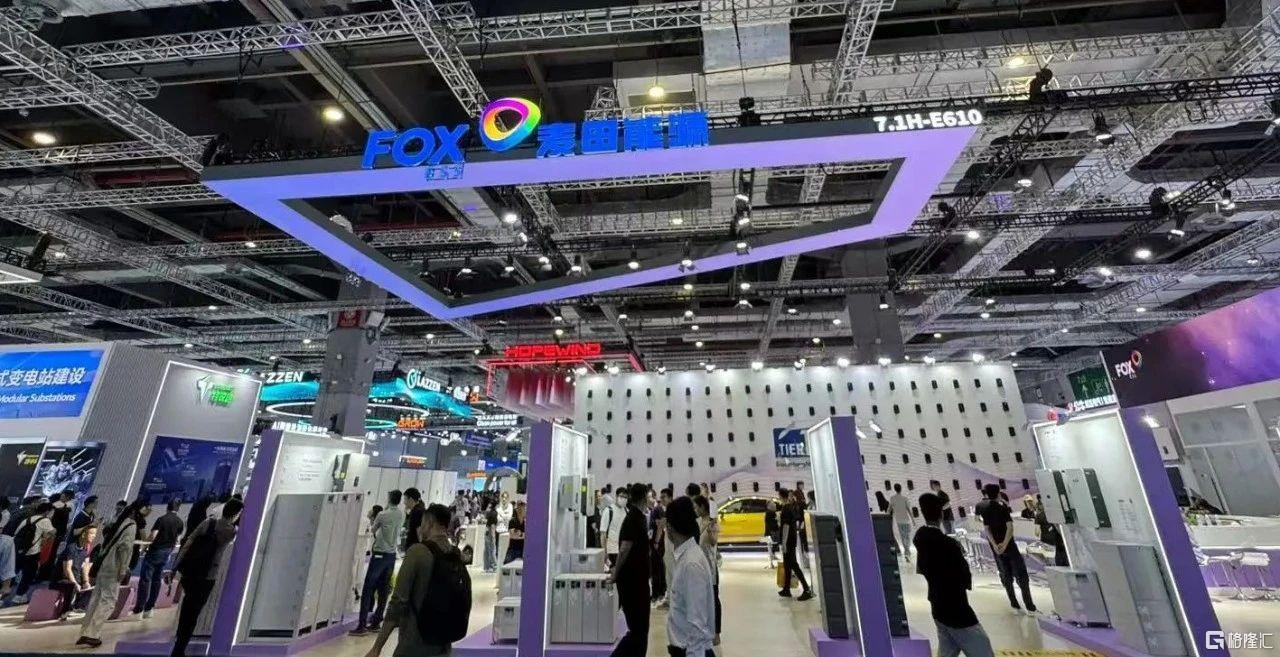
5个股东,为什么对麦田能源上市投下反对票?
Ge Long Hui· 2025-08-08 19:12
Core Viewpoint - The article discusses the complexities surrounding the IPO of Maitian Energy, highlighting the opposition from several small shareholders managed by Chaoxi Capital, which is unusual for private equity investors [1][3][7]. Group 1: Shareholder Dynamics - Five small shareholders collectively opposed Maitian Energy's IPO, holding a total of 2.27% of the company's shares [3][4]. - The opposing shareholders are all managed by Chaoxi Capital, which has a significant stake in Maitian Energy [3][4]. - The investment cost for the opposing shareholders was significantly higher than that of the supporting shareholders, indicating a potential concern over the expected returns from the IPO [5][6]. Group 2: IPO Funding and Company Valuation - Maitian Energy plans to raise 1.661 billion yuan through its IPO, primarily for the construction of a production facility for smart energy storage products [1]. - The company's valuation increased from 5 billion yuan in October 2022 to 14.887 billion yuan in 2023, reflecting a substantial rise in investor interest [5][6]. Group 3: Management and Control - Zhu Jingcheng is identified as the actual controller of Maitian Energy, while Xiang Guangda, known as the "Nick King," is a significant but secondary figure in the company [1][18]. - Zhu Jingcheng's family members hold key positions in the company, raising questions about potential conflicts of interest and governance [14][15]. Group 4: Financial Health and Support - Maitian Energy's debt-to-asset ratio is reported at 46.78%, which is lower than many peers in the energy storage sector, indicating a relatively healthy financial position [14]. - The company has received substantial financial backing from Qing Shan Capital, including loans and guarantees exceeding 2 billion yuan [20][21]. Group 5: Market Position and Strategy - Maitian Energy has achieved significant overseas sales, with international revenue accounting for over 95% of its total sales, contributing to its early profitability [24]. - The company sources its battery cells from lower-tier suppliers, including those controlled by Xiang Guangda, which helps reduce production costs amid increasing competition in the energy storage market [24].

光伏反内卷系列报告:政策逐步落地,光伏反内卷进入新阶段
Shenwan Hongyuan Securities· 2025-08-08 09:45
Investment Rating - The report suggests a positive outlook for the photovoltaic industry, particularly focusing on the benefits from the anti-involution policies and the expected price increases across the supply chain [3][19][22]. Core Insights - The current round of anti-involution is fundamentally different from previous self-regulatory efforts, with significant policy and regulatory measures being implemented since the sixth Central Financial Committee meeting [3][18]. - The anti-involution has catalyzed positive changes in the industry, leading to substantial price increases in the photovoltaic supply chain, particularly in polysilicon, which has seen prices rise above 40,000 yuan per ton [3][14]. - The feasibility of price transmission from polysilicon to downstream components is supported by the involvement of state-owned energy enterprises, which are expected to resist low-price competition [3][38]. - Polysilicon is identified as the key focus for the anti-involution efforts, with policies aimed at eliminating outdated production capacity and promoting industry consolidation [3][23]. - The supply side has initiated changes, while the demand side is seen as the critical area for breakthroughs, with new policies expected to stimulate demand in the photovoltaic market [3][45]. Summary by Sections 1. Review of Anti-Involution Market - The report reviews the developments in the photovoltaic market since the implementation of anti-involution policies, highlighting the significant price increases in polysilicon and other components [3][12][14]. 2. Positive Changes from Anti-Involution Expectations - The report notes that the anti-involution expectations have led to a positive market response, with polysilicon futures prices rising significantly and aligning closely with the prices of photovoltaic materials [11][12]. 3. Policy Implementation Phase with Focus on Polysilicon - The report emphasizes that the implementation of policies targeting polysilicon production is crucial for the success of the anti-involution strategy, with a focus on reducing outdated capacity and enhancing industry standards [3][22][29]. 4. Indicators of Anti-Involution Effects: Component Prices - The report identifies the rising prices of photovoltaic components as a key indicator of the success of the anti-involution measures, with expectations for further price increases as the supply chain adjusts [3][14][38]. 5. Supply-Side Anti-Involution and Demand-Side Efforts - The report discusses the need for coordinated efforts between supply-side adjustments and demand-side stimulation to ensure the sustainability of the photovoltaic market, particularly in light of new regulatory frameworks [3][45][42].




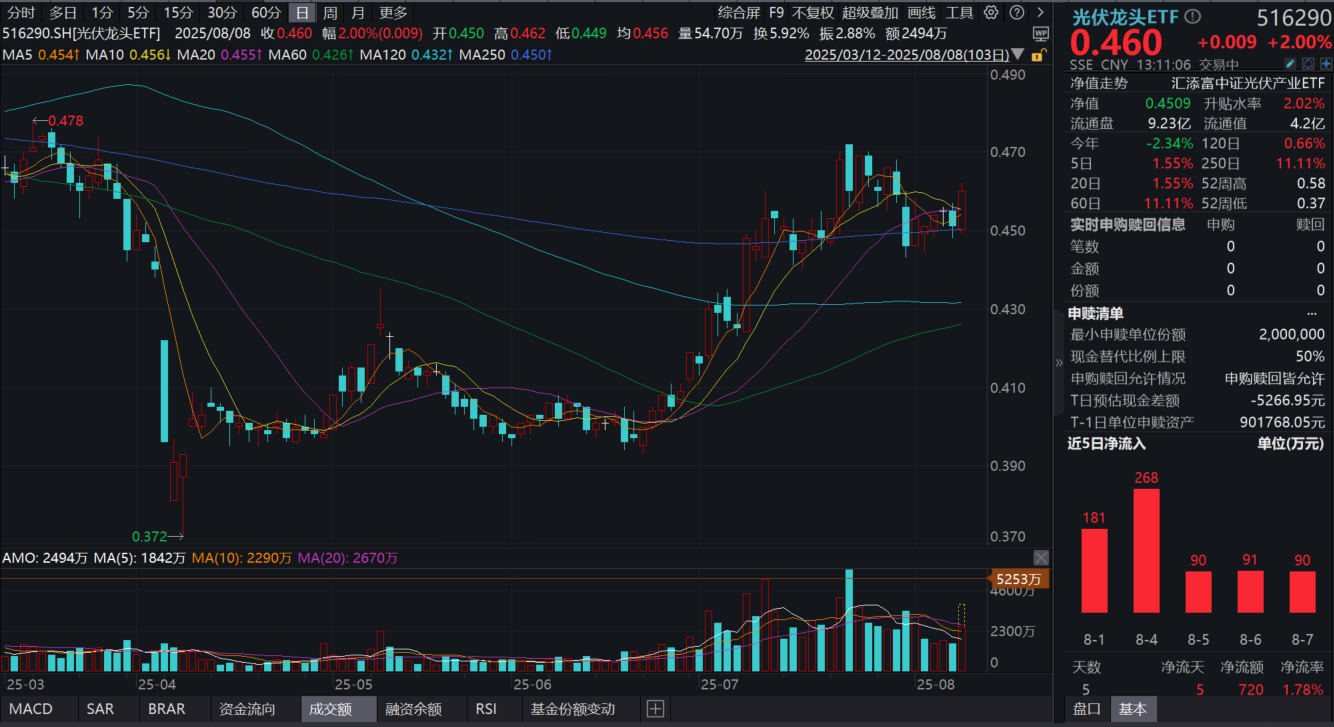
阳光电源暴涨超11%,再获海外储能大单!光伏龙头ETF(516290)大涨2%,连续10日强势吸金超4000万元!光伏底部反转将至?机构分析!
Xin Lang Cai Jing· 2025-08-08 05:52
Core Viewpoint - The solar energy sector is experiencing significant growth, particularly highlighted by recent orders received by leading companies like Sungrow Power, which is expanding its global footprint in energy storage solutions [3][5]. Group 1: Company Performance - Sungrow Power's stock surged by 11.71%, with a trading volume of 74.20 billion, indicating strong market interest [1]. - Other companies in the solar energy sector, such as DeYee Co. and Chint Electric, also saw positive movements, with increases of 2.17% and 1.32% respectively [1][4]. - Conversely, companies like TCL Technology and JA Solar experienced slight declines, reflecting mixed performance across the sector [1][4]. Group 2: Market Developments - Sungrow Power secured a significant overseas order to provide energy storage solutions for Galp in Spain and Portugal, totaling approximately 74MW/147MWh [3][5]. - The company has been actively winning multiple energy storage contracts globally, indicating a deepening presence in the energy storage market [3]. - The solar industry is responding to government policies aimed at reducing "involution" and promoting fair competition, which is expected to stabilize pricing and improve profitability across the sector [6][7]. Group 3: Price Trends - The prices of key materials in the solar industry, such as polysilicon and solar cells, have shown significant increases, with polysilicon prices rising by 22.22% to 44 RMB/kg since early June [6][8]. - The price of solar cells has also increased by over 15%, indicating a recovery in the market and a shift towards value-based competition [6][8]. - The overall sentiment in the solar sector is turning positive, with expectations of a fundamental recovery supported by recent policy changes and market dynamics [6][8].

市场情绪有所降温 短期预计多晶硅期货高位震荡
Jin Tou Wang· 2025-08-07 07:58
Core Viewpoint - The domestic futures market for non-ferrous metals is experiencing fluctuations, with polysilicon futures showing a significant decline of 2.41% to 50,310.0 yuan/ton [1] Supply - The Ministry of Industry and Information Technology has released a notice regarding the special energy conservation inspection tasks for the polysilicon industry for 2025, which strengthens the expectations for capacity reduction in polysilicon production [1] Demand - Downstream silicon wafer companies are maintaining stable prices, and there is an increase in export demand due to expectations of reduced export tax rebates. Production schedules are expected to increase this month, with prices smoothly transmitting to battery cells. However, recent price reductions in mainstream component specifications raise concerns about end-user acceptance [1] Market Outlook - The photovoltaic industry is expected to remain a key area of focus, with support from lower spot prices. Downstream silicon wafers and battery cells are anticipated to rise in price, but components have not yet adjusted. There is an increase in warehouse receipts, leading to a cooling market sentiment, with short-term expectations of high-level fluctuations [1]
信义光能(00968.HK):2025H1环比扭亏 关注光伏玻璃“反内卷”
Ge Long Hui· 2025-08-06 19:19
Group 1: Company Performance - In H1 2025, the company's revenue was 10.9 billion yuan, a year-on-year decrease of 7% and a quarter-on-quarter increase of 7% [1] - The net profit attributable to shareholders was 700 million yuan, a year-on-year decrease of 59%, but a quarter-on-quarter turnaround to profit [1] - The main pressure on performance was due to the decline in photovoltaic glass prices, along with increased impairment of factory equipment, which amounted to approximately 300 million yuan in H1 2025, a year-on-year increase of 300 million yuan [1] Group 2: Photovoltaic Glass Business - The company's photovoltaic glass revenue in H1 2025 was 9.5 billion yuan, a year-on-year decrease of 7% but a quarter-on-quarter increase of 10% [1] - The gross margin for photovoltaic glass was 11.4%, a year-on-year decrease of 10.1 percentage points, but a quarter-on-quarter increase of 15.8 percentage points [1] - The company sold 4.07 million tons of photovoltaic glass in H1 2025, a year-on-year increase of 18% and a quarter-on-quarter increase of 1% [1] Group 3: Industry Capacity and Trends - As of the end of H1 2025, the industry’s operating capacity was 98,340 tons per day, an increase of 5,850 tons per day compared to the end of 2024 [2] - The company’s total capacity and operating capacity remained stable at 30,200 tons per day and 23,200 tons per day, respectively, compared to the end of 2024 [2] - The company has no plans to ignite new production lines in H2 2025, maintaining a cautious attitude towards resuming and expanding production [2] Group 4: Solar Power Generation - The company's solar power generation revenue in H1 2025 was 1.4 billion yuan, a year-on-year increase of 1% but a quarter-on-quarter decrease of 10% [3] - The gross margin for solar power generation was 63.5%, a year-on-year decrease of 2.0 percentage points and a quarter-on-quarter decrease of 5.3 percentage points [3] - The cumulative grid-connected capacity as of the end of H1 2025 was 6.2 GW, remaining stable compared to the end of 2024 [3] Group 5: Future Outlook - The company expects to focus on project reserve development and preparation in H2 2025, with a smaller scale of new grid-connected capacity anticipated [3] - The company maintains its revenue forecasts for 2025-2027 at 23 billion, 25.9 billion, and 28.9 billion yuan, representing year-on-year growth of 5%, 13%, and 11% respectively [3] - The net profit forecasts for the same period are 2.4 billion, 2.8 billion, and 3.2 billion yuan, indicating year-on-year growth of 133%, 17%, and 15% respectively [3]