软件定义汽车

Search documents
欧洲汽车科技反击战开启!大众、奔驰、宝马等11家巨头联手打造开源软件平台
Hua Xia Shi Bao· 2025-07-01 11:17
Core Insights - Major German automotive companies, including Volkswagen, BMW, and Mercedes-Benz, have partnered with 11 other firms to develop an open-source automotive software platform, aiming to regain control over the digital future of the industry [1][2] - The initiative is supported by the German Automotive Industry Association (VDA), which emphasizes the need for a shared, open-source core software stack to reduce rising R&D costs and foster innovation [1][2] - The European automotive industry faces significant challenges from American and Chinese competitors, with a projected software market size of €80 billion by 2030, where local companies hold less than 30% market share [1][2] Industry Challenges - The software crisis has severely impacted European automakers, with Volkswagen's software unit CARIAD reporting losses of nearly €5.8 billion over three years, and delays in key model launches due to software issues [2] - Mercedes-Benz has also faced significant software failures, affecting its luxury brand reputation [2] Collaborative Efforts - The collaboration includes major luxury car manufacturers and top-tier suppliers, aiming to create a robust open-source software platform managed by the neutral Eclipse Foundation [2][3] - The "code-first" strategy allows direct sharing of executable software modules, enhancing development efficiency [2] Future Plans - The core software stack is scheduled for delivery in 2026, with the first mass-produced vehicles expected to roll off production lines in 2030 [3] Global Context - The automotive industry is entering a new era where software and data are becoming critical competitive factors, shifting the focus from traditional mechanical engineering to digital capabilities [4] - Companies like Tesla and Xpeng are leading advancements in autonomous driving technology, showcasing the importance of AI and data integration [4][5] Competitive Landscape - The competition is intensifying as companies globally adopt open-source models and AI technologies, with significant implications for market positioning and technological leadership [5][6] - The ongoing battle for standards and digital dominance will shape the future of the automotive industry, determining who leads in smart mobility over the next decade [6]


【IPO一线】奇瑞、长安座舱方案供应商镁佳股份正式递表港交所
Ju Chao Zi Xun· 2025-07-01 08:43
Group 1 - The core viewpoint of the articles is that Meijia Co., Ltd. is positioning itself as a leading automotive technology company focused on AI-driven integrated domain control solutions for the next generation of software-defined vehicles [2][3] - Meijia's integrated smart cockpit and X-domain control solutions combine various smart automotive functions, including smart cockpit, ADAS parking, ADAS driving, vehicle networking, and OTA upgrades, into a unified physical domain controller [2] - Since the mass production of its first model equipped with Meijia's solutions in 2022, the company has experienced strong growth, with its solutions now widely adopted by major manufacturers such as Chery, Changan, Dongfeng, Changan Mazda, Nissan, and Ford [2] Group 2 - By 2024, it is projected that one in every ten new cars equipped with smart cockpit domain control systems in China will utilize Meijia's solutions, reflecting the trust of manufacturers and the quality of Meijia's offerings [2] - Meijia is expanding its domestic market share and global influence, leveraging its strong technology and product quality to collaborate with international manufacturers and introduce its solutions to new global markets [3] - By the end of 2025, products equipped with Meijia's technology are expected to expand to over 40 countries and regions, reinforcing its position as a trusted partner for manufacturers in the development of future software-defined vehicles [3]

新股消息 | 镁佳股份冲刺港交所 每10辆智能座舱车就有1辆用它的技术
智通财经网· 2025-06-30 12:59
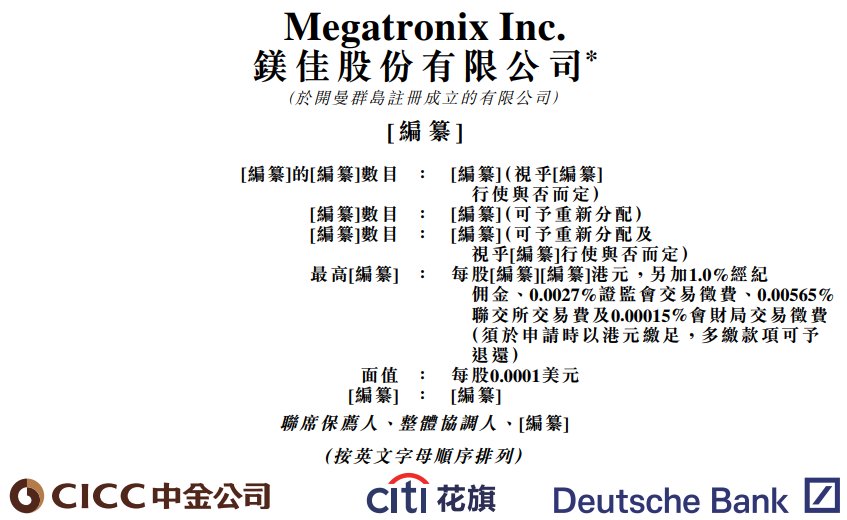
Core Viewpoint - Magnesium Technology Co., Ltd. (referred to as "Magnesium") has submitted its listing application to the Hong Kong Stock Exchange, with CICC, Citigroup, and Deutsche Bank as joint sponsors [1] Company Overview - Magnesium is an innovative automotive technology company focused on reshaping future mobility through AI-driven integrated domain control solutions, aiding OEMs in developing the next generation of software-defined vehicles [3] - The company has built a modular software architecture and seamless integration of intelligent functions and hardware, laying the foundation for future smart mobility beyond traditional automotive upgrades [3] Market Performance - Since the mass production of its first model equipped with Magnesium's solutions in 2022, the company has experienced strong growth. By June 22, 2025, its solutions will be widely used in multiple models from leading OEMs such as Chery, Changan, Dongfeng, Changan Mazda, Nissan, and Ford [3] - In 2024, it is projected that one in every ten new cars equipped with smart cockpit domain control systems in China will utilize Magnesium's solutions, reflecting OEMs' trust and the quality of its solutions [3] Financial Performance - For the fiscal years 2022, 2023, and 2024, Magnesium reported revenues of approximately RMB 388 million, RMB 1.513 billion, and RMB 1.42 billion, respectively. The gross profits for the same periods were RMB 73.56 million, RMB 183.15 million, and RMB 309.28 million [4][6] - The company has shown a significant increase in revenue from 2022 to 2023, with a growth rate of approximately 288.5%, although a slight decline is noted in 2024 [4][6] Expansion Plans - Magnesium is expanding its domestic market share and global influence, collaborating with international OEMs to introduce its solutions to new markets worldwide. By the end of 2025, products featuring Magnesium's technology are expected to reach over 40 countries and regions [4] - This rapid expansion underscores Magnesium's capability to address the global challenges of the FPC (Function, Performance, Cost) triangle and solidifies its position as a trusted partner for OEMs in developing the next generation of software-defined vehicles [4]
最有“钱”景的专业,这些汽车人才正在被疯抢
汽车商业评论· 2025-06-29 15:28
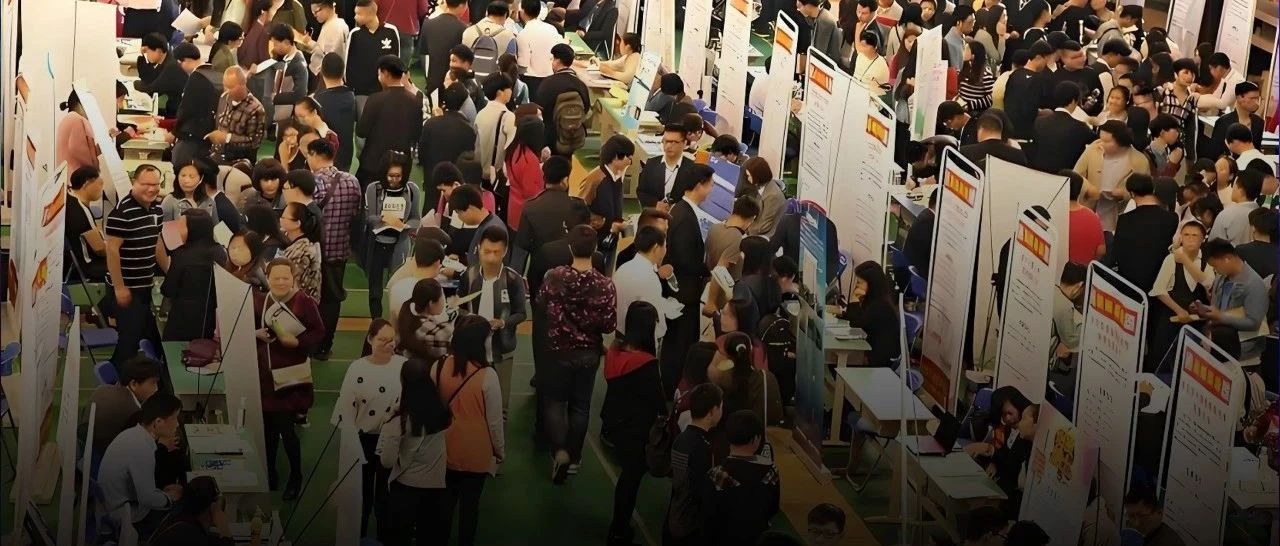
Core Viewpoint - The article discusses the changing landscape of the automotive job market, emphasizing the importance of choosing the right academic major to secure high-paying jobs in the future, particularly in the context of the industry's transformation driven by technology and innovation [5][6][9]. Group 1: Employment Trends and Statistics - In 2025, there will be 12.22 million college graduates, an increase of 430,000 from 2024, while the number of national college entrance exam candidates will be 13.35 million, a decrease of 70,000 from the previous year, marking the first decline since 2017 [4]. - The automotive industry is experiencing a significant shift due to the "new four modernizations," leading to high demand for skilled professionals in areas such as algorithms and battery technology, with salaries for algorithm engineers exceeding one million yuan annually [6][9]. Group 2: Popular Majors and Salary Insights - Traditional mechanical engineering roles are declining, with average starting salaries for graduates in this field around 20,000 yuan per year, while those in intelligent vehicle engineering can earn up to 35,000 yuan per year [9][11]. - Graduates in new energy fields can expect starting salaries of 12,000 yuan per month, compared to 7,800 yuan per month for traditional vehicle engineering graduates [11]. - The demand for interdisciplinary talents is increasing, with many universities introducing programs that combine mechanical and automation engineering with software [12][13]. Group 3: High-Paying Positions in the Automotive Industry - Key high-paying roles include those in "software-defined vehicles," with salaries for software quality managers ranging from 30,000 to 60,000 yuan, and for large model algorithm engineers between 50,000 and 80,000 yuan [21][22]. - The automotive industry is expected to increasingly focus on software-related positions, with significant salary growth anticipated in algorithm, energy, and data roles over the next five years [22]. Group 4: Talent Preferences of Automotive Companies - Automotive companies are prioritizing candidates with strong academic backgrounds in software, computer science, and data analysis, as well as those who can bridge the gap between technology and market needs [24][26]. - There is a notable demand for professionals who can define product requirements based on market trends and user experiences, particularly in the context of "software-defined vehicles" [26].
6.27犀牛财经早报:超百只主动权益基金净值创新高 张勇等9人退出阿里合伙人
Xi Niu Cai Jing· 2025-06-27 01:54
Group 1: Fund Performance and Market Trends - Over 180 active equity funds have reached new net asset value highs as of June 25, with more than half having been established for over a year, some close to 14 years [1] - The new fund issuance market has seen significant activity, with over 100 billion yuan in new fund issuance in June alone, marking a record monthly high for the year [1] - Commercial banks have significantly increased the issuance of perpetual bonds, with over 600 billion yuan issued in the second quarter, a 260.82% increase compared to the previous quarter [1] Group 2: Corporate Developments and Challenges - Mercedes-Benz is facing a crisis in its smart technology transition, with widespread failures in vehicle navigation and CarPlay functions reported, leading to a recall of 16,100 vehicles due to safety concerns [2] - The company plans to invest over 14 billion yuan in R&D to address these issues, but delays in developing its proprietary operating system and slow collaboration with local tech firms have raised concerns [2] - Alibaba has seen a significant leadership change, with nine partners, including Zhang Yong, exiting the partnership, as the company emphasizes a shift towards AI-driven innovation [4] Group 3: Legal and Financial Matters - Li Bao Insurance has faced a surge in legal challenges, with five new cases set for trial in July, bringing the total to 78 cases since 2025 [4] - The court upheld a ruling against Smartisan Technology, requiring the company to repay a loan of 15 million yuan with interest, following a dispute with investor Zheng Gang [6][7] Group 4: Market Movements and Economic Indicators - The U.S. stock market saw all three major indices close higher, with the Nasdaq rising by 0.97% and the S&P 500 nearing historical highs, driven by strong performance in tech stocks [8] - Economic data from the U.S. has bolstered expectations for at least two interest rate cuts by the Federal Reserve this year, leading to a decline in U.S. Treasury yields and a drop in the dollar index [8]

大面积车机瘫痪背后:奔驰深陷智能化困境
news flash· 2025-06-26 21:38
Core Viewpoint - Mercedes-Benz is facing a series of technical and trust crises in the Chinese market, highlighting challenges in its digital transformation and product reliability [1] Group 1: Technical Issues - On June 12, multiple Mercedes-Benz owners reported widespread failures of the in-car navigation and CarPlay functions, leading to user dissatisfaction due to slow repair processes [1] - Shortly after, the State Administration for Market Regulation issued three recall notices affecting 16,100 vehicles due to power system faults and fire risks in both imported and domestic models [1] Group 2: Strategic Challenges - Industry experts believe these incidents are indicative of a broader issue with Mercedes-Benz's delayed transition to smart technology [1] - Despite the chairman's announcement of over 14 billion yuan investment in R&D in China, the development of the self-developed operating system MB.OS has been slow, and collaboration with local tech companies has not progressed effectively [1] Group 3: Market Performance - Data indicates a projected global sales decline of 3% for Mercedes-Benz in 2024, with a 7% drop in China, its largest single market, resulting in sales of 683,600 units [1] - Sales of pure electric models have seen a significant decline of 23%, underscoring the difficulties traditional automakers face in adapting to the "software-defined vehicle" era [1]
奔驰深陷智能化困境
Zhong Guo Zheng Quan Bao· 2025-06-26 21:25
Core Viewpoint - Mercedes-Benz is facing a series of technical and trust crises in the Chinese market, highlighted by widespread failures of in-car navigation and CarPlay functions, followed by a recall of 16,100 vehicles due to safety concerns, indicating a significant delay in the company's smart transformation efforts [1][2][3] Group 1: Technical Failures - On June 12, numerous Mercedes-Benz owners reported a sudden failure of in-car navigation and CarPlay functions, with the central screen going black and displaying error messages [2] - Mercedes-Benz acknowledged the issue was due to a backend failure and attempted to rectify it, but many users continued to experience problems, leading to dissatisfaction with the company's response [2][3] - Following the technical failures, the State Administration for Market Regulation issued three recall notices affecting 16,100 vehicles, further damaging the brand's reputation in China [2][3] Group 2: Recall Details - The recalls included 252 domestic C-Class and GLC SUVs due to incorrect fuse boxes that could lead to loss of power and airbag failure, posing a fire risk [3] - Additionally, 13,447 domestic EQC vehicles were recalled due to software defects in the battery management system that could cause thermal runaway in extreme conditions [3] - 2,151 imported A-Class, CLA-Class, and GLA-Class vehicles were recalled for non-compliant turbocharger nozzles, which posed emission risks [3] Group 3: Strategic Challenges - The series of technical incidents reflects a systemic lag in Mercedes-Benz's smart transformation, with the company struggling to implement its self-developed MB.OS operating system and collaborate effectively with local tech firms [1][3] - Despite plans to invest over 14 billion yuan in R&D in China, the company's progress in smart technology has been minimal compared to competitors like Volkswagen and Audi, who have made significant advancements [3][4] - Mercedes-Benz's electric vehicle sales in China dropped 23% in 2024, with overall sales declining by 7% to 683,600 units, indicating challenges in adapting to the "software-defined vehicle" era [1][4] Group 4: Financial Performance - In 2024, Mercedes-Benz's global sales fell by 3% to 1.983 million units, with revenue decreasing by 8.5% [4] - The company announced a shift in strategy, abandoning its 2030 full electrification plan and restarting the development of fuel vehicles to recover profits [4] - To address ongoing challenges, Mercedes-Benz initiated the "Next Level Performance" cost-saving plan, aiming to reduce costs by 5 billion euros by 2027 [4][5] Group 5: Industry Perspective - Industry experts suggest that Mercedes-Benz urgently needs to restructure its technology R&D system and improve user response mechanisms to remain competitive in the smart vehicle market [5] - The company's failure to address basic issues, such as OTA upgrades and battery management, has resulted in significant customer dissatisfaction, particularly during widespread technical failures [5]
英特尔汽车业务败走中国,喊出“All in”才过两个月
Tai Mei Ti A P P· 2025-06-26 10:52
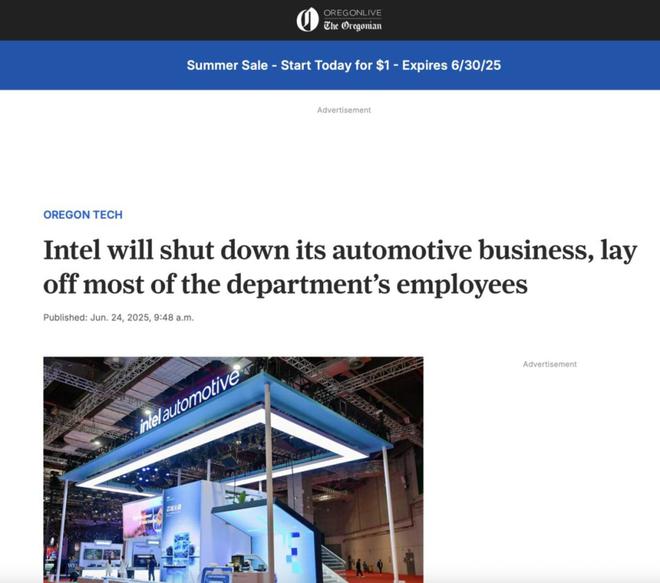
Core Viewpoint - Intel has abruptly decided to shut down its automotive business, which was previously seen as a significant growth opportunity, indicating a strategic retreat in response to financial pressures and competitive challenges in the automotive semiconductor market [1][10][23]. Group 1: Business Decision and Leadership Changes - Intel's automotive division, once considered a key growth area, is being closed under the leadership of new CEO Lip-Bu Tan, who has initiated a company-wide restructuring to focus on core businesses [8][10]. - Jack Weast, a prominent figure in Intel's automotive strategy, had recently relocated to China to spearhead the automotive initiative but has now returned to the U.S. following the decision to cut the division [9][22]. Group 2: Financial Performance - Intel reported a net loss of $821 million in Q1 2025, with total revenue declining over 30% from 2021 to 2024, and the foundry business losing $7 billion in 2023 [10][11]. - The automotive division, defined as a "small-scale business," has not generated sufficient revenue to justify its continued operation amid the company's financial struggles [11][18]. Group 3: Competitive Landscape - The automotive semiconductor market is highly competitive, dominated by companies like Qualcomm and NVIDIA, making it difficult for Intel to establish a foothold [19][20]. - Local Chinese companies, such as SemiDrive and SiEngine, are gaining traction in the market, further complicating Intel's position [20]. Group 4: Strategic Shift - Intel's decision to exit the automotive chip market reflects a broader strategy to focus on its core data center and client computing businesses while retaining control over Mobileye, a leader in advanced driver-assistance systems (ADAS) [23][24]. - The shift from being an operator in the automotive space to a more focused investor in specialized segments indicates a strategic realignment in response to market dynamics and geopolitical risks [24][25].

小米将发布AI眼镜;英特尔回应关闭汽车业务;大疆无人机在美国严重缺货
Guan Cha Zhe Wang· 2025-06-26 01:14
【观网财经丨智能早报 6月26日】 小米官宣将发布AI眼镜,京东预约人数破万 6月25日,小米通过微博官宣,将于6月26日晚7点发布"面向下一代的个人智能设备"小米AI眼镜。根据 已公布的海报可知,当晚活动的主题为 "小米人车家全生态发布会",或暗示AI眼镜将作为小米 "人车家 全生态" 战略的一部分推出,可能与汽车、智能家居等场景进行联动。 另据小米创始人雷军介绍,小米AI眼镜将内置小爱同学AI助手,结合前端摄像头,用户可对视线范围 内的物体实时提问,并可启动第一人称视角视频录制。 当天,京东抢先上线小米AI眼镜并开启预约,新品销售热度持续高涨,预约人数已超1.6万。26日该款 新品在京东正式开售。 夸克志愿报告生成排队过万人,阿里副总裁吴嘉:已紧急扩充算力 6月25日,多位用户在社交平台反馈,使用夸克生成志愿报告时出现排队等待现象,多次出现排队超万 人的情况。 对此,阿里巴巴集团副总裁吴嘉在朋友圈发文,截至当日15:15,夸克系统已累计生成超300万份志愿报 告,当前的排队情况主要由于多个省份集中出分,用户需求在短时间内集中爆发。他表示,团队已紧急 扩充算力,全力压缩等待时间。 此前,阿里巴巴已预先调配了 ...


小鹏汽车逻辑
数说新能源· 2025-06-25 09:51
Core Viewpoint - Xiaopeng Motors focuses on long-term investment in intelligent technology, betting on the future of automobiles as software-defined smart terminals [1] Group 1: Profit Logic - Future profits are expected to come from software, with Xiaopeng investing heavily in intelligent driving (XNGP) to achieve high-margin software revenue similar to Apple or Tesla [2] - High brand premium potential exists as an exceptional intelligent driving experience can lead to higher vehicle prices and increased per-unit profits [3] - B2B revenue from technology licensing, such as collaboration with Volkswagen, creates a new business model that generates high-margin service fees, directly monetizing significant R&D investments [4] Group 2: Long-term Strategy - A strong technological moat is anticipated if Xiaopeng succeeds in high-level autonomous driving, potentially becoming the industry standard with unmatched bargaining power and longevity [5] - The ability to build a comprehensive smart ecosystem around intelligence, extending from vehicles to robots and flying cars, indicates limitless commercial boundaries and long-term value [6] - Xiaopeng is pursuing a challenging, capital-intensive path that, if successful, promises substantial returns, aiming for a "winner-takes-all" future [7]