
产业生态

Search documents
为硬科技注入温度:汇志传媒如何助力湾区品牌“走出去”
Zhong Guo Jing Ying Bao· 2026-01-23 08:57
Core Insights - The Greater Bay Area is undergoing a significant transformation, evolving from a "manufacturing-driven" to an "innovation-enabled" economy, positioning itself as a core source of brand innovation [1] - Companies in the region are shifting from OEM (Original Equipment Manufacturer) models to developing their own brands for international markets [1] Group 1: Company Overview - Huizhi Media, established in 2006, has grown into a key partner in the Greater Bay Area, leveraging 20 years of experience and over 1,000 quality clients to evolve alongside the industry [1] - The company specializes in translating complex technological language into relatable stories for hard-tech enterprises, addressing the challenge of "technologically advanced but difficult to narrate" products [2] Group 2: Strategic Partnerships - Huizhi Media has collaborated with BYD for eight years, supporting its transition from a newcomer in the automotive industry to a leader in the new energy vehicle sector, evolving its communication strategy from local to global narratives [2] - The company played a pivotal role in facilitating a strategic meeting between BYD's founder and the chairman of Jomoo Group, enhancing collaboration in technology and brand vision [4] Group 3: Ecosystem Development - The company is expanding its traditional business boundaries by fostering strategic dialogues and collaborations across different industries, which has become a core competitive advantage for communication service providers in the Greater Bay Area [4] - Huizhi Media's establishment of the Zhimei Huizhi Industrial Park, the first 5G digital industrial park in Shenzhen, has served nearly 200 digital creative and live e-commerce companies, creating a comprehensive ecosystem that empowers the industry [5] Group 4: Cultural Integration - The Greater Bay Area's appeal lies in its diverse economic and cultural environment, which brands must leverage to create innovative narratives that resonate globally [7] - Huizhi Media's work in revitalizing the "Charming Yau Ma Tei" brand in Hong Kong exemplifies its approach of blending traditional craftsmanship with modern trends, successfully attracting cross-regional traffic [7][9] Group 5: Brand and Ecosystem Competition - The competition among brands is ultimately a competition of ecosystems, and Huizhi Media is contributing to the Greater Bay Area's fertile ground for nurturing globally recognized brands [9]


智元拆分灵巧手部门为独立公司,灵巧手赛道已进入精细发展阶段
Jin Rong Jie· 2026-01-22 01:10
Group 1 - The core point of the article is that Zhiyuan Robotics has completed a significant business adjustment by spinning off its dexterous hand division into an independent company named "Shanghai Critical Point Innovation Intelligent Technology Co., Ltd." [1] - Zhiyuan invested 4 million yuan to hold an 80% stake in the new company, which will be led by Xiong Kun, the former head of the dexterous hand business with a background in Tencent Robotics X and industry experience [1]. - This spin-off is not only an internal strategic adjustment but also a crucial step in building the core supply chain for robotics and creating an industrial ecosystem [1]. Group 2 - According to Guoyuan Securities, data from the High-tech Industry Research Institute (GGII) indicates that the market for dexterous hands in China is expected to exceed 340,000 units by 2030, with a CAGR of approximately 90% from 2024 to 2030 [1]. - The dexterous hand industry is still in its early stages, and advancements in materials, motors, transmission, control, and sensing technologies are expected to accelerate the point of substantial industrialization [1].
烟台市人大代表黄飞:以系统性创新驱动生物医药产业跃升
Qi Lu Wan Bao· 2026-01-21 14:55
Core Viewpoint - The Yantai Municipal Government is focusing on cultivating new productive forces and building a modern industrial system, with a particular emphasis on technological innovation and industrial upgrading [1] Group 1: Industry Development Focus - Yantai has identified biomedicine as one of the five key emerging industrial clusters, with cell and gene therapy being prioritized for future development [2] - The transition from "aggregated development" to "system construction" in Yantai's biomedicine industry marks a significant advancement [2] Group 2: Challenges to High-Quality Development - Yantai faces systemic bottlenecks in high-quality development, including weak original innovation capabilities, suboptimal collaborative efficiency among industry clusters, insufficient global resource connectivity, and gaps in the transformation of research outcomes [3][4][5] Group 3: Recommendations for Innovation Ecosystem - Four core recommendations have been proposed to build a complete industrial ecosystem: 1. Strengthen original innovation capabilities by establishing a dedicated "Future Technology Special Fund" for biomedicine and promoting talent attraction initiatives [4] 2. Construct a clinical transformation collaborative system to accelerate the research and commercialization process, including the formation of a clinical development alliance [4] 3. Promote institutional openness to enhance international competitiveness, including establishing regulatory service points and data-sharing platforms [5] 4. Optimize the industrial development ecosystem by creating specialized pilot bases and reforming investment mechanisms to support early-stage hard technology projects [6]
易地搬迁“后半篇”文章怎么做
Jing Ji Ri Bao· 2026-01-20 22:20
Core Insights - The article highlights the successful implementation of relocation policies in Guizhou, where nearly 10 million people have been lifted out of poverty through resettlement initiatives, focusing on sustainable employment and community integration [1][15] Employment and Economic Development - Guizhou has become the largest province for resettlement in China, with 1.92 million people relocated during the 13th Five-Year Plan, and 1.83 million of them settled in urban areas [1] - The average income of relocated individuals increased from 11,228 yuan in 2020 to 16,927 yuan in 2024, marking a growth of 50.76% [1] - In the Wangjia community of Tongren, the introduction of labor-intensive enterprises has created over 1,200 job opportunities, increasing average monthly income by more than 2,600 yuan [4][3] - Bijie City has established a modern textile and garment industry cluster, with over 120 textile enterprises, generating a total output value of 12.82 billion yuan in the first three quarters of 2025, a year-on-year increase of 50.33% [5][10] Community Integration and Governance - Effective community governance is essential for the integration of relocated individuals, with Guizhou focusing on building public service systems and community governance frameworks [11][12] - The establishment of community service centers and support programs has improved the living conditions and social integration of relocated populations [14][12] - Bijie has implemented a points-based governance model to encourage community participation and support for relocated individuals, allowing them to exchange points for daily necessities [12][11] Challenges and Future Directions - Despite the progress, challenges remain in ensuring job stability and addressing the needs of vulnerable groups, such as the elderly and children [10][14] - The focus is shifting towards upgrading industries and expanding income channels to ensure long-term prosperity for relocated populations [6][10] - Continuous efforts are required from the government, enterprises, and society to enhance employment quality and provide equitable development opportunities [10][15]
兆新股份董事长刘公直: AI赋能精益运维 生态筑垒新能源赛道
Zhong Guo Zheng Quan Bao· 2026-01-19 21:47
Core Insights - The renewable energy industry is transitioning from a phase of rapid expansion to one focused on lean operations and value creation, driven by a fundamental shift in underlying logic from policy dependence to market competition [1][2] - The company aims to transform from a single asset operator to a comprehensive smart energy service provider, integrating assets, data, and services, with a focus on becoming a leader in photovoltaic smart operations [1][3] Industry Transformation - The traditional model of merely increasing the number of power stations is no longer viable due to slowing installation growth and increasing price volatility, necessitating a shift to refined management practices [2] - The future of the renewable energy sector will be dominated by operators who excel in efficient management, ensuring optimal electricity utilization at the right time and price [2] Strategic Acquisitions - The company plans to acquire a 70% stake in Youde New Energy, which will become a subsidiary, enhancing its operational capabilities and aligning with its strategic upgrade in the renewable energy sector [3] - This acquisition will provide the company with approximately 5 GW of operational power station management scale and valuable hands-on experience, supporting its goal of reaching a 10 GW operational scale [3] AI and Technology Integration - The company is focusing on integrating AI and robotics into its operations to address the challenges posed by the increasing scale of installations and the complexity of maintenance [4] - A strategy has been established that combines human expertise with AI and robotic execution to create a comprehensive operational framework [4][5] Operational Efficiency - AI-driven predictive maintenance models will enhance operational efficiency by preemptively identifying issues and minimizing unplanned downtime, while automated systems will reduce the need for manual intervention [5][6] - In a pilot project, AI optimization strategies have led to a 3% to 5% increase in power generation, demonstrating the tangible benefits of technology integration [6] Ecosystem Development - The company is transitioning from an asset-based model to a capability-based model, focusing on smart operations and value extraction as core growth drivers [7] - Short-term goals include achieving a 30% increase in asset operational efficiency and a 3% to 5% enhancement in revenue by the end of 2026, with a long-term vision of productizing and platforming smart operational capabilities [7] Industry Standards and Collaboration - The company aims to be a market integrator and standard setter in the field of distributed photovoltaic operations, emphasizing the importance of standardized and intelligent practices [8] - By collaborating with partners across the supply chain, the company seeks to define new standards for the entire operational process of power stations, fostering a sustainable ecosystem [8]

跳出“优惠政策依赖症” 地方建生态、稳预期塑造吸引外资新优势
Zheng Quan Shi Bao Wang· 2026-01-19 14:14
Group 1 - The core viewpoint of the articles highlights the ongoing efforts and strategies of various Chinese government bodies to attract foreign investment, despite a decline in actual foreign capital usage in recent months [1][3][4] - In the first eleven months of 2025, China saw a total of 61,207 newly established foreign-invested enterprises, marking a year-on-year increase of 16.9%, while the actual foreign capital utilized was 693.18 billion RMB, a decrease of 7.5% [1] - The Ministry of Commerce has planned 80 investment promotion activities for the year, categorized into five types, including domestic and international exhibitions, industry-specific events, and bilateral cooperation activities [1] Group 2 - The implementation of the "Fair Competition Review Regulations" starting August 1, 2024, prohibits local governments from providing tax incentives or selective financial rewards to specific operators without legal basis [2] - The city of Chuzhou has enacted local economic regulations to enhance the business environment, which has positively influenced foreign investment, particularly in high-tech sectors [3] - Shenzhen has focused on building a technology innovation ecosystem, resulting in over 240 billion RMB in R&D investment, accounting for 6.67% of its GDP, and a significant increase in foreign investment in high-tech industries [4]
上海“十五五”:增强内需主动力、壮大服贸优势
Di Yi Cai Jing· 2026-01-19 12:45
Core Viewpoint - Shanghai aims to strengthen its role as a "key node in the global city network" during a period of globalization headwinds by enhancing domestic consumption and service engines while improving its discourse power in trade and shipping rules [1][2] Economic Development Goals - The "15th Five-Year Plan" outlines major goals for Shanghai's economic and social development, emphasizing high-quality development, new leaps in urban core functions, breakthroughs in high-level reform and opening up, and significant improvements in social civilization [3] - The plan highlights the importance of building an international consumption center and enhancing domestic demand as the main driver of economic growth [3] Service Sector Expansion - Shanghai plans to expand service consumption, focusing on cultural, tourism, sports, and health services, while promoting green and smart consumption [4] - The city encourages innovation in consumption models and formats, integrating online and offline consumption, and enhancing the international influence of large consumption events [4] Policy Measures - Recent policies include the "Measures to Promote the Quality Improvement and Consumption Expansion of the Service Industry," which proposes 28 initiatives aimed at optimizing supply and expanding consumption [5] - The focus is on quality competition in the service sector, shifting from scale expansion to value enhancement [5][6] Trade and Shipping Enhancements - Shanghai's "15th Five-Year Plan" emphasizes the enhancement of trade hub functions and the optimization of trade structures, aiming to strengthen global supply chain management [7][8] - The city plans to promote high-value product exports and develop knowledge-intensive service trade, including cultural and technical trade [7] Foreign Trade Performance - In 2025, Shanghai's foreign trade is projected to reach 4.51 trillion yuan, with exports growing by 10.8% and imports by 1.8%, outperforming national averages [8] - The export of high-end manufacturing products, particularly electric vehicles and industrial robots, has shown significant growth, indicating a shift towards "Shanghai Intelligent Manufacturing" [9] Maritime and Shipping Development - Shanghai aims to solidify its position as a global maritime hub by developing modern shipping services and promoting digital and green transformations in the shipping industry [9] - Plans include establishing a world-class shipping exchange and enhancing the global service network of shipping insurance institutions [9]
企业家青睐怎样的投资热土
Xin Lang Cai Jing· 2026-01-18 22:33
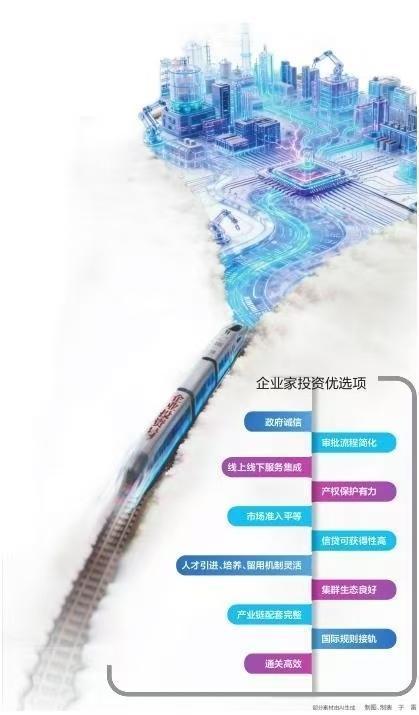
Core Viewpoint - Investment examination teams are increasingly active in various regions, with over 60 companies participating in investment tours in Liaoning, reflecting a shift in entrepreneurs' investment criteria from seeking government incentives to valuing ecosystem building and fairness [3][4] Group 1: Investment Trends - Investment examination teams from the Yangtze River Delta and Guangdong-Hong Kong-Macao Greater Bay Area are exploring opportunities in provinces like Shaanxi, Zhejiang, and Jiangsu [3] - The 2025 Regional Equity Investment Vitality Index indicates that Guangdong, Jiangsu, Zhejiang, Shanghai, and Beijing remain the top regions for investment due to their favorable policy environments and efficient service systems [3][4] Group 2: Ecosystem and Fairness - Companies are now prioritizing whether governments build ecosystems and ensure fairness over merely providing incentives [4] - Guangdong's approach to optimizing the business environment focuses on marketization, rule of law, and internationalization, which has made it a preferred destination for foreign investment [4] Group 3: Collaborative Efficiency - The focus of investment decisions is shifting from traditional industrial foundations to the importance of efficient collaboration within industrial ecosystems [6][8] - Localized supply chains significantly reduce operational costs, as seen in the furniture industry in Foshan, where over 80% of supply chain procurement is completed locally [7] Group 4: Market Potential and Resource Endowment - Large market spaces and unique resource endowments are becoming key advantages for attracting investment, with companies increasingly considering long-term market potential and resource integration capabilities [9][10] - Liaoning's rich land and marine resources, along with its port advantages, are attracting investments in renewable energy and pharmaceuticals [10][11] Group 5: Regional Competitive Advantages - Regions like Jiangsu and Zhejiang are leveraging their unique strengths, such as high-efficiency industrial clusters and vibrant digital economies, to attract investments [11] - Companies are encouraged to identify and capitalize on their local resources and market opportunities to transform their advantages into investment appeal and growth momentum [11]
“十五五”开好局起好步丨从“便捷服务”到“增值服务” 优化营商环境成为开年“重头戏”
Yang Shi Xin Wen· 2026-01-16 09:04
Group 1 - The core focus of the news is the optimization of the business environment in regions like Fujian and Shanghai, which has become a key task for the new year [1] - Fujian's manufacturing sector, particularly in the electric vehicle parts industry, is experiencing growth due to expedited administrative approvals and financial support, such as a 10 million yuan loan that significantly increased production capacity [2][4] - Local authorities in Fujian are addressing challenges like labor shortages and technological upgrades by creating offline centers and online platforms to provide diversified value-added services to businesses [2][3] Group 2 - The establishment of a dual-loop service and supervision mechanism in Fujian aims to ensure efficient implementation of enterprise demands, with a focus on accountability and weekly follow-ups on specific requests [4] - Fujian's broader goals for optimizing the business environment include removing market entry barriers, addressing overdue payments to businesses, and protecting the legal rights of business entities [5] - In Shanghai, the focus is on enhancing the business environment through the "Action Plan for Accelerating the Creation of a World-Class Business Environment," which emphasizes the development of an industrial ecosystem [7][8] Group 3 - The "Meichuang Jingjie" beauty and health ecosystem community in Shanghai is fostering collaboration among startups and industry experts, significantly reducing costs for businesses and contributing to a 100% growth for some companies [7][8] - Shanghai's latest action plan includes specific measures to address enterprise needs related to space, financing, and human resources, aiming to create a more adaptable and innovation-friendly industrial ecosystem [8]
亲商者 商亲之 | 麓山快评
Sou Hu Cai Jing· 2026-01-15 23:42
Group 1 - The core viewpoint of the articles emphasizes that Changsha's investment attraction has shifted from a reliance on subsidies to a focus on ecosystem, service, and environment [1][2] - The previous model of investment attraction, which relied heavily on land, tax, and subsidies, is deemed fragile and ineffective for long-term relationships between businesses and local governments [1] - Changsha's new approach involves a systematic rethinking of investment logic, focusing on both strengthening existing industries and targeting future sectors like artificial intelligence [1] Group 2 - A clear, fair, and efficient business environment is essential for long-term investment and planning, proving to be more attractive than short-term subsidies [2] - A well-developed industrial chain, an active innovation atmosphere, and abundant talent resources create a "rainforest ecosystem" that supports business growth and attracts significant projects [2] - The commitment of city decision-makers to long-term vision and continuous improvement in institutional frameworks and public services fosters a nurturing environment for businesses [2]