人工智能热潮

Search documents
摩根士丹利预警美股:若美联储降息不及预期,回调或不可避免
Di Yi Cai Jing· 2025-09-22 23:03
Group 1 - The core viewpoint is that the market may face risks due to liquidity pressures amidst rising expectations for monetary easing [1][2] - Morgan Stanley suggests that if the Federal Reserve's actions do not meet investor expectations, the market could experience volatility [2] - The S&P 500 index has rebounded over 30% since early April, driven by reduced uncertainty regarding White House policies and optimism surrounding artificial intelligence [2] Group 2 - The Federal Reserve has announced a restart of interest rate cuts, with the market pricing in a potential 50 basis point cut this year, and the federal funds rate expected to drop to around 3% by the end of next year [2] - Morgan Stanley's report indicates that the current U.S. economy may not require significant rate cuts, as the labor market has not deteriorated to a level necessitating strong stimulus [2] - The report highlights that the dual mandate of the Federal Reserve has not reached a point that would typically warrant substantial easing, as inflation remains stubbornly above the 2% target [2][3] Group 3 - The deterioration of the liquidity environment may exacerbate market risks, with the Federal Reserve continuing its quantitative tightening (QT) while the U.S. Treasury is issuing bonds at a large scale [3] - Morgan Stanley anticipates that signs of liquidity pressure will first manifest in the widening spread between the Secured Overnight Financing Rate (SOFR) and the federal funds rate [3] - The Bank of America Merrill Lynch MOVE index, currently at 72.5, is close to a four-year low, and a significant rise in this index could indicate increasing tension in the Treasury market [3]

Wall Street ‘Nirvana’ Nears as Fed Fuels 2021-Style Risk Rally
Yahoo Finance· 2025-09-19 20:15
Core Viewpoint - The Federal Reserve's recent interest rate cuts have ignited a significant rally in various asset classes, leading to a broad surge in global equities and a tightening of credit spreads, reminiscent of past market frenzies [1][2]. Group 1: Market Performance - Global equities have reached record highs, with the S&P 500 increasing by 13% year-to-date and experiencing three consecutive weeks of gains [5]. - Unprofitable tech stocks surged by 9% within five days, while high-yield bonds are on their longest rally ever [5]. - Stocks, bonds, and commodities are rising together for the second month, a phenomenon not seen since the 2021 stay-at-home investing trend [6]. Group 2: Economic Context - The current market optimism is driven by a resilient consumer base, advancements in artificial intelligence, and a reduction in tariff threats from the government [3]. - The Federal Reserve's rate cuts are designed to stimulate spending and investment by lowering borrowing costs, which in turn boosts asset prices and valuations [4]. - The prevailing narrative suggests that while economic growth is slowing, it is not collapsing, and inflation is easing, allowing for a more risk-on investment environment [6]. Group 3: Market Sentiment - Wall Street's confidence in the current rally is characterized by a belief that excessive optimism is justified, at least for the time being [7]. - The market is currently priced for perfection despite underlying economic imperfections, with investors willing to take bold bets based on the favorable conditions created by the Fed [4].
91万就业岗位蒸发 美联储下周豪赌50基点降息
Sou Hu Cai Jing· 2025-09-13 16:17
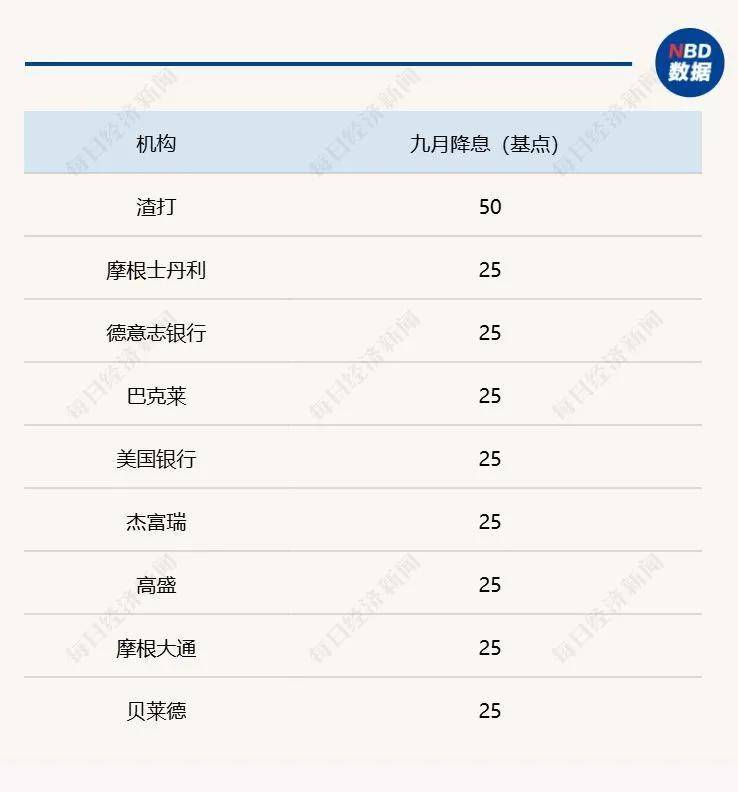
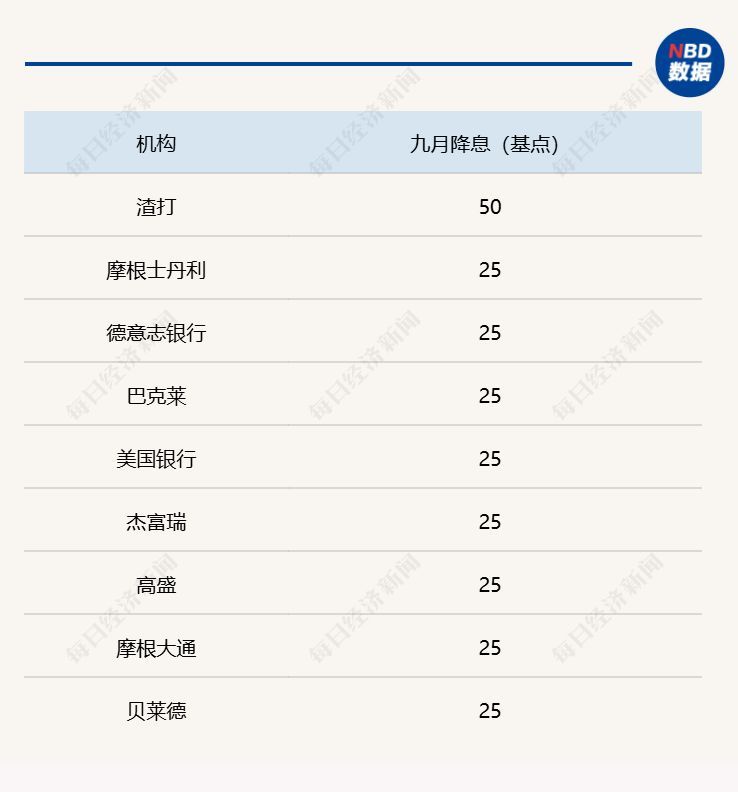
Core Viewpoint - The Federal Reserve is expected to lower interest rates next week, with debates intensifying over whether the cut will be 25 or 50 basis points, influenced by economic data and political pressures surrounding Chairman Powell [1][3][21]. Economic Data - Recent economic indicators, including a surprising drop in the Producer Price Index (PPI) and a significant downward revision of non-farm employment data, suggest a weakening labor market, paving the way for a potential rate cut [2][5]. - The unemployment rate has risen to 4.3%, the highest in nearly four years, indicating a deteriorating job market [2]. Predictions on Rate Cuts - Various financial institutions have adjusted their predictions for the Fed's rate cut, with Standard Chartered now forecasting a 50 basis point cut, citing a rapid shift in the labor market from robust to weak [5][6]. - In contrast, firms like Morgan Stanley and Deutsche Bank believe that the August employment report does not justify a 50 basis point cut in a single meeting, although they acknowledge the possibility of consecutive cuts [5][6]. Political Influences - Chairman Powell's recent shift towards a more dovish stance has raised concerns about the influence of political pressures, particularly from the Trump administration, which has been vocal about the need for significant rate cuts [10][11]. - Analysts suggest that a 50 basis point cut could be seen as a political statement of loyalty to Trump, rather than purely an economic decision [10][11]. Historical Context - Historical data indicates that every time the Fed has initiated a rate cut cycle with a 50 basis point reduction since 1987, it has been followed by an economic recession [12][13]. - The potential for a 50 basis point cut raises alarms among market participants, who fear it may signal severe economic distress [13][20]. Market Reactions - The market is currently pricing in a 90% probability of a 25 basis point cut and a 10% chance for a 50 basis point cut, reflecting uncertainty and divided opinions among investors [7]. - The upcoming Fed meeting is anticipated to have significant implications for global financial markets, influencing stock, bond, currency, and commodity markets [21].

91万就业岗位“蒸发”,美联储下周“豪赌”50基点降息?
Mei Ri Jing Ji Xin Wen· 2025-09-13 06:47
Core Viewpoint - The Federal Reserve is expected to lower interest rates next week, with debates intensifying over whether the reduction will be 25 or 50 basis points, influenced by economic data and political pressures [1][3][21] Economic Data - Recent economic indicators show a weakening labor market, with the unemployment rate rising to 4.3%, the highest in nearly four years, and a significant downward revision of 919,000 in projected non-farm payrolls for 2024-2025 [2][3] - The Producer Price Index (PPI) unexpectedly turned negative in August, marking the first decline in four months [2] Predictions on Rate Cuts - Standard Chartered has revised its forecast from a 25 basis point cut to a 50 basis point cut, citing a rapid shift in the labor market from robust to weak [5] - Various institutions have differing predictions, with some, like Morgan Stanley and Deutsche Bank, suggesting that the August employment report does not warrant a 50 basis point cut, while acknowledging the possibility of consecutive cuts [5][6] Political Influences - Federal Reserve Chairman Jerome Powell faces political pressure from the Trump administration, which has been vocal about the need for significant rate cuts [10][11] - Analysts suggest that a 50 basis point cut could be seen as a political statement of loyalty to Trump, rather than purely an economic decision [10] Historical Context - Historical data indicates that every time the Federal Reserve has initiated a rate cut cycle with a 50 basis point reduction since 1987, it has been followed by an economic recession [12] - The potential for a 50 basis point cut raises concerns about signaling a severe economic downturn, which could lead to market panic [12][13] Market Reactions - The market is currently pricing in a 90% probability of a 25 basis point cut and a 10% probability of a 50 basis point cut [7] - The upcoming Federal Reserve meeting is anticipated to have significant implications for global financial markets, affecting stocks, bonds, currencies, and commodities [21]
美国还是没能撑住,国际金价突破3500,人民币升值,美元深夜跳水
Sou Hu Cai Jing· 2025-08-30 14:55
Group 1: Gold Market Dynamics - International gold prices surged past $3,500, reaching a historical high, with COMEX gold hitting $3,516.10 per ounce, marking a 2.86% increase for the week [1][3][22] - The rise in gold prices has positively impacted the physical gold market, with domestic gold jewelry prices exceeding 1,000 yuan per gram, and gold stocks in Hong Kong showing significant gains [3][22] - The bullish sentiment in the gold market is closely linked to the Federal Reserve's monetary policy, with expectations of a 25 basis point rate cut in September, further driving gold demand [3][5] Group 2: Currency and Economic Factors - The offshore RMB exchange rate surged over 300 points, reaching a high of 7.1182, the strongest in nearly nine months, influenced by the Fed's dovish signals [1][9] - The weakening of the US dollar index, which fell below 98, reflects the market's anticipation of a shift in the Fed's policy and concerns over structural issues in the US economy [12][11] - China's economic stability, characterized by strong export performance and a rising stock market, has bolstered the RMB's attractiveness, leading to increased capital inflows into Chinese assets [9][18] Group 3: Market Reallocation and Investment Trends - The decline in the US dollar has prompted a reallocation of global capital from low-yield dollar assets to higher-yield RMB assets, enhancing liquidity in the A-share market [16][18] - Concerns over the sustainability of US fiscal deficits and rising debt levels have led investors to seek refuge in gold and other safe-haven assets [12][20] - The ongoing transition from a dollar-dominated international order to a more multipolar financial landscape is expected to drive further demand for gold as central banks diversify their reserves [18][20]
台积电(TSM.US)ADR较台股溢价创16年来新高!分析师警示或预示美股过热
Zhi Tong Cai Jing· 2025-08-01 03:24
Core Viewpoint - The price gap between TSMC's American Depositary Receipts (ADR) and its shares listed in Taipei has surged to the highest level in over 16 years, raising concerns about a potential overheating in the AI market [1][2] Group 1: Price Discrepancy - TSMC's ADR in July had a premium of 24% compared to its local shares, up from 17% in April and significantly higher than the 10-year average of 7.4% [1] - The current price difference is the largest since April 2009, indicating a significant divergence in market perception between the U.S. and Taiwan [1] Group 2: Market Dynamics - The increase in ADR premium is attributed to heightened investor interest in TSMC's role in the global AI supply chain, leading to increased demand for its ADRs in the U.S. market [1] - The supply of ADRs is relatively fixed, with limited room for new issuances and more challenging conversion processes, which has contributed to the widening premium [1] Group 3: Investment Trends - Since the release of ChatGPT in 2022, TSMC's ADR has risen over 190%, while its Taipei-listed shares have increased by less than 140% [2] - Foreign ownership of TSMC's local shares has risen to nearly 74%, still below the historical high of 80% recorded in 2017 [2] Group 4: Cautionary Signals - Market observers, including Owen Lamont from Acadian Asset Management, suggest that the expanding price gap may signal caution, as excessive premiums for popular tech companies' ADRs relative to local stocks often indicate market bubbles [2]

中东紧张局势打击风向偏好 新兴市场货币与股票齐跌
智通财经网· 2025-06-17 23:31
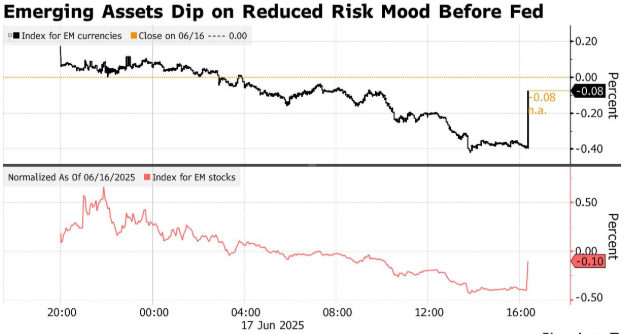
Group 1 - Emerging market currencies and stocks have declined due to escalating tensions in the Middle East and the upcoming Federal Reserve interest rate decision, with indices dropping over 0.4% before narrowing to a 0.1% decline at close [1] - The South African rand, Hungarian forint, and South Korean won were among the worst performers, each depreciating over 1% against the US dollar, while the Israeli shekel dropped as much as 0.8% before recovering [1] - The market is under pressure from risk aversion due to geopolitical tensions and uncertainty surrounding the Federal Reserve's decisions [1][3] Group 2 - Despite recent declines, fund managers believe that the strong performance of emerging markets relative to US assets will continue, as the risks from the conflict are not expected to be deep or prolonged [4] - Emerging markets are expected to outperform other markets in macroeconomic growth this year and next, with international investors recognizing the need to diversify their investments [7]
关税大棒失灵?美国铝业复兴梦碎 致命弱点浮出水面
智通财经网· 2025-05-09 08:00
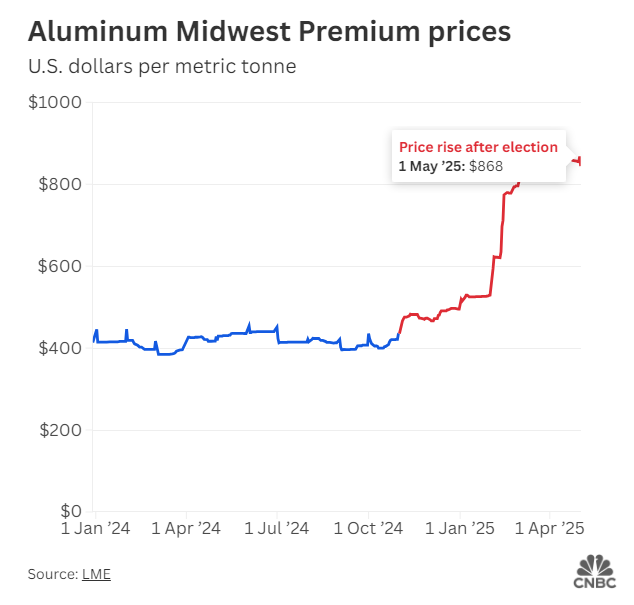
Core Viewpoint - The tariffs imposed by the Trump administration on imported aluminum have failed to revive domestic aluminum production, leading to increased costs for American consumers and closures of local smelters instead of restarts [1][6]. Group 1: Impact of Tariffs - The 25% aluminum tariff has significantly affected the physical market, with regional delivery premiums reflecting the tariff costs, despite the London Metal Exchange providing benchmark aluminum prices [1]. - European aluminum premiums have decreased by over 30% year-on-year, highlighting the price disparity caused by U.S. trade policies [5]. - The CFO of Norsk Hydro indicated that the costs from tariffs will ultimately be passed on to downstream users, likely resulting in higher prices for American consumers [5]. Group 2: Energy Costs and Production Challenges - High energy costs, particularly electricity prices in the U.S., are a major barrier to the revival of the energy-intensive primary aluminum smelting industry [6]. - The cost of electricity for aluminum production in the U.S. is approximately $550 per ton, significantly higher than Canada’s $290 per ton, which hampers competitiveness [6]. - Recent industry developments include the permanent closure of Alcoa's Intalco smelter due to a lack of competitive power supply, and Century Aluminum temporarily idling its smelter in Kentucky due to soaring energy costs [9]. Group 3: Market Dynamics and Price Effects - The tariffs have led to a restructuring of trade flows, with Canadian producers shifting to European markets in response to U.S. tariffs, which has allowed European metals to fill the gap in U.S. demand [10]. - The increase in Midwest aluminum premiums due to tariffs has also raised scrap aluminum prices, indirectly passing costs onto downstream customers [10]. - The construction sector, which is experiencing weak demand, is particularly affected, as the rising costs are reflected in the performance guidance of companies like Hydro, indicating a soft spot in their extrusion products segment [10].