价格震荡

Search documents
广发期货《有色》日报-20251212
Guang Fa Qi Huo· 2025-12-12 05:16
Report Industry Investment Ratings No relevant information provided. Core Views of the Reports Industrial Silicon - Industrial silicon spot prices are stable, and futures prices are oscillating. It is expected to maintain a weak supply - demand situation in December, with prices fluctuating in the range of 8000 - 9000 yuan/ton, and attention should be paid to the support at 8000 yuan/ton and coal price changes [1]. Polysilicon - Spot prices are stable, and the main contract has risen. Although new delivery brands are beneficial for increasing deliverable volume and warehouse receipts, considering weak demand and a large decline in production, polysilicon futures may still oscillate at a high level, and the spot is still under pressure [2]. Aluminum Alloy - The casting aluminum alloy market is oscillating strongly in the game between strong cost support and weak demand. It is expected to maintain a narrow - range high - level oscillation in the short term, with the main contract reference range of 20700 - 21400 yuan/ton [3]. Aluminum - Alumina is expected to maintain a bottom - oscillation, with the main contract reference range moving down to 2400 - 2700 yuan/ton. Aluminum is expected to run strongly in the short term, with the main contract of Shanghai Aluminum oscillating in the range of 21700 - 22400 yuan/ton [4]. Tin - Market sentiment is positive, and the fundamentals are strong. It is expected that tin prices will maintain a strong trend throughout the year, and a bullish view on tin prices is maintained [6]. Zinc - With the decline of TC, the supply pressure is relieved, and the short - term price has limited downward space. The export of refined zinc drives the spot to tighten, boosting domestic zinc prices. The short - term Shanghai zinc price trend may be stronger than that of London zinc, and the main contract should focus on the support at 23000 - 23200 [8]. Copper - In the short term, the imbalance of global copper supply and inventory drives copper prices to rise rapidly, and price fluctuations may intensify. In the long term, the supply - demand contradiction of copper still exists, supporting the gradual upward movement of the bottom center of copper prices [10]. Nickel - Macro factors are temporarily stable. After the valuation repair of nickel prices, the price driving force weakens. In the medium term, the loose fundamentals restrict the upward space of prices. It is expected to oscillate in a range in the short term, with the main contract reference range of 116000 - 120000 [13]. Stainless Steel - Macro factors are temporarily stable, the supply pressure eases slightly, but the demand in the off - season is weak, and inventory reduction is not smooth. It is expected to oscillate and adjust in the short term, with the main contract operating range of 12400 - 12800 [15]. Lithium Carbonate - The lithium carbonate market is running strongly. Although the fundamentals have not changed much, the market is affected by news of slower - than - expected upstream resumption of production. In the short term, it may maintain a strong oscillation under the drive of capital sentiment [18]. Summaries According to Relevant Catalogs Price and Basis - **Industrial Silicon**: On December 11, the prices of East China oxygen - passing S15530 industrial silicon, East China SI4210 industrial silicon, and Xinjiang 99 silicon remained unchanged compared with the previous day, while the basis of each variety declined [1]. - **Polysilicon**: The average prices of N - type re - feeding materials, N - type granular silicon, and N - type silicon wafers - 210mm remained unchanged on December 11, while the average price of N - type silicon wafers - 210R increased by 4.24% [2]. - **Aluminum Alloy**: On December 12, the prices of SMM aluminum alloy ADC12 in various regions increased by 0.46% - 0.47% compared with the previous day, and the price difference between refined and scrap aluminum in various regions also showed an upward trend [3]. - **Aluminum**: On December 12, the price of SMM A00 aluminum increased by 0.55% compared with the previous day, and the average price of alumina in various regions showed a downward trend [4]. - **Tin**: On December 12, the price of SMM 1 tin increased by 1.04% compared with the previous day, and the SMM 1 tin premium decreased by 66.67% [6]. - **Zinc**: On December 12, the price of SMM 0 zinc ingot increased by 0.17% compared with the previous day, and the import profit and loss improved [8]. - **Copper**: On December 12, the prices of SMM 1 electrolytic copper, SMM Guangdong 1 electrolytic copper, and SMM wet - process copper increased by 1.05% - 1.22% compared with the previous day, and the import profit and loss worsened [10]. - **Nickel**: On December 12, the prices of SMM 1 electrolytic nickel, 1 Jinchuan nickel, and 1 imported nickel decreased by 0.21% - 0.26% compared with the previous day, and the import profit and loss of futures worsened [13]. - **Stainless Steel**: On December 12, the price of 304/2B (Wuxi Hongwang 2.0 coil) remained unchanged, and the price of 304/2B (Foshan Hongwang 2.0 coil) increased by 0.39% [15]. - **Lithium Carbonate**: On December 12, the average prices of SMM battery - grade lithium carbonate, SMM industrial - grade lithium carbonate, etc. increased to varying degrees compared with the previous day [18]. Month - to - Month Price Differences - **Industrial Silicon**: The price differences between 2512 - 2601, 2601 - 2602, etc. showed significant changes on December 11, with some increasing by more than 100% [1]. - **Polysilicon**: The price differences between the main contract, current - month - to - first - continuous, etc. changed on December 11, with the current - month - to - first - continuous increasing by 1166.67% [2]. - **Aluminum Alloy**: The price differences between 2601 - 2602, 2602 - 2603, etc. changed on December 12 [3]. - **Aluminum**: The price differences between AL 2512 - 2601, AL 2601 - 2602, etc. changed on December 12 [4]. - **Tin**: The price differences between 2512 - 2601, 2601 - 2602, etc. changed on December 12 [6]. - **Zinc**: The price differences between 2512 - 2601, 2601 - 2602, etc. changed on December 12 [8]. - **Copper**: The price differences between 2512 - 2601, 2601 - 2602, etc. changed on December 12 [10]. - **Nickel**: The price differences between 2601 - 2602, 2602 - 2603, etc. changed on December 12 [13]. - **Stainless Steel**: The price differences between 2601 - 2602, 2602 - 2603, etc. changed on December 12 [15]. - **Lithium Carbonate**: The price differences between 2601 - 2602, 2601 - 2603, etc. changed on December 12 [18]. Fundamental Data - **Industrial Silicon**: In November, the national industrial silicon output decreased by 11.17% month - on - month, and the outputs of Yunnan and Sichuan decreased significantly. The outputs of organic silicon DMC and regenerative aluminum alloy increased, while the outputs of polysilicon and the export volume of industrial silicon decreased [1]. - **Polysilicon**: In November, the polysilicon output decreased by 14.48% month - on - month, the import volume increased by 11.96%, and the export volume decreased by 27.99%. The silicon wafer output decreased by 10.35% [2]. - **Aluminum Alloy**: In November, the output of regenerative aluminum alloy ingots increased by 5.74% month - on - month, the output of primary aluminum alloy ingots increased by 5.84%, and the output of scrap aluminum increased by 11.45%. In October, the import volume of unforged aluminum alloy ingots decreased by 7.06%, and the export volume increased by 31.49% [3]. - **Aluminum**: In November, the alumina output decreased by 4.44% month - on - month, the domestic electrolytic aluminum output decreased by 2.82%, and the overseas electrolytic aluminum output decreased by 3.50%. In October, the electrolytic aluminum import volume increased by 0.61%, and the export volume decreased by 15.18% [4]. - **Tin**: In October, the tin ore import volume increased by 33.49%, the SMM refined tin output increased by 53.09%, the refined tin import volume decreased by 58.55%, and the export volume decreased by 15.33% [6]. - **Zinc**: In November, the refined zinc output decreased by 3.56% month - on - month. In October, the refined zinc import volume decreased by 16.94%, and the export volume increased by 243.79% [8]. - **Copper**: In November, the electrolytic copper output increased by 1.05% month - on - month. In October, the electrolytic copper import volume decreased by 15.61% [10]. - **Nickel**: In November, the Chinese refined nickel output decreased by 9.38% month - on - month, and the refined nickel import volume decreased by 65.66% [13]. - **Stainless Steel**: In November, the output of Chinese 300 - series stainless steel crude steel decreased by 0.72%, and the output of Indonesian 300 - series stainless steel crude steel increased by 0.36%. The stainless steel import volume increased by 3.18%, and the export volume decreased by 14.43% [15]. - **Lithium Carbonate**: In November, the lithium carbonate output increased by 3.35% month - on - month, the demand increased by 5.11%, the import volume increased by 21.86%, and the export volume increased by 63.05% [18]. Inventory Changes - **Industrial Silicon**: The weekly factory - warehouse inventories in Xinjiang, Yunnan, and Sichuan increased slightly, the weekly social inventory increased by 0.54%, the daily warehouse - receipt inventory increased by 11.40%, and the non - warehouse - receipt inventory decreased by 0.28% [1]. - **Polysilicon**: The polysilicon inventory increased by 0.69%, the silicon wafer inventory increased by 9.39%, and the polysilicon warehouse receipts increased by 7.58% [2]. - **Aluminum Alloy**: The weekly social inventory of regenerative aluminum alloy ingots decreased by 1.08%, the daily inventory in Foshan decreased by 0.28%, the daily inventory in Ningbo increased by 3.91%, and the daily inventory in Wuxi decreased by 28.57% [3]. - **Aluminum**: The Chinese electrolytic aluminum social inventory decreased by 2.01%, the Chinese aluminum rod social inventory decreased by 3.72%, the electrolytic aluminum plant's alumina inventory increased by 0.15%, the alumina plant's in - house inventory increased by 1.72%, the alumina port inventory increased by 2.36%, the LME inventory decreased by 0.39% [4]. - **Tin**: The SHEF weekly inventory increased by 7.96%, the social inventory increased by 2.39%, the SHEF daily warehouse - receipt inventory decreased by 1.78%, and the LME daily inventory increased by 1.09% [6]. - **Zinc**: The Chinese zinc ingot seven - region social inventory decreased by 8.62%, and the LME inventory increased by 0.92% [8]. - **Copper**: The domestic social inventory increased by 2.58%, the bonded - area inventory decreased by 2.58%, the SHFE inventory decreased by 9.22%, the LME inventory decreased by 0.42%, the COMEX inventory increased by 0.48%, and the SHFE warehouse receipts increased by 8.74% [10]. - **Nickel**: The SHFE inventory increased by 4.23%, the social inventory increased by 2.71%, the bonded - area inventory remained unchanged, the LME inventory decreased by 0.09%, and the SHFE warehouse receipts decreased by 0.86% [13]. - **Stainless Steel**: The 300 - series social inventory (Wuxi + Foshan) increased by 0.69%, the 300 - series cold - rolled social inventory (Wuxi + Foshan) increased by 0.08%, and the SHFE warehouse receipts decreased by 0.20% [15]. - **Lithium Carbonate**: In November, the total lithium carbonate inventory decreased by 23.36%, the downstream inventory decreased by 21.13%, and the smelter inventory decreased by 27.19% [18].
碳酸锂日评:偏弱震荡-20251204
Hong Yuan Qi Huo· 2025-12-04 01:37
| 碳酸锂日评20251204:偏弱震荡 | | | | | | | | | | | | | | | --- | --- | --- | --- | --- | --- | --- | --- | --- | --- | --- | --- | --- | --- | | 2025-12-02 | 较昨日变化 | 交易日期(日) | 2025-12-03 | 2025-11-26 | 近两周走势 | 近月合约 | 收盘价 | 92200.00 | 94960.00 | 94260.00 | -2,760.00 | 1 | | | 连一合约 | 收盘价 | -2.800.00 | 92060.00 | 94860.00 | 94500.00 | 收盘价 | 92200.00 | 95140.00 | -2,940.00 | 94660.00 | 连二合约 | | | | -2.940.00 | 连三合约 | 收盘价 | 92200.00 | 95140.00 | 94700.00 | -2,900.00 | 收盘价 | 93660.00 | 96560.00 | 96340.00 | | | | | 3 | 砖 ...
国投期货综合晨报-20251203
Guo Tou Qi Huo· 2025-12-03 05:44
Report Industry Investment Rating No relevant content provided. Core Viewpoints - The overall market shows a complex and diversified situation, with different commodities and sectors presenting various trends. Some commodities are facing supply - demand imbalances, while others are affected by factors such as geopolitical events, policy changes, and seasonal patterns. Market participants should pay close attention to these factors and adjust their investment strategies accordingly [2][3][4] Summary by Commodity Categories Energy - **Crude Oil**: API data shows an increase in US refined oil and crude oil inventories. The external market oil price fell more than 1% on Tuesday. Although there are some short - term positive news, the supply - demand surplus expansion determines that the oil price center has a downward pressure [2] - **Fuel Oil & Low - Sulfur Fuel Oil**: High - sulfur fuel oil's short - term supply pressure is relieved, but the supply is still expected to be loose in the medium term. Low - sulfur fuel oil's short - term supply pressure is also alleviated, and attention should be paid to whether the end - of - year shipping peak season and winter power generation demand can improve its supply - demand structure [19] - **Asphalt**: The domestic asphalt market shows a regional differentiated price trend. The demand in Northeast and North China is gradually stagnant, while the South China market is weak. The weekly shipment volume is at a low level in the past four years, and it is expected that BU will continue to be weak [20] Metals - **Precious Metals**: Overnight, precious metals fluctuated. Silver's upward trend slowed after hitting a new high, and gold also showed fluctuations. Platinum has a supply gap this year, and palladium is in a tight - balance supply - demand situation. Platinum is stronger than palladium in performance [3] - **Base Metals** - **Copper**: Overnight, LME copper fluctuated and closed down, while Shanghai copper showed some resilience in the previous trading - intensive area. It is recommended to hold long positions based on the MA5 moving average [4] - **Aluminum**: Overnight, Shanghai aluminum fluctuated at a high level. The social inventory of aluminum ingots in major regions increased slightly, and the spot discount slightly expanded. The aluminum market's fundamental contradictions are limited, and it is testing the previous high of 22,000 yuan [5] - **Zinc**: The domestic supply and demand of zinc both decreased, while the overseas zinc ingot spot is tight. The LME zinc is running at a high level, and the export window is open, driving the domestic market up. The bottom support of zinc is strong, and it is expected to fluctuate in the range of 22,200 - 23,000 yuan/ton [7] - **Lead**: The LME lead inventory is at a high level, and the import window is open, transferring the overseas surplus pressure to the domestic market. The domestic refined - scrap lead price difference is 25 yuan/ton, and the social inventory is at a low level. It is expected to fluctuate in the range of 17,000 - 17,500 yuan/ton [8] - **Tin**: Overnight, LME tin closed down, and Shanghai tin fluctuated with a positive line above 300,000 yuan. It is not recommended to chase the high, and a medium - to - long - term short - allocation with a hedging strategy is suggested [9] - **Industrial Silicon**: The industrial silicon market is driven down by the decline in polysilicon prices. The supply and demand are both weak, and the price is expected to continue to fluctuate. Attention should be paid to the DMC price trend [10] - **Iron & Steel Related** - **Iron Ore**: The global iron ore shipment is strong, and the domestic arrival volume is high. The port inventory is accumulating. The demand for iron ore may further decline. The market has expectations for policy benefits, and the iron ore price is expected to fluctuate [13] - **Coke**: The coke price oscillated strongly during the day. The market has expectations for downstream replenishment. The coking profit is average, and the inventory has a slight increase. The price is expected to maintain a rebound in the short term [14] - **Coking Coal**: The coking coal price oscillated strongly during the day. The market expects downstream replenishment. The production of coking coal mines increased slightly, and the total inventory decreased slightly. The price is expected to oscillate strongly in the short term [15] - **Manganese Silicon**: The price oscillated during the day. The spot price of manganese ore increased. The iron - water production is at a high level, and the silicon - manganese inventory is slowly increasing. Attention should be paid to the follow - up impact of the reduction in Ghana's shipment [16] - **Silicon Iron**: The price oscillated during the day. The market expects coal supply guarantee, which may lead to a decline in power cost and blue - carbon price. The iron - water production is at a high level, and the export demand has decreased. The supply of silicon iron has decreased, and the inventory has decreased slightly [17] Chemicals - **Polypropylene, Plastic & Propylene**: Propylene's price slightly increased. The supply of polyethylene has limited changes, and the downstream demand is weak. The supply of polypropylene is expected to slightly increase, and the short - term demand is also weak [25] - **PVC & Caustic Soda**: PVC oscillates. The export situation may improve, and the supply pressure may be relieved. It is expected to operate in a low - level range. Caustic soda oscillates weakly. The supply is high, and the downstream demand is insufficient [26] - **PX & PTA**: The price of PX and PTA is driven down by the oil price. PTA continues to cut production, and the demand for PX is weak in the short term. PX is expected to be strong in the medium term, and PTA's processing margin is expected to be repaired [27] - **Ethylene Glycol**: The weekly output of ethylene glycol decreased. The supply has improved marginally, and the price is expected to oscillate. However, it is expected to accumulate inventory around the Spring Festival [28] - **Short - Fiber & Bottle - Chip**: Short - fiber has no new investment pressure, and its price fluctuates with raw materials. Bottle - chip's demand is weak, and the over - capacity is a long - term pressure [29] Agricultural Products - **Soybean & Soybean Meal**: The South American soybean planting progress is different. The domestic soybean supply is sufficient, and the soybean meal inventory has returned to a high level. The 05 contract has reached the upper edge of the oscillation platform, and attention should be paid to the US soybean export and South American weather [33] - **Soybean Oil & Palm Oil**: Palm oil's near - month contract is reducing positions and shifting positions. The supply of Malaysian palm oil decreased slightly in November, and the Indonesian export policy is favorable. The overall view of soybean and palm oil is range - bound [34] - **Rapeseed & Rapeseed Oil**: The relationship between China and Canada has not improved, and rapeseed is oscillating at the bottom. Rapeseed meal's demand is weak, and rapeseed oil is mainly destocking. The rapeseed series is expected to oscillate in a range [35] - **Soybean No. 1**: Domestic soybeans are oscillating strongly. The supply of high - protein soybeans is tight. The US soybean is affected by South American weather and export factors, and is expected to oscillate strongly [36] - **Corn**: The spot market drives the corn futures to oscillate at a high level. The new grain supply is lower than expected, and there is a supply - demand mismatch. Attention should be paid to the new grain sales progress in the Northeast and the auction of overdue wheat [37] - **Pork**: The pork futures fluctuate narrowly, and the spot price is slightly down. The southern curing will start soon, but there is also pressure from the second - fattening pigs. The pig price may form a second bottom in the first half of next year [38] - **Eggs**: The egg futures rose sharply and then fell. The far - month contract should not be chased up, and the near - month contract may oscillate weakly [39] - **Cotton**: The US cotton slightly decreased. The domestic cotton supply pressure is not large, and the new cotton sales progress is fast. The pure - cotton yarn price is stable, and the new orders are insufficient. The industry can pay attention to hedging opportunities [40] - **Sugar**: The US sugar oscillates. The production in India and Thailand is expected to be good. The domestic market focuses on the new - season sugar production estimate, and the production in Guangxi is expected to be good [41] - **Apple**: The apple futures oscillate at a high level. The spot price is strong, and the inventory is lower than last year. In the long - term, there may be inventory pressure in the far - month contract [42] - **Wood**: The wood futures oscillate. The supply is not expected to increase significantly in the short term, the demand is in the off - season, and the low inventory supports the price [43] - **Pulp**: The pulp futures rose sharply yesterday. The domestic port inventory is still high, and the demand is weak. The price is expected to oscillate in a range [44] Financial Products - **Stock Index**: The A - share market fell with reduced volume yesterday. The stock index futures all closed down. The external market is mixed. The short - term macro - liquidity factor has uncertainties, and a wait - and - see and defensive strategy is recommended [45] - **Treasury Bonds**: The treasury bond futures oscillate. The six major banks have stopped selling 5 - year large - value deposits. The bond market sentiment is cautious, and the long - term interest rate lacks the basis for a large - scale increase [46]
纸浆大幅拉升,或因利空前期充分交易
Zhong Xin Qi Huo· 2025-12-03 00:37
投资咨询业务资格:证监许可【2012】669号 中信期货研究|农业策略⽇报 2025-12-3 纸浆大幅拉升,或因利空前期充分交易 油脂:近日棕油和豆油相对偏强 蛋白粕:内外盘期价震荡,豆菜粕价差或扩大 玉米/淀粉:东北华北价格分化,期货维持震荡 生猪:供应充裕,价格趋弱 天然橡胶:维持小幅震荡 合成橡胶:原料出口消息点燃市场激情,基本面变化不大 棉花:棉价持续反弹,套保压力限制上方空间 白糖:糖价震荡徘徊,供应压力边际增大 纸浆:期货大幅拉升,或因利空前期充分交易 双胶纸:原料端反弹,双胶纸向上修复 原木:原木反弹修复估值 风险因素:宏观大幅变动;气候异常;供需超预期变化 农业团队 研究员: 刘高超 从业资格号:F3011329 投资咨询号:Z0012689 王聪颖 从业资格号:F0254714 投资咨询号:Z0002180 吴静雯 从业资格号:F3083970 投资咨询号:Z0016293 李艺华 从业资格号: F03086449 投资咨询号: Z0019380 程也 从业资格号: F03087739 投资咨询号: Z0019480 周重廷 从业资格号:F03093821 投资咨询号:Z0020578 刘 ...
现实预期博弈,盘?上涨乏
Zhong Xin Qi Huo· 2025-12-03 00:36
Report Industry Investment Rating - The mid - term outlook for the black building materials industry is "oscillating" [8] Core View of the Report - The macro - environment is warm with the upcoming Central Economic Work Conference in December and overseas interest - rate cut expectations, but the steel inventory is still high year - on - year, and demand faces weakening pressure, so the steel futures market has limited upward momentum. Iron ore is supported by winter storage expectations, coal - coke spot prices are weak due to demand pressure, and the supply - demand surplus of glass and soda ash suppresses the futures prices [3][4]. Summary by Relevant Catalogs 1. Iron Element - Iron water production is decreasing, steel mill profitability is compressing, and there are still blast furnace maintenance plans. The short - term ore price is expected to oscillate as the upward support is insufficient after the previous price rebound. Scrap steel arrivals are low, and its price is expected to oscillate as the cost - performance improves after the price drop [4]. 2. Carbon Element - Coke supply has slightly increased, and steel mill开工 is seasonally declining. There are 1 - 2 rounds of supplementary price - cut expectations for coke, but the possibility of multiple consecutive rounds of cuts is low. The coke futures market is expected to follow coking coal. Coking coal fundamentals have slightly deteriorated, but the low valuation and winter storage expectations support the price. The near - month contract may oscillate, and the far - month contract is expected to be slightly stronger [5]. 3. Alloy - For manganese - silicon, the cost is relatively high, but the supply - demand is loose, and the price is expected to run at a low level. For ferrosilicon, the cost supports the price bottom, but the supply - demand is weak, and the price is also expected to run at a low level [5]. 4. Glass and Soda Ash - For glass, if there is no more cold - repair by the end of the year, the high inventory will suppress the price, and it is expected to oscillate weakly; otherwise, the price will rise. For soda ash, the price is close to the cost with obvious bottom support, and it is expected to oscillate in the short term and decline in the long term [5][8]. 5. Specific Product Analysis Steel - The spot market trading is average, steel mill profitability is decreasing, and demand is weakening. Although the macro - environment is warm, the upward space is limited due to the poor fundamentals [9]. Iron Ore - The port trading volume has increased, and the price is expected to oscillate as the upward support is insufficient and the winter storage demand has not been released [10]. Scrap Steel - The arrivals are low, and the price is expected to oscillate as the cost - performance has improved and the demand from long - and short - process steel enterprises is supported [11]. Coke - The supply has slightly increased, and the market is slightly loose. There are 1 - 2 rounds of supplementary price - cut expectations, and the futures market is expected to follow coking coal [13]. Coking Coal - The spot price has a bottom support. The near - month contract may oscillate, and the far - month contract is expected to be slightly stronger [14]. Glass - If there is no more cold - repair by the end of the year, the price is expected to oscillate weakly; otherwise, it will rise [15]. Soda Ash - The price is close to the cost with obvious bottom support, and it is expected to oscillate in the short term and decline in the long term [17]. Manganese - Silicon - The cost is relatively high, but the supply - demand is loose, and the price is expected to run at a low level [18]. Ferrosilicon - The cost supports the price bottom, but the supply - demand is weak, and the price is expected to run at a low level [20].
下周铸造铝合金现货价格或窄幅震荡为主
Xin Lang Cai Jing· 2025-11-30 05:22
来源:市场资讯 (来源:富宝有色) 核心提示:本周废铝价格稳中上涨,幅度0-100元/吨不等,合金白料、喷涂、铝线价格表现略好于生 铝、铝屑等铸造铝合金原料;预计下周废铝偏稳运行,涨跌空间有限;铝企下游订单不温不火,成品售 价处于贴水状态、利润不足,一定程度上限制废铝原料价格反弹。但华东、西南等多地废铝市场供应偏 紧亦支持其抗跌属性较强,综合来看,预计下期废铝或延续偏稳运行。 一、国内再生铝合金市场分析 1、再生铝合金市场情况 期内A00铝锭重心继续下移,整体表现先涨后跌;截止11月27日,富宝现货A00铝价格在21440-21480 元/吨,均价21460元/吨,环比11月20日跌110元/吨;富宝现货ADC12铝合金锭价格20800元/吨,环比11 月20日平稳;目前华东地区非交割品ADC12铝合金锭主流价格在20600-20800元/吨之间,华南ADC12主 流价格20900-21000元/吨,西南地区ADC12铝合金锭主流价格在20800-21100元/吨,环保11月20日平 稳。交割品价格多高100-200元/吨不等。 期内铸造铝合金期货先抑后扬,主力合约盘中一度跌至2.02万附近,随后陆续抬升,扳 ...


黑色金属数据日报-20251128
Guo Mao Qi Huo· 2025-11-28 03:21
Report Summary 1. Report Industry Investment Rating No information provided. 2. Core Views - The steel market is expected to fluctuate within a narrow range. Prices are supported at the 3000 low but the upside is limited due to weak demand. Steel production is likely to decline gradually as the industry awaits the implementation of the production cut logic [2]. - The prices of silicon - iron and manganese - silicon are oscillating with insufficient driving forces. With steel prices under pressure, demand for these alloys is weakening, and the supply - demand surplus will continue to weigh on prices [3][5]. - For coking coal and coke, the current decline may be nearing its end from a valuation perspective. However, the market may need to wait for a while from a driving force perspective, and the next round of downstream restocking may start around mid - December [6]. - The fundamentals of iron ore remain weak with clear upward pressure. Inventory is expected to continue to accumulate due to reduced steel production, and the operation strategy is to sell on rallies [7]. 3. Summary by Category Steel - On November 27, the closing prices of far - month contracts RB2605 and HC2605 were 3105.00 yuan/ton and 3281.00 yuan/ton respectively, with daily declines of 0.38% and 0.33%. The closing prices of near - month contracts RB2601 and HC2601 were 3093.00 yuan/ton and 3293.00 yuan/ton respectively, with daily declines of 0.13% and 0.27% [1]. - The price is in a narrow - range oscillation. There is an impulse to rebound, but the upside is limited due to weak demand. The industry contradiction is not prominent, and the price is likely to remain within the range. The production cut logic needs time to be realized [2]. - Investment strategy: Treat the single - side with an interval oscillation mindset; consider participating in spot - futures positive arbitrage for hot - rolled coils or use option strategies to assist spot sales [8]. Silicon - iron and Manganese - silicon - The prices are oscillating with insufficient driving forces. The macro - policy has expected benefits but is unconfirmed. The direct demand has weakened significantly, and the weekly apparent demand has dropped to the lowest point of the year. The supply - demand surplus persists, and prices will be under pressure [3][5]. - Investment strategy: Investment clients can short on rallies, and industrial clients can use put - writing options to protect their spot exposure [8]. Coking Coal and Coke - On November 27, the closing prices of far - month contracts J2605 and JM2605 were 1751.00 yuan/ton and 1165.00 yuan/ton respectively, with daily declines of 0.43% and 0.21%. The closing prices of near - month contracts J2601 and JM2601 were 1607.00 yuan/ton and 1071.00 yuan/ton respectively [1]. - The spot market sentiment is weakening, with coke having a price cut expectation and most coking coal spot auctions falling. From a valuation perspective, the decline is approaching the end, but the market may need to wait for a while. The next round of downstream restocking may start around mid - December [6]. - Investment strategy: Treat the single - side with a short - term mindset for now, wait and see for the medium - and long - term, and liquidate hedging short positions [8]. Iron Ore - The short - term arrival of iron ore has weakened slightly, but the subsequent shipment is not greatly affected. With the decline of molten iron and steel production, the inventory will continue to accumulate. Although the price has rebounded at the bottom of the range, it is difficult to break through the range due to inventory pressure [7]. - Investment strategy: Hold short positions [8].
基本面短期内无明显利好支撑 纯苯或走入震荡区间
Jin Tou Wang· 2025-11-24 06:10
Core Viewpoint - The main focus of the articles is the recent decline in pure benzene futures prices, with expectations of continued volatility in the market due to supply and demand dynamics [2][3]. Group 1: Market Performance - On November 24, pure benzene futures experienced a sharp decline, reaching a low of 5421.0 yuan, with the main contract closing at 5455.0 yuan, down 1.68% [1]. - The latest commercial inventory of pure benzene at Jiangsu ports is 147,000 tons, which is an increase of 34,000 tons from the previous period, representing a 30.09% rise; compared to the same period last year, it is up by 29,300 tons, or 24.89% [2]. Group 2: Supply and Demand Analysis - Supply side: The operating rate of petroleum benzene is currently at 76.67%, down 1.31% from the previous week, with new maintenance schedules for some facilities [3]. - Demand side: The downstream weighted operating rate is at 73.52%, showing a slight increase, but overall terminal demand remains weak, limiting support for pure benzene prices [3]. - The overall demand for pure benzene is declining due to reduced needs from downstream products such as styrene, caprolactam, aniline, and adipic acid, while phenol demand remains stable [2]. Group 3: Price Outlook - The market sentiment is influenced by external factors, with the benzene price spread remaining stable at $104/ton compared to the previous week [3]. - The expectation of a gradual improvement in supply and demand for pure benzene is noted, particularly as the U.S. market's supply gap will rely on imports, potentially affecting China's import share [3]. - However, the recent decline in gasoline crack spreads poses a risk to cost support, leading to expectations that pure benzene prices may enter a range-bound trading phase [3].
黑色建材日报:库存压力犹存,钢价震荡偏弱-20251120
Hua Tai Qi Huo· 2025-11-20 02:41
Report Industry Investment Ratings - Steel: Sideways [1] - Iron Ore: Sideways [2] - Coking Coal and Coke: Sideways [3][4] - Thermal Coal: Sideways with a Bullish Bias [5] Core Views - Steel has inventory pressure, and prices are expected to fluctuate weakly. Iron ore supply pressure remains, and prices will likely oscillate at high levels. Coking coal and coke prices are expected to fluctuate weakly due to early release of warehouse receipt pressure. Thermal coal prices are expected to fluctuate strongly in the short - term, influenced by the winter heating season and other factors [1][2][3][5] Summary by Related Catalogs Steel - **Market Analysis**: Futures prices fluctuated weakly, and spot transactions were generally dull, with low - price rigid demand as the main driver. National building materials transactions were 9.23 tons, a 4.14% decrease from the previous day. Building materials production and sales declined, inventory decreased, hot - rolled coil production decreased, inventory declined, and consumption increased [1] - **Supply - Demand and Logic**: Building materials production decreased, inventory continued to decline, apparent consumption was weak, and the fundamentals continued to face pressure. The contradictions of high inventory and high production of strip materials have not been resolved. Short - term prices will continue to fluctuate, and subsequent winter storage games and raw material support need to be observed [1] - **Strategy**: Single - side trading: Sideways; Other strategies: None [1] Iron Ore - **Market Analysis**: Futures prices maintained a sideways trend, spot prices rose slightly, and transactions improved. National main port iron ore cumulative transactions were 72.1 tons, an 18.98% increase from the previous day [2] - **Supply - Demand and Logic**: Iron ore supply remained at a high level, inventory continued to increase, and steel mills were losing money and reducing production. There was a seasonal weakening expectation for hot metal. However, considering the limited arrival volume of iron ore, the downward adjustment space for ore prices was insufficient, and they would likely maintain a range - bound operation. Subsequent hot metal production and downstream inventory changes need to be monitored [2] - **Strategy**: Single - side trading: Sideways; Other strategies: None [2] Coking Coal and Coke - **Market Analysis**: Futures prices continued to fluctuate weakly. Imported Mongolian coal prices at ports declined due to the downward transmission of futures prices, and market trading volume continued to decline [3] - **Supply - Demand and Logic**: For coking coal, domestic production gradually recovered, Mongolian coal customs clearance was at a high level, and seaborne coal imports increased. Speculative demand decreased, and downstream maintained a rigid procurement rhythm. For coke, after four rounds of price increases, coking enterprise profits improved, but supply did not increase significantly. Although hot metal increased slightly, further steel mill production reduction plans need to be monitored. Currently, the coking coal trading focus is on the warehouse receipt value, and the market avoids subsequent warehouse receipt pressure through early price drops [3] - **Strategy**: Coking coal: Sideways; Coke: Sideways; Other strategies: None [3][4] Thermal Coal - **Market Analysis**: In the producing areas, coal prices rose slightly, and downstream procurement was acceptable, mostly on a demand - based basis. Supply was relatively stable, but some resources were difficult to ship, and miners were still optimistic. Port inspections were still strict, and some coal mines sold a small amount of goods as their tasks were almost completed. At ports, transactions were mainly long - term contracts, and downstream resistance to high - priced coal was high, with market coal transactions relatively cold. Due to gale - induced port closures, inventory slowly increased. Imported coal still had profit margins, and the market was active [5] - **Supply - Demand and Logic**: Current supply recovery in the producing areas was limited, and downstream procurement was more cautious. However, with the arrival of the winter heating season, port inventory accumulation was lower than expected, and non - power downstream demand was strong. Short - term prices will fluctuate strongly, and overall consumption and restocking need to be monitored [5]
【早盘直通车】行情提示及操作建议2025/11/20
Xin Lang Cai Jing· 2025-11-20 01:27
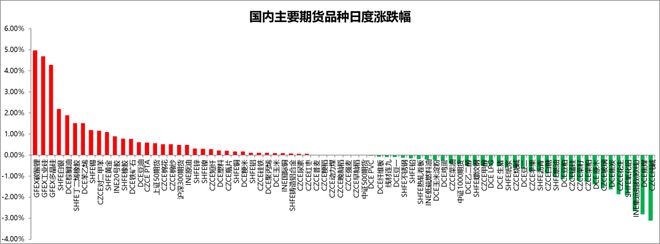
Market Overview - As of November 19, 2025, domestic futures contracts showed mixed performance, with lithium carbonate, industrial silicon, and polysilicon rising over 4%, while soda ash fell over 3% [3][4] - The A-share market experienced a volatile trading session, with the Shanghai Composite Index up 0.18% and the ChiNext Index up 0.25% [6] - The bond market saw a decline across all maturities, with the 30-year contract down 0.41%, reflecting increased market divergence on long-term interest rates [7] Commodity Insights - Palm oil prices increased significantly, reaching a three-week high, while soybean oil also saw a rise, indicating strong demand despite a weak supply outlook for Malaysian palm oil [8][9] - The coal market is under pressure due to concerns over potential supply increases, with the focus on energy production stability during the heating season [11] - Gold and silver futures rose by 2.01% and 3.84% respectively, influenced by recent employment data indicating a decrease in private sector jobs [12][13] Specific Commodity Analysis - Lithium carbonate prices surged by 6.18% due to high demand from the power and storage sectors, although there are concerns about potential supply disruptions from upcoming mine restarts [14] - Industrial silicon and polysilicon contracts rose by 4.57% and 4.63% respectively, driven by reduced production rates in key regions [15] - Soda ash prices fell sharply, with the main contract dropping to a new low, reflecting weak demand and a slowdown in new orders [16] Shipping and Logistics - The European shipping index declined by 2.66%, with a notable drop in freight rates for container shipments, indicating a potential oversupply in the market [19]