
保交楼

Search documents
北方三城南下取经,保交楼“南宁模式”何以成为全国范本
2 1 Shi Ji Jing Ji Bao Dao· 2025-11-19 23:15
Core Insights - The establishment of the Kaifeng City Stabilization Fund marks the nationwide adoption of the "Nanning model" for ensuring housing delivery, indicating a replicable and promotable experience in addressing unfinished housing projects [1][3] Group 1: Background and Context - The "Nanning model" has been recognized as a successful case for addressing complex unfinished housing projects, which are often seen as "hard nuts to crack" due to issues like debt complexity and asset multiple pledges [2][4] - The stabilization fund in Nanning is the first of its kind in China, primarily funded by state-owned enterprises, and has inspired other regions to establish similar funds [2][3] Group 2: Challenges in Housing Delivery - Unfinished projects face three main challenges: "handover difficulties," "funding issues," and "management problems" [5][6] - Handover difficulties arise from bankrupt developers and the reluctance of original management teams to cooperate, complicating the transition to new management [5] - Funding issues stem from misappropriated pre-sale funds, leading to significant financial gaps that hinder market-based funding support [6] - Management problems include poor construction quality and incomplete infrastructure due to prolonged project halts [6] Group 3: Solutions and Innovations - The stabilization fund employs a dual isolation strategy to mitigate risks from original developers and management teams, ensuring that new funding is used exclusively for project completion [6][7] - To address funding gaps, the fund utilizes asset segmentation, special loans, and profits from commercial developments [6][7] - The fund emphasizes quality service and homeowner rights in project delivery, ensuring compliance with original construction plans [7] Group 4: Evolution of the Stabilization Fund - The stabilization fund is evolving into a 2.0 version, focusing on innovative funding sources and integrating economic development strategies [8][9] - The new model involves local governments contributing physical assets (land) to secure financing, reducing fiscal burdens while ensuring project initiation [9] - The fund's role has expanded from merely addressing housing delivery to becoming a platform for local asset management and industrial incubation [9][10] Group 5: Broader Implications - The successful practices of the stabilization fund are being replicated across regions, indicating a shift from localized solutions to a more standardized approach to real estate risk management [10] - The model creates a multi-win framework that balances government guidance, market leadership, and legal safeguards, promoting social stability and economic efficiency [10]
华夏幸福2025年11月19日涨停分析:债务重组+产业转型+保交楼进展
Xin Lang Cai Jing· 2025-11-19 05:51
Core Points - 华夏幸福's stock reached the daily limit of 3.64 yuan, with a rise of 9.37%, bringing its total market value to 14.168 billion yuan and circulating market value to 14.094 billion yuan, with a total transaction amount of 3.056 billion yuan as of the report date [1] Group 1 - The stock surge is attributed to significant debt restructuring, with 1,926.69 billion yuan of financial debt restructured, accounting for 87.9% of total debt, and interest reduction of 202.03 billion yuan, alleviating debt pressure and boosting market confidence in future development [2] - The "guarantee delivery" initiative is nearly complete, with residential projects delivered and only four apartment projects pending, stabilizing market expectations [2] - The company is advancing its transformation as an industrial new city service provider, with 18 new enterprises entering the park and a signed investment amount of 13.66 billion yuan, aligning with industry development trends supported by recent government policies [2] Group 2 - On November 18, the stock saw a trading volume of 3.466 billion yuan, with a net buying of 284 million yuan and net selling of 215 million yuan, indicating increased attention from funds [2] - Previous net buying by retail and foreign funds on November 13 also suggests growing interest in the stock [2] - Although technical patterns were not mentioned, the participation of substantial funds contributed to the stock's limit-up performance [2]

【头条评论】 银行下场卖房降风险也要防风险
Zheng Quan Shi Bao· 2025-11-17 23:08
Core Viewpoint - Banks are actively selling properties at prices significantly lower than market rates, driven by the need to manage non-performing assets and respond to economic pressures in the real estate market [1][2] Group 1: Market Context - The trend of banks selling properties is a response to increasing personal mortgage defaults and real estate loan defaults, leading to a rise in "foreclosed properties" and "debt settlement assets" on bank balance sheets [1] - Traditional disposal channels for these assets have become bottlenecked, with high rates of unsold foreclosed properties due to issues like unclear tax obligations and difficulties in clearing properties [1][3] Group 2: Benefits of Direct Property Sales - Direct property sales by banks can significantly enhance asset disposal efficiency and accelerate capital recovery, while also reducing legal disputes through better control of the transaction process [2] - Buyers benefit from purchasing "direct supply houses" at prices generally 16% to 31% lower than market rates, with transparent transaction processes and access to mortgage services, addressing the full payment requirement of foreclosed properties [2] Group 3: Challenges and Risks - Banks face challenges in selling properties due to a lack of professional sales teams and market experience, which may lead to inefficiencies and potential conflicts of interest [3] - Issues related to property rights and fees could result in disputes that harm the bank's reputation, while the influx of low-priced properties may temporarily suppress surrounding property values [3] Group 4: Alternative Asset Disposal Strategies - Besides direct sales, banks can utilize asset management companies (AMCs) to package and dispose of non-performing assets, leveraging their expertise for more effective management [4] - Banks can also establish special asset divisions or use asset securitization to attract capital market investors, and repurpose unsold properties into long-term rental apartments to align with policy directions [4] - Collaborating with local governments and quality real estate companies to inject funds into ongoing projects can help ensure timely delivery of housing and maximize asset value [4]
【头条评论】银行下场卖房 降风险也要防风险
Zheng Quan Shi Bao· 2025-11-17 17:12
Core Viewpoint - Banks are actively selling properties at prices significantly lower than market rates, driven by the need to manage non-performing assets and respond to economic pressures in the real estate market [1][2]. Group 1: Market Context - Recent economic downturns and deep adjustments in the real estate market have led to increased defaults on personal mortgage loans and real estate development loans, resulting in a growing scale of "foreclosure properties" and "debt settlement assets" held by banks [1]. - Traditional disposal channels for these assets have faced bottlenecks, with high rates of unsold foreclosure properties due to issues like unclear tax obligations and difficulties in clearing properties [1][3]. Group 2: Benefits of Direct Property Sales - Direct property sales by banks can significantly enhance asset disposal efficiency and accelerate capital recovery, while also reducing legal disputes through better control of the transaction process [2]. - Buyers benefit from "direct supply properties" that are generally priced 16% to 31% lower than market rates, with transparent transaction processes and access to mortgage services, addressing the challenges of full cash payments for foreclosure properties [2]. Group 3: Challenges and Risks - Banks may face challenges due to a lack of professional sales teams and market promotion experience, which could lead to inefficiencies and imbalances in cost and revenue [3]. - Potential issues with property rights and payment of property fees could result in disputes that harm the bank's reputation [3]. - The influx of low-priced properties into the market could temporarily suppress surrounding property prices, as seen in certain areas where average transaction prices have dropped [3]. Group 4: Alternative Asset Disposal Strategies - Besides direct sales, banks can utilize more mature and innovative methods for disposing of non-performing assets, such as packaging them for asset management companies (AMCs) that specialize in efficient asset disposal [4]. - Establishing "special asset divisions" or using asset securitization to attract capital market investors are also viable strategies for risk sharing and maximizing returns [4]. - For properties that are difficult to sell, converting them into long-term rental apartments or affordable rental housing aligns with policy directions and helps activate assets [4]. Group 5: Long-term Strategy - The decision for banks to sell properties directly is a tactical choice aimed at quickly mitigating risks and recovering funds, but it is essential to focus on preventing transaction disputes and reputation risks [4]. - A long-term solution involves building a multi-layered, professional, and market-oriented system for disposing of non-performing assets, with banks acting as financial providers and coordinators through collaboration with AMCs, technology companies, and local governments [4].
避雷!买房5年未收房、房产证逾期……长沙这几个楼盘业主维权中
Sou Hu Cai Jing· 2025-11-14 13:39
此前政府部门曾介入协调,明确承诺该楼盘将于2025年3月交房,但交房日期随后推迟至2025年11月, 即便如此,到期后业主们仍未等到收房通知。一次次的延期让业主们心力交瘁,从最初的期盼逐渐陷入 崩溃,迫切希望相关部门能彻底解决问题。 近期,问政湖南平台多个楼盘业主的投诉留言,涉及房屋逾期交付、保交楼资金挪用、房产证办理受 阻、配套设施搁置等多重问题。 和泓桃李春风:买房5年仍未收房 长沙县和泓桃李春风业主反馈,买房5年仍未收到房屋来,楼盘一直是停工再复工的反反复复,以至于 到现在还是处于未完工的状态,不知道现在该拖多久才能交房。 长沙市望城区金辉优步学府9栋业主投诉:房款、契税、维修基金一分没少交,却因为开发商和银行的 债务纠纷,拿不到房产证。 业主均已按《商品房买卖合同》约定足额支付全部购房款,且已缴纳契税、维修基金等所有相关费用, 履行了作为买受人的全部合同义务。但当依据相关法律法规和不动产登记要求,前往民生银行办理住房 抵押注销手续(因案涉房屋存在金辉地产与民生银行的债务关联抵押),遭到银行无正当理由拒绝。 中梁玺悦台二期:项目停工,配套设施建设完全停滞! 长沙中梁玺悦台二期业主反映,小区业主于2022 ...


全国房地产“白名单”项目融资稳步推进
Zheng Quan Shi Bao· 2025-11-06 00:45
Core Insights - The real estate financing coordination mechanism established in early 2024 has made significant progress, with the "white list" project loan approval amount exceeding 7 trillion yuan, effectively supporting the construction and delivery of residential projects [1][2][3] Group 1: Financing Mechanism Progress - As of the end of 2024, the loan amount for "white list" projects reached 5.03 trillion yuan, surpassing the expected target of 4 trillion yuan [2] - By January 22, 2024, the loan amount increased by 570 billion yuan, reaching 5.6 trillion yuan [2] - By March 5, 2024, the approved loans exceeded 6 trillion yuan, covering over 15 million housing units [2] - As of September 22, 2024, the loan amount for "white list" projects surpassed 7 trillion yuan, supporting nearly 20 million housing units [2] Group 2: Delivery and Quality Improvement - The pace of housing delivery has become more stable compared to the same period last year, with significant improvements in delivery quality and homeowner satisfaction [1][4] - The delivery of over 7.5 million sold but undelivered housing units has been achieved, effectively safeguarding the legal rights of homebuyers [3][4] Group 3: Government and Policy Support - The Ministry of Housing and Urban-Rural Development has established a three-tiered working group to ensure accountability among local governments, real estate companies, and financial institutions [3] - Local governments have implemented strict pre-sale fund supervision regulations to ensure the safety of funds and prevent misuse [6] - A government-led relief fund has been established to provide bridge financing for projects facing funding shortages [6] Group 4: Industry Transformation and Economic Impact - The real estate sector is transitioning from high-leverage expansion to high-quality development, promoting the establishment of long-term mechanisms such as improved pre-sale systems and expanded pilot programs for selling completed homes [7] - The recovery of the real estate market is expected to positively impact related industries such as construction materials, services, and property management, fostering coordinated development with the national economy [7]
半年增加一万亿元 全国房地产“白名单”项目融资稳步推进
Zheng Quan Shi Bao Wang· 2025-11-04 13:06
Core Insights - The real estate financing coordination mechanism established in early 2024 has made significant progress, with the "white list" project loan approval amount exceeding 7 trillion yuan, effectively supporting the construction and delivery of residential projects [1][2][3] Group 1: Financing Mechanism Progress - As of the end of 2024, the loan amount for "white list" projects reached 5.03 trillion yuan, surpassing the expected target of 4 trillion yuan [2] - By January 22, 2024, the loan amount increased by 570 billion yuan, reaching 5.6 trillion yuan [2] - By March 5, 2024, the approved loans exceeded 6 trillion yuan, covering over 15 million housing units [2] - As of September 22, 2024, the loan amount for "white list" projects surpassed 7 trillion yuan, supporting nearly 20 million housing units [2] Group 2: Delivery and Quality Improvement - The pace of housing delivery has become more stable compared to the same period last year, with significant improvements in delivery quality and homeowner satisfaction [1][4] - The delivery of housing has transitioned from an emergency response to a normalized and stable operation, with most key projects in various cities completed [4] Group 3: Government and Institutional Support - The Ministry of Housing and Urban-Rural Development has established a three-tier working group to ensure accountability among local governments, real estate companies, and financial institutions [3] - Over 7.5 million sold but undelivered housing units have been delivered, effectively safeguarding the legal rights of homebuyers [3] - Local governments play a crucial role in supporting the delivery of housing through policy guarantees, resource coordination, and financial support [6] Group 4: Financial Tools and Risk Management - The "white list" mechanism and special loans for housing delivery form a core support system for financing, enhancing efficiency and ensuring fund safety [5] - Strict fund supervision mechanisms are in place to ensure that funds are used exclusively for project construction [5] - Local governments have implemented stringent pre-sale fund supervision regulations to protect fund security and prevent misuse [6] Group 5: Market Impact and Future Outlook - The completion of housing delivery work is expected to restore buyer confidence in the pre-sale market and stabilize market expectations [7] - The initiative is anticipated to accelerate the clearing of industry risks and create a healthier development environment for quality enterprises [7] - The shift from high-leverage expansion to high-quality development is being promoted, along with the implementation of long-term mechanisms [7]
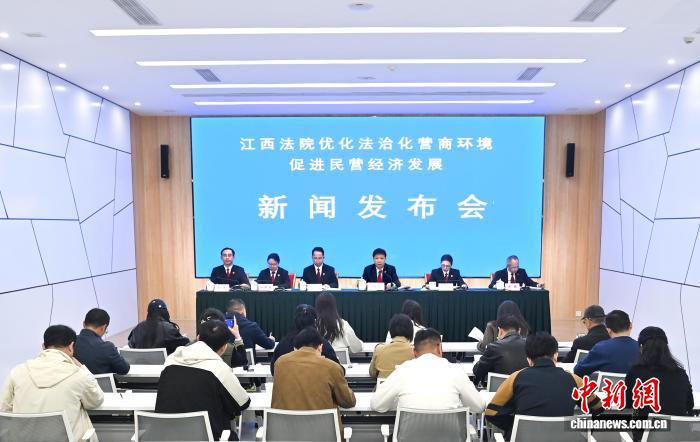
强化审执衔接 今年以来江西法院办理诉讼保全案件超8万件
Zhong Guo Xin Wen Wang· 2025-10-31 12:02
Core Points - Jiangxi courts have handled over 82,395 litigation preservation cases this year, involving a total preservation amount of 132.775 billion yuan [4][3]. Group 1: Judicial Environment Optimization - Jiangxi courts are committed to enhancing the legal business environment to promote the development of the private economy, aligning with the "14th Five-Year Plan" and the 2035 vision [3]. - A series of normative documents have been established, including the "Implementation Opinions on Creating a First-Class Legal Business Environment," focusing on judicial concepts, trial mechanisms, and service measures [3][4]. Group 2: Real Estate Risk Prevention - The courts have identified a list of 591 enterprises and 524 projects to prevent risks in the real estate sector, facilitating the delivery of housing and ensuring property rights [3]. - A collaborative plan has been signed with five departments to address difficulties in property registration related to seized properties, focusing on a phased approach for 46 projects involving over 5,000 housing registrations [3][4]. Group 3: Criminal Case Management - Jiangxi courts have processed over 400 criminal cases related to enterprises this year, aiming to combat crimes that disrupt the normal operations of private enterprises [3]. - The courts have differentiated between criminal and non-criminal cases, referring 57 criminal clues to law enforcement and recommending the withdrawal of two enterprise-related criminal cases [3].
数据点评 | 三季度经济:“韧性”的来源?(申万宏观·赵伟团队)
赵伟宏观探索· 2025-10-20 16:03
Core Viewpoint - The economic growth in the third quarter is supported by short-term factors and medium-term resilience, maintaining reasonable growth [2][8][42] GDP - The GDP growth rate for the third quarter is 4.8%, matching expectations, with contributions from service consumption, improved external demand, and strong construction activity [2][44] - Service consumption remains resilient, contributing 2.7 percentage points to GDP [2][8] - External demand has improved, with net exports contributing 1.2 percentage points to GDP [2][8] - Construction activity surged in September, with a 22.9% increase, boosting property sales and supporting capital formation in GDP [2][8] Production - Industrial value-added growth increased to 6.5% in September, driven by specific industries like automotive production [2][13] - The automotive sector saw a 7.6% increase in value-added, contributing to an overall production growth of 0.4% [2][13] - Downstream production showed significant improvement, while upstream production remained weak due to declining investments [2][14] Retail Sales - Retail sales below the quota showed a decline, but service consumption continued to grow at a rate of 5.2% [3][20] - Retail sales of automobiles improved due to anticipated adjustments in subsidy policies, while home appliances saw a decline [3][20] - The overall retail sales growth in September was 3.0%, down 0.4 percentage points from the previous month [3][20] Real Estate - The "guarantee delivery" and "existing home sales policy" have been implemented, leading to a significant increase in construction activity [3][24] - Property prices in 70 cities showed a slight year-on-year increase, but still negative on a month-on-month basis [3][24] - The construction growth rate surged to 1.5% in September, driven by policy support [3][24] Investment - Fixed asset investment growth remains low, with a year-on-year decline of 6.5% in September [4][33] - Other expenses saw a significant increase, while construction and installation investment dropped sharply [4][33] - The acceleration of debt repayment has occupied funds for fixed investment, contributing to the ongoing decline in investment growth [4][33] Summary - Economic pressures are increasing, but policies are actively countering these effects, with expectations for resilience in the fourth quarter [4][42] - Short-term factors like "production rush" may fade, leading to potential downward pressure on industrial production [4][42] - The implementation of 500 billion yuan in local special bond quotas is expected to alleviate the impact of debt repayment on fixed asset investment [4][43]

9月经济数据点评:三季度经济:“韧性”的来源?
Shenwan Hongyuan Securities· 2025-10-20 13:11
Economic Performance - Q3 GDP growth was 4.8%, matching expectations but down from 5.2% in the previous quarter[1] - In September, industrial added value increased by 6.5%, exceeding the expected 5.2%[1] - Fixed asset investment showed a cumulative year-on-year decline of 0.5%, against an expectation of 0%[1] Consumption and Retail - Retail sales in September grew by 3.0%, slightly below the expected 3.1%[1] - Service consumption remained resilient, with service retail growth rising by 0.1 percentage points to 5.2%[3] - Below-limit retail sales weakened, dropping by 0.5 percentage points to 3.8%[3] Investment Trends - Fixed asset investment in September saw a slight recovery, up 0.7 percentage points to -6.5% year-on-year[4] - Real estate development investment continued to decline, with a cumulative year-on-year drop of 13.9%[4] - Manufacturing investment showed a slight increase, with a monthly year-on-year growth of -1.5%[4] Real Estate Market - The completion rate surged by 22.9 percentage points in September, reaching 1.5%[3] - New housing sales area saw a year-on-year decline of 5.5%[1] - Housing prices in 70 cities showed a slight recovery, but remained negative on a month-on-month basis[3] Outlook and Risks - Economic pressures are increasing, but policies are actively countering these effects, suggesting resilience in Q4[4] - Potential risks include external environment changes and slower-than-expected implementation of growth stabilization policies[4]