
出海

Search documents
首席点评:地缘与政策角力,油价走势偏强
Shen Yin Wan Guo Qi Huo· 2026-02-10 06:52
Report Industry Investment Ratings - **Cautiously Bullish**: Index (IH, IF, IC, IM), Rubber, Coking Coal, Coke, Manganese Silicon, Ferrosilicon, Gold, Silver, Aluminum, Lithium Carbonate, Corn [5] - **Cautiously Bearish**: Crude Oil, Methanol, Rebar, Hot Rolled Coil, Iron Ore, Apple [5] Core Views - Geopolitical and policy factors are influencing the oil price, which shows a strong upward trend. The negotiation between Iran and the US on the nuclear issue is in progress, and the Fed's interest - rate stance affects market expectations. The global grain consumption in the 2025/26 season is expected to increase, and the domestic futures market has mixed performance [1]. - Precious metals are in a rebound phase. Although affected by short - term factors, long - term support factors remain. Silver's high volatility suggests investors to wait and see. Crude oil prices are affected by geopolitical negotiations and supply changes in Kazakhstan. Copper prices may enter an adjustment phase due to supply and demand factors [2][3]. - In the financial market, the stock index is expected to continue the phased upward trend in February, but there are potential overseas risks during the Spring Festival. The bond market is affected by factors such as the Fed's policy and domestic economic data, and the bond price is expected to stabilize [10][11]. - In the energy and chemical market, the supply and demand of various products such as crude oil, methanol, and rubber are affected by different factors, and their prices show different trends. In the metal market, precious metals, copper, zinc, aluminum, and lithium carbonate have different price trends and influencing factors. In the black market, the supply and demand of steel, iron ore, and coking coal are affected by the approaching Spring Festival and other factors. In the agricultural product market, the prices of protein meal, oil, sugar, cotton, and pork are affected by factors such as production, demand, and policies. In the shipping market, the container shipping European line is expected to be volatile before the Spring Festival and will face verification after the festival [13][19][25][28][33]. Summary by Relevant Catalogs 1. Daily Main News Focus International News - Elon Musk said that SpaceX has shifted its focus to building a "self - developing" city on the moon, which is expected to be achieved in less than 10 years. The plan to build a city on Mars will start in 5 - 7 years and is expected to take more than 20 years [6]. Domestic News - On the morning of February 9, President Xi Jinping inspected the National Information Technology Application Innovation Park in Beijing, emphasizing the importance of scientific and technological self - reliance in building a modern socialist country [7]. Industry News - Seven departments including the Ministry of Human Resources and Social Security conducted administrative guidance on 16 platform companies to protect the rights and interests of new - form workers [8]. 2. Daily Returns of Overseas Markets - The S&P 500, European STOXX 50, and FTSE China A50 futures all rose. The US dollar index fell. ICE Brent crude oil, London gold, London silver, LME aluminum, LME copper, and LME nickel all rose, while LME zinc fell. CBOT soybeans, CBOT wheat, and CBOT corn fell, while CBOT soybean oil rose [9]. 3. Morning Comments on Major Varieties Financial - **Stock Index**: The US stock market rose, and the domestic stock index rebounded. In February, the market is expected to continue the upward trend, but there are potential overseas risks during the Spring Festival [10]. - **Treasury Bond**: Treasury bonds rose slightly. The central bank's open - market operations keep the money market loose. The Fed's policy and domestic economic data affect the bond market, and it is recommended to operate cautiously before the Spring Festival [11][12]. Energy and Chemical - **Crude Oil**: The sc night - session price rose. The negotiation between Iran and the US is in progress, and Kazakhstan's oil export may decline [13]. - **Methanol**: The methanol night - session price fell. The domestic coal - to - olefin device's operating rate increased, and the methanol inventory in coastal areas decreased slightly [14]. - **Natural Rubber**: The natural rubber price rebounded. The supply is relatively stable, and the demand supports the stable operation of all - steel tires. It is expected to fluctuate and adjust before the Spring Festival [15]. - **Polyolefin**: Polyolefin futures fell slightly. The market focuses on supply improvement and macro - factors [16]. - **Glass and Soda Ash**: Glass futures rebounded slightly, and soda ash futures mainly fell. The supply and demand of glass and soda ash are gradually being repaired, and the market focuses on the real - estate and photovoltaic industries [17]. Metal - **Precious Metals**: Precious metals continued to rebound. Although affected by short - term factors, long - term support factors remain. It is recommended to wait and see for silver [19]. - **Copper**: The copper price rose at night. The concentrate supply is tight, and the copper price may enter an adjustment phase [20]. - **Zinc**: The zinc price fell at night. The zinc concentrate processing fee decreased, and the zinc price may follow the overall trend of non - ferrous metals [21]. - **Aluminum**: The Shanghai aluminum price rose at night. The domestic aluminum price is high, but the downstream demand is weak before the Spring Festival. However, long - term factors support the price [22]. - **Lithium Carbonate**: The production and demand of lithium carbonate decreased, and the inventory decreased. The market sentiment is weak, and it is recommended to pay attention to trading opportunities after the volatility decreases [23][24]. Black - **Coking Coal and Coke**: The prices of coking coal and coke were weak at night. The demand for coking coal and coke is limited, but the downstream's pre - festival replenishment provides support [25]. - **Steel**: The steel supply decreased slightly, and the demand weakened. The inventory increased, and the steel price is expected to fluctuate weakly [26]. - **Iron Ore**: The iron ore shipping and arrival increased, and the port inventory increased. The steel mill's replenishment is coming to an end, and the iron ore price is expected to fluctuate weakly [27]. Agricultural Products - **Protein Meal**: The prices of soybean meal and rapeseed meal fell at night. The Brazilian soybean harvest is in progress, and the domestic supply is expected to be sufficient, which may put pressure on the price [28]. - **Oil**: The oil prices were weak at night. The Malaysian palm oil production decreased, and the inventory is expected to decline, but the crude oil price affects the palm oil price. It is expected to fluctuate in the short term [29]. - **Sugar**: The Zhengzhou sugar price was slightly stronger at night. The global sugar supply is in an over - supply situation, and the domestic sugar supply is increasing seasonally. It is expected to fluctuate in the short term [30]. - **Cotton**: The Zhengzhou cotton price fluctuated within a range. The textile factory's replenishment is coming to an end, and the cotton price is expected to fluctuate. Attention should be paid to the direct subsidy policy [31]. - **Pork**: The pork price fell. The supply pressure increased, and the demand could not fully digest it. The pig price is expected to be weakly stable [32]. Shipping Index - **Container Shipping European Line**: The EC price fell. The spot freight rate is relatively stable before the Spring Festival, and it is expected to be volatile. After the Spring Festival, it will face the verification of the photovoltaic export rush and the implementation of the price increase letter [33][34].
未知机构:申万轻工齐心集团办公物资集采龙头AI出海打开成长空间推荐评级-20260210
未知机构· 2026-02-10 02:00
Summary of Key Points from the Conference Call Company Overview - The company is a leading B2B office supplies procurement platform, focusing on digital procurement services for office supplies and expanding into MRO industrial products, employee benefits, and marketing materials, creating a comprehensive digital procurement service platform [1] Core Insights and Arguments - **AI Integration**: The company utilizes AI large models to replace complex workflows, leveraging vast industry data for deep mining and precise matching capabilities. This approach enables the rapid formation of integrated solutions, optimizing supply chain efficiency and achieving systematic cost reduction and efficiency improvement [1][2] - **Efficiency Improvements**: The "Qixin Zhipan AI Model" enhances product circulation with intelligent reporting, increasing product listing efficiency by 80%. The "Smart Eye Acceptance System" improves acceptance accuracy to 98% through multi-modal information fusion processing [2] - **International Expansion**: The company is transitioning from product export to brand and service export, utilizing Amazon Business to enhance its B2B supply chain services abroad, thereby increasing the influence of the COMIX brand. The cross-border e-commerce business is experiencing rapid growth, optimizing profitability [2] - **IP Cultural and Creative Development**: The company is positioning its IP cultural and creative initiatives as an important supplement to its proprietary brand business, engaging in comprehensive product licensing and brand collaboration [2] - **Employee Stock Ownership Plan**: An employee stock ownership plan will be launched in September 2025, covering up to 180 middle and senior management personnel. The performance indicators include a revenue growth rate of no less than 3% and 8% for 2025 and 2026 compared to 2024, and net profits of no less than 1.4 billion and 1.8 billion yuan respectively [2] Additional Important Content - The focus on AI and digital solutions indicates a strategic shift towards technology-driven efficiency, which may present significant competitive advantages in the procurement industry [1][2] - The emphasis on international expansion and brand development suggests a long-term growth strategy that could enhance market presence and profitability [2]

基金早班车丨宽基ETF资金流出,化工通信有色ETF逆势吸金
Jin Rong Jie· 2026-02-10 00:53
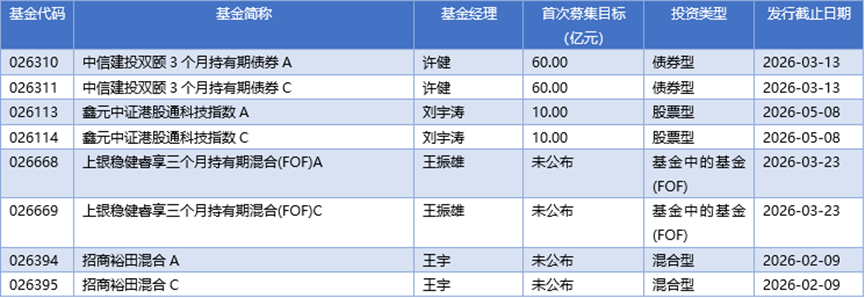
Group 1: Market Trends - In early 2026, A-share ETF fund flows have changed, with continuous net outflows from broad-based products like CSI 300 and CSI 500, while high-growth sectors such as chemicals, communications, and non-ferrous metals have seen inflows [1] - The market is experiencing a strong rebound, with the Shanghai Composite Index rising by 1.41% to 4123.09 points, the Shenzhen Component Index up 2.17% to 14208.44 points, and the ChiNext Index increasing by 2.98% to 3332.77 points [1] Group 2: Fund News - On February 9, 2026, eight new funds were launched, primarily bond funds and funds of funds (FOF), with a fundraising target of 6 billion yuan for the CITIC Securities Dual Yield 3-Month Holding Period Bond A [2] - The number of new fund accounts opened in January reached 546,300, a significant increase of 168% compared to the same period in 2025, indicating a notable rise in investor enthusiasm [2] - Credit bond ETFs have faced a "tide of withdrawal," with a cumulative reduction of over 100 billion yuan in scale over five weeks, particularly affecting the Sci-Tech Innovation Bond ETF, which shrank by more than 70 billion yuan [2] Group 3: Fund Dividends - On February 9, 2026, several funds distributed dividends, with the highest payout being 0.1330 yuan per 10 fund shares for the China Europe National Index Free Cash Flow Index A fund [5] - Other notable dividend distributions include 0.1310 yuan for the China Europe National Index Free Cash Flow Index C fund and 0.0870 yuan for the Bosera Yukun 3-Month Fixed Open Bond fund [5]

四大证券报精华摘要:2月10日
Zhong Guo Jin Rong Xin Xi Wang· 2026-02-10 00:04
Group 1: Tungsten Market and Related Industries - Tungsten prices have been rising, with ammonium paratungstate (APT) price reaching over 1 million yuan per ton, attracting significant attention from the capital market [1] - Affected by the price increase of tungsten-related products, listed companies in the industry are expected to report strong performance in their 2025 earnings forecasts, with noticeable growth in product sales [1] - The price surge in the MLCC (multi-layer ceramic capacitors) market, driven by AI trends, has seen a nearly 20% increase in spot prices in South Korea, with expectations for continued growth [1] Group 2: Sodium Battery Development - Changan Automobile and CATL have launched the world's first mass-produced sodium battery passenger vehicle, marking a significant step towards large-scale application of sodium batteries in the automotive sector [2] - Sodium batteries are gaining traction due to their abundant resource availability, wide temperature range, long cycle life, and high safety, transitioning from laboratory to large-scale applications [2] Group 3: A-Share ETF Market Trends - The A-share ETF market is experiencing a shift, with traditional broad-based ETFs seeing outflows while ETFs in high-growth sectors like chemicals, telecommunications, and non-ferrous metals are attracting inflows [3] - Recent earnings forecasts from listed companies indicate a positive market sentiment, with a focus on AI, price increase chains, and overseas expansion as key investment themes [3] - Over the past month, 148 brokerages have conducted research on over 560 listed companies, a 26% increase compared to the same period last year, highlighting a growing interest in sectors such as electronics and machinery [3] Group 4: Solar Energy and Space Initiatives - Tesla is ramping up hiring for solar panel manufacturing, aiming to become the largest solar component manufacturer in the U.S., while SpaceX has acquired xAI to build a space-based data center [4] - The A-share photovoltaic sector responded positively to these developments, with a 4.53% increase in stock prices and a net inflow of 4.058 billion yuan in the photovoltaic equipment sector [4] Group 5: Banking Sector Insights - Since the beginning of 2026, listed banks have seen a surge in institutional research, particularly among small and medium-sized banks in coastal economic regions, with 54 institutional visits recorded [5] - Key topics of interest include the performance of credit in the new year, the "14th Five-Year Plan," and wealth management strategies [5] Group 6: Dye Industry Price Increases - The dye industry is experiencing a price increase trend, with companies like Fulaient notifying customers of price adjustments for various disperse dye products due to rising raw material costs [6] - The current price surge in the dye industry is driven by multiple factors, primarily the increase in prices of key upstream intermediates [6] Group 7: Fund Issuance and Foreign Investment - As of February 9, 29 new funds are set to be issued in the coming weeks, with a focus on mixed equity funds and passive index funds [7] - A total of 224 foreign institutions have conducted 569 research visits to A-share listed companies, with firms like Goldman Sachs maintaining a "overweight" rating on Chinese stocks [7] Group 8: Night Economy Initiatives - Various local governments are incorporating night economy strategies into their work reports to stimulate consumption, with initiatives in cities like Shanghai and Fujian focusing on expanding service consumption [8] - The night economy is recognized as a key driver for activating consumer potential and enhancing service consumption quality [8]
上市公司业绩传递暖意 资金借ETF布局三大景气主线
Shang Hai Zheng Quan Bao· 2026-02-09 18:21
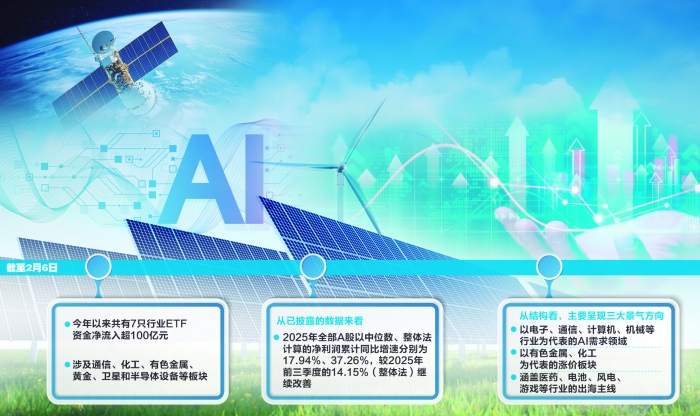
Group 1 - The A-share ETF market is experiencing a shift in capital flow, with traditional broad-based ETFs seeing outflows while sector-specific ETFs in high-growth industries like chemicals, telecommunications, and non-ferrous metals are attracting significant inflows [2][3] - As of February 6, 2026, seven industry ETFs have seen net inflows exceeding 10 billion yuan, with notable inflows into the Guotai Communication ETF (239.54 billion yuan), Penghua Chemical ETF (155.34 billion yuan), and Southern Non-ferrous Metals ETF (127.58 billion yuan) [3] - The overall net profit growth rate for A-shares in 2025 is projected to be 17.94% and 37.26% based on different calculation methods, indicating a recovery trend in corporate earnings [4] Group 2 - The current capital flow reflects investor interest in sectors aligned with industrial trends, particularly AI, price increase chains, and overseas expansion, which are expected to drive market performance [5] - Three key growth areas have been identified: AI demand in electronics and communications, price increases in non-ferrous metals and chemicals, and overseas expansion in pharmaceuticals and renewable energy [4][6] - The free cash flow analysis of A-share companies (excluding financial stocks) indicates an improving fundamental trend, with expectations for a turning point in corporate earnings growth in 2026 driven by AI technology and supportive policies [7] Group 3 - Investment opportunities in A-shares are expected to be abundant, driven by technological innovation, industrial upgrades, and green transformation, with a focus on sectors that are experiencing gradual earnings improvement and policy support [8] - The semiconductor industry in China is projected to continue its growth trajectory, with self-sufficiency rates expected to rise from 16% in 2020 to approximately 26% by 2025, driven by domestic demand and technological advancements [8] - High-end manufacturing sectors, including military, nuclear power, wind energy, and energy storage, are anticipated to produce globally competitive leading enterprises [10]
2025新茶饮复盘:告别野蛮生长,存量博弈下的生死时速
新消费智库· 2026-02-09 13:03
Core Insights - The Chinese new tea beverage market is experiencing a significant slowdown, with the growth rate dropping from 24.9% (2017-2022) to 6.4% in 2024, indicating a shift from expansion to competition in a saturated market [4][34][37] - The market is projected to reach a size of 3547.2 billion yuan in 2024, with growth rates stabilizing between 5%-7% in the first three quarters of 2025, marking the transition to a phase of stock competition [4][37] - The competitive landscape is characterized by a concentration of market share among leading brands, with smaller brands struggling to survive [5][49] Group 1: Industry Trends - The new tea beverage industry has officially transitioned from a high-growth phase to a period of meticulous management and profitability focus, moving away from rapid store openings and population growth [4][34] - The number of new tea beverage stores opened in the past year was 118,000, while 157,000 closed, resulting in a net decrease of 39,000 stores, highlighting the intense competition and market saturation [5][47] - The health trend in the industry is deepening, with the use of sugar substitutes in milk tea reaching 61.3%, and the application of plant-based ingredients increasing from 18.9% in 2024 to 26.4% in 2025 [7] Group 2: Brand Dynamics - Leading brands like Mixue Ice City and Bawang Chaji are expanding rapidly, with Mixue Ice City surpassing 53,000 global stores and Bawang Chaji increasing to 7,038 stores, reflecting a trend of head brand concentration [5][44] - Mid-tier brands are facing significant challenges, with companies like Nayuki's Tea reporting a revenue decline of 4.7% and a net loss of 919 million yuan in 2024 [6][49] - The market is witnessing a "one super, many strong" structure, with Mixue Ice City holding a dominant position and other brands like Bawang Chaji and Gu Ming rapidly gaining ground [55] Group 3: Market Strategies - Brands are increasingly focusing on emotional marketing, with Bawang Chaji positioning itself as a solution for emotional needs among young consumers [10] - The exploration of overseas markets has become a core strategy for leading brands, with Bawang Chaji's overseas GMV exceeding 300 million yuan in Q3 2025, marking a 75.3% year-on-year growth [8] - The industry is shifting towards value competition, moving away from price wars, as brands like Xicha announce a return to user and brand focus, halting low-price competition [14] Group 4: Consumer Behavior - The rise of the "one-person economy" is driving demand for smaller, high-quality products, as consumers prefer moderate consumption over large quantities [25][26] - The focus on seasonal products has become a fixed rhythm, with multiple brands launching offerings based on seasonal fruits, indicating a trend towards timely innovation [22] - The consumer landscape is stabilizing, with shopping and afternoon tea becoming dominant consumption scenarios, limiting the expansion of new consumption contexts [38]

把握汽车行业主线价值,智能汽车ETF(159889)收涨超2%
Mei Ri Jing Ji Xin Wen· 2026-02-09 12:40
Core Viewpoint - The automotive industry is focusing on three main themes: smart technology, overseas expansion, and AI integration, with significant growth expected in these areas by 2026 [1] Group 1: Smart Technology - The trend of equal access to intelligent driving in China is gradually establishing, with high-level autonomous driving penetration expected to continue increasing due to the L3 autonomous driving policy and technological iterations by 2026 [1] - Key components to watch include intelligent driving chips and cockpit domain controllers [1] Group 2: Overseas Expansion - The penetration rate of new energy vehicles in Europe is continuously rising, and domestic automotive parts companies are expected to leverage overseas production capacity, cost, and technological advantages for expansion [1] Group 3: AI Integration - The Robotaxi industry is accelerating, with multiple Robotaxi models set for large-scale production and expanding operational areas [1] - Tesla's Optimus Gen3 is expected to achieve mass production by 2026, while domestic automakers are rapidly developing humanoid robots, creating new growth opportunities for local automotive parts companies [1] - Liquid cooling technology, which is relevant for vehicle thermal management and server systems, presents an opportunity for domestic automotive parts companies to enter the supply chain of overseas manufacturers [1] Group 4: ETF Information - The Smart Automotive ETF (159889) tracks the CS Smart Automotive Index (930721), which selects listed companies involved in autonomous driving, vehicle networking, terminal perception, and platform applications to reflect the overall performance of related securities [1]
泡泡玛特欧洲总部将设伦敦;冬奥会基于千问打造大模型丨出海周报
2 1 Shi Ji Jing Ji Bao Dao· 2026-02-09 02:48
Industry Overview - China's foreign exchange reserves reached $3.4 trillion, with a 1.23% increase month-on-month as of January 2026, while gold reserves rose to 74.19 million ounces [1] - The depreciation of the US dollar is driven by geopolitical risks and market expectations regarding US monetary policy, leading to a sell-off [1] - The global asset prices have increased due to fluctuations in US Treasury yields and expectations surrounding potential Federal Reserve leadership changes [1] Trade and Services - China's service trade import and export total reached 8.08 trillion yuan in 2025, marking a 7.4% year-on-year growth, with knowledge-intensive services showing strong performance [2] - The Ministry of Commerce plans to organize over 100 import promotion activities in 2026 to balance trade development, emphasizing a dual approach of "policy + activities" [2] - Investment from countries like South Korea, Canada, and Finland into China maintained double-digit growth, reflecting multinational companies' confidence in the Chinese market [2] Company Dynamics - Amazon reported Q4 revenue of $213.39 billion, a 14% year-on-year increase, with net profit at $21.19 billion, up 6% [3] - Amazon's North American retail revenue for Q4 was $127.1 billion, a 10% increase, while international revenue reached $50.7 billion, a 17% increase [3] - Amazon's AI assistant Rufus has over 300 million users, contributing nearly $12 billion in additional annual sales [3] Logistics and Delivery - Amazon aims to achieve same-day or next-day delivery for over 13 billion items globally by 2025, with significant increases in delivery speed noted in the US and Europe [4] Technology and Innovation - The International Olympic Committee announced the creation of the first official Olympic model based on Alibaba's Qianwen, highlighting the transformative impact of AI technology on the 2026 Milan Winter Olympics [5] - Alibaba Cloud ranked first in comprehensive competitiveness growth index globally, planning to establish new data centers in multiple countries by 2026 [7] Strategic Partnerships - Hesai Technology announced a strategic partnership with Grab, making Grab the exclusive distributor of Hesai's lidar products in Southeast Asia [8] Automotive Industry - GAC Group set an overseas sales target of 250,000 units for 2026, aiming to reach 300,000 units, with significant growth in both domestic and overseas sales reported [9] Retail Expansion - Pop Mart established its European headquarters in London, planning to open seven new stores in the UK and expand to 20 stores across Europe [10] - Anta will open its first flagship store in the US on February 13, marking a shift from wholesale to direct retail in the North American market [11] - JD.com will launch its European online retail platform Joybuy in March, with successful trial runs achieving same-day and next-day delivery in several UK cities [12] Logistics Optimization - Temu signed a memorandum of understanding with Hungary Post to enhance local logistics, indicating a shift towards improved service experience in the European market [13] IPO News - Ugreen Technology submitted an application for listing on the Hong Kong Stock Exchange, with Huatai International as the sole sponsor [14]





建材在底部,行业正迎来景气度和估值共振向上拐点
ZHONGTAI SECURITIES· 2026-02-08 15:06
Investment Rating - The report maintains a "Buy" rating for key companies in the building materials sector, indicating an expected relative performance increase of over 15% in the next 6-12 months [6][110]. Core Insights - The building materials industry is at a turning point, with both demand and valuation expected to improve. The real estate sector is anticipated to stabilize, leading to a recovery in building materials demand. The report highlights that new construction starts in 2025 are projected to decline by 70% compared to 2021, with completions down by 40% and new home sales down by 50% [9][8]. - Rising prices of upstream raw materials such as asphalt, polypropylene, and polyethylene are expected to drive up building material prices, benefiting companies with pricing power [9][8]. - The report recommends several companies, including Beixin Building Materials, Oriental Yuhong, and Sanhe Tree, while suggesting to pay attention to companies like Rabbit Baby and China Liansu [9][8]. Summary by Sections Market Overview - The building materials sector is currently underweighted, with a configuration ratio of 0.72% as of Q4 2025, which is significantly lower than the historical average since 2010 [8]. - The cement and glass sectors are noted to be at low valuation levels, with the cement manufacturing PB at the 16th percentile and glass manufacturing PB also at the 16th percentile since 2010 [8]. Key Company Recommendations - Recommended companies include: - Beixin Building Materials: EPS forecasted to increase from 2.1 in 2024 to 3.5 in 2027, with a PE ratio decreasing from 13.4 to 8.2 [6]. - Conch Cement: EPS forecasted to rise from 1.5 in 2024 to 2.2 in 2027, with a PE ratio decreasing from 17.3 to 11.6 [6]. - China Jushi: EPS expected to grow from 0.6 in 2024 to 1.2 in 2027, with a PE ratio decreasing from 36.1 to 18.6 [6]. - Other companies include Weixing New Materials, Sanhe Tree, and Huaxin Cement, all rated as "Buy" or "Increase" [6]. Industry Trends - The report notes a significant increase in market share for consumer building materials over the past few years, with profitability in segments like waterproofing and piping at a low point, suggesting potential for recovery [9][8]. - The cement sector is expected to see a gradual recovery in profitability, with a current national cement market price decrease of 1% and a notable drop in average shipment rates [36][9]. - The float glass sector is experiencing a supply-side adjustment, with production capacity at a five-year low, indicating potential for price recovery [9][8]. Emerging Opportunities - The report highlights opportunities in overseas markets, particularly in Africa, Central Asia, and Southeast Asia, where rising populations and urbanization rates are creating demand for building materials [9][8]. - The electronic fabric market is also noted for its upward price trend due to supply constraints, with significant price increases observed in recent weeks [9][8]. Conclusion - The building materials industry is positioned for a recovery phase, driven by stabilization in the real estate market and rising raw material prices. The report emphasizes the importance of focusing on companies with strong pricing power and market positioning to capitalize on these trends [9][8].



广发基金投顾团队:关注“出海+科技”两大主题
Zhong Zheng Wang· 2026-02-06 14:17
Core Insights - The A-share market is experiencing a complex situation as it approaches the Spring Festival holiday, with previous hot sectors like optical modules, non-ferrous metals, and AI tech stocks in the US showing varying degrees of correction [1] - The Guangfa Fund advisory team suggests that after a significant rise in January, the market is becoming more rational, with a focus on "going overseas + technology" themes, emphasizing cyclical industries supported by global demand and sectors intersecting AI and overseas markets [1][3] Industry Performance - As of February 1, approximately 55% of listed companies in A-shares have disclosed their earnings forecasts for 2025, indicating an overall recovery in profitability, although significant industry divergence is noted, with non-bank financials and non-ferrous metals performing particularly well [1] - The median earnings growth forecast for all A-shares in 2025 is 18%, with a quarterly median growth forecast of 11% for Q4 2025. However, historical trends suggest that this data may decline after all companies complete their earnings disclosures [1] Positive Earnings Forecasts - The proportion of positive earnings forecasts varies significantly across industries, with non-bank financials at 100%, non-ferrous metals at 65%, and automotive and beauty care sectors exceeding 50%. In contrast, industries like coal, real estate, and light manufacturing have positive forecast ratios below 20%, indicating lower industry sentiment [2] - High earnings growth industries for 2025 are primarily in three areas: those directly boosted by market or price factors (e.g., non-bank financials and non-ferrous metals), those benefiting from AI-driven demand (e.g., machinery, electronics, computing, and communications), and those supported by overseas market demand (e.g., machinery, media, and batteries) [2] Investment Strategy - The Guangfa Fund advisory team recommends that investors maintain a balanced allocation strategy to mitigate risks and smooth portfolio volatility, especially in a market characterized by significant industry divergence [3] - The company emphasizes its comprehensive asset management capabilities, offering a full range of products to meet diverse investment needs across different economic cycles and market environments, suggesting that investors consider fund advisory combinations for a more manageable investment experience [3]