
厄尔尼诺现象

Search documents
2024年全球大气二氧化碳浓度创新高
Ke Ji Ri Bao· 2025-10-22 11:10
Core Insights - The World Meteorological Organization (WMO) reports a significant increase in global atmospheric CO2 concentration, reaching a record high of 423.9 ppm in 2024, an increase of 3.5 ppm from 2023 [1] - The report indicates a continuing acceleration in the annual growth rate of atmospheric CO2, which has quadrupled since the 1960s [1] - The last time CO2 levels were similar to current concentrations was 3 to 5 million years ago, before the emergence of humans [1] Group 1 - The three main causes for the sharp increase in CO2 concentration are ongoing fossil fuel emissions, rampant wildfires releasing large amounts of CO2, and a weakened carbon absorption capacity of global land and oceans [1] - Despite international calls for emissions reduction, fossil fuel emissions remain high, highlighting the urgent need to curb fossil fuel use [1] - The 2024 El Niño phenomenon is expected to exacerbate global temperatures and trigger extreme weather events, further impacting carbon absorption capabilities in critical regions like the Amazon [1] Group 2 - The WMO warns that excessive CO2 will continue to contribute to warming effects on Earth for centuries, leading to more frequent extreme weather events [2]
瑞达期货天然橡胶产业日报-20251022
Rui Da Qi Huo· 2025-10-22 09:53
Report Industry Investment Rating - Not provided Core Viewpoints - The total inventory at Qingdao Port shows a de - stocking trend, with both bonded and general trade warehouses reducing inventory, and the de - stocking amplitude of the general trade warehouse exceeding expectations. After the holiday, the capacity utilization rate of tire enterprises has recovered significantly, driving up the overall capacity utilization rate. However, the overall market performance has not improved significantly, and some enterprises are still in a state of flexible production control to control inventory growth. The ru2601 contract is expected to fluctuate in the range of 14,700 - 15,400 in the short term, and the nr2512 contract is expected to fluctuate in the range of 12,000 - 12,630 in the short term [2] Summary by Directory Futures Market - The closing price of the main Shanghai rubber contract is 15,150 yuan/ton, unchanged; the closing price of the main 20 - number rubber contract is 12,350 yuan/ton, down 15 - 10 yuan/ton. The 1 - 5 spread of Shanghai rubber is 5 yuan/ton, unchanged; the 12 - 1 spread of 20 - number rubber is 15 yuan/ton. The spread between Shanghai rubber and 20 - number rubber is 2,800 yuan/ton, up 15 yuan/ton. The trading volume and net position of both Shanghai rubber and 20 - number rubber have decreased, and the exchange warehouse receipts of Shanghai rubber have decreased by 1,340 tons, while those of 20 - number rubber have increased by 1,412 tons [2] Spot Market - The price of state - owned whole latex in the Shanghai market is 14,300 yuan/ton, unchanged; the price of Vietnamese 3L is 14,950 yuan/ton. The price of Thai standard STR20 is 1,860 US dollars/ton, up 30 US dollars/ton; the price of Malaysian standard SMR20 is 1,860 US dollars/ton, up 0 - 30 US dollars/ton. The prices of Thai and Malaysian RMB mixed rubbers have increased by 300 yuan/ton. The prices of Qilu Petrochemical's butadiene - styrene 1502 and cis - butadiene BR9000 are 11,400 yuan/ton and 11,200 yuan/ton respectively, with the former up 100 yuan/ton. The basis of Shanghai rubber and its non - standard products has decreased, while the price of 20 - number rubber in the Qingdao market has increased by 104 yuan/ton, and the basis of the main 20 - number rubber contract has decreased by 81 yuan/ton [2] Upstream Situation - The market reference prices of Thai raw rubber (smoked sheet, film, glue, and cup rubber) have different changes. The theoretical production profits of RSS3 and STR20 have decreased. The monthly import volume of technically - classified natural rubber is 122,600 tons, up 9,500 tons; the monthly import volume of mixed rubber is 317,500 tons, up 49,100 tons. The weekly opening rates of all - steel and semi - steel tires have increased significantly [2] Downstream Situation - The inventory days of all - steel and semi - steel tires in Shandong have different changes. The monthly production of all - steel and semi - steel tires has increased. The 20 - day and 40 - day historical volatilities of the underlying asset have decreased, while the implied volatilities of at - the - money call and put options have increased [2] Industry News - In September 2025, the El Niño Index (ONI) was - 0.38, a month - on - month decrease of 0.19, indicating a weakening of the El Niño phenomenon. As of October 19, 2025, the total inventory of natural rubber in Qingdao's bonded and general trade was 437,500 tons, a decrease of 18,600 tons from the previous period, with a decline of 4.07%. The inventory in the bonded area decreased by 1.70%, and the general trade inventory decreased by 4.51%. The natural rubber production areas in Yunnan are in normal production, while Hainan is affected by Typhoon Fengshen, with limited raw material supply [2]
大摩:予中国石油股份目标价10.25港元仍为中国首选天然气投资标的
Xin Lang Cai Jing· 2025-10-21 10:36
Core Viewpoint - Morgan Stanley's report indicates that the upcoming winter is expected to be colder than usual due to the dissipation of the effects from previous warm winters caused by the El Niño phenomenon, alongside strengthening La Niña signals [1] Group 1: Natural Gas Market Outlook - The anticipated colder winter may lead to a potential natural gas shortage, resulting in a surge in natural gas consumption and an increase in both wholesale and retail prices [1] - Morgan Stanley believes that China National Petroleum Corporation (CNPC) will remain the preferred investment target for natural gas in China due to reforms in wholesale natural gas pricing, decreasing import costs, retail participation, and structural demand growth [1] - The company's natural gas business, which includes exploration and production, distribution, and pipelines, is viewed positively by Morgan Stanley [1]

瑞达期货天然橡胶产业日报-20251021
Rui Da Qi Huo· 2025-10-21 09:53
Report Summary 1. Report Industry Investment Rating No relevant content provided. 2. Core Viewpoints - The total inventory at Qingdao Port is in a destocking trend, with both bonded and general trade warehouses showing destocking, and the destocking amplitude of the general trade warehouse exceeding expectations [2]. - After the holiday, the capacity utilization rate of tire enterprises has recovered, driving a significant increase in the capacity utilization rate of sample enterprises. However, the overall market performance has not shown a significant improvement. To control inventory growth, some enterprises are still in a state of flexible production control. It is expected that the operation of enterprise equipment will remain stable in the short - term [2]. - The ru2601 contract is expected to fluctuate in the range of 14,700 - 15,400 in the short term, and the nr2512 contract is expected to fluctuate in the range of 12,000 - 12,630 in the short term [2]. 3. Summary by Relevant Catalogs Futures Market - The closing price of the main Shanghai rubber contract is 15,150 yuan/ton, up 340 yuan; the closing price of the main 20 - gauge rubber contract is 12,365 yuan/ton, up 185 yuan [2]. - The Shanghai rubber 1 - 5 spread is 5 yuan/ton, up 10 yuan; the 20 - gauge rubber 12 - 1 spread is 25 yuan/ton, down 5 yuan [2]. - The spread between Shanghai rubber and 20 - gauge rubber is 2,785 yuan/ton, up 155 yuan [2]. - The position of the main Shanghai rubber contract is 152,738 lots, up 4,378 lots; the position of the main 20 - gauge rubber contract is 66,180 lots, up 3,153 lots [2]. - The net position of the top 20 in Shanghai rubber is - 22,376 lots, up 5,484 lots; the net position of the top 20 in 20 - gauge rubber is - 11,209 lots, down 610 lots [2]. - The Shanghai rubber exchange warehouse receipt is 129,080 tons, down 2,720 tons; the 20 - gauge rubber exchange warehouse receipt is 41,228 tons, unchanged [2]. Spot Market - The price of state - owned whole latex in the Shanghai market is not provided; the price of Vietnamese 3L in the Shanghai market is not provided [2]. - The price of Thai standard STR20 is 1,830 US dollars/ton, unchanged; the price of Malaysian standard SMR20 is 1,830 US dollars/ton, up 50 US dollars [2]. - The price of Thai RMB mixed rubber is 14,550 yuan/ton, unchanged; the price of Malaysian RMB mixed rubber is 14,500 yuan/ton, unchanged [2]. - The price of Qilu Petrochemical's styrene - butadiene 1502 is 11,300 yuan/ton, unchanged; the price of Qilu Petrochemical's butadiene BR9000 is 11,200 yuan/ton, unchanged [2]. - The Shanghai rubber basis is - 850 yuan/ton, down 340 yuan; the non - standard product basis of the main Shanghai rubber contract is - 260 yuan/ton, down 115 yuan [2]. - The price of 20 - gauge rubber in the Qingdao market is 13,017 yuan/ton, up 104 yuan; the basis of the main 20 - gauge rubber contract is 652 yuan/ton, down 81 yuan [2]. Upstream Situation - The market reference price of smoked sheets of Thai raw rubber is 57.37 Thai baht/kg, up 0.22 Thai baht; the market reference price of rubber sheets of Thai raw rubber is 54.01 Thai baht/kg, down 0.19 Thai baht [2]. - The market reference price of glue of Thai raw rubber is 54.1 Thai baht/kg, unchanged; the market reference price of cup lump of Thai raw rubber is 50.45 Thai baht/kg, up 0.25 Thai baht [2]. - The theoretical production profit of RSS3 is 221 US dollars/ton, down 30 US dollars; the theoretical production profit of STR20 is 51.6 US dollars/ton, down 8.4 US dollars [2]. - The monthly import volume of technically specified natural rubber is 122,600 tons, up 9,500 tons; the monthly import volume of mixed rubber is 317,500 tons, up 49,100 tons [2]. Downstream Situation - The weekly opening rate of all - steel tires is 64.52%, up 13.65 percentage points; the weekly opening rate of semi - steel tires is 72.72%, up 17.46 percentage points [2]. - The inventory days of all - steel tires in Shandong at the end of the period is 39.95 days, up 0.08 days; the inventory days of semi - steel tires in Shandong at the end of the period is 45.17 days, down 0.53 days [2]. - The monthly output of all - steel tires is 13.14 million pieces, up 110,000 pieces; the monthly output of semi - steel tires is 60.25 million pieces, up 2.19 million pieces [2]. Option Market - The 20 - day historical volatility of the underlying is 20.52%, up 1.56 percentage points; the 40 - day historical volatility of the underlying is 18.26%, up 1.03 percentage points [2]. - The implied volatility of at - the - money call options is 22.44%, down 0.11 percentage points; the implied volatility of at - the - money put options is 22.43%, down 0.11 percentage points [2]. Industry News - In the first week of the future (October 19 - 25, 2025), the rainfall in the main natural rubber producing areas in Southeast Asia decreased compared with the previous period. The red areas north of the equator are mainly concentrated in Vietnam and southern Thailand, and the rainfall in most other areas is low, which weakens the impact on tapping; the red areas south of the equator are mainly distributed in Indonesia and eastern Malaysia, and the rainfall in most other areas is at a medium level, which increases the impact on tapping [2]. - In September 2025, the El Niño index (ONI) was - 0.38, a month - on - month decrease of 0.19, and the El Niño phenomenon weakened month - on - month [2]. - As of October 19, 2025, the total inventory of natural rubber in bonded and general trade in Qingdao was 437,500 tons, a decrease of 18,600 tons from the previous period, a decline of 4.07%. The bonded area inventory was 69,600 tons, a decline of 1.70%; the general trade inventory was 367,900 tons, a decline of 4.51% [2]. - As of October 16, the capacity utilization rate of Chinese semi - steel tire sample enterprises was 71.07%, a month - on - month increase of 28.92 percentage points, and a year - on - year decrease of 8.57 percentage points; the capacity utilization rate of Chinese all - steel tire sample enterprises was 63.96%, a month - on - month increase of 22.43 percentage points, and a year - on - year increase of 4.98 percentage points [2].
瑞达期货天然橡胶产业日报-20251020
Rui Da Qi Huo· 2025-10-20 09:40
Report Summary 1. Report Industry Investment Rating No relevant content provided. 2. Core Viewpoints - The total inventory at Qingdao Port is in a destocking trend, with both bonded and general trade warehouses reducing inventory, and the destocking amplitude of the general trade warehouse exceeding expectations [2]. - After the holiday, the capacity utilization rate of tire enterprises has recovered, driving a significant increase in the capacity utilization rate of tire enterprises. The提货 volume of the downstream general trade warehouse has increased significantly. Coupled with the decline in rubber prices, the downstream replenishment sentiment has improved, and the overall出库 volume of the warehouse is greater than the inbound volume, resulting in a destocking of the total inventory [2]. - In terms of demand, enterprises that had maintenance during the holiday have resumed production as planned. Currently, the capacity utilization rate of most enterprises has returned to the pre - holiday level, driving a significant increase in the capacity utilization rate of sample enterprises. However, the overall market performance has not improved significantly. To control inventory growth, some enterprises are still in a state of flexible production control. It is expected that the enterprise equipment will operate stably in the short term [2]. - The ru2601 contract is expected to fluctuate in the range of 14,500 - 15,100 in the short term, and the nr2512 contract is expected to fluctuate in the range of 12,000 - 12,400 in the short term [2]. 3. Summary by Relevant Catalogs Futures Market - The closing price of the main contract of Shanghai rubber is 14,810 yuan/ton, down 15 yuan; the 1 - 5 spread is - 5 yuan/ton, up 20 yuan. The closing price of the main contract of 20 - numbered rubber is 12,180 yuan/ton, up 30 yuan; the 12 - 1 spread is - 45 yuan/ton, down 40 yuan [2]. - The spread between Shanghai rubber and 20 - numbered rubber is 2,630 yuan/ton, up 160 yuan. The position of the main contract of Shanghai rubber is 148,360 lots, down 281 lots; the position of the main contract of 20 - numbered rubber is 63,027 lots, down 1,972 lots [2]. - The net position of the top 20 in Shanghai rubber is - 27,860 lots, down 508 lots; the net position of the top 20 in 20 - numbered rubber is - 10,599 lots, down 1,637 lots. The warehouse receipts of Shanghai rubber in the exchange are 131,800 tons, down 3,200 tons; the warehouse receipts of 20 - numbered rubber in the exchange are 41,228 tons [2]. Spot Market - The price of state - owned whole latex in the Shanghai market is 14,300 yuan/ton, up 50 yuan; the price of Vietnamese 3L in the Shanghai market is 14,900 yuan/ton, down 100 yuan [2]. - The price of Thai standard STR20 is 1,830 US dollars/ton, down 20 US dollars; the price of Malaysian standard SMR20 is 1,830 US dollars/ton, down 20 US dollars. The price of Thai RMB mixed rubber is 14,550 yuan/ton, down 130 yuan; the price of Malaysian RMB mixed rubber is 14,500 yuan/ton, down 130 yuan [2]. - The price of Qilu Petrochemical's styrene - butadiene 1502 is 11,300 yuan/ton, unchanged; the price of Qilu Petrochemical's cis - butadiene BR9000 is 11,200 yuan/ton, unchanged [2]. - The basis of Shanghai rubber is - 510 yuan/ton, up 5 yuan; the non - standard product basis of the main contract of Shanghai rubber is - 145 yuan/ton, up 75 yuan. The price of 20 - numbered rubber in the Qingdao market is 13,028 yuan/ton, up 173 yuan; the basis of the main contract of 20 - numbered rubber is - 1,782 yuan/ton, up 7 yuan [2]. Upstream Situation - The market reference price of Thai raw rubber (smoked sheet) is 57.15 Thai baht/kg, down 0.24 Thai baht; the market reference price of Thai raw rubber (film) is 54.2 Thai baht/kg, down 0.9 Thai baht. The market reference price of Thai raw rubber (glue) is 54.1 Thai baht/kg, unchanged; the market reference price of Thai raw rubber (cup rubber) is 50.2 Thai baht/kg, up 0.2 Thai baht [2]. - The theoretical production profit of RSS3 is 221 US dollars/ton, down 30 US dollars; the theoretical production profit of STR20 is 51.6 US dollars/ton, down 8.4 US dollars [2]. - The monthly import volume of technically classified natural rubber is 113,100 tons, down 8,800 tons; the monthly import volume of mixed rubber is 268,400 tons, up 8,900 tons [2]. Downstream Situation - The weekly opening rate of all - steel tires is 64.52%, up 13.65 percentage points; the weekly opening rate of semi - steel tires is 72.72%, up 17.46 percentage points [2]. - The inventory days of all - steel tires in Shandong at the end of the period is 39.95 days, up 0.08 days; the inventory days of semi - steel tires in Shandong at the end of the period is 45.17 days, down 0.53 days [2]. - The monthly output of all - steel tires is 13.03 million pieces, up 280,000 pieces; the monthly output of semi - steel tires is 58.06 million pieces, up 1.09 million pieces [2]. Option Market - The 20 - day historical volatility of the underlying is 18.95%, up 0.45 percentage points; the 40 - day historical volatility of the underlying is 17.23%, down 0.49 percentage points [2]. - The implied volatility of at - the - money call options is 22.55%, up 0.57 percentage points; the implied volatility of at - the - money put options is 22.54%, up 0.54 percentage points [2]. Industry News - From October 19th to October 25th, 2025, the rainfall in the main natural rubber producing areas in Southeast Asia decreased compared with the previous period. The red areas north of the equator are mainly concentrated in Vietnam and southern Thailand, and the rainfall in most other areas is low, which has less impact on rubber tapping. The red areas south of the equator are mainly distributed in Indonesia and eastern Malaysia, and the rainfall in most other areas is at a medium level, which has an increased impact on rubber tapping [2]. - In September 2025, the El Niño index (ONI) was - 0.38, a month - on - month decrease of 0.19, and the El Niño phenomenon weakened month - on - month. Attention should be paid to its subsequent development [2]. - As of October 19th, 2025, the total inventory of natural rubber in bonded and general trade in Qingdao was 437,500 tons, a decrease of 18,600 tons from the previous period, a decrease of 4.07%. The bonded area inventory was 69,600 tons, a decrease of 1.70%; the general trade inventory was 367,900 tons, a decrease of 4.51% [2]. - As of October 16th, the capacity utilization rate of Chinese semi - steel tire sample enterprises was 71.07%, a month - on - month increase of 28.92 percentage points and a year - on - year decrease of 8.57 percentage points. The capacity utilization rate of Chinese all - steel tire sample enterprises was 63.96%, a month - on - month increase of 22.43 percentage points and a year - on - year increase of 4.98 percentage points [2].
瑞达期货天然橡胶产业日报-20251015
Rui Da Qi Huo· 2025-10-15 09:15
1. Report Industry Investment Rating No relevant information provided. 2. Core View of the Report The overall sentiment of the natural rubber market is complex. With the gradual resumption of operations of maintenance - enterprises, the production capacity of domestic tire enterprises is expected to be significantly released this week, and the capacity utilization rate is expected to rise significantly. The ru2601 contract is expected to fluctuate in the range of 14,750 - 15,400 yuan/ton in the short - term, and the nr2512 contract is expected to fluctuate in the range of 12,000 - 12,450 yuan/ton in the short - term [2]. 3. Summary by Relevant Catalogs 3.1 Futures Market - The closing price of the main contract of Shanghai rubber was 14,895 yuan/ton, with a daily increase of 50 yuan/ton; the 1 - 5 spread was 50 yuan/ton. The closing price of the main contract of 20 - number rubber was 12,195 yuan/ton, with a daily increase of 205 yuan/ton; the 11 - 12 spread was 20 yuan/ton. The spread between Shanghai rubber and 20 - number rubber was 2,660 yuan/ton, a decrease of 195 yuan/ton [2]. - The position of the main contract of Shanghai rubber was 149,446 lots, a decrease of 384 lots; the position of the main contract of 20 - number rubber was 22,169 lots, a decrease of 5,323 lots. The net position of the top 20 in Shanghai rubber was - 25,886 lots, an increase of 899 lots; the net position of the top 20 in 20 - number rubber was - 12,440 lots, a decrease of 1,940 lots [2]. - The warehouse receipts of Shanghai rubber in the exchange were 139,560 tons, a decrease of 860 tons; the warehouse receipts of 20 - number rubber in the exchange were 39,917 tons, a decrease of 1,512 tons [2]. 3.2 Spot Market - The price of state - owned whole latex in the Shanghai market was 14,250 yuan/ton, unchanged; the price of Vietnamese 3L was 14,950 yuan/ton, unchanged. The price of Thai standard STR20 was 1,820 US dollars/ton, unchanged; the price of Malaysian standard SMR20 was 1,820 US dollars/ton, unchanged [2]. - The price of Thai RMB mixed rubber was 14,450 yuan/ton, unchanged; the price of Malaysian RMB mixed rubber was 14,400 yuan/ton, unchanged. The price of Qilu Petrochemical's styrene - butadiene 1502 was 11,500 yuan/ton, unchanged; the price of Qilu Petrochemical's cis - butadiene BR9000 was 11,200 yuan/ton, unchanged [2]. - The basis of Shanghai rubber was - 645 yuan/ton, a decrease of 50 yuan/ton; the basis of non - standard products of the main contract of Shanghai rubber was - 395 yuan/ton, an increase of 95 yuan/ton. The price of 20 - number rubber in the Qingdao market was 12,855 yuan/ton, an increase of 3 yuan/ton; the basis of the main contract of 20 - number rubber was 620 yuan/ton, a decrease of 242 yuan/ton [2]. 3.3 Upstream Situation - The market reference price of smoked sheets of Thai raw rubber was 57.65 Thai baht/kg, a decrease of 0.3 Thai baht/kg; the market reference price of rubber sheets of Thai raw rubber was 55.1 Thai baht/kg, a decrease of 1.01 Thai baht/kg. The market reference price of glue of Thai raw rubber was 54.1 Thai baht/kg, unchanged; the market reference price of cup rubber of Thai raw rubber was 49.95 Thai baht/kg, a decrease of 1 Thai baht/kg [2]. - The theoretical production profit of RSS3 was 171 US dollars/ton, an increase of 20 US dollars/ton; the theoretical production profit of STR20 was 15.8 US dollars/ton, an increase of 20.8 US dollars/ton [2]. - The monthly import volume of technically specified natural rubber was 113,100 tons, a decrease of 88,000 tons; the monthly import volume of mixed rubber was 268,400 tons, an increase of 89,000 tons [2]. 3.4 Downstream Situation - The weekly operating rate of all - steel tires was 50.87%, a decrease of 14.85 percentage points; the weekly operating rate of semi - steel tires was 55.26%, a decrease of 18.32 percentage points [2]. - The inventory days of all - steel tires in Shandong at the end of the period were 39.87 days, an increase of 0.36 days; the inventory days of semi - steel tires in Shandong at the end of the period were 45.7 days, a decrease of 0.23 days [2]. - The monthly output of all - steel tires was 13.03 million pieces, an increase of 280,000 pieces; the monthly output of semi - steel tires was 58.06 million pieces, an increase of 1.09 million pieces [2]. 3.5 Option Market - The 20 - day historical volatility of the underlying was 18.21%, a decrease of 0.71 percentage points; the 40 - day historical volatility of the underlying was 17.59%, a decrease of 0.08 percentage points [2]. - The implied volatility of at - the - money call options was 23.16%, a decrease of 0.04 percentage points; the implied volatility of at - the - money put options was 23.15%, a decrease of 0.05 percentage points [2]. 3.6 Industry News - From October 12th to October 18th, 2025, the rainfall in the main natural rubber producing areas in Southeast Asia increased compared with the previous period. In the northern part of the equator, the red areas were mainly concentrated in the central and northern regions of Vietnam, and the rainfall in most other areas was low, with a slight weakening impact on tapping; in the southern part of the equator, the red areas were mainly distributed in eastern Malaysia, and the rainfall in most other areas was medium - low, with an enhanced impact on tapping [2]. - In September 2025, the El Niño index (ONI) was - 0.38, a month - on - month decrease of 0.19, and the El Niño phenomenon weakened month - on - month [2]. - In September 2025, China's heavy - truck market sold about 105,000 vehicles (wholesale caliber, including exports and new energy), a month - on - month increase of 15% and a year - on - year increase of about 82%. From January to September this year, the cumulative sales of China's heavy - truck market exceeded 800,000 vehicles, reaching 821,000 vehicles, a year - on - year increase of about 20% [2]. - As of October 9th, the capacity utilization rate of China's semi - steel tire sample enterprises was 42.15%, a decrease of 17.50 percentage points compared with the previous period and a year - on - year decrease of 36.62 percentage points. The capacity utilization rate of China's all - steel tire sample enterprises was 41.53%, a decrease of 13.83 percentage points compared with the previous period and a year - on - year decrease of 0.78 percentage points [2].

瑞达期货天然橡胶产业日报-20251014
Rui Da Qi Huo· 2025-10-14 09:52
Report Summary 1. Report Industry Investment Rating No information provided. 2. Core Viewpoint The global natural rubber producing areas are in the tapping season. In Yunnan, the weather is normal with stable raw material supply, but the purchase price has slightly decreased due to the decline in futures and spot prices. In Hainan, continuous rainfall has restricted tapping operations, slowing the seasonal increase in raw material supply. The overall inventory in Qingdao Port has slightly decreased after the holiday, with the bonded warehouse showing inventory accumulation and the general trade warehouse showing inventory reduction. After the holiday, downstream enterprises are mostly observing and have not shown significant restocking. As tire enterprises resume work after maintenance, the production capacity is expected to be gradually released, and the capacity utilization rate of domestic tire enterprises is expected to increase significantly this week. The ru2601 contract is expected to fluctuate in the range of 14,750 - 15,400 yuan/ton in the short - term, and the nr2512 contract is expected to fluctuate in the range of 11,850 - 12,350 yuan/ton in the short - term [2]. 3. Summary by Directory Futures Market - The closing price of the main Shanghai rubber contract is 14,845 yuan/ton, down 95 yuan; the closing price of the main 20 - number rubber contract is 11,990 yuan/ton, down 50 yuan [2]. - The 1 - 5 spread of Shanghai rubber is 15 yuan/ton, unchanged; the 11 - 12 spread of 20 - number rubber is 20 yuan/ton, up 25 yuan [2]. - The spread between Shanghai rubber and 20 - number rubber is 2,855 yuan/ton, down 45 yuan [2]. - The position of the main Shanghai rubber contract is 149,830 lots, down 1,941 lots; the position of the main 20 - number rubber contract is 27,492 lots, down 2,363 lots [2]. - The net position of the top 20 in Shanghai rubber is - 26,785 lots, up 1,378 lots; the net position of the top 20 in 20 - number rubber is - 10,500 lots, up 461 lots [2]. - The exchange warehouse receipts of Shanghai rubber are 140,420 tons, down 2,520 tons; the exchange warehouse receipts of 20 - number rubber are 41,429 tons [2]. Spot Market - The price of state - owned whole latex in the Shanghai market is 14,250 yuan/ton, unchanged; the price of Vietnamese 3L in the Shanghai market is 14,950 yuan/ton, down 50 yuan [2]. - The price of Thai standard STR20 is 1,820 US dollars/ton, down 30 US dollars; the price of Malaysian standard SMR20 is 1,820 US dollars/ton, down 30 US dollars [2]. - The price of Thai RMB mixed rubber is 14,450 yuan/ton, down 300 yuan; the price of Malaysian RMB mixed rubber is 14,400 yuan/ton, down 300 yuan [2]. - The price of Qilu Petrochemical's styrene - butadiene 1502 is 11,500 yuan/ton, unchanged; the price of Qilu Petrochemical's cis - butadiene BR9000 is 11,200 yuan/ton, unchanged [2]. - The basis of Shanghai rubber is - 595 yuan/ton, up 95 yuan; the non - standard product basis of the main Shanghai rubber contract is - 490 yuan/ton [2]. - The price of 20 - number rubber in the Qingdao market is 12,852 yuan/ton, down 292 yuan; the basis of the main 20 - number rubber contract is 862 yuan/ton, down 242 yuan [2]. Upstream Situation - The market reference price of Thai raw rubber (smoked sheet) is 57.95 Thai baht/kg, down 1.16 Thai baht; the market reference price of Thai raw rubber (film) is 55.1 Thai baht/kg, down 1.01 Thai baht [2]. - The market reference price of Thai raw rubber (glue water) is 54.1 Thai baht/kg, up 0.2 Thai baht; the market reference price of Thai raw rubber (cup rubber) is 50.95 Thai baht/kg, down 0.55 Thai baht [2]. - The theoretical production profit of RSS3 is 171 US dollars/ton, up 20 US dollars; the theoretical production profit of STR20 is 15.8 US dollars/ton, up 20.8 US dollars [2]. - The monthly import volume of technically specified natural rubber is 11.31 million tons, down 0.88 million tons; the monthly import volume of mixed rubber is 26.84 million tons, up 0.89 million tons [2]. Downstream Situation - The weekly operating rate of all - steel tires is 50.87%, down 14.85 percentage points; the weekly operating rate of semi - steel tires is 55.26%, down 18.32 percentage points [2]. - The inventory days of all - steel tires in Shandong are 39.87 days, up 0.36 days; the inventory days of semi - steel tires in Shandong are 45.7 days, down 0.23 days [2]. - The monthly output of all - steel tires is 13.03 million pieces, up 280,000 pieces; the monthly output of semi - steel tires is 58.06 million pieces, up 1.09 million pieces [2]. Option Market - The 20 - day historical volatility of the underlying is 18.92%, up 0.01 percentage points; the 40 - day historical volatility of the underlying is 17.66%, down 0.32 percentage points [2]. - The implied volatility of at - the - money call options is 23.2%, up 0.51 percentage points; the implied volatility of at - the - money put options is 23.2%, up 0.52 percentage points [2]. Industry News - In the first week of October 2025, rainfall in the main natural rubber producing areas in Southeast Asia increased compared with the previous period. In the northern hemisphere, the red - marked areas with more rainfall are mainly in northern and central Vietnam, and the impact on tapping is slightly reduced; in the southern hemisphere, the red - marked areas are mainly in eastern Malaysia, and the impact on tapping is increased [2]. - In September 2025, the El Niño index (ONI) was - 0.38, a month - on - month decrease of 0.19, indicating a weakening of the El Niño phenomenon [2]. - In September 2025, China's heavy - truck market sold about 105,000 vehicles (wholesale), a 15% increase from August and an 82% increase from the same period last year. From January to September, the cumulative sales exceeded 821,000 vehicles, a 20% year - on - year increase [2]. - As of October 9, the capacity utilization rate of China's semi - steel tire sample enterprises was 42.15%, a 17.50 - percentage - point decrease from the previous period and a 36.62 - percentage - point decrease year - on - year; the capacity utilization rate of all - steel tire sample enterprises was 41.53%, a 13.83 - percentage - point decrease from the previous period and a 0.78 - percentage - point decrease year - on - year [2].
瑞达期货天然橡胶产业日报-20251009
Rui Da Qi Huo· 2025-10-09 12:03
Report Summary 1. Report Industry Investment Rating - Not provided in the content 2. Core Viewpoints - The ru2601 contract is expected to fluctuate in the range of 15,000 - 15,700 in the short - term, and the nr2511 contract is expected to fluctuate in the range of 12,100 - 12,730 in the short - term [2] - During the holiday, some domestic tire enterprises had a 5 - 8 day maintenance plan, which dragged down the enterprise capacity utilization rate significantly. As the maintenance enterprises resume operation, the device capacity will be gradually released [2] - The inventory at Qingdao Port continued to decline, mainly in general trade warehouses. Before the festival, overseas goods arrived at the port and were warehoused in a concentrated manner, and the overall warehouse inbound volume increased month - on - month. Downstream tire factories picked up the previously ordered goods, increasing the overall outbound volume of general trade [2] 3. Summary by Relevant Catalogs Futures Market - The closing price of the main Shanghai rubber contract was 15,415 yuan/ton, up 385 yuan; the closing price of the main 20 - number rubber contract was 12,465 yuan/ton, up 365 yuan [2] - The 1 - 5 spread of Shanghai rubber was 60 yuan/ton, and the 11 - 12 spread of 20 - number rubber was 10 yuan/ton [2] - The spread between Shanghai rubber and 20 - number rubber was 2,950 yuan/ton, up 20 yuan [2] - The trading volume of the main Shanghai rubber contract was 140,720 lots, down 378 lots; the trading volume of the main 20 - number rubber contract was 34,149 lots, down 52 lots [2] - The net position of the top 20 in Shanghai rubber was - 22,185 lots, up 3,236 lots; the net position of the top 20 in 20 - number rubber was - 11,125 lots, down 482 lots [2] - The exchange warehouse receipts of Shanghai rubber were 145,390 tons, down 4,420 tons; the exchange warehouse receipts of 20 - number rubber were 41,632 tons, down 402 tons [2] Spot Market - The price of state - owned full - latex in the Shanghai market was 14,650 yuan/ton, up 350 yuan; the price of Vietnamese 3L in the Shanghai market was 15,250 yuan/ton, up 100 yuan [2] - The price of Thai standard STR20 was 1,820 US dollars/ton, down 30 US dollars; the price of Malaysian standard SMR20 was 1,820 US dollars/ton, down 30 US dollars [2] - The price of Thai RMB mixed rubber was 14,600 yuan/ton, down 200 yuan; the price of Malaysian RMB mixed rubber was 14,550 yuan/ton, down 200 yuan [2] - The price of Qilu Petrochemical's styrene - butadiene 1502 was 11,800 yuan/ton, unchanged; the price of Qilu Petrochemical's butadiene BR9000 was 11,500 yuan/ton, unchanged [2] - The basis of Shanghai rubber was - 765 yuan/ton, down 35 yuan; the non - standard product basis of the main Shanghai rubber contract was - 430 yuan/ton, up 145 yuan [2] - The price of 20 - number rubber in the Qingdao market was 12,968 yuan/ton, down 148 yuan; the basis of the main 20 - number rubber contract was 503 yuan/ton, down 513 yuan [2] Upstream Situation - The market reference price of smoked sheets of Thai raw rubber was 58.12 Thai baht/kg, down 0.49 Thai baht; the market reference price of rubber sheets of Thai raw rubber was 56.11 Thai baht/kg, down 0.7 Thai baht [2] - The market reference price of glue of Thai raw rubber was 54.8 Thai baht/kg, unchanged; the market reference price of cup - lump of Thai raw rubber was 50.3 Thai baht/kg, down 0.25 Thai baht [2] - The theoretical production profit of RSS3 was 171 US dollars/ton, up 20 US dollars; the theoretical production profit of STR20 was 15.8 US dollars/ton, up 20.8 US dollars [2] - The monthly import volume of technically specified natural rubber was 113,100 tons, down 8,800 tons; the monthly import volume of mixed rubber was 268,400 tons, up 8,900 tons [2] Downstream Situation - The operating rate of all - steel tires was 65.72%, up 0.06%; the operating rate of semi - steel tires was 73.58%, down 0.08% [2] - The inventory days of all - steel tires in Shandong were 39.16 days, up 0.03 days; the inventory days of semi - steel tires in Shandong were 46.15 days, up 0.13 days [2] - The monthly output of all - steel tires was 13.03 million pieces, up 280,000 pieces; the monthly output of semi - steel tires was 58.06 million pieces, up 1.09 million pieces [2] Option Market - The 20 - day historical volatility of the underlying was 19.68%, up 2.68%; the 40 - day historical volatility of the underlying was 16.86%, up 1.3% [2] - The implied volatility of at - the - money call options was 23.17%, up 0.51%; the implied volatility of at - the - money put options was 23.16%, up 0.49% [2] Industry News - From October 8 - 14, 2025, the rainfall in the main natural rubber producing areas in Southeast Asia increased compared with the previous period. In the northern hemisphere, the red areas were mainly in southern Thailand and south - western Cambodia, and the rainfall in most other areas was low, slightly increasing the impact on tapping; in the southern hemisphere, there were no red areas, and the rainfall in most other areas was moderately low, reducing the impact on tapping [2] - In September 2025, the El Niño index (ONI) was - 0.38, a month - on - month decrease of 0.19, indicating a weakening of the El Niño phenomenon month - on - month [2] - In September 2025, China's heavy - truck market sold about 105,000 vehicles (wholesale, including exports and new energy), a 15% month - on - month increase from August and an 82% year - on - year increase from 58,000 vehicles in the same period last year. From January to September this year, the cumulative sales of China's heavy - truck market exceeded 800,000 vehicles, reaching 821,000 vehicles, a year - on - year increase of about 20% [2]
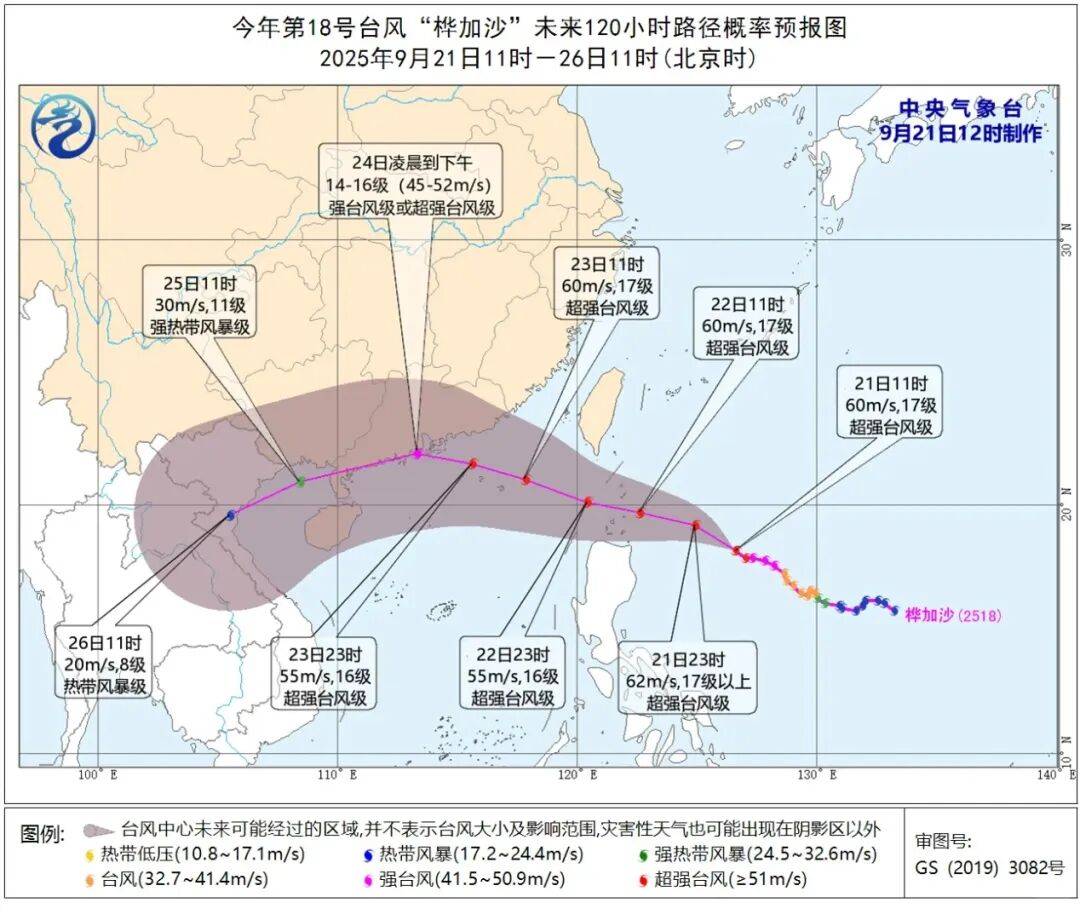
台风豪雨,打乱多少人的十一计划?
Hu Xiu· 2025-09-24 00:39
距离国庆假期还有一周,身边不少朋友却陷入了要不要退机票的纠结。 早在今年暑期,家在上海的朋友小龙就锁定了三亚某五星酒店的国庆套餐,机票也抢在涨价之前定好,早去晚回,一切看上去挺好。 周一开始,西北太平洋的"风王"桦加沙台风对海南旅游的影响逐渐明显之际,小龙还信誓旦旦地称"牛马的假期不容更改,管它下不下雨,下刀子我都要 去。" 但台风它真来了,去程航班被取消了,连返程机票也得跟航空公司打电话退掉。 小龙说:"我真没想到,海不蓝、风很大我都能忍,但航班取消,是真的一点机会不给啊。" 另一位朋友小美,更无奈。 她原本定的是9月26日飞三亚,五天后返程的错峰短假期,时间很巧,正好撞在台风离境前后。 01 "到底要不要退票啊?有没有懂的人来说说看?"她把三亚的天气截图贴在社交媒体上。 虽然当地官方发布消息称"台风天气对海南旅游影响不大",但一眼看去全是雨的天气预报,让小美完全提不起兴趣了。 下面的评论区,更是有人直白留言:"为了让你们来海南旅游直接说无影响,到时候下雨让你们酒店住着。" 十一暴雨台风,这不仅是旅客们的烦恼。 广东某热门景区酒店负责人A先生告诉我,今年暑期他们就受天气影响吃了大亏,好不容易熬到国庆黄金周前 ...

Wheat And Soybean In September: Caught In The Crossfire Of Regulation, Geopolitics And Tariffs
Benzinga· 2025-09-18 17:56
As we enter the final quarter of 2025, the global commodity markets for wheat and soybeans are once again proving to be highly sensitive to a complex interplay of geopolitical events, shifting trade policies, and distinctive weather patterns for this time of the year. While the weather in the U.S. proved to be a make-or-break factor for soybeans during the critical pod-filling period, with 22% of U.S. acreage in drought by early September, the overall domestic output remains essentially unchanged from the p ...