
商品消费

Search documents
“十四五”期间居民服务性消费年均增长9.6%
news flash· 2025-07-18 02:54
Core Insights - During the "14th Five-Year Plan" period, China's service consumption is expected to grow at an average annual rate of 9.6%, outpacing goods consumption [1] - Cumulative imports of consumer goods are projected to reach 7.4 trillion yuan from 2021 to 2024, highlighting China's significant contribution to global market growth [1] - The "Buy in China" initiative and optimized tax refund policies for outbound tourists are expected to boost inbound tourist spending to 94.2 billion USD in 2024, representing a 77.8% increase [1] Group 1 - The average annual growth rate of service consumption is 9.6% from 2021 to 2024 [1] - Cumulative imports of consumer goods are estimated at 7.4 trillion yuan during the same period [1] - The increase in inbound tourist spending is driven by the "Buy in China" initiative [1] Group 2 - The growth in service consumption is faster than that of goods consumption [1] - The "Buy in China" campaign aims to enhance the attractiveness of Chinese products to international visitors [1] - The expected total spending by inbound tourists in 2024 is 94.2 billion USD, marking a significant increase [1]
促消费进入新阶段,18万亿服务消费潜能如何进一步释放?
Sou Hu Cai Jing· 2025-07-03 08:20
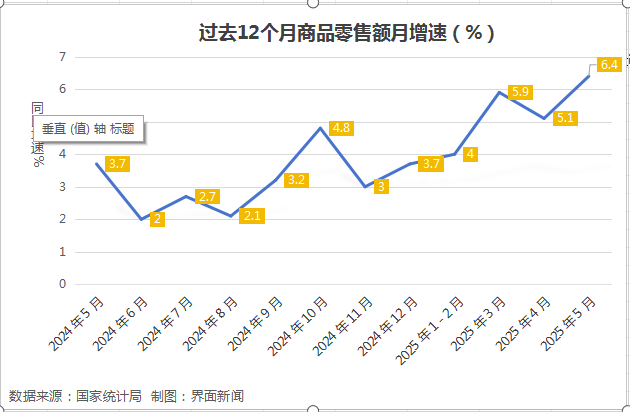
Core Viewpoint - The Chinese government is focusing on boosting consumption, particularly in the service sector, as a key economic strategy to adapt to changing consumer behavior and external uncertainties [1][3][5]. Group 1: Government Initiatives - In June, the People's Bank of China and other ministries issued guidelines to support consumption, emphasizing service consumption in areas like home services, elderly care, and cultural tourism [1]. - A new policy was introduced to provide 500 billion yuan in loans aimed at enhancing service consumption and supporting the elderly care sector, effective until the end of 2027 [9]. Group 2: Consumption Trends - In the first five months of 2024, retail sales of goods grew by 5.1% year-on-year, while service retail sales showed a slower growth of 5.2%, indicating a shift in consumer spending patterns [1][3]. - The average per capita service consumption expenditure in China is projected to reach 13,000 yuan in 2024, translating to a total service consumption expenditure of 18.3 trillion yuan nationwide [1]. Group 3: Economic Context - Analysts suggest that as the effectiveness of the "old-for-new" consumption subsidy policy diminishes, service consumption will become the primary driver for consumption growth in the latter half of the year [3]. - China's per capita GDP has surpassed 13,000 USD, indicating a transition towards a service-oriented consumption structure, similar to trends observed in developed countries [5][6]. Group 4: Challenges and Opportunities - Despite the growth in service consumption, there remains a significant gap compared to developed nations, with service consumption accounting for only 45.2% of total consumption in China, compared to 54.3% in the US and South Korea [6]. - Factors limiting service consumption include disposable income levels and social security systems, suggesting that improvements in these areas could enhance consumer confidence and spending [7][8]. Group 5: Recommendations for Growth - Analysts recommend increasing disposable income through job creation and enhancing social security, such as raising pension benefits, to stimulate service consumption [7]. - There is a call for targeted policies, such as consumption vouchers and subsidies, to specifically encourage service consumption, which is currently lagging behind goods consumption [8].

金融促消费路线明晰:政策重心转向服务消费和供给端
Xin Lang Cai Jing· 2025-06-26 02:40
Core Viewpoint - The recent issuance of the "Guiding Opinions on Financial Support to Boost and Expand Consumption" marks a shift in policy focus from goods consumption to service consumption, emphasizing the cultivation of supply rather than merely stimulating demand [1] Group 1: Policy Changes - The "Opinions" outline 19 specific measures across six areas to enhance consumer capacity, cultivate demand, and improve the specialized service capabilities of financial institutions [1] - Service consumption is highlighted as a key area, mentioned 13 times in the document, while goods consumption is referenced only twice [1] Group 2: Economic Context - In May, retail sales of goods increased by 6.5% year-on-year, showing a 2.6 percentage point improvement from December of the previous year, while service sector growth was more subdued at 6.2%, down 0.3 percentage points from December [1] - Analysts suggest that the marginal effects of the old-for-new consumption policy will weaken, indicating limited growth potential for goods consumption, whereas service consumption still holds significant potential [2] Group 3: Supply-Side Focus - The "Opinions" emphasize the importance of optimizing supply alongside expanding demand, aiming for a virtuous cycle in production, distribution, and consumption [2] - Future policies may focus on increasing financing support for consumer enterprises and investing in service consumption infrastructure, including facilities for culture, sports, healthcare, and community services [3] Group 4: Consumer Confidence - The primary constraint on consumer growth is not financial access but rather macroeconomic pressures and cautious consumer sentiment regarding employment and income [4] - The "Opinions" propose measures to support employment and income growth, enhance consumer confidence, and improve financial services for small and micro enterprises [4]
商务部:5月份商品消费增速加快 家电手机等产品热销
news flash· 2025-06-19 07:59
Core Insights - In May, China's retail sales of goods increased by 6.5% year-on-year, accelerating by 1.4 percentage points compared to the previous month [1] - Retail sales of goods in above-designated size enterprises grew by 8.2%, with an acceleration of 1.6 percentage points from the previous month [1] Group 1: Consumer Trends - The policy of replacing old consumer goods with new ones has shown a significant impact, with retail sales of home appliances, communication equipment, cultural and office supplies, and furniture increasing by 53.0%, 33.0%, 30.5%, and 25.6% year-on-year, respectively [1] - The retail volume of passenger cars in May saw a year-on-year increase of 13.3% according to data from the Automobile Circulation Association [1] Group 2: Upgraded Product Sales - Sales of upgraded consumer goods have experienced rapid growth, with retail sales of sports and entertainment products and gold and silver jewelry increasing by 28.3% and 21.8% year-on-year, respectively [1]
服务消费的新特征(国金宏观孙永乐)
雪涛宏观笔记· 2025-06-03 05:43
Core Viewpoint - The article discusses the recovery and trends in service consumption in China, highlighting the differences between service and goods consumption growth, as well as the performance of various sectors within service consumption. Group 1: Service Consumption Trends - Service consumption has shown a strong rebound for about a year, with a notable increase in growth rates for service retail compared to goods retail. In 2023, service retail grew by 20%, significantly outpacing the 5.8% growth in goods retail. In 2024, service retail is expected to grow by 6.2%, exceeding goods retail growth by 3 percentage points [2]. - The introduction of the "old-for-new" policy in 2024 has contributed to a sustained increase in goods consumption growth, with an estimated 1.5 percentage points increase in consumption driven by this policy [2]. Group 2: Sector-Specific Recovery - The fastest recovery within service consumption is observed in cultural entertainment and dining services, with 2023 year-on-year growth rates of 39.2% and 27.6%, respectively. Their share of cash consumption increased from 3% and 7.5% in 2022 to 3.7% and 8.7% in 2023 [5]. - In 2024, the growth rates for cultural entertainment and dining services are projected to be 10.6% and 8.4%, with their shares of cash consumption rising to 3.9% and 8.9% [5]. Group 3: Urban vs. Rural Consumption - Urban residents have shown a faster recovery in tourism consumption compared to rural residents, with tourism numbers and income recovering to 97.7% and 103.8% of 2019 levels, respectively, while rural residents lag at 81.4% and 84.7% [10]. - Rural residents are more inclined to spend on food, clothing, and daily necessities, with spending growth rates in these categories exceeding those of urban residents in 2024 [10]. Group 4: Seasonal Consumption Patterns - Tourism consumption exhibits a clear holiday concentration, with the proportion of total tourism numbers and income during major holidays like May Day and National Day remaining above pre-pandemic levels, despite a slight decrease from 2020 [11]. Group 5: Per Capita Spending Trends - Per capita tourism spending rapidly recovered to 90% of 2019 levels in 2023 but has since plateaued, indicating a stabilization phase in consumer spending patterns [12]. Group 6: Dining Consumption Insights - There is a notable disparity in growth rates between dining consumption in different market segments, with lower-tier dining establishments experiencing a 6.3% growth compared to just 3% for higher-tier establishments in 2024 [16]. - The performance of dining companies varies significantly based on their market focus, with those operating in lower-tier cities showing substantial profit growth, while those in higher-tier cities face declines [18].

商务部:4月商品消费增速加快
Zhong Guo Zheng Quan Bao· 2025-05-23 21:14
Group 1 - The core viewpoint is that China's consumption market is showing stable growth, driven by effective policies and promotional activities [1][2] - In April, retail sales of goods increased by 5.1% year-on-year, with a 0.5 percentage point acceleration compared to the first quarter [2] - The "old for new" consumption policy has significantly boosted sales, particularly in home appliances, cultural office supplies, furniture, and communication equipment, with respective year-on-year growth rates of 38.8%, 33.5%, 26.9%, and 19.9% [2] Group 2 - The digital product subsidy policy has led to a notable increase in sales, with 48.8 million consumers purchasing 51.48 million digital products, generating sales of 143.26 billion yuan [1] - From January to April, retail sales of communication equipment increased by 25.4% year-on-year, ranking first among 16 categories of consumer goods [1] - The sales of new energy passenger vehicles surged by 33.9% in April, achieving a penetration rate of 51.5% [2] Group 3 - Online consumption is steadily growing, with online retail sales increasing by 7.7% year-on-year, and physical goods online retail sales growing by 5.8%, accounting for 24.3% of total retail sales [2] - E-commerce is enhancing domestic circulation and international cooperation, with significant contributions to improving consumption quality [2][3] - The integration of industrial e-commerce is facilitating foreign trade and domestic sales, with over 3,100 foreign trade enterprises participating in online activities, generating over 1.1 billion yuan in sales [3]
热点思考 | 消费困局的“盲点”?(申万宏观·赵伟团队)
申万宏源研究· 2025-05-22 01:27
Group 1 - The core issue of service consumption recovery is that it is slower compared to goods consumption, with a significant gap in service consumption tendency compared to historical trends, indicating that income may not be the primary constraint on service recovery [2][8][107] - In 2024, the gap in per capita service consumption compared to historical trends is 2,093 yuan (13.9%), while the gap for goods consumption is only 458 yuan (2.9%) [2][8][107] - The increase in working hours, averaging 6 hours and 23 minutes per day in 2023, has reduced leisure time, which is crucial for service consumption [2][19][107] Group 2 - The increase in working hours has led to a concentration of consumption during holidays, but the legal holiday days are relatively few, with only 18 days mandated for 2025, significantly lower than Japan and South Korea [3][30][108] - The service sector is a non-trade sector, and insufficient effective supply will constrain the recovery of service consumption more than that of goods consumption [4][49][109] - Employment in the service sector has decreased compared to historical trends, indicating an excess supply gap, particularly in life services such as education and entertainment [4][60][109] Group 3 - The lack of entrepreneur confidence is a significant constraint on service supply, with high industry costs and increased debt pressure contributing to this issue [6][110][111] - Investment in the service sector, especially in life services, has not kept pace with profitability, indicating a cautious investment behavior among entrepreneurs [6][90][110] - The shift in investment logic from proactive to reactive, driven by profitability, has led to a slowdown in investment growth, particularly in the health and education sectors [7][90][110]
见微知著系列专题之六:消费困局的“盲点”?
Shenwan Hongyuan Securities· 2025-05-21 10:42
Group 1: Service Consumption Recovery - Service consumption recovery is slower compared to goods consumption, with a per capita service consumption gap of 2,093 yuan (13.9%) compared to historical trends, while goods consumption gap is only 458 yuan (2.9%) and optional goods consumption gap is 450 yuan (6.2%) [3] - The increase in working hours has led to a reduction in leisure time, with average paid labor time increasing by 2 hours daily, resulting in a weekly average of 44.7 hours in 2023, which is 13.9 hours more than in 2018 [3][21] - The concentration of consumption during holidays is increasing, with holiday sales growth of 6.8% during the 2024 May Day holiday, compared to a mere 3.7% for the same month’s retail sales [26] Group 2: Supply Constraints in Service Consumption - Insufficient effective supply in the service sector is causing slower recovery compared to goods consumption, with service employment numbers falling 3.8% below historical trends in 2023 [4][35] - The core service prices have been rising since 2022, indicating tighter supply compared to core goods prices, which are recovering better [4][35] - The supply recovery in life services, particularly in education and entertainment, is lagging, with employment in these sectors down by 6% and 2.8% respectively compared to historical trends [5][40] Group 3: Causes of Supply Constraints - Weak entrepreneur confidence is a significant factor limiting service supply, with investment in life services not keeping pace with profit margins, as seen in the entertainment sector with a sales profit margin of only 1.1% [6][53] - The cost rates in life services are high, with education and resident services at 109.4% and 104.8% respectively, reflecting a 15% and 13% increase since 2019 [7][63] - The cash flow ratio for the entertainment sector has decreased to an average of 19.8% in 2023-2024, indicating increased cash flow pressure and limiting supply expansion willingness [7][63]
国泰海通:从美日看中国消费潜力
智通财经网· 2025-05-11 00:51
Core Insights - Current per capita GDP in China is comparable to the levels of the late 1970s in the US and early 1980s in Japan, indicating significant potential for growth in the consumption market as it surpasses the $10,000 threshold [1] - The transition from goods consumption to service and cultural consumption will create numerous investment opportunities, driven by a large domestic market and ongoing consumption upgrades [1] Comparison of Economic and Consumption Markets - The US has the largest GDP and consumption market globally, characterized by a relatively young population, high income levels, and a tendency towards advanced and credit consumption [1] - Japan faces challenges from an aging population, leading to more rational consumer behavior focused on high cost-performance ratios, with a slower economic growth rate [1] - China, with a population of 1.4 billion, has a vast domestic market with continuous growth in retail sales, but lower per capita disposable income and consumption tendencies, suggesting significant room for improvement and potential in consumption upgrades and lower-tier markets [1] Historical Context of Service Consumption - In the 1970s, the US entered a phase where service consumption surpassed goods consumption, with the share of service spending increasing from 50.7% in 1970 to an estimated 68.5% in 2024 [2] - This shift led to a decline in spending on goods such as food, clothing, and automobiles, while expenditures on health care, financial insurance, and cultural entertainment surged, driving employment growth in the service sector [2] Japan's Consumption Shift - In the early 1980s, Japan's per capita GDP exceeded $10,000, marking a transition from goods to higher-level service consumption, with a focus on experiences and satisfaction [3] - By 1994, service consumption in Japan surpassed goods consumption for the first time, maintaining around 60% share thereafter, establishing the service sector as a key driver of GDP growth [3]
