
国产替代

Search documents
纳芯微(02676) - 海外监管公告
2026-03-30 13:54
(股份代號:2676) 香港交易及結算所有限公司及香港聯合交易所有限公司對本公告之內容概不負 責,對其準確性或完整性亦不發表任何聲明,並明確表示,概不對因本公告全部 或任何部分內容而產生或因依賴該等內容而引致之任何損失承擔任何責任。 Suzhou Novosense Microelectronics Co., Ltd. 蘇州納芯微電子股份有限公司 (於中華人民共和國註冊成立的股份有限公司) 王升楊先生 海外監管公告 香港,2026年3月30日 截 至 本 公 告 日 期,本 公 司 董 事 包 括:(i)執 行 董 事 王 升 楊 先 生、盛 雲 先 生、王 一 峰 先生及姜超尚先生;(ii)非執行董事吳傑先生;及(iii)獨立非執行董事洪志良博士、 陳西嬋博士、王如偉先生及杜琳琳女士。 本公告乃根據香港聯合交易所有限公司證券上市規則第13.10B 條而作出。 茲 載 列 蘇 州 納 芯 微 電 子 股 份 有 限 公 司(「 本公司 」)於 上 海 證 券 交 易 所 網 站 (www.sse.com.cn) 所刊發的公告,僅供參考。 承董事會命 蘇州納芯微電子股份有限公司 董事長兼執行董事 苏州纳芯微电子 ...
秦川机床(000837) - 2026年3月30日投资者关系活动记录表
2026-03-30 12:26
Group 1: Company Performance - In 2025, the company achieved a revenue of CNY 4.09 billion, an increase of 5.96% compared to the previous year [4] - The net profit attributable to shareholders was CNY 52.89 million, a decrease of 1.65%, but adjusted for stock incentive expenses, the net profit was CNY 71.22 million, an increase of 32.42% [5] - Earnings per share for 2025 was CNY 0.0520 [5] Group 2: Future Projections - The company aims to increase its market share in the robotics sector, with a focus on large clients and expanding its customer base [3] - The RV reducer product line includes over 50 specifications and is expected to continue growing in sales and revenue in 2026 [3] - The company plans to release new products, including high-efficiency CNC internal and external thread grinding machines, in April 2026 [9] Group 3: Market Position and Strategy - The company has established partnerships with leading domestic robot manufacturers, although specific client names are confidential [2] - The high-end industrial mother machine innovation base has successfully developed a product matrix covering over 20 models, enhancing its market presence in key industries [4] - The company is committed to addressing key challenges in high-end machine tools, including high-end CNC systems and precision detection [8] Group 4: Financial Management and Investor Relations - The company has implemented cash dividends and buybacks totaling CNY 82.10 million from 2023 to 2025, emphasizing its commitment to investor returns [8] - The company regularly conducts asset impairment tests and has accounted for CNY 103 million in impairments, ensuring asset quality [7] - Future performance will be closely monitored and reported in quarterly updates, with expectations for growth in the first quarter of 2026 [8]

《化工周报26/3/23-26/3/27》:高油价下关注煤化工等能源套利以及农药板块,SEMICON 展现国产替代加速趋势-20260330
Shenwan Hongyuan Securities· 2026-03-30 11:18
Investment Rating - The report maintains an "Optimistic" rating for the chemical industry [3][4]. Core Insights - The report highlights the impact of geopolitical tensions on oil prices, suggesting that the oil price center may remain elevated throughout the year. It emphasizes the potential for significant arbitrage opportunities in coal chemical, natural gas chemical, and chlor-alkali sectors due to high oil prices [3][4]. - The report also notes the acceleration of domestic substitution trends in the semiconductor sector, with a focus on new product launches from domestic equipment manufacturers [3][4]. - The agricultural sector is experiencing a price surge in pesticide products, driven by supply constraints and rising costs of raw materials [3][4]. Summary by Relevant Sections Macro Economic Judgments - Oil prices are expected to remain high due to geopolitical factors, while coal prices are stabilizing at a low level. Natural gas prices may rise temporarily due to conflicts, but costs for imported natural gas are anticipated to decrease [3][4]. Chemical Sector Configuration - The report suggests a focus on four areas for investment: alternative energy (coal chemical, natural gas chemical, chlor-alkali), agriculture, fine chemicals with high overseas production capacity, and sub-industries with favorable supply-demand dynamics [3][4]. Key Companies to Watch - In the coal chemical sector, companies like Baofeng Energy, Hualu Hengsheng, and Luxi Chemical are highlighted. For natural gas chemicals, attention is drawn to Satellite Chemical and Wanhua Chemical. In agriculture, Yangnong Chemical and Runfeng shares are recommended [3][4]. Semiconductor Materials - The report emphasizes the importance of key materials in the semiconductor industry, recommending companies such as Yake Technology and Dinglong Co. for their potential in domestic substitution and material breakthroughs [3][4]. Price Trends - The report provides specific price movements for various chemicals, including a rise in methionine prices to 48 CNY/kg, and a notable increase in helium prices from 87.5 CNY/m³ to 100.5 CNY/m³ [3][4].


高油价下关注煤化工等能源套利以及农药板块,SEMICON展现国产替代加速趋势
Shenwan Hongyuan Securities· 2026-03-30 09:29
Investment Rating - The report maintains an "optimistic" rating for the chemical industry [3][4]. Core Insights - The report highlights the impact of geopolitical tensions on oil prices, suggesting that the oil price center may remain elevated throughout the year. It emphasizes the potential for significant arbitrage opportunities in coal chemical, natural gas chemical, and chlor-alkali sectors due to high oil prices [3][4]. - The report notes a bullish trend in the agricultural chemicals sector, with many pesticide products experiencing price increases following the CAC Global Agricultural Exhibition. It suggests that the price hikes may exceed expectations [3][4]. - The semiconductor sector is showing accelerated trends in domestic substitution, with local equipment manufacturers launching new products and material companies successfully ramping up production [3][4]. Summary by Sections Macro Economic Judgments - Oil prices are expected to remain high due to geopolitical factors, while coal prices are stabilizing at a low level. Natural gas prices may rise in the short term due to conflicts, but costs for imported natural gas are anticipated to decrease [4][5]. Chemical Sector Configuration - The report suggests focusing on four areas for investment: alternative energy (coal chemical, natural gas chemical, chlor-alkali), agricultural chemicals, fine chemicals with high overseas production capacity, and sub-industries with favorable supply-demand dynamics [3][4]. - Specific companies to watch include Baofeng Energy, Hualu Hengsheng, Luxi Chemical, and Weixing Chemical in the coal chemical sector; Yangnong Chemical and Runfeng Co. in the agricultural sector; and Xinjiang Tianye and Wanwei High-tech in chlor-alkali [3][4]. Price Trends and Market Dynamics - The report provides detailed price movements for various chemicals, including a rise in methionine prices by 8.5 CNY/kg to 48 CNY/kg, indicating strong price transmission and continued bullish sentiment [3][4]. - The report also notes that the PPI for industrial products decreased by 0.9% year-on-year but increased by 0.4% month-on-month, reflecting ongoing market adjustments [5][6]. Key Material Focus - The report emphasizes the importance of self-sufficiency in key materials, particularly in the semiconductor sector, where companies like Yake Technology and Dinglong Co. are highlighted for their growth potential [3][4].
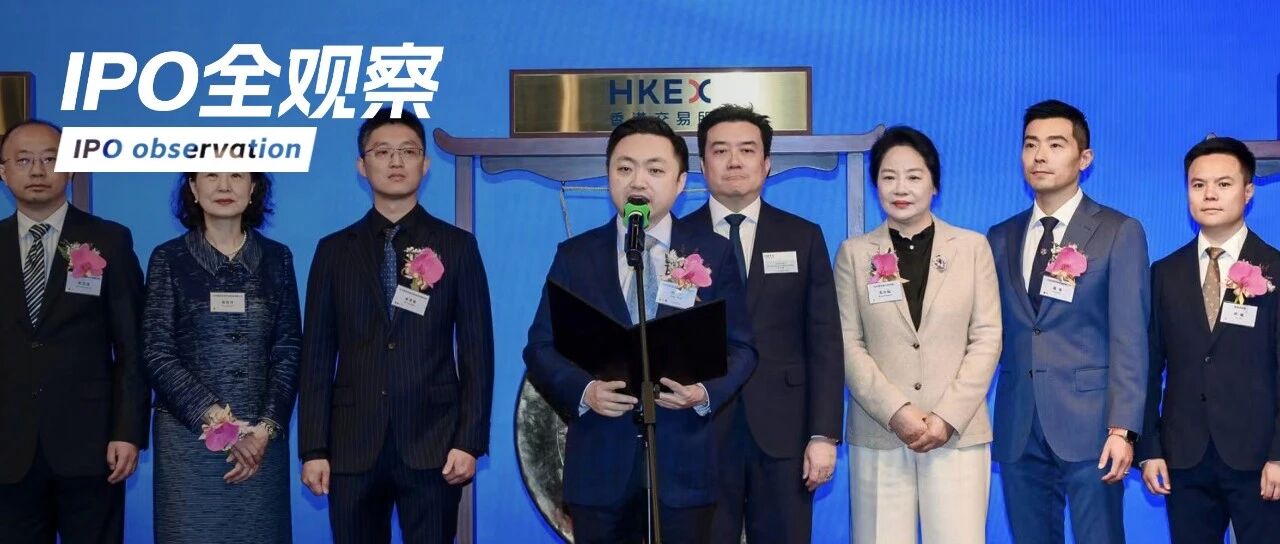
190亿港元!80后交大教授,用AI分析染色体,刚刚IPO
创业邦· 2026-03-30 08:44
Core Viewpoint - The article highlights the successful IPO of Hangzhou Deshi Biotechnology Co., Ltd., marking it as the first stock in the Hong Kong market focused on medical imaging large models, with a market capitalization of approximately HKD 19.5 billion (around RMB 17.2 billion) at opening [3][4]. Company Overview - Deshi Biotechnology operates in the niche field of chromosome karyotype analysis, utilizing AI to provide intelligent analysis solutions for medical devices [4][20]. - The company has developed AI AutoVision® software and MetaSight® scanning system, automating the entire process from image scanning to result interpretation, significantly improving efficiency [4][24]. - In the first three quarters of 2025, the company reported revenue of RMB 112 million, a 470% year-on-year increase, with a gross margin of 75.9% [4][32]. Market Position - According to a report by Frost & Sullivan, Deshi Biotechnology holds a 30.6% market share in China for chromosome karyotype analysis, ranking first, whereas previously, over 95% of the market was dominated by German companies Zeiss and Leica [4][36]. - The market for chromosome karyotype analysis in China is projected to grow from RMB 120 million in 2019 to RMB 166 million by 2024, indicating a stable growth trajectory [36]. Founder Background - The founder, Song Ning, has a diverse academic background in computer science and medical genetics, which has influenced the company's innovative approach to integrating AI in medical diagnostics [8][9][10]. - Song Ning's vision was driven by the need for advanced genetic testing solutions in China, where a significant portion of couples face reproductive challenges due to genetic diseases [10][11]. Product Development - Deshi Biotechnology's AI AutoVision significantly reduces the analysis time for samples from approximately 34.1 minutes to about 11.3 minutes, allowing a single doctor to process around 50 samples daily [24][22]. - The company has developed a comprehensive product matrix that includes software, hardware, reagents, and consumables, addressing the entire workflow of chromosome karyotype analysis [22][21]. Financial Performance - The company has not yet achieved profitability but has shown a trend of narrowing losses, with net losses of RMB 56.1 million in 2023, RMB 43.4 million in 2024, and RMB 36.6 million in the first nine months of 2025 [34][32]. - As of September 30, 2025, the company had cash and cash equivalents of RMB 396 million, indicating a strong cash flow position [34]. Investment and Shareholding - Major shareholders include Hangzhou Zijin Port (9.88%), Shanghai Meihong (7.48%), and several other institutional investors, reflecting a diverse investment base [5][18]. - The article notes that some investors have seen returns as high as 90 times their initial investment following the company's IPO [15][19]. Industry Trends - The article discusses the shift in the chromosome karyotype analysis market from reliance on imported technologies to domestic innovations, with Deshi Biotechnology leading this change [36][39]. - The broader AI medical imaging market in China is expected to grow from RMB 1.1 billion in 2019 to RMB 138.2 billion by 2030, highlighting the increasing demand for automated solutions in medical diagnostics [40][42].

金宏气体(688106):现场制气盈利能力稳步提升,关注氦气涨价利润弹性
Guoxin Securities· 2026-03-30 08:27
Investment Rating - The investment rating for the company is "Outperform the Market" [5][29][32] Core Insights - The company achieved a revenue of 2.777 billion yuan in 2025, representing a year-on-year growth of 9.95%, while the net profit attributable to shareholders decreased by 34.44% to 132 million yuan [11][29] - The revenue structure consists of bulk gases (42.3%), specialty gases (32.1%), on-site gas production and rental (12.9%), and gas (8.3%) [11][29] - The specialty gas segment faced pressure due to cyclical impacts from downstream industries like photovoltaics, leading to a decline in revenue and gross margin [11][29] - The company is actively pursuing mergers and acquisitions, project construction, and regional expansion to enhance its core business and mitigate the impact of declining specialty gas profits [11][29] Summary by Relevant Sections Bulk Gas Business - In 2025, the bulk gas business generated 1.173 billion yuan in revenue, a growth of 20.57% year-on-year [2][23] - The company is expanding its retail network and enhancing service capabilities in core regions while entering new markets, including a successful acquisition of CHEM-GAS in Singapore [2][23] Specialty Gas Business - The specialty gas segment reported 891 million yuan in revenue, down 7.42% year-on-year due to industry cyclicality [3][24] - The company is focusing on domestic substitution for electronic specialty gases and has successfully onboarded over 20 semiconductor clients [3][24] On-Site Gas Production - The on-site gas production and rental segment achieved 357 million yuan in revenue, reflecting a growth of 28.57% year-on-year [4][25] - The company is expanding its project capabilities and has signed significant contracts, including a breakthrough project in Spain [4][25] Helium Business Strategy - The company is strategically positioning itself in the helium market, anticipating profit elasticity from rising helium prices due to global supply disruptions [5][27] - A joint venture was established to enhance helium production and supply capabilities, targeting various sectors including semiconductors and healthcare [5][27]

光芯片专家交流
2026-03-30 05:15
Summary of Key Points from the Conference Call on Optical Chip Industry Industry Overview - The optical chip industry is experiencing a significant demand surge driven by the explosion of artificial intelligence applications, leading to a supply-demand gap in the market for optical modules, particularly 800G and 1.6T modules, which are expected to exceed 50 million units by 2027 [2][6]. Core Insights and Arguments Supply and Demand Gap - The demand for 800G and 1.6T optical modules is projected to exceed 50 million units by 2027, but there is a severe shortage in the production capacity of upstream laser chips [2][6]. - In the first half of 2026, the domestic market is expected to face a shortfall of over 1.5 million optical connectors, with Tencent alone accounting for a gap of 350K [20]. Technology Pathways - The lifecycle of single-wave 100G modules is estimated to last up to 8 years, contrary to the belief that it would be short-lived [5]. - Silicon photonics is gradually encroaching on the market share of EML technology, particularly in the 100G and 200G modulation rate range, while thin-film lithium niobate is expected to become essential for 400G and above [5][19]. Cost Structure - In silicon photonics, the value of CW lasers accounts for approximately 60% of the cost structure due to their scarcity [2][11]. - The price of single-wave 100G EML chips is around $5 to $7, while CW lasers used in silicon photonics are priced at $6 to $8, with an upward trend expected due to supply shortages [12]. Competitive Landscape - The core processing technology for 200G EML is monopolized by Japanese and American manufacturers, while domestic companies are still in the experimental or sample testing stages [2][4]. - The market share for DFB laser types (including EML and CW lasers) is approximately 70%, with VCSELs holding the remaining 30% [4]. Supply Chain Bottlenecks - The supply chain for optical emitters faces significant bottlenecks, particularly in the upstream materials and processing technology, with indium phosphide being a critical substrate material facing supply constraints [8][9]. - DSP chips are also experiencing severe shortages, with TSMC's 3nm and 5nm production capacities being insufficient to meet the demand for optical modules [10]. Additional Important Insights CPO vs NPO - CPO (Co-Packaged Optics) is expected to reduce power consumption by about 30%, but its reliability is still in question, leading to a preference for NPO (Near-Packaged Optics) among major companies like Tencent and Alibaba [2][21]. - NPO offers higher maintainability as it allows for the replacement of individual components without affecting the entire system, making it a more attractive option in the current market [21][22]. Future Market Trends - The market for 200G EML technology is dominated by foreign companies, with domestic firms lagging in production capabilities, primarily focusing on lower-speed lasers [13][15]. - The domestic optical chip industry is making strides in developing thin-film lithium niobate technology, which could present future opportunities [15]. Certification and Production Timeline - The certification cycle for new optical chip products typically takes at least six months, involving multiple testing and verification stages [17]. Market Dynamics - The domestic market is prioritizing supply to North America, exacerbating local shortages, as seen with Oracle's significant procurement activities [20]. This summary encapsulates the critical insights and dynamics within the optical chip industry as discussed in the conference call, highlighting the challenges and opportunities that lie ahead.
机床刀具研究-刀具的进击时刻
2026-03-30 05:15
Summary of Key Points from the Conference Call Industry Overview - The conference call focuses on the cutting tool industry, specifically highlighting the performance of the company 欧科亿 (Okai) and its peers in the market [1][5]. Company Performance - 欧科亿's Q1 2026 performance exceeded expectations, with profits expected to be between 180 million to 220 million yuan, averaging around 200 million yuan, marking a significant increase from approximately 50 million yuan in Q4 2025 and over 20 times year-on-year growth [2][3]. - The substantial growth is attributed to the delivery of orders from Q4 2025 and effective price transmission, with revenue expected to double year-on-year [2]. - The company anticipates continued strong performance in Q2 2026, driven by higher prices from new orders, no impact from the Spring Festival holiday, and improved capacity utilization [3][4]. Industry Dynamics - The cutting tool sector is experiencing high demand, with other companies like 华锐精密 (Huarui Precision) and 新锐 (Xinrui) also expected to report strong Q1 2026 results, indicating a broader industry trend rather than isolated company success [5]. - Tungsten prices have surged significantly since 2025, increasing over six times, which has implications for pricing strategies within the cutting tool industry [5][6]. - The cost of tungsten, which constitutes over 30% of the raw material costs, has not been fully reflected in product prices, suggesting further price increase potential [6]. Supply Chain and Pricing Strategies - Overseas brands, particularly Japanese brands like Toshiba and Mitsubishi, have reduced supply to China, leading to tight availability and price adjustments [7]. - European brands have also raised prices multiple times since 2026, with increases exceeding those of domestic brands, creating opportunities for local brands to adjust their pricing strategies [7]. Profit Potential and Market Valuation - Companies like 欧科亿, 华锐精密, and 新锐 have significant potential profits from low-cost raw material inventories, with estimates suggesting potential profits could reach several billion yuan if these materials are processed into cutting tools [8]. - If 欧科亿 achieves a profit of 800 million to 1 billion yuan in 2026, it could correspond to a market valuation of 16 billion to 20 billion yuan based on a 20x price-to-earnings ratio [8]. - The market expectations for 华锐精密 are currently low, indicating a potential discrepancy in anticipated performance [8]. Growth Strategies - In addition to core business growth, companies are exploring new business avenues. 华锐精密 is entering the tungsten recycling business, 新锐 is focusing on PCB drill bits, and 欧科亿 is expected to pursue horizontal expansion strategies [8]. - These initiatives aim to create additional growth curves, enhancing future market valuations for these companies [8].

国产手机,为什么越卖越贵?
创业邦· 2026-03-30 04:15
Core Viewpoint - The article discusses the significant price increase of Chinese smartphones, which is not merely a result of greed or cost transfer, but rather a complex interplay of technology, brand narrative, user segmentation, global compliance, and geopolitical competition [61][64]. Group 1: Price Increase Trends - Major Chinese smartphone brands like vivo, Xiaomi, and OPPO are raising prices across all segments, with flagship models starting at 4399 yuan for vivo and 4499 yuan for Xiaomi [6][8]. - The price increase is described as a silent revolution, moving from high-end models to all price ranges, reflecting a shift in the market dynamics [5][8]. - Consumers express frustration over rising prices while simultaneously opting for installment plans, indicating a disconnect between income growth and smartphone pricing [10]. Group 2: Memory Chip Price Surge - The surge in memory prices is attributed to the dominance of Korean companies like SK Hynix, which have shifted their production focus to higher-margin products, leading to a supply crunch for standard DRAM and LPDDR [12][22]. - The BOM (Bill of Materials) cost for flagship smartphones is projected to increase from 18% in 2024 to 25% in 2026 due to rising memory costs [22]. - The competitive landscape has changed, with smartphone manufacturers losing bargaining power as suppliers tighten their pricing strategies [25]. Group 3: Display Technology Independence - Chinese display manufacturers like BOE are achieving technological parity with Samsung, marking a shift in the supply chain dynamics and reducing reliance on a single supplier [27][32]. - The introduction of advanced display technologies by domestic manufacturers allows smartphone brands to differentiate their products without being constrained by Samsung's supply terms [32]. - Although the cost of domestic displays is currently higher by 8%-12%, manufacturers are willing to pay for the security and independence it provides [32]. Group 4: Chipset Pricing and Self-Development - Qualcomm continues to increase prices for its chipsets, which has led to a growing concern among Chinese smartphone manufacturers about their dependency on a single supplier [38][39]. - The trend of self-developed chips is gaining momentum, with companies like Xiaomi and OPPO aiming to cover a significant portion of their flagship models with in-house solutions by 2026 [41][43]. - The strategy of gradually replacing high-cost components with self-developed alternatives is seen as a way to mitigate risks associated with reliance on external suppliers [44]. Group 5: Consumer Behavior and Market Dynamics - The average smartphone replacement cycle in China has extended from 24 months in 2019 to 30-36 months by 2026, prompting manufacturers to adjust their pricing strategies accordingly [49]. - Brands are leveraging AI capabilities to redefine the value proposition of smartphones, encouraging consumers to pay for "intelligence" rather than just hardware [50][66]. - The willingness of consumers to pay a premium for AI features indicates a shift in market expectations and the perceived value of smartphones [71]. Group 6: Future Implications - The ongoing price increases and shifts in technology are part of a broader social experiment regarding value perception in the smartphone market [73]. - The outcome of this experiment will determine which brands can sustain their presence in the market, particularly in the context of rising competition from domestic chip manufacturers and changing consumer preferences [74][75].




内地工企利润显著修复:环球市场动态2026年3月30日
citic securities· 2026-03-30 03:25
Market Overview - A-shares opened lower but rebounded, with the Shanghai Composite Index rising 0.63% to 3,913.72 points, while the Shenzhen Component Index increased by 1.13%[3] - U.S. stocks fell sharply, with the Dow Jones down 1.73% to 45,166 points, and the Nasdaq dropping 2.15% to 20,948 points, amid concerns over global economic recession[10] - European markets declined, with the Euro Stoxx 600 index falling approximately 1.1%, erasing year-to-date gains[10] Commodity and Currency Movements - The U.S. dollar index surpassed 100, while gold prices rebounded nearly 3%, reaching $4,494.09 per ounce[4][27] - Crude oil prices surged, with WTI crude rising 5.46% to $99.64 per barrel and Brent crude increasing 4.22% to $112.57 per barrel due to escalating Middle East tensions[26][27] - The Japanese yen fell below the 160 mark against the dollar, reflecting market volatility[27] Corporate Earnings and Economic Indicators - China's industrial profits for January-February reached 10,245.6 billion yuan, a year-on-year increase of 15.2%, marking the highest value in four months[6] - U.S. consumer confidence dropped to a three-month low in March, as reported by the University of Michigan[6] - The European Central Bank's officials indicated potential interest rate hikes if the conflict in Iran persists beyond June[6] Sector Performance - In the Hong Kong market, healthcare and lithium battery sectors led gains, with the Hang Seng Index closing at 24,951.88 points, up 0.38%[12] - In the U.S., large tech stocks faced significant declines, with Meta and Amazon both dropping around 4%[10] - The energy sector in the U.S. saw gains due to rising oil prices, with Chevron increasing by 1.62%[10]