
国际消费中心城市

Search documents
奋进“十五五”·一线见闻丨中国游中国购,“来一趟怎么够”
Ren Min Ri Bao· 2026-01-20 02:37
Core Insights - The article highlights the efforts to cultivate international consumer center cities and expand inbound consumption in China, particularly in Shanghai's Yuyuan Garden area, showcasing the increasing popularity of local dining experiences among foreign tourists [1][3]. Group 1: Inbound Tourism and Consumer Experience - The implementation of the "immediate refund" policy for departure tax has significantly enhanced the shopping experience for inbound tourists, allowing for quick and efficient tax refund processes [2]. - The proportion of foreign tourists in the Yuyuan area has exceeded 30%, with a notable increase in visitors from Southeast Asia and the Middle East following the expansion of visa-free policies [3]. - Popular purchases among foreign tourists include traditional cultural products, non-heritage cuisine, and handicrafts, with items like silk scarves and traditional Chinese clothing being particularly favored [3]. Group 2: Service Enhancements and Cultural Integration - Yuyuan Mall has improved its service offerings for inbound tourists by providing bilingual menus, staff language training, and integrating digital payment solutions like Alipay and "Alipay+" [3]. - The establishment of a centralized tax refund point in the Bund Financial Center will connect multiple shopping venues, creating a seamless shopping and cultural experience for tourists [2]. - Future initiatives include enhancing cultural immersion experiences and expanding language support during events like the Yuyuan Lantern Festival to attract more international visitors [4].

中国游中国购,“来一趟怎么够”
Xin Lang Cai Jing· 2026-01-19 23:21
Core Insights - The article highlights the growing trend of inbound tourism and consumption in China, particularly in Shanghai, as international visitors experience local culture and convenience in shopping [1][6]. Group 1: Inbound Tourism Growth - Shanghai's tourism sector is witnessing a surge in international visitors, with over 30% of tourists being from abroad, particularly from Southeast Asia and the Middle East [4]. - The implementation of visa-free policies has diversified the sources of tourists, contributing to increased inbound consumption [4]. Group 2: Consumer Experience Enhancements - The introduction of the "immediate refund" policy for tax refunds has significantly improved the shopping experience for international tourists, with a reported 500% increase in tax refund applications since its implementation [3]. - Retailers are enhancing services for foreign visitors by providing bilingual menus, foreign language training for staff, and international payment options, such as Alipay [2][4]. Group 3: Popular Products and Cultural Engagement - Traditional cultural products, non-heritage cuisine, and handicrafts are the top three categories purchased by international tourists, with items like silk scarves and traditional crafts being particularly popular [4]. - Events like the Yuyuan Garden's cultural festivals are attracting tourists to engage with traditional crafts, enhancing their overall experience [4]. Group 4: Future Strategies - The company aims to continue innovating immersive cultural experiences to attract more international tourists during the 14th Five-Year Plan period [5].
“四中心”引擎 制度型开放突破“十五五”启幕千年商都新纪元
Nan Fang Du Shi Bao· 2026-01-19 23:12
Core Viewpoint - The construction of an international consumption center city and high-quality foreign trade development are key supports for Guangzhou's economic stability and progress during the transition from the "14th Five-Year Plan" to the "15th Five-Year Plan" [4]. Group 1: Consumption Enhancement - Guangzhou's retail sales are projected to grow by 5.5% in 2025, following a 26% increase over the past five years [6]. - The "Yangcheng New Eight Scenic Spots" initiative aims to boost consumption through over 2,000 themed events, including international shopping festivals and gourmet weeks, generating over 900 billion yuan in sales [6][7]. - The city will continue to optimize the consumption environment by expanding the number of tax refund stores to 1,620 and enhancing cross-border payment options [7]. Group 2: Foreign Trade Growth - Guangzhou's foreign trade is expected to reach 1.2 trillion yuan in 2025, with a growth rate of 10.4%, driven by a 17.3% increase in trade with non-U.S. markets [8]. - The "New Three Samples" products have seen an export increase of nearly 70%, becoming a new growth engine for the economy [8][9]. - Key strategies for 2026 include diversifying markets, supporting leading enterprises, and enhancing new foreign trade formats [9]. Group 3: Open Upgrades - Guangzhou aims to enhance its high-level opening-up system, focusing on the Guangdong-Hong Kong-Macao Greater Bay Area and expanding the service industry [10]. - The city has established a robust open matrix, including one free trade zone and multiple national-level economic development zones [10][11]. - Future initiatives will include platform innovation, port upgrades, and leveraging the exhibition economy to stimulate industrial upgrades [11].

连续五年破万亿,广州“万亿消费”如何炼成?
2 1 Shi Ji Jing Ji Bao Dao· 2026-01-19 16:14
Core Viewpoint - Guangzhou has become the third city in China to achieve a "double trillion" in consumption and foreign trade, with specific growth targets set for GDP, fixed asset investment, and total retail sales by 2026 [1][2]. Economic Growth Targets - The GDP growth target for Guangzhou is set at around 5% by 2026, with fixed asset investment, total retail sales, and total import-export value also targeted to grow by 5% [1]. - The total retail sales of social consumer goods are expected to exceed 1.1 trillion yuan, growing by 5.5% by 2025, while total import-export value is projected to exceed 1.2 trillion yuan, with a growth rate of 10.4% [1]. Consumption as Economic Driver - Consumption is highlighted as a key driver for economic recovery, with Guangzhou's retail sales exceeding 1 trillion yuan for five consecutive years since 2021 [1]. - The city aims to explore both domestic and international demand potential as a primary task this year [1]. Policy Initiatives - Guangzhou has introduced a series of policy measures, including 33 initiatives to boost consumption, 23 to promote service trade, and 33 for high-quality development of business districts [2]. - The city is focusing on creating a vibrant and competitive consumer market by enhancing retail innovation and optimizing the consumption environment [2]. Cultural and Tourism Integration - The cultural and tourism sectors are seen as vital for enhancing consumer spending, with suggestions to integrate cultural scenes with technology to create new attractions [5]. - The government emphasizes the importance of developing cultural tourism as a means to stimulate consumer willingness to spend [4]. International Consumption Center - Guangzhou is working towards becoming an international consumption center, with plans to implement consumption upgrade initiatives and enhance the international consumption environment [6]. - The city aims to leverage its cultural heritage and modern commercial projects to create unique shopping experiences [3]. Event-Driven Consumption - The city plans to host numerous large-scale concerts and events, with 53 major concerts scheduled this year, featuring popular artists [7]. - There is a focus on developing event-driven economies, including sports and entertainment, to enhance consumer engagement [7]. Trade and Investment Strategies - Guangzhou aims to stabilize foreign trade and investment, with plans to enhance the influence of the Canton Fair and promote integrated development of domestic and foreign trade [8]. - The city is also looking to expand its international trade capabilities and support innovative enterprises in attracting foreign investment [8].
魏敏:消费提质、外贸增效、开放升级,千年商都开启新纪元
Nan Fang Du Shi Bao· 2026-01-19 16:00
Group 1 - The core viewpoint of the article emphasizes the importance of Guangzhou's economic development strategies during the "14th Five-Year Plan" and the transition into the "15th Five-Year Plan," focusing on enhancing domestic demand and building a modern industrial system [2][3] - The 2026 Guangzhou government work report outlines ten key areas for economic and social development, including deepening consumption potential, accelerating the construction of a modern industrial system, and promoting education and talent development [2] - The article highlights the role of the "International Consumption Center City" and high-quality foreign trade development as critical supports for Guangzhou's economic stability and growth [3][8] Group 2 - Guangzhou's retail sales and import-export indicators have shown growth rates exceeding national and provincial averages, contributing positively to the city's economic growth [6] - The city plans to implement special actions to boost consumption and enhance foreign trade quality, aiming to build a more resilient international trade center [7][8] - The "New Eight Scenic Spots of Consumption" initiative aims to stimulate new consumption trends through various promotional activities, with a projected retail sales growth of 5.5% in 2025 [9][10] Group 3 - In 2025, Guangzhou's foreign trade is expected to reach 1.2 trillion, with a growth rate of 10.4%, driven by strong performance in non-U.S. markets [11][12] - The city aims to diversify its market by expanding into non-U.S. markets and organizing procurement activities, while also supporting leading enterprises in the foreign trade sector [12] - Key measures for enhancing foreign trade include promoting new business models, improving export quality, and establishing national-level import trade innovation demonstration zones [12][13] Group 4 - Guangzhou is focusing on institutional openness to drive high-quality development, with plans to deepen service industry reforms and enhance connectivity with Hong Kong and Macau [13][14] - The city aims to upgrade its port facilities and improve the business environment to facilitate smoother internal and external circulation [14] - The article discusses the importance of the exhibition economy in promoting industrial upgrades and fostering a favorable ecosystem for trade and consumption [14]
静安 骨架“两轴”定格局 经络“绣带”活全域
Xin Lang Cai Jing· 2026-01-17 07:27
Core Viewpoint - The article discusses the strategic development plan for Jing'an District over the next five years, focusing on the construction of a spatial layout known as "two axes, one belt, and three areas" to enhance resource allocation and promote balanced high-quality development [1] Group 1: Spatial Layout and Development Strategy - Jing'an District will accelerate the construction of a spatial layout consisting of two main axes: the high-end service leading development axis along Nanjing West Road and the north-south high-quality balanced development axis [1] - The Nanjing West Road axis aims to highlight its role in gathering high-end elements and strengthening leadership, positioning itself at the forefront of the city's development [1] - The north-south axis focuses on transportation corridors and functional linkages to drive overall regional progress, integrating into the city's broader development framework [1] Group 2: Ecological and Functional Development Areas - The "Σ Ecological Belt," formed by the Suzhou River, Pengyuepu, and Zhaomatang, aims to enhance regional quality and create high-quality living environments through systematic blue-green space construction [1] - The three areas, including the Nanjing West Road-Suhewang Central Vitality Area (CAZ), the Danning "Three Lives" Integration Innovation Area, and the North City International Science and Technology Innovation Area, are designed to promote coordinated development across the district [2] - The CAZ will be developed into a world-class central vitality area, gathering high-end elements and promoting integrated development [2]
万亿元消费城市之争 中部不再“缺位”
Mei Ri Jing Ji Xin Wen· 2026-01-13 17:24
Core Insights - Wuhan's GDP is projected to grow by approximately 6% by 2025, marking the highest growth rate in four years, with retail sales expected to exceed 900 billion yuan, indicating progress towards a trillion yuan consumption target [1][2] - The city is emerging as a competitive player in the consumption market, alongside Hangzhou and Nanjing, with retail sales rebounding to 700 billion yuan in 2023 and expected to surpass 900 billion yuan in 2025 [2][3] Economic Growth and Consumption - Wuhan's government aims for a retail sales target of over 1.07 trillion yuan by 2027 as part of its action plan to establish itself as an international consumption center [1] - The retail sales growth reflects a shift in consumer behavior and market dynamics, with Wuhan's consumption market showing new momentum [2] Emerging Trends and Cultural Impact - The rise of "internet celebrity" products, such as the "Garlic Bird," has provided Wuhan with a unique opportunity to enhance its cultural and consumption appeal, achieving over 1 million yuan in sales in a single month [3][4] - The cherry blossom season has become a significant draw for tourism, with over 1 million visitors in 2025, indicating a blend of cultural and commercial activities that enhance consumer engagement [4][8] Tourism and External Consumption - A significant portion of visitors during the cherry blossom season are from outside Wuhan, contributing to local economic growth, with external tourists generating approximately 1.2 billion yuan in direct consumption [8][9] - Wuhan's tourism revenue reached 217.04 billion yuan during the 2025 National Day and Mid-Autumn Festival, showcasing its position as a leading economic city [8][9] Retail and E-commerce Growth - Wuhan's online retail sales grew by 9.51% to 268.06 billion yuan in the first eight months of 2025, indicating a shift towards digital consumption [11] - The transformation of traditional retail spaces, such as Han Zheng Street, into hubs for live-streaming commerce has significantly boosted sales, with clothing revenue surpassing 100 billion yuan [11] Challenges and Opportunities - Despite strong growth, Wuhan's per capita tourism spending remains lower than that of Nanjing and Hangzhou, highlighting potential for further development in local consumption [12][14] - The city is focusing on enhancing local consumer spending through initiatives aimed at increasing disposable income and promoting new consumption trends, such as outdoor camping and electric vehicles [12][15] Strategic Positioning - Wuhan's geographical advantage as a transportation hub allows it to connect with surrounding provinces, enhancing its role as a consumption center [10] - The city's focus on emerging industries, including new energy vehicles and technology sectors, positions it to capture future consumer trends and drive economic growth [15]
场景焕新、业态融合、服务升级 北京商业多维激活消费新动能
Bei Jing Shang Bao· 2026-01-11 12:12
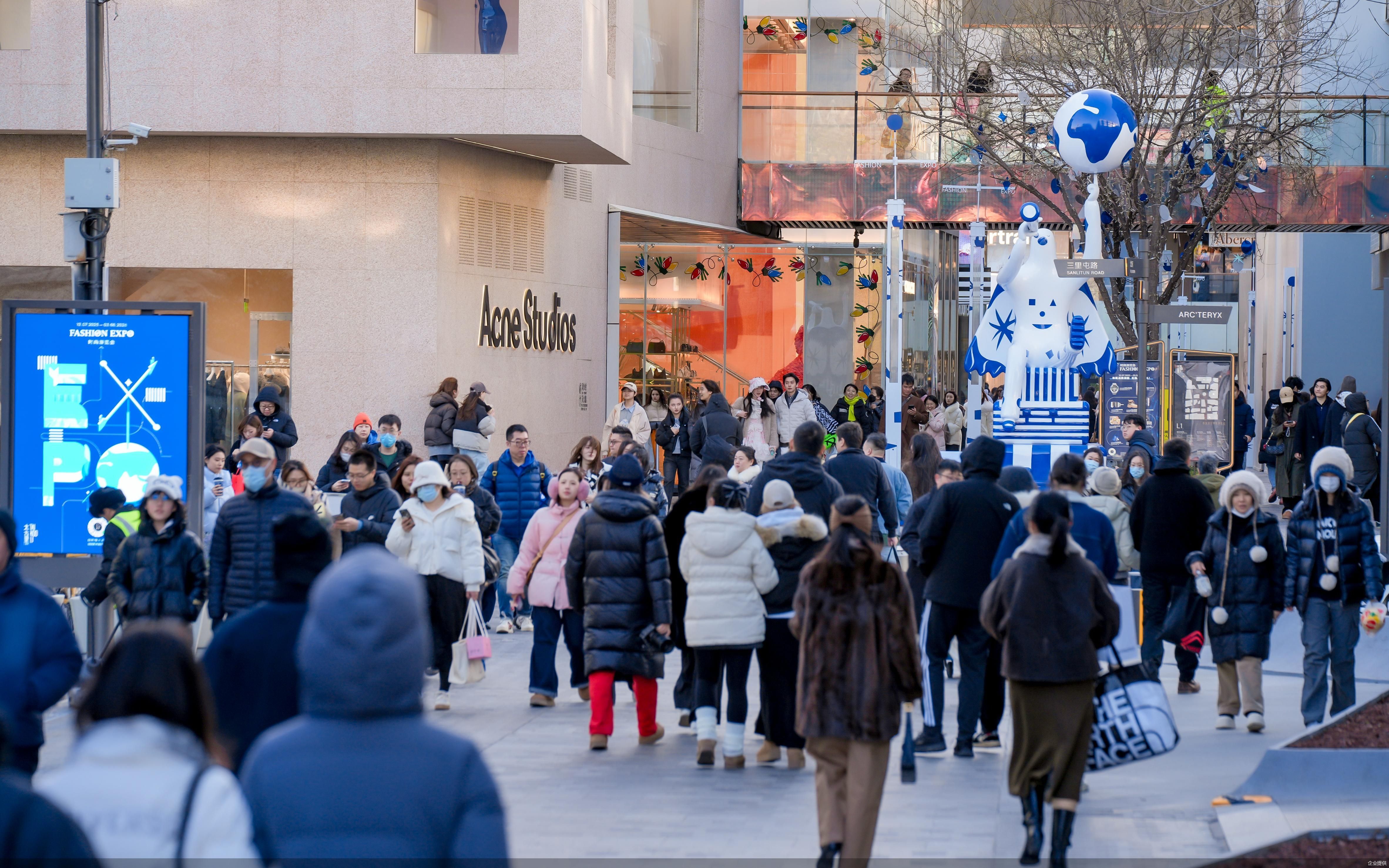
Core Insights - The national business work conference emphasized accelerating the cultivation of new growth points in service consumption and releasing the potential of service consumption [9] - Beijing has made significant progress in innovating and upgrading physical commerce, aiming to expand and upgrade commodity consumption and create an international consumption environment [1] Group 1: Commercial Supply Expansion - In the past year, Beijing's physical commerce has achieved breakthroughs in commercial supply, spatial layout, and experiential innovation, injecting strong vitality into the consumption market [4] - Over 960 new stores were added in Beijing from January to November 2025, with over 5,000 new stores established since 2019, including 12 global launch centers [4] - The city is focusing on transforming commercial spaces from "single function" to "multi-experience" through quality enhancement policies and creating a fusion matrix of various themes [5][6] Group 2: Restaurant Service Innovation - The restaurant sector has become a key driver of domestic demand, with a significant increase in customer traffic and sales during the 2026 New Year holiday [7] - Data shows that 58.1% of surveyed restaurants reported stable or increased customer flow, while 69.6% saw stable or increased takeaway orders [7] - The Beijing government is promoting high-quality development in the restaurant industry through various initiatives, including the establishment of characteristic dining streets and support for brand stores [8] Group 3: Future Outlook - Beijing's commercial strategy will focus on "scene renewal, business integration, and service upgrades," with plans to enhance the first-release economy and support the establishment of first-store gathering centers [13] - The city aims to create a more international consumption environment by improving high-quality supply, supporting international consumption clusters, and enhancing foreign payment services [13]
武汉创建国际消费中心城市 重塑“货到汉口活”
Sou Hu Cai Jing· 2026-01-07 13:52
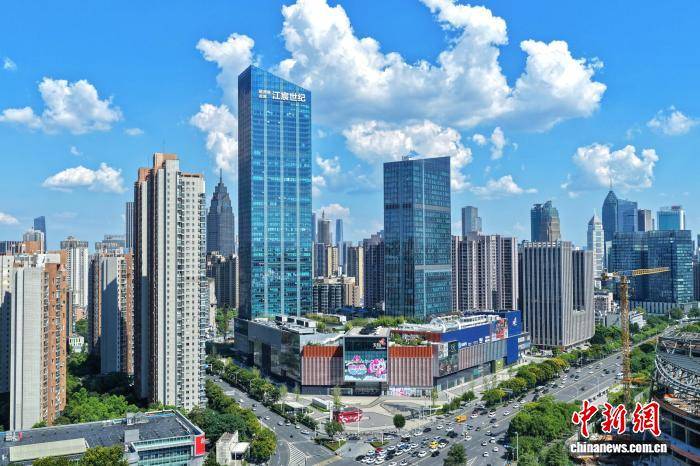
Group 1 - The core viewpoint of the article emphasizes the goal of Wuhan to actively lead a new consumption trend and reshape its historical commercial glory by accelerating the construction of an international consumption center city [1][3] - By 2025, Wuhan's retail sales of consumer goods are projected to exceed 900 billion yuan, with a year-on-year growth of approximately 5% [1] - The "Three-Year Action Plan for Creating an International Consumption Center City in Wuhan (2025-2027)" aims to establish Wuhan as a global consumption hub through the development of new consumption landmarks and diverse consumption scenarios [3] Group 2 - The current transformation of Wuhan's consumption market is shifting from "commodity purchasing" to "value consumption," focusing on immersive experiences and cross-industry integration [3] - Key supporting factors for nurturing new consumption formats in Wuhan include a solid commercial logistics foundation, its role as an economic hub, and a large population of university students [3] - Suggestions from local representatives include creating a "natural film studio" in the Hankou historical area to attract creative industries and enhancing the city's appeal through themed activities and micro-vacation destinations [5][5]
全力推动全国经济中心建设取得决定性进展
Chang Jiang Ri Bao· 2026-01-05 07:28
Core Viewpoint - The city's economic operation is showing a positive trend in 2025, laying a foundation for the "14th Five-Year Plan" and the establishment of "five centers" [1] Group 1: Economic Development Strategy - In 2026, the municipal development and reform department will take the lead in achieving the goals of building a "national economic center" and will focus on four key areas [1] Group 2: Reform and Market Initiatives - Emphasis will be placed on reform awareness, particularly in promoting market-oriented reforms of factors, expanding asset securitization, and enhancing investment and financing mechanisms to establish a nationally influential venture capital center [1] Group 3: Project Implementation - There will be a strong focus on project awareness to accelerate the construction of infrastructure and major industrial projects, as well as to enhance consumer capacity through initiatives like trade-in programs [1] Group 4: Coordination and Collaboration - The strategy includes a high-level approach to promote regional collaboration, optimize traditional industries, and foster emerging and future industries, aiming for a smart economy in the city [1] Group 5: Market Environment - The plan aims to invigorate market entities, improve the market circulation system, and create a top-tier market environment, ensuring that policies benefiting enterprises are easily accessible [1]