
多层次资本市场

Search documents
专访中金总裁王曙光:中国投行何以竞逐全球定价权
2 1 Shi Ji Jing Ji Bao Dao· 2025-12-30 08:43
在建设金融强国的时代征程中,扎实服务国内实体经济始终是投资银行的立身之本与使命所系。作为资 本市场的"看门人"和资源配置的关键枢纽,投行肩负着联通实体企业融资需求与资本市场资金供给的桥 梁作用。通过深度发挥资本中介功能,投行不仅助力提升金融资源的配置效率,更以全生命周期的综合 金融体系,精准服务国家战略,无论是科技创新、绿色低碳转型,还是先进制造、数字经济等关键领 域,均能提供从早期私募股权融资、上市到并购重组、再融资等一揽子解决方案,切实赋能企业借助资 本市场做强做优做大,筑牢高质量发展的基础。 21世纪经济报道记者 崔文静 当前,我国正加速迈向"金融强国"的新征程。作为资本市场的核心中介与关键枢纽,证券行业被赋予更 高期望:不仅要更高效地服务实体经济,还要在全球金融舞台上争取更大话语权。如何平衡"立足本 土"与"竞逐全球"这双重使命,成为券业发展的重要议题。 近日,21世纪经济报道记者专访了中金公司(601995)党委副书记、副董事长、总裁王曙光。他明确指 出,服务国内实体经济与争夺全球金融定价权是"双向赋能"、协同共进的关系。唯有深耕本土,才能锻 造国际竞争的核心能力;同时,只有争取全球定价权,才能反哺 ...

齐鲁股交成立十五周年:构建中小企业全周期服务链 筑牢多层次资本市场“塔基”
Zheng Quan Ri Bao Wang· 2025-12-29 10:30
为强化多层次资本市场衔接,齐鲁股交在全国较早推动"四板"与"新三板"制度型对接。2023年,与全国 股转公司首批签署监管合作备忘录,设立"绿色通道",推动企业实现"批量转板"。此外,齐鲁股交联合 全国性交易所、新三板共建"多层次资本市场资源联合培育基地",落地"深交所淄博基地""鲁中路演中 心",并携手"中证路演"打造山东路演中心,构建起山东中小企业"培育—辅导—路演—上市"全链条服 务矩阵。 齐鲁股交在服务体系上逐步构建起覆盖企业全成长周期的培育模式。通过打造"678"标准化梯度培育体 系,推出"上市苗圃计划""券商面对面""直通交易所"等系列服务,并与北京大学等高校合作开设"上市 云梯计划""山东省董秘领航计划"等高端培育课程,推动企业规范化运营和上市进程。截至目前,齐鲁 股交累计培育专精特新企业2917家、国家级专精特新"小巨人"253家、单项冠军16家、瞪羚企业658家, 推动88家企业实现新三板挂牌或登陆沪深北港交易所。 本报讯 (记者王僖)作为国内首批成立的区域性股权市场运营机构,齐鲁股权交易中心(以下简称"齐 鲁股交")近日迎来成立十五周年。自2010年经山东省政府批准设立以来,齐鲁股交逐步由区 ...
守“早期”护“成长” 深耕北交所服务专精特新——证券行业服务科技创新调研之开源证券样本
Shang Hai Zheng Quan Bao· 2025-12-26 18:58
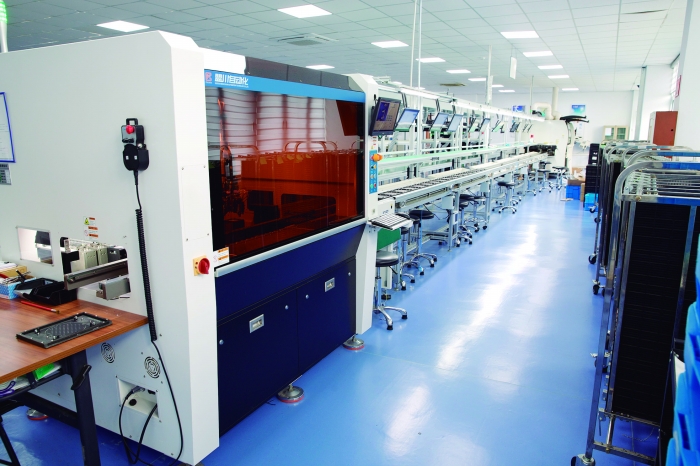
铁大科技LED信号机电子装配车间 铁大科技智能点灯装置测试流水线 ◎刘禹希 记者 李雨琪 闫刘梦 在宁夏银川,巨能股份的车间内,数台桁架机器人沿轨道排列。它们是自动化产线的核心执行单元,通 过模块化设计和智能调度系统,满足绝大多数零部件制造自动化的需求。这里生产的超过1700条自动化 产线,已应用于汽车、机器人、航空航天等高端制造领域的核心环节。 在广湛高铁沿线,铁大科技的技术团队正分组进驻多个站点。他们负责调试自主研制的信号集中监测系 统,确保这条时速350公里的高铁如期安全运行。 开源证券高新三期办公楼 巨能股份产品装配车间 一家是机器人自动化产线的"智造者",一家是轨道交通信号的"守护者"。两者看似不同,却有着相同的 特质:技术"重"、赛道"专"、成长周期"长"。它们并非资本市场常见的快速成长型公司,而是需要被深 度识别、耐心陪伴和精准赋能的技术型企业。 面对这类企业,传统投行的标准化服务模式往往难以完全适用。开源证券选择了一条更贴近企业需求的 服务路径——它不仅仅满足于发现企业,而是致力于构建一套价值发现体系,以北交所市场为依托,为 这些领域细分、技术深奥、模式独特的硬核企业,打磨出能与资本市场对话的 ...

锚定新质生产力 资本市场“含科量”迈上新台阶
Zheng Quan Ri Bao· 2025-12-25 16:07
据Wind资讯数据统计,2025年以来截至12月25日,共有111家企业成功登陆A股市场,首发募集资金合计达1253.24亿元。 其中,102家企业隶属于战略性新兴产业,覆盖新一代信息技术、新材料、高端装备制造等领域。同时,年内沪深上市公司累 计披露重大资产重组超200单,标的集中分布于半导体、信息技术、高端装备制造等关键赛道。 展望2026年,接受《证券日报》记者采访的专家普遍认为,一方面,需构建多层次资本市场互联互通新格局,打造覆盖企 业全生命周期的"金字塔"式服务体系,为创新主体提供精准金融支持;另一方面,需进一步深化注册制改革,锚定信息披露核 心环节,压实各方主体责任,完善IPO定价与二级市场估值联动的市场化约束机制,充分发挥市场在资源配置中的决定性作 用。 纵深推进差异化改革 今年以来,在中国证监会领导下,沪深北交易所紧扣高质量发展主线,通过明晰板块定位、纵深推进差异化改革,筑牢多 层次市场根基。 科创板"1+6"改革举措落地见效,科创板科创成长层成功设立并迎来首批企业,未盈利"硬科技"企业适用第五套标准上市 通道重启,为处于成长期、研发投入高的科创企业提供了专属融资通道;创业板同步发力,正式启用第 ...
广东:支持符合条件的生物医药企业与特专科技企业赴港上市融资
Jin Rong Jie· 2025-12-25 02:24
【财华社讯】12月25日,广东省地方金融管理局等10部门联合印发《广东省推动金融服务科技强省建设 工作方案》。方案提出,发挥多层次资本市场支持科技创新的关键枢纽作用。统筹运用多层次资本市场 各类工具支持科技型企业在"成长期—扩张期—成熟期"等不同阶段的发展。强化"三所一中心"协同机 制,支持各地市建立规范化、分层级、分产业的上市培育孵化体系,打造科技上市军团。引导科技型企 业适配沪深主板、科创板、创业板、北交所等各板块定位上市融资,鼓励未盈利科技型企业上市利用好 上海证券交易所科创板科创成长层、深圳证券交易所创业板第三套上市财务标准。引导科技型企业合理 用好境内外上市"两个市场、两种资源",支持符合条件的生物医药企业与特专科技企业通过港股18A、 18C赴港上市融资。引导科技型企业综合运用股份、定向可转债等各类资本工具开展并购重组,围绕重 点产业强链、补链、延链,向研发端和市场端等产业链上下游延伸。夯实区域性股权市场"塔基"功能, 高质量建设"专精特新""科技创新"专板。 本文源自:财华网 ...
决胜“十四五” 擘画“十五五”·地方资本市场高质量发展之河北篇:梯度资本融合培育 共促燕赵产业聚力新质航向
Zheng Quan Shi Bao· 2025-12-23 18:34
Core Viewpoint - During the "14th Five-Year Plan" period, Hebei's capital market has made significant progress in serving the real economy, optimizing industrial structure, and preventing market risks, achieving a remarkable increase in both quantity and quality [1] Group 1: Market Expansion and Quality Improvement - Hebei's capital market has embraced the stock issuance registration system reform, leading to a dual breakthrough in direct financing scale and quality [2] - A total of 24 new companies were listed during this period, with a diverse representation across various boards, including 5 on the main board, 1 on the Sci-Tech Innovation Board, 9 on the Growth Enterprise Market, and 9 on the Beijing Stock Exchange [2] - By the end of October 2025, the total number of listed companies in Hebei reached 84, a 37.7% increase from the end of the "13th Five-Year Plan" [2] Group 2: Direct Financing and Investment - Over 4,800 billion yuan was raised through direct financing in the capital market, with 172 billion yuan specifically directed towards strategic emerging industries such as new energy vehicles and new materials [3] - Innovative bond products like Sci-Tech bonds and green bonds have expanded, with a total outstanding scale exceeding 1,300 billion yuan [3] - The public infrastructure securities investment funds have successfully raised 10.2 billion yuan through the issuance of REITs [3] Group 3: Policy Support and Capacity Building - Hebei has established a comprehensive support system for companies aiming to go public, including the formation of a provincial enterprise listing leadership group and the issuance of supportive policies [4] - Special actions have been taken to provide targeted training for over 700 enterprises, enhancing their understanding of the listing process [4] - A structured approach to nurturing companies has been implemented, with 75% of the newly listed companies in strategic emerging industries [5][6] Group 4: Quality Enhancement and Corporate Governance - The focus on improving the quality of listed companies has been emphasized through initiatives like the "Leading Goose" program, which supports top companies in stabilizing and growing their operations [7] - By the end of October 2025, the total market value of Hebei's 84 listed companies reached 14.3 trillion yuan, a 33.2% increase from the end of the "13th Five-Year Plan" [7] - Hebei has actively encouraged companies to adopt market value management practices, with 14 companies receiving stock repurchase loan support [8] Group 5: Regulatory Framework and Risk Management - The Hebei Securities Regulatory Bureau has prioritized regulatory enforcement and risk prevention, addressing 30 cases and imposing fines exceeding 1.7 billion yuan during the "14th Five-Year Plan" [9] - A collaborative mechanism with law enforcement has been established to enhance market integrity and investor protection [9] - Continuous efforts have been made to improve investor education and establish effective complaint resolution channels [9] Group 6: Future Outlook - The "15th Five-Year Plan" period is seen as crucial for enhancing the quality and functionality of the capital market, with a focus on aligning Hebei's strategic advantages with high-quality development [10][11] - The plan includes fostering a high-quality group of listed companies and enhancing the effectiveness of regulatory enforcement [11]
天津上市公司市值超1.6万亿元
Zhong Guo Jing Ying Bao· 2025-12-22 11:41
Core Insights - The financial sector in Tianjin is projected to contribute 14.2% to the city's GDP by the end of 2024, with significant growth in total assets and market capitalization of listed companies [1][2] - The banking sector's total assets exceeded 7 trillion yuan, marking a growth of over 30% since the end of the 13th Five-Year Plan [2] - Cross-border capital settlement efficiency has improved by over 50% during the 14th Five-Year Plan period, supporting the city's open economy [4][6] Financial Sector Growth - By the end of 2024, the financial sector's added value and loan scale are expected to grow by over 20% compared to 2020 [2] - The total market capitalization of A-share listed companies has increased by 80% since 2020, reaching over 1.6 trillion yuan [2][3] - Financing leasing companies' total assets surpassed 2.3 trillion yuan, reflecting a nearly 30% increase since 2020 [2] Capital Market Financing - Tianjin has raised 1.6 trillion yuan through multi-level capital markets over the past five years, 1.6 times the total financing amount during the 13th Five-Year Plan [3] - The number of A-share listed companies in Tianjin has grown by 18% to 71, with a total market value exceeding 1.66 trillion yuan [3] - The bond issuance scale in Tianjin's market reached 1.28 trillion yuan, with 109 issuers [3] Regulatory Environment - The Tianjin Financial Regulatory Bureau has maintained a high-pressure stance on penalties, issuing 745 administrative penalties and imposing fines totaling 229 million yuan [3] Cross-Border Economic Activities - During the 14th Five-Year Plan, cross-border receipts and payments totaled over 800 billion USD, indicating stable growth despite external challenges [4][5] - The city has implemented over 50 innovative policies and pilot projects to facilitate cross-border financing, benefiting around 90,000 businesses [5][6] - The efficiency of cross-border capital settlement has improved significantly, with processing times reduced to minutes for over 600 billion USD in transactions [6]
“十四五”时期天津利用多层次资本市场融资1.6万亿元
Xin Hua Cai Jing· 2025-12-20 03:21
Core Insights - Tianjin has successfully utilized multi-level capital markets to raise 1.6 trillion yuan over the past five years, which is 1.6 times the total financing amount during the "13th Five-Year Plan" period [1] - The number of A-share listed companies in Tianjin has increased to 71, representing an 18% year-on-year growth, with a total market capitalization exceeding 1.66 trillion yuan, an 80% increase [1] - The overall quality and investment value of listed companies in Tianjin have continued to improve, with cumulative cash dividends exceeding 170 billion yuan over the past five years, which is 7.5 times that of the "13th Five-Year Plan" period [2] Group 1: Capital Market Growth - Tianjin's bond issuers have reached 109, with a bond issuance scale of 1.28 trillion yuan [1] - The number of private equity fund managers in Tianjin has reached 310, with a total scale exceeding 570 billion yuan, ranking among the top in the country [1] - The average dividend yield of listed companies in Tianjin is 3.08%, with 32 companies (45%) having paid dividends for five consecutive years [2] Group 2: Innovation and R&D Investment - Over the past five years, listed companies in Tianjin have invested over 100 billion yuan in R&D, nearly an 80% increase compared to the "13th Five-Year Plan" period [1] - The overall R&D intensity of listed companies in Tianjin is 3.01%, with key industry chain companies at 7.64% and companies on the Sci-Tech Innovation Board at 28.16% [1] Group 3: Market Reforms and Developments - Tianjin has implemented comprehensive reforms, including the full implementation of the stock issuance registration system and the introduction of policies such as "Sci-Tech 16 Articles" and "Sci-Tech Board 8 Articles" [2] - The number of companies listed on the Sci-Tech Innovation Board has doubled, and 14 companies have been listed on the A-share market [2] - The futures market has expanded, with the number of futures delivery warehouses increasing to 75, a 25% growth compared to the "13th Five-Year Plan" period [2]
安徽“十五五”规划建议:壮大多层次资本市场安徽板块 推动企业上市“迎客松行动”计划和“科创100”上市专项行动扩围提质
Zheng Quan Shi Bao Wang· 2025-12-19 00:25
人民财讯12月19日电,中共安徽省委关于制定国民经济和社会发展第十五个五年规划的建议发布,其中 提出,健全现代地方财税金融管理体制。推进财政科学管理试点,加强财政资源和预算统筹,持续深化 零基预算改革。完善国有资本经营预算和绩效评价制度。加强财会监督。健全政府债务管理制度,加强 专项债券"借用管还"全生命周期管理。全面落实税收法定原则,规范税收优惠政策,完善对重点领域和 关键环节支持机制。扎实推进金融体制改革,发挥全国融资信用服务平台作用,积极发展科技金融、绿 色金融、普惠金融、养老金融、数字金融。壮大多层次资本市场安徽板块,推动企业上市"迎客松行 动"计划和"科创100"上市专项行动扩围提质。全面加强金融监管,促进各类金融机构专注主业、完善治 理、错位发展,丰富风险处置资源和手段,构建风险防范化解体系,保障金融稳健运行。 ...
服务外包提质升级迎政策东风 多层次资本市场打开融资新空间
Zheng Quan Ri Bao· 2025-12-16 16:05
近年来,随着数字经济与全球产业链深度融合发展,我国服务外包产业加速突破传统业务范畴,从基础 信息技术外包向高附加值领域持续拓展,国际市场布局日益多元,全方位、多层次的产业发展新格局正 加快形成。 据商务部最新数据,2025年1月份至10月份,我国企业承接服务外包执行额13551.7亿元。其中,承接离 岸服务外包执行额7853.6亿元,同比增长3%。从业务结构看,我国企业承接离岸信息技术外包(ITO)执 行额3267亿元,同比增长1.9%;承接离岸业务流程外包(BPO)执行额1421.5亿元,同比增长18.4%。从 国际市场看,承接《区域全面经济伙伴关系协定》(RCEP)成员国离岸服务外包执行额合计2267.3亿元, 同比增长10.5%。承接共建"一带一路"国家离岸服务外包执行额合计2667.8亿元,同比增长12.5%。 我国服务外包产业发展对融资支持、政策配套等外部保障提出了更高要求,资本市场的精准赋能正成为 推动产业进一步提质增效的关键助力。 一方面,我国多层次资本市场体系可精准匹配不同发展阶段、不同规模服务外包企业的差异化融资需 求。特别是股债联动机制,既能为初创期企业提供股权融资支持,也能为成熟期企业拓 ...