
政府债务

Search documents
美国,突传利空!
中国基金报· 2025-10-25 16:08
Group 1 - The core viewpoint of the article is that the U.S. credit rating has been downgraded by Scope Ratings due to ongoing fiscal deterioration and weakened governance standards [2][3] - Scope Ratings has lowered the U.S. credit rating to AA-, which is three levels below its highest rating, indicating significant concerns about the country's fiscal health [2] - The agency warns that the ongoing government shutdown has increased the risk of policy missteps and reduced the predictability of U.S. policy-making [2][3] Group 2 - As of October 21, the total U.S. federal government debt has surpassed $38 trillion, marking a significant increase from $37 trillion just two months prior [3] - The International Monetary Fund (IMF) predicts that the U.S. general government debt will reach 140% of GDP within four years, an increase of 15 percentage points from 2025 [3] - Scope Ratings has maintained a negative outlook on the U.S. rating since 2023, with analysts highlighting the government shutdown as a "negative credit event" [3]


美国评级,突遭下调!发生了什么?
Zheng Quan Shi Bao· 2025-10-25 15:02
Core Points - The European credit rating agency has downgraded the U.S. sovereign credit rating from "AA" to "AA-" due to deteriorating public finances and declining government governance standards [1] - The report predicts that without substantial reforms, U.S. government debt as a percentage of GDP could rise to 140% by 2030, significantly higher than most sovereign nations [1] - The agency has assigned a "stable" outlook for the U.S. rating, indicating balanced risks for upgrades and downgrades in the next 12 to 18 months [1] Financial Condition - The U.S. public finances are characterized by persistently high fiscal deficits, rising interest expenditures, and limited budget flexibility, leading to an ongoing increase in government debt levels [1] - As of October 21, the total U.S. federal government debt has surpassed $38 trillion, marking a significant increase from $37 trillion just two months prior [2] Governance Issues - The report highlights a decline in governance standards, citing the concentration of executive power and instances of the Trump administration ignoring court orders, which has increased policy unpredictability and risk of policy errors [1] - The uncertainty in tariff negotiations with major trading partners exemplifies the governance challenges faced by the U.S. [1] Rating Agency Actions - Other rating agencies have also downgraded U.S. ratings, with Fitch downgrading the outlook for 25% of U.S. industries to "negative" due to increased uncertainty and anticipated prolonged high interest rates [3] - Moody's downgraded the U.S. sovereign credit rating from AAA to AA1 earlier this year, citing rising government debt and interest payment ratios [3] Economic Impact - The ongoing government shutdown, which has lasted for 24 days as of October 24, is projected to reduce economic growth by 0.1 to 0.2 percentage points for each week it continues [2] - The shutdown has set a record for the second-longest government closure in U.S. history, further complicating the fiscal landscape [2]
美国评级突遭下调!发生了什么?
Zheng Quan Shi Bao· 2025-10-25 14:59
Core Points - The European credit rating agency has downgraded the U.S. sovereign credit rating from "AA" to "AA-" due to deteriorating public finances and declining government governance standards [1] - The report predicts that without substantial reforms, U.S. government debt as a percentage of GDP could rise to 140% by 2030, significantly higher than most sovereign nations [1] - The agency noted that the concentration of executive power and the Trump administration's disregard for court orders have increased policy unpredictability and risk of policy errors [1] - The U.S. rating outlook is "stable," with balanced risks for upgrades and downgrades in the next 12 to 18 months [1] - As of October 21, the total U.S. federal government debt has surpassed $38 trillion, marking a significant increase in a short period [2] Financial Implications - The U.S. federal government debt reached $37 trillion in mid-August, indicating rapid growth in just over two months [2] - The ongoing government shutdown, which has lasted 24 days as of October 24, could potentially reduce economic growth by 0.1 to 0.2 percentage points for each week it continues [2] - Other rating agencies, including Fitch and Moody's, have also downgraded U.S. ratings, citing increased policy risks and long-term fiscal challenges [3] - Fitch has projected that the U.S. government deficit could remain above 7% of GDP, with debt-to-GDP ratio expected to reach 135% by 2029 [3] - Moody's downgraded the U.S. rating from AAA to AA1, reflecting a significant increase in government debt and interest payment ratios compared to similarly rated countries [3] Trade and Economic Impact - The new U.S. government's imposition of tariffs on trade partners has notably hampered the domestic economy [4]
美国债破38万亿,黄金多头还在
Jin Tou Wang· 2025-10-23 09:30
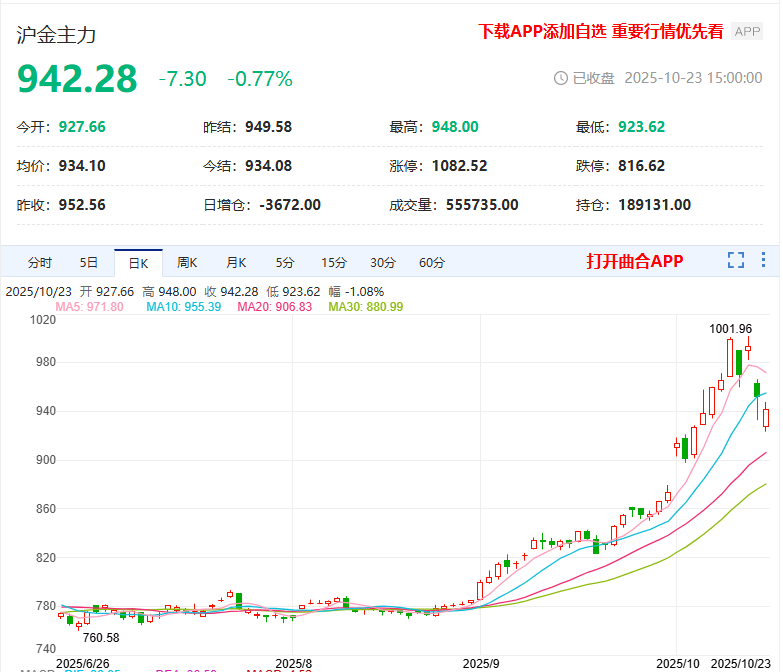
Group 1 - The total federal government debt in the United States has exceeded $38 trillion for the first time as of October 21, marking a significant increase from $37 trillion in mid-August, which occurred in just over two months [1] - The U.S. Senate has failed to pass a temporary funding bill proposed by the Republican Party, leading to a continued "shutdown" stalemate, with this being the 12th vote to reject the temporary funding bill since the recent government shutdown [1] Group 2 - The price of gold in Shanghai has decreased by 0.77%, closing at 942.28 yuan per gram [2]
The flip side of gold's massive year
Yahoo Finance· 2025-10-09 10:00
Core Insights - The US dollar remains the world's preferred reserve currency, but gold is attracting significant investment as political instability and government debt undermine fiat currencies [1][3] - Gold's rise indicates a shift in investor sentiment, highlighting a loss of faith in traditional financial shelters like the dollar and long-term bonds [2][3] - The US dollar index has dropped nearly 9% year-to-date, reflecting growing trust issues in fiat currencies [3] Gold Market Dynamics - Gold prices are approaching $4,000 per ounce, signaling a major flight to safe-haven assets during periods of inflation and economic instability [5] - The current market environment is unique, with stock markets at record highs while investors seek hard assets and cryptocurrencies as alternatives to perceived unsustainable government spending [7][9] Cryptocurrency Trends - Bitcoin has reached new record highs, behaving as a hedge and a store of value, similar to gold, but without the volatility associated with cryptocurrencies [6][7] - The current dynamics suggest that both gold and cryptocurrencies are being favored as responses to rising government debt and economic uncertainty [7] Economic Context - Economic growth is seen as a potential solution to the debt crisis, contributing to the demand for gold, as lower interest rates typically lead to higher gold prices [9]
黄金比特币创新高!美政府停摆与日本新首相推升全球“双宽”预期
Di Yi Cai Jing· 2025-10-09 03:25
Core Viewpoint - The global political rightward shift, along with trends of expansive fiscal and monetary policies, indicates increased uncertainty from geopolitical friction and greater unsustainability of global government debt, raising the probability of the economy moving from a soft landing to moderate overheating [1] Market Strategy - Short-term risk appetite for US stocks is expected to weaken due to the ongoing government shutdown, while in the medium term, the combination of right-wing policies and dual expansionary fiscal and monetary measures is likely to lead to geopolitical risks, economic overheating, and weakened fiat currency credit, with expected asset performance ranking as gold > copper > stocks [1] Major Events Impacting Markets - The US government shutdown and the election of Kishi Nobuo as the president of the Liberal Democratic Party in Japan are the two main events driving market sentiment [2] - The US government shutdown, which began on October 1, is expected to last longer than market expectations, leading to increased risk aversion and a rise in gold and Bitcoin prices, with both assets reaching historical highs [2][3] Economic Data - The US ADP employment data showed a negative growth of 32,000 jobs in September, significantly below the expected increase of 51,000, indicating weakness in the labor market [5] - The ISM manufacturing PMI improved to 49.1, while the services PMI fell to 50, reflecting mixed signals in the US economy [5] Political Developments in the US - The US federal government entered a shutdown due to a failure to pass a temporary spending bill, primarily over disagreements on healthcare spending, with potential economic impacts being limited based on historical precedents [6][7] - The shutdown is expected to delay the release of key economic data, including non-farm payrolls and CPI, which are crucial for Federal Reserve monetary policy decisions [7] Political Developments in Japan - Kishi Nobuo's election as the new president of the Liberal Democratic Party is expected to lead to a continuation of expansionary fiscal and monetary policies, which may delay the Bank of Japan's interest rate hike process [8][9] - Kishi's economic policies are characterized by a commitment to "more responsible" fiscal expansion, with a focus on coordinating closely with the Bank of Japan [9]
特朗普白宫谈判失败,美国政府距离关门“还有一天多”,金价突破3800美元
Hua Er Jie Jian Wen· 2025-09-30 00:31
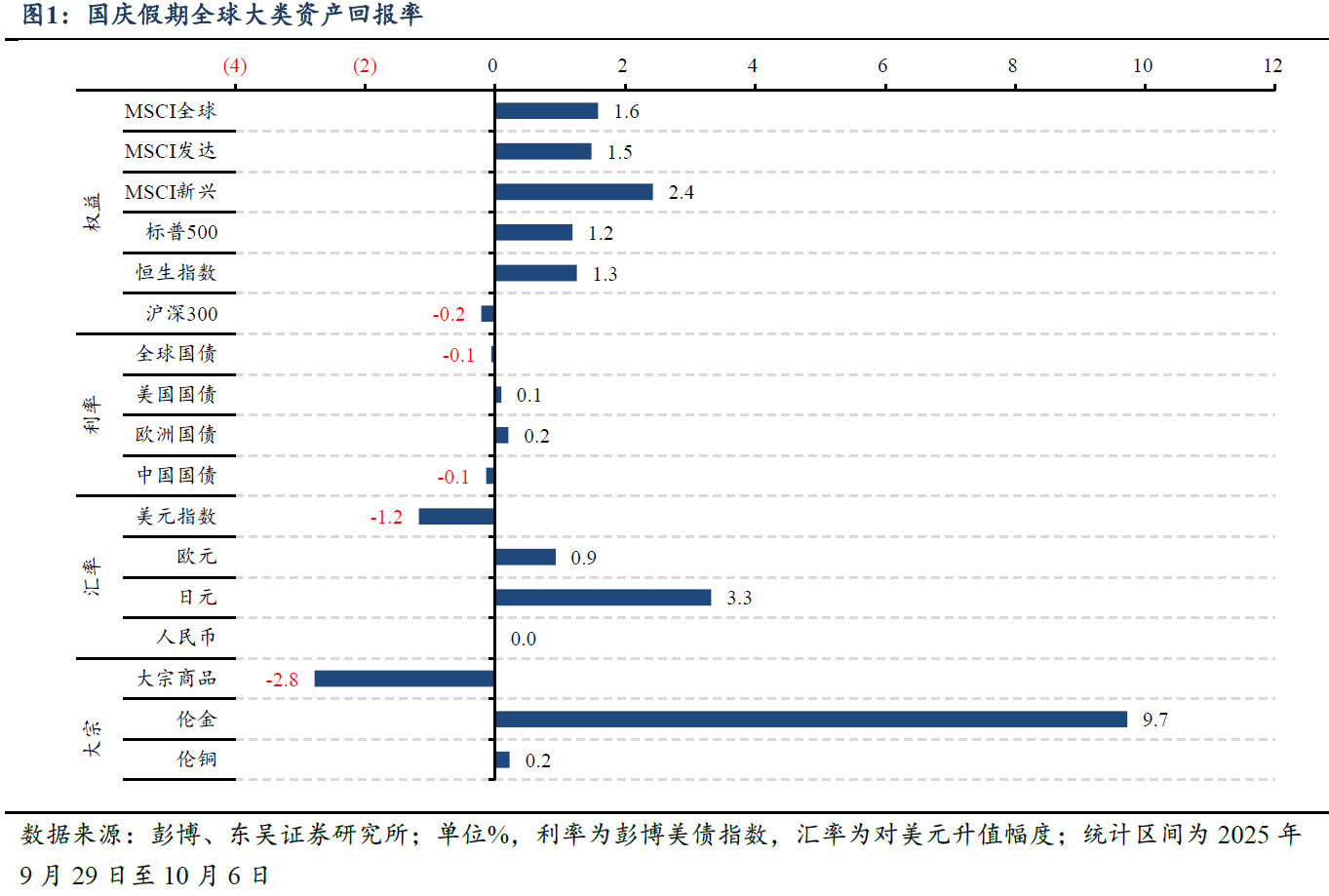
Core Points - The U.S. government is on the brink of a shutdown due to failed negotiations between the two parties regarding funding, causing market anxiety and pushing gold prices above $3,800 per ounce [1][8] - The political deadlock is characterized by strong stances from both parties, with President Trump and Republican leaders blaming Democrats, while Democrats insist that any agreement must include healthcare subsidies [5][6] - The potential government shutdown could delay the release of the non-farm payroll data, impacting the Federal Reserve's plans for interest rate cuts [4] Group 1: Political Negotiations - Key discussions involving President Trump and congressional leaders failed to reach an agreement, with a proposed "Continuing Resolution" rejected by Democrats [5] - The core issue lies in the requirement for at least 60 votes to pass any funding bill, necessitating support from at least seven Democratic senators [6] - The White House shows no willingness to compromise, increasing market concerns about a potential government shutdown [7] Group 2: Market Reactions - The political uncertainty and a weakening dollar have driven gold prices to surpass $3,800 per ounce, marking a 45% increase this year [1][8] - Analysts attribute the rise in gold prices to high government debt, ongoing inflation, and doubts about the dollar's status as the primary reserve currency [8] - Institutional and central bank buying has also contributed to the surge in gold prices, with significant inflows into gold ETFs and record net long positions from speculative investors [9]
贝莱德上调美债评级至“中性” 预计美联储本周开启降息周期
智通财经网· 2025-09-15 22:29
Core Viewpoint - BlackRock, the world's largest asset management company, has upgraded its rating on U.S. long-term Treasuries from "underweight" to "neutral" as investors anticipate a potential interest rate cut by the Federal Reserve this week [1] Group 1: Investment Strategy Adjustments - BlackRock's tactical investment stance for U.S. long-term Treasuries has been adjusted to "neutral" for the next 6 to 12 months, ending a long-standing "underweight" strategy [1] - The company has also downgraded its position on short-term Treasuries from "overweight" to "neutral" [1] - The adjustment is based on the expectation of a short-term decline in Treasury yields, despite structural factors pushing yields higher in the long term [1] Group 2: Economic Indicators and Market Sentiment - The U.S. 10-year Treasury yield fell by 2.3 basis points to 4.034%, marking its fourth consecutive week of decline, although it remains above the 52-week low of 3.622% reached last September [1] - The CME FedWatch tool indicates that investors widely expect the Federal Reserve to announce a 25 basis point rate cut, lowering the federal funds rate target range to 4% to 4.25% [1] - BlackRock's Jean Boivin noted that a weak labor market provides a reasonable basis for the Fed to cut rates, which could help alleviate inflationary pressures [1] Group 3: Long-term Economic Outlook - Despite inflation risks, BlackRock maintains a "risk-on" stance, believing that U.S. economic growth, while slowing, remains resilient, and corporate earnings will continue to be stable [2] - The market's driving factors are shifting from tariffs and policy uncertainty to a balance between inflation, economic growth, and government debt [2] - BlackRock's long-term strategic allocation still favors inflation-linked bonds over long-term government bonds [2] Group 4: Market Reactions and Future Considerations - U.S. stock indices closed higher, with the S&P 500 and Nasdaq reaching all-time highs, indicating positive market sentiment [3] - BlackRock views the Fed's upcoming policy decision as a potential turning point for global markets, with the possibility of supporting both U.S. equities and long-term Treasuries if the rate cut occurs under controlled inflation and sustained economic growth [3] - However, the market must remain vigilant regarding the potential resurgence of inflation [3]

中经资料:巴基斯坦证券市场一周回顾(2025.09.08 - 2025.09.12)
Zhong Guo Jing Ji Wang· 2025-09-15 06:56
Group 1: Company Registrations and Economic Indicators - In August 2025, Pakistan registered 3,278 new companies, with a total paid-up capital of 7.74 billion PKR, bringing the total number of registered companies to approximately 265,600 [9] - The information technology and e-commerce sector led the new registrations with 670 companies, followed by trade (413), services (394), and real estate and construction (297) [9] - Worker remittances in August 2025 amounted to 3.1 billion USD, showing a 2.38% decline from the previous month but a 6.6% increase year-on-year [9] Group 2: Government Debt and Tax Expenditures - The total government debt for the fiscal year 2024-2025 reached 77.888 trillion PKR, a 13% increase from the previous fiscal year's 68.914 trillion PKR, raising the debt-to-GDP ratio to 73.2% [10] - The Federal Board of Revenue (FBR) estimated tax expenditures for the fiscal year 2023-2024 at 2.43 trillion PKR, which is 26.18% of the total revenue (9.3 trillion PKR) and 2.32% of the GDP (105.14 trillion PKR) [10] Group 3: Banking Sector Performance - The banking sector's asset size grew by 11.0% in the first half of 2025, with deposits increasing by 17.7%, while the ratio of non-performing loans slightly worsened to 7.4% [11] - The banking sector's credit risk remains manageable, with a decrease in non-performing loans reported [11] Group 4: Automotive Industry Growth - In the first two months of the fiscal year 2025-26, automobile sales and production in Pakistan increased by 40.06% and 100.93%, respectively, with sales rising from 12,274 units to 17,192 units [12] - Motorcycle sales also saw significant growth, increasing by 44.06% from 189,227 units to 272,601 units during the same period [12] Group 5: International Financial Support - The Asian Development Bank (ADB) and the Asian Infrastructure Investment Bank (AIIB) agreed to provide a total guarantee of 285 million USD to assist Pakistan in issuing 250 million USD in panda bonds, with commitments to use the funds for green projects [11]
蓝佛安回应政府负债问题
Zhong Guo Ji Jin Bao· 2025-09-12 09:48
Core Points - The Chinese government aims to achieve high-quality development while ensuring and improving people's livelihoods during the "14th Five-Year Plan" period [2][3] - The total government debt is projected to reach 92.6 trillion yuan by the end of 2024, with a debt-to-GDP ratio of 68.7%, indicating a manageable risk level [1][2] Group 1: Fiscal Policy and Debt Management - The total government debt includes 34.6 trillion yuan in national bonds, 47.5 trillion yuan in local government legal debt, and 10.5 trillion yuan in local government hidden debt [1] - The government emphasizes that the fiscal policy will focus on areas where the public has urgent needs, directing funds accordingly [2][3] Group 2: Social Welfare and Public Services - Over 70% of the national general public budget expenditure is allocated to social welfare, ensuring that funds are directly benefiting the public [3] - The number of people participating in basic pension insurance has exceeded 1.07 billion, and those in basic medical insurance has reached 1.327 billion [4] - The government has increased the per capita subsidy for resident medical insurance from 580 yuan to 700 yuan during the "14th Five-Year Plan" [4] Group 3: Equity and Accessibility in Public Services - The scale of equalization transfer payments is set to grow from 1.9 trillion yuan in 2021 to 2.7 trillion yuan by 2025, with an average annual growth of 9.6% [5] - All administrative villages in China have access to paved roads, with over 95% coverage for express delivery services and 94% for tap water [5] - The government has supported the construction of approximately 7.8 million affordable housing units and the renovation of 160,000 old residential communities [5] Group 4: Education and Healthcare Initiatives - All students in compulsory education are exempt from miscellaneous fees and receive free textbooks, with around 20 million economically disadvantaged students receiving living subsidies [7] - The government has allocated over 80 billion yuan to enhance clinical specialties and regional healthcare capabilities [7][8] - Direct settlement for cross-province medical treatment has benefited 560 million people, reducing out-of-pocket expenses by 590 billion yuan [8]