用户体验

Search documents
6天狂飙200万,这个AI应用为何全网爆火?
3 6 Ke· 2025-11-24 10:58
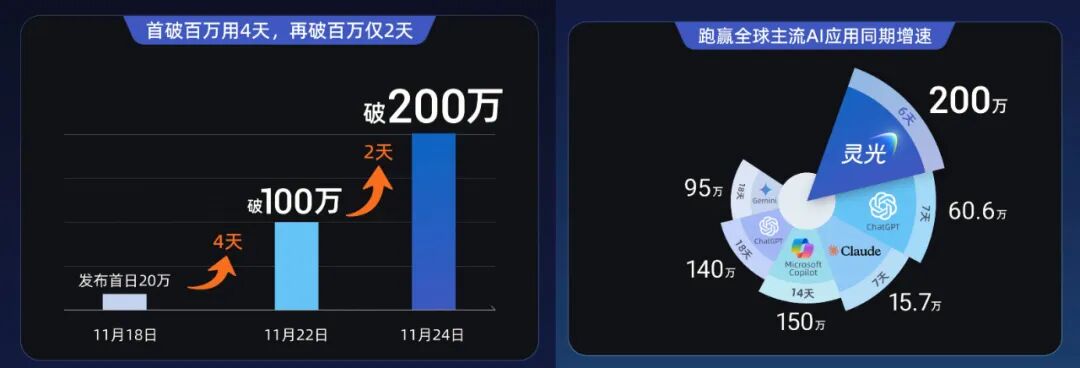
Core Insights - Ant Group's newly launched AI assistant, Lingguang, is expected to be one of the biggest surprises in the AI application sector by the end of 2025, with rapid growth in downloads and user engagement [1][4] - Lingguang's download numbers exceeded initial expectations, reaching over 2 million within six days of launch, outperforming several global AI applications [1][2] User Engagement and Features - The "Lingguang Flash Application" feature has become a highlight, leading to a surge in user-generated applications, with users actively modifying and creating applications to solve real-life problems [2][3] - Users have shared positive experiences on social media, highlighting the speed, usability, and effectiveness of Lingguang, particularly praising the Flash Application feature [3][6] Technical Differentiation - Lingguang's approach focuses on user experience rather than just technical capabilities, addressing long-standing pain points in the industry by making AI tools more accessible to non-technical users [14][18] - The application supports multi-modal outputs, including 3D, audio, video, charts, and animations, enhancing the clarity and engagement of information presented to users [9][17] Market Positioning - Lingguang positions itself as a practical tool aimed at fulfilling essential needs in daily life and work, differentiating itself from other AI products that focus on entertainment or general assistance [25] - The trend towards democratizing application development is evident, as users can create functional applications without programming knowledge, potentially transforming the software ecosystem [22][24] Future Development - Anticipated advancements in Lingguang's capabilities over the next 6-18 months include improved programming abilities and enhanced user interaction features, aiming to create a more robust application ecosystem [24] - The integration of Lingguang with Ant Group's broader ecosystem, including Alipay, is expected to create a seamless user experience from need identification to service completion [25]

国货美妆双十一大促收官:函得仕成头皮护理“黑马”,优时颜守擂眼霜品类,自然堂新品油敷膜借李佳琦直播间“破圈”
Cai Jing Wang· 2025-11-14 14:15
Core Insights - The "Double Eleven" shopping festival has evolved into a prolonged and competitive battle, requiring brands to adapt their strategies for sustained engagement rather than relying solely on price cuts [1] - Brands are increasingly focusing on building long-term trust and reputation with consumers, rather than just chasing high sales growth [1][5] Industry Trends - The preparation period for the beauty industry during "Double Eleven" has lengthened, while the time available for product incubation has shortened [2] - New brands are leveraging platforms like Li Jiaqi's livestream to launch products and accelerate growth, with significant increases in the number of new products introduced compared to previous years [2][3] - The head care segment has become a focal point for many beauty companies, with brands like Proya and Orange Group making strategic investments in this area [4] Company Strategies - Companies are adopting new marketing strategies to cope with declining online traffic efficiency, emphasizing the importance of product quality and user experience [6] - Natural brands like Chando are focusing on competitive pricing while maintaining product quality, achieving over 30% sales growth during "Double Eleven" [12] - Brands are increasingly engaging with consumers through pre-sale experiences and feedback collection to refine their products [3][5] Competitive Landscape - International brands are introducing promotional strategies such as "buy the original, get the original" to attract consumers, intensifying competition in the beauty market [7][9] - The beauty market is characterized by a rapid pace of product iteration, with brands needing to adapt quickly to consumer preferences and market dynamics [10][11] Sales Performance - Chando achieved over 2 billion yuan in sales during "Double Eleven," with specific product categories like masks and serums seeing significant growth [12] - The sales performance of new products like the "Lingyu Cream" from Pechoin and the "Collagen Hair Mask" from Hande Shi indicates a strong consumer response, with both products selling over 100,000 units [4][12]

万字复盘Google搜索如何一年实现AI翻盘,产品副总裁分享三大核心产品经验
创业邦· 2025-11-14 03:42
Core Insights - Google is transitioning from a "research lab" to an "AI product factory," with significant product releases like Gemini 2.5, indicating a renewed focus on AI and potential advancements towards AGI [5][6][8]. - The core mission of Google remains unchanged: to organize global information and make it universally accessible and useful, despite the rise of AI chatbots like ChatGPT [8][15]. - AI is enhancing the search experience rather than replacing it, leading to an expansion in user inquiries and curiosity [15][19]. Next-Generation Search Experience - The next-generation search experience comprises three main components: AI Overviews for quick summaries, Google Lens for multimodal queries, and AI Mode for conversational, multi-turn searches [9][18]. - AI Overviews, launched in 2024, provide AI-generated summaries at the top of search results, significantly improving user experience [17][18]. - Google Lens has seen a 70% year-over-year increase in usage, demonstrating the growing demand for visual search capabilities [15]. Product Development Philosophy - Product managers should draw inspiration from external innovations but adapt them to their own product logic and user expectations [9][10]. - Understanding the core user needs is essential for driving new growth in existing products, moving beyond mere incremental improvements [9][10]. - AI should be integrated as a core experience rather than a replacement, allowing for continuous user engagement and recommendations [9][10][37]. Team Dynamics and Innovation - Small, agile teams can drive significant innovation, but they must be adequately resourced to avoid stagnation on critical issues [10]. - A culture of relentless improvement is vital for product managers, emphasizing the importance of being dissatisfied with the status quo to drive innovation [28][29]. AI Mode and User Interaction - AI Mode allows users to interact with Google in a conversational manner, leveraging a vast knowledge network for deeper exploration [18][19]. - The integration of AI capabilities into the search experience is designed to be seamless, allowing users to transition naturally between different modes of interaction [20][21]. - The AI system is built to handle complex queries and provide reliable, sourced answers, enhancing user trust and engagement [24][25]. Growth and Market Adaptation - Google is observing a shift in user behavior, with more complex and natural language queries being submitted, indicating a need for adaptive search capabilities [21][39]. - The company is focused on identifying growth opportunities within its existing product ecosystem, ensuring that new features complement rather than replace established functionalities [39][42]. - Continuous monitoring of product performance and user engagement metrics is essential for determining when to pivot resources towards new growth engines [42][43].


JD(JD) - 2025 Q3 - Earnings Call Transcript
2025-11-13 13:02
Financial Data and Key Metrics Changes - Total revenues increased by 15% year-on-year to RMB 299 billion in Q3 2025, outpacing the group of MBS total retail sales [17] - Non-GAAP net profit was RMB 5.8 billion, with a non-GAAP net margin of 1.9%, both down year-on-year [24] - JD Retail's gross margin expanded year-on-year for 14 consecutive quarters, reaching 19.3% in Q3 [21] Business Line Data and Key Metrics Changes - JD Retail revenues grew by 11% year-on-year to RMB 251 billion, with general merchandise revenues up 19% year-on-year [8][18] - Marketplace and marketing revenues increased by 24% year-on-year, marking the highest growth rate since Q2 2022 [19][71] - Food delivery business achieved double-digit growth in GMV quarter-on-quarter, with a healthier order mix and narrowing operating loss [11][50] Market Data and Key Metrics Changes - Quarterly active customer number increased by over 40% year-on-year, surpassing 700 million in October [6][38] - User shopping frequency on the platform also rose by over 40% year-on-year [7][61] - The number of active merchants grew by over 200% year-on-year, with significant contributions from food delivery and 3P offerings [70] Company Strategy and Development Direction - The company aims to enhance user experience, lower costs, and improve efficiency across its business lines [4] - Focus on product innovation, price optimization, and service enhancement to consolidate market share in home appliances and electronics [35][36] - International expansion remains a key long-term strategy, with gradual establishment of a global retail network [39][40] Management's Comments on Operating Environment and Future Outlook - Management expressed confidence in the core retail business's ability to expand market share and improve margins [5] - The company anticipates continued healthy growth in marketplace and marketing revenues, contributing to top-line growth and margin performance [20] - Management highlighted the importance of synergies between food delivery and core retail, driving user engagement and shopping frequency [63] Other Important Information - The company unveiled its AI roadmap, launching several AI products and applications across various sectors [14][65] - JD Food Delivery's new business model, Seven Fresh Kitchen, aims to address food safety concerns and improve profitability for quality restaurants [51][52] Q&A Session Summary Question: Outlook for electronics and home appliances growth - Management acknowledged the high base effect from government training subsidies but emphasized ongoing product innovation and market share enhancement strategies [30][33] Question: International strategy post-acquisition - Management outlined a gradual approach to international expansion, focusing on establishing a global retail network and leveraging supply chain advantages [39][40] Question: Duration of investment in food delivery - Management indicated a long-term commitment to food delivery, focusing on improving operational efficiency and user experience [48][50] Question: Strengthening competitive edge in general merchandise - Management highlighted sustained double-digit growth in general merchandise and plans to enhance user mind share through promotions and operational efficiency [55][56] Question: Synergies from food delivery traffic - Management reported strong user retention and engagement from food delivery, with a significant conversion rate of new users to core retail [61][62] Question: Latest AI strategy and investment - Management detailed a comprehensive AI capability framework and ongoing investments to foster a trillion RMB scale AI ecosystem [65][66] Question: Ecosystem development and 3P merchant contributions - Management noted rapid growth in active merchants and user engagement, with a focus on enhancing platform infrastructure for better merchant efficiency [70][74] Question: Profitability and margin outlook - Management expressed confidence in long-term margin expansion driven by ecosystem growth, supply chain advantages, and category mix optimization [76][77]

曾拒绝在Mac植入广告,乔布斯坚守的“红线”,正被苹果一点点擦除
3 6 Ke· 2025-11-11 03:22
Core Viewpoint - The article discusses the shift in Apple's core values from prioritizing user experience under Steve Jobs to focusing on profit under Tim Cook, suggesting that the company's original "red line" of maintaining a pure user experience is becoming increasingly blurred [1][10]. Group 1: Historical Context - Steve Jobs emphasized a clear value system centered around innovation, design, and user experience, which he believed was essential for attracting new users and fostering brand loyalty [1][4]. - Upon his return to Apple in the late 1990s, Jobs established a blueprint that prioritized user experience above all else, willing to invest heavily in enhancing it while rejecting any suggestions that could compromise it [1][8]. Group 2: Current Developments - Recent reports indicate that Apple Maps will begin displaying advertisements, similar to the App Store, which raises questions about the impact on user experience [4][5]. - The decision to introduce ads is driven by the potential for new revenue streams, highlighting a shift in focus towards financial gain rather than user satisfaction [4][5]. Group 3: Leadership Comparison - The article contrasts Jobs' leadership style with that of Tim Cook, suggesting that Cook lacks the same level of commitment to user experience, which has led to the erosion of the original "red line" [11]. - Jobs famously rejected the idea of incorporating ads into Mac OS, prioritizing the purity and elegance of the user interface over potential revenue, a stance that Cook does not seem to uphold [8][11]. Group 4: Implications for the Future - The article concludes that the longevity of Apple's commitment to user experience depends on the leadership's willingness to maintain it; without such commitment, the "red line" may continue to fade [10][11]. - While Apple remains a powerful company, the shift from a focus on user experience to profit raises concerns about its purity and integrity as a brand [11].


Nextdoor (KIND) - 2025 Q3 - Earnings Call Transcript
2025-11-05 23:02
Financial Data and Key Metrics Changes - Revenue for Q3 2025 reached $69 million, representing a 5% year-over-year growth, marking the highest quarterly revenue ever for the company [4] - Q3 GAAP net loss was $13 million, while Adjusted EBITDA was $4 million, reflecting a positive 6% margin and an 8-point year-over-year improvement [6] - Revenue per employee increased by 21% year-to-date, with cash, cash equivalents, and marketable securities totaling $403 million and zero debt at quarter end [6] Business Line Data and Key Metrics Changes - Self-serve revenue grew by 33% year-over-year, accounting for approximately 60% of total revenue, driven by strong demand from advertisers [5] - The active customer base and associated net new advertiser spend also saw growth, indicating effective ad stack investments [5] Market Data and Key Metrics Changes - Platform WOW (users engaging directly on the app or website) was 21.6 million, showing a modest sequential decline due to a strategic reduction in notification and email volumes [5] - The company plans to maintain its current ad load and intentionally reduce new user acquisition efforts in Q4 to enhance user experience [7] Company Strategy and Development Direction - The company is focused on building a stronger neighborhood ecosystem by increasing high-quality content and enhancing user engagement [9][10] - Plans to reinvent the recommendations ecosystem to turn authentic word-of-mouth into actionable insights for users and local businesses [10] - The strategy emphasizes long-term sustainable growth over short-term metrics, with a commitment to product quality and user experience [11] Management's Comments on Operating Environment and Future Outlook - Management expressed optimism about the transformation of the platform, highlighting the importance of user-generated content and local information [8][9] - The company expects Q4 revenue between $67 million and $68 million, with an Adjusted EBITDA range of $3.5 million to $4.5 million, indicating a focus on maintaining operational efficiency [6][7] - Full-year 2025 revenue growth is projected at 3%-4%, with expectations for Adjusted EBITDA break-even in 2026 [7] Other Important Information - A new Chief Financial Officer, Indrajit Ponnambalam, will join the company effective December 1, 2025, bringing extensive experience in finance and operations [11] Q&A Session Summary Question: Insights on customer engagement and depth of engagement metrics - Management noted that the new Nextdoor platform has seen news content approaching 10% of the feed, with a focus on increasing high-quality content to drive deeper engagement [16][17] Question: User acquisition strategies evolving into 2026 - The company plans to enhance the first-time user experience and will not aggressively pursue new user acquisition in the short term [18][19] Question: Sources of additional content - Management indicated a focus on increasing user-generated content while also integrating more third-party alerts, with 4,000 publishers currently providing news content [23] Question: Update on programmatic capabilities - The company has completed supply-side platform integration and is testing with demand-side platforms, including a deal with Yahoo for programmatic advertising [25][26] Question: Engagement from alerts and notifications - Management confirmed that reducing notifications has led to more effective alerts, which are helping to re-engage lapsed users [30][31]

Nextdoor (KIND) - 2025 Q3 - Earnings Call Transcript
2025-11-05 23:00
Financial Data and Key Metrics Changes - Q3 revenue reached $69 million, a 5% year-over-year increase, marking the highest quarterly revenue ever for the company [4] - Q3 adjusted EBITDA was $4 million, representing a positive 6% margin and an 8-point year-over-year improvement [6] - Q3 GAAP net loss was $13 million, with expectations for a full-year adjusted EBITDA loss of approximately $3 million [6][7] - The company had $403 million in cash, cash equivalents, and marketable securities, with zero debt at quarter end [6] Business Line Data and Key Metrics Changes - Self-serve revenue grew 33% year-over-year, accounting for roughly 60% of total revenue [5] - The active customer base and associated net new advertiser spend increased, indicating strong demand for the self-serve ads platform [5] Market Data and Key Metrics Changes - Platform WOW (users engaging directly on the app or website) was 21.6 million, showing a modest sequential decline due to reduced notification and email volumes [5] - The company plans to maintain its current ad load and reduce new user acquisition efforts in Q4 to focus on user experience [7] Company Strategy and Development Direction - The company is focused on building a stronger neighborhood ecosystem by increasing high-quality content and enhancing user engagement [9][10] - Plans to reinvent the recommendations ecosystem to turn authentic word-of-mouth into actionable insights for users and local businesses [10] - The company aims for full-year adjusted EBITDA break-even in 2026, emphasizing long-term value creation over short-term metrics [7][11] Management's Comments on Operating Environment and Future Outlook - Management expressed optimism about the transformation of the platform, highlighting the importance of user-generated content and local information [8][9] - The company acknowledged past challenges with content relevance and is committed to improving user experience and engagement [30] Other Important Information - A new Chief Financial Officer, Indrajit Panambalan, will join the company effective December 1, 2025, bringing extensive experience in finance and operations [11] Q&A Session Summary Question: Insights on customer engagement and depth of engagement metrics - Management noted that increasing high-quality content leads to deeper engagement, with news content now approaching 10% of the feed [15][16] Question: User acquisition strategies evolving into 2026 - The company plans to enhance the first-time user experience and will not aggressively pursue new user acquisition in the short term [18][19] Question: Sources of additional content - Management indicated a focus on increasing user-generated content while also integrating more third-party publisher content [22][23] Question: Update on programmatic capabilities - The company completed supply-side platform integration and is currently testing with demand-side platforms, including a deal with Yahoo [24][25] Question: Engagement from alerts and notifications - Management confirmed that reducing notifications has led to more effective alerts, which are helping to re-engage lapsed users [29][30]
首创磁吸光幕门板,海信冰箱破解高端家电美学与功能兼容难题
Ge Long Hui· 2025-11-04 21:18
Core Insights - The home appliance industry has witnessed a significant innovation with Hisense refrigerator launching the world's first magnetic light curtain door panel, which has been recognized in the 2025 International CMF Design Awards [1][5] - This breakthrough technology addresses the long-standing user pain point of glass door refrigerators being aesthetically pleasing yet unable to hold magnets, redefining the design standards for high-end refrigerators [1][5] Group 1: Technological Innovation - Hisense's magnetic light curtain door panel integrates a unique magnetic medium composite technology within the glass, allowing for strong magnetic adhesion without compromising aesthetics, flatness, or insulation performance [5][6] - The door panel enables users to attach family photos, travel mementos, and reminders, transforming the refrigerator into a center for family memories and emotional connections [5][6] Group 2: Aesthetic and Functional Attributes - The magnetic light curtain door panel features the industry's first SMI magnetic composite technology, offering various texture options that enhance visual appeal and home compatibility while providing practical attributes like antibacterial properties, high hardness, fingerprint resistance, and ease of cleaning [6] - This innovation represents Hisense's commitment to user-centered design and continuous technological advancement, balancing external user experience with internal preservation technology [6] Group 3: Market Performance - Hisense's third-quarter report indicates strong performance in refrigerator sales, ranking first in sales across 11 global markets, showcasing the company's product strength, brand power, and global operational capabilities [7] - The successful integration of user-centric innovations, from the magnetic light curtain to vacuum preservation technology, has garnered positive feedback from global consumers, affirming Hisense's competitive edge in the high-end market [7]


海尔空调每一次发明,都是行业“风口”
Xi Niu Cai Jing· 2025-11-04 08:33
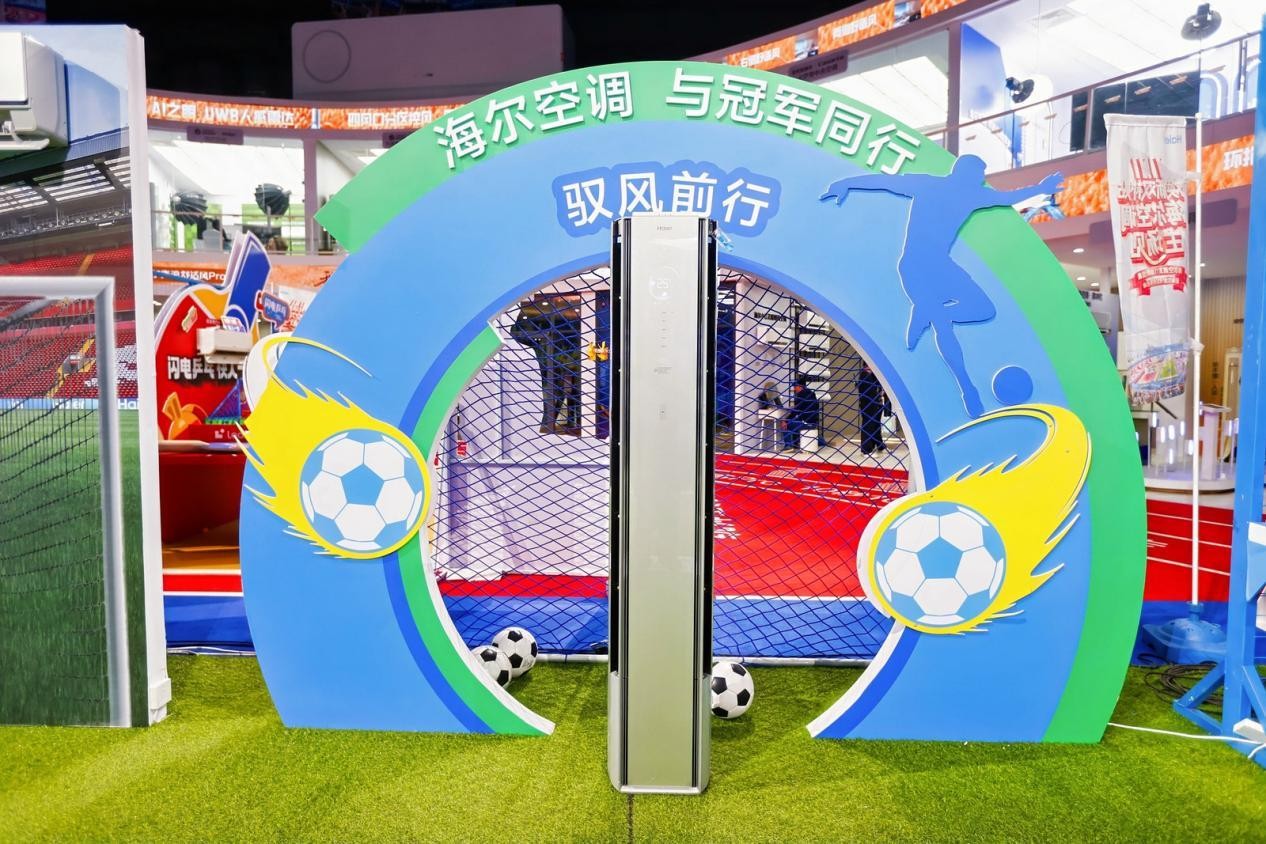
Core Insights - Haier Air Conditioning has launched the "Mai Lang Comfortable Wind" series, which utilizes UWB human perception radar technology to enhance user comfort by automatically adjusting airflow based on breathing detection [1][3][6] - The company has a history of innovation, having led three significant industry transformations over the past 40 years, including the introduction of the first split air conditioner in China and the first variable frequency air conditioner [3][6] - Haier's focus on user needs drives its technological advancements, ensuring that innovations address real consumer pain points rather than being technology for technology's sake [6][7] Industry Position - Haier Air Conditioning has sold over 100,000 self-cleaning air conditioners in Thailand and has developed generator-specific air conditioners for regions with low electricity coverage, demonstrating its adaptability to local markets [6] - The company has achieved a 31% year-on-year growth in sales across all channels in the first three quarters, with significant market shares on platforms like Douyin and Pinduoduo [10] - Haier's commitment to user-centric innovation has positioned it as a leader in the air conditioning industry, consistently creating new "wind" or trends that competitors follow [3][10] Technological Advancements - The latest "Mai Lang Comfortable Wind" series features technology that can detect breathing and adjust airflow accordingly, marking a significant breakthrough in smart sensing technology [3][7] - Haier holds 5,300 invention patents and has established three world-class lighthouse factories, underscoring its strong technological foundation [7] - The integration of precise sensing with user comfort in the new product line exemplifies Haier's ability to translate research into practical consumer solutions [7][10] Market Performance - The successful launch of the "Mai Lang Comfortable Wind" series led to it topping sales charts within half an hour of its debut during the Double Eleven shopping festival [3][10] - Haier's sales growth reflects a strong alignment with its philosophy of "technology serving people," which resonates with consumers and drives market share [10] - The company's innovative approach not only enhances its market position but also contributes to the overall advancement of the air conditioning industry [10]

APP商品页图片过度美化、配料表被隐藏?山姆深夜回应
第一财经· 2025-11-04 06:24
Core Viewpoint - The recent updates to the Sam's Club app have led to significant user dissatisfaction due to issues such as overly beautified images, hidden ingredient lists, and a cumbersome interface, prompting calls for management changes and membership cancellations [3][5][18]. User Feedback and Reactions - Users have expressed frustration over the app's new features, particularly the excessive beautification of images for fresh produce and meat, which detracts from the realistic representation of products [5][10]. - Complaints have surged in the app's comment sections, with many users demanding refunds or threatening to cancel their memberships if changes are not made [5][6][21]. App Functionality Issues - The updated app interface has made it more difficult for users to access product details, requiring additional steps to view information that was previously easily accessible [12][18]. - Confusion arises from inconsistent product information, such as discrepancies between the product descriptions and images, leading to further user dissatisfaction [12][20]. Company Response - Sam's Club has acknowledged the feedback regarding the app updates and stated that they will continue to make improvements based on user suggestions [21][23]. - Despite some updates to product images in response to complaints, many issues remain unresolved, indicating a need for ongoing adjustments to meet customer expectations [18][21].