
股市估值

Search documents
建信期货股指日评-20250904
Jian Xin Qi Huo· 2025-09-04 02:30
Report Overview - Report Type: Stock Index Daily Review [1] - Date: September 4, 2025 [2] - Research Team: Macro Financial Team [4] - Researchers: Nie Jiayi, He Zhuoqiao, Huang Wenxin [3] 1. Report Industry Investment Rating - Not provided in the report 2. Core View - Mid - term, the stock market valuation is high but not at an absolute high, and the stock index still has room to rise, but the upward slope is expected to slow down. Short - term, after the September 3rd expectation is fulfilled, market volatility intensifies, showing a volatile consolidation trend. Holding CSI 300 (IF) contracts can reduce volatility risk, and one can also try to go long on IF and short on IM to resist market corrections [8] 3. Summary by Directory 3.1 Market Review and Future Outlook 3.1.1 Market Review - On September 3, the Wind All - A index opened with a volatile decline, closing down 1.19%, with more than 4,500 stocks falling. In terms of index spot, the CSI 300, SSE 50, CSI 500, and CSI 1000 closed down 0.68%, 1.07%, 1.34%, and 1.46% respectively. Index futures performed weaker than the spot market. The main contracts of IF, IH, IC, and IM closed down 1.14%, 1.46%, 1.56%, and 1.50% respectively (calculated based on the previous trading day's closing price) [6] 3.1.2 Future Outlook - External market: The US Court of Appeals ruled that most of the global tariff policies implemented by former President Trump were illegal. Although tariffs can still be legally collected until October 14 and the final cancellation is uncertain, short - term market sentiment will be boosted. The increasing expectation of the Fed to restart interest rate cuts in September is also beneficial to the domestic capital market. - Domestic situation: The economic data in July showed a weakening in both supply and demand, but the expectation of economic fundamental repair is strong. In terms of liquidity, the margin trading balance fell after reaching a record high yesterday, and the subsequent changes in margin trading funds need to be observed [8] 3.2 Data Overview - The report presents multiple data charts, including the performance of domestic main indexes, market style performance, industry sector performance (Shenwan Primary Index), trading volume of Wind All - A, trading volume of stock index spot, trading volume and open interest of stock index futures, basis trend of main contracts, inter - period spread trend, share statistics of major ETF funds, and trading volume statistics of major ETFs. All data sources are from Wind and the Research and Development Department of CCB Futures [9][14][15] 3.3 Industry News - On September 2, data released by ISM showed that US manufacturing activity contracted for the sixth consecutive month in August due to output decline, indicating that the manufacturing industry remains in trouble. However, the new orders index expanded for the first time since the beginning of this year, and the price index reached the lowest level since February, suggesting that price fluctuations caused by tariffs are subsiding [30]
越盾贬值与高估值影响,越南股市迎来史上最大外资抛售潮
Hua Er Jie Jian Wen· 2025-09-03 08:47
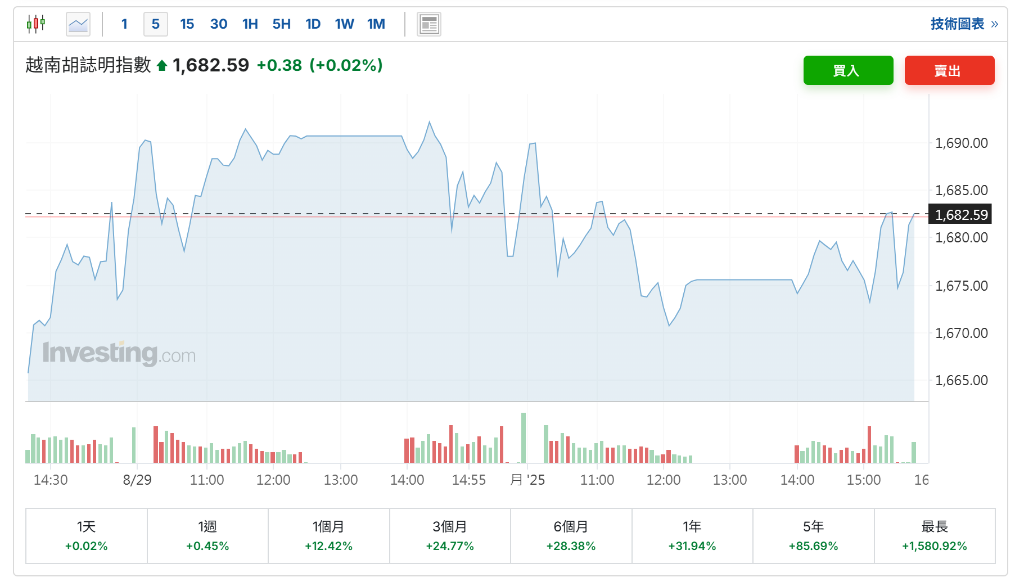
Group 1 - The core issue is the unprecedented capital outflow from the Vietnamese stock market, with foreign investors selling local stocks worth $1.5 billion in August, marking the largest monthly outflow since records began in 2009 [1][4] - Concerns over unfavorable exchange rate prospects and profit-taking from previous market gains are driving the capital outflow [3][4] - The Vietnamese dong has depreciated approximately 3.4% against the US dollar this year, making it the worst-performing currency in Southeast Asia, with further depreciation expected due to rising import demand and a narrowing current account surplus [4][7] Group 2 - Despite the significant foreign capital withdrawal, the Vietnamese stock market is supported by resilient domestic capital flows and improving corporate earnings, which may help cushion the impact of foreign outflows [7] - The VN index has surged over 32% this year, outperforming most Southeast Asian markets, but this rebound has also led to higher market valuations, prompting foreign investors to lock in profits [7] - Notably, a substantial portion of the capital outflow is concentrated in key stocks, such as Vingroup, which saw a net outflow of approximately 49.3 million USD [4]

美股最动荡月份来了
第一财经· 2025-09-02 00:09
Core Viewpoint - September is historically the most volatile month for the US market, with uncertainties such as potential Fed rate cuts and political pressures on the Fed adding to the suspense of whether the S&P 500 can maintain its strength after reaching historical highs [3][5]. Market Trends - The S&P 500 index has a 56% probability of declining in September, with an average drop of 1.17% since 1927, and a more concerning average drop of 1.93% over the past decade [5][8]. - In the first year of a presidential term, the S&P 500's decline probability in September rises to 58%, with an average drop of 1.62% [5]. Valuation Risks - The forward P/E ratio of the S&P 500 has reached 22 times, nearing levels seen at the end of the internet bubble, raising concerns about potential sell-off pressures during portfolio rebalancing at the end of September [8]. - Hedge funds have increased their stock holdings to the 80th percentile, indicating a risk of overextension in positions [8]. Sector Performance - Since August, cyclical sectors and small-cap stocks have led the market, with the non-essential consumer sector ETF rising by 4.3% and the Russell 2000 small-cap index increasing by 7.3%, significantly outperforming large tech stocks [8]. Economic Indicators - Recent US economic data presents a mixed picture, with non-farm payrolls declining significantly from May to July, while retail sales and major retailers' earnings indicate strong consumer spending [8][11]. - The upcoming non-farm payroll report is expected to show an increase of 75,000 jobs in August, with the unemployment rate slightly rising to 4.3% [10]. Federal Reserve Outlook - The Fed's expectation of a rate cut has increased due to the significant drop in non-farm payrolls, with Chairman Powell indicating a shift from a cautious stance [11]. - Market pricing suggests that while a rate cut in September is fully priced in, the probability of more than two cuts this year has decreased from over 50% to below 30% [13]. Political Pressures - Political pressures on the Fed, particularly from President Trump, raise concerns about the Fed's ability to maintain its independence in monetary policy [13]. - The potential removal of Fed officials could lead to a more dovish stance on interest rates, facilitating future rate cuts [13].

突发“黑天鹅”事件 印尼股市一度大跌3.6% 中使馆此前提醒:中国公民减少非必要性外出 避免前往人员密集地区
Mei Ri Jing Ji Xin Wen· 2025-09-01 06:02
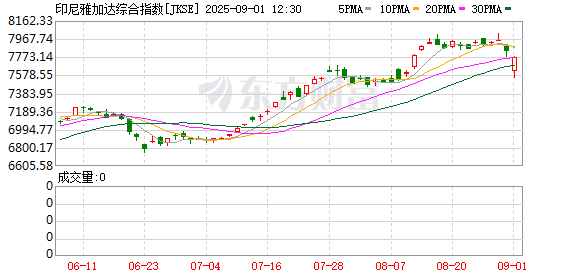
Group 1 - Indonesia's stock index, the Jakarta Composite Index, experienced a significant decline of 1.5% last Friday, leading the losses among global indices [1] - On Monday, the Jakarta Composite Index further dropped, reaching a maximum decline of 3.6%, marking the largest drop since April 8 [1] - As of the latest update, the index's decline was reduced to 1.11%, closing at 7743.73 [2] Group 2 - Analysts indicate that political risks in Indonesia are rising, which may increase the risk premium in the stock market [2] - The Bank of Indonesia is committed to monitoring market conditions to maintain exchange rate stability and ensure sufficient liquidity for the rupiah [2] - Prior to the recent events, the Indonesian stock market had reached a historical high, with an approximate increase of 9.6% year-to-date [2][4] Group 3 - Economic growth in Indonesia has exceeded expectations, with the second quarter growth rate returning to above 5%, boosting market confidence [4] - Indonesia's ongoing restrictions on resource exports and efforts to localize manufacturing are attracting investment and improving its position in the international supply chain [4] - The implementation of a mandatory foreign exchange retention policy has significantly increased foreign exchange reserves, enhancing confidence in the rupiah's exchange rate [4]
涨势透支?德国股市高估值引发盈利兑现担忧
Zhi Tong Cai Jing· 2025-08-29 09:03
Group 1 - The German stock market is currently at a historical high valuation, with the DAX index up 21% this year, and the expected P/E ratio approaching 16 times, exceeding the past decade's average of 13 times [1] - Analysts predict a 4% growth in earnings per share for DAX constituents by 2025, with a 14% profit growth expected next year, surpassing the S&P 500's projections [2] - The strong performance of the DAX index is primarily attributed to four major stocks: Rheinmetall, Siemens, Allianz, and Deutsche Bank, which collectively contributed nearly half of the index's gains [3] Group 2 - There is caution regarding the sustainability of the current market rally, as some leading stocks may have limited domestic revenue exposure, raising concerns about actual earnings meeting expectations [3] - The German government's €500 billion infrastructure fund, allocated over 12 years, presents uncertainties, as some funds may be used to fill state budget gaps rather than for new investments [4] - Over 80% of DAX constituents derive their revenue from overseas, making them vulnerable to global economic slowdowns, particularly in export-oriented sectors like the automotive industry [5]
建信期货股指日评-20250827
Jian Xin Qi Huo· 2025-08-27 01:49
Group 1: Report Overview - Report Type: Stock Index Daily Review [1] - Date: August 27, 2025 [2] - Researchers: Nie Jiayi, He Zhuoqiao, Huang Wenxin [3] Group 2: Market Review - On August 26, the Wind All A index opened lower, oscillated upward, and then quickly declined in the late session, closing down 0.09%. Over 60% of stocks rose. Among index spot markets, CSI 300, SSE 50, and CSI 1000 closed down 0.37%, 0.67%, and 0.02% respectively, while CSI 500 closed up 0.18%, indicating better performance of small and medium - cap stocks. Index futures generally performed weaker than spot markets. IF and IH main contracts closed down 0.57% and 0.71% respectively, while IC and IM main contracts closed up 0.10% and 0.04% respectively [6] Group 3: Market Outlook - Externally, Trump's statement about imposing 200% tariffs on China if it fails to ensure US rare - earth magnet supply has reignited market risk - aversion sentiment. Domestically, the economy is in a weak recovery phase. July economic data shows a decline in both supply and demand, but market expectations for the future are positive. Margin trading balance has exceeded 2 trillion yuan and is growing. The A - share trading volume decreased slightly today, reflecting capital's risk - aversion behavior under external market disturbances, but the overall trading volume remains at a relatively high level of 2.71 trillion yuan. Currently, the stock market valuation is relatively high but not extremely high. There is still room for further capital inflow. However, the latest US tariff statement has impacted market sentiment, increasing the pressure for the Shanghai Composite Index to break through 3900. In terms of market style, the dumbbell strategy remains unchanged, with SSE 50 with stable earnings and CSI 1000 with higher earnings - repair elasticity likely to perform better [8] Group 4: Data Overview - The report provides data on domestic major indexes, market style, industry sectors, stock index futures trading volume and open interest, and major ETF fund shares and trading volume, with data sources from Wind and the Research and Development Department of Jianxin Futures [10][13][14][17][18][20][22][24][27][28][29] Group 5: Industry News - On August 25, six departments in Shanghai jointly issued a notice on optimizing and adjusting real - estate policies, including reducing housing purchase restrictions, optimizing housing provident funds, optimizing personal housing credit, and improving personal housing property tax [30]
美国企业营收预期逆势走高,华尔街为何仍焦虑不安?
智通财经网· 2025-08-26 11:19
Group 1 - Despite concerns over economic slowdown and high stock market valuations, companies are showing improved revenue forecasts, providing some comfort to investors [1] - 44% of S&P 500 companies that adjusted revenue expectations raised them, the highest percentage since 2021, while only 14% lowered expectations, the lowest since 2015 [1] - The optimism in corporate revenue outlook contrasts with signs of weakness in the labor market amid high inflation [1] Group 2 - The Federal Reserve is facing challenges with inflation above the 2% target and signs of weakness in employment data, yet corporate America shows little concern [4] - Morgan Stanley's analysis indicates that mentions of "order books" and "upward guidance" have reached recent highs following the global trade war [4] - Communication services, financials, consumer discretionary, and information technology sectors have seen upward revisions in earnings expectations for 2025 and 2026 [5] Group 3 - Stock buybacks are providing additional support to the market, with announced buyback sizes at a three-year high [5] - Goldman Sachs noted a disconnect between corporate commentary and macroeconomic conditions, with their internal economic activity indicator showing a 4.8% year-over-year increase, outpacing economic growth [5] - Despite optimistic corporate outlooks, high valuations may limit further stock market gains, as noted by market observers [5]
美国银行调查:基金经理称美国股市估值过高
Ge Long Hui A P P· 2025-08-11 15:20
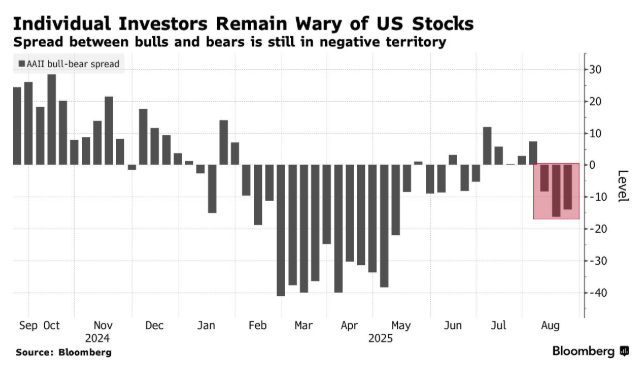
Group 1 - The core finding of the survey indicates that a record net 91% of respondents believe that U.S. stock market valuations are too high [1] - Additionally, a net 49% of fund managers consider emerging market stocks to be the most undervalued, marking the highest level since February 2024 [1]

美股再创佳绩?高盛拆解市场韧性密码,下半年布局看这几点
Zhi Tong Cai Jing· 2025-08-11 13:49
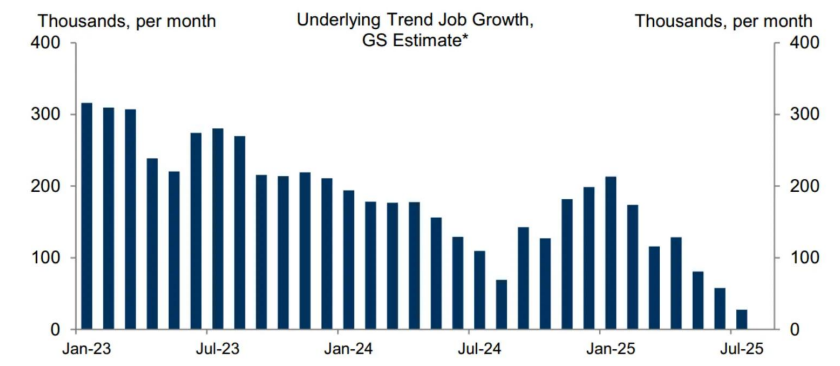
Group 1: U.S. Stock Market Narrative - The U.S. stock market showed resilience despite signs of weakness in the labor market, with the S&P 500 recovering losses and the Nasdaq 100 reaching a new all-time high [4][3] - Three hypotheses were proposed to explain this resilience: new AI stimuli, healthy capital flows despite reduced speculative demand, and the notion that stock markets do not directly reflect the economy [5][6][7] Group 2: Market Framework - The overall market sentiment remains positive, but increased risk asset holdings may complicate future trading [8] - AI spending has exceeded expectations, while employment growth has significantly declined since Q1, leading to a volatile market environment [8] - Short-term risk balance is uncertain, with expectations of consolidation in August and a challenging technical situation in September, but a bullish trend is anticipated for the second half of 2025 [8] Group 3: Key Points and Data Analysis - The U.S. labor market's health is under scrutiny, with mixed initial jobless claims and a disappointing ISM services index, leading to a GDP tracking expectation of 1.2% for Q3 [12] - Systematic trading institutions have largely completed their buying of global index futures, and discretionary investors have increased long positions, while retail investor demand has weakened [12] - The impact of tariffs is seen as destructive but not catastrophic, with the market no longer viewing it as a significant variable [13] Group 4: U.S. Technology Sector - Major U.S. tech companies reported strong Q2 earnings, with growth acceleration across various sectors, including cloud computing and AI [14] - The Nasdaq 100 index's P/E ratio is approaching historical highs, suggesting a need for consolidation, but potential earnings growth justifies a positive outlook on tech valuations [14] - Concerns about AI's impact on employment are noted, with a significant rise in unemployment rates among tech workers aged 20-30 since early 2024 [14] Group 5: Global Market Insights - The Japanese stock market has shown resilience, with the Nikkei index reaching new highs, while India's market faces challenges despite strong fundamentals [15] - Market depth and risk transfer ease are deteriorating, indicating a sensitive trading environment with increased price volatility [15] Group 6: Credit Market Dynamics - The surge in new corporate bond issuances suggests ample credit supply in the U.S. financial system, supported by ongoing demand and rising coupon rates [16] - A favorable policy environment for large corporations is noted, with pressures on consumers due to rising prices and stagnant real wage growth [16] Group 7: Investment Strategy - The recommended investment strategy includes going long on U.S. stocks (particularly tech), value storage assets (gold, silver, Bitcoin), shorting the dollar, and steepening yield curve trades [16] - This strategy is viewed as a preferred defensive measure for 2025, despite potential short-term underperformance in certain components [16]
美联储库克:股市估值相当高,令人担忧
Sou Hu Cai Jing· 2025-08-06 23:34
Core Viewpoint - The Federal Reserve's Cook expressed concerns about the high valuation of the stock market, indicating potential worries for investors [1] Group 1 - The stock market is currently perceived to have high valuations, which raises concerns among financial analysts and investors [1]