货币政策不确定性

Search documents
刚刚,降息!5国,集体宣布!
券商中国· 2025-10-30 04:10
Core Viewpoint - A new wave of interest rate cuts is emerging globally, initiated by the Federal Reserve's decision to lower rates by 25 basis points, followed by similar actions from several central banks in the Middle East and Canada, indicating a shift in monetary policy amid economic uncertainties [2][4][7]. Summary by Sections Federal Reserve Actions - The Federal Reserve announced a 25 basis point rate cut, but future rate paths remain uncertain, with significant internal disagreements among officials regarding potential actions in December [2][11]. - The probability of another rate cut in December has decreased to 67.8%, down from 95.3% prior to the recent statements by Fed Chair Jerome Powell [11]. Global Central Bank Responses - Following the Fed's announcement, the central banks of the UAE, Qatar, Bahrain, and Saudi Arabia also cut their benchmark rates by 25 basis points [4][5][6]. - The Bank of Canada reduced its policy rate by 25 basis points to 2.25%, marking the second consecutive meeting with a rate cut, as the Canadian economy faced challenges due to U.S. tariffs [7]. Economic Context - The Canadian economy contracted by 1.6% in the second quarter, raising concerns about the potential for a negative growth in the third quarter [7]. - The Bank of Canada highlighted that the economy is undergoing a difficult transition due to structural damages from trade conflicts, which have limited the effectiveness of monetary policy [7][8]. Future Outlook - The European Central Bank is expected to maintain its key interest rate at 2%, while the Bank of Japan's rate hike expectations have diminished due to political pressures [9]. - Analysts suggest that the Fed's future rate cuts may be more nuanced than the market currently anticipates, with strong consumer spending and economic growth potentially influencing the pace of future cuts [12].


数百名经济学家声援库克,反对特朗普削弱美联储独立性
Feng Huang Wang· 2025-09-02 22:45
Core Viewpoint - Nearly 600 economists have signed an open letter warning that Trump's attempt to remove Federal Reserve Governor Lisa Cook threatens the independence of the U.S. financial system and undermines public trust in the Federal Reserve [1][2] Group 1: Economists' Concerns - The open letter emphasizes that credible economic policy relies on a trustworthy monetary authority, which in turn depends on the independence of the Federal Reserve [1] - The signatories include notable economists such as Nobel laureates Joseph Stiglitz and Paul Romer, as well as former White House economic advisors [1] - Economists argue that Trump's actions are based on unverified allegations, which jeopardize the fundamental principle of central bank independence and erode public trust in a key U.S. institution [2][3] Group 2: Trump's Actions and Implications - Trump has been pressuring the Federal Reserve to lower borrowing costs and has previously suggested removing Fed Chair Jerome Powell over alleged mismanagement of a renovation project [2] - If Trump successfully removes Cook, he could appoint a new governor, thereby exerting more direct influence over the Federal Reserve's interest rate decisions [2] - The White House claims that the president has legal justification for removing Cook, asserting that it enhances the credibility and accountability of the Federal Reserve [2] Group 3: Legal Proceedings - Cook has filed a lawsuit seeking to prevent her removal, arguing that the accusations against her are baseless and merely a pretext [3] - A hearing was held regarding Cook's request for a temporary restraining order, but no decision has been made yet [3]
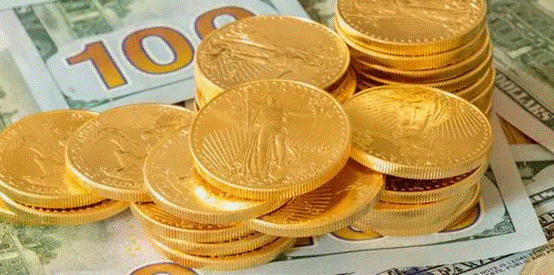
Mhmarkets迈汇:黄金的长期逻辑仍未失效
Sou Hu Cai Jing· 2025-08-06 10:42
Core Viewpoint - The gold market is at a critical stage of potential upward movement, with current price fluctuations not indicating the end of an upward trend but rather the beginning of a new rising cycle, highlighting its strategic allocation value [1] Group 1: Economic and Political Factors - Gold prices reflect a combination of economic, political, and financial uncertainties, serving as an important tool for investors to restructure risk margins when traditional assets face systemic pressures [1] - Global monetary policy uncertainty remains a significant driver of gold demand, with low or negative real interest rates providing ongoing support for gold prices amid persistent inflation pressures [3] - Concerns over debt sustainability due to fiscal expansion are influencing asset allocation preferences, with gold typically gaining favor when debt levels rise without clear economic growth prospects [3] Group 2: Geopolitical and Currency Trust Issues - The current global governance environment, characterized by weakened multilateral mechanisms and frequent geopolitical events, enhances market vigilance regarding systemic stability, making gold more attractive [3] - Trust in the currency system is being tested, leading to a potential shift of funds into assets with value anchoring properties, with gold emerging as a key vehicle for hedging against currency devaluation and loss of trust [3] Group 3: Investment Perspective - Gold's cross-cycle adaptability allows it to perform well in various economic conditions, including high inflation, high volatility, and economic slowdowns, reinforcing its role as a long-term stabilizer in asset portfolios [4] - Investors are encouraged to reassess gold's role in their portfolios from a risk management and asset structure optimization perspective, moving away from viewing it solely as a short-term trading tool [4] - The long-term value of gold is supported by both real driving forces and logical foundations, with short-term adjustments providing a window for rational investors to enter the market [4]
美股三大指数集体收跌!科技巨头独木难支,特朗普签署新关税行政令,全球贸易紧张局势升级
Jin Rong Jie· 2025-08-01 00:16
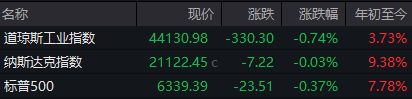
Market Overview - The US stock market closed lower on July 31, with all three major indices declining despite strong performances from Microsoft and Meta [1][2] - The Dow Jones Industrial Average fell by 0.74% to 44,130.98 points, the S&P 500 decreased by 0.37% to 6,339.39 points, and the Nasdaq Composite slightly dropped by 0.03% to 21,122.45 points [2][3] - Both the S&P 500 and Nasdaq reached historical highs during the trading session but retreated, indicating cautious investor sentiment [2] Company Performance - Microsoft and Meta reported quarterly earnings that exceeded expectations, with Microsoft shares rising approximately 3.95% and Meta's shares increasing by 11.25% [4][5] - Microsoft's cloud service Azure achieved annual revenue exceeding $75 billion, while Meta provided an optimistic revenue forecast for Q3, surpassing Wall Street expectations [4] - Other major tech stocks showed mixed results, with Apple down 0.71%, Nvidia down 0.78%, and Google down 2.36%, while Amazon rose by 1.70% and Tesla fell by 3.38% [4][5] Chinese Stocks - The Nasdaq Golden Dragon China Index rose by 0.66%, with notable performances from Alibaba (up 2.77%) and NIO (up 7.98%), while JD.com fell by 0.82% [5][6] Earnings Reports - Apple reported Q3 revenue of $94.04 billion, a year-over-year increase of 9.6%, and a net profit of $23.43 billion, also up by 9% [8] - Amazon's Q2 revenue reached $167.7 billion, a 13% increase year-over-year, with a net profit of $18.16 billion, up 34.7% [8] Trade Policy Impact - President Trump's new tariff measures, including a 90-day extension of tariffs on Mexico and an increase in tariffs on Canada from 25% to 35%, have raised concerns about global trade tensions [9]
7月31日电,美联储删除了表示不确定性已经减弱的措辞。
news flash· 2025-07-30 18:08
Core Viewpoint - The Federal Reserve has removed language indicating that uncertainty has diminished, signaling a cautious approach to future monetary policy decisions [1] Group 1 - The Federal Reserve's decision reflects ongoing economic uncertainties that may impact future interest rate adjustments [1] - The removal of specific wording suggests a more cautious stance in the Fed's communication strategy [1]
日本政局与货币政策不确定性助推下 日元套利交易重获青睐
智通财经网· 2025-07-23 07:40
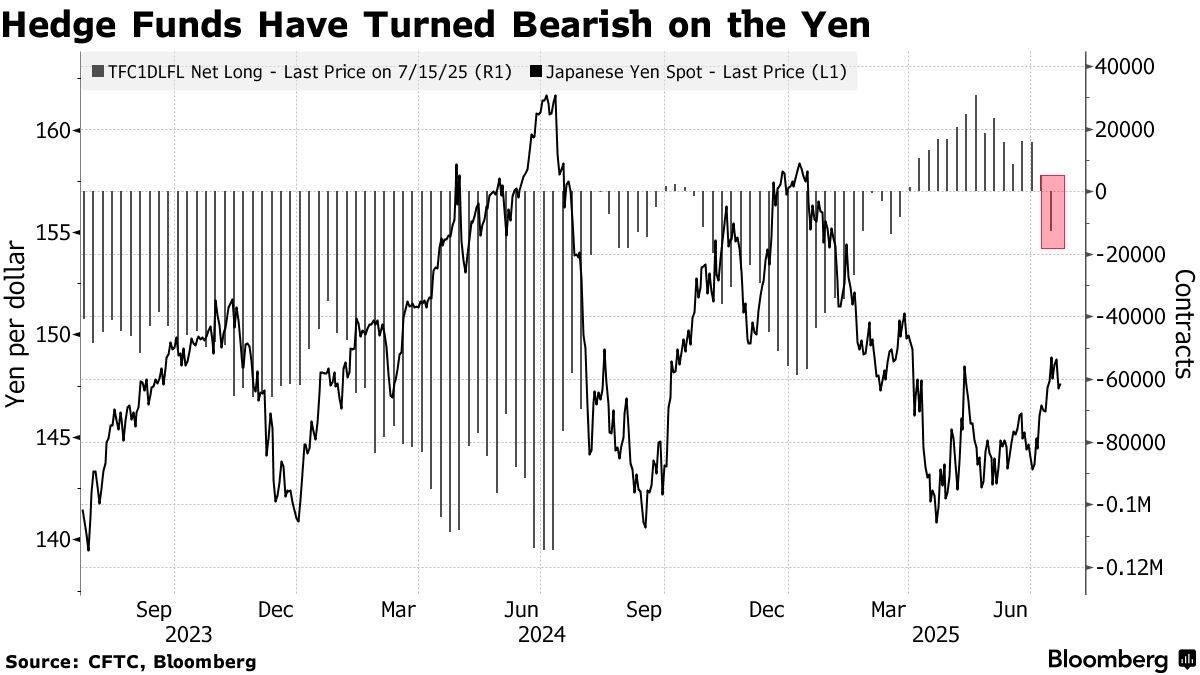
Core Viewpoint - The yen carry trade, which had previously collapsed, is now regaining popularity among investors due to political uncertainties in Japan and potential changes in monetary policy [1][4]. Group 1: Yen Carry Trade Dynamics - The yen carry trade involves borrowing low-yielding yen to invest in higher-yielding currencies, and it is seeing renewed interest as political changes may lead to increased fiscal spending and a slower pace of interest rate hikes by the Bank of Japan [1][4]. - Recent elections resulted in Prime Minister Shigeru Ishiba's ruling coalition losing its majority in the House of Councillors, which may compel the government to seek support from opposition parties, further benefiting the yen carry trade [1][4]. - The yen carry trade has recently yielded significant returns, with a 13% return from borrowing yen to invest in the New Taiwan Dollar and around 10% returns from investments in the South African Rand and Mexican Peso over the past three months [4]. Group 2: Political and Economic Context - Speculation about Prime Minister Ishiba's potential resignation is increasing, which could delay interest rate hikes by the Bank of Japan, thus favoring the yen carry trade [4][5]. - The current benchmark interest rate in Japan is only 0.5%, significantly lower than the Federal Reserve's rate of 4.25%-4.50%, providing a favorable environment for the carry trade [5]. - The political instability surrounding Ishiba's position makes it less likely for the Bank of Japan to raise rates in the near term, which supports the continuation of the yen carry trade [5]. Group 3: Market Sentiment and Future Outlook - Hedge funds have recently turned bearish on the yen for the first time in four months, indicating a shift in market sentiment towards the yen carry trade [5]. - Analysts predict that the yen may depreciate further, potentially reaching 153 yen per dollar, which would further support the carry trade [5]. - While some analysts see the carry trade as a viable short-term strategy, concerns about U.S. monetary policy and political pressures may pose risks to this strategy in the long run [5].
货币政策处于不确定时期 伦敦银呈上升趋势
Jin Tou Wang· 2025-07-22 04:22
Core Viewpoint - Silver prices are influenced by rising geopolitical risks and mixed signals from the Federal Reserve, with recent trading showing profit-taking near multi-year highs [1][3] Group 1: Silver Market Performance - On July 21, London silver closed at $38.92 per ounce, up $0.75 or 1.97%, with a daily high of $39.05 and a low of $38.06 [1] - The silver ETF holdings increased to 15,005.79 tons as of July 21, up 347.58 tons from the previous trading day, indicating a bullish sentiment in the market [2] - Last week, silver prices closed around $38.16, down 0.62% from the 14-year high of $39.13, reflecting a balance between geopolitical risks and mixed signals from the Fed [2] Group 2: Economic Indicators and Federal Reserve Outlook - The U.S. 10-year Treasury yield remains stable around 4.42%, indicating market confidence in a dovish policy shift later this year [3] - The market anticipates a 45 basis point rate cut by the Federal Reserve by the end of the year, with September seen as a likely starting point for rate cuts [3] - Political pressures on the Federal Reserve's independence may support demand for precious metals, including silver [3] Group 3: Industrial Demand and Future Outlook - Strong industrial demand, particularly from the solar and electronics sectors, is supporting physical silver consumption [3] - The fundamental outlook for silver remains strong, driven by expectations of Fed rate cuts and limited upside for the dollar [3] - Silver prices may benefit from policy-driven support and favorable conditions in the real economy, especially if U.S. economic data remains weak [3]
7.18黄金价格回调!国际、国内金价最新行情曝光
Sou Hu Cai Jing· 2025-07-19 04:08
Core Viewpoint - The global precious metals market is experiencing significant volatility driven by geopolitical risks in Washington and the Middle East, as well as escalating trade tensions between the US and Europe [1] Geopolitical Risks - The turmoil in the Middle East, particularly the Houthi attacks on Iraqi oil fields, has led to a daily drop in oil production by 140,000 to 150,000 barrels, impacting the global energy market [4] - The issuance of missile safety alerts by the US Embassy in Israel has heightened risk-averse sentiment among investors [4] Federal Reserve Policy Divergence - Internal disagreements within the Federal Reserve are causing market fluctuations, with hawkish member Kugler opposing rate cuts while dovish member Waller advocates for a 25 basis point cut in July [2][5] - Market expectations for a July rate cut have risen from 28% to 30%, while the probability of a September cut remains at 54% [2] Trade Tensions - The escalation of the US-EU trade war, including a 40% tariff on EU steel starting August 1, has begun to impact the precious metals supply chain [6] - A factory owner in Dongguan reported a 50% drop in orders for 18K gold necklaces destined for the US, resulting in significant inventory losses [6] Market Volatility - A rumor regarding former President Trump's consideration to fire Fed Chair Powell caused gold prices to spike by $50 to a three-week high of $3,377 before dropping back down, illustrating the extreme volatility in the gold market [8] - Gold has experienced nine instances of daily fluctuations exceeding $35 since July [8] Precious Metals Price Movements - Platinum prices have surged to a two-month high of $1,408, driven by miner strikes in South Africa and the booming hydrogen vehicle market, while silver prices have declined due to weak global factory orders [8] - Domestic gold prices in Shanghai opened at 771.2 yuan per gram, slightly down from the previous day, while retail prices for gold jewelry are significantly higher due to additional costs [9] Central Bank Gold Purchases - Central banks globally are increasing their gold reserves, purchasing between 37 to 39 tons monthly, with China's central bank being the most aggressive, raising its reserves to 2,298 tons over the past eight months [9] - Some Nordic pension funds have increased their gold allocations to 14%, indicating a shift towards gold as a hedge against currency devaluation [9]
关税滞后效应显现,三季度起或推高美国通胀?
Sou Hu Cai Jing· 2025-07-18 05:38
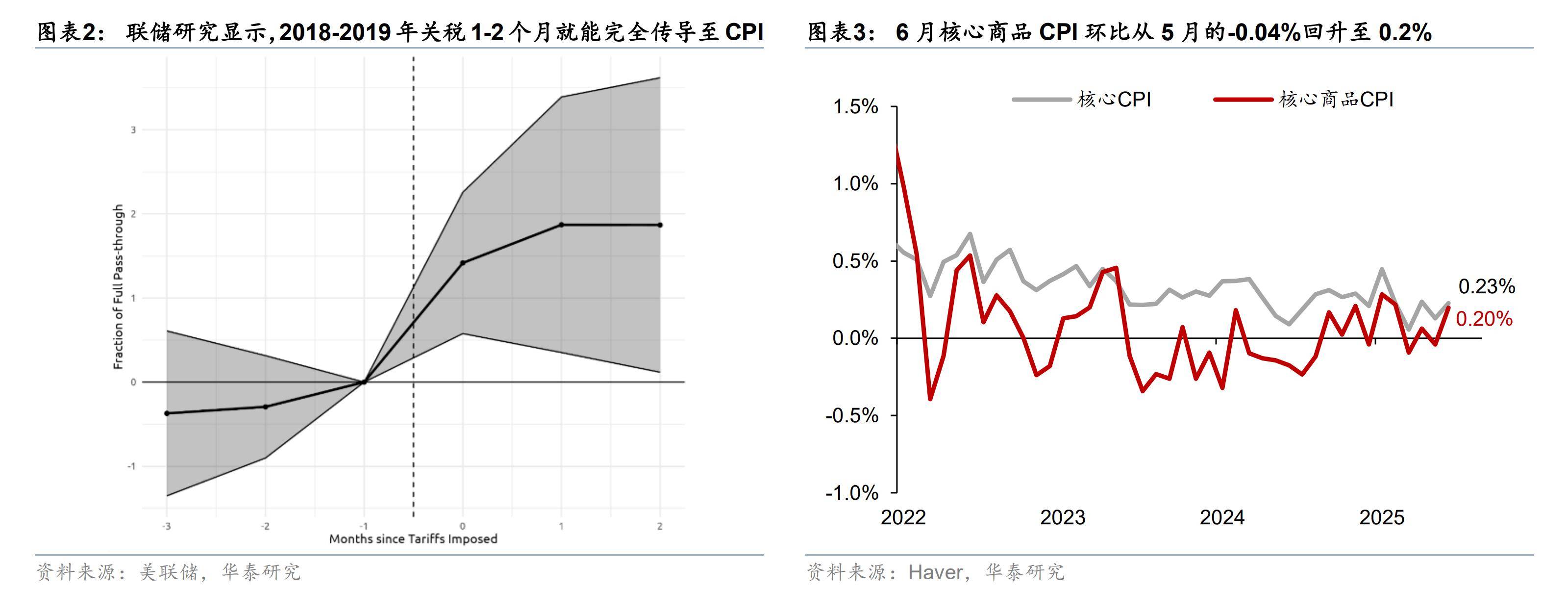
Group 1 - The impact of U.S. tariffs on inflation has become a focal point in the market, with significant increases in tariffs since the beginning of the year, but the transmission effect on inflation has not been immediate [1] - The delayed transmission of tariffs to inflation is attributed to several factors, including phased implementation and transportation time lags, which typically require months to significantly affect prices [1] - Companies have adopted strategies such as restructuring trade and increasing domestic procurement to mitigate the actual tariff burden, while some industries have stockpiled inventory to temporarily avoid passing on tariff costs to consumers [1] Group 2 - Economists suggest that the transmission of tariffs to inflation is merely delayed and not eliminated, with expectations that tariffs will gradually raise U.S. inflation levels starting in the third quarter [1] - The Federal Reserve's decision-making is significantly influenced by concerns over tariffs pushing inflation, leading to a postponement of interest rate cuts [3] - The uncertainty surrounding tariffs, along with the potential impacts of immigration policy and the "Big Beautiful" Act, may contribute to increased inflation levels in the fourth quarter [3][7] Group 3 - Market participants express concern that while the magnitude of tariff transmission to inflation may be less than expected, its persistence could exceed expectations, leading to increased volatility in U.S. Treasury yields [5] - Analysts note that the uncertainty of Trump's tariff policy and the time lag in its inflation impact create uncertainty regarding the timing of these effects [5] - The overall uncertainty in monetary policy is expected to rise by 2026 due to the delayed effects of tariffs and other economic factors, potentially slowing the pace of interest rate cuts [7]
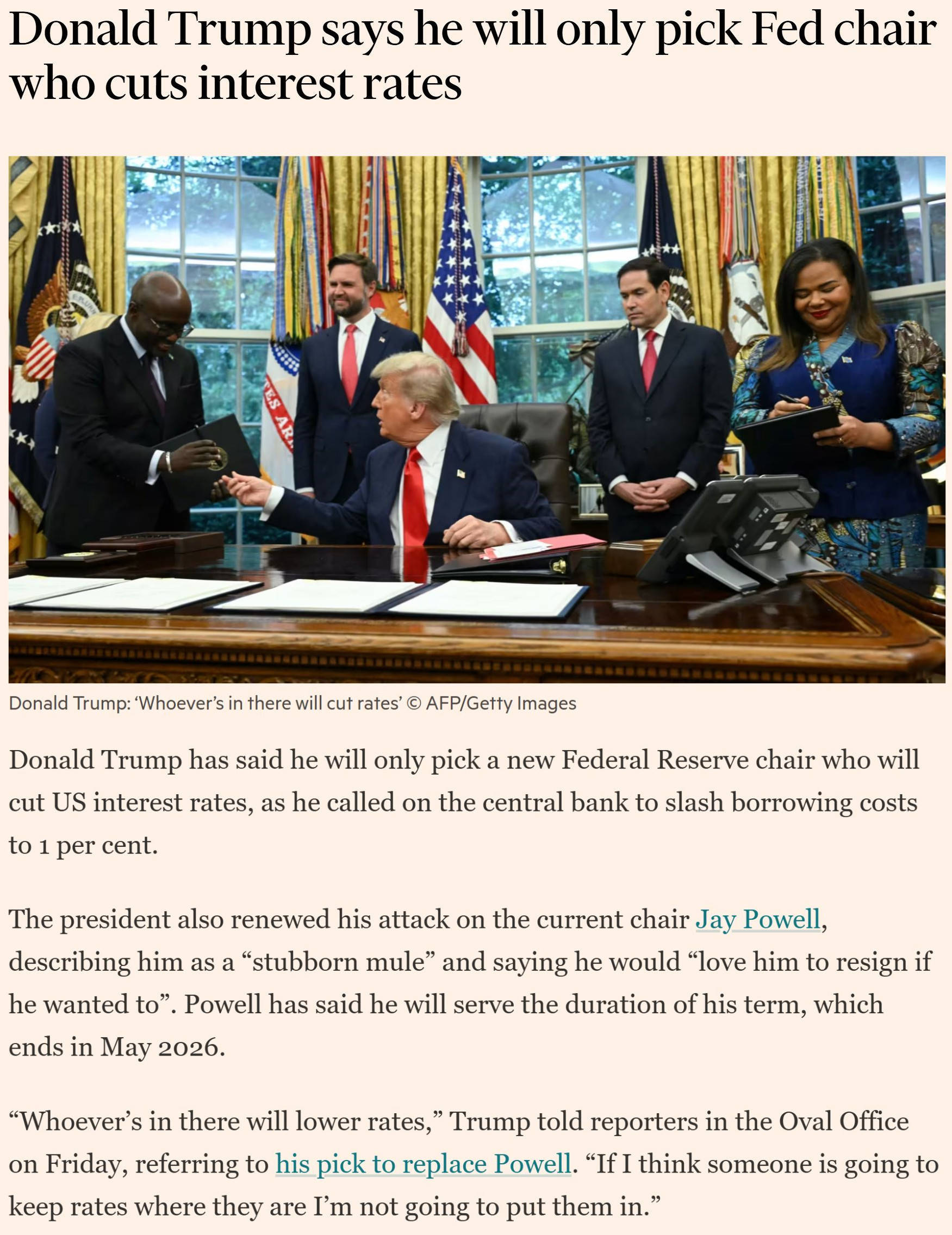
深观察丨美联储何时降息 “急不得”背后要“着急换人”?
Sou Hu Cai Jing· 2025-06-28 11:25
Group 1 - Federal Reserve Chairman Jerome Powell emphasized a cautious approach to adjusting interest rate policy during congressional hearings, suggesting that waiting for more economic data is prudent [1][4][6] - President Trump criticized Powell, stating he made a significant error and expressed a desire for Powell to resign, indicating he would only appoint those willing to lower interest rates [1][4][8] - Trump is reportedly considering breaking tradition by announcing his nominee for the next Federal Reserve Chair as early as September, which could influence market expectations regarding future interest rate paths [4][11][12] Group 2 - Powell noted that the impact of tariffs on inflation remains uncertain, with potential short-term and long-term effects on prices and economic activity [4][14] - Recent data showed that the core personal consumption expenditures price index rose by 2.7% year-over-year in May, surpassing expectations and marking the highest increase since February [5][6] - Market expectations indicate an 81.4% probability that the Federal Reserve will maintain interest rates in July, with an 18.6% chance of a 25 basis point cut [6][7] Group 3 - Concerns have been raised about the quality of economic data collected by the U.S. government, which may affect the Federal Reserve's ability to make informed policy decisions [14][15][16] - Powell expressed the need for improved measurement of economic activity data, highlighting the importance of reliable indicators for effective policy-making [16]