跨界造车

Search documents
又一豪华新势力诞生 科技巨头跨界造车局中局
Zhong Guo Jing Ying Bao· 2025-08-29 21:39
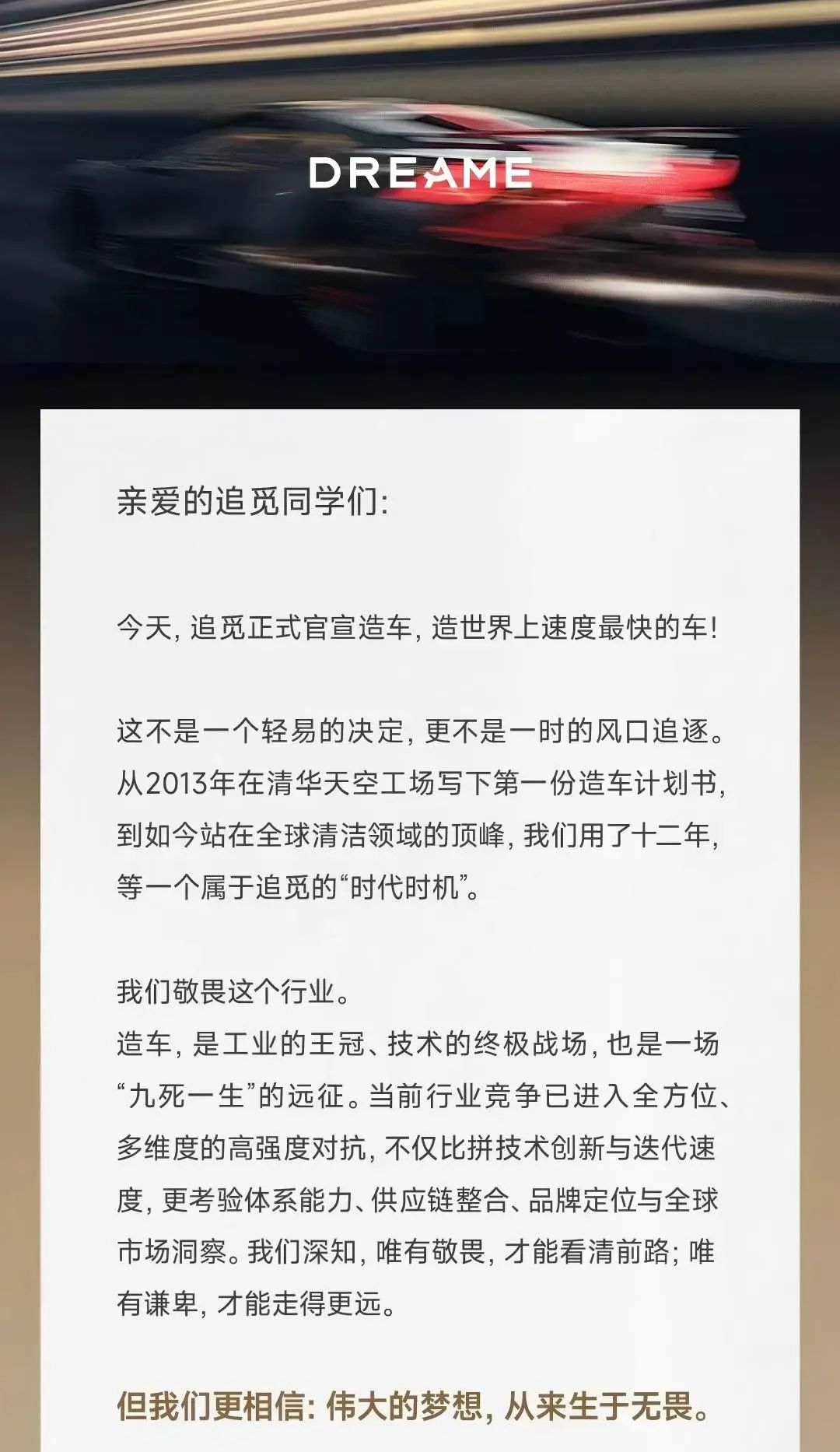
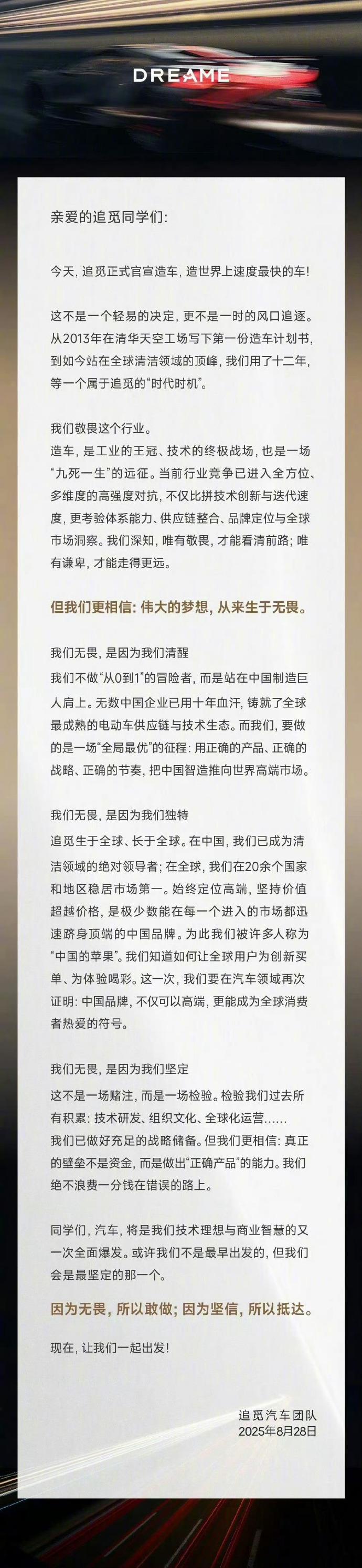
Core Viewpoint - Chasing Technology has announced its entry into the automotive industry, aiming to produce the world's fastest car, positioning itself as a high-end brand in the competitive electric vehicle market [1][3]. Company Strategy - The company emphasizes its commitment to high-end positioning and aims to leverage its technological strengths accumulated in the smart hardware sector to transition into the luxury electric vehicle market [3][10]. - Chasing Technology plans to launch its first ultra-luxury electric vehicle, targeting the Bugatti Veyron, by 2027, indicating a strategic focus on high-performance and luxury segments [3][10]. Market Context - The automotive market in China is highly competitive, with several new entrants like Hozon and Aiways exiting the market recently, highlighting the challenges faced by new players [1][8]. - Despite the intense competition, there is still potential for new players to carve out niches, particularly in the high-end electric vehicle segment, which currently represents only 1.5% of total electric vehicle sales [3][8]. Talent Acquisition and Team Structure - Chasing Technology has formed a dedicated team of nearly 1,000 personnel for its automotive project, focusing on integrating expertise from both smart hardware and traditional automotive sectors [4][11]. - The company is actively recruiting for various positions, with a significant number of roles related to vehicle functionality and development, indicating a robust approach to building its automotive capabilities [4][5]. Technological Advantages - The company claims to have developed a high-speed motor technology that can be applied to electric vehicles, which is crucial for achieving high performance in the automotive sector [6][7]. - Chasing Technology has a substantial patent portfolio, with 6,379 applications, of which approximately 45% are invention patents, covering key areas relevant to electric vehicles [6][7]. Global Expansion - The company has established a global marketing network, covering over 100 countries and regions, which will support its international expansion in the automotive sector [5][6]. - Chasing Technology's existing customer base and distribution channels will facilitate its entry into the global luxury electric vehicle market [5][6].
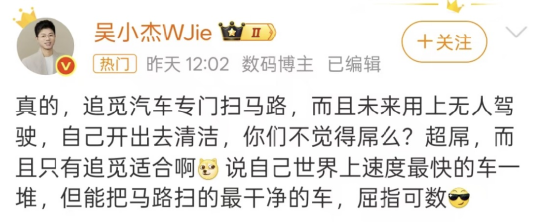
KOL调侃“追觅汽车专门扫马路”,目前高薪招整车人才,PMO岗位年薪近70万,整车销售端直指海外
Xin Lang Zheng Quan· 2025-08-29 08:29
Core Viewpoint - Chasing, a company known for its vacuum cleaners and robotic vacuums, is attempting to enter the automotive industry, raising questions about its ability to transition from home appliances to car manufacturing [1][3]. Group 1: Company Actions - Chasing has opened multiple positions related to vehicle development, including roles for vehicle R&D engineers, design engineers, and project managers, indicating a strong intent to build a car manufacturing team [2][3]. - The highest salary for a project management position is set at 50,000 yuan per month, which translates to nearly 700,000 yuan annually, reflecting the company's commitment to attracting talent [2]. Group 2: Market Perception - Social media reactions to Chasing's automotive ambitions are mixed, with some users humorously questioning the feasibility of a brand known for cleaning products entering the car market [1][3]. - The light-hearted comments highlight a general skepticism regarding Chasing's ability to compete in the complex automotive sector, which is heavily reliant on capital and technology [1][3]. Group 3: Strategic Risks - The automotive industry is characterized by a complex supply chain, long R&D cycles, and significant capital requirements, posing a challenge for Chasing as it shifts focus from its core competencies in smart home appliances [3]. - There are concerns about whether Chasing can leverage its existing technology in small electric motors to create competitive vehicles, as its primary expertise lies in home cleaning products [3].

跨界上瘾,追觅科技官宣造车,钱够吗?
3 6 Ke· 2025-08-29 04:52
Core Viewpoint - The competitive landscape of the new energy vehicle (NEV) sector is becoming increasingly brutal, with several prominent players exiting the market, while new entrants continue to emerge, such as Chasing Technology, which plans to launch a luxury electric vehicle by 2027 [1][14]. Group 1: Company Overview - Chasing Technology, founded in 2017, initially focused on manufacturing cleaning appliances for Xiaomi before transitioning to its own brand in 2019, quickly becoming a leading player in the cleaning appliance industry [3][4]. - The company has expanded its product lines significantly, now offering a wide range of products including vacuum cleaners, air purifiers, and even plans for electric vehicles, positioning itself as a boundaryless ecological enterprise [3][12]. Group 2: Market Dynamics - The cleaning appliance market has seen rapid growth, with the market size increasing from 20 billion yuan in 2019 to 42.3 billion yuan in 2024, driven primarily by the sales of robotic vacuums and floor washers [9][12]. - Despite the growth, the penetration rates for cleaning appliances remain low, with robotic vacuums and floor washers at only 5.5% and 3.1% respectively in 2024, indicating a potential ceiling for growth in this segment [9][12]. Group 3: Competitive Landscape - The entry of new competitors, including DJI's recent launch of a high-end robotic vacuum, adds pressure to existing brands in the cleaning appliance market [12]. - The shift towards cross-industry ventures is evident, with companies like Stone Technology also expanding into washing machines while Chasing Technology explores various sectors including home appliances and drones [12]. Group 4: Financial Considerations - The automotive sector is significantly more capital-intensive than the cleaning appliance industry, with substantial investments required for research and development, factory construction, and operational costs [13]. - Chasing Technology's market strategy for its vehicle launch is focused on a "super luxury, overseas first" approach, reminiscent of strategies employed by other players in the NEV market [14].
又有小米投资?“ 追觅官宣造车 ”上热搜,网友:太癫了...
3 6 Ke· 2025-08-29 03:49
Core Viewpoint - The company Chasing has announced its ambition to create the world's fastest car, directly competing with the legendary hypercar brand Bugatti Veyron, which has sparked a mix of skepticism and support among netizens [1][12][9]. Company Overview - Chasing, established in 2017, has seen significant growth in the cleaning sector, achieving a valuation of 20 billion yuan in the 2024 Hurun Global Unicorn List [14]. - The company has a history of collaboration with Xiaomi, having initially produced smart cleaning products for Xiaomi before developing its own brand [17]. Market Position and Strategy - Chasing aims to launch its first car model in 2027, targeting the high-end market, which indicates a strong confidence in its capabilities [12][19]. - The company has reportedly formed a nearly 1,000-person team dedicated to vehicle development and is in the process of expanding this team [20]. Industry Context - The automotive industry is characterized by high capital requirements and rapid technological advancements, making entry challenging for new players [26][29]. - Previous attempts by home appliance companies, such as Dyson, to enter the automotive market have ended unsuccessfully, raising concerns about Chasing's strategy [23][25]. Consumer Sentiment - While some consumers express skepticism about Chasing's venture into automotive manufacturing, others are optimistic about the potential for cross-industry innovation [9][31]. - The general sentiment reflects a mix of caution and hope, with many consumers willing to observe the company's progress in this ambitious endeavor [31].
又见跨界造车!首款车型对标布加迪威龙
Zheng Quan Shi Bao Wang· 2025-08-28 07:05
Core Viewpoint - The announcement by Chasing Technology to enter the automotive industry marks a significant shift, aiming to produce a super luxury electric vehicle that competes with brands like Bugatti, with plans for a 2027 launch [1][4]. Company Overview - Chasing Technology, known for its smart hardware products such as wireless vacuum cleaners and robotic vacuum cleaners, has been recognized as one of China's top 100 innovative growth enterprises [3]. - The company has a valuation of 20 billion RMB and was included in the 2024 Hurun Global Unicorn List [3]. - Xiaomi Group has a close relationship with Chasing Technology, having invested in its early funding rounds [3]. Strategic Intent - Chasing Technology aims to leverage its core technological capabilities in the automotive sector, seeking to redefine the super luxury car market by integrating extreme performance with intelligent technology [4][6]. - The company has assembled a team of nearly 1,000 people for its automotive project and plans to continue long-term investments in this area [3][4]. Market Positioning - The global super luxury car market is currently dominated by traditional brands like Bugatti and Bentley, which are slow in electrification and intelligence advancements. Chasing Technology sees an opportunity for "dislocated competition" in this space [4][6]. - The company intends to avoid the price war prevalent in the mid-range market and instead focus on performance and technology to target the more profitable super luxury segment [7]. Product Features - The first model will be a super luxury electric vehicle that emphasizes an intelligent ecosystem, utilizing AI to learn and adapt to user preferences, creating a personalized driving experience [5]. - The vehicle will feature advanced voice interaction capabilities that aim to replicate natural human communication, enhancing user engagement [5]. Ecosystem Integration - Chasing Technology plans to create a seamless integration between the vehicle and users' smart home devices, enhancing the overall luxury experience and establishing a strong connection within the smart living ecosystem [6].
追觅官宣造车:跨界的“速度梦想”能否落地?
Jing Ji Guan Cha Bao· 2025-08-28 05:17
Group 1 - Dreame Technology announced its intention to manufacture the "fastest car in the world," marking its entry into the automotive industry after focusing on smart cleaning appliances since its establishment in 2017 [2] - The company's first vehicle is expected to be a range-extended SUV, projected to debut around 2027, targeting overseas markets, although details on funding, partnerships, and R&D team size remain undisclosed [2][3] - The automotive industry in China is currently undergoing a phase of consolidation, with leading companies expanding production and reducing prices, while smaller players are exiting the market, indicating a challenging environment for new entrants like Dreame [3] Group 2 - Xiaomi's successful entry into the automotive market serves as a reference for Dreame, highlighting the importance of a strong personal brand and established supply chain investments, which Dreame currently lacks [3] - The capital requirements for entering the electric vehicle market are substantial, and Dreame's asset-light approach raises questions about its ability to achieve mass production [3] - The company's ambition to transition from a "cleaning appliance miracle" to an "automotive miracle" hinges on its ability to secure technology, funding, and market validation [3]
27亿元甩卖美国工厂,这家巨头为何屡屡冲刺造车却铩羽而归?
Zhong Guo Qi Che Bao Wang· 2025-08-07 02:54
Core Insights - Foxconn's ambitious electric vehicle manufacturing dream has faced significant setbacks in the U.S. market, culminating in the sale of its Ohio factory for $375 million, which it had acquired for $230 million two years prior [2][3][4] Group 1: Company Actions and Decisions - The sale of the Ohio factory is framed as a strategic shift towards AI and data, but it highlights the challenges Foxconn has faced in the automotive sector [2][3] - The factory, once seen as a key asset for Foxconn's entry into electric vehicle manufacturing, has been described as an "electric vehicle graveyard" due to its underperformance [6][8] - The sale agreement includes a leaseback clause, allowing Foxconn to retain operational control while alleviating the financial burden of heavy capital investment [3][4] Group 2: Market Context and Challenges - The U.S. electric vehicle market is highly competitive, with established players like Tesla and traditional automakers accelerating their electric transitions, creating immense pressure on new entrants [6][9] - Regulatory complexities and varying state policies in the U.S. add to the operational challenges, increasing compliance costs for new manufacturers [6][9] - Foxconn's reliance on external partners for technology and its lack of core vehicle development capabilities have hindered its ability to adapt to the automotive industry's unique demands [8][9] Group 3: Lessons and Industry Implications - The experience of Foxconn serves as a cautionary tale for other companies considering entry into the automotive sector without a deep understanding of its complexities [9] - Industry experts emphasize the need for a return to fundamental manufacturing principles, moving away from speculative approaches to ensure sustainable growth [9]

王传福现身小米,和雷军聊啥?
Sou Hu Cai Jing· 2025-07-18 08:57
Core Viewpoint - The recent visit of BYD CEO Wang Chuanfu to Xiaomi's car factory, accompanied by Xiaomi's founder Lei Jun, indicates a potential collaboration between the two companies in the automotive sector, highlighting the ongoing trend of cross-industry partnerships in vehicle manufacturing [1][3][5]. Group 1: Company Interactions - Wang Chuanfu's visit to Xiaomi's factory is not merely a casual meeting but suggests significant industry developments and potential collaboration opportunities [3]. - The historical relationship between Xiaomi and BYD has been established, with past interactions indicating a willingness to cooperate, as seen during the Beijing Auto Show where Lei Jun expressed hopes for collaboration [5]. - Lei Jun has acknowledged BYD as a crucial partner for Xiaomi, emphasizing their long-standing friendship and collaboration in the smartphone sector [8]. Group 2: Industry Trends - The automotive industry is witnessing a trend where major tech companies are entering the vehicle manufacturing space, with Wang Chuanfu previously commenting on the low financial risks associated with such ventures [5]. - Wang Chuanfu's remarks about the potential pitfalls of vehicle manufacturing for new entrants suggest a cautious approach, advising against wasting time on unproductive routes [5][7]. - The current challenges faced by Xiaomi in terms of production capacity and delivery timelines highlight the critical need for efficient scaling in the automotive sector [8][10]. Group 3: Future Prospects - The ability of Xiaomi to enhance its production capacity will be pivotal for its future success in the automotive market, directly influencing its competitive positioning [10]. - Speculation exists regarding the possibility of BYD assisting Xiaomi with production capabilities, although such scenarios remain uncertain [10].



苹果向下,小米向上
3 6 Ke· 2025-07-10 01:59
Core Insights - The article highlights the contrasting outcomes of Apple's Titan Project and Xiaomi's foray into the electric vehicle market, emphasizing Xiaomi's pragmatic approach versus Apple's ambitious but ultimately flawed strategy [1][3][4] Group 1: Company Strategies - Apple's Titan Project aimed to reinvent the automotive industry but suffered from a lack of clear direction and frequent changes in leadership, leading to its failure [4][6] - Xiaomi, on the other hand, defined its car manufacturing as a final entrepreneurial venture, focusing on practical integration rather than disruptive innovation [6][8] - Xiaomi's strategy involved leveraging existing industry resources and partnerships, allowing it to achieve production in just three years compared to Apple's decade-long struggle [11][14] Group 2: Market Environment - The article discusses the structural advantages Xiaomi has in the Chinese electric vehicle market, including a well-established supply chain and supportive government policies [9][12] - Xiaomi's ability to integrate components from established suppliers like CATL and Hesai Technology contrasts sharply with Apple's reliance on imported parts and a lack of local supply chain [11][12] - The favorable policy environment in China, including subsidies and tax exemptions, has provided Xiaomi with a competitive edge that Apple lacks in the U.S. market [12][14] Group 3: User Base and Market Acceptance - Xiaomi benefits from a large existing user base of 380 million MIUI users, which provides a ready market for its vehicles, while Apple faces challenges in gaining consumer acceptance [16] - The article notes that Xiaomi's focus on user experience and ecosystem integration resonates well with younger consumers, enhancing its market appeal [8][16] - Despite its successes, Xiaomi must navigate challenges such as design controversies and production capacity issues, which are critical in the complex automotive industry [16]

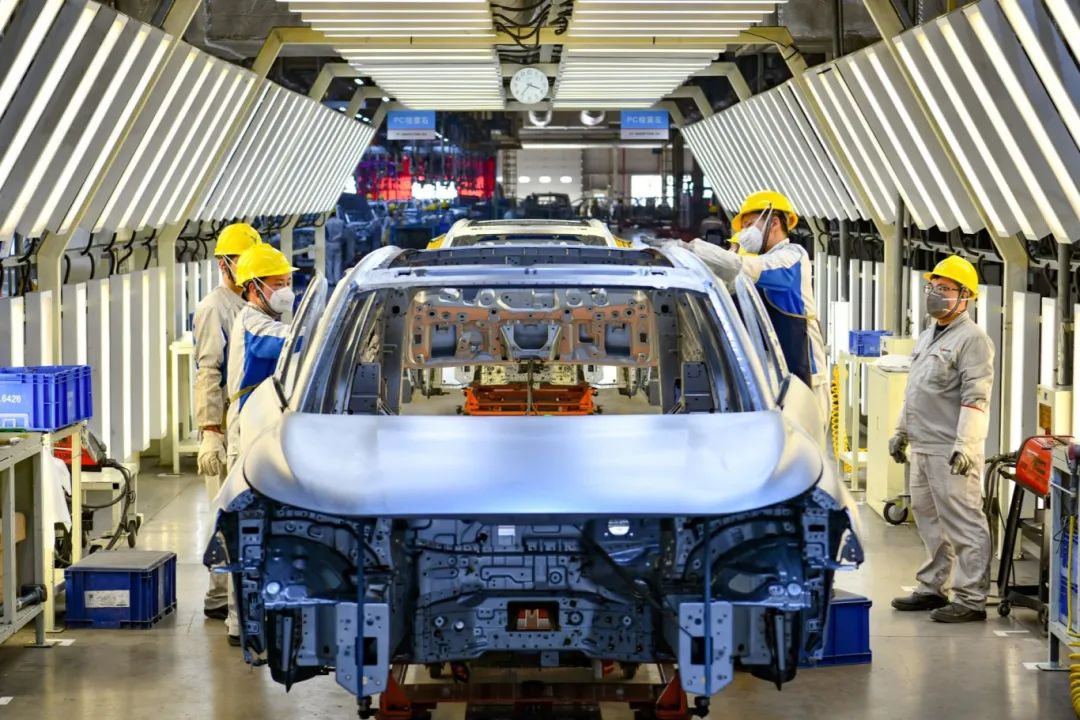
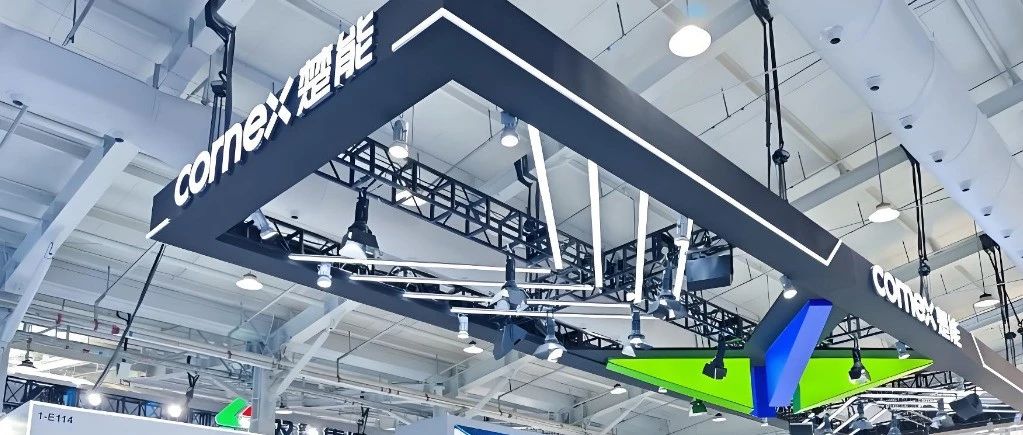
从车商大佬到储能巨头!如今又要跨界造车?这家成立4年的新企业,葫芦里卖的什么药?
电动车公社· 2025-07-04 15:59
Core Viewpoint - The article discusses the entry of Choneng New Energy into the automotive industry, highlighting its ambitious plans and the background of its founder, Dai Deming, who has a successful track record in both the home appliance and automotive sectors [2][11][26]. Group 1: Company Overview - Choneng New Energy is based in Hubei and specializes in energy storage batteries, power batteries, and energy management systems, positioning itself as a lithium-ion battery technology company [3][5]. - The automotive division of Choneng has grown to over 100 employees and is actively recruiting for various roles, indicating significant ambitions in the electric vehicle manufacturing sector [5][6]. - The first vehicle from Choneng is expected to target the market segment of range-extended SUVs, competing with models like Xiaomi's YU7 and AITO's M5 [10]. Group 2: Founder Background - Dai Deming, born in 1964, transitioned from a military career to the business world, initially in home appliances before moving into automotive sales [13][14]. - He founded Hubei Hengxin Delong Industrial Co., Ltd. in 2000, capitalizing on the booming automotive market post-China's WTO accession [20][22]. - Under his leadership, Hengxin has become the fourth-largest automotive dealer in China, with revenues reaching 78.51 billion yuan [26]. Group 3: Investment and Market Strategy - Choneng New Energy was established in August 2021, strategically entering the market just before the surge in demand for energy storage solutions [45][51]. - The company has invested 10 billion yuan in building its manufacturing base, which was completed in just 10 months [53]. - Choneng has launched a competitive pricing strategy, offering its 280Ah energy storage lithium battery at a price of no more than 0.5 yuan/Wh, a reduction of approximately 40% compared to previous prices [59]. Group 4: Market Position and Future Prospects - As of October 2023, Choneng has established partnerships with major domestic and international power groups, receiving orders from countries including Japan, the USA, and Australia [63]. - The company aims to expand its production capacity significantly, with plans for additional investments in the coming years [64]. - Choneng's entry into vehicle manufacturing is seen as an attempt to control the downstream supply chain, leveraging its existing automotive dealership network for potential success [74].