进口关税

Search documents
铝价高企缓解关税阵痛!美国铝业(AA.US)Q3净利润同比增158%,Q4关税成本或再升5000万
智通财经网· 2025-10-23 00:04
Core Viewpoint - Alcoa Corporation reported a significant increase in net income for Q3 2025, driven by rising domestic aluminum prices, despite facing challenges from tariffs on Canadian aluminum imports [1][3]. Financial Performance - Q3 2025 revenue reached $2.995 billion, up from $2.904 billion year-over-year [2]. - Net income attributable to Alcoa Corporation was $232 million, compared to $90 million in the same period last year, marking a nearly 158% increase [1][2]. - Adjusted net loss was $6 million, down from a profit of $135 million in the previous year [1][2]. - Adjusted EBITDA was $270 million, a decrease from $455 million year-over-year [1][2]. Production and Operations - Alumina production increased by 4% quarter-over-quarter to 2.5 million tons, attributed to reduced maintenance at Australian refineries [2]. - Aluminum segment production rose by 1% to 579,000 tons, mainly due to the successful restart of the San Ciprián smelter in Spain [2]. - Total alumina shipments remained flat at 2.2 million tons, while aluminum shipments decreased by 3% due to trade volume adjustments [2]. Major Developments - The net income of $232 million included gains from the sale of Ma'aden joint venture interests, offset by restructuring costs [3]. - The company announced a long-term energy contract with the New York Power Authority and plans to invest approximately $60 million in the Massena smelter [3]. - Alcoa received support from the U.S. and Australian governments for the joint development of a gallium plant at the Wagerup refinery [3]. Market Context - U.S. aluminum prices have outpaced international markets, with Midwest premiums soaring 113% since early June, influenced by tariffs imposed by the Trump administration [3][4]. - The company anticipates an additional $50 million increase in tariff costs for Q4 2025, indicating ongoing trade impacts [3]. Future Outlook - Alcoa expects total alumina production to remain between 9.5 million and 9.7 million tons for 2025, with aluminum production projected at 2.3 million to 2.5 million tons [4]. - Q4 2025 adjusted EBITDA for the alumina segment is expected to improve by approximately $80 million, while the aluminum segment may face a $20 million adverse impact due to operational inefficiencies [4].



专家称美国企业与消费者正为新一轮关税买单
Shang Wu Bu Wang Zhan· 2025-10-14 15:49
Core Viewpoint - The cost of new import tariffs is primarily borne by U.S. businesses and consumers, contradicting previous claims by Trump [1] Group 1: Tariff Impact on Prices - Since the imposition of new tariffs in early March, the average price of imported goods has increased by 4%, while domestic product prices have risen by approximately 2% [1] - The most significant price increases are observed in goods that the U.S. cannot produce domestically, such as coffee, and imports from countries facing high tariffs, like Turkey [1] - Despite notable price increases, the overall rise is still lower than the tariff rates, indicating that some suppliers are absorbing costs [1] Group 2: Import Price Index and Export Costs - The U.S. import price index (excluding tariffs) shows that foreign exporters have generally raised their factory prices in U.S. dollars to offset losses from dollar depreciation [1] - Export costs from countries such as China, Germany, Mexico, Turkey, and India have increased, while Japan's export prices have remained stable [1] Group 3: Current Tariff Rates and Future Outlook - The average tariff rate on U.S. imports has surged from about 2% to approximately 17%, with monthly tariff collections reaching around $30 billion [1] - Experts predict that businesses and consumers will require several months to fully adapt to the unstable tariff system [1]
特朗普宣布对进口中型和重型卡车征收25%关税
Yang Shi Xin Wen Ke Hu Duan· 2025-10-06 18:56
Core Points - Starting November 1, 2025, a 25% tariff will be imposed on all medium and heavy trucks imported into the United States from other countries and regions [1] - On September 25, it was announced that a 25% tariff on all imported heavy trucks would take effect from October 1 [1] Summary by Category Tariff Implementation - A 25% tariff on medium and heavy trucks will begin on November 1, 2025 [1] - An earlier announcement indicated that a 25% tariff on heavy trucks would start on October 1 [1]
X @外汇交易员
外汇交易员· 2025-09-30 00:58
Trade Policy Changes - US to adjust import tariffs on wood, lumber, and processed wood products [1] - 10% ad valorem duty on softwood lumber and boards [1] - 25% ad valorem duty on certain upholstered wood products [1] - Intention to cap tariffs on wood products originating from the EU and Japan at 15% [1] - Wood national security tariff measures to take effect on October 14 [1]
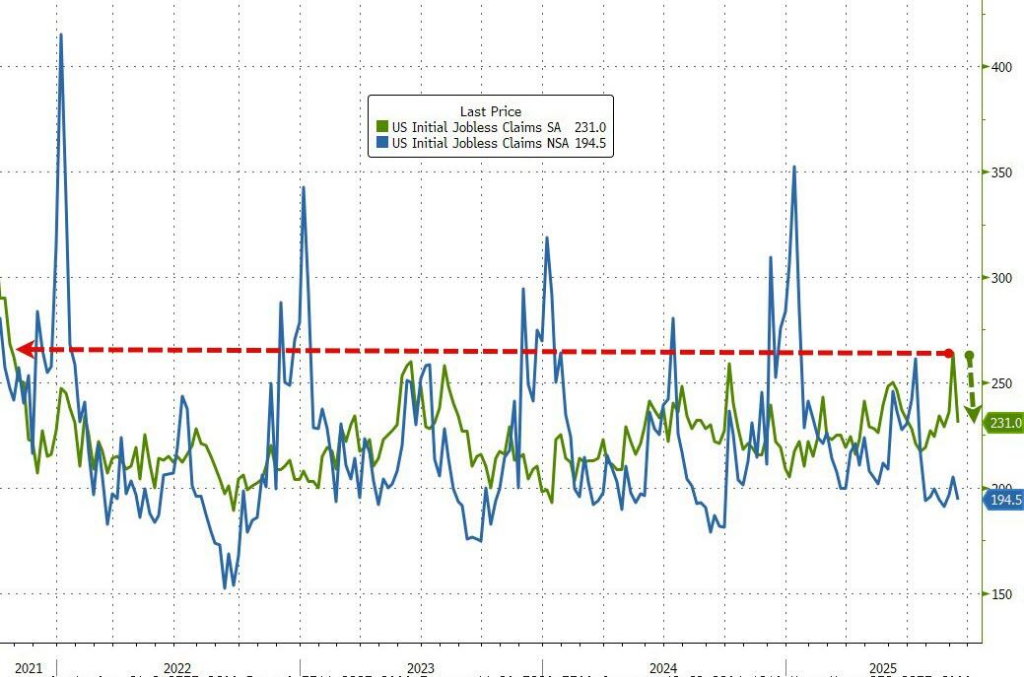
美国上周首申失业金人数大幅回落至23.1万,创近四年来最大降幅
Hua Er Jie Jian Wen· 2025-09-18 22:32
Group 1 - The U.S. labor market is facing a dual decline in supply and demand, with a notable decrease in initial jobless claims but an overall weak employment environment [1][2] - The number of initial jobless claims for the week ending September 13 was 231,000, lower than the expected 240,000 and down from the previous week's 263,000, indicating a return to a normal range over the past four years [2] - Despite the drop in initial claims, the number of individuals continuing to receive unemployment benefits remains above 1.9 million, highlighting the challenges for existing unemployed individuals to find new jobs [2][4] Group 2 - The average duration of unemployment has increased to 24.5 weeks in August, the longest since April 2022, reflecting longer job search periods for unemployed individuals [4] - Job creation has significantly slowed, with an average monthly increase of only 29,000 jobs over the past three months, indicating a stagnation in hiring activity [4] - The fluctuations in unemployment data are believed to be linked to seasonal hiring and layoffs in the Texas education system, which can temporarily impact unemployment figures [6] Group 3 - Federal Reserve Chairman Jerome Powell described the current labor market as an unusual balance, where both supply and demand have significantly decreased, leading to rising unemployment rates [8] - Economists attribute the slowdown in labor demand to uncertainties stemming from import tariffs, while tightened immigration policies have reduced labor supply, creating this unique market dynamic [8] - The Federal Reserve's recent policy actions, including the resumption of interest rate cuts, reflect concerns about the labor market and a desire to support employment [8]
南非7月零售销售同比增长5.6%
Zhong Guo Xin Wen Wang· 2025-09-18 02:46
Core Insights - South Africa's retail sales showed a significant rebound in July, with a year-on-year growth of 5.6%, marking the highest annual growth rate since April [1] - The growth was driven by strong performances in categories such as clothing, general retail, and hardware [1] - Seasonally adjusted retail sales increased by 2.1% month-on-month, reversing the contraction seen in the previous two months [1] Group 1: Economic Indicators - The three-month period ending in July 2025 saw a year-on-year retail sales growth of 3.8%, with a seasonally adjusted quarterly increase of 1.3% [1] - Household consumption was identified as the main driver behind the unexpected GDP growth in the second quarter of 2025 [1] - The resilience of consumers remains crucial for the economy, as indicated by the first retail data of the third quarter [1] Group 2: Consumer Factors - Multiple favorable factors are currently supporting consumers, including low inflation, interest rate cuts, and new job opportunities in the public sector [1] - The ability of households to maintain consumption is being positively impacted despite the lack of inflation adjustments to personal income tax thresholds in the current budget [1] Group 3: Potential Risks - There are warnings regarding potential economic pressure due to the 30% import tariffs implemented by the U.S. since August 7, which may affect third-quarter employment data [2] - Increased uncertainty in the economic environment could lead businesses to reduce or delay hiring and investment plans, potentially overshadowing future retail growth [2]
X @外汇交易员
外汇交易员· 2025-09-06 00:23
Trade Policy Adjustment - US can adjust tariffs based on trade agreements, potentially reducing reciprocal tariffs to zero for certain goods [1] - Tariff reduction or modification of Section 232 tariffs (steel and aluminum derivatives) is unlikely before a final agreement is signed [1] Eligible Goods for Zero Reciprocal Tariffs - Goods not produced in the US or with insufficient domestic production [1] - Specific agricultural products [1] - Aircraft and parts [1] - Non-patented items for pharmaceutical applications [1]
X @外汇交易员
外汇交易员· 2025-09-06 00:22
Trade Policy Adjustment - US can adjust tariffs based on trade agreements, potentially reducing reciprocal tariffs to zero [1] - Tariff reduction or modification of Section 232 tariffs (steel and aluminum derivatives) is unlikely before the final agreement is signed [1] Eligible Goods for Zero Reciprocal Tariffs - Goods not produced or insufficiently produced in the US to meet domestic demand [1] - Specific agricultural products [1] - Aircraft and parts [1] - Non-patented items for pharmaceutical applications [1]
关税扰动下企业进口激增 美国7月贸易逆差升至四个月新高
Zhi Tong Cai Jing· 2025-09-04 13:33
Group 1 - The trade deficit in the U.S. widened to a four-month high in July, reaching $78.3 billion, an increase of nearly 33% from the previous month, exceeding economists' expectations of $78 billion [1] - Imports surged by 5.9% month-over-month, marking the largest increase of the year, driven primarily by a rise in industrial goods imports [1] - The trade deficit with China expanded for the first time in six months, while the deficit with Mexico slightly increased and the deficit with Canada also widened after hitting a record low in June [1] Group 2 - Monthly fluctuations in trade data have contributed to volatility in the U.S. GDP measurement, reflecting clearer understanding of import tariffs among businesses following agreements with key trade partners [2] - Ongoing trade negotiations between the Trump administration and China continue, with a recent court ruling deeming most of the tariff measures implemented by Trump as illegal, although these measures can remain in effect until October 14 for an appeal to the Supreme Court [2]
特朗普称不打算降低对印度征收的进口关税
Sou Hu Cai Jing· 2025-09-04 01:35
Core Viewpoint - President Trump has stated that he does not plan to reduce the current 50% import tariffs on India, which includes tariffs imposed due to India's purchase of Russian oil [1][3] Group 1 - Trump emphasized that the U.S.-India relationship is "very friendly," but he believes that New Delhi previously imposed "huge tariffs" on U.S. goods, which were among the highest globally [3]