
通胀走势

Search documents
美国零售数据回暖,贵?属短线延续震荡
Zhong Xin Qi Huo· 2025-07-18 09:25
Report Summary 1) Report Industry Investment Rating No information provided. 2) Core View of the Report The overnight economic data in the US showed an overall improvement. The better - than - expected retail data in June and the decline in the weekly initial jobless claims drove the short - term strengthening of the US dollar and US stocks, putting pressure on precious metals, which are expected to maintain a short - term volatile trend. Gold maintains a long - term bullish trend, and silver retains a medium - term bullish view with cautious consideration of its elasticity. Attention should be paid to the new round of trade game in the first half of August and the change in interest - rate cut expectations brought by the global central bank meeting in the second half of August, as well as the trading interference from the "shadow Fed chairman" in the second half of the year. The weekly COMEX gold is expected to be in the range of [3250, 3450], and COMEX silver in the range of [36, 40] [1][3]. 3) Summary by Related Catalogs Key Information - US retail sales in June increased by 0.6% month - on - month, the highest since March this year, with an expected increase of 0.1% and a previous decrease of 0.9%. Core retail sales increased by 0.5% month - on - month, with an expected increase of 0.3% and a previous decrease (revised) of 0.2% [2]. - The number of initial jobless claims in the US last week was 221,000, with an expected 235,000. The four - week average was 229,500. The number of continued jobless claims as of the week ending July 5 was 1.956 million [2]. - US President Trump said he has no plan to fire Fed Chairman Powell unless fraud is proven. He also said he would accept Powell's resignation if Powell wants to [2]. - The Fed's latest Beige Book showed that economic activity in the US slightly rebounded from June to July. Import tariffs pushed up costs, and inflation may accelerate by the end of summer. Employment slightly increased, but companies were more cautious in hiring and lay - off decisions. The Fed's policy rate remained unchanged, and most officials were waiting to observe the impact of trade policies and inflation trends [2]. Price Logic The market had short - term fluctuations around the issue of Powell's possible dismissal. After Trump denied the dismissal rumor, market sentiment subsided. The overall improvement in US economic data drove the short - term strengthening of the US dollar and US stocks, putting pressure on precious metals, which maintained a short - term volatile trend. Long - term gold is bullish, and medium - term silver is also bullish with cautious consideration of its elasticity [3]. Outlook The weekly COMEX gold is expected to be in the range of [3250, 3450], and COMEX silver in the range of [36, 40] [3].
|安迪|&2025.7.16黄金原油分析:避险情绪摇摆不定,黄金维持箱体震荡!
Sou Hu Cai Jing· 2025-07-16 06:32
Group 1: Gold Market Insights - The market is focused on the upcoming US PPI data, which will directly impact the future movement of gold prices [1] - Gold prices found support near the 100-period SMA around $3320, halting a decline from a three-week high [1] - If gold can stabilize above the resistance zone of $3342-$3343, it may test the $3365-$3366 area, with a further target of $3400 [1] - Current momentum indicators like MACD and RSI have not formed clear bullish signals, indicating limited upward momentum [1] - A drop below the $3320 support could lead to a decline towards the $3300 level, with further support at $3283-$3282 and a potential revisit to the July low of $3247 [1] - Gold's movement is influenced by both fundamental factors, such as Trump's tariff policies raising inflation expectations, and technical factors, with the Fed's stance on maintaining high rates limiting price rebounds [1] Group 2: Oil Market Insights - The recent rebound in oil prices was supported by a surprising decrease in US API crude oil inventories, which fell by 3.6 million barrels, contrary to market expectations of a 1.5 million barrel increase [5] - This indicates strong demand for US crude oil, contributing to market confidence [5] - The technical outlook for US crude shows a double bottom structure around $66, with prices stabilizing above the 20-day moving average and breaking a short-term downtrend [5] - Despite signs of a rebound, uncertainties surrounding tariffs may limit the extent of the price increase [7] - Close attention is needed on EIA official inventory data and changes in US and European consumption data to assess the sustainability of the rebound [7]

高盛调整美联储降息预期!从12月单次降息改为9月开始三次降息
Sou Hu Cai Jing· 2025-07-02 03:03
Core Viewpoint - The Federal Reserve's monetary policy stance is undergoing subtle changes, with Goldman Sachs adjusting its interest rate cut expectations from a single cut in December to three cuts starting in September, reflecting a reassessment of the U.S. economic environment and inflation trends [1]. Group 1: Tariff Impact and Inflation - Goldman Sachs analysts noted that preliminary evidence suggests the impact of tariffs on inflation is less severe than previously expected, with May's personal consumption expenditure data showing an unexpected decline due to the fading effects of pre-tariff purchasing [3]. - Federal Reserve Chairman Jerome Powell acknowledged that without the Trump administration's tariff policies, the Fed would likely have begun cutting rates this year, indicating that tariffs have significantly raised inflation forecasts [3]. Group 2: Divergence in Market Expectations and Policy - There is a notable division within the Federal Reserve regarding the timing of interest rate cuts, with 10 officials advocating for at least two cuts this year while 7 officials express concerns over persistent price pressures from tariffs [4]. - Atlanta Fed President Raphael Bostic maintains a forecast for one cut this year and three cuts by 2026, emphasizing the gradual impact of tariffs on prices and the need for more information before making rate adjustments [4]. Group 3: Economic Data and Future Policy Outlook - Fed Governor Christopher Waller indicated that if tariffs remain around 10%, the Fed might start cutting rates in the second half of 2025, contingent on the resolution of tariffs by July [5]. - Several investment banks, including Citigroup and Wells Fargo, expect the Fed to cut rates three times in 2025, with Goldman Sachs predicting two additional cuts in 2026, bringing the final rate to a range of 3.00%-3.25% [5].


国信期货(镍、不锈钢)半年报:低位区间,沪镍持续磨底
Guo Xin Qi Huo· 2025-06-29 03:21
Report Summary 1) Report Industry Investment Rating No information provided in the report. 2) Core Viewpoints of the Report - In 2025, nickel prices showed an overall oscillating downward trend. The supply - side surplus intensified with increasing refined nickel production, high LME nickel inventory, and continuous stockpiling. The demand - side was structurally weak, with limited demand pull from the new energy sector and low demand in the stainless - steel industry [6][50]. - The macro - economic situation in the US and China had different impacts on the nickel market. In the US, the Fed's interest - rate policy was uncertain due to inflation and tariff issues. In China, the economy showed strong resilience and structural optimization, but the nickel market was affected by factors such as high inventory and weak demand [4][5]. - In the second half of the year, attention should be paid to the adjustment of Indonesia's nickel ore policy, the reduction efforts of the stainless - steel industry, and the marginal improvement of new energy demand [51]. 3) Summary According to Relevant Catalogs I. Market Review - In 2025, the main contract of Shanghai nickel futures showed a complex trend of "rushing up and then falling back - oscillating to build a bottom - stage rebound - falling back again". It was affected by factors such as Indonesia's nickel ore policy, new energy demand expectations, refined nickel stockpiling, stainless - steel demand, and US tariff increases [10]. II. Fundamental Analysis 2.1 Supply - side Analysis - **LME and SHFE Inventory**: Since the second half of 2023, both LME and SHFE nickel inventories have shown a steady upward trend. As of late June 2025, SHFE inventory was 25,304 tons, and LME inventory was 204,216 tons [13]. - **Nickel Port Inventory**: As of June 20, 2025, nickel port inventory was 4.6591 million tons [15]. - **Import of Philippine Nickel Ore**: The import of Philippine nickel ore sand and concentrates in China showed seasonal fluctuations [16]. - **Electrolytic Nickel Price**: The prices of domestic and imported electrolytic nickel have shown a weak oscillating trend this year, closing at around 120,180 yuan/ton in late June [21]. - **Nickel Sulfate Price**: As of June 26, 2025, the nickel sulfate price dropped to 28,930 yuan/ton [25]. - **Nickel Iron Import Volume and Price**: On June 26, 2025, the Fubao price of nickel iron (8% - 12%) was 940 yuan/nickel [27]. 2.2 Demand - side Analysis - **Stainless - steel Price and Position**: The stainless - steel futures price showed a weak downward trend, with the market range in the first half of the year approximately between 12,300 yuan/ton and 13,700 yuan/ton [32]. - **Stainless - steel Inventory**: As of June 20, 2025, the inventories of 300 - series stainless steel in Wuxi and Foshan were 475,200 tons and 184,100 tons respectively [37]. - **Production of Power and Energy - storage Batteries**: The production of power and energy - storage batteries showed certain trends, but specific analysis was not detailed in the report [40]. - **New Energy Vehicle Production**: The production of new energy vehicles also showed certain trends, but specific analysis was not detailed in the report [48]. III. Outlook for the Future - In the first half of 2025, the domestic refined nickel production continued to climb, with the cumulative output from January to May reaching 173,000 tons, a year - on - year increase of 17.99%. The over - supply pattern in the market intensified, and the demand was weak. The stainless - steel industry showed characteristics of "high production, high inventory, and low demand" [50].
英国央行货币政策委员格林:担心今年短期内的通胀走势,在他看来,目前更像是“平台期”而非“高峰”。
news flash· 2025-06-24 09:36
Group 1 - The core viewpoint expressed by the Bank of England's monetary policy committee member, Green, is a concern regarding the short-term inflation trends for this year, suggesting that the current situation resembles a "plateau" rather than a "peak" [1]
韩国央行:未来的通胀走势将取决于经济状况、外汇汇率以及油价水平。
news flash· 2025-05-29 01:37
Core Viewpoint - The future inflation trajectory in South Korea will be influenced by economic conditions, foreign exchange rates, and oil price levels [1] Economic Conditions - Economic performance is a critical factor that will determine inflation trends in South Korea [1] Foreign Exchange Rates - Fluctuations in foreign exchange rates are expected to play a significant role in shaping the inflation outlook [1] Oil Prices - The level of oil prices will also be a key determinant of future inflation in the South Korean economy [1]
金晟富:5.13黄金反弹修正还会跌吗?晚间黄金行情分析参考
Sou Hu Cai Jing· 2025-05-13 11:33
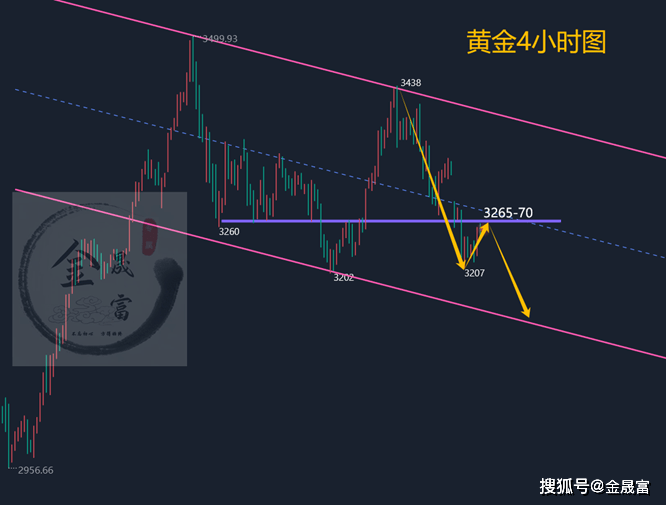
Group 1 - The core viewpoint of the articles revolves around the recent fluctuations in gold prices influenced by geopolitical events and economic data, particularly the U.S. Consumer Price Index (CPI) [2][3][4] - Gold prices rebounded by 0.6% to approximately $3,254 after hitting a low, following a significant drop of 2.7% the previous day due to improved market risk appetite after a U.S.-China tariff agreement [2][3] - The U.S. and China agreed to reduce tariffs significantly, with U.S. tariffs on Chinese goods dropping from 145% to 30%, and Chinese tariffs on U.S. goods from 125% to 10%, which boosted global stock markets and reduced concerns about a U.S. economic recession [2][3] Group 2 - The upcoming U.S. CPI report is critical, with expectations of a 2.4% year-over-year increase, which could influence Federal Reserve policy and subsequently impact gold prices [3][4] - If the CPI data exceeds expectations, it may strengthen the hawkish sentiment around the Federal Reserve, leading to a stronger dollar and further declines in gold prices [3][4] - Conversely, if the CPI growth slows, it could reignite expectations for multiple rate cuts by the Federal Reserve, providing support for gold prices [3][4] Group 3 - Technical analysis indicates that gold is currently in a bearish trend, with significant downward movement observed, and a potential target of $2,909 if it breaks below the previous low of $3,200 [4][6] - Short-term trading strategies suggest focusing on selling during rebounds, with key resistance levels identified around $3,265 to $3,270, and support levels at $3,200 to $3,160 [6][7] - The market sentiment remains cautious, with traders advised to manage positions carefully and consider real-time strategies based on market movements [6][7]
【UNFX课堂】市场静待美国四月CPI数据,各类资产走势谨慎
Sou Hu Cai Jing· 2025-05-13 05:59
Group 1: Core Insights - The April CPI data is a crucial economic indicator that significantly impacts inflation trends and the Federal Reserve's monetary policy direction [1] - In March, the CPI decreased by 0.1%, marking a five-year low, while the core CPI rose by 2.8%, the lowest level in four years, indicating easing inflationary pressures [2] - The market anticipates a 0.3% month-on-month increase in the core CPI for April, with an annual rate around 2.4%, reflecting the impact of tariff policies on import costs [2] Group 2: Market Impact Analysis - A rise in the April CPI could increase market expectations for the Federal Reserve to maintain or even raise interest rates, especially given the current inflationary pressures [3] - If the CPI data exceeds expectations, it may lead to short-term volatility in the stock market, particularly affecting interest-sensitive technology and growth stocks, while bond yields may rise due to tightening monetary policy expectations [4] - Conversely, weak CPI data could boost the stock market and lead to a decline in bond yields [4] Group 3: Currency and Consumer Impact - An increase in CPI typically supports a stronger dollar, as investors expect the Federal Reserve to maintain higher interest rates [5] - Tariff-induced inflation expectations may dampen consumer confidence, despite a 1.4% month-on-month increase in retail sales in March, the largest growth in over two years [6] - If CPI data indicates rising price pressures, it could negatively affect future consumer spending [6] Group 4: Summary - The release of the April CPI data serves as an important indicator for assessing current inflation trends and future monetary policy directions [7] - Expectations are for a 0.3% month-on-month increase in both overall and core CPI, highlighting the transmission effects of tariff policies on prices [7] - Depending on whether the data meets or exceeds expectations, it could lead to a hawkish stance from the Federal Reserve, strengthening the dollar and increasing market volatility, or reinforce expectations for rate cuts, boosting the stock and bond markets [7]