黄金配置

Search documents
申万宏源证券晨会报告-20251225
Shenwan Hongyuan Securities· 2025-12-25 08:08
Group 1: Gold Market Outlook - The long-term price of gold is expected to rise due to persistent high U.S. fiscal deficits and ongoing de-dollarization trends, supported by global central bank purchases of gold [9][10] - Tactical timing for gold investments in 2026 should focus on U.S. Treasury yield trends and volatility, as changes in the U.S. interest rate cycle may increase gold price volatility [9][10] - The demand for gold has significantly increased since 2022, primarily driven by central bank purchases, with expectations for a rebound in ETF demand in 2025 [9][10] Group 2: Alibaba's Cloud Business - Alibaba is positioned as a leading cloud provider in China, with a comprehensive self-developed technology stack that includes chips, servers, and cloud computing operating systems [10][13] - The growth of AI cloud services is expected to continue, driven by easing upstream chip pressures and increasing AI penetration in the market [10][13] - Alibaba's revenue projections for FY2026-FY2028 are estimated at 1,038.6 billion, 1,143.4 billion, and 1,250.6 billion RMB, with adjusted net profits of 101.9 billion, 145.5 billion, and 183.6 billion RMB respectively [10][13] Group 3: Jiangzhong Pharmaceutical - Jiangzhong Pharmaceutical has diversified its business into OTC, prescription drugs, and health consumer products, enhancing its market presence [21] - The company is focusing on expanding its OTC market with strong brand products, aiming for stable growth in its gastrointestinal health segment [21] - Future revenue projections for Jiangzhong Pharmaceutical are 854 million, 939 million, and 1,051 million RMB for 2025-2027, with a target valuation indicating a 36% growth potential [21] Group 4: AI-Driven E-commerce Operations - The e-commerce operation sector is experiencing a resurgence due to increased demand for brand agency services on platforms like Tmall, aided by AI technologies [16][17] - The company is leveraging AI to enhance operational efficiency and expand its client base, which is expected to drive revenue growth [16][17] - Future profit projections for the company are 111 million, 146 million, and 181 million RMB for 2025-2027, with a focus on maintaining a competitive edge in the market [16][17] Group 5: Honor Technology - Honor Technology is strategically positioned in the smart glasses and solid-state battery sectors, with significant growth potential in AI visual inspection technology [14][15] - The company has established partnerships with major clients like Apple and Meta, enhancing its market position in the consumer electronics sector [14][15] - Future growth in the solid-state battery market is anticipated, with the company actively developing inspection equipment for this emerging technology [14][15]
申万宏源研究晨会报告-20251225
Shenwan Hongyuan Securities· 2025-12-25 00:46
Group 1: Gold Market Outlook - The long-term outlook for gold prices remains positive due to persistent high U.S. fiscal deficits and a long-term trend of de-dollarization, supported by global central bank purchases of gold [9][10] - In 2026, tactical timing for gold investments should focus on U.S. Treasury yield trends and volatility, as changes in the U.S. interest rate cycle may increase gold price volatility compared to 2025 [9][10] - The demand for gold has significantly increased since 2022, primarily driven by central bank purchases, with a notable rise in ETF demand expected in 2025 [9][10] Group 2: Alibaba's Cloud and AI Strategy - Alibaba is positioned as a leading cloud provider in China with a comprehensive self-developed technology stack, including chips, servers, and AI models, which supports its revenue growth and profit margins [10][13] - The domestic AI cloud market is expected to continue its upward trajectory, driven by easing upstream chip pressures and increasing AI penetration rates [10][13] - Alibaba's strategy includes capturing the consumer-facing AI market by integrating its services across various platforms, enhancing user engagement and data asset accumulation [10][13] Group 3: Rongqi Technology's Market Position - Rongqi Technology focuses on intelligent detection and assembly equipment, with significant growth in its consumer electronics and new energy sectors, particularly in smart glasses and solid-state batteries [14][15] - The company has established strong partnerships with major clients like Apple and Meta, positioning itself well in the AI glasses market, which is expected to see increased demand [14][15] - In the new energy sector, Rongqi is strategically positioned to provide inspection equipment for solid-state batteries, collaborating with leading battery manufacturers [14][15] Group 4: Yiwang Yichuang's E-commerce Operations - Yiwang Yichuang has a solid foundation in e-commerce operations, leveraging AI to enhance operational efficiency and expand its client base [16][17] - The company has seen a recovery in its performance due to strategic adjustments and AI integration, with a projected increase in net profit in the coming years [16][17] - The e-commerce agency sector is experiencing renewed interest, driven by increased demand for brand representation on platforms like Tmall [16][17] Group 5: Jiangzhong Pharmaceutical's Growth Strategy - Jiangzhong Pharmaceutical has diversified its business into OTC, prescription drugs, and health consumer products, enhancing its market presence and brand value [19][20] - The company is focusing on expanding its OTC market share with strong product lines and leveraging its brand strength to drive growth [19][20] - Future growth is anticipated in the health consumer products sector, supported by demographic trends and increasing health awareness [19][20] Group 6: Zhongfu Industrial's Financial Outlook - Zhongfu Industrial is expected to benefit from cost improvements and increased production capacity, leading to enhanced earnings potential [20][21] - The company has a robust dividend policy, indicating strong long-term investment value [20][21] - Projections for net profit growth in the coming years reflect the company's strategic positioning in the aluminum industry [20][21]
全球资产配置方法论黄金框架性报告之七:2026年黄金配置指南:供需新格局与战术择时策略
Shenwan Hongyuan Securities· 2025-12-24 14:18
证 券 研 究 报 告 2026年黄金配置指南:供需新格局与战术择时策略 主要观点 www.swsresearch.com 证券研究报告 2 ◼ 展望2026年黄金:战略层面,美国财政赤字居高不下+去美元化长期趋势持续(全球央行购金)背景下,金价长期仍有上涨空间。2026 年金价年内战术择时需重点关注美国周期性变化下的美债利率走 势与波动率等交易性指标,相比2025年,2026年美国利率周期边际变化和交易性力量的增加或提升黄金波动性,需要加强战术择时。 ◼ 2026年黄金战略配置逻辑关注供需格局变化和美元信用,中期仍有上行空间。供需格局来看,2022 年以来的金价上涨核心源于黄金供需缺口扩大,而缺口扩大的核心驱动力是需求大幅增加。2022年 以来央行购金是主要需求增量,而2025年ETF需求出现加速回升。1)央行与官方机构购金方面,欧美债务风险与地缘政治风险叠加,以中国为首的央行对黄金的配置性需求趋势将持续,支撑黄金长期 战略配置价值。截至 2025 年 8 月,中国黄金占储备资产比例仅 7%,显著低于 22.4% 的全球平均水平,仍有较大上行空间。而俄罗斯近年阶段性黄金抛售并未阻碍金价系统性牛市,历史数据显 ...
金ETF(159834.SZ)涨0.49%
Jin Rong Jie· 2025-12-24 03:37
资讯所属栏目还有更多独家策划、专家专栏,免费查阅>> 风险提示:基金有风险,投资需谨慎。 12月24日,沪深两市窄幅震荡,国防军工、环保、电子板块涨幅靠前。截至10点47分,金 ETF(159834.SZ)涨0.49%。 国元期货分析指出,贵金属板块中黄金配置价值凸显:一方面,美联储12月 降息落地,美元短期偏弱及长期走弱预期持续削弱黄金计价压制,流动性改善环境为金价提供支撑;另 一方面,地缘局势扰动下避险需求升温,叠加全球货币体系多元化进程中央行购金趋势延续,黄金资产 属性优势进一步强化。中长期看,美国实际利率下行周期与去美元化进程共振,黄金价格中枢有望持续 抬升。综合来看,贵金属板块趋势性行情明确,其中黄金ETF(159834.SZ)作为便捷配置工具,可有效对 冲宏观经济波动,配置机会值得关注。 ...
金价,大涨!年内黄金ETF规模大幅攀升
Sou Hu Cai Jing· 2025-12-16 01:26
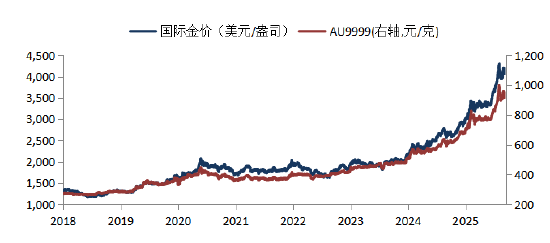
12月15日,现货黄金价格继续上行,伦敦金现价盘中一度突破4350美元/盎司。 伴随金价回暖,资金配置黄金的意愿同步升温,黄金ETF年内规模扩张明显。截至12月12日,全市场已 有5只黄金ETF管理规模突破百亿元,头部产品年内实现快速放量。 机构人士指出,在降息预期与流动性环境边际改善的背景下,黄金的中长期配置价值正再度受到市场重 视。 金价走强,黄金ETF规模扩张明显 12月15日,现货黄金价格再度走高,重回阶段性高位,伦敦金现价盘中一度突破4350美元/盎司。回顾 上周走势,国际金价整体呈现平稳上行态势,避险与配置需求对金价形成持续支撑。数据显示,上周伦 敦现货黄金收于4299美元/盎司,周环比上涨2.4%;国内AU9999黄金收于964元/克,周环比上涨1.0%。 但另一方面,鑫元基金也表示,联储内部对通胀与"数据缺口"的担忧上升、点阵图暗示2026年降息有 限,意味着利率下行的顺风未必线性延续,金价上冲后更容易进入"消息驱动+技术面回吐",全球货币 政策方面,市场对日本央行12月加息的预期升温、欧洲央行偏鹰派的"更长时间按兵不动"取向,可能阶 段性推升全球利率波动并扰动美元与避险资产定价。 责编:杨喻 ...
黄金股普遍上扬 紫金矿业涨近4% 美联储如期降息25个基点
Zhi Tong Cai Jing· 2025-12-11 05:27
Group 1 - The core viewpoint of the article highlights a general rise in gold stocks following the Federal Reserve's decision to cut interest rates by 25 basis points, bringing the target range for the federal funds rate to 3.50%–3.75% [1] - Major gold stocks mentioned include Zijin Mining, which rose by 3.94% to HKD 34.26, Tongguan Gold, which increased by 2.84% to HKD 2.9, and Shandong Gold, which saw a rise of 1.58% to HKD 33.52 [1] - Citic Futures suggests that the dovish tone of the FOMC meeting may lead to a bullish trend for gold and silver prices [1] Group 2 - Goldman Sachs predicts a significant upside potential for gold prices, forecasting a price of USD 4,900 per ounce by the end of 2026 [1] - The report notes an increasing call from investors to enhance gold allocations, indicating a shift towards diversification that may boost gold's attractiveness [1]

港股异动 | 黄金股普遍上扬 紫金矿业(02899)涨近4% 美联储如期降息25个基点
智通财经网· 2025-12-11 02:26
智通财经APP获悉,黄金股普遍上扬 ,截至发稿,紫金矿业(02899)涨3.94%,报34.26港元;潼关黄金 (00340)涨2.84%,报2.9港元;山东黄金(01787)涨1.58%,报33.52港元。 消息面上,美联储货币政策委员会FOMC会后公布,降息25个基点,将联邦基金利率目标区间下调至 3.50%–3.75%。这是美联储继9月17日、10月29日降息后年内的第三次降息,幅度均为25个基点。中信 期货认为,议息会议措辞偏鸽,金银有望震荡向上。此外,高盛表示,2026年底每盎司4900美元的金价 预测有很大上行空间。该公司指出,"最近多位投资者呼吁增加黄金配置",并强调多元化趋势的转变可 能会增强黄金的吸引力。 ...
中国新贵崛起 另类投资占比翻倍,黄金成新晋标配资产
Jing Ji Guan Cha Bao· 2025-12-10 12:27
Core Insights - The UBS report indicates a structural shift in wealth creation and asset allocation among billionaires, with the number of billionaires projected to increase by 8.8% to 2,919 by 2025, and total wealth reaching a record $15.8 trillion, a 13% increase [1] - The Asia-Pacific region is expected to see a significant rebound, with the number of billionaires rising from 981 to 1,036, marking the highest growth globally [1] - A notable change in asset allocation among Chinese billionaires is observed, with alternative investments doubling from around 10% to over 20% of their portfolios [1][2] Wealth Distribution and Investment Trends - The report highlights a shift from concentrated wealth in publicly traded companies, particularly in technology and consumer sectors, to a more diversified asset allocation including alternative investments [2] - Infrastructure investments are becoming a key focus, with 35% of global billionaires indicating increased exposure, particularly among Chinese clients, as these assets provide stable cash flows of 5%-6% [2] - The trend of increasing gold investments is evident, with 32% of billionaires planning to increase their holdings in gold and precious metals, significantly higher than levels seen in 2022-2023 [2][3] Behavioral Changes and Wealth Management - The behavior of billionaires is influenced by national actions, with many closely monitoring central bank gold purchases, leading to a historical high in global official gold reserves [3] - Gold is increasingly viewed as a core defensive asset rather than a short-term speculative investment, integrated into family trusts and long-term wealth pools to hedge against currency devaluation and political uncertainty [3] - The profile of new Chinese billionaires is characterized by youth, entrepreneurial spirit, and a focus on wealth inheritance, with 60% planning to regularly update wills and trust structures [4] Future Wealth Transition - An estimated $135.3 billion wealth transfer is expected in mainland China over the next 15 years, prompting new billionaires to seek professional structures for investment, education, and philanthropy [5] - The shift from high-growth pursuits to building diversified portfolios signifies a transition from "wealth creators" to "wealth managers" among Chinese billionaires [5] - This transformation is closely linked to China's macroeconomic narrative, with billionaires' wealth rooted in industrial upgrades and technological innovation, reflecting the integration of the Chinese economy into the global landscape [5][6] Capital Flow and Global Investment Landscape - The changing investment strategies may reshape capital flows, directing more funds into alternative investments that support the real economy, innovative technologies, and global infrastructure [6] - As Chinese billionaires become active participants in shaping risk-return profiles through asset allocation, they are expected to play an increasingly critical role on the global wealth stage [6]
华安基金:多位联储官员发言偏鸽,12月降息预期继续升温
Xin Lang Cai Jing· 2025-12-02 06:53
黄金行情回顾及主要观点: 上周金价稳步上行。伦敦现货黄金收于4,219美元/盎司(周环比3.8%),国内AU9999黄金收于948元/ 克(周环比2.3%)。 上周公布的美国零售不及预期。美国9月零售销售环比0.2%,低于预期0.4%和前值0.6%,表明就业市场 的疲软逐步蔓延至消费领域,对降息形成支撑。 近期多位联储官员公开支持降息。上周联储理事沃勒、米兰和旧金山联储主席戴利均表态呼吁降息,均 认为就业恶化的风险高于通胀反弹风险,关税对通胀的影响有限且一次性。美联储12月10日将公布最新 的利率决议,本周美联储将进入议息会议前的噤声期。当前利率期货显示,市场预期12月降息25bp的概 率达87%,相较此前进一步上升。 展望后市,美联储仍处于降息大周期,且特朗普可能在圣诞节前公布新任美联储主席人选,若鸽派主席 任选,美联储降息节奏或更加激进,有望利好黄金。宽货币之外,美国也处于宽财政阶段,美债偿本付 息压力下的信用风险延续,全球央行持续购买黄金以分散外汇储备。货币财政双宽松的趋势下,仍看好 黄金中长期配置价值。 责任编辑:石秀珍 SF183 黄金行情回顾及主要观点: 上周金价稳步上行。伦敦现货黄金收于4,21 ...

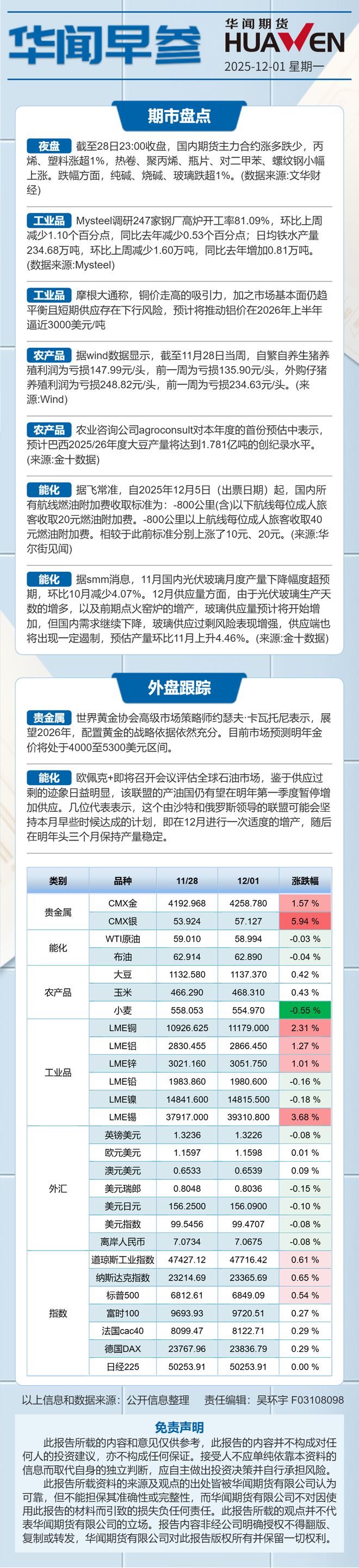
【华闻早参1202】白银再创新高!
Xin Lang Cai Jing· 2025-12-02 01:57
Group 1 - Domestic photovoltaic glass production decreased by 4.07% month-on-month in November, with expectations of a 4.46% increase in December due to more production days and increased output from previously ignited furnaces [2] - The demand for photovoltaic glass continues to decline, leading to heightened risks of oversupply in the market [2] Group 2 - The World Gold Council's senior market strategist Joseph Cavatoni indicates that the strategic rationale for allocating to gold remains strong, with market predictions for gold prices in 2024 expected to range between $4,000 and $5,300 [3] - OPEC+ is set to assess the global oil market, with indications of oversupply prompting member countries to likely maintain stable production levels in the first quarter of next year [3] Group 3 - Various commodities showed price fluctuations, with CMX gold rising by 1.57% to $4,258.78 and LME copper increasing by 2.31% to $11,179.00 [4] - The WTI crude oil price slightly decreased by 0.03% to $58.994, while Brent crude oil fell by 0.04% to $62.890 [4]