黄金ETF(518880)

Search documents
超4400万持有人,这家公司的ETF凭什么?
点拾投资· 2026-03-05 03:33
Core Viewpoint - The article discusses the launch of "Jimu Planet," a dedicated index investment education platform by Huazhang Fund, aimed at transforming the cold, tool-like nature of ETFs into a more engaging and supportive investment experience for users [4][6]. ETF Product Introduction - Investors often feel overwhelmed by the vast array of ETF options available, leading to a sense of isolation despite the wealth of information [3]. - The article highlights the need for a more personalized approach to ETF investment, where investors can feel understood and supported [4]. Jimu Planet Launch - Huazhang Fund launched "Jimu Planet" in early 2025, designed to provide comprehensive information and configuration services for investors [6][8]. - The platform aims to help investors build their own investment portfolios, likening the process to assembling building blocks [8]. Educational Initiatives - By the end of 2025, Jimu Planet had conducted nearly 300 online and offline educational activities across over 30 provinces, engaging with thousands of brokerage firms [8]. - The platform hosted over 200 live sessions, totaling more than 9,000 minutes, equivalent to reading 20 investment books [8]. - Huazhang Fund produced over 700 in-depth research reports, providing insights into the industries and companies behind ETFs [8]. Collaborative Efforts - The fund collaborated with exchanges to host events like "Exploring ETF Component Stocks" and "ETF Lectures," allowing investors to connect with real economic activities [9]. - This approach aims to build trust and a sense of community among investors, moving beyond mere transactions [9]. Growth Metrics - By the end of 2025, Huazhang Fund's index management scale exceeded 250 billion yuan, with ETF assets reaching 195.05 billion yuan, marking an annual growth of nearly 80 billion yuan [11]. - In the first three quarters of 2025, the fund generated over 50 billion yuan in profits for its investors [11]. - The fund has gained the trust of over 44 million investors, reflecting a strong preference for its products in a highly competitive market [11]. Product Offerings - Huazhang Fund offers a diverse range of ETFs, including the first domestic gold ETF, which saw a 58.54% increase in 2025, and the ChiNext 50 ETF, which rose over 57% [12]. - The fund emphasizes a diversified, specialized, and high-quality product strategy, covering various asset classes and market conditions [13]. Ecosystem Integration - Huazhang Fund has integrated deeply into the Guotai Junan ecosystem, leveraging research support and branch collaboration to enhance product visibility and investor engagement [15]. - The company aims to be more than just an ETF provider, positioning itself as a companion and guide for investors [15].


华安基金:建议以稳健大类资产配置理念参与黄金投资
Quan Jing Wang· 2026-02-24 11:14
Group 1 - The core viewpoint of the article highlights that a series of macro events and geopolitical risks during the Spring Festival have driven gold prices upward, with London spot gold rising by 3.64% to $5,226 per ounce during the period from February 14 to February 23, 2026 [1] - Ongoing tensions in the Middle East, with negotiations and military confrontations occurring simultaneously, are contributing to increased geopolitical risks, prompting safe-haven investments in gold [1][2] - The U.S. Supreme Court ruled that the global tariffs imposed by Trump were unconstitutional, which will eliminate certain tariffs but will not affect others based on different legal grounds, potentially impacting U.S. fiscal revenue and inflation [1][2] Group 2 - Trump announced plans to impose an additional 10% import tariff globally for 150 days, which was later increased to 15%, but this measure is limited in duration and scope, making it unlikely to serve as a long-term tariff foundation [2] - The elimination of the reciprocal tariffs may reduce U.S. fiscal revenue and alleviate domestic inflation, which could be beneficial for gold prices [2] - The macro structural factors supporting gold, such as ongoing central bank demand for gold and geopolitical fragmentation, remain intact, highlighting gold's value as a hedge against systemic risks [3] Group 3 - Key signals for gold investment in the upcoming week include developments in the Middle East and the results of the U.S.-Iran negotiations on February 26, as well as changes in U.S. tariffs [4] - Related investment products include gold ETFs and specific fund options that track gold prices [5][6]
ETF午评 | 船舶制造走强, 法国CAC40ETF(513080)上涨3.11%,A500ETF基金(512050)成交额居首
Sou Hu Cai Jing· 2026-02-13 05:22
Market Performance - The Shanghai Composite Index decreased by 0.70%, the Shenzhen Component Index fell by 0.67%, and the ChiNext Index dropped by 0.96% [1] - Shipbuilding, aerospace, and semiconductors showed the highest gains, while small metals, photovoltaic equipment, and shipping ports collectively retreated [1] ETF Performance - The top five ETFs by increase were: - France CAC40 ETF (513080) up 3.11% - China-Korea Semiconductor ETF (513310) up 2.35% - Sci-Tech Semiconductor Equipment ETF (589020) up 2.32% - Sci-Tech Semiconductor ETF (588170) up 2.21% - Sci-Tech Semiconductor Equipment ETF (588710) up 2.14% [1] - The top five ETFs by decrease were: - Oil and Gas ETF (561760) down 3.63% - Oil ETF (561360) down 3.60% - Oil and Gas ETF (159309) down 3.58% - Oil and Gas ETF (561570) down 3.50% - Oil ETF (159697) down 3.30% [1] ETF Trading Volume - The top ten ETFs by trading volume included: - A500 ETF Fund (512050) with a volume of 9.776 billion - A500 ETF Huatai-PB (563360) with 7.270 billion - CSI A500 ETF (159338) with 5.846 billion - A500 ETF Southern (159352) with 5.665 billion - Gold ETF (518880) with 4.225 billion - A500 ETF E Fund (159361) with 3.106 billion - Hang Seng Technology ETF (513130) with 3.105 billion - Hong Kong Securities ETF E Fund (513090) with 2.785 billion - CSI 500 ETF (510500) with 2.601 billion - Hang Seng Technology Index ETF (513180) with 2.303 billion [2]
ETF收评 | 文化传媒走强, 影视ETF(516620)上涨7.50%,A500ETF基金(512050)成交额居首
Sou Hu Cai Jing· 2026-02-09 12:03
Group 1 - The Shanghai Composite Index rose by 1.41%, the Shenzhen Component Index increased by 2.17%, and the ChiNext Index climbed by 2.98% [1] - The sectors that performed well included cultural media, photovoltaic equipment, and glass fiber, while the mining, gas, and energy metal industries experienced a collective pullback [1] - The top five ETFs by increase included the Film and Television ETF (516620) up by 7.50%, the Huashan AI ETF (159279) up by 6.98%, and the Film and Television ETF (159855) up by 6.89% [1] Group 2 - The top ten ETFs by trading volume included the A500 ETF Fund (512050) with a volume of 14.183 billion yuan, the Gold ETF (518880) at 12.418 billion yuan, and the A500 ETF from Huatai-PB (563360) at 9.836 billion yuan [2] - Other notable ETFs in the trading volume rankings included the China A500 ETF (159338) at 6.886 billion yuan and the A500 ETF from Southern (159352) at 6.532 billion yuan [2]
华安基金:中国央行延续购金,本周将迎美国通胀与就业数据
Xin Lang Ji Jin· 2026-02-09 07:57
Group 1 - Gold prices continued to fluctuate, with London spot gold closing at $4,967 per ounce (up 1.8% week-on-week) and domestic AU9999 gold at 1,094 yuan per gram (down 6.9% week-on-week) [1] - Japan's fiscal expansion trend is expected to continue, potentially exacerbating its debt burden, as the ruling coalition led by Prime Minister Fumio Kishida secured a significant majority in the recent House of Representatives election, allowing for more aggressive fiscal policies [1] - The market is gradually digesting the expectations of a "hawkish" stance from the newly nominated Federal Reserve Chairman Kevin Warsh, while recognizing the potential for a "dovish" outcome in the long term due to political and fiscal pressures [1] Group 2 - Upcoming U.S. inflation and employment data are crucial for assessing the Federal Reserve's interest rate cut expectations, with the January non-farm payroll report delayed to February 11 and CPI data to February 13 [2] - The People's Bank of China has increased its gold reserves for the 15th consecutive month, maintaining a steady accumulation pace, with reserves expected to reach 74.19 million ounces by the end of January 2026, reflecting a trend of diversifying foreign exchange reserves amid the weakening dollar credit system [2] - The macro structural factors supporting gold remain intact, including ongoing central bank demand for gold amid de-dollarization, the erosion of the dollar's long-term credibility due to "fiscal dominance" policies, and systemic risks from a fragmented global geopolitical landscape [3] Group 3 - Key signals for gold investment in the coming week include the U.S. January employment data and CPI [4] - Related investment products include gold ETFs and various colored metal ETFs [5]
行情拐点已清晰明了,没意外,金价大概会重演历史?
Sou Hu Cai Jing· 2026-02-07 17:41
Core Viewpoint - The gold market experienced a significant drop on February 6, 2026, with international gold prices plummeting from $5023 per ounce to $4774, marking a nearly 4.75% decline, the largest single-day drop in 40 years [1][3]. Market Phenomenon - Global gold prices fell sharply, with London gold dropping from $5020 to $4783, a daily fluctuation exceeding 4.7%, closing at $4773.08 per ounce, down $237.85 from the previous day [3]. - In the domestic market, Shanghai gold T+D prices fell to 1081.66 yuan per gram, with significant volatility observed [3]. - The price of physical gold also decreased, with major brands adjusting their prices to 1555-1568 yuan per gram, while the recovery price dropped to 1070 yuan per gram, creating a price gap of nearly 200 yuan [3]. - The market showed a disparity in pricing, with wholesale gold bar prices in Shenzhen remaining at 1261 yuan per gram, while recovery prices fell significantly [3]. Causes of the Plunge - The primary trigger for the drop was a shift in the Federal Reserve's policy signals, with unexpectedly strong initial jobless claims data leading to a sharp decline in expectations for interest rate cuts [6]. - Technical breakdowns exacerbated the situation, as the London gold price fell below the critical psychological level of $4900, triggering automated sell orders and a vicious cycle of selling [6]. - Easing geopolitical risks, such as developments in the Russia-Ukraine conflict and U.S.-Iran nuclear negotiations, diminished gold's appeal as a safe-haven asset [6]. - The substantial profit accumulated during the previous price rise also contributed to the sell-off as investors sought to cash in [6]. Institutional Perspectives - Analysts are divided on the implications of the price drop. Some, like Citic Securities, believe the long-term upward trend for gold remains intact, driven by liquidity expectations [8]. - Others caution about short-term risks, with UBS raising its gold price target to $6200 per ounce while warning of potential downward risks from a hawkish Fed [8]. - Goldman Sachs and Deutsche Bank maintain a target of $6000 per ounce, viewing the current adjustment as a buying opportunity [8]. Investor Response - Investor strategies have diverged, with some opting to cash out, leading to long queues at gold recovery stores [10]. - Others are taking advantage of lower prices to buy gold, indicating a belief in its long-term value [10]. - Analysts recommend cautious approaches, such as dollar-cost averaging, to mitigate risks associated with high leverage [10]. Market Ecology - The current gold market exhibits a unique dual trend of high recovery and purchasing activity [12]. - Recovery channels have diversified, with banks, brand stores, pawn shops, and online platforms all participating, though with varying price structures [12]. - Despite price fluctuations, demand for gold remains strong ahead of the Chinese New Year, reflecting its perceived value as both an investment and a gift [12]. - This duality in market behavior highlights differing perspectives on gold's value, with some investors focused on short-term gains while others prioritize long-term stability [12].
华安基金:黄金短期波动加剧 关注中长期配置价值
Xin Lang Cai Jing· 2026-02-03 02:52
Group 1: Market Overview - The global gold market has experienced significant volatility, with London gold prices reaching a historical high of nearly $5,600 per ounce on January 29, followed by a drop of over 9% the next day, falling below the $5,000 mark [1][7] - Last week, the London spot gold closed at $4,880 per ounce, reflecting a week-on-week decrease of 2.0%, while domestic AU9999 gold was priced at 1,164 yuan per gram, showing a week-on-week increase of 4.8% [1][7] Group 2: Causes of Market Fluctuation - The recent market turmoil is attributed to a combination of internal market vulnerabilities and external catalysts, primarily driven by overheated trading conditions and crowded positions in the gold market [1][8] - The immediate trigger for the market pullback was the nomination of Kevin Warsh as the next Federal Reserve Chairman, which sparked fears regarding policy expectations. His perceived hawkish stance has raised concerns about a potential tightening of liquidity, impacting gold prices [2][8] Group 3: Policy Implications - Warsh's policy proposals are complex, advocating for both interest rate cuts and significant balance sheet reduction, which the market has interpreted as hawkish. This has led to a reassessment of the previous expectations of ongoing liquidity and inflation concerns that supported rising gold prices [2][9] - The combination of "rate cuts + balance sheet reduction" aims to create space for future rate cuts by addressing the oversized balance sheet, which is seen as a constraint on monetary policy [9] Group 4: Geopolitical Factors - Geopolitical risks, particularly the tensions between the U.S. and Iran, are also influencing market sentiment. Recent developments include increased military presence in the Middle East and potential back-channel communications, which have created mixed signals regarding the risk of escalation [11] Group 5: Future Outlook - The recent drop in gold prices is viewed as a short-term technical adjustment rather than a long-term trend reversal. The market is transitioning from a phase of unilateral gains to a more complex environment characterized by intense competition between bulls and bears [11] - Long-term structural factors supporting gold remain intact, including ongoing demand from central banks amid de-dollarization, pressures on the dollar's long-term credibility due to fiscal policies, and systemic risks arising from a fragmented geopolitical landscape [11]
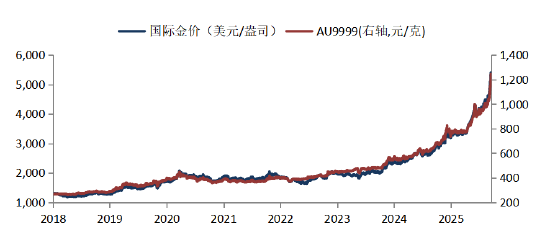
华安基金:金价历史性站上5000美元大关,全球传统秩序正迎重构
Sou Hu Cai Jing· 2026-01-27 10:16
Core Viewpoint - Gold prices have recently reached historic highs, driven by geopolitical turmoil, a fiscal trust crisis, and ongoing de-dollarization efforts by global central banks [1][2][3] Group 1: Gold Price Trends - London spot gold closed at $4,981 per ounce, a week-on-week increase of 8.3%, while domestic AU9999 gold reached 1,110 yuan per gram, up 7.7% week-on-week [1] - On January 26, gold prices broke the $5,000 per ounce mark for the first time, marking a significant psychological milestone [1] Group 2: Geopolitical Factors - The deterioration of U.S.-European ally relations, highlighted by U.S. tariff threats against eight European allies, has triggered market risk aversion and increased demand for gold [1] - In the Middle East, rising tensions and potential military conflict have escalated, while the Russia-Ukraine situation remains volatile, further increasing global risk premiums and driving investment into gold [2] Group 3: Central Bank Actions - Global central banks continue to purchase gold, with Poland's central bank approving a plan to acquire 150 tons, aiming to increase its reserves to 700 tons [3] - China's central bank has been net buying gold for 14 consecutive months, reflecting a broader trend among central banks to optimize reserve assets and hedge against geopolitical and dollar credit risks [3] Group 4: Market Outlook - The upcoming Federal Reserve meeting is expected to maintain interest rates, which may influence gold prices [4] - In the medium to long term, gold is viewed as a critical hedge against the restructuring of global geopolitical order and sovereign fiscal discipline, with its value likely to be reassessed during this transition [3]
华安基金:全球局势变数加大,金价再创历史新高
Xin Lang Cai Jing· 2026-01-20 02:44
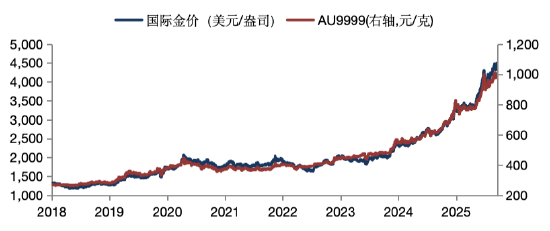
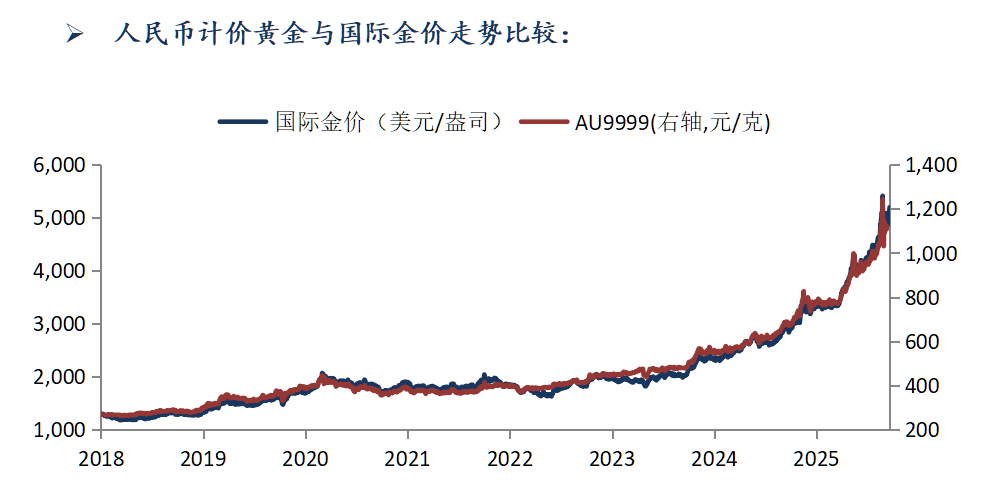
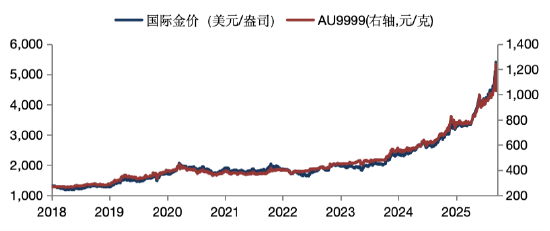
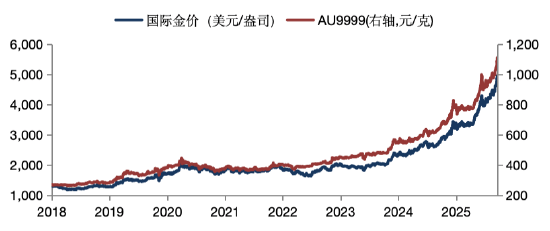
Group 1: Gold Market Overview - Gold prices have recently reached historical highs, with London spot gold closing at $4,599 per ounce (up 2.0% week-on-week) and domestic AU9999 gold at 1,033 yuan per gram (up 3.0% week-on-week) [1][6] - Geopolitical uncertainties are increasing, leading to a potential influx of safe-haven funds into gold. Notably, the dispute over Greenland's ownership and tensions surrounding Iran are contributing factors [1][6] - The European Union is considering imposing tariffs on $93 billion worth of goods imported from the U.S. in response to proposed U.S. tariffs on imports from several European countries [1][6] Group 2: U.S. Economic Indicators - The U.S. December CPI was lower than expected at 2.7% year-on-year, with core CPI at 2.6%, the lowest since March 2021, which has increased market speculation for an early interest rate cut by the Federal Reserve [2][7] - The Federal Reserve's independence is under scrutiny, with ongoing investigations into Chairman Powell, while major central bank leaders and Wall Street figures have expressed support for him [2][7] - The outlook suggests that if a dovish chairman is appointed, the pace of interest rate cuts may accelerate, which could be favorable for gold [2][7] Group 3: Future Signals for Gold ETF - Key signals to watch for the upcoming week regarding the gold ETF include U.S. Q3 GDP and PCE data, as well as changes in geopolitical situations [3][8] Group 4: Comparison of Gold Prices - A comparison of gold priced in RMB and international gold prices is noted, with data sourced from Wind and Huaan Fund as of January 18, 2026 [4][10]
华安基金:伦敦金价站上4600美元历史新高
Xin Lang Cai Jing· 2026-01-12 08:33
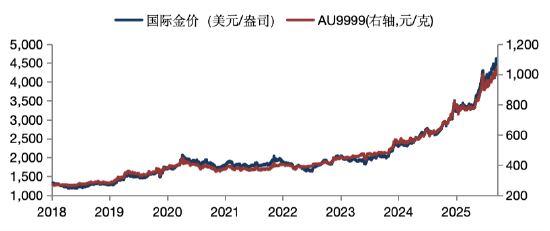
Group 1: Gold Market Overview - Gold prices experienced a strong increase last week, with London spot gold closing at $4,509 per ounce (up 4.1% week-on-week) and domestic AU9999 gold at 1,003 yuan per gram (up 3.1% week-on-week) [1][7] - On January 12, London gold prices briefly surpassed $4,600 per ounce, marking a historical high, with domestic AU9999 gold also reaching a new peak [1][7] - The rise in gold prices is attributed to increasing geopolitical tensions, including ongoing issues in Venezuela and potential U.S. military actions against Iran, which may drive safe-haven investments into gold [1][7] Group 2: Central Bank Actions - The People's Bank of China has increased its gold reserves for the 14th consecutive month, with reserves reaching 74.15 million ounces as of the end of December 2025, up by 30,000 ounces from November [2][8] - This trend reflects a broader strategy among central banks to diversify foreign exchange reserves amid a weakening dollar credit system [2][8] Group 3: U.S. Economic Indicators - U.S. unemployment rate and non-farm payrolls for December were both below expectations, with the actual unemployment rate at 4.4% compared to the expected 4.5% [2][8] - The decline in unemployment is primarily due to reduced labor supply rather than increased demand, indicating a cooling labor market [2][8] - Market expectations suggest that the Federal Reserve will not lower interest rates this month, with potential rate cuts anticipated in June and September [2][8] Group 4: Future Outlook - The Federal Reserve is expected to remain in a rate-cutting cycle, and if a dovish chair is appointed, the pace of rate cuts may accelerate, which could be favorable for gold [2][8] - The combination of loose monetary policy and fiscal measures in the U.S., along with ongoing credit risks associated with U.S. debt, supports the continued trend of central banks purchasing gold [2][8] - Global demand for gold ETFs is also on the rise, enhancing the investment value of gold through 2026 [2][8] Group 5: Upcoming Signals - Key signals to watch for the upcoming week regarding gold ETFs include the U.S. December CPI and changes in geopolitical situations [3][9]