
6G网络

Search documents
欧克科技:“设备+材料”双轮驱动,战略布局提速绘就新发展蓝图
Zheng Quan Shi Bao Wang· 2025-11-27 04:20
Core Viewpoint - The ongoing "dual carbon" transition is creating a golden development period for lithium battery new energy and intelligent manufacturing sectors, with Ok Technology (001223.SZ) gaining continuous attention from the capital market due to its precise strategic vision and clear transformation layout [1] Group 1: Strategic Layout and Product Development - Ok Technology is extending its industrial chain vertically by exploring the synergy between downstream customers' needs in product production and packaging film, leading to the development of film material production lines [2] - The company has formed a business structure covering three core products: intelligent equipment for household paper, film materials, and intelligent equipment for new energy lithium batteries, achieving an integrated link from R&D to sales and service [2] - The company is actively expanding into high-end materials and equipment, particularly in the high-performance PI film sector, which is essential for flexible electronics, new energy power batteries, and semiconductor packaging [2] Group 2: Lithium Battery Equipment and Market Trends - The lithium battery intelligent equipment sector is a key focus for the company, leveraging its experience in household paper equipment to develop high-performance wet-process lithium battery separator equipment [3] - The demand for lithium battery separators is expected to grow significantly due to the government's targets for wind and solar power installations, benefiting companies with technological barriers [3] - The company is well-positioned to benefit from both policy and market advantages in the lithium film equipment sector, potentially opening new growth avenues [3] Group 3: Robotics and Future Industry Focus - The company is making significant progress in the robotics field, establishing a subsidiary to focus on products like harmonic reducers and servo motors, with expectations of over 50 million yuan in sales by 2025 [4] Group 4: Financial Performance and Capital Expansion - In the first half of 2025, the company achieved a revenue of 455 million yuan, a substantial increase of 112.65% year-on-year, with a net profit of 69 million yuan, up 53.65% [5] - The film materials business has shown remarkable growth, with revenue reaching approximately 211.64 million yuan, a staggering increase of 332.81% year-on-year, becoming a new growth engine for the company [5] - The establishment of a 1.5 billion yuan investment fund aims to support high-end intelligent equipment, new energy, and new materials, enhancing the company's strategic expansion [5][6] Group 5: Shareholder Structure and Future Outlook - The company has room to introduce external investors through share issuance, with the top five shareholders holding 74.97% of shares, ensuring effective control by the founders while allowing for increased competitiveness [7] - The company plans to continue its dual-driven strategy of "equipment + materials," leveraging stable profits from traditional businesses and the advantages of the investment fund and shareholder structure to achieve growth in solid-state batteries and robotics [7]
卫星物联网业务商用试验正式启动,卫星产业ETF、卫星ETF易方达涨超4%
Ge Long Hui· 2025-11-24 06:38
Core Viewpoint - The A-share market has seen a significant rise, particularly in the satellite navigation sector, with notable increases in stock prices for companies like China Satellite and Aerospace Electronics, indicating a positive trend in the satellite industry [1]. Group 1: Market Performance - Major A-share indices have risen, with the satellite navigation sector leading the gains [1]. - China Satellite's stock increased by over 6%, while Aerospace Electronics rose by more than 4% [1]. - Satellite ETFs, including those from E Fund and GF Fund, also experienced substantial growth, with increases of over 4% and 3.7% respectively [1]. Group 2: ETF Details - The Satellite Industry ETF rose by 4.17%, with an estimated scale of 627 million [2]. - E Fund's Satellite ETF increased by 4.14%, with an estimated scale of 413 million [2]. - The index tracked by E Fund's Satellite ETF includes 50 companies involved in satellite manufacturing, launching, communication, navigation, and remote sensing, indicating a comprehensive coverage of the industry [2]. Group 3: Industry Developments - On November 22, the Ministry of Industry and Information Technology announced the official launch of commercial trials for satellite IoT services, aimed at providing low-speed data connections in areas lacking ground networks [3]. - This initiative marks a shift from demonstration to large-scale commercial use, addressing connectivity issues in remote areas and potentially increasing demand for satellite manufacturing and services [3]. - The trial is expected to drive the entire satellite industry chain, including manufacturing, launch services, and operational platforms [3]. Group 4: Future Outlook - Huaxi Securities noted that satellite networks are foundational for 6G construction, with the issuance of satellite internet licenses marking a critical step towards commercial operation [4]. - The satellite communication market in China is projected to exceed 80 billion in 2023, with an expected annual growth rate of approximately 15% from 2024 to 2029, potentially surpassing 200 billion by 2029 [4].


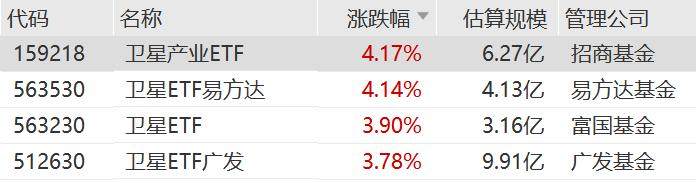
2025中国航天第二次发射失利,损失3颗卫星,原因已确认
3 6 Ke· 2025-11-20 11:37
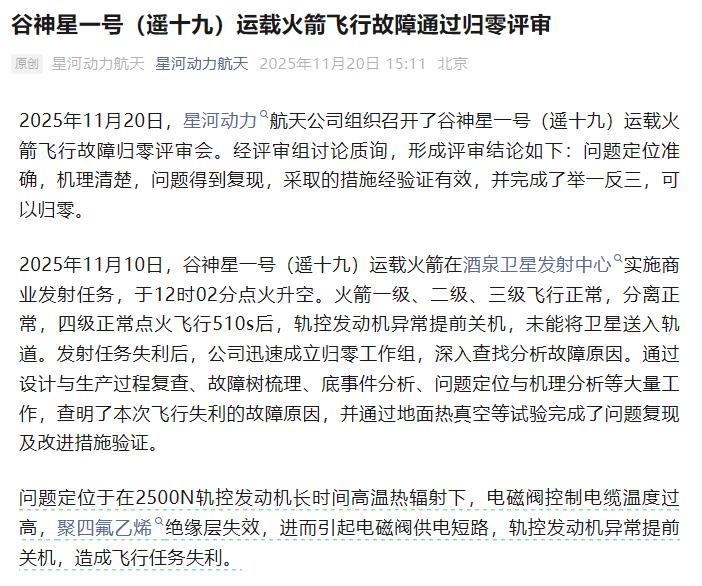
Core Viewpoint - The recent failure of the Ceres-1 rocket launch by Star River Dynamics highlights the challenges faced by private aerospace companies in China, particularly as the company approaches its IPO phase. Despite the setback, the overall growth trajectory of the private space sector remains strong, supported by government policies and a burgeoning market for satellite launches. Group 1: Launch Details - The Ceres-1 rocket was launched on November 10, 2023, from the Jiuquan Satellite Launch Center, with initial stages proceeding normally before an anomaly occurred during the fourth stage ignition [1][2] - The failure resulted in the inability to place three satellites into orbit, marking the second launch failure for the year in China's aerospace sector [2][5] - The Ceres-1 rocket is designed for low Earth orbit small satellite launches, featuring a configuration of three solid stages and one liquid stage, with a total launch capacity of 400 kg to low Earth orbit [5][8] Group 2: Investigation and Impact - An investigation revealed that the failure was caused by overheating of the electromagnetic valve control cable, leading to a short circuit and premature engine shutdown [3][10] - The financial impact of the failure is somewhat mitigated by insurance coverage, which can offset some of the economic losses incurred [9] - Star River Dynamics has previously achieved a success rate of 90.9% with 20 successful launches out of 22 attempts since its first successful launch in November 2020 [11] Group 3: Industry Context - The failure is viewed as a "growing pain" for China's private aerospace sector, which has rapidly developed since 2014 under supportive government policies [13] - The commercial space market in China is projected to exceed 300 billion yuan by 2025, with satellite launch demand accounting for 45% of this market [13] - Globally, launch failures are common in the aerospace industry, with a long-term success rate of around 90%, indicating that setbacks are part of the technological evolution and maturation of the industry [14]
诺基亚股价大涨超20%,英伟达计划10亿美元股权投资,进行AI 6G网络合作
硬AI· 2025-10-29 01:46
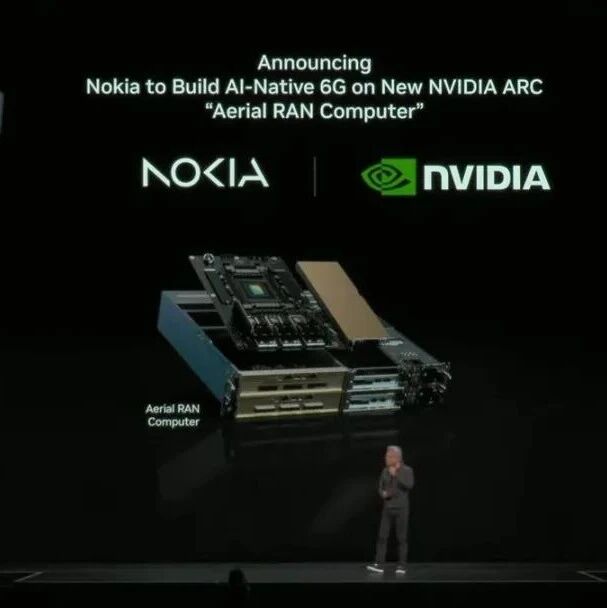
Core Viewpoint - Nvidia plans to invest $1 billion in Nokia, acquiring approximately 2.9% equity through the purchase of 166 million shares at $6.01 each, to support Nokia's transition to AI-native 6G networks and enhance collaboration in 5G and 6G network software and AI infrastructure [2][3][5]. Group 1: Investment and Collaboration - Nvidia will acquire 166 million shares of Nokia at $6.01 per share, resulting in a 2.9% ownership stake [5]. - The partnership focuses on leveraging Nvidia's chips to accelerate Nokia's 5G and 6G network software, while exploring the integration of Nokia's data center technology into Nvidia's AI infrastructure [5][11]. - The collaboration aims to combine the core technological strengths of both companies to meet the demands of AI-driven network infrastructure [5][11]. Group 2: AI-RAN Technology Development - Nvidia introduced the Aerial RAN Computer (ARC) platform for 6G networks, which Nokia will use to expand its RAN product offerings and develop new AI-RAN products [5][10]. - T-Mobile plans to conduct field tests of AI-RAN technology starting in 2026, integrating these technologies into its 6G development processes [5][13]. - The AI-RAN system is expected to enhance network performance and efficiency, catering to the growing demand for AI applications and billions of new connected devices [8][10]. Group 3: Transition to AI-native Networks - The Aerial RAN Computer Pro platform enables telecom operators to transition smoothly from 5G-Advanced to 6G networks through software upgrades [10][11]. - Nokia's unique anyRAN approach simplifies the introduction of the ARC-Pro platform, allowing for seamless upgrades and coexistence with existing RAN networks [10]. - The collaboration aims to provide a cost-effective and efficient pathway for the evolution of networks towards AI-driven capabilities [11]. Group 4: Broader AI Network Solutions - Beyond AI-RAN, Nvidia and Nokia will collaborate on AI network solutions, including the integration of Nokia's SR Linux software with Nvidia's Spectrum-X Ethernet platform [15][16]. - The partnership will explore incorporating Nokia's optical technologies into Nvidia's future AI infrastructure architecture [16]. - Nokia's strategic shift towards data center business, highlighted by its recent acquisition of Infinera Corp for $2.3 billion, is driven by the increasing demand for computing power due to the AI boom [16][17].

诺基亚股价大涨超20%,英伟达计划10亿美元股权投资,进行AI 6G网络合作
美股IPO· 2025-10-29 01:11
Core Viewpoint - Nvidia is investing approximately $1 billion in Nokia, acquiring a 2.9% stake through the purchase of about 166 million shares at $6.01 each, to collaborate on AI infrastructure and 5G/6G network software [1][3][5]. Group 1: Investment and Collaboration - Nvidia will acquire approximately 166 million shares of Nokia at $6.01 per share, resulting in a 2.9% ownership stake [1][5]. - The partnership will focus on AI-driven transformations in mobile networks, particularly in the development of AI-RAN products for 5G and 6G networks [3][5]. - T-Mobile will collaborate with both companies to conduct field tests of AI-RAN technology starting in 2026, integrating it into their 6G development process [1][5][11]. Group 2: AI-RAN Technology - Nvidia has introduced the Aerial RAN Computer (ARC) platform aimed at 6G networks, which will enhance Nokia's RAN product offerings [5][8]. - The AI-RAN system will help mobile operators improve network performance and efficiency, catering to the growing demand for AI applications and billions of new connected devices [7][9]. - The collaboration aims to provide a seamless transition from existing RAN networks to future AI-RAN networks, leveraging Nokia's unique anyRAN approach [8][9]. Group 3: Market Impact and Future Prospects - Following the announcement, Nokia's stock surged over 22% on both the New York Stock Exchange and Helsinki Stock Exchange [3]. - The partnership is expected to redefine telecommunications infrastructure, positioning the U.S. to regain global leadership in this critical sector [7]. - Nvidia's investment in Nokia is part of a broader strategy, which includes significant investments in various AI companies and technologies [13].
弈东电子:紧跟行业与客户需求进行战略布局
Xin Lang Cai Jing· 2025-10-27 01:22
Core Viewpoint - The company, Yidong Electronics, is strategically positioned to meet the growing demand for communication connectors, which are essential for interconnecting data centers and end devices like humanoid robots and Apple AR glasses [1] Group 1: Product and Market Positioning - Yidong Electronics' communication connectors, such as high-speed I/O connectors, are critical for the connectivity between data centers and end devices [1] - The company's products are already supplied to leading global clients, including Amphenol and Molex, which have a market capitalization of 1 trillion RMB [1] Group 2: Future Opportunities - The company is poised to support future hardware upgrades required for satellite communication, 6G networks, and other advanced networking technologies [1] - Yidong Electronics is actively aligning its strategic layout with industry trends and customer needs to capitalize on emerging opportunities [1]
智能手机时代将终结?高通CEO安蒙详解AI未来六大趋势
Feng Huang Wang· 2025-09-24 13:29
Core Insights - Qualcomm's CEO Cristiano Amon presented the company's strategic vision for AI development, emphasizing the emergence of a "user-centric ecosystem" [1] Group 1: Key Trends in AI Development - AI is becoming the new user interface, focusing on human-centric adaptability [2] - The core user experience is shifting from smartphone-centric to AI agent-centric [2] - A fundamental transformation in computing architecture is required, necessitating redesign across chips, software, and operating systems for AI [2] - AI models will develop in a hybrid manner, efficiently coordinating cloud and edge computing power [2] - Edge data will significantly enhance AI model intelligence due to its high relevance [2] - The future network will possess perceptual capabilities, with 6G serving as a critical bridge [2] Group 2: Future Vision and Goals - The transition from smartphone-centric to AI agent-centric indicates that future devices like smartwatches and wireless earbuds will serve as independent interfaces for direct interaction with AI [2] - Qualcomm aims to create a dynamic, adaptive intelligent network powered by a new computing architecture, hybrid AI models, and edge data [2] - 6G is positioned as essential for connecting cloud and edge, merging physical and digital worlds, with initial 6G commercial terminals expected by 2028 [3] - Qualcomm's ultimate goal is to enable pervasive AI, creating a personalized user ecosystem across multiple devices [3] Group 3: Upcoming Product Launch - The new Snapdragon mobile platform is set to be officially launched at the summit on the 25th [4]

英伟达将向OpenAI投资1000亿美元;甲骨文换帅!两位联席CEO上任;三星电子加入全球6G商用化联盟
Sou Hu Cai Jing· 2025-09-23 05:01
Group 1 - NVIDIA will invest $100 billion in OpenAI to build data centers based on NVIDIA's AI processors, requiring 10 gigawatts of power [2][4] - NVIDIA's stock rose nearly 4% following the announcement, with a market capitalization of $4.46 trillion [4] - NVIDIA established the first AI development center in the Middle East in collaboration with the Abu Dhabi Technology Innovation Institute [5] Group 2 - Oracle appointed Clay Magouyrk and Mike Sicilia as co-CEOs, with Safra Catz becoming the board's vice chair [6] - T-Mobile announced the appointment of Srini Gopalan as the new CEO, effective November 1 [7] Group 3 - A U.S. federal court ruled that Google must share core search data with competitors, raising concerns about privacy [8] - Google will launch the Gemini AI feature for Google TV, allowing users to interact with AI for content recommendations [9] Group 4 - Samsung Electronics joined a global alliance led by Verizon to commercialize 6G technology [10] - DeepSeek upgraded its online model to version DeepSeek-V3.1-Terminus, supporting various output lengths and pricing structures [12] - MediaTek launched the Dimensity 9500 AI chip, featuring advanced processing capabilities and 4K image generation [13] Group 5 - Sichuan Changhong's subsidiary plans to be privatized and delisted, with a total acquisition amount of approximately HKD 709 million [14] - The power semiconductor industry is facing turmoil due to the bankruptcy filing of Wolfspeed, impacting companies like Renesas and ROHM [15]

中国移动黄宇红:量子计算将与人工智能、6G网络深度融合
Shang Hai Zheng Quan Bao· 2025-09-17 14:53
Core Insights - Quantum computing is entering a development inflection point, transitioning from a period of technological breakthroughs to accelerated growth, with mainstream technology routes advancing steadily and new routes making progress [1] - The deep integration of quantum computing with artificial intelligence and 6G networks is expected to bring new opportunities for technological transformation in global science and technology development [1] Group 1 - The integration of quantum computing, artificial intelligence, and 6G networks (referred to as "quantum-intelligent integration") is becoming an important trend in information technology development [1] - Quantum computing is expected to inject new momentum into scientific research by shifting the paradigm from hypothesis-driven to data-driven approaches [1] - The complexity of network structure, increased bandwidth, and antenna numbers in 6G will make computational complexity and power consumption key factors for commercial success [1] Group 2 - Despite the promising prospects of quantum-intelligent integration, there are still nine major challenges in theory, engineering, and application, including unclear capability boundaries, weak hardware capabilities, and fragmented software ecosystems [2] - China Mobile plans to implement three major initiatives: open quantum computing devices, co-build an innovation consortium for quantum-intelligent integration, and empower applications through quantum-intelligent integration [2] - The company aims to leverage its advantages in resource aggregation and application scenario implementation to accelerate the industrialization process of quantum technology [2]

烽火通信(600498):夯实光通信等产品技术,持续优化营收结构加速盈利能力提升
Great Wall Securities· 2025-08-29 08:52
Investment Rating - The report maintains a "Buy" rating for the company, indicating a positive outlook for future performance [4][6]. Core Views - The company is focusing on optimizing its revenue structure and enhancing profitability through continuous technological advancements in optical communication products [2][3]. - Despite a slight decline in revenue for the first half of 2025, the company has improved its revenue structure, particularly in high-margin areas such as multimode fiber and data products [2]. - The company is actively expanding its overseas market presence, with international revenue growth of 13%, accounting for over 34% of total revenue [2]. Financial Summary - The company's projected revenue for 2025 is 29.12 billion yuan, with a year-on-year growth rate of 2.0% [4]. - The projected net profit attributable to the parent company for 2025 is 924 million yuan, reflecting a year-on-year growth rate of 31.5% [4]. - The company's return on equity (ROE) is expected to increase from 3.3% in 2023 to 5.9% in 2025 [4]. - The earnings per share (EPS) is projected to rise from 0.40 yuan in 2023 to 0.73 yuan in 2025 [4]. - The price-to-earnings (P/E) ratio is expected to decrease from 70.4 in 2023 to 38.5 in 2025, indicating a more attractive valuation over time [4].
