大消费

Search documents
交易型指数基金资金流向周报-20250708
Great Wall Securities· 2025-07-08 09:59
Report Information - Report Title: Weekly Report on Capital Flows of Exchange-Traded Index Funds [1] - Data Date: June 30, 2025 - July 4, 2025 [1] - Analyst: Jin Ling [1] - Report Date: July 8, 2025 [1] Core Content Domestic Passive Stock Funds - **Composite and Industry Themes**: Different concepts have varying fund sizes, weekly price changes, and net weekly capital inflows. For example, the SSE 50 has a fund size of 159.456 billion yuan, a weekly increase of 1.41%, and a net weekly capital outflow of 2.765 billion yuan; the large technology concept has a fund size of 216.688 billion yuan, a weekly decrease of 0.32%, and a net weekly capital inflow of 6.066 billion yuan [4]. - **Style Strategies and Other Categories**: Similar to the above, different concepts show different performance. For instance, the dividend low - volatility concept has a fund size of 43.535 billion yuan, a weekly increase of 1.82%, and a net weekly capital inflow of 1.419 billion yuan [4]. Overseas - Related Funds - **Composite and Industry Themes**: Concepts like the Nasdaq 100 have a fund size of 78.421 billion yuan, a weekly increase of 1.04%, and a net weekly capital outflow of 0.032 billion yuan; the Hong Kong stock technology concept has a fund size of 92.609 billion yuan, a weekly decrease of 2.43%, and a net weekly capital inflow of 2.88 billion yuan [5]. - **Style Strategies**: The dividend concept has a fund size of 126.9 million yuan, a weekly increase of 0.99%, and a net weekly capital inflow of 0.0016 billion yuan; the dividend low - volatility concept has a fund size of 77.7 million yuan, a weekly increase of 1.26%, and a net weekly capital inflow of 0.00154 billion yuan [5]. Other Investment Types - **Bonds**: Different maturities and types of bonds have different performances. For example, 30 - year bonds have a fund size of 8.969 billion yuan, a weekly increase of 0.18%, and a net weekly capital inflow of 0.0257 billion yuan; convertible bonds have a fund size of 43.859 billion yuan, a weekly increase of 1.05%, and a net weekly capital outflow of 0.0098 billion yuan [6]. - **Commodities**: Gold has a fund size of 70.887 billion yuan, a weekly increase of 1.13%, and a net weekly capital inflow of 2.252 billion yuan; energy and chemical products have a fund size of 293 million yuan, a weekly decrease of 0.37%, and a net weekly capital outflow of 0.0093 billion yuan [6]. - **Index Enhancement**: Different index - related concepts also show different trends. For example, the SSE 50 index - enhanced concept has a fund size of 76 million yuan, a weekly increase of 2.55%, and no net weekly capital inflow or outflow [6].
500亿补贴后,淘宝闪购何以拿下市场新增量的六成?
Xin Lang Ke Ji· 2025-07-07 12:50
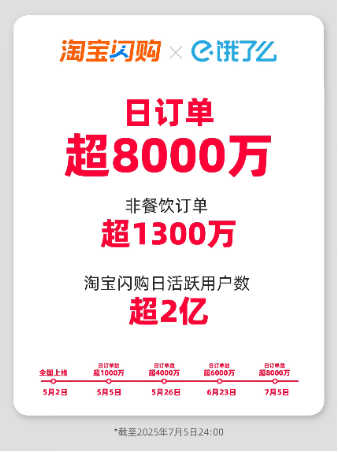
Core Insights - Taobao Flash Sale has launched a subsidy plan of 50 billion yuan, resulting in daily orders exceeding 80 million and active users surpassing 200 million [2][5] - Over the past two months, Taobao Flash Sale contributed approximately 60% of the total market's new daily orders, which amounted to 1 billion [2][5] Group 1: Business Growth - Taobao Flash Sale, which was upgraded from "Hour Delivery" on April 30, has shown rapid growth, with daily orders reaching over 40 million by May 26 and 60 million shortly after [3][5] - The platform's growth is attributed to the new "big consumption" business model, which creates new consumer experiences and service scenarios [2][6] Group 2: Subsidy Impact - The 50 billion yuan subsidy is fully funded by the platform, requiring no investment from merchants, and aims to stimulate new consumption while avoiding price wars among small businesses [4][6] - The subsidy is expected to generate a consumption increment of at least 100 billion yuan, acting as a "consumption voucher" for users [6][7] Group 3: Market Dynamics - The market capacity for daily orders has reached 200 million, with Meituan also reporting over 120 million daily orders, indicating a competitive landscape [5][8] - Experts suggest that the timing of the subsidy plan aligns with seasonal demand increases due to summer weather and holiday travel, enhancing immediate consumption needs [7][8] Group 4: Competitive Landscape - Taobao Flash Sale's rapid growth contrasts with JD's focus on differentiated growth and Meituan's increasing competitive pressure, highlighting the need for strategic adjustments [8] - Taobao's strengths include its extensive online operational capabilities and user base, while Meituan must enhance its supply chain in the physical e-commerce sector to meet diverse consumer demands [8]


淘宝闪购再掏500亿补贴,阿里试寻“大消费”最优解
Tai Mei Ti A P P· 2025-07-05 09:07
Core Insights - The article discusses Alibaba's strategy to invest 50 billion yuan in consumer and merchant subsidies through Taobao Flash Sale over the next 12 months, aiming to stimulate consumption and enhance merchant growth [1][2][12] - It highlights the importance of instant retail as a potential "third pole" in the retail landscape, alongside offline retail and centralized e-commerce platforms [4][6] - The article emphasizes that consumer behavior is evolving, with a focus on emotional and experiential aspects of consumption, indicating a shift towards service-oriented consumption [12] Group 1: Investment and Strategy - Taobao Flash Sale will provide 50 billion yuan in subsidies to consumers and merchants within 12 months, indicating a significant commitment to boosting the e-commerce sector [1][9] - The initiative has already shown promising results, with over 60 million orders placed within two months of launch, demonstrating strong consumer engagement [1][6] - The focus on both consumer and merchant subsidies suggests a balanced approach to stimulate demand while supporting merchant profitability [2][9] Group 2: Market Dynamics - Instant retail is positioned as a crucial growth area for Alibaba, with the potential to redefine the retail landscape by addressing unmet consumer needs [4][6] - The article notes that the current market is not yet saturated, unlike the logistics industry, indicating ample opportunities for innovation and differentiation [2][3] - The evolving consumer landscape, characterized by fluidity in purchasing behavior and preferences, necessitates a more integrated approach to service and product offerings [11][12] Group 3: Consumer Behavior - Consumers are increasingly seeking the "optimal solution" in their purchasing decisions, which encompasses not just price but also service quality and product availability [5][8] - The article points out that the overlap of users across different platforms indicates a need for e-commerce platforms to enhance their value propositions to retain customers [5][8] - The shift towards service-oriented consumption reflects changing consumer priorities, with a growing emphasis on experiences rather than just physical goods [12]
市场窄幅震荡,沪指微跌
Dongguan Securities· 2025-07-02 23:32
Market Overview - The A-share market experienced narrow fluctuations with the Shanghai Composite Index slightly declining by 0.09% to close at 3454.79 points [2] - The Shenzhen Component Index fell by 0.61%, while the ChiNext Index dropped by 1.13% [2] - Overall, more than 3200 stocks in the market declined, indicating a bearish sentiment [4] Sector Performance - The top-performing sectors included Steel (3.37%), Coal (1.99%), and Building Materials (1.42%) [3] - Conversely, the worst-performing sectors were Electronics (-2.01%), Communication (-1.96%), and Defense & Military Industry (-1.94%) [3] - Concept stocks such as Low-E Glass (4.24%) and Silicon Energy (4.19%) showed strong performance, while Brain-Computer Interface (-2.60%) and EDR Concept (-2.47%) lagged [3] Future Outlook - The market is expected to remain volatile, with attention on domestic policies, US-China tariffs, and potential interest rate cuts by the Federal Reserve [6] - The upcoming mid-year reports in July are anticipated to significantly impact individual stock performances [6] - Analysts suggest focusing on sectors such as Finance, Machinery, Consumer Goods, and TMT (Technology, Media, and Telecommunications) for potential investment opportunities [6] Key Events - A notable surge in marine economy concept stocks was observed following the Central Financial Committee's meeting on July 1, which emphasized the high-quality development of the marine economy [5]
交易型指数基金资金流向周报-20250701
Great Wall Securities· 2025-07-01 09:51
1. Report Industry Investment Rating - No relevant content provided 2. Core View of the Report - The report presents the weekly capital flow and performance data of various types of trading - index funds from June 16, 2025, to June 20, 2025, including domestic passive stock funds, overseas - related funds, bond funds, commodity funds, and index - enhanced funds [4][5][6] 3. Summary by Relevant Catalogs Domestic Passive Stock Funds - **Fund Scale and Performance**: The scale of different concept funds varies greatly, such as the Shanghai - Shenzhen 300 fund with a scale of 9834.49 billion yuan, while the State - owned Enterprise Reform fund has a scale of only 0.61 billion yuan. The weekly price changes also differ, with the ChiNext Index rising by 5.61% and the Public Utilities rising by only 0.65%. The net weekly capital inflows and outflows are also diverse, with the A500 fund having a net inflow of 75.70 billion yuan and the Shanghai - Shenzhen 300 fund having a net outflow of 71.25 billion yuan [4] Overseas - related Funds - **Fund Scale and Performance**: For overseas - related funds, the Nasdaq 100 fund has a scale of 784.21 billion yuan, with a weekly increase of 3.68% and a net capital outflow of 10.53 billion yuan. The Hong Kong Stock Medical fund has a scale of 272.31 billion yuan, with a 2.24% increase and a net capital inflow of 13.37 billion yuan [5] Bond Funds - **Fund Scale and Performance**: Among bond funds, the 30 - year bond fund has a scale of 89.69 billion yuan, with a - 0.33% change and a net capital outflow of 16.93 billion yuan. The convertible bond fund has a scale of 438.59 billion yuan, with a 1.97% increase and a net capital inflow of 24.94 billion yuan [6] Commodity Funds - **Fund Scale and Performance**: In commodity funds, the gold fund has a scale of 708.87 billion yuan, with a - 1.49% change and a net capital inflow of 14.52 billion yuan. The energy - chemical fund has a scale of 2.93 billion yuan, with a - 4.15% change and a net capital outflow of 0.12 billion yuan [6] Index - enhanced Funds - **Fund Scale and Performance**: For index - enhanced funds, the Shanghai - Shenzhen 300 index - enhanced fund has a scale of 32.09 billion yuan, with a 1.82% increase and a net capital outflow of 5.18 billion yuan. The CSI 1000 index - enhanced fund has a scale of 6.56 billion yuan, with a 4.58% increase and a net capital inflow of 0.24 billion yuan [6]
万联晨会-20250626
Wanlian Securities· 2025-06-26 00:59
周三 A 股三大股指集体收涨,上证指数上涨 1.04%,报 3455.97 点; 深证成指上涨 1.72%,报 10,393.72 点;创业板指上涨 3.11%,报 2128.39 点。A 股两市全天成交额 1.60 万亿元人民币,南向资金净买 入 95.73 亿港元。A 股两市个股普遍上涨,超 3700 只个股上涨。申 万行业方面,非银金融、国防军工及计算机行业领涨,石油石化及煤 炭行业跌幅居前;概念板块方面,兵装重组概念及互联网保险概念指 数涨幅居前,可燃冰及草甘膦概念指数跌幅居前。恒生指数上涨 1.23%,恒生科技指数上涨 1.15%;美国三大股指涨跌不一,道指下跌 0.25%,报 42,982.43 点,标普 500 指数持平,报 6092.16 点,纳指 上涨 0.31%,报 19,973.55 点。欧洲股市主要股指普遍下跌、亚太主 要股指普遍上涨。 3282 市 场 研 究 [Table_Title] 万联晨会 [Table_MeetReportDate] 2025 年 06 月 26 日 星期四 [Table_Summary] 概览 核心观点 【市场回顾】 【重要新闻】 【国泰君安国际获批将现有 ...
A股、港股强势上涨 沪指创年内新高!下半年有哪些投资机会?
Guang Zhou Ri Bao· 2025-06-25 16:50
Core Viewpoint - The A-share market is expected to show a trend of upward fluctuations, while the Hong Kong stock market may experience phase-based fluctuations, with investment opportunities in technology, consumption, and large financial sectors being highlighted [1][4]. Group 1: Market Performance - On June 25, the Shanghai Composite Index rose by 1.03%, the Shenzhen Component Index increased by 1.72%, and the ChiNext Index surged by 3.11% [2]. - The total market turnover reached 16,394 billion yuan, an increase of 1,915 billion yuan compared to the previous trading day, with over 3,800 stocks rising [2]. - The financial sector saw a significant rally, with multiple stocks hitting the daily limit, and the military and semiconductor sectors also performed strongly [2]. Group 2: Policy and Economic Factors - Recent financial policies, including the "Guiding Opinions on Financial Support to Boost and Expand Consumption," aim to enhance financial services from both supply and demand sides, thereby stimulating consumption growth [2]. - The People's Bank of China conducted a 3,000 billion yuan MLF operation to maintain ample liquidity in the market [2]. - Analysts noted that the development of stablecoins provides new opportunities for the financial sector, and the recovery of overseas markets has increased risk appetite, contributing to the positive market sentiment [3]. Group 3: Future Outlook - Analysts predict that the A-share market will maintain a stable upward trend, with current valuations remaining low compared to mature overseas markets, indicating relatively high investment value [4]. - The focus for structural opportunities is on safe assets, technological innovation, large consumption, and mergers and acquisitions [4]. - For the Hong Kong market, it is suggested to adopt a strategy of buying on dips, particularly in technology, consumption, and large financial sectors, which are expected to remain as core holdings [4].
沪指创年内新高后,A股下半年“剧本”来了
2 1 Shi Ji Jing Ji Bao Dao· 2025-06-25 13:10
Core Viewpoint - The A-share market is expected to show a fluctuating upward trend in the second half of 2025, driven by strong domestic economic resilience and relatively low asset valuations, with investment opportunities identified in dividend assets, technological innovation, and consumer sectors [1][2][4][15]. Investment Strategy - Multiple brokerages suggest focusing on three main investment directions for the second half of 2025: dividend assets, technology innovation themes, and large consumer sectors [1][15]. Dividend Assets - Dividend assets include high-dividend financial sectors such as insurance and banking, as well as shipping ports, communication services, and electricity sectors. These assets are attractive due to low valuations and stable dividend returns, particularly in a low-interest-rate environment [16]. - The focus should be on quality cash flow, volatility, and dividend certainty rather than solely on dividend yield, with recommendations for sectors like consumer leaders, public utilities, telecommunications, and banking [16]. Technology Innovation - Key areas of focus include AI computing, AI applications, and embodied intelligence. The first phase of AI market growth is centered around infrastructure, while the second phase will focus on application layers [17]. - AI Agents, which integrate various capabilities, are expected to drive demand for computing power and cloud services, while humanoid robots and advancements in core components are also significant [17]. Large Consumer Sectors - The large consumer sector is highlighted, with particular interest in domestic beauty brands, pet economy, and IP economy. Emerging consumption trends in beauty, pet products, and innovative pharmaceuticals are recommended for investment [18][19].

阿里迈出关键一步
3 6 Ke· 2025-06-25 11:30
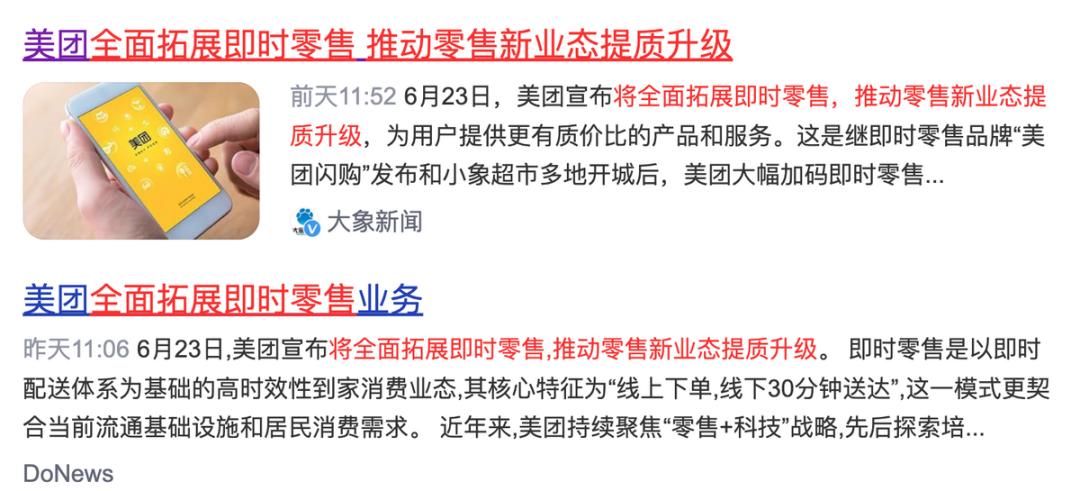
关于此新闻,许多媒体都出现了"误读",比如"淘天收编饿了么/飞猪",再比如"淘天与饿了么/飞猪合并",其实都不是。简单地说,就是饿了么、飞猪的 业务形态不变,但目标和协同上会与淘天加速融合。这一"合",意在进一步打破部门墙、打通资源、提高协同效率,但重要的信号,是阿里走出了从电商 迈向大消费的关键一步。 阿里美团京东给即时赛道上强度 618落下帷幕,头部电商平台继续在今年复杂多变的战局中落下新子: 6月23日,饿了么、飞猪并入阿里中国电商事业群,范禹继续担任饿了么董事长兼CEO,向蒋凡汇报;南天继续担任飞猪CEO,向蒋凡汇报。在此中,饿 了么、飞猪继续保持公司化管理模式,继续保持独立经营和管理,在业务决策执行上则与中国电商事业群集中目标、统一作战。 在阿里官宣饿了么与淘天「会师」的同一天,美团官方宣布,"将全面拓展即时零售,推动零售新业态提质升级。"同时公布了首次参加618的美团闪购战 报:今年"6·18",近百万实体店在闪购上迎来了超过1亿名顾客,以及手机成交额翻倍,智能设备增长超6倍,白酒增长超10倍…… (图源:百度新闻) 紧接着,媒体也爆出阿里618惊人数字:618期间,淘宝闪购联合饿了么峰值突破60 ...
A股午后走高,沪指突破3月高点创出年内新高
Xin Lang Cai Jing· 2025-06-25 06:23
Group 1 - The A-share market is experiencing a significant upward trend, with the Shanghai Composite Index reaching a new high for the year at 3442.6 points, surpassing the previous high of 3439.05 points set on March 19 [3] - The surge in the index is primarily driven by the performance of brokerage stocks, with nearly 10 stocks in the non-bank financial sector, including Nanhua Futures and Guosheng Financial Holdings, hitting the daily limit [3] - Major banks such as Industrial and Commercial Bank of China and Agricultural Bank of China also reached historical highs, indicating strong performance in the banking sector [3] Group 2 - Sectors such as military industry, semiconductor chips, and digital currency are showing significant gains, reflecting a broad-based market rally [4] - Analysts from Dongguan Securities suggest that while the domestic economy remains stable, the importance of boosting domestic demand is becoming more evident as the tariff suspension period ends in July and August [4] - The market is expected to maintain upward momentum, with a focus on financial, machinery, consumer goods, and TMT sectors for potential investment opportunities [4] Group 3 - According to Yang Chao, chief strategist at Galaxy Securities, the A-share market's liquidity is expected to remain stable and improve, with current valuations still low compared to mature overseas markets, indicating a favorable investment environment [4] - The market is anticipated to show a fluctuating upward trend in the second half of the year, with a shift towards large-cap stocks while still presenting opportunities in growth stocks [4] - Structural investment opportunities are highlighted in four key areas: safe assets, technological innovation, consumer goods, and mergers and acquisitions [4]