数字化

Search documents
葵花药业的“创新”样本:理念顺应产业重塑,产品驱动治疗升级
Huan Qiu Wang· 2025-12-24 13:11
Core Viewpoint - The pharmaceutical industry is crucial for public health and is a key focus of national policy, with companies like Kew Flower Pharmaceutical leading innovation and high-quality development in traditional Chinese medicine and modern pharmaceuticals [2][10]. Group 1: Company Overview - Kew Flower Pharmaceutical is a large brand pharmaceutical group primarily focused on traditional Chinese medicine, with a dual focus on chemical drugs, biological drugs, and health products [2][10]. - The company has shifted from a marketing-driven approach to a dual-driven strategy that emphasizes both marketing and product innovation, ensuring steady and high-quality development [2][10]. Group 2: Product Innovation - Kew Flower Pharmaceutical has introduced innovative products such as polyethylene glycol (PEG) for treating chronic constipation, which is based on a unique physical mechanism that does not involve metabolic participation or stimulation of intestinal nerves [4][5][7]. - The application of PEG in the treatment of constipation is still in the early stages in China, and Kew Flower Pharmaceutical is the first to introduce this technology domestically, aiming to improve the quality of life for patients [7][8]. Group 3: Industry Trends - The pharmaceutical industry is undergoing a transformation driven by policy support and technological breakthroughs, with a focus on high-quality value competition rather than low-level price competition [10][9]. - Kew Flower Pharmaceutical is committed to integrating traditional Chinese medicine with modern medical practices, focusing on the elderly, children, and women's health, which are key growth areas in the market [13]. Group 4: Digital Transformation - The company is actively investing in digitalization and smart technology to enhance operational efficiency and accelerate the innovation cycle in drug development, viewing digital transformation as a key driver for innovation [11][12]. - Kew Flower Pharmaceutical has developed a new digital work hub that integrates business processes, data interaction, and collaborative workflows, enhancing overall management capabilities [11]. Group 5: Future Outlook - The company plans to focus on core products and potential leading products, ensuring they meet quality standards and regulatory requirements to provide consumers with more choices [12]. - Kew Flower Pharmaceutical aims to leverage brand recognition and product quality to gain a competitive edge in the evolving pharmaceutical landscape [12].



黄志达:数字化将重构建筑“碳中和”未来
2 1 Shi Ji Jing Ji Bao Dao· 2025-12-24 11:45
Core Viewpoint - The Chinese interior design and construction industry is undergoing a significant paradigm shift towards sustainability, driven by the integration of "green" and "digital" practices, as traditional high-energy and wasteful methods are no longer viable [1] Group 1: Industry Transformation - The construction industry contributes nearly 40% of global carbon emissions, necessitating a move towards sustainable practices [1] - The integration of technology and green design is seen as the main driver for future home living styles [1] - A call for the establishment of a "cross-domain green design open platform" to facilitate resource sharing and collaboration across the industry has been made [3] Group 2: Role of AI and Digitalization - AI and digital technologies are expected to help reduce energy consumption in buildings by transforming design processes from traditional two-dimensional methods to a "five-dimensional" approach, enhancing efficiency and reducing waste [4] - The development of a green design and construction software, "Residential AI Lifecycle Application System," aims to provide transparent management of construction processes, helping to eliminate blind procurement and waste [4] Group 3: Challenges in Green Design Implementation - The primary challenge in promoting green design is overcoming traditional mindsets and resistance to change within the manufacturing sector [5] - Green design requires comprehensive planning from the design stage, demanding higher capabilities from professionals in the industry [5] Group 4: Collaborative Ecosystem - The proposed open platform aims to address challenges related to fragmented information and the need for collaboration among various stakeholders in the construction process [8] - A unified approach involving data sharing from material sourcing to construction completion is essential for accelerating the green transition [8] Group 5: Industry Trends and Future Outlook - The trend towards platformization in the design industry is aimed at decentralizing creativity and empowering designers [9] - AI is expected to evolve from a supportive role to a deeper integration in digital design, energy optimization, and intelligent solution assessment [10] - The realization of benefits from green and digital practices is crucial for driving internal motivation among investors and businesses [11]

开启商业办公新范式 中国写字楼产业园发展论坛年会在京举办
Zheng Quan Ri Bao Wang· 2025-12-24 11:11
本报讯 (记者陈潇)12月23日至24日,中国写字楼产业园发展论坛第22届年会在北京成功举办,主题 为"内卷与进化:商业办公的范式变革"。论坛年会聚焦五大核心主题,深入探讨在全球经济格局变迁与 科技革命的交织影响下商业办公的范式变革。 2025年,综合产业结构调整带来的需求演变、产业生命周期和创新演变、人才结构变化和产业集聚区演 变、城市功能体系完善和特征演变,标志着我国产业园市场的需求开始从数量扩张向质量提升发展,从 城市功能区集聚向产业功能集聚发展,从传统行业导向向新质生产力导向发展。 今年以来,中国境内写字楼产业园最具代表性的开发商、运营商和服务商企业集体选择"进化",多方面 提升自身的资产管理和运营能力,或发力商业地产公募REITs,或迭代进化明星产品线,或加快空间改 造调改节奏,开启商业办公新范式。 同时,商业办公行业集中度进一步提升,强者恒强的趋势进一步深化。在旧范式被新范式取代的转换过 程中,面临旧范式价值观和方法论的全面重构和颠覆;头部企业正在从行业周期到企业变革的剧变,从 提供物理空间到价值空间演进,从产品到运营底层逻辑的重构。 年会上,房讯指数CORC正式发布《2025中国写字楼产业园竞争 ...
超30个重点项目签约发布,创建院士工作站!佛山南海区要这样打造高水平渔业全国标杆
Nan Fang Nong Cun Bao· 2025-12-24 11:08
Core Viewpoint - Nanhai District in Foshan is advancing its high-level fishery development, aiming to establish itself as a national benchmark in the industry through various projects and initiatives [1][4][6]. Group 1: Industry Development - Nanhai has built a leading freshwater fish farming area, fry breeding center, and processing and distribution center, contributing to a fishery output value exceeding 60 billion yuan in the first three quarters [3][8][11]. - The district's freshwater aquaculture area spans 139,000 acres, with a projected fishery output of 224,800 tons and a value exceeding 6 billion yuan in 2024, and an expected output of over 230,000 tons and a value of approximately 6.6 billion yuan in 2025 [11][12]. - Nanhai is recognized as a hub for high-value fish species, with over 50% of the province's high-value fish transported from the area, and it accounts for 60% of the national distribution of certain fish species [17][18]. Group 2: Technological and Strategic Initiatives - The district is focusing on the standardization, digitalization, and intelligent transformation of its fishery sector, supported by the establishment of a national-level healthy breeding demonstration area and a modern agricultural industrial park [13][15]. - A significant collaboration was formed with a team from the Chinese Academy of Sciences to create an academic workstation for fish breeding, enhancing the selection of new varieties and accelerating the transformation of the fishery sector [28][30][34]. - Nanhai has become the largest freshwater fish fry breeding center in the country, producing 198.5 billion high-quality fry annually, which constitutes one-seventh of the national output [35][36]. Group 3: Economic Impact and Future Plans - The district's agricultural and fishery sectors are interconnected, promoting a diversified food supply system to meet the protein needs of the population [21][23]. - The total aquatic product output for Foshan city reached 633,600 tons, with a fishery output value surpassing 16.9 billion yuan, highlighting the economic significance of the fishery industry in the region [25][26]. - Nanhai is implementing a three-year work plan to enhance the quality of the fishery industry, aiming to introduce at least 10 new freshwater fish brands and achieve a fry output of over 180 billion [38][41]. Group 4: Collaborative Efforts and Community Engagement - Over 30 projects were signed and announced during the high-level fishery promotion meeting, covering various sectors including breeding, cultivation, processing, and financial services [42][46]. - The district is leveraging media resources to enhance the value of the fishery industry, aiming to expand market access and promote the cultural narrative of Nanhai's fishery sector [80][82]. - The establishment of the Nanhai Aquatic Research Center will support research, disease prevention, and financial services, marking a new phase in technological innovation within the fishery sector [76][78].

湖北黄石智造引领产业转型 “十四五”以来规上工业总产值年均增长14.4%
Jing Ji Ri Bao· 2025-12-24 07:29
Core Insights - Huangshi City in Hubei Province is focusing on industrial strength and modernizing its industrial system, achieving an average annual growth of 14.4% in industrial output value since the start of the 14th Five-Year Plan [1] Group 1: Traditional and Emerging Industries - The city has transformed traditional industries like steel and copper smelting from "scale expansion" to "quality and efficiency improvement" with nearly 100 billion yuan invested in industrial upgrades [1] - The first fully automated copper smelting factory in China, built by Hongsheng Copper Industry, has improved labor efficiency by 60% compared to industry averages [1] - Huangshi is promoting emerging industries such as new materials and optoelectronic information, shifting from "single-point breakthroughs" to "cluster rises" [1] Group 2: Future Industry Development - Huangshi aims to achieve a future industry output value of 10 billion yuan by 2029, creating new growth opportunities for high-quality urban development [2] - The city is implementing advanced projects like the first "low-altitude + bonded area" smart inspection demonstration project in Central China, enhancing the smart transformation of the comprehensive bonded area [2] - East Bay Group's robotic joint motors are in testing, utilizing industrial internet for remote operation and maintenance [2]
第13届郑州市摄影艺术展览开展
Xin Lang Cai Jing· 2025-12-24 06:29
本届展览由中共郑州市委宣传部、郑州市文学艺术界联合会主办,郑州市园林局、郑州市摄影家协会等 单位承办。 来源:中国青年报客户端 中国青年报客户端郑州12月24日电(中青报·中青网记者 李瑞璇)今天,第13届郑州市摄影艺术展览在 郑州开幕。本次展览集中呈现了近四年来郑州摄影创作的成果。经省市专家多轮评审,主办方最终评选 出120件共220余幅优秀作品,涵盖185幅摄影图片和9部视频作品。展览特别增设AI影像单元,积极融 合数字化手段,打造沉浸式观展体验。展览紧扣郑州三大核心文化坐标,设四大展陈单元:"天地之中· 文明坐标"展现中华文明核心区的历史纵深;"黄帝故里·精神原乡"传递根脉文化与非遗传承;"功夫郑 州·城市气韵"展现少林武术精神与现代城市发展的关系;"数字郑州·未来视界"探索科技与人文的融合共 生,其中AI重构的"郑州八景"尤为引人注目。现场通过系统展线设置,引导观众领略郑州的厚重历史、 辉煌成就、城市发展和美好生活。每件作品配备二维码,观众可扫码收藏作品,也可通过VR展厅实 现"云端漫游"。据统计,开幕首日参观人次近千。 展览地点为郑州市中原区西流湖公园南区"晴云阁"一楼展厅,市民可免费观展。 ...
瞩目!这个智慧低碳公共机构虚拟电厂建设启动,引领数字化节能降碳创新模式先河!
Quan Jing Wang· 2025-12-24 06:29
Core Viewpoint - The construction of the Smart Low-Carbon Public Institution Virtual Power Plant in Zhancheng District, Foshan, marks a significant step in integrating public institution energy resources and exploring new market-oriented mechanisms for energy conservation and carbon reduction, aiming to provide a practical model for optimizing energy structure and promoting green low-carbon development in urban centers [1][2]. Group 1: Project Overview - The virtual power plant utilizes advanced digital, communication, and intelligent control technologies to aggregate and optimize controllable electric loads across different spaces, participating in power system operations and market transactions [1][2]. - A strategic cooperation agreement was signed between the Zhancheng District People's Government and Southern Power Grid Comprehensive Energy Co., Ltd., indicating collaboration among various industry chain enterprises to implement this innovative project [1][2]. Group 2: Development Strategy - Zhancheng District aims to leverage its unique resource endowment by integrating public institution management with large-scale virtual power plant operations, driving participation from commercial resources and optimizing energy supply and conservation through market mechanisms [3][4]. - The district plans to accelerate the construction of the virtual power plant by conducting resource surveys of public institutions and establishing a dynamic digital resource database [4][5]. Group 3: Implementation Measures - The district will promote the "virtual power plant + energy management" model, allocating at least 50% of the virtual power plant's profits towards energy-saving renovations, particularly in distribution and air conditioning sectors [4][5]. - A comprehensive smart low-carbon virtual power plant demonstration platform will be established to integrate data collection, AI optimization, and remote control, enhancing urban energy management's intelligence [4][5]. Group 4: Ecosystem Development - The project encourages participation from state-owned and private enterprises, establishing a whitelist system for companies and promoting business innovation within the virtual power plant framework [5]. - The implementation of this project represents an innovative exploration of energy conservation and carbon reduction management mechanisms, providing a "Zhancheng experience" for urban energy efficiency and cost reduction [5].
从社区超市到智慧生态 科技赋能 红旗连锁描绘消费新图景
Mei Ri Jing Ji Xin Wen· 2025-12-23 13:17
Core Viewpoint - In 2025, with steady recovery in domestic demand and deep adjustments in consumption structure, Hongqi Chain (002697) is consumer demand-oriented, continuously innovating and developing steadily, and has been recognized as a "Listed Company with Outstanding Competitive Strength in Big Consumption" at the 14th Annual Development Conference of Listed Companies [1] Group 1: Business Strategy and Innovation - Hongqi Chain has evolved from a single "community convenience store" to a comprehensive service system of "goods + services + finance" [1] - The company has built an information management system that connects various operational aspects, significantly enhancing operational efficiency and management precision [2] - The upgrade to the Hongqi Cloud Platform allows for data sharing and collaborative decision-making across the supply chain, improving inventory management and decision-making processes [2] Group 2: Consumer Engagement and Digital Transformation - Hongqi Chain has become the first digital partner of Alipay's "Tap to Pay" membership system, simplifying payment processes and enhancing member engagement [3] - The company is actively embracing social e-commerce, with Douyin sales exceeding 1 billion yuan in 2024, becoming a significant growth channel beyond physical stores [3] Group 3: Operational Efficiency and Cost Management - The company plans to expand its 24-hour cloud-staffed stores to 300 by the end of 2025, utilizing remote monitoring and smart security to enhance service coverage while controlling labor costs [4] - Hongqi Chain is introducing unmanned vending systems in various locations to expand consumer touchpoints without significantly increasing costs [4] Group 4: Financial Performance and Strategic Focus - In the first three quarters of 2025, the company reported revenue of 7.108 billion yuan, a year-on-year decrease of 8.48%, while net profit attributable to shareholders was 383 million yuan, down 1.89%, but net profit excluding non-recurring items increased by 3.96% [6] - The company is focusing on optimizing store structure, improving supply chain efficiency, and reducing costs through digitalization, laying a solid foundation for long-term high-quality development [6] Group 5: Future Outlook and Industry Positioning - Hongqi Chain is strategically concentrating resources on more promising business circles and store formats, leveraging cloud platforms and AI technology for efficiency gains [7] - The company is expected to play a more significant role in community governance, public services, and consumer finance as retail enterprises evolve beyond mere sales [7]

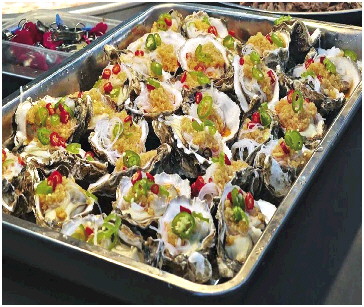
冬日“蚝”鲜!乳山抱团打造百亿蓝色名片
Qi Lu Wan Bao· 2025-12-23 10:46
Core Insights - The event "Winter Solstice Lushun Oyster Tasting" marks the transformation of Lushun oysters from a bulk commodity to a branded product, reflecting a significant shift in the local agricultural industry from production to branding and sales [2][3] Group 1: Brand Development - The introduction of liquid color-changing anti-counterfeiting technology in 2021 has significantly improved brand protection, increasing the proportion of genuine Lushun oyster products in online searches from 30% to over 90% [3] - The average price of Lushun oysters has risen by 20% to 30% due to the transition from bulk selling to individual sales [3] Group 2: Industry Growth - The investment of 270 million yuan by Shandong Lighthouse Jellyfish Marine Technology Co., Ltd. has led to the development of a full industry chain encompassing breeding, processing, sales, and research [4] - The company achieved online sales leadership within three months by investing 20 million yuan in brand promotion [4] Group 3: Technological Advancements - Scientific assessments of oyster farming capacity have led to improved management practices, optimizing breeding layouts and addressing quality issues [5][6] - The introduction of high-temperature resistant oyster varieties has improved survival rates during summer, contributing to a more sustainable farming approach [6] Group 4: E-commerce Transformation - The collaboration with top influencers has enabled significant sales growth, with daily sales reaching 200,000 jin, showcasing the impact of e-commerce on the oyster market [7] - The nutritional value of Lushun oysters has been highlighted, with high protein and zinc content, promoting them as a health food [7] Group 5: Community and Sustainability - The establishment of a 140-acre oyster industry integration development demonstration zone has unified management and created over 500 new jobs, increasing average annual income for local villagers by over 30,000 yuan [8] - The project has facilitated the sharing of brand benefits among local farmers, enhancing resilience against market risks [8] Group 6: Future Outlook - The brand value of Lushun oysters reached 19.385 billion yuan in 2023, indicating a successful transformation into a multifaceted industry that supports local economies and rural revitalization [9] - The focus on quality and health, combined with technological and market forces, is essential for sustaining the growth and longevity of the oyster industry [9]
“吸金”超百亿、A500ETF强势崛起 南方基金做对了什么?
Sou Hu Cai Jing· 2025-12-23 07:25
Core Viewpoint - The A500 ETF has seen significant trading activity and inflows, indicating a shift in investor preference towards quality assets amid market volatility, with institutional investors leading the charge [2][3][4]. Group 1: Market Activity and Trends - On December 17, the total trading volume of A500 ETFs exceeded 52 billion yuan, significantly outpacing the CSI 300 ETF [2]. - From December 15 to 19, the total net inflow into ETFs reached 76.036 billion yuan, with A500 ETFs receiving 80% of this inflow, bringing their total scale to over 230 billion yuan, an increase of nearly 37 billion yuan since the end of November [2][3]. - As of December 21, the total number of ETFs in the market surpassed 5,800, with a total scale exceeding 58 trillion yuan, solidifying their role as a backbone of the A-share market [3]. Group 2: Fund Performance and Management - The South A500 ETF's scale reached 36.1 billion yuan as of December 22, marking a net inflow of over 10 billion yuan in just two months, which has helped it regain its position as the second-largest fund in its category [4]. - The South A500 ETF has demonstrated strong performance with a 6-month return of 24.29% and a 1-year return of 21.19%, both exceeding the returns of the CSI 300 index during the same periods [5][6]. - The fund's management fee was reduced from 0.6% to 0.2%, which could enhance investor returns significantly over time [5]. Group 3: Competitive Landscape and Challenges - The competitive landscape for ETFs is intensifying, with top funds like South A500 ETF showing strong capital attraction even during market downturns, indicating robust investor confidence [3][4]. - Despite recent successes, South Fund faces challenges such as a significant reduction in equity fund sizes and regulatory scrutiny due to past compliance issues, which could impact its reputation and growth potential [11][12][14]. - The fund's performance in equity investments has lagged behind industry averages, with a 1-year return of only 20.32%, necessitating improvements in asset allocation and risk management strategies [14][15].