
车路云一体化

Search documents
推进“车路云一体化”,起步区将部署智能网联汽车不少于300辆
Qi Lu Wan Bao Wang· 2025-08-28 03:12
Core Insights - Jinan city is implementing an industrial development strategy focused on the new energy vehicle (NEV) sector, with plans to construct a high-end NEV industrial park and upgrade infrastructure to support smart connected vehicles [1][2] Group 1: Industrial Development - The Jinan New and Old Kinetic Energy Conversion Pilot Zone plans to start construction of the Binli Technology high-end NEV industrial park this year [1] - The area aims to upgrade at least 200 kilometers of roads and 220 intersections, deploying no fewer than 300 smart connected vehicles [1][2] - The NEV sector is identified as a key area for the transformation of the manufacturing industry [1] Group 2: Ecosystem and Collaboration - The pilot zone has attracted leading enterprises and is building a complete industrial ecosystem that includes vehicle manufacturing, core components like batteries and electric control systems, and smart driving technologies [1][2] - A collaborative mechanism has been established between city and district levels to ensure the successful implementation of projects, exemplified by the rapid development of BYD's Jinan base, which achieved nearly 100 billion yuan in industrial output in just three years [1][2] Group 3: Innovation and Application - The pilot zone has released a demand list for "vehicle-road-cloud integration" and has developed several policy documents to support the implementation of smart connected vehicle applications [2] - Initiatives include the operation of autonomous buses and other smart vehicle applications, with plans for significant infrastructure upgrades to facilitate these technologies [2]

桐庐如何“跑”出加速度
Hang Zhou Ri Bao· 2025-08-28 02:50
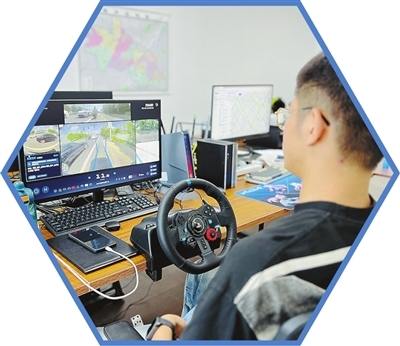
Core Viewpoint - The article highlights the rapid adoption and operational efficiency of unmanned delivery vehicles in Tonglu County, showcasing the transformation of smart driving from experimental technology to everyday utility in logistics and delivery services [5][6][7]. Group 1: Unmanned Delivery Vehicles - Unmanned delivery vehicles are actively operating in Tonglu, with three vehicles from Qiaokou Food Factory efficiently delivering goods to various stores, completing deliveries in just two minutes [5]. - The introduction of unmanned delivery vehicles has improved delivery efficiency, allowing Qiaokou Food Factory to complete deliveries an hour earlier than before, with a reported 20%-30% increase in delivery speed and a 30%-50% reduction in cost per delivery [6]. - The operational model includes a safety officer monitoring the vehicles from an office, utilizing a 360-degree scanning system for real-time navigation and emergency control [6][7]. Group 2: Policy and Infrastructure Support - Tonglu County has established a supportive policy environment for the deployment of smart vehicles, including a financial incentive program that offers up to 50% subsidies for related projects [8]. - The county has developed a "3+3+X" support framework to enhance infrastructure for smart vehicles, including the construction of smart intersections and the integration of vehicles into a unified monitoring and control network [8]. - The local government is actively pursuing innovative projects, including the transformation of traditional vehicles into smart ones and exploring new logistics avenues such as low-altitude logistics [8][9]. Group 3: Industry Development and Future Plans - The investment in the headquarters and R&D base for New Stone Age unmanned vehicles in Tonglu is part of a broader strategy to cultivate new production capabilities and high-quality development [9]. - The county aims to transition from traditional logistics to smart logistics, leveraging its advantages in delivery services to expand into low-altitude economy and humanoid robotics [9]. - The ongoing projects and initiatives are expected to create a virtuous cycle of technology adaptation and scene feedback, positioning Tonglu as a competitive player in the smart driving industry [9].

万集科技20250827
2025-08-27 15:19
Summary of the Conference Call for Wanji Technology Company Overview - **Company**: Wanji Technology - **Industry**: Intelligent Transportation and Automation Solutions Key Financial Metrics - **Revenue**: 421 million CNY in H1 2025, a year-on-year increase of over 10% [2][4] - **Net Profit**: -100 million CNY, a year-on-year improvement of 32% [4][23] - **Gross Margin**: 31.42% in H1 2025, up 3.3% year-on-year [2][9] Business Segments Performance - **ETC (Electronic Toll Collection)**: Revenue of 252 million CNY, with a gross margin of 29.7%, up 5.05% [4][9] - **Dynamic Weighing**: Revenue of 85.63 million CNY, with a gross margin of 38.14%, up 3.55% [4][9] - **LiDAR (Laser Radar)**: Revenue of 58.77 million CNY, with a stable gross margin of 32.05% [4][9] - **Intelligent Networking**: Revenue of 24.19 million CNY, with a gross margin of 23.41%, showing a decline [4][9][17] Market Position and Competitive Advantage - **ETC Market Share**: Over 80% [2][7] - **Dynamic Weighing Market Position**: Among the top three [2][7] - **LiDAR Breakthroughs**: Significant advancements in the industrial sector [2][7] Technological Capabilities - **Integrated Vehicle-Road-Cloud Solutions**: Comprehensive technical capabilities in vehicle, road, cloud, network, and mapping technologies [2][5] - **Core Competencies**: Real-time dynamic digital twin capabilities, vehicle-road collaboration, and safety warning systems [5][11] Strategic Initiatives - **Cost Control**: Focus on enhancing product gross margins and managing operational costs [11][24] - **Investment in Emerging Fields**: Increased focus on industrial LiDAR and intelligent networking [11] - **Ecosystem Collaboration**: Partnerships with AI, autonomous driving, and traffic simulation sectors to drive innovation [6][11] Policy Impact - **Equipment Update Policies**: Benefiting from government initiatives aimed at digital transformation in transportation, leading to the establishment of over 50 digital tunnels and numerous digital toll stations [12][13] R&D and Future Outlook - **R&D Investment**: 119 million CNY in H1 2025, a decrease of 6.6% year-on-year, reflecting improved efficiency in converting R&D into revenue [8][21] - **Future Plans**: Continued focus on core business development and market expansion, particularly in intelligent networking and industrial applications [11][12] Challenges and Risks - **Fluctuating Margins**: Variability in gross margins across different business segments, particularly in intelligent networking due to project-specific costs [17] - **Cash Flow Management**: Cash flow net amount of -120 million CNY, with plans to enhance revenue and accelerate receivables collection [24] Conclusion - **Overall Performance**: The company is on a path to recovery with a focus on strategic growth areas, cost management, and leveraging technological advancements to enhance market position and operational efficiency [23][24]
深入实施“人工智能+”行动,将如何为智能网联汽车赋能?
Zhong Guo Qi Che Bao Wang· 2025-08-27 09:08
Core Viewpoint - The recent policies from the government are significantly beneficial for the rapidly developing intelligent connected vehicle industry, particularly through the implementation of "Artificial Intelligence+" [3][4]. Industry Development Direction - The "Artificial Intelligence+" initiative emphasizes the development of intelligent connected vehicles, guiding the industry's transformation towards greater intelligence [4]. - The competition for automotive-grade AI chips is intensifying, with both international and domestic companies striving to enhance the intelligence of vehicles [4][5]. Technological Advancements - Enhanced computing power from advanced AI chips is crucial for processing data from various sensors, enabling accurate decision-making in complex driving environments [5][6]. - Multi-modal fusion algorithms are being developed to improve the perception capabilities of intelligent connected vehicles, allowing for better decision-making based on historical data [6]. User Experience Transformation - The evolution of intelligent cockpits is transforming traditional vehicle interiors into dynamic mobile ecosystems, with AI playing a key role in personalizing user experiences [7][8]. - The integration of AI technologies allows for seamless connectivity and enhanced entertainment options within vehicles, enriching the travel experience [8]. Future Trends - The future of intelligent connected vehicles will see hardware standardization alongside software personalization, allowing for customized user experiences similar to smartphones [10]. - The concept of "smart mobility" will emerge, where vehicles will collaborate with infrastructure and cloud platforms for improved traffic management and efficiency [11]. Sustainable Development - The integration of AI will facilitate the transition towards greener transportation by optimizing energy consumption and enhancing the efficiency of electric vehicle charging networks [12]. - The ongoing evolution of intelligent connected vehicles, driven by AI, is expected to reshape travel methods and contribute to sustainability goals [12].

2025中国数字服务大会在烟台大学举行
Da Zhong Ri Bao· 2025-08-27 04:35
Core Insights - The CCF 2025 China Digital Services Conference was held from August 19 to 21, focusing on the theme "Smart Services: Reshaping Industrial Systems and Empowering Social Governance" [1] - The conference attracted over 1,000 participants, including top experts and representatives from universities, research institutions, and well-known enterprises [1] Event Highlights - The conference featured a diverse range of sessions including invited reports, regular forums, academic forums, educational forums, and innovation competitions [1] - A new educational and academic forum was established in the low-altitude economy sector to address national professional and industrial needs [1] - The Shandong Computer College Dean Forum was introduced to support the development of local academic disciplines [1] Research and Innovation - The conference covered over 100 cutting-edge topics such as intelligent unmanned systems, agricultural large models, AI in biomedicine, quantum computing, low-altitude economy, edge intelligence, integrated vehicle-road-cloud systems, and cloud-native service governance [1] - A total of 116 papers were submitted, with 49 accepted, showcasing the latest research achievements and industrial practices in China's digital services sector [1]
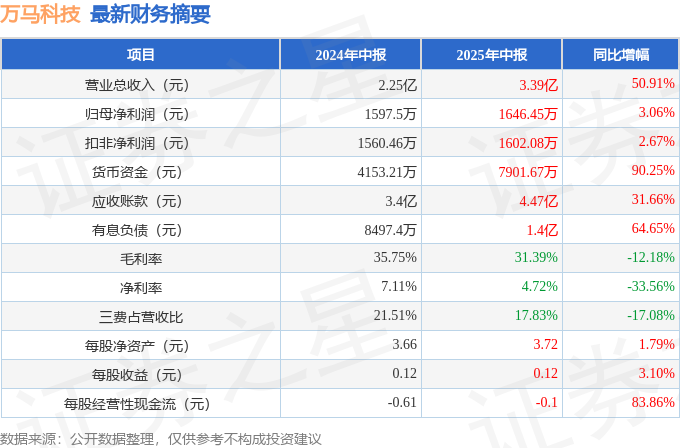
万马科技2025年中报简析:营收净利润同比双双增长,应收账款上升
Zheng Quan Zhi Xing· 2025-08-26 23:41
Financial Performance - The company reported a total revenue of 339 million yuan for the first half of 2025, representing a year-on-year increase of 50.91% [1] - The net profit attributable to shareholders was 16.46 million yuan, up 3.06% year-on-year [1] - In Q2 2025, total revenue reached 190 million yuan, a year-on-year increase of 34.62%, while net profit decreased by 20.96% to 11.45 million yuan [1] - The gross margin was 31.39%, down 12.18% year-on-year, and the net margin was 4.72%, down 33.56% year-on-year [1] Financial Ratios and Metrics - The company's return on invested capital (ROIC) was 7.52% last year, indicating average capital returns [3] - The historical median ROIC since the company went public is 5.36%, with two years of losses since its listing [3] - The cash flow situation is concerning, with cash and cash equivalents to current liabilities at only 28.17% [4] Accounts Receivable and Liabilities - Accounts receivable increased by 31.66% year-on-year, reaching 447.1 million yuan, which is 1082.71% of the profit [1][4] - Interest-bearing liabilities rose by 64.65% to 140 million yuan [1] Market and Industry Trends - The company operates in a sector that is seeing significant policy support for the commercialization of autonomous driving, with new regulations being implemented in major cities [5]

金溢科技:上半年研发投入增加13%,实控人及关联方拟认购定增不超过10亿元
Zheng Quan Shi Bao Wang· 2025-08-26 03:29
Core Viewpoint - The company, Jin Yi Technology, reported a decline in revenue for the first half of 2025, but it continues to invest in research and development, indicating confidence in future growth [1][2]. Financial Performance - In the first half of 2025, the company achieved operating revenue of 202.92 million yuan, a year-on-year decrease of 11.01% [1]. - The company did not achieve profitability during this period due to significant price declines in some products and reduced income from financial products [1]. - Research and development investment increased by 13% to 31.58 million yuan, demonstrating the company's commitment to long-term growth despite current challenges [1]. Capital Raising and Control - On August 22, the company announced a plan to issue up to 53.67 million shares to its controlling shareholder, Mr. Luo Ruifa, and his controlled entity, Huari Teng Technology, raising up to 1 billion yuan [1][2]. - Following the issuance, the controlling shareholder's stake will increase to 39.17%, further consolidating control over the company [1]. Strategic Initiatives - The raised funds will be used to supplement working capital, providing strong financial support for future business development and market position stabilization [2]. - The company aims to explore investment and acquisition opportunities to enhance its industry chain and cultivate new profit growth points [3]. Industry Context - The chairman highlighted the importance of integrated vehicle-road-cloud systems in reshaping the transportation industry, with investments in vehicle-road collaboration exceeding 80 billion yuan in 2024 [2]. - The company is positioned within the digital transportation and integrated energy sectors, collaborating with various stakeholders, including traditional and new energy vehicle manufacturers [3]. - The ongoing digital transformation in the transportation sector is supported by national strategies and policies, driving sustained high growth in the smart transportation industry [2].
“筑”路三千 联云聚车 ——“车路云一体化”应用试点的进展与未来
Zhong Guo Qi Che Bao Wang· 2025-08-26 01:30
Core Viewpoint - The "Vehicle-Road-Cloud Integration" initiative has made significant progress in pilot cities over the past year, focusing on collaborative development, urban construction, enterprise participation, and scenario exploration [2][3][4]. Group 1: Work Achievements - The pilot cities have implemented relevant policies, regulations, and standards, with 20 pilot cities constructing over 3,000 kilometers of smart roads and more than 3,500 smart intersections [3][4]. - Various stakeholders, including standardization organizations, universities, and enterprises, have collaborated to create guidelines and standards to support the integration and application of "Vehicle-Road-Cloud" systems [3][4]. - The automotive industry has recognized the safety benefits of "Vehicle-Road-Cloud Integration," leading to active participation in technology research and validation [4][5]. Group 2: Scenario Exploration - There has been beneficial exploration in both large-scale scenarios and urban-level demonstrations, with applications such as smart taxis, autonomous parking, and logistics being expanded [5][6]. - Cities are focusing on innovative scenarios based on local industry characteristics and traffic needs, leading to unique explorations in areas like autonomous driving and traffic signal data standardization [6][7]. Group 3: Standardization and Collaboration - The establishment of a unified standard system is crucial for ensuring data interoperability and mutual business operations among cities [7][8]. - The "Recommended Standard List" has gained attention and is actively being adopted in pilot projects, facilitating cross-city standardization [8][9]. Group 4: Future Trends and Development - The integration of "Vehicle-Road-Cloud" is expected to accelerate as cities leverage their industrial advantages to explore functional scenarios and applications [10][11]. - The industry is focusing on demand-driven development, emphasizing the need for unified architecture and standards to ensure interoperability [11].

记者观察 | 直面一场协同攻坚
Zhong Guo Qi Che Bao Wang· 2025-08-26 01:30
在应用试点城市公布一周年之际,笔者借参与专题策划报道的机会,对"车路云一体化"政策法规制 定、不同领域部门协调、标准体系供给、建设成果进展等方面的信息有了更为全面和深入的了解。一年 来,我国"车路云一体化"应用试点建设亮出了"硬核"成绩单;但着眼未来,下一步需要完成的任务也着 实不少。 整体来看,一线试点城市的"车路云一体化"建设进度较快,比较明显的特征是测试道路数量较多、里程 较长、场景较为多样、智能化路侧基础设施建设进展较快、企业参与测试的累计时长较长。这反应出一 线城市对于"车路云一体化"建设的决心与能力。这些城市围绕乘用车、无人巴士、无人配送、干线物 流、环卫清扫等场景展开了测试验证;普遍重视建设城市级服务管理平台,并且已经开始赋能实际的城 市管理工作,"车路云一体化"的巨大发展潜力初见端倪。 此外,一些试点城市在标准供给方面走在了前列,在发布的相关文件中"架构相同、标准统一、业务互 通、安全可靠"成为重要的指导原则。但在建设工作开展的过程中,国家性、行业性标准确实存在供给 落后于实际需求的情况。如果没有统一的标准,车-路-云服务的互联互通将大打折扣,前期的投入也可 能付之东流。北京、上海、广州、深圳 ...
四维图新上半年营收17.61亿元,业务多点突破抢占智能网联发展机遇
Zheng Quan Shi Bao Wang· 2025-08-25 03:34
Core Insights - The company reported a revenue of 1.761 billion yuan for the first half of 2025, marking a year-on-year growth of 5.62% [1] - The company has made significant advancements in multiple business areas, including intelligent cloud, intelligent driving, intelligent cockpit, and intelligent chip sectors [1] Intelligent Cloud Business - The intelligent cloud business achieved a revenue of 1.265 billion yuan, reflecting a year-on-year increase of 24.42% with a gross margin improvement of 1.13 percentage points to 37.73% [3] - The company is actively involved in various "vehicle-road-cloud integration" pilot projects, leveraging over 20 years of map data accumulation and cloud service capabilities [2][3] - Collaborations with partners like Tianan Zhili to advance high-precision dynamic map construction in Wuxi are notable achievements [2] Intelligent Chip Business - The intelligent chip business recorded a revenue of 259 million yuan, showing a year-on-year growth of 2.48% [4] - The company has shipped over 300 million chips, including 90 million SoC and 80 million MCU units, which are integrated into various vehicle models [4] - The introduction of new MCU chips, such as the AC7870, demonstrates the company's commitment to innovation and market expansion [4] Intelligent Driving and Cockpit Business - The intelligent driving business has made substantial progress in technology breakthroughs and customer deliveries, with ongoing projects for key clients like Great Wall and BAIC [5][6] - The launch of the AI Infrastructure as a Service aims to provide comprehensive support for the entire intelligent driving development chain, successfully securing orders from major automotive clients [6] - The intelligent cockpit sector continues to innovate with a focus on integrated software and hardware solutions, achieving significant market expansion [6] Overall Strategy and Future Outlook - The company is transitioning from a single technology supplier to a "new Tier 1" player, emphasizing data ecosystem integration and agile delivery capabilities [6] - Future initiatives aim to evolve assisted driving from a premium option to a standard feature across the automotive industry, supporting the overall smart transformation of the sector [6]
