
智能化

Search documents
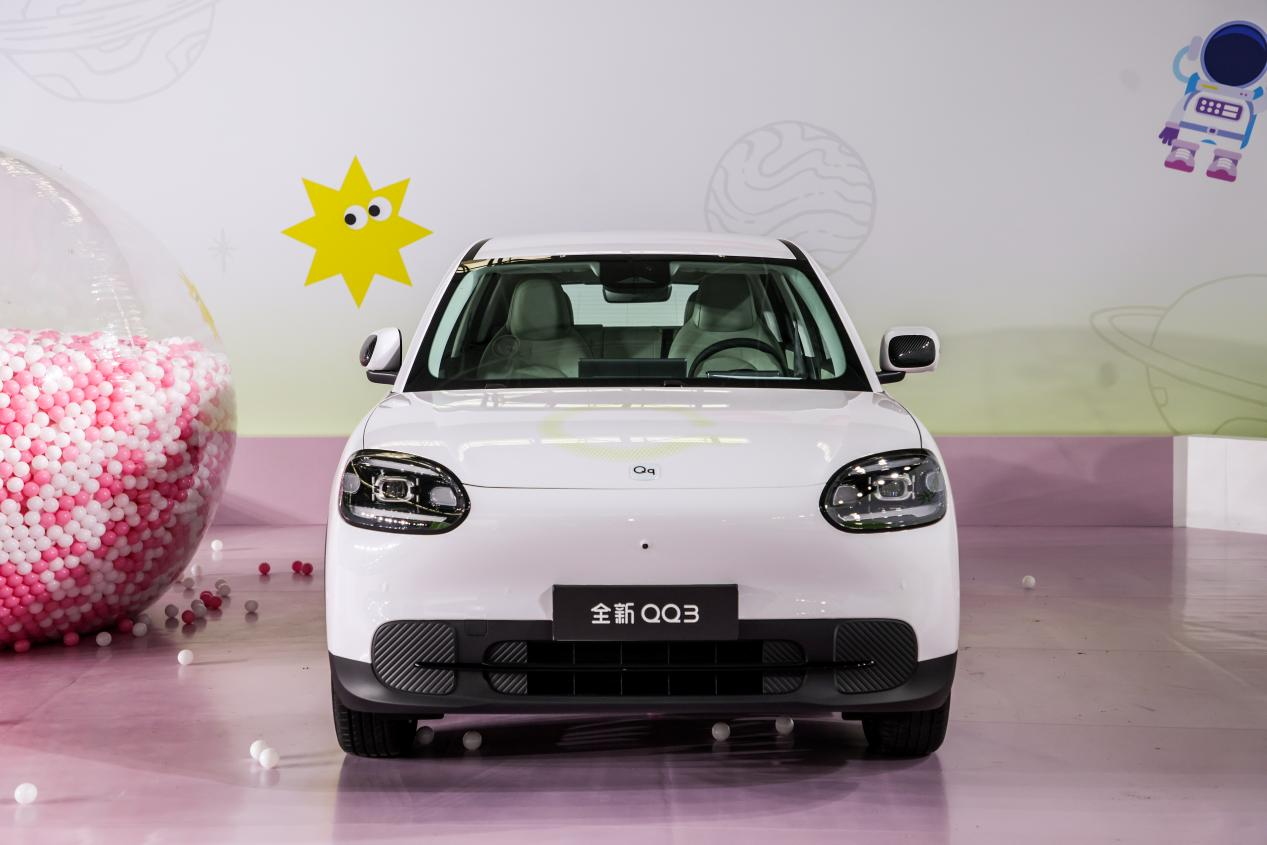
“国民神车”王者归来,全新QQ3以智造革新重塑微车新标杆
Zhong Guo Qi Che Bao Wang· 2026-02-07 13:11
Core Insights - The article highlights the launch of the new Chery QQ3, which aims to redefine the value standards of compact cars through electrification and intelligent technology, building on the legacy of the original QQ that has sold 1.54 million units since its debut in 2003 [2][9] Historical Context - The Chery QQ was introduced in 2003, breaking the foreign brand monopoly in the microcar market and making car ownership accessible to ordinary families in China. It achieved over 40,000 sales in its first year and became the first domestic microcar brand to sell over 10,000 units monthly in 2005 [3][9] - The QQ maintained its position as a market leader, winning the microcar sales championship for four consecutive years from 2005 to 2008 and surpassing one million units sold by 2011 [3][9] Brand Evolution - Chery's chairman emphasized that the QQ was designed to be a car that brings joy and allows young people to express themselves, evolving beyond a mere transportation tool to a cultural icon [5][9] - The QQ has consistently challenged traditional perceptions of compact cars through innovations in fashion, technology, and quality, becoming a unique pioneer in the Chinese automotive industry [5][9] Product Launch and Features - The new QQ3 is positioned as an "AI Smart Pure Electric Sedan" and is set to redefine compact cars with its innovative design and technology, including a blind booking system that allows customers to reserve the car with a deposit [14][22] - The QQ3 features a highly automated manufacturing process, ensuring high quality and precision, and has undergone extensive testing across various extreme conditions to guarantee global quality standards [16][17] Space and Safety Innovations - The QQ3 utilizes a dedicated electric platform to maximize interior space, offering a spacious experience comparable to larger vehicles, with significant storage options [19][20] - Safety features include a high proportion of high-strength steel in the body structure and advanced battery protection systems, ensuring superior crash resistance and safety for users [20][22] Technological Advancements - The QQ3 incorporates advanced AI technology, providing features such as L2-level driving assistance and a smart interactive system that enhances user experience [22][24] - The brand aims to engage users in the design process through initiatives that allow them to contribute to aspects like color and interior design, reinforcing the QQ's cultural significance [24] Market Positioning - The return of the QQ brand is seen as a revival of national memory and a strategic move to cater to modern consumer needs, with the QQ3 representing a new chapter in the compact car market [10][13] - Chery QQ's legacy and continuous innovation position it as a leader in the compact car segment, with the new model expected to set new benchmarks in the industry [24]

奇瑞汽车(09973.HK):深耕出海 多品牌协同拓展增长边界
Ge Long Hui· 2026-02-07 02:49
Core Viewpoint - Chery Automobile is undergoing a dual transformation towards globalization and intelligence, with a clear equity structure and strategic partnerships driving its growth in the new energy and export markets [1][2]. Group 1: Company Overview - Chery Automobile, established in 1997, initially entered the mainstream and entry-level passenger car market with models like Fengyun and QQ, and is now focusing on global and intelligent development [1]. - The company operates under a governance structure that balances state-owned capital, strategic investors, and management equity, ensuring no direct interference from state capital in operations [1]. - Chery's financial performance is improving due to the scaling delivery of its new energy brands, including Fengyun, Shanhai, Xingjiyuan, iCAR, and Zhijie, alongside continuous growth in overseas revenue [1]. Group 2: Export Strategy - Chery's export strategy has evolved from focusing on developing markets to key single markets like Russia, and now expanding into Europe [2]. - The Tiggo series is central to Chery's export products, with a parallel offering of internal combustion engine (ICE) and plug-in hybrid electric vehicle (PHEV) models to cater to different regional markets [2]. - The company employs a localized approach in its overseas operations, utilizing a dealer authorization system and establishing local subsidiaries in certain countries, while adopting a multi-regional KD assembly model for manufacturing [2]. Group 3: Technological Development - Chery plans to integrate its subsidiaries, including Lion Technology and Dazhuo Intelligence, by 2025 to streamline its R&D efforts [3]. - The company is pursuing a "self-research + cooperation" dual-track strategy, leveraging its own R&D capabilities alongside partnerships with leading technology firms like Huawei and Horizon [3]. - Chery's vehicle platform system consists of both traditional fuel and new energy platforms, structured by price range and technology path [3]. Group 4: Financial Projections - Chery's projected net profits for 2025, 2026, and 2027 are expected to be 18.4 billion, 21.1 billion, and 25.4 billion yuan respectively [3]. - The company is compared to other publicly listed automotive firms, with expected price-to-earnings (PE) ratios of 14, 11, and 8 for the years 2025 to 2027 [3]. - Given the strong momentum in new energy development and stable export positioning, Chery is anticipated to command a higher valuation, with an initial "buy" rating assigned [3].
奋进“十五五” 阔步向未来|庆安 科技赋能激发医药产业新活力
Xin Lang Cai Jing· 2026-02-06 21:59
Group 1 - The pharmaceutical manufacturing industry in Qing'an County is focusing on technological innovation as a core driver for development, aiming for breakthroughs in formulation, intelligent upgrades, and cross-industry integration [1] - Heilongjiang Aolida Naide Pharmaceutical has invested nearly 50 million yuan in consistency evaluation for generic drugs, resulting in five products approved for market, including a unique product with a market share of 70% to 80% [1] - The company is also expanding its product matrix with new approvals expected this year, including oral solutions and small-volume injectables [1] Group 2 - Heilongjiang Zhonggui Pharmaceutical has established a high-level innovation platform recognized by the provincial government, with an annual investment of about 20 million yuan in technology innovation and new product development [2] - The company has received awards for its industrialization of oral solutions and has secured funding for major technological achievements, promoting a cycle of research, transformation, and industrialization [2] - Heilongjiang Ruige Pharmaceutical is undergoing a digital and intelligent transformation in traditional Chinese medicine manufacturing, enhancing production stability and increasing extraction rates by at least 10% [2] Group 3 - Heilongjiang Kelong Pharmaceutical is diversifying into the health beverage market, leveraging its pharmaceutical-grade production environment to create products from local resources, aligning with consumer trends and seeking new growth opportunities [3] - By 2026, Qing'an County aims to leverage technological innovation to drive high-quality development in key industries, contributing to the revitalization of Northeast China and the establishment of a modernized Heilongjiang [3]
中微半导:公司总体供货正常
Zheng Quan Ri Bao Wang· 2026-02-06 13:46
证券日报网2月6日讯,中微半导在接受调研者提问时表示,下游需求总体是在增长的,MCU作为自动 化、智能化的基础元器件,随着社会的发展,需求总是在不断增大。公司总体供货正常,也有部分料号 处于供货紧张之中,存在客户等货的情况。 ...

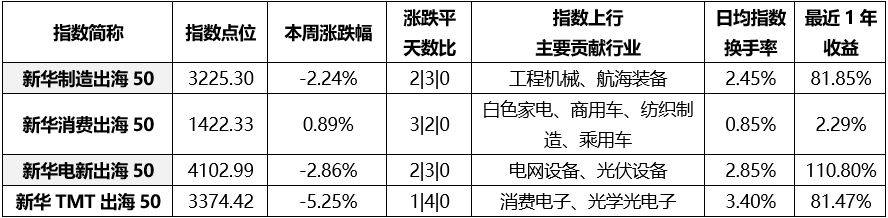
新华指数丨工程机械板块景气度上升 新华出海消费指数同步飘红
Xin Hua Cai Jing· 2026-02-06 13:36
Core Viewpoint - The A-share market is experiencing a structural trend, with the engineering machinery sector showing strong resilience supported by solid fundamentals, indicating a dual development opportunity of "domestic demand recovery + export breakthrough" [1] Industry Overview - The engineering machinery industry is closely tied to infrastructure investment and the overall economic climate, encompassing various machinery used in large projects such as construction, road building, and mining [1] - The industry is expected to see a market size of $23.4 billion in 2024, accounting for 11.0% of the global market, with projections to grow to $57.0 billion by 2030, reflecting a compound annual growth rate (CAGR) of approximately 16% [3] Sales and Demand - Excavator sales, a core product in the engineering machinery market, are projected to reach 235,257 units in 2025, marking a 17% year-on-year increase, with December 2025 sales expected to hit 23,095 units, a 19.2% increase [2] - The domestic market is expected to see excavator sales of 118,518 units in 2025, up 17.9%, while overseas sales are projected to exceed 116,739 units, a 16.1% increase, indicating a "dual-wheel drive" growth pattern [2] Export Performance - Excavator exports are anticipated to reach 76.64 billion yuan in 2025, a significant increase of 31.1%, highlighting the global competitiveness of Chinese excavator products [3] - Emerging markets and traditional markets are both contributing to export growth, with regions like Asia, Europe, and Africa maintaining high growth rates, while Latin America and Oceania markets are seeing growth rates around 30% [3] Company Performance - Leading companies in the sector, such as Sany Heavy Industry, XCMG, and Zoomlion, have shown robust performance with significant revenue and profit growth in 2025 [5] - Sany Heavy Industry reported a revenue of 66.104 billion yuan, a 13.27% increase, and a net profit of 7.136 billion yuan, up 46.58% [5] - XCMG achieved a revenue of 78.157 billion yuan, an 11.61% increase, and a net profit of 5.977 billion yuan, up 11.67% [5] - Zoomlion reported a revenue of 37.156 billion yuan, an 8.06% increase, and a net profit of 3.920 billion yuan, up 24.89% [5] Market Dynamics - The engineering machinery sector is undergoing a technological innovation wave focused on "intelligent, high-end, and green" development, with leading firms increasing R&D investments to drive industry upgrades [4] - The overall recovery in the industry is reflected in the performance of A-share engineering machinery stocks, with significant market capitalization growth among leading companies [4]
中国汽研:持续加大科研投入,强化客户合作与市场开拓
Zheng Quan Ri Bao Wang· 2026-02-06 12:45
Core Viewpoint - The automotive industry in China is steadily advancing towards an era characterized by electrification, intelligence, low carbon emissions, and internationalization, with a continuous increase in the number of new products as indicated by the Ministry of Industry and Information Technology's announcements [1] Group 1: Industry Trends - The demand for technology services in the automotive sector is consistently growing, driven by the industry's transition towards new technological paradigms [1] - The number of new products in the automotive sector is on the rise, reflecting a positive trend in the industry [1] Group 2: Company Strategy - The company plans to focus on three main technological lines: safety, green technology, and user experience, while increasing research and development investments [1] - The company aims to strengthen customer collaboration and market expansion, concentrating on its core business and emerging sectors [1] - The company is committed to enhancing business synergy across various segments to improve its technological innovation and operational capabilities, thereby elevating its market position [1]

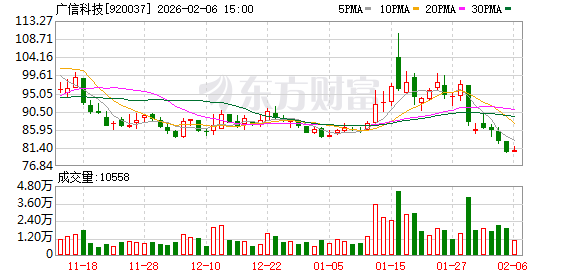
广信科技:公司在2026年将以智能化、数字化为核心驱动工艺升级
Zheng Quan Ri Bao· 2026-02-06 12:41
Core Viewpoint - The company aims to enhance its production processes through automation and digitalization by 2026, focusing on the upgrade of insulation molding parts processing lines [2] Group 1: Company Strategy - The company plans to introduce industrial robots to achieve precision and efficiency in key operations [2] - The automation upgrade is expected to optimize labor costs and improve production efficiency and product quality stability [2] - These initiatives are intended to further strengthen the company's competitive advantage in the market [2]
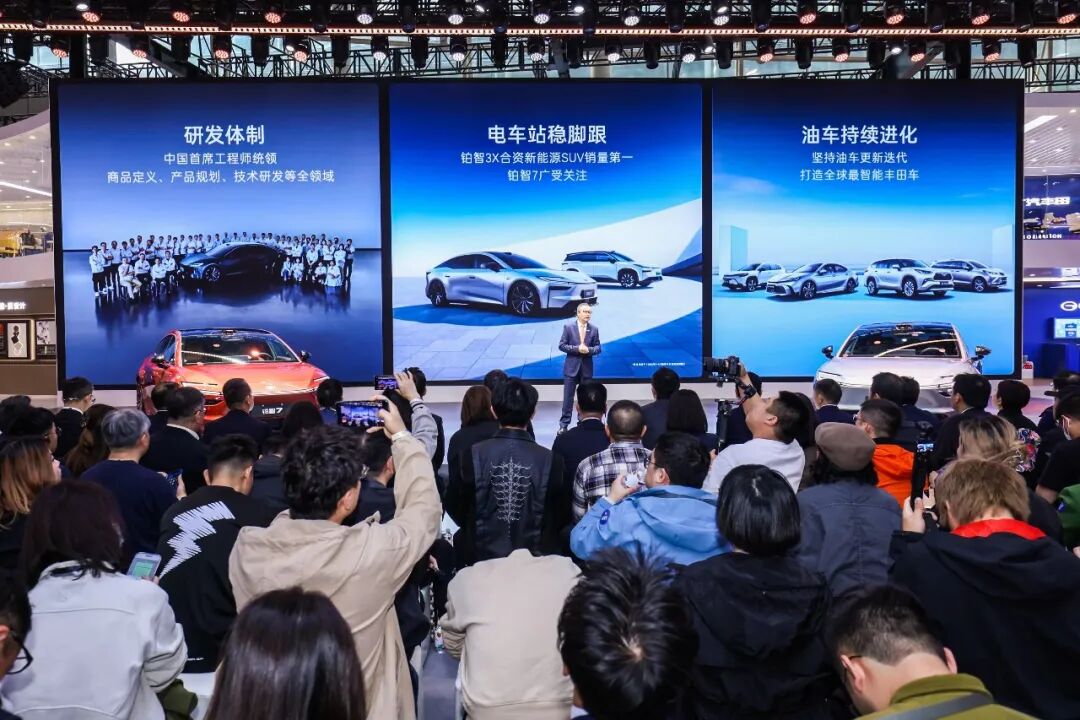
合资品牌做不好智能化?2026年广汽丰田亮出新牌
Di Yi Cai Jing· 2026-02-06 12:35
Core Insights - The automotive market in China is expected to undergo significant changes by 2025, with a focus on "intelligentization," where the penetration rate of smart features is projected to exceed 64% [1] - GAC Toyota is adopting a "practicality" approach to intelligent features, emphasizing usability and reliability over unique functionalities, setting a benchmark for joint venture brands in their smart transformation [3] Industry Trends - By 2026, the market for smart cockpits in China is forecasted to reach 212.7 billion yuan, with a compound annual growth rate of over 17% [1] - The penetration rates for L2 and L3 autonomous driving features are expected to reach 21% and 22% respectively, as major companies implement "smart driving equality" strategies [1] - A shift in consumer preferences is noted, with 40.08% of respondents unwilling to pay extra for smart driving systems, indicating a need for practical and reliable features rather than just a plethora of options [4] GAC Toyota's Strategy - GAC Toyota's "Fusion 2030" strategy aims to achieve intelligent breakthroughs in both fuel and new energy vehicles, with the 2026 global models featuring high-performance Qualcomm Snapdragon 8155 chips and advanced smart driving systems [1][5] - The company is focusing on a comprehensive smart product matrix that includes both fuel and electric vehicles, ensuring that all models meet user demands for intelligent features [4][5] - GAC Toyota's approach includes a commitment to stability over rapid iteration, with a focus on long-term reliability and user-friendly experiences [5][8] Product Innovations - The upcoming Platinum series, including the Platinum 7, is positioned as a luxury electric vehicle with advanced smart features, targeting a market segment that combines affordability with high-end specifications [6][11] - The Platinum 7 will utilize the Momenta R6 intelligent driving solution, backed by extensive training data, ensuring a high level of reliability and safety [8][9] - GAC Toyota emphasizes the importance of practical features, such as wireless charging and multi-device connectivity, addressing common consumer pain points [5][9] Market Positioning - GAC Toyota aims to capture over 20% of its sales from new energy vehicles by 2026, with a strategic focus on the mainstream and high-end electric vehicle markets [6][11] - The company is leveraging its engineering capabilities and partnerships to enhance its product offerings, ensuring that they meet both local and global standards [11][12] - GAC Toyota's commitment to user-centered design and practical solutions positions it favorably in the competitive landscape of automotive intelligentization [12]
增长势能不减!从去年的1551%,到今年的“开门红”,福田汽车持续强势领跑
Xin Lang Cai Jing· 2026-02-06 11:25
Core Viewpoint - Beiqi Foton Motor Co., Ltd. reported a remarkable performance increase for 2025, with a net profit growth of 1551% and a non-net profit of 820 million yuan, establishing itself as a benchmark for high-quality growth in the commercial vehicle industry. This surge is primarily driven by the strong performance of its new energy sector, with annual sales of new energy vehicles reaching 101,200 units, a year-on-year increase of 87.21%, significantly surpassing the industry average growth rate of 66.5% for new energy commercial vehicles [1][7]. Group 1: Performance Highlights - In January 2026, Foton's sales reached 55,600 units, a year-on-year increase of 10.99%. This includes 14,600 heavy trucks (up 86%) and 36,400 light trucks, maintaining a leading position in sales. Overseas sales reached 15,100 units, a growth of 20.2% [1][8]. - Foton achieved the title of the top seller in new energy vehicles in January 2026 [8]. Group 2: Strategic Leadership - Foton's strategic leadership is the core guiding principle for its new energy transformation, enabling it to navigate industry cycles and achieve high-quality growth. The company established three core strategies: "comprehensive internationalization, comprehensive new energy, and comprehensive intelligence" to define its development direction [2][9]. - The "New Energy 30·50 Strategy" aims for new energy vehicle sales to exceed 50% by 2030 and to become a global leader in green transportation by 2050. The "GREEN3030 Strategy" focuses on overseas markets, targeting 300,000 overseas sales and 30% new energy sales by 2030 [2][9]. Group 3: Technological Leadership - Foton prioritizes research and development, with R&D expenses reaching 1.379 billion yuan in the first three quarters of 2025, accounting for 3.03% of revenue. The focus is on four core areas: new energy, power systems, lightweight technology, and intelligence [3][10]. - The company has achieved significant breakthroughs in core technologies, including the development of the Aiyike three-electric technology, which meets industry-leading standards. Its power batteries have passed extreme condition tests, exceeding national standards by 3 to 7 times [3][10]. Group 4: Product Innovation and Market Validation - Foton is committed to sustainable development, focusing on a new energy product matrix that has led to its top sales in the new energy sector. The company plans to launch multiple new energy strategic products across various categories, including heavy trucks, light trucks, and vans [5][12]. - The "Qiming Star" product line includes innovative models such as the world's first "electric and hydrogen" intelligent heavy truck and the "Qiming Star" pure electric light truck, showcasing Foton's commitment to product quality and user-centric development [5][12]. Group 5: Future Goals and Sustainable Development - Foton aims to become a world-class commercial vehicle enterprise, targeting a 50% penetration rate for new energy vehicles and a 30% share of overseas sales. The company plans to achieve sales of 200,000 new energy vehicles and 200,000 exports [6][13]. - The company is focused on deepening its three core strategies, enhancing its product offerings, and building a comprehensive ecosystem for new energy vehicles, including innovative models like battery banks and vehicle-to-grid solutions [6][14].

市场最前沿丨数智赋能 中粮全力保障春节市场供应
Xin Hua Wang· 2026-02-06 10:33
Core Viewpoint - The article highlights the efforts of COFCO Group to ensure a stable supply of food products during the Spring Festival by leveraging digital and intelligent technologies to meet consumer demand [1] Group 1: Production and Supply Chain Management - COFCO Oil has optimized production capacity for key products such as flaxseed oil, peanut oil, and corn oil, ensuring efficient and stable operations ahead of the holiday season [1] - The smart production line for flaxseed oil in Chengdu has the capacity to refine hundreds of tons daily and package tens of thousands of boxes, achieving continuous operation [1] Group 2: Pork Product Supply - COFCO Jiajia Kang has implemented a scientific staggered production and capacity linkage across its nationwide factories to ensure seamless supply of pork products [1] - The company has utilized backend data analysis to develop tailored stocking strategies for different regions, aiming to meet diverse consumer needs [1]